Telangana SCERT 10th Class Telugu Guide Pdf Download Telangana ఉపవాచకం రామాయణం Questions and Answers.
TS 10th Class Telugu Guide ఉపవాచకం రామాయణం
ఉపోద్ఘాతం
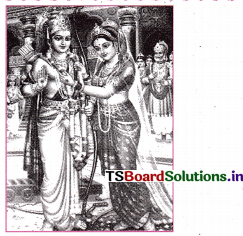
శ్రీమద్రామాయణం ఒక మహాకావ్యం. ఇది ఆదికావ్యం. వాల్మీకి మహర్షి రామాయణాన్ని రసవత్తరంగా రచించారు. ఈ కావ్యాన్ని కొందరు ధర్మశాస్త్రమని, శరణాగతిశాస్త్రమని కూడా పిలుస్తారు. మానవజీవితాన్ని సంస్కరించగల మహాకావ్యం. మానవ హృదయాల నుండి ఎప్పటికీ చెరగని కథ. ఆత్మీయతానుబంధాలు, సోదరుల అభిమానం, సేవక భక్తి, భార్యాభర్తల అనుబంధం, గురుభక్తి, శిష్యానురక్తి, స్నేహఫలం, ధర్మబలం, వినయ, వివేకాలు, జీవకారుణ్య భావన ……..ఇలా జీవితపార్శ్వాలెన్నింటినో రామాయణం పట్టిచూపిస్తుంది. ఈ కావ్యంలో 24 వేల శ్లోకాలు, ఆరు కాండలు ఉన్నాయి. శ్రీరామచంద్రుని గుణగణాలను అద్భుతంగా వాల్మీకి జగతికి అందించారు. ఇందులోని పాత్రలన్నీ ఇప్పటికీ సజీవంగానే మానవ హృదయాల్లో నిలిచి ఉన్నాయి.
ప్రశ్నలు – సమాధానములు
క్రింది పాత్రల స్వభావాన్ని వ్రాయండి.
ప్రశ్న 1.
విశ్వామిత్రుడు
జవాబు:
రామాయణంలో విశ్వామిత్రుని పాత్ర గొప్పది. ఇతడు గొప్ప ఋషి. యాగరక్షణ కోసం దశరథుని సమీపించాడు. రామలక్ష్మణుల సహాయాన్ని అర్థించాడు. యాగరక్షణ పేరుతో విశ్వామిత్రుడు రామలక్ష్మణులకు ఎన్నో శస్త్రాస్త్రాలను బోధించాడు. బల, అతిబల అనే మంత్రాలను కూడా ఉప దేశించాడు. సీతారాముల వివాహవిషయంలో ప్రధాన భూమికను పోషించాడు. శ్రీరామునికి అస్త్రవిద్యలను ఉపదేశించడంలో నేర్పరితనాన్ని ప్రదర్శించాడు. గంగావతరణ మొదలైన వృత్తాంతాలను తెలియ జేశాడు.
ప్రశ్న 2.
శ్రీరాముడు
జవాబు:
మానవునిగా జన్మించి మహనీయునిగా ఎదిగి జగతికి ఆదర్శంగా నిలిచిన పురుషోత్తముడు శ్రీరామచంద్రుడు. శ్రీరాముని వంటి ఉత్తమ గుణ సంపన్నుడు మరొకడు కనిపించడు. ఆయన ఆ కాలానికే కాదు ఏ కాలానికీ లేడు. శ్రీరాముని ధర్మ చరిత్ర సృష్టి ఉన్నంతకాలం ఉంటుంది. మానవ జాతిని తీర్చిదిద్ది, ధార్మికజీవనం ఎంతగొప్పదో, ఎంత పవిత్రమైందో, ఎంత ఆదర్శవంతమైందో తన ప్రవర్తన ద్వారా శ్రీరాముడు నిరూపించాడు. శ్రీరాముడు ధర్మనిష్ఠకు, సత్యసంధతకు, ఏకపత్నీ వ్రతానికి దృష్టాంతంగా నిలిచాడు. దుష్టరావణాది రాక్షసులను సంహరించి లోకకళ్యాణం చేశాడు.

ప్రశ్న 3.
సీత
జవాబు:
ప్రపంచమునందలి మహాపతివ్రతలలో సీతామహాదేవి అగ్రగణ్యురాలు. శ్రీమద్రామాయణం లో సీత పాత్ర మహోన్నతమైంది. అసాధారణ పాతివ్రత్యం, త్యాగం, సౌశీల్యం, శాంతం, నిర్భయత్వం, సహనశీలం, ధర్మపరాయణత, వినయం, సంయమనం, సేవాభావం, సదాచారం మొదలైన ఉత్తమగుణాలతో కూడిన మహాసాధ్వి సీతాదేవి. సీతాదేవి పవిత్ర జీవనం, నిరుపమాన పతిభక్తి అపూర్వములు.
ఈమె అన్ని విషయాల్లోను పవిత్రురాలు. ఈమె జీవితంలోని ఘట్టాలన్నీ మన తల్లులకు, అక్కచెల్లెళ్ళకు, కోడళ్ళకు, కుమార్తెలకు చక్కని ప్రబోధాత్మకములు, స్ఫూర్తి దాయకములు. రావణుని తృణప్రాయంగా ఎదిరించి మాట్లాడిన ధీరవనిత. ఈమె సాక్షాత్తు దైవస్వరూపిణి. అయినప్పటికిని సీత తన మానవజీవితము నందు ఆదర్శచరిత్ర కలిగి సామాన్య గృహిణిగా ఆదర్శ జీవనాన్ని గడిపింది.
ప్రశ్న 4.
లక్ష్మణుడు
జవాబు:
వాల్మీకి రామాయణంలో లక్ష్మణుని పాత్ర ఆదర్శవంతమైంది. సోదరప్రేమకు సరియైన . ఉదాహరణ లక్ష్మణుడు. అన్నతోపాటు అరణ్యవాసం చేశాడు. తన జీవితాన్ని రాముని సేవకే అంకితం చేసిన మహనీయమూర్తి. లక్ష్మణుని బ్రహ్మచర్యము నిరుపమానము. అతడు గొప్పధైర్యశాలి. అసమాన పరాక్రమవంతుడు. అంతకు మించి జితేంద్రియుడు, సరళ స్వభావం కలవాడు, సహనం కలవాడు, నిష్కపటం లేనివాడు. తపస్సంపన్నుడు, త్యాగి, సేవాభావం కలవాడు. శ్రీరాముని యందు సాటిలేని ప్రేమగలవాడు. రాముని సేవలో తనను తానే మరచి పోతాడు. నీడవలె లక్ష్మణుడు శ్రీరాముని విడిచి ఉండలేడు. సీతను తల్లిగా భావించి గౌరవించాడు. యుద్ధరంగంలో రామునికి అండగా నిలిచిన మహనీయుడు.
ప్రశ్న 5.
కైక (లేదా) కైకేయి పాత్ర స్వభావాన్ని వివరించండి.
జవాబు:
ఈమె దశరథుని ముగ్గురి భార్యలలో మూడవ భార్య. పుత్రకామేష్టి యాగం తరువాత ఈమెకు భరతుడు జన్మించాడు. మంథర మాయమాటలకు లోనైంది. రాముని అరణ్యవాసానికి కారణమైంది. భరతుని ఆగ్రహానికి లోనైంది. దశరథుని మరణానికి పరోక్షంగా కారణభూతురాలైంది.
ప్రశ్న 6.
భరతుడు
జవాబు:
రామాయణంలో భరతుడు సర్వశ్రేష్ఠుడు. అతని చరిత్ర ఉజ్జ్వలమైంది. ఆదర్శవంతమైనది. భరతుని మనస్సు నిష్కపటమైందిగా నిరూపితమైంది. ఇతడు సాధు శిరోమణి, స్వామిభక్తి పరాయణుడు, ఆదర్శపురుషుడు, స్వార్థం లేనివాడు, భక్తితత్పరుడు, కర్మయోగి, నిరుపమాన నీతిజ్ఞుడు, సంయమనం కలవాడు, సదాచారపరాయణుడు, ప్రేమమూర్తి, వినయశీలి. శ్రీరామునియందు భక్తి విశ్వాసాలు కలవాడు, రాజ్యకాంక్ష లేనివాడు. రామాజ్ఞను శిరసావహించేవాడు. అన్న కోసం తల్లిని కూడా దూషించాడు. భరతుని సేవ అపూర్వమైంది.
ప్రశ్న 7.
మంథర
జవాబు:
రామాయణంలో మంథర పాత్ర ఎంతో విశిష్టమైనది. శ్రీరామ వనవాసానికి ప్రధాన కారకురాలు. ఈమె కైకేయి సహాయకురాలు. పచ్చని కాపురంలో చిచ్చుపెట్టే స్వభావం కలది. కైకేయిలో దుర్భుద్ధిని పుట్టించింది. మంథర మాటలను విని కైక రాముడిని 14 సంవత్సరాలు వనవాసాన్ని, భరతునికి పట్టాభిషేకాన్ని కోరింది. భరతుని ఆగ్రహానికి లోనైంది. ఈమె ఒక దుష్టపాత్రగా రామాయణంలో నిలిచిపోయింది.
ప్రశ్న 8.
మారీచుడు
జవాబు:
ఇతడు ఒక రాక్షసుడు. తాటకి యొక్క కుమారుడు. అయినా ఇతడు గొప్ప ధర్మాత్ముడు, ప్రభుభక్తి పరాయణుడు. సీతాపహరణం తప్పని రావణునికి చెప్పాడు. రావణుని ఆగ్రహానికి కారకుడైనాడు. గత్యంతరంలేక రావణుని ఆదేశాన్ని అనుసరించి మాయారూపమైన జింకగా మారాడు. రాముని బాణానికి మరణించాడు.
ప్రశ్న 9.
రావణుడు
జవాబు:
శ్రీమద్రామాయణంలో అత్యంత ప్రధానమైన భూమికను పోషించినవాడు, లంకాధిపతియైన రావణుడు. ఒకవిధంగా చెప్పాలంటే రామావ తారమునకు కారణమైనవాడు రావణుడే. అతడు గొప్ప విద్యావంతుడు, తపశ్శాలి, గొప్ప శివభక్తుడు మరియు అస్త్ర శస్త్రవిద్యలన్నీ నేర్చిన మహావీరుడు. అయితే అతడు దురహంకారి. కామక్రోధాలకు లొంగినవాడు. ఇలాంటి దుర్గుణాలే అతని పతనానికి దారితీశాయి. పవిత్రమైన ఆలోచనలు లేనివాడు. పరకాంతా వ్యామోహం కలవాడు. మంచిమాటలను వినని స్వభావం కలవాడు. రాక్షసవంశ నాశనానికి తానే మార్గం చూపాడు.
ప్రశ్న 10.
సుగ్రీవుడు
జవాబు:
ఇతడు ఒక వానరరాజు. ఇతడు గొప్పవీరుడు, ధర్మపరుడు, నిరంకుశుడు, కొంత చాపల్యం కలవాడు. మిత్ర ధర్మానికి కట్టుబడినవాడుగా రామాయణంలో కనిపిస్తాడు. ఇతని ఆజ్ఞకు తిరు గుండదు. తన సోదరుడైన వాలిని సంహరించడానికి శ్రీరామునితో సఖ్యతను కుదుర్చుకున్నాడు. సీతాన్వేషణలో సుగ్రీవుడు తన కర్తవ్యాన్ని పాటించాడు. రావణవధ తరువాత రాముని కోరికపై అయోధ్యకు వెళ్ళాడు.
ప్రశ్న 11.
హనుమంతుడు
జవాబు:
శ్రీమద్రామాయణంలో హనుమంతుని పాత్ర అనుపమానమైనదిగా పేర్కొనవచ్చు. ప్రభుభక్తి పరాయణుడు. గొప్ప వక్త, సాటిలేని బలం కలవాడు, బుద్ధికుశలుడు, వ్యాకరణ పండితుడు, సేవా ధర్మపరాయణుడు, నిరంతరం సత్యమునే పలుకు వాడు, హనుమంతుని స్వామిభక్తి తిరుగులేనిది. దైవభక్తి ఇతనికి ఉగ్గుపాలతో పెట్టిన విద్య. యుద్ధవిద్యలయందు ఆరితేరినవాడు. కోరిన రూపమును ధరించగల సమర్థుడు. హనుమంతుని గుణములు అద్భుతములు, అపారములు. సీతాన్వేషణలోను, లంకాదహనంలోను, రావణునికి సందేశాన్ని ఇవ్వడంలోను ఇతనికి ఇతడే సాటి. లంకా నగరంలో హనుమంతుడు చూపిన సాహసం వీరులందరికి ఆదర్శప్రాయమైనది.
ప్రశ్న 12.
త్రిజట
జవాబు:
రామాయణంలోని ముఖ్యపాత్రలలో త్రిజట పాత్ర ప్రముఖమైనది. ఈమె విభీషణుని కుమార్తె. రాక్షస వంశంలో జన్మించినా మంచిచెడులను గురించి ఆలోచించి చెప్పగల సమర్థురాలు. రాక్షస స్త్రీలు లంకలోని సీతను ఎన్నో రకాలుగా ఇబ్బంది పెట్టారు. చివరకు రావణుడు బెదిరించాడు. ఆ సమయంలో సీత దుఃఖించింది. ఈ సందర్భంలో త్రిజట సీతను ఓదార్చింది. పగటిపూట వచ్చిన తన స్వప్న వృత్తాంతాన్ని చెప్పింది. సీతలో బ్రతుకుపై ఆశ కల్గించింది. ఈమె ప్రవర్తన అందరికి ఆదర్శం కావాలి.
ప్రశ్న 13.
ఇంద్రజిత్తు
జవాబు:
ఇతడు రావణుని కుమారుడు. ఇతనికి మేఘ నాథుడు అనే పేరు కూడా ఉంది. ఇంద్రుడిని జయించినందువల్ల ఇంద్రజిత్తు అయ్యాడు. బ్రహ్మ అనుగ్రహంతో బ్రహ్మాస్త్రాన్ని పొందాడు. యుద్ధ సంగ్రామంలో ఆకాశంలోకి వెళ్ళి మేఘాలలో యుద్ధం చేయగల సమర్థుడు. రామరావణ సంగ్రామం లో చురుకైన పాత్రను పోషించాడు. నాగాస్త్రంతో ఒకేసారి రామలక్ష్మణులను బంధించాడు. చివరకు లక్ష్మణుని చేతిలో మరణించాడు.
ప్రశ్న 14.
వాలి
జవాబు:
ఇతడు వానరరాజు, గొప్ప పరాక్రమవంతుడు. పెద్దపెద్ద బండరాళ్ళను కూడా అవలీలగా విసిరి వేయగల సమర్థుడు. దృఢమైన చెట్లను కూడా పీకిపారేయగల శక్తిసమర్థుడు. రావణుడిని సముద్రాల్లో ముంచి ముచ్చెమటలు పట్టించాడు. పరకాంతా వ్యామోహం కలవాడు. అదే ఇతని మరణానికి దారితీసింది. ధర్మాన్ని అభిమానించాడు. వాలి కోరికపై రాముడు అతని కుమారుడైన అంగదుడుని యువరాజుగా నియమించాడు.
ప్రశ్న 15.
విభీషణుడు (లేదా) విభీషణుడి పాత్ర స్వభావాన్ని వివరించండి.
జవాబు:
రామాయణంలో విభీషణుని పాత్ర అపూర్వ మైనది. ఇతడు రావణుని సోదరుడు. సేవాప రాయణుడు, ధర్మతత్పరుడు. ఎవరు తప్పు చేసినా వారిని నిలదీసే స్వభావం గలవాడు. అధర్మ పరాయణుడైన రావణుని ఎదిరించిన మహావీరుడు. శ్రీరాముడిని శరణుజొచ్చాడు. ధర్మంవైపు నిలిచి శాశ్వతమైన కీర్తిని పొందాడు.
ప్రశ్న 16.
దశరథుడు (లేదా) దశరథుని పాత్ర స్వభావం వివరించండి.
జవాబు:
ఇతడు ఇక్ష్వాకు వంశపు మహారాజు. గొప్ప పరాక్రమవంతుడు, సత్యసంధుడు. పుత్రకామేష్టి ద్వారా కుమారులను పొందాడు. శ్రీరామునియందు అమితమైన అనురాగం కలవాడు. పుత్ర వ్యామోహంతో మరణించాడు. కుమారులకు శస్త్రాస్త్ర విద్యలను నేర్పించాడు. పెద్దలయందు వినయం కలవాడు.
ప్రశ్న 17.
జనక మహారాజు
జవాబు:
ఈయన మిథిలానగరానికి మహారాజు. సీతా దేవికీ తండ్రి. మిక్కిలి పరాక్రమవంతుడు. తన పూర్వీకుల నుండి సంక్రమించిన శివధనస్సును రక్షిస్తున్నాడు. సీతాదేవికి స్వయంవరాన్ని ప్రకటించి యోగ్యుడైన శ్రీరామచంద్రునికి తన కుమార్తె అయిన సీతను ఇచ్చి వివాహాన్ని జరిపించాడు. అంతేకాదు తన సొంత కుమార్తె అయిన ఊర్మిళను లక్ష్మణుడికి ఇచ్చి వివాహాన్ని జరిపించాడు. తన సోదరుని కుమార్తెలైన మాండవి, శ్రుతకీర్తనలను భరత, శత్రుఘ్నులకు ఇచ్చి వివాహాన్ని జరిపించాడు.
ప్రశ్న 18.
కుంభకర్ణుడు
జవాబు:
ఇతడు రావణుని సోదరుడు. బ్రహ్మవరప్రసాది. ఇతడు ఆరునెలలు మేల్కొని ఉంటాడు. ఆరునెలలు పడుకొని ఉంటాడు. భోజనప్రియుడు, యుద్ధ సమయంలో రావణుని ఆదేశంతో శ్రీరామునితో యుద్ధం చేశాడు. వీరమరణాన్ని పొందాడు.
ప్రశ్న 19.
జటాయువు
జవాబు:
ఇతడు ఒక వానరుడు. అనూరుని రెండవ కుమారుడు. ఇతని తల్లి శ్యేని, తాత కశ్యపుడు. రావణుడు సీతను అపహరించుకొని వెళ్ళే సమయంలో రావణుని ఎదిరించాడు. రావణుని చేతిలో మరణించాడు. రామునికి సీత జాడను తెలియజేశాడు. మిత్ర ధర్మాన్ని పాటించాడు.
ప్రశ్న 20.
భగీరథుడు
జవాబు:
ఇతడు ఒక సూర్యవంశపు రాజు. గొప్ప పరాక్రమవంతుడు. దిలీపుని కుమారుడు. తన ప్రపితామహులకు స్వర్గలోక ప్రాప్తిని కలిగించడం కోసం ఆకాశగంగను తన తపశ్శక్తితో భూలోకానికి దింపిన మహానీయుడు. గంగావతరణ విషయంలో కఠోర పరిశ్రమను చేశాడు.
ప్రశ్న 21.
శబరి
జవాబు:
ఈమె గొప్ప భక్తురాలు. మతంగ మహర్షి ఆశ్రమంలో నివసించే ఒక సన్యాసిని. కబంధుడు సూచించిన మార్గంలో ప్రయాణిస్తూ రామలక్ష్మణులు పంపా సరస్సు ప్రాంతంలో ఉన్న శబరి ఆశ్రమానికి వెళ్ళారు. శబరి తపస్సిద్ధురాలు. జ్ఞానవయో వృద్ధురాలు. శ్రీరామదర్శనంతో ఆమె తనువు పులకించింది. పంపా తీరంలో దొరికే పండ్లను స్వామికి సమర్పించింది. తన జన్మ ధన్యమైనట్లు భావించింది. శ్రీరాముడి అనుమతినిపొంది తన దేహాన్ని అగ్నికి ఆహుతి చేసి అగ్నికాంతితో ఊర్ధ్వలోకాలకు వెళ్ళింది.
ప్రశ్న 22.
కౌసల్య
జవాబు:
దశరథ మహారాజు భార్య. శ్రీరాముని తల్లి. ఏనాడూ భర్త మాటకు ఎదురుచెప్పని మహాపతివ్రత. శ్రీరాముడు అరణ్యవాసానికి బయల్దేరేటప్పుడు శ్రీరాముని వనవాస ప్రయత్నం విరమింపజేయాలను కుంది. ఫలించలేదు. పుత్ర వ్యామోహంతో వన వాసానికి తానూ వస్తానంది. రాముడు ఒప్పుకోలేదు. శ్రీరాముడికి ధర్మబోధ చేసింది. ధైర్యం చెప్పిన వీరనారి. ధర్మాన్ని విడిచిపెట్టవద్దని చెప్పిన మహారాణి కౌసల్య.
ప్రశ్న 23.
సుమిత్ర
జవాబు:
దశరథ మహారాజుకు రెండవ భార్య. లక్ష్మణుడు, శత్రుఘ్నుడు ఈమె సంతానం. కౌసల్యా దేవి అడుగు జాడలలో నడిచింది. భర్త మాటకు ఎదురుచెప్పని మహాపతివ్రత, శ్రీరామ, లక్ష్మణ, భరత శత్రుఘ్ను లందర్నీ సమానంగా చూసిన మాతృమూర్తి.
ప్రశ్న 24.
శత్రుఘ్నుడు
జవాబు:
సుమిత్రయందు దశరథునకు జన్మించాడు. లక్ష్మణుని స్వభావం శత్రుఘ్నుని స్వభావం ఒక్కటే. అన్నగార్లపై అమితమైన గౌరవం కలవాడు.
ప్రశ్న 25.
ఋష్యశృంగుడు
జవాబు:
విభాండక మహర్షి కొడుకు. దశరథుని కుమార్తె శాంతను వివాహం చేసుకున్నాడు. పుత్రకామేష్ఠి యాగం దశరథుని చేత చేయించాడు. ఋష్య శృంగుడు సాక్షాత్తు దైవస్వరూపుడు. ఆయన ఎక్కడ ఉంటే అక్కడ వర్షాలు బాగా కురుస్తాయి. భూమి సస్యశ్యామలంగా ఉంటుంది.
ప్రశ్న 26.
నారదుడు
జవాబు:
దేవఋషి. రామాయణగాథను వాల్మీకికి ఉపదేశించిన వాడు. బ్రహ్మయొక్క మానసపుత్రుడు. త్రిలోక సంచారి. నిరంతరం నారాయణ నామాన్ని జపిస్తూ ఉంటాడు. లోకకల్యాణం కోసం నిరంతరం ప్రయత్నిస్తాడు. ఋషులకు మార్గదర్శకుడు. రామాయణ కథారచనకు మూలపురుషుడు.
ప్రశ్న 27.
కబంధుడు
జవాబు:
ఒక రాక్షసుడు. ఇతని చేతిలో చిక్కితే ఎవ్వరూ తప్పించుకోలేరు. రావణుడు అపహరించిన సీతాదేవి దొరికే ఉపాయాన్ని శ్రీరామునకు చెప్పాడు.
క్రింది వాటిని వివరించండి.
ప్రశ్న 1.
చెవిటివాని చెవిలో శంఖం ఊదినట్లు :
జవాబు:
మూర్ఖునికి ఉపదేశం చేయడం వల్ల ఏమాత్రం ఉపయోగం లేదని తెలియజెప్పే అర్థంలో ఈ జాతీయం వాడు తారు.
ప్రశ్న 2.
చెవినిల్లుకట్టుకొనిపోరు:
జవాబు:
చెప్పింది విన్నా, వినక పోయినా అదేపనిగా ఎదుటివానికి చెప్పే సందర్భంలో ఈ జాతీయం వాడుతారు.
ప్రశ్న 3.
గతజలసేతుబంధనం :
జవాబు:
జరిగిపోయిన నష్టం తర్వాత వారధిని నిర్మించడం వల్ల ఉపయోగం లేదని తెలియజెప్పే సందర్భంలో దీన్ని వాడుతారు.
ప్రశ్న 4.
అగస్త్యభ్రాత:
జవాబు:
పేరు తెలియని వ్యక్తిని గూర్చి తెలియజేయు సందర్భంలో ఈ జాతీయాన్ని వాడుతారు.
ప్రశ్న 5.
సుగ్రీవాజ్ఞ :
జవాబు:
తిరుగులేని ఆదేశం అని తెలియజేయు సందర్భంలో ఈ జాతీయాన్ని వాడుతారు.
ప్రశ్న 6.
శ్రీరామరక్ష :
జవాబు:
రక్షింపగలిగినది, సర్వరక్షమైనది అనే సందర్భంలో ఈ జాతీయాన్ని వాడుతారు.
ప్రశ్న 7.
కబంధహస్తాలు :
జవాబు:
విడిపించుకోవడానికి వీలుకాని బంధాన్ని గూర్చి తెలియజేయు సందర్భంలో ఈ జాతీయాన్ని వాడుతారు.
ప్రశ్న 8.
భగీరథ ప్రయత్నం :
జవాబు:
అసాధ్యమైనదానిని సాధించాడు అని తెలియజేయు సందర్భంలో ఈ జాతీయాన్ని వాడుతారు.
మరికొన్ని జాతీయాలు :
ప్రశ్న 9.
కారాలు మిరియాలు నూరడం :
జవాబు:
ఈ జాతీయాన్ని ‘కోపము చేయు’ ‘పగ సాధించు’ అనే సందర్భంలో ఉపయోగిస్తారు.
ప్రశ్న 10.
ఉచితజ్ఞత :
జవాబు:
‘తగిన విషయాన్ని తెలుసుకొనే తత్త్వము’ అనే సందర్భంలో దీనిని ఉపయోగిస్తారు.
ప్రశ్న 11.
స్థితప్రజ్ఞత :
జవాబు:
దేనికీ చలింపని మనస్సు కలిగి ఉండడం. పొంగుక్రుంగులు లేని మనస్తత్వము అనే సందర్భంలో దీనిని వాడతారు.
ప్రశ్న 12.
పితృవాక్య పరిపాలన :
జవాబు:
తండ్రి మాటను ఎటువంటి స్థితిలోనయినా తప్పకుండా పాటించడం అనే సందర్భంలో దీనిని ఉపయోగిస్తారు. తండ్రి మాట వలె తప్పక పాటింపవలసినదని భావము.
ప్రశ్న 13.
గజ్జెకట్టడం :
జవాబు:
కాలికి గజ్జెలు కట్టుకొని నాట్యం చేయడం అని దీని అర్థము. ఆ పనిని చేయడానికి పూనుకున్నాడు అనే సందర్భంలో దీన్ని ఉపయోగిస్తారు.
ప్రశ్న 14.
మంత్రాలకు చింతకాయలు రాలడం :
జవాబు:
మంత్రాలు చదవడానికి, చింతకాయలు రాలడానికి సంబంధం ఉండదు. ఇలా బొత్తిగా సంబంధం లేదని చెప్పే సందర్భంలో దీన్ని వాడతారు.
ప్రశ్న 15.
నీరు కారిపోవుట :
జవాబు:
‘దిగాలు పడిపోవు”, లేక “నిరుత్సాహుడగు” అనే సందర్భంలో దీన్ని ఉపయోగిస్తారు.
ప్రశ్న 16.
కలుపు తీయడం :
జవాబు:
చేలలో పనికిరాని మొక్కలను తొలగించడం అనే సందర్భంలో దీనిని ఉపయోగిస్తారు.
ప్రశ్న 17.
పురిట్లో సంధి కొట్టడం :
జవాబు:
“పురుడు వచ్చి బిడ్డ పుట్టగానే సంధిరోగం రావడం’ అనగా పని ప్రారంభించగానే విఘ్నం కలగడం అనే సందర్భంలో దీన్ని ఉపయోగిస్తారు.
ప్రశ్న 18.
బ్రహ్మాస్త్రం :
జవాబు:
బ్రహ్మగారి అస్త్రము వలె, తిరుగులేని అస్త్రము అనే సందర్భంలో దీన్ని ప్రయోగిస్తారు. తప్పకుండా జరిగేది అనే భావములో దీన్ని వాడతారు.
ప్రశ్న 19.
చూసి రమ్మంటే కాల్చిరావడం :
జవాబు:
సీతను చూసి రమ్మంటే ఆంజనేయుడు లంకను కాల్చి వచ్చాడు. అలా ఏదో చిన్న పని చేయమని చెపితే, దాన్ని పాడుచేసి రావడం అనే సందర్భంలో వాడతారు.
ప్రశ్న 20.
చెప్పుడు మాటలు చేటు :
జవాబు:
మంథర చెప్పిన మాటలు విని కైక రాముడిని అడవులకు పంపింది. చెప్పుడు మాటలు వింటే చెడు వస్తుందనే సందర్భంలో వాడతారు.
సొంతవాక్యాలు
ప్రశ్న 1.
చెవిటివాని ముందు శంఖం ఊదినట్లు :
జవాబు:
విభీషణో పదేశం చెవిటివాని ముందు శంఖం ఊదినట్లు వ్యర్థం అయింది.
ప్రశ్న 2.
చెవినిల్లు కట్టుకొనిపోరు :
జవాబు:
విభీషణుడు సీతాపహరణం తప్పని, చెవినిల్లు కట్టుకొనిపోరుగా రావణునికి చెప్పాడు.
ప్రశ్న 3.
గతజలసేతుబంధనం :
జవాబు:
ప్రభుత్వం చేపట్టే కొన్ని సహాయకచర్యలు గతజల సేతుబంధనంతో సమానంగా ఉంటున్నాయి.
ప్రశ్న 4.
అగస్త్యభ్రాత :
జవాబు:
స్వాతంత్ర్య సమరంలో ఎందరో అగస్త్య భ్రాతలు కాలగర్భంలో కలిసిపోయారు.
ప్రశ్న 5.
సుగ్రీవాజ్ఞ :
జవాబు:
పూర్వకాలంలో రాజుల ఆదేశాలు సుగ్రీవాజ్ఞగా నిలిచేవి.
ప్రశ్న 6.
శ్రీరామరక్ష :
జవాబు:
పిల్లలకు తల్లిదండ్రుల దీవెనలే శ్రీరామరక్షగా ఉంటాయి.
ప్రశ్న 7.
కబంధహస్తాలు :
జవాబు:
పేద ప్రజలు వడ్డీ వ్యాపారుల కబంధహస్తాల్లో నలిగిపోతున్నారు.
ప్రశ్న 8.
భగీరథ ప్రయత్నం :
జవాబు:
నదుల అనుసంధాన కార్యక్రమాన్ని ప్రభుత్వం భగీరథ ప్రయత్నంగా సాధించింది.
ప్రశ్న 9.
కనువిప్పు :
జవాబు:
గురువులు చెప్పిన మాటలతో నా అజ్ఞానము పోయి కనువిప్పు కలిగింది.
ప్రశ్న 10.
చివాట్లు పెట్టడం :
జవాబు:
పరీక్షకు మాని సినిమాకు వెళ్ళాడని తమ్ముడిని అమ్మ చివాట్లు పెట్టింది.
ప్రశ్న 11.
వన్నెచిన్నెలు :
జవాబు:
మా ఆవుదూడ వన్నెచిన్నెలు చూస్తే అందరూ మురిసిపోతారు.
ప్రశ్న 12.
రూపుమాపడం :
జవాబు:
మద్యపానం అనే దురలవాటును రూపుమాపడం కోసం ప్రయత్నించాలి.
ప్రశ్న 13.
మిన్నందుకోవడం :
జవాబు:
మన ప్రధాని కీర్తి ప్రతిష్ఠలు, దేశ విదేశాలలో మిన్నందుకొన్నాయి.
ప్రశ్న 14.
శ్రద్ధాసక్తులు :
జవాబు:
విజయం సాధించాలంటే పనిపై శ్రద్ధాసక్తులు చూపించాలి.
ప్రశ్న 15.
ప్రేమ-ఆప్యాయతలు :
జవాబు:
గురువులు శిష్యుల యందు ప్రేమ ఆప్యాయతలను చూపించాలి.
ప్రశ్న 16.
కంపించిపోవడం :
జవాబు:
మా వీధిలో బాంబు పేలడంతో మా ఇంటి తలుపులు కంపించిపోయాయి.
ప్రశ్న 17.
గుండెలు బరువెక్కడం :
జవాబు:
నా ప్రియమిత్రుడు కాలధర్మం చెందాడని తెలిసి, నా గుండెలు బరు వెక్కాయి.
ప్రశ్న 18.
ప్రతిధ్వనించడం :
జవాబు:
బాణసంచా చప్పుళ్ళు నగరం అంతా ప్రతిధ్వనించాయి.
ప్రశ్న 19.
కుందాడుట :
జవాబు:
గురువులు శిష్యుల తప్పులను ఎత్తి చూసి కుందాడుట మంచిది కాదు.
ప్రశ్న 20.
పొద్దస్తమానం :
జవాబు:
రైతులు పొద్దస్తమానం పొలాల్లో పనిచేస్తారు.
ప్రశ్న 21.
అడుగున పడిపోవు :
జవాబు:
ప్రభుత్వం శ్రద్ధతీసుకోకపోవడం వల్ల మా గ్రామాభివృద్ధి అడుగున పడిపోయింది.
ప్రశ్న 22.
కష్టఫలం :
జవాబు:
నేడు రైతులకు తమ కష్టఫలం దక్కటల్లేదు.
ప్రశ్న 23.
కడుపులు మాడ్చుకొను :
జవాబు:
తల్లులు, తమ కడుపులు మాడ్చుకొని తమకు ఉన్నదాన్ని పిల్లలకు పెడతారు.
ప్రశ్న 24.
లాలన :
జవాబు:
తల్లిదండ్రులు తమ పిల్లలను లాలన చేసి పెంచాలి.
ప్రశ్న 25.
సమయ సందర్భాలు :
జవాబు:
విద్యార్థులు సమయ సందర్భాలు గమనించి నడుచుకోవాలి.
ప్రశ్న 26.
హాయిసౌఖ్యాలు :
జవాబు:
పాలకులు ప్రజల హాయి సౌఖ్యాలకు ప్రాధాన్యం ఇవ్వాలి.
ప్రశ్న 27.
చమత్కారం :
జవాబు:
మా బావగారు మంచి చమత్కారంగా మాట్లాడతారు.
ప్రశ్న 28.
సాన్నిధ్యం :
జవాబు:
దైవసాన్నిధ్యంలో మా అక్కాబావల పెళ్ళి జరిగింది.
వ్యాసరూప సమాధాన ప్రశ్నలు
ప్రశ్న 1.
ఉపవాచకం ఆధారంగా ‘శ్రీరాముడు పితృవాక్య పరిపాలకుడు’ అని సమర్థిస్తూ ఆ సన్నివేశాలను వివరించండి.
జవాబు:
శ్రీరాముడు దశరథుడు, కౌసల్యల పుత్రుడు, శ్రీరాముడు ఎప్పుడూ తల్లిదండ్రుల సేవలో నిమగ్న మయ్యేవాడు. పితృవాక్య పరిపాలకుడు. తండ్రి అనుమతితోనే విశ్వామిత్రుని యజ్ఞాన్ని రక్షించడానికి ఆయన వెంట వెళ్ళాడు. పినతల్లి కైక తన తండ్రి నుండి కోరిన వరాలమేరకు తండ్రి మాట పాటించడానికి పదునాలుగేళ్ళు వనవాసం చేశాడు.
భరతుడు ప్రార్థించినా అయోధ్య ప్రజలు విలపించినా తల్లి వారించినా తన నిర్ణయాన్ని మార్చుకోలేదు. తండ్రి స్వయంగా చెప్పకపోయినా పినతల్లి వినిపించిన మాటలనే తండ్రి ఆజ్ఞగా స్వీకరించాడు. అడవులలో ఎన్ని కష్టాలు వచ్చినా ధైర్యంగా ఎదుర్కొన్నాడు. సీతావియోగ దుఃఖాన్ని భరించాడు. రావణాసురుని రాక్షస కులాన్ని సమూలంగా నిర్మూలించాడు. ధర్మాన్ని ప్రతిష్ఠించాడు. రాచరికపు సౌఖ్యాలన్నీ త్యజించి నారబట్టలు ధరించి అన్ని కష్టాలకు సిద్ధపడ్డాడు. తండ్రిమాట పాటించడమే తన ధర్మంగా భావించిన ఆదర్శపురుషుడు శ్రీరాముడు.
ప్రశ్న 2.
హనుమంతుని వాక్చాతుర్యం, పాండిత్యం ఎటువంటిది ?
జవాబు:
హనుమంతుడు సూర్యుని శిష్యుడు. గొప్ప జ్ఞాని. వేదాలను, వ్యాకరణాన్ని క్షుణ్ణంగా చదివాడు. తొందరపాటు లేకుండా, తప్పులు పలకకుండా, సరైన స్వరంతో స్పష్టంగా మాట్లాడుతాడు. ఈయన మాట్లాడే తీరు చూస్తే చంపాలని కత్తి ఎత్తిన శత్రువు కూడా. కరిగిపోతాడు. ఆ మాటతీరు శ్రీరాముని కెంతో నచ్చింది. సుగ్రీవునికి రామునికి మైత్రి కలిపాడు. ‘ఒకరికొకరు సహాయం చేసుకొనేటట్లు ఒప్పందం చేశాడు. వాలిని సంహరించిన తరువాత సుగ్రీవునికి పట్టాభిషేకం చేయాలని రామునికి సూచించాడు.
సీతను తాను తప్పక వెదకగలనన్న నమ్మకం గలవాడు. జాంబవంతుడు మొదలైన వానర వీరుల ప్రోత్సాహంతో నూరు యోజనాల సముద్రం దాటి లంకలో సీతను దర్శించాడు. రాముని విషయాలు తెలిపి సీతను ఓదార్చాడు. తిరిగి వచ్చి సీత విషయాలు వివరించి రామునికి ఊరట కలిగించాడు. రావణుడికి రాముని శక్తిని తెలిపి భయం కలిగించాడు. యుద్ధంలో అందరినీ ఉత్తేజపరుస్తూ శత్రు సంహారం చేశాడు. ఇవన్నీ హనుమంతుని పాండిత్యం వల్ల సాధ్యమైన విషయాలే.
ప్రశ్న 3.
రామాయణం ఆధారంగా అన్నదమ్ముల అనుబంధాన్ని విశ్లేషించండి.
జవాబు:
రామాయణంలో దశరథ మహారాజు కుమారులు రామలక్ష్మణ భరత శత్రుఘ్నులు. నలుగురూ కలిసి వశిష్ఠుని వద్ద విద్యాభ్యాసం చేశారు. సర్వలక్షణ సంపన్నులైనారు. రాముడు ఎల్లప్పుడూ తల్లిదండ్రుల సేవలో మునిగి ఉండేవాడు. లక్ష్మణుడికి అన్న సేవ కంటే మిన్న ఏదీ లేదు. భరతుడు, శత్రుఘ్నుడు అన్యోన్య ప్రేమాభిమానాలు కలవారు.
భరతుని మేనమామ ఇంటికి శత్రఘ్నుడు కూడా వెనుకనే వెళ్ళాడు. తండ్రి ఆజ్ఞ మేరకు రాముడు వనవాసానికి బయలుదేరితే లక్ష్మణుడు కూడా వెంటే వెళ్ళి పద్నాలుగేళ్ళూ నిద్రాహారాలు మాని సేవించు కున్నాడు. రావణుడి శక్తి ఆయుధానికి లక్ష్మణుడు స్పృహ తప్పిపోయినప్పుడు రాముడు ఎంతో దుః ఖించాడు. లక్ష్మణుడు మరణిస్తే తన విజయానికి అర్థమే లేదన్నాడు రాముడు.
రామునికి చెందవలసిన రాజ్యాన్ని తను పాలించనని భరతుడు తానూ వనవాసానికి బయలు దేరాడు.రాముడు నచ్చజెప్పి తనకు మారుగా రాజ్యంలో లుగు (ప్రథమ భాష) శాంతి భద్రతలు కాపాడుతూ ఉండమన్నాడు. అన్న ఆజ్ఞను తలదాల్చి అతని పాదుకలను అతని బదులుగా రాజ్యానికి తెచ్చి సింహాసనం పైనుంచి పరిపాలన సాగించాడు భరతుడు. రాముడు గడువులోపల తిరిగి రాకపోతే ప్రాణత్యాగం చేస్తానని శపథం చేశాడు. ఇలా ఈ కావ్యంలో అన్నదమ్ముల అనుబంధం చాలా గొప్పది.
ప్రశ్న 4.
రామాయణంలో మీకు నచ్చిన పాత్ర ఏది? ఎందుకో తెల్పండి.
(ఈ ప్రశ్నకు జవాబుగా విద్యార్థులు ఎవరికి వారు తమ సొంత జవాబులు రాయవచ్చు)
జవాబు:
రామాయణంలో నాకు నచ్చిన పాత్ర ఆంజనేయుడు. ఆంజనేయునికి హనుమంతుడు, అంజనీపుత్రుడు, వాయునందనుడు, మారుతి, పవనకుమారుడు అని పేర్లు. హనుమ పుట్టుకతోనే మహాబలశాలి. గొప్ప శూరుడు. పసితనంలోనే పండు అనుకొని సూర్యుణ్ణి మింగేయడానికి ఆకాశానికి ఎగిరినవాడు.
ఆంజనేయుడు స్వామి భక్తి పరాయణుడు. అంటే తన యజమానికి ఎంతో నమ్మకంగా సేవ చేసే వ్యక్తి అని అర్థం. అతను సుగ్రీవునికి నమ్మిన బంటు, తర్వాత శ్రీరామునికి పరమభక్తుడయ్యాడు. తన మాటల నేర్పుతో రామలక్ష్మణులకు సుగ్రీవునితో మైత్రి కుదిర్చాడు. అంతటి వాక్చతురుడు హను మంతుడు. వేదవేదాంగాలలో గొప్ప పండితుడైనా ఎప్పుడూ వినయంగానే ఉంటాడు. సీతను వెతకడానికి సమర్థుడిగా అందరిచేత ఏకగ్రీవంగా ఎన్నికయ్యాడు. అందుకే రాముడు అతనికి తన ముద్రికను ఇచ్చాడు.
వానరవీరుల ప్రేరణతో మహాసముద్రాన్ని దాటాడు. వెళ్ళిన పని సాధించుకొని వస్తానని ఆత్మవిశ్వాసం చాటాడు. సముద్రంలో మైనాకుడు ఆతిథ్యానికి ఆహ్వానించినా విశ్రాంతి తీసుకోని కార్యదక్షుడు. సింహిక అనే రాక్షసిని చంపిన వీరుడు. సీత జాడ దొరకక ఆత్మహత్యకు ప్రయత్నించి కూడా విచక్షణతో ప్రాణాలు నిలుపుకున్న తెలివిగలవాడు. లంకలో అణువణువూ వెదకి సీతమ్మను గుర్తించిన కార్యశూరుడు.సీతను చూసి రమ్మంటే ఆ పనితోపాటు లంకను కూడా కాల్చి వచ్చిన హనుమంతుడు సమయానుకూలంగా ఎట్లా ప్రవర్తించాలో తెలిసిన మహనీయుడు.
ప్రశ్న 5.
సీత ఆదర్శనారి – వివరించండి.
(లేదా)
సీత పాత్ర స్వభావాన్ని వివరించండి.
జవాబు:
సీత జనక మహారాజు కుమార్తె. సకల సద్గుణవతి. శ్రీరాముని అర్థాంగి. భర్తను సేవిస్తూ నీడలా అనుసరించడమే ధర్మంగా భావించింది. అత్తవారింట ఎంతో అనుకూలవతిగా వ్యవహరించింది.
శ్రీరాముడు తండ్రి ఆజ్ఞమేరకు అడవులకు బయలుదేరినప్పుడు ‘వనవాస కష్టాలు భరించలేవు’ అని ఎంతమంది వారించినా వినకుండా రాముని వెంట అడవులకు వెళ్ళింది. 14 ఏళ్ళ వనవాస కష్టాలన్నీ అనుభవించింది. పతియే ప్రత్యక్షదైవం అని ప్రపంచానికి చాటిన ఆదర్శ మహిళ సీత.
రావణుని చెరలోవున్న పదినెలలూ అశోక వనంలో భర్తనే తలచుకుంటూ గడిపింది. రావణుడు ఎన్ని ఆశలు చూపినా, ఎంత భయ పెట్టినా, ఎన్ని మాయలు పన్నినా వేటికీ లొంగలేదు. ఎంతో ధైర్యంగా భర్త రాకకోసం ఎదురు చూసింది.
హనుమంతుడు సీతను రాముని చెంతకు చేరుస్తానన్నాడు. దానివల్ల తన భర్త పరాక్రమానికి మచ్చవస్తుందని, శ్రీరాముడు రావణుని జయించి తనను తీసుకు వెళ్ళడమే ఉచితమని చెప్పి తిరస్కరించింది. ఈ విధంగా సీత ఆదర్శనారి అని చెప్పవచ్చు.
ప్రశ్న 6.
రామాయణం ఎందుకు చదవాలి ?
(లేదా)
రామాయణం చదవడం వల్ల, వ్యక్తికి గాని, సమాజానికి గాని కలిగే ప్రయోజనాలు ఏమిటి ?
జవాబు:
శ్రీమద్రామాయణం మనకు ఆదికావ్యం. ఈ మహాకావ్యం మానవ జాతిని జాగృతం చేసింది. రామాయణ కథ మానవ హృదయాల నుండి చెరగదు. రామాయణంలో తల్లిదండ్రుల అనురాగం, పుత్రుల అభిమానం, భార్యాభర్తల అనుబంధం, గురుభక్తి, శిష్యానురక్తి, స్నేహభావం, ధర్మబలం, జీవకారుణ్యం వంటి ఎన్నో జీవిత పార్శ్వాలు కనబడతాయి.
రామాయణాన్ని చదవడం అంటే, జీవితాన్ని చదవడమే. అది అందరికీ పఠనీయ గ్రంథం. మానవీయ విలువలతో కూడిన ధర్మాలను ఆచరిస్తే, మనిషి మనీషిగా ఎలా ఎదగగలడో రామాయణం నేర్పుతుంది. చిన్న చిన్న పాత్రల ద్వారా రామాయణం గొప్ప సందేశాన్ని అందించింది. రామాయణంలో వాల్మీకి మారీచునివంటి రాక్షసుని నోటి నుండి “రామో విగ్రహవాన్ ధర్మః – సత్య ధర్మ పరాక్రమః అనే మాటలు పలికించాడు.
శ్రీరాముని వంటి ఆదర్శమూర్తి, రామాయణం వంటి మహాకావ్యం ‘నభూతో నభవిష్యతి’ అని నిరూపించబడింది. ఈ కావ్యం భావితరాలకు మార్గదర్శకంగా ఉంది. అందువల్ల రామాయణాన్ని తప్పక చదవాలి. కాబట్టి భారతదేశంలో ఏవిధంగా జీవించాలో రామాయణం మనకు బోధిస్తుందని చెప్పవచ్చు. రామాయణం ‘రామునివలె నడుచుకో రావణునివలె నడువవద్దు’ అనే ధర్మాన్ని భారతీయులకు అందిస్తుంది. అందువల్లనే రామాయణం మానవు లందరికీ ఆదర్శగ్రంథం. పఠనీయ గ్రంథం.
ప్రశ్న 7.
రామాయణంలోని అన్నదమ్ముల గురించి రాయండి.
జవాబు:
రామాయణంలో ముగ్గురు అన్నదమ్ముల బాంధవ్యాలు గురించి చెప్పబడింది. వారు :
- రామలక్ష్మణ భరత శత్రుఘ్నులు
- వాలి సుగ్రీవులు,
- రావణ కుంభకర్ణ విభీషణులు.
ఇందులో రామలక్ష్మణ భరత శత్రుఘ్నుల సోదర బంధం, ప్రశంసనీయం. ఇందులో రామలక్ష్మణుల సోదర ప్రేమ, అమోఘము. లక్ష్మణుడు రామునికి బహిః ప్రాణము. అన్నను విడిచి ఉండలేక లక్ష్మణుడు అన్నతో అడవికి వెళ్ళి ఎన్నో కష్టాలు పడ్డాడు. భరత శత్రుఘ్నులు సహితం ఒకరిని విడిచి మరొకరు ఉండలేకపోయేవారు. భరతుడు తనకు వచ్చిన రాజ్యాన్ని కాదని, రాముని పాదుకలకు పట్టం గట్టి, అన్న పేర పాలించాడు. అన్న 14 ఏండ్ల తరువాత అయోధ్యకు రాకపోతే భరతుడు అగ్ని ప్రవేశం చేస్తానన్నాడు.
వాలి సుగ్రీవులు అన్నదమ్ములు. వీరి సోదర బంధం ఆదర్శప్రాయం కాదు. వాలి, సుగ్రీవుని భార్యను అపహరించి, సుగ్రీవుడిని దేశ బహిష్కారం చేయించాడు. ఇక సుగ్రీవుడు రామునితో స్నేహం చేసి వాలిని చంపించాడు.
రావణ కుంభకర్ణ విభీషణులు సోదరులు. విభీషణుడు ధర్మాత్ముడు. దూతను చంపవద్దనీ, రామునితో విరోధం వద్దనీ, అన్న రావణునికి ఇతడు హితవు చెప్పాడు. కుంభకర్ణుడు కూడా సీతను అపహరించేముందు తనతో చెప్పలేదని అన్నను తప్పుపట్టాడు. కాని అన్నకోసం యుద్ధంలో చచ్చాడు. విభీషణుడు రామునితో కలిసి, రావణునిపై యుద్ధం చేసి, అన్నను చంపించి తాను లంకకు రాజు అయ్యాడు. వీరి సోదర బంధం ఆదర్శప్రాయము కాదు.
ప్రశ్న 8.
రామాయణములోని స్నేహాల గురించి రాయండి.
జవాబు:
రామాయణంలో రామసుగ్రీవుల స్నేహం, రామ విభీషణుల స్నేహాలు, సుప్రసిద్ధమైనవి. సుగ్రీవుడు రామునితో స్నేహం చేశాడు. సుగ్రీవుడికీ అతని అన్న వాలికీ విరోధం ఉంది. వాలి, కిష్కింధకు రాజు. సుగ్రీవుడు రామునితో స్నేహం చేసి, రామునిచేత తన అన్న వాలిని చంపించి, తాను కిష్కింధకు రాజు అయ్యాడు. రాముడే సుగ్రీవుడిని కిష్కింధకు రాజును చేశాడు. రావణుని చంపి, సీతను తిరిగి తెచ్చు కోవడానికి సుగ్రీవుడు తన వానర సైన్యంతో రామునికి సాయపడ్డాడు. ఈ విధంగా రామసుగ్రీవుల స్నేహం వల్ల వారిద్దరికీ మేలు జరిగింది.
రామాయణంలో రామవిభీషణుల స్నేహం కూడా ప్రసిద్ధమైనది. విభీషణుడు లంకా నగరాధిపతి, రావణుడికి తమ్ముడు. రావణుడు సీతను అపహరించి తీసుకురావడం, విభీషణుడికి ఇష్టం లేదు. అందుకే విభీషణుడు తన అన్న రావణుని విడిచి, రాముని స్నేహాన్ని ఆశ్రయించాడు. రాముడు విభీషణుని ఆదరించాడు. రామ విభీషణుల స్నేహం గొప్పది.
విభీషణుడు మాట సాయంతో రాముడు రావణుని జయించాడు. విభీషణుని లంకా నగరానికి రాజును చేశాడు. విభీషణుడు సీతను రామునకు అప్పగించాడు. ఈ విధంగా రామవిభీషణులు స్నేహం వల్ల ఒకరికి ఒకరు మేలు చేసుకున్నారు. రామవిభీషణుల స్నేహం వల్ల వారిద్దరికీ మేలు జరిగింది.
ప్రశ్న 9.
రామాయణంలో సీత – కైకల పాత్రల భేదాలను విశ్లేషించండి.
జవాబు:
సీత, శ్రీరామచంద్రునికి ధర్మపత్ని. ఈమె మహా పతివ్రత. మహా సౌందర్యవతి. ఈమె జనక మహారాజు కుమార్తె. రామునితో పాటు సీత కూడా వనవాసానికి వెళ్ళి ఎన్నో బాధలు పడింది. రావణుడు ఈమెను అపహరించి లంకకు తీసుకువెళ్ళాడు. రాముడు సీతాదేవి జాడను తెలిసికోవడానికి హనుమంతుడిని దూతగా పంపాడు. హనుమ సీతను కలిసి, రాముని ఉంగరాన్ని ఆమెకు ఇచ్చాడు. సీత ఇచ్చిన చూడామణిని తెచ్చి రామునకు ఇచ్చాడు. రాముడు సీత కోసం సముద్రానికి వారధిని కట్టి యుద్ధంలో రావణుని సంహరించి సీతను తీసుకు వచ్చాడు. రామాయణంలోని పాత్రలలో రాముని తరువాత సీత పాత్ర ప్రధానమైనది.
కైక దశరథ మహారాజునకు ముద్దుల భార్య. ఈమెకు రాముడంటే మంచి ప్రేమ. మంథర చెప్పిన చెప్పుడు మాటలు విని, కైక తన మనస్సును మార్చుకొని దుష్టురాలయ్యింది. పుత్రప్రేమతో భరతుడిని రాజును చెయ్యమనీ, రాముడిని అడవులకు పంపమనీ ఈమె పట్టుపట్టింది. దశరథుడు బ్రతిమాలి చెప్పినా ఈమె వినలేదు. కైక మొండిది.
కైక పట్టుదల వల్లనే దశరథుడు రాముడిని వనవాసానికి పంపవలసి వచ్చింది. రామునిపై బెంగతో దశరథుడు మరణించాడు. రాముని వనవాసానికి, దశరథుని మరణానికి కైక యొక్క మూర్ఖపు పట్టుదలయే కారణము.
‘సీత’ భర్త రామునికి తోడుగా ఉండి అరణ్యానికి వెళ్ళింది. కైక, భర్త దశరథుని మరణానికి కారణం అయ్యింది. సీత మహాపతివ్రత కాగా, కైక గయ్యాళి భార్య. కైక భర్త మాటను లెక్కచేయలేదు. సీత రాముని కోసం, తన ప్రాణాలను కూడా ఇవ్వగల ఉత్తమ సతి. రామాయణ కావ్యంలో సీత – కైక పాత్రలు రెండూ ప్రధానమైనవే. రామాయణ కథ, ఈ రెండు పాత్రల వల్లనే సాగింది. సీత మహాసాధ్వి. కైక గయ్యాళి గంప.
ప్రశ్న 10.
లక్ష్మణుని వ్యక్తిత్వాన్ని సొంతమాటల్లో రాయండి.
జవాబు:
లక్ష్మణుని మహిమ సాటిలేనిది. వాల్మీకి రామాయణము నందు లక్ష్మణుడు పరమాత్ముడగు, విష్ణువు యొక్క అంశయై అవతరించెనని పేర్కొందురు. కొన్ని గ్రంథములలో అతడు శ్రీరాముని వెన్నంటి వచ్చిన మహాత్ముడగు ఆదిశేషుని అవతారమని పేర్కొన బడినది. ఆయన జన్మ శ్రీరాముని చరణము లకు అంకితమైనది.
ఆయనను సేవించుటకే లక్ష్మణు డవతరించెనని ఈయన చరిత్ర వలన స్పష్టమగును. సోదరులందరికిని రఘు రాముని ఎడల సమానమైన ప్రేమకలదు. అయినప్పటికిని దేవాలయముల యందు మాత్రము రామచంద్రుని ప్రక్కన లక్ష్మణస్వామి ప్రతిమయే ప్రతిష్ఠింపబడి ఉండును. శ్రీరాముని నామముతో కూడా లక్ష్మణస్వామి పేరు సైతము స్మరింపబడు చుండును.
భరతశత్రుఘ్నులు మాత్రము శ్రీరామునకు దూరముగా తాతగారి ఇంటిదగ్గర స్వేచ్ఛగా మసలు కొనుచుండిరి. కాని లక్ష్మణుడు తన జీవిత మందెప్పుడును ఎట్టిపరిస్థితులలోను రామునివిడిచి ఉండలేదు. రాఘవుడు తనను పరిత్యజించిన వెంటనే లక్ష్మణుడు పరంధామము నకు వెళ్లిపోయెను. ఆయన బ్రహ్మచర్య వ్రతము నిరుపమానము.
ఆ స్వామి మహాధైర్యశాలి, సాటిలేని వీరుడు, తేజో విరాజితుడు, గొప్ప పరాక్రమ శాలి, జితేంద్రి యుడు, మిగుల చక్కనివాడు, సరళ స్వభావము కలవాడు, సహనము గలవాడు, భయమునెరుగనివాడు, కపటములేనివాడు, తపస్సంపన్నుడు, త్యాగి, సేవాభావముగలవాడు, అతడు సత్యసంధుడు, బుద్ధిమంతుడు, నీతికుశలుడు, శ్రీరామునియందు ఆయనకు గల ప్రేమ సాటిలేనిది. రామచంద్రుని చరణములను ధ్యానించుచు ఆయనను సేవించుట యే తన పరమధర్మమని, కర్తవ్యమని అతడు తలంచెడివాడు.
ఈ ప్రపంచమంతయు రామచంద్రుని గుణము. లను గానము చేయును. శ్రీరాముడు భరతుని గుణములను వర్ణించును. రామభరతు లిరువురు లక్ష్మణుని ఉత్తమగుణములను ప్రశంసించు
చుందురు.
ప్రశ్న 11.
సుగ్రీవాజ్ఞ ఎటువంటిది ? సుగ్రీవుడు వానరులను ఏమని ఆదేశించాడు ?
జవాబు:
సీతాదేవి అన్వేషణకై సుగ్రీవుడు వివిధ ప్రాంతాలలో గల వానర వీరులను రావలసిందిగా చెప్పమని హనుమంతుణ్ణి ఆజ్ఞాపించాడు. పదిరోజుల్లోగా రాకపోతే వాళ్ళకు మరణదండన తప్పదని హెచ్చరించాడు. హనుమంతుడు ఈ వార్తను అన్ని దిక్కులకూ వేగంగా పంపాడు. ఫలితంగా కోట్లమంది వానరయోధులు కిష్కింధకు చేరుకున్నారు. సుగ్రీవుని ఆజ్ఞ అటువంటిది. దానికి తిరుగులేదు. అందుకే ‘సుగ్రీవాజ్ఞ’ అనేది జాతీయంగా స్థిరపడ్డది.
సుగ్రీవుడు శ్రీరామునికి వానరుల రాకను గురించి తెలిపాడు. సీతజాడను తెలుసుకోవడం, రావణుడి నివాసాన్ని పసిగట్టడమే ప్రధాన కర్తవ్యమన్నాడు శ్రీరాముడు. శ్రీరాముని సూచన మేరకు సీతాన్వేషణ కోసం వానర వీరులను నలుదిక్కులకు పంపాడు. తూర్పు దిక్కునకు ‘వినతుని’ నాయకత్వంలో సేనను పంపాడు. దక్షిణ దిక్కుకు అంగదుని నాయకత్వంలో హనుమంతుడు, జాంబవంతుడు మొదలైన ప్రముఖులతో కూడిన సేనను పంపాడు.
మేనమామ అయిన సుషేణుని నాయకత్వంలో పడమరకు, శతబలి నాయకత్వంలో ఉత్తర దిశకు సేనను పంపాడు. ఒక్కొక్క దిక్కుకు ఏయే ప్రదేశాలగుండా వెళ్ళాలో, అక్కడ ఏమేమి ఉంటాయో వివరంగా చెప్పాడు సుగ్రీవుడు. ఆ ప్రదేశాలకు సంబంధించిన అతని జ్ఞానం చూస్తే ముక్కున వేలేసుకుంటాం. నెలరోజుల్లో సమాచారం తెమ్మని సుగ్రీవాజ్ఞ. సీతాన్వేషణను సఫలం చేయగల సమర్థుడు హనుమంతుడేనని సుగ్రీవుడి నమ్మకం. హనుమంతుడూ అంతే విశ్వాసంతో ఉన్నాడు.
శ్రీరాముడి భావన కూడా అదే. అందుకే తన పేరు చెక్కబడిన ఉంగరాన్ని హనుమంతుడికి ఇచ్చాడు శ్రీరాముడు. సీత దీన్ని చూస్తే హనుమను రామ దూతగా నమ్ముతుందన్నాడు. హనుమంతుడు నమస్కరించి రామముద్రికను గ్రహించాడు. శ్రీరాముని పాదాలకు ప్రణమిల్లి ప్రయాణమయ్యాడు.
ప్రశ్న 12.
సీతాదేవి గుణశీలాదులను వివరించండి.
జవాబు:
ప్రపంచమునందలి పతివ్రతలలో సీతాదేవి మేలు బంతి. పతిసేవా పరాయణులైన స్త్రీలయందు సాధ్వికి మిగుల ఉన్నతస్థానము కలదు. రామాయణములో వర్ణించబడిన స్త్రీల చరిత్రలన్నింటి యందును ఆమె చరిత్రము సర్వోత్తమమైనది, అన్ని విధముల ఆదర్శప్రాయమైనది, అనుసరణయోగ్య మైనది. హిందూసమాజమునందలి స్త్రీలకందరికిని అన్ని విధములుగా సీతాదేవి జీవితము మార్గ దర్శకము.
సీతాదేవియందు అసాధారణ పాతి వ్రత్యము, త్యాగము, సౌశీల్యము, నిర్భయత్వము, శాంతము, క్షమాగుణము, సౌహార్థము, సహన శీలము, ధర్మపరాయణత, వినయము, సంయ మనము, సేవాభావము, సదాచారము, వ్యవహారము నందలి పటుత్వము, సాహసము, శౌర్యము మొదలగు గుణములన్నియు గూడుకట్టుకొనిఉన్నవి. ప్రపంచము నందలి ఏ ఇతర స్త్రీయందును ఇట్టి మహోన్నత గుణములు దుర్లభములు. సీతాదేవి యొక్క పవిత్ర జీవనము, నిరుపమాన పతిభక్తి అపూర్వములు.
ప్రపంచ చరిత్రలను ఎంతగా గాలించి చూచినను అట్టివి కానరావు. మొదటి నుండియు ఆ మహాసాధ్వి అన్ని విషయములందును పవిత్రురాలు, ఆదర్శ వంతురాలు. ఆమె జీవితము నందలి ఘట్టములు అన్నియును మనతల్లులకు, అక్కచెల్లెళ్ళకు, కోడళ్ళకు, కుమార్తెలకు చక్కని ప్రబోధాత్మకములు, స్ఫూర్తి దాయకములు. నేటి వరకు గల స్త్రీలందరిలో ‘సీతాదేవి మిన్నయైన పతివ్రతాశిరోమణి’ అని చెప్పుటలో అతిశయోక్తి ఎంతమాత్రమును లేదు.
సీతాదేవి తన జీవితమున కఠిన పరీక్షలను ఎదుర్కొనెను. ఆపదలందు కూడ తన ధర్మమును పాటించిన స్త్రీ. సీతాదేవి యొక్క పతిభక్తి, అత్తలయెడ సేవాభావము, ‘అందరిని గౌరవించు స్వభావము,
ప్రేమతో వ్యవహరించుట, ఋషులను, మునులను సేవించుట మొదలగు జీవనవిధానములు ఆమె కీర్తికిరీటమునకు వన్నెలు దిద్దినవి. వీరులు, పరాక్రమవంతులు అయిన కుశలవులకు జన్మనిచ్చిన ఆ జానకీదేవి ఎంతయు ధన్యాత్మురాలు.
సీతాదేవి సాక్షాత్తు దైవస్వరూపిణి. అయినప్పటికిని ఆమె తన మానవజీవితమునందు ఆదర్శచరిత్ర కలిగి సామాన్య గృహిణిగా మసలుకొనెను. ఏ స్త్రీయైనను పట్టుదలతో, దీక్షతో పూనుకొనినచో ఆమె యొక్క పవిత్ర జీవన విధానములను అనుసరించ గలుగును. ఇందు ఆమె చరిత్ర అలౌకికము కాదు, వ్యావహారికమైనది. అట్టివానిని ఆచరించినచో స్త్రీలందరును పరమ ప్రయోజనమును పొందగలరు.
ప్రశ్న 13.
శ్రీరాముని వ్యక్తిత్వం మనకందరికీ ఆదర్శం. దీనిని సమర్థిస్తూ రాయండి.
జవాబు:
శ్రీరాముడు మంచిగుణాలు కలవాడు. ఆపదల్లో తొణకనివాడు. ధర్మమూర్తి, ఆశ్రితులను ఆదుకొనే వాడు. ఆడిన మాట తప్పనివాడు. వీరుడు, సౌందర్యమూర్తి. తండ్రిమాట జవదాటనివాడు. పెద్దలయెడ గౌరవం, దేవతలు-ఋషులు, మునుల పట్ల భక్తి కలవాడు.
అధర్మాన్ని అనుసరించిన వాలిని, రావణుని, రాక్షసగుణాలను మట్టుపెట్టి ధర్మాన్ని స్థాపించాడు. రావణుని అవినీతిని వ్యతిరేకించి వచ్చిన విభీషణునికి ఆశ్రయమిచ్చి లంకకు రాజును చేశాడు.
శ్రీరాముడు మహర్షులను, పెద్దలను గౌరవించాడు. భరతునిపై కోపాన్ని చూపకుండా తన పాదుకలను ఇచ్చి పంపించాడు. తనను ఆశ్రయించిన సుగ్రీవుడిని, విభీషణుడిని ఆదరించాడు. శ్రీరామునికి తన జన్మభూమిపై గల అనురాగం అపూర్వమైందిగా కనిపిస్తుంది.
శ్రీరామునివలె మనము కూడా తమ్ముళ్ళను ప్రేమగా చూడాలి. ఆశ్రయించిన వారికి అభయం ఇవ్వాలని, శ్రీరాముని పాత్ర ద్వారా తెలుస్తుంది. రాముడు పక్షియైన జటాయువుకు అంత్యసంస్కారం చేశాడు. రాముని తండ్రికి మిత్రుడు. అందువల్ల రాముడు ఆ పక్షిపై దయచూపాడు. రాముడు ధర్మ రక్షణతో యుద్ధం చేశాడు. రాముని వలె మనం ధర్మాన్ని కాపాడాలి. మొత్తం మీద శ్రీరాముని వ్యక్తిత్వం సదా మనకందరికీ ఆదర్శం.
ప్రశ్న 14.
రామాయణం ఆధారంగా కుటుంబంలోని వ్యక్తుల మధ్య సంబంధ బాంధవ్యాలు ఎలా ఉండాలో సోదాహరణంగా వివరించండి.
జవాబు:
రామాయణంలో రామలక్ష్మణ భరత శత్రుఘ్నల అన్నదమ్ముల అనుబంధం ఆదర్శవంతం. రావణ, కుంభకర్ణ, విభీషణుల సోదర బంధాన్ని కూడా చక్కగా చెప్పడం జరిగింది. అలాగే సుగ్రీవునకు, వాలికి మధ్య గల అన్నదమ్ముల అనుబంధం కూడా రామాయణంలో ఉంది. వారిద్దరి మధ్య ఏర్పడిన వివాదాల కారణంగా వాలి తన ప్రాణాలను పోగొట్టు కున్నాడు.
ముఖ్యంగా రామలక్ష్మణుల అనుబంధం ఏనాటికీ విడదీయరానిదిగా ఉంటుంది. అరణ్యవాస సమయంలోను, యుద్ధంలోను లక్ష్మణుడు శ్రీరాముడిని అంటి పెట్టుకొని ఉన్నాడు. సదా సేవించాడు. లక్ష్మణుడు అన్న సేవలో తన సౌఖ్యాలను కూడా వదులుకున్నాడు. యుద్ధ సమయంలో లక్ష్మణుడు మూర్ఛపోతే శ్రీరాముడు తీవ్రంగా దుఃఖించాడు. అది రామలక్ష్మణుల అన్నదమ్ముల అనుబంధానికి ప్రతీకగా నిలిచింది.
రామలక్ష్మణుల అన్నదమ్ముల అనుబంధము వల్ల నేను ఎన్నో విషయాలను గ్రహించాను. ఎన్నో కష్టాలు, సుఖాలు వచ్చినా, నష్టాలు వచ్చినా అన్నదమ్ములు కలకాలం కలసి ఉండాలని గ్రహించాను. అన్నదమ్ముల అనుబంధం మాన వీయతకు ప్రతిబింబంగా గ్రహించాను. ఆధునిక కాలంలో డబ్బుకోసం, భూమికోసం తగాదాలు పడుతూ, ఒకరినొకరు చంపుకుంటున్న అన్న దమ్ములకు రామలక్ష్మణుల సోదర ప్రేమ ఆదర్శంగా ఉంటుందని గ్రహించాను. ముఖ్యంగా పాఠశాల స్థాయిలో రామాయణ కథను అందరికి విని పించాలని, దానిద్వారా విద్యార్థుల్లో నైతిక విలువలు పెరుగుతాయని గ్రహించాను.
ప్రశ్న 15.
రామాయణంలోని ఆదర్శపాత్రలు ఏవి ? అవి ఎందుకు ఆదర్శప్రాయంగా నిలిచాయో రాయండి.
జవాబు:
శ్రీమద్రామాయణం మానవజాతికి ఆదర్శ గ్రంథం. అది జాతిని జాగృతం చేసింది. రామాయణంలోని పాత్రలు సహజంగా కనిపిస్తాయి. సకల మానవాళికి ఆదర్శంగా నిలుస్తాయి. రామాయణంలోని ముఖ్య పాత్రలలో కొన్ని :
శ్రీరాముడు : ఇతడు సత్యధర్మ పరాక్రమవంతుడు, ఆదర్శ ప్రభువు. మూర్తీభవించిన ధర్మ స్వరూపుడు. మహావీరుడైన రావణుని చంపాడు. తనను ఆశ్రయించిన విభీషణుని, సుగ్రీవుని ఆదరించాడు. ఏకపత్నీవ్రతునిగా కొనసాగాడు.
సీత : ఈమె గొప్ప పతివ్రత. ఎన్నో కష్టాలు అను భవించింది. నిరంతరం భర్తనే అనుసరించింది. రావణుని తృణ ప్రాయంగా భావించింది. అగ్ని ప్రవేశం చేసి, తన పాతివ్రత్యాన్ని నిరూపించుకుంది.
లక్ష్మణుడు : ఇతడు గొప్ప సేవకుడు. అన్నను కష్టాల్లో అనుసరించాడు. ఆరణ్యాల్లో అండగా నిలిచాడు. అన్నా వదినలను సేవించాడు. తన సుఖసంతోషాలను కూడా ప్రక్కనపెట్టి శ్రీరాముని సేవలో తరించాడు.
హనుమంతుడు : రామాయణంలో ఇతడు గొప్ప భక్త శిఖామణి. మహామంత్రిగా రాణించాడు. సీతాన్వేషణలో హనుమంతుని కృషి అపూర్వమైనది. లంకలో తన పరాక్రమాన్ని చూపాడు. రావణునికి హితోపదేశాన్ని చేశాడు. సంజీవిని తెచ్చి లక్ష్మణుని ప్రాణాలను నిలిపాడు. ఆదర్శ సేవకునిగా, కార్య సాధకునిగా కీర్తి పొందాడు.
భరతుడు : ఇతని సోదర భక్తి నిరుపమానమైంది. రాజ్యాన్ని తిరస్కరించి రాముని సమీపించాడు. తన తల్లి తప్పును క్షమించమని కోరాడు. రాముని పాదుకలను తీసుకొని, వాటికి పట్టాభిషేకం చేసి రామునికి ప్రతినిధిగా రాజ్యాన్ని పాలించిన మహా మనిషి.
ఈ విధంగా రామాయణంలో ఎన్నో పాత్రలు మనకు ఆదర్శంగా నిలుస్తాయి. వారి మార్గంలో ప్రజలంతా పయనించాలి.
ప్రశ్న 16.
రామాయణ రచనను ప్రభావితం చేసిన పరిస్థితు లను వివరించండి.
జవాబు:
శ్రీమన్నారాయణుని నిరంతరం స్మరించే నారద మహర్షి ఒకనాడు మునిశ్రేష్ఠుడైన వాల్మీకి ఆశ్రమానికి వచ్చాడు. నారదుడు తపస్వి, వాక్చాతురుల్లో శ్రేష్ఠుడు. వాల్మీకి జిజ్ఞాసతో నారదుల వారినడిగాడు (జిజ్ఞాసే విజ్ఞానానికి మూలం).
‘ఓ మహర్షీ! అన్నీ మంచి గుణాలు కలవాడు, ఎలాంటి ఆపదలు చుట్టు ముట్టినా తొణకనివాడు, ధర్మం తెలిసినవాడు, ఆశ్రయించిన వారిని ఆదుకునేవాడు, మాటతప్పని వాడు, సకల ప్రాణులకు మేలుచేసేవాడు, వీరుడు, ధీరుడు, అసూయలేనివాడు, అందమున్నవాడు…. ఇలాంటి శుభలక్షణాలు కలవాడు ఎవరైనా ఈ లోకంలో ఉన్నాడా ?” అని ప్రశ్నించాడు. నారదుడు చిరునవ్వుతో సమాధానమిచ్చాడు.
‘మహామునీ ! ఇన్ని లక్షణాలు ఒకే వ్యక్తిలో కుదురుకోవడం సాధారణంగా జరగదు. కానీ, నీవు తెలిపిన విశిష్ట గుణాలన్నీ మూర్తీభవించినవాడు శ్రీరాముడ’ని తెలిపాడు. రామాయణగాథను సంక్షిప్తంగా వాల్మీకికి వినిపించాడు నారదుడు. అక్కడి నుంచి బ్రహ్మ లోకానికి వెళ్ళిపోయాడు.
వాల్మీకి రామకథను గురించి ఆలోచిస్తూ, శిష్యులతో కలిసి స్నానం చేయడానికి తమసానదీ తీరానికి వెళ్ళాడు. ఆ సమయంలో ఒకవేటగాడు బాణంతో ఒక మగక్రౌంచ పక్షిని కొట్టి చంపాడు. అప్పుడు వాల్మీకి హృదయంలో కరుణరసం పొంగింది. ‘మానిషాద’ అనే శ్లోకం ఆయన నోట వెలువడింది. వాల్మీకి తిరిగి ఆశ్రమానికి వచ్చాడు.
బ్రహ్మ వాల్మీకిని చూడడానికి ఆశ్రమానికి వచ్చాడు. వాల్మీకి బ్రహ్మకు ఉపచారాలుచేశాడు. వాల్మీకి హృదయంలో ‘మానిషాద’ అనే శ్లోకం మళ్ళీమళ్ళీ ప్రతిధ్వనించింది. పిమ్మట బ్రహ్మ చిరునవ్వు నవ్వి వాల్మీకితో ‘నీవు పలికింది శ్లోకమే. ఈ ఛందస్సులోనే రామాయణం వ్రాయి. ఈ లోకంలో పర్వతాలు, నదులు ఉన్నంతకాలం రామాయణ గాథను కీర్తిస్తూనే ఉంటారు’ అని చెప్పాడు. ఈ రకంగా బ్రహ్మ ఆదేశానుసారం వాల్మీకి రామాయణ రచనకు శ్రీకారం చుట్టాడు.
ప్రశ్న 17.
రామాయణం ఆధారంగా సమాజంలోని వ్యక్తుల మధ్య సంబంధ బాంధవ్యాలు ఎలా ఉండాలో సోదాహరణంగా వివరించండి.
జవాబు:
శ్రీమద్రామాయణం ఆదర్శవంతమైన గ్రంథం. ఇది జాతిని జాగృతం చేసింది. రామాయణంలోని పాత్రలు సజీవంగా నిలుస్తాయి. మనమంతా అనుసరించ దగిన పాత్ర శ్రీరాముడు. ఆయన నడిచిన మార్గము ధర్మ మార్గము.
శ్రీరాముని లాగా ప్రజలు తమ భార్యలయందు మిక్కిలి అనురాగాన్ని ప్రదర్శించాలి. అన్నదమ్ముల మధ్య పటిష్టమైన అనుబంధం ఉండాలి. సీతా రాములవలె ఆదర్శవంతమైన దాంపత్య జీవితాన్ని కొనసాగించాలి. శ్రీరాముడు తల్లి దండ్రులపై ప్రేమ గలవాడు. శ్రీరాముడు తండ్రిని సత్య ప్రతిజ్ఞునిగా నిలబెట్టడం కోసం 14 సంవత్సరాలు అరణ్యవాసం చేశాడు. రాజ్యాన్ని తృణప్రాయంగా తిరస్కరించాడు. అట్లే లక్ష్మణుడు తన అన్నను సేవించడం కోసం సుఖ సంతోషాలను విడనాడి అరణ్యానికి వెళ్ళాడు. అన్నావదినలను సేవించాడు.
రామాయణంలో శరణాగతి రక్షణ ప్రధాన మైందిగా పేర్కొనవచ్చు. రాముడు తనను ఆశ్రయించిన సుగ్రీవునికి, విభీషణునికి రాజ్యాన్ని అందించాడు. రాముడు దుష్ట రాక్షసులను సంహరించి లోకానికి ఆదర్శంగా నిలిచాడు.
అట్లే భరతుడు కూడా రామునిపై అచంచలమైన భక్తిని ప్రదర్శించాడు. రాముని పాదుకలను తీసుకొని, వాటికి పట్టాభిషేకం చేసి తన భక్తిని లోకానికి చాటాడు. ఈ రకంగా రామలక్ష్మణ, భరతశత్రుఘ్నుల సోదర సంబంధం అనుసరణీయం. కుటుంబంలోని ఆత్మీయతానురాగాలకు రామాయణ కథ ఆదర్శవంతం. రామాయణంలోని కుటుంబ జీవనం మధురమైంది.
ప్రశ్న 18.
శ్రీరాముని పితృవాక్య పరిపాలనను వివరించండి.
జవాబు:
శ్రీరాముడు దశరథుడు, కౌసల్యల పుత్రుడు. శ్రీరాముడు ఎప్పుడూ తల్లిదండ్రుల సేవలో నిమగ్న మయ్యేవాడు. పితృవాక్య పరిపాలకుడు. తండ్రి అనుమతితోనే విశ్వామిత్రుని యజ్ఞాన్ని రక్షించడానికి ఆయన వెంట వెళ్ళాడు. పినతల్లి కైక తన తండ్రి నుండి కోరిన వరాలమేరకు తండ్రిమాట పాటించడానికి పదునాలుగేళ్ళు వనవాసం చేశాడు. భరతుడు ప్రార్థించినా, అయోధ్య ప్రజలు విలపించినా, తల్లి వారించినా తన నిర్ణయాన్ని మార్చుకోలేదు. తండ్రి స్వయంగా చెప్పకపోయినా పినతల్లి వినిపించిన మాటలనే తండ్రి ఆజ్ఞగా స్వీకరించాడు. అడవులలో ఎన్ని కష్టాలు వచ్చినా ధైర్యంగా ఎదుర్కొన్నాడు. సీతావియోగ దుఃఖాన్ని భరించాడు. రావణాసురుని రాక్షస కులాన్ని సమూలంగా నిర్మూలించాడు. ధర్మాన్ని ప్రతిష్ఠించాడు. రాచరికపు సౌఖ్యాలన్నీ త్యజించి నార బట్టలు ధరించి అన్ని కష్టాలకు సిద్ధపడ్డాడు. తండ్రిమాట పాటించడమే తన ధర్మంగా భావించిన ఆదర్శ పురుషుడు శ్రీరాముడు.
ప్రశ్న 19.
సీతాదేవి అగ్నిప్రవేశ వృత్తాంతాన్ని రాయండి.
జవాబు:
రావణుని మరణం తర్వాత, విభీషణుడు పల్లకిలో సీతాదేవిని శ్రీరాముని దగ్గరకు చేర్చాడు. కానీ సీతను స్వీకరించడానికి రాముడు నిరాకరించాడు. చాలా కాలం పరపురుషుడైన రావణుని పంచన ఉన్నందు వల్ల సీత ప్రవర్తన గురించి అనుమానం ఉందన్నాడు. తన ఇష్టం వచ్చిన చోటుకు సీత వెళ్ళవచ్చన్నాడు. తన వంశ ప్రతిష్ఠ నిలుపుకోవడానికే రావణుని చెర నుండి సీతను విడిపించానన్నాడు.
శ్రీరాముని మాటలు సీతకు సూదుల్లా గుచ్చు కున్నాయి. స్థాయికి తగినట్లు రాముడు మాట్లాడ లేదన్నది. శ్రీరామునికి తన శీలం గురించి నమ్మకం కలిగించడానికి అగ్నిప్రవేశమొక్కటే మార్గమని భావించింది. లక్ష్మణుడు పేర్చిన చితిలో సీత అగ్నిప్రవేశం చేసింది. అగ్నిదేవుడే స్వయంగా వచ్చి, సీతాదేవిని బయటకు తీసుకొని వచ్చి, ఆమె గొప్పదనాన్ని లోకానికి వెల్లడించాడు. సీతను స్వీకరించాల్సిందిగా శ్రీరాముణ్ణి కోరాడు.
సీత శీలం గొప్పదనాన్ని మూడు లోకాలకు చాటడానికే సీత అగ్నిప్రవేశం చేస్తున్నా ఊరుకున్నానే గానీ, సీత గురించి తనకంతా తెలుసునని రాము డన్నాడు. సీతను దగ్గరకు తీసుకున్నాడు.
ఈ వృత్తాంతంవల్ల సీత వంటి పతివ్రతలను తాకడానికి అగ్నిదేవుడు కూడా భయపడతాడని తెలుస్తోంది. సీత గొప్పదనమూ, సీత మీద రాముని కున్న నమ్మకమూ తెలుస్తున్నాయి.
ప్రశ్న 20.
విశ్వామిత్రుడు అయోధ్యకు రావడం రామాయణంలో ప్రధాన ఘట్టంగా అభివర్ణిస్తూ వ్రాయండి.
జవాబు:
వాల్మీకి రచించిన రామాయణం మనకు ఆదికావ్యం. ఇందులో ఆరు కాండలు ఉంటాయి. రామాయణం మానవ జీవితానికి పరమార్థాన్ని తెలియజేసే కావ్యం. మానవుడు మహానీయుడిగా ఎలా మారాలో తెలియజేసే ఉత్తమ గ్రంథం.
రామాయణంలో బాలకాండలో విశ్వామిత్రుని పాత్ర ప్రముఖమైనది. విశ్వామిత్రుడు అయోధ్యకు రావడం రామాయణ కథలో ప్రధాన మలుపుగా పేర్కొనవచ్చు. రామలక్ష్మణ భరతశత్రుఘ్నుల విద్యాభ్యాసం చక్కగా జరిగింది. ఆ సమయంలో విశ్వామిత్రుడు అయోధ్యకు వచ్చాడు. విశ్వామిత్రుడు తన శక్తియుక్తులను, ఆయుధ సంపత్తిని, రామ లక్ష్మణులకు ధారాదత్తం చేయాలనుకున్నాడు.
యాగరక్షణ ఒక నెపం మాత్రమే. విశ్వా మిత్రునికి రామలక్ష్మణులపై దశరథునికి ఎంత ప్రేముందో తెలుసు. దశరథునికి పుత్రప్రేమ అధికం. రాముడిని పంపించనని చెప్పాడు. చివరకు వశిష్ఠుని మాట విని రామలక్ష్మణులను విశ్వామిత్రుని వెంట పంపించాడు.
యాగరక్షణకు ముందు విశ్వామిత్రుడు ఎన్నో మంత్రాలను ఉపదేశించాడు. శస్త్రాస్త్రసంపత్తిని అందించాడు. సీతారాముల వివాహానికి విశ్వా మిత్రుడు పునాది వేశాడు. విశ్వామిత్రుని రాకతో రామాయణంలో ప్రధానమైన మలుపు తిరిగిందని చెప్పవచ్చు.
ప్రశ్న 21.
రామాయణ ప్రాశస్త్యమును గురించి రాయండి.
జవాబు:
మానవ జీవితాన్ని సంస్కరించగల మహాకావ్యం “రామాయణం”. మానవ హృదయాల నుండి ఎప్పటికీ చెరగని కథ. “అమ్మానాన్నల అనురాగం, పుత్రుల అభిమానం, అన్నదమ్ముల అనుబంధం, భార్యాభర్తల సంబంధం, గురుభక్తి, శిష్యానురక్తి, స్నేహఫలం, ధర్మబలం, వినయంతో ఒదగడం, వివేకంతో ఎదగడం, జీవకారుణ్య భావన, ప్రకృతి లాలన” ఇలా జీవిత పార్శ్వాలనెన్నింటినో పట్టి చూపిస్తుంది రామాయణం.
రామాయణాన్ని చదవడమంటే జీవితాన్ని చదవడమే. రామాయణం పారాయణ గ్రంథం మాత్రమే కాదు, ఆచరణ ప్రధాన గ్రంథం. ఉత్తమ ధర్మాలను ఆచరిస్తే మనిషి మనిషిగా ఎలా ఎదగగలడో నేర్పుతుంది. చిన్నచిన్న పాత్రల ద్వారా సమున్నత సందేశాన్నందిస్తుంది. “రామో విగ్రహవాన్ ధర్మః సత్యధర్మ పరాక్రమః” అన్న మహితోక్తిని మారీచుని నోటినుండి మహర్షి పలికించాడు. రామునివంటి ఆదర్శమూర్తి, రామాయణం వంటి ఆదర్శకావ్యం ‘నభూతో నభవిష్యతి !’ మనిషి ఉన్నంతకాలం రామాయణం ఉంటుంది.
ప్రపంచ సాహిత్యంలోనే ఆదికావ్యం రామాయణం. వాల్మీకి మహర్షి దీనిని రచించి ‘ఆదికవి’ గా కీర్తి పొందాడు. ‘రామాయణం, పౌలస్త్యవధ, సీతా యాశ్చరితం మహత్’ అనే మూడు పేర్లు దీనికున్నాయి. ఆరు కాండల (విభాగం)తో, ఇరవై నాలుగు వేల శ్లోకాలతో, సంస్కృతభాషలో సాగిన రచన ఇది. తరువాతి కాలంలో ఎన్నో రామాయణాలు వచ్చాయి. మనదేశంలోనే కాదు ప్రపంచంలోని పలు దేశాల్లో ఈ రామాయణ కథ మనకు కనిపిస్తుంది. వారివారి ప్రతిభననుసరించి వాల్మీకి కథకు జోడింపులు చేసిన కవులూ ఉన్నారు.
రామాయణాన్ని అందరూ చదవాలి. దీనివల్ల సనాతన భారతీయ సంస్కృతి తెలుస్తుంది. మానవీయ విలువలు తెలుస్తాయి. మనిషి తన జీవితాన్ని సార్థకం చేసుకుంటాడు. మహోన్నత ఉత్తమ గుణాలను పొందగలుగుతాడు.
ప్రశ్న 22.
సీతారామకళ్యాణమును రాయండి.
(లేదా)
శివధనుర్భంగ వృత్తాంతమును విశ్లేషించండి.
జవాబు:
విశ్వామిత్రుడు రామలక్ష్మణులతో “జనక మహారాజు యజ్ఞం చేస్తున్నాడు. అక్కడ ఒక మహాధనస్సు ఉంది. అక్కడకు వెడదాం” అన్నాడు. రామలక్ష్మణులు విశ్వామిత్రుని వెంట మిధిలకు బయలుదేరారు. దారిలో మహర్షి రామలక్ష్మణులకు తన వంశాన్ని గూర్చి, గంగ వృత్తాంతాన్ని గూర్చి చెప్పాడు. భగీరథుని వృత్తాంతం చెప్పాడు.
మిధిలా నగరం సమీపంలో, వారు గౌతమ మహర్షి ఆశ్రమం చూశారు. ఆ ఆశ్రమంలో అహల్యాగౌతములు ఉండేవారు. అహల్య తప్పు చేసిందని గౌతముడు అహల్యను వేల సంవత్సరాల పాటు అన్నపానాలు లేకుండా బూడిదలో పడి ఉండమని శపించాడు. రాముని రాకతో ఆమెకు శాపవిముక్తి కలుగుతుందని చెప్పాడు. రాముడు మహర్షి ఆదేశంపై గౌతమాశ్రమంలో కాలుమోపి, అహల్యకు శాపవిముక్తి కల్పించాడు.
మిధిలలో జనక మహారాజు వీరిని ఆదరించాడు. అహల్యా గౌతముల కుమారుడు శతానందుడు, రామునికి కృతజ్ఞతలు చెప్పాడు. జనకుడు రామ లక్ష్మణులను ఆహ్వానించాడు. విశ్వామిత్రుడు జనకునితో “వీరు దశరథ పుత్రులు రామలక్ష్మణులు. నీ ధనస్సును చూద్దామని వచ్చారు. చూపించు శుభం కలుగుతుంది” అని చెప్పాడు. జనకుడు శివధనస్సు చరిత్రను వివరించి తన కూతురు సీత నాగటి చాలులో దొరికిందనీ, ఆ సీతను శివధనుస్సును ఎక్కుపెట్టగల వీరునికి ఇచ్చి పెండ్లి చేస్తానని చెప్పాడు. చాలామంది రాజులు శివధనస్సును ఎక్కుపెట్టలేకపోయారని కూడా చెప్పాడు.
విశ్వామిత్రుడు శివధనస్సును తెప్పించమన్నాడు. ఐదువేలమంది కలసి శివధనస్సు ఉన్న పెట్టెను సభలోకి తెచ్చారు. రాముడు పట్టుకోగానే శివధనస్సు వంగింది. నారి ఎక్కుపెట్టగా ఆ ధనస్సు ధ్వనిచేస్తూ విరిగింది.
జనకుడు సీతారాములకు పెండ్లి చేయడానికి సిద్ధం అయ్యాడు. దశరథునికి కబురుపెట్టారు. అయోధ్య నుండి అందరూ వచ్చారు. జనకుడు తన కుమార్తెలు సీతా, ఊర్మిళలను, రామలక్ష్మణులకు, తన తమ్ముడు కుశధ్వజుని కుమార్తెలు మాండవిని, శ్రుతకీర్తిని భరతశత్రుఘ్నులకు ఇచ్చి పెండ్లి చేశాడు.
దశరథుడు అయోధ్యకు తిరిగి వెడుతుండగా పరశురాముడు ఎదురువచ్చాడు. రాముడు పరశు రాముని చేతిలోని వైష్ణవి ధనస్సును ఎక్కుపెట్టాడు. పరశురాముడు ఓడిపోయి, మహేంద్ర పర్వతానికి వెళ్ళిపోయాడు.
ప్రశ్న 23.
శ్రీరాముడు వనవాసానికి వెళ్ళడానికి గల కారణమేమి ?
జవాబు:
దశరథుడు శ్రీరామునికి యువరాజుగా పట్టం కట్టాలని ఆలోచించాడు. అందరూ సంతోషించారు. అయోధ్య నగరంలో పండుగ వాతావరణం చోటు చేసుకున్నది. దశరథుని చిన్నభార్య కైకేయికి ఆమె దాసి మంథర దుర్బోధలు చేసింది. “నీ కొడుకు భరతుడు రాజైతే నీవు పట్టపురాణివి ఔతావు. లేకుంటే నీవు కౌసల్యకు నీ కొడుకు రామునికి సేవకుల్లా బతకాల్సిందే” అని చెప్పింది.
కైక మందిరానికి వచ్చిన దశరథుని కైక రెండు వరాలుకోరింది. రాజు సంతోషంతో ఇస్తానని చెప్పాడు. వెంటనే కైక రాముని పదునాలుగేళ్ళు వనవాసం, భరతునికి పట్టాభిషేకం అనే రెండు వరాలు కోరింది. దశరథుడు దుఃఖంతో కుప్పకూలి పోయాడు. కైక రామునికి కబురు పంపింది. దశరథుడు తనకిచ్చిన వరాల గురించి చెప్పింది. తండ్రి ఆజ్ఞను శిరసావహించి రాముడు సీతా లక్ష్మణులతో కలిసి అడవులకు వెళ్ళాడు.
ప్రశ్న 24.
శ్రీరామ సుగ్రీవుల మైత్రి ఎలా ఏర్పడింది ?
(లేదా)
సుగ్రీవుని మిత్రత్వాన్ని సోదాహరణంగా వివరించండి.
జవాబు:
సుగ్రీవుడు సూర్యుని అంశతో జన్మించినవాడు. ఇతని అన్నయగు వాలి ఇంద్రాంశ సంభవుడు. వీరి తండ్రి ఋక్షవిరజుడు. మాయావి అనే రాక్షసునితో యుద్ధములో అన్న వాలి మరణించాడు అనుకొని, మరలివచ్చిన సుగ్రీవునికి మంత్రులు కూడి చేసిన పట్టాభిషేకం వలన కిష్కింధకు రాజు అయ్యాడు.
కొంతకాలము తరువాత తిరిగివచ్చిన వాలి, సుగ్రీవునిపై ఆగ్రహం చెంది కిష్కింధ నుండి వెడల గొట్టి అతని భార్యను, కుమారులను నిర్బంధించెను. భూమండలం అంతా తిరిగి తిరిగి సుగ్రీవుడు వాలి అడుగుపెట్టని ఋష్యమూక పర్వతంపై తన మంత్రులైన హనుమంతుడు మొదలగువారితో కాలం గడుపుచుండెను.
రావణాసురుడు సీతాదేవిని అపహరించుకొని పోయిన పిమ్మట ఆమెను వెదకుచూ రామలక్ష్మణులు ఋష్యమూక పర్వతం వద్దకు చేరిరి. హనుమంతుడు రామలక్ష్మణులను సాదరముగా సుగ్రీవుని కడకు తీసికొనివచ్చెను. రామసుగ్రీవులు అగ్నిసాక్షిగా మిత్రులైరి. శ్రీరాముడు ఒకేఒక్క బాణముతో వాలిని వధించి సుగ్రీవుని భయమును తొలగించెను.
ప్రశ్న 25.
సీతాన్వేషణ వృత్తాంతం రాయండి.
జవాబు:
మారీచుణ్ణి చంపి, శ్రీరాముడు వెనుక వస్తుండగా లక్ష్మణుడు కనబడ్డాడు. రామలక్ష్మణులు ఆశ్రమానికి వెళ్ళి, సీతను వెదికారు. వనమంతా వెదికారు. సీత జాడ కనబడలేదు.
సీతను వెతుకుతూ వెళుతుంటే దారిలో రామ లక్ష్మణులకు రక్తంలో తడిసిన జటాయువు కనిపించాడు. రావణుడు సీతను అపహరించాడనీ, రావణుడే తనను దెబ్బతీశాడనీ, జటాయువు వారికి
చెప్పి మరణించాడు. రాముడు జటాయువుకు అంత్యక్రియలు చేశాడు.
రామలక్ష్మణులు “క్రౌంచారణ్యం” చేరుకున్నారు. అక్కడ వారికి కబంధుడనే రాక్షసుడు కనబడ్డాడు. ‘కబంధుడు’ రామలక్ష్మణులను చేతులతో పట్టు కున్నాడు. వాడు రామలక్ష్మణుల్ని తినడానికి నోరు తెరచాడు. వారు కబంధుని భుజాలు నరికి పార వేశారు. కబంధుడు కుప్పకూలాడు. శాపంవల్ల తనకు వికృతరూపం వచ్చిందని కబంధుడు వారికి చెప్పాడు.
రామలక్ష్మణులు రావణుని గురించి కబంధుణ్ణి అడిగారు. కబంధుడు తన శరీరాన్ని దహిస్తే తనకు దివ్యజ్ఞానం వస్తుందనీ, అప్పుడు రావణుడి గురించి చెప్పగలననీ చెప్పాడు. రామలక్ష్మణులు కబంధుడి శరీరానికి అగ్నిసంస్కారం చేశారు. కబంధుడు దివ్యదేహంతో వచ్చి, సీతాదేవి దొరికే ఉపాయాన్ని చెప్పాడు. సుగ్రీవుడితో స్నేహం చేయమన్నాడు. కబంధుడు సూచించిన మార్గంలో రామలక్ష్మణులు ప్రయాణించారు.
ఆ దారిలో శబరి ఆశ్రమానికి వెళ్ళారు. శబరి రాముడికి పండ్లు పెట్టింది. శ్రీరాముని అనుమతి పొంది శబరి తన శరీరాన్ని అగ్నికి ఆహుతిచేసి ఊర్ధ్వలోకాలకు వెళ్ళింది. రామలక్ష్మణులు ఈ విధంగా పంపా సరస్సుకు చేరారు.
ప్రశ్న 26.
సేతువు నిర్మాణం గురించి రాయండి.
జవాబు:
సముద్రాన్ని దాటే ఉపాయమేమిటని సుగ్రీవుణ్ణి ప్రశ్నించాడు శ్రీరాముడు. సముద్రుణ్ణి ప్రార్థించడం వల్ల ఇది సాధ్యపడుతుందన్నాడు విభీషణుడు. శ్రీరాముడు సముద్రతీరంలో దర్భాసనంమీద కూర్చుని సముద్రుణ్ణి ఉపాసించాడు. మూడు రాత్రులు గడిచాయి. సముద్రుడు ఎదుట నిలువ లేదు. శ్రీరాముడి కన్నులు ఎర్రబారాయి. సముద్రుడి అహంకారాన్ని అణగదొక్కాల నుకున్నాడు. నీటి నంతా ఇంకిపోయేటట్టు చేయాలను కున్నాడు.
బ్రహ్మాస్త్రాన్ని స్మరించాడు. ప్రకృతంతా అల్లకల్లోల మౌతున్నది. సముద్రుడు భయపడి పారిపోతున్నాడు. పరుగెత్తే వానిపై బాణం ప్రయోగించరాదని ఆగాడు శ్రీరాముడు. సముద్రుడు దారికి వచ్చాడు. లంకకు వెళ్ళడానికి దారినిస్తానన్నాడు. ఎక్కుపెట్టిన బాణం వృథాకారాదు. ఎక్కడ ప్రయోగించాలో చెప్పమన్నాడు. శ్రీరాముడు. పాపాత్ములు దోపిడి దారులు ఉండే ‘ద్రుమకుల్యం’పైన ప్రయోగించ మన్నాడు సముద్రుడు. అది జరిగిపోయింది.
విశ్వకర్మ కుమారుడైన ‘నలుడు’ శిల్పకళా నిపుణుడు. ఉత్సాహం, శక్తి ఉన్నవాడు. సేతువు (వంతెన) ను నిర్మించడానికి అతడే యోగ్యుడని సముద్రుడు తెలిపాడు. ఆ సేతువును తాను భరిస్తానని మాట ఇచ్చాడు. సేతువు నిర్మాణానికి వానర నాయకులకు ఆజ్ఞ ఇచ్చాడు శ్రీరాముడు. అందరూ మహారణ్యం దారిపట్టారు. పెద్దపెద్ద చెట్లను, బండరాళ్ళను మోసుకువచ్చి సముద్రంలో పడేశారు. వాటి దెబ్బకు సముద్రంలోని నీరు ఆకాశానికి ఎగిసి పడింది. నలుని సూచనల ననుసరించి కొలతల ప్రకారం సేతువు నిర్మాణం జరిగింది. వంద యోజనాల పొడవు, పది యోజనాల వెడల్పు గల సేతువును కట్టడం ఐదు రోజుల్లో పూర్తయింది.
ప్రశ్న 27.
భారతీయ జీవన విధానానికి రామాయణం మార్గదర్శకమని ఎలా చెప్పగలరు ? (March 2015)
జవాబు:
ప్రపంచ సాహిత్యంలోనే ఆదికావ్యం రామాయణం. వాల్మీకి మహర్షి దీనిని రచించి ‘ఆదికవి’గా కీర్తి పొందాడు. ‘రామాయణం’ ‘పౌలస్త్యవధ, సీతాయాశ్చరితం మహత్’ అనే మూడు పేర్లు దీని కున్నాయి. ఆరు కాండల (విభాగం)తో, ఇరవై నాలుగు వేల శ్లోకాలతో, సంస్కృత భాషలో సాగిన రచన ఇది. తరువాతి కాలంలో ఎన్నో రామాయణాలు వచ్చాయి. మన దేశంలోనే కాదు ప్రపంచంలోని పలుదేశాల్లో ఈ రామాయణ కథ మనకు కనిపిస్తుంది.
మానవ జీవితాన్ని సంస్కరించగల మహాకావ్యం రామాయణం. మానవ హృదయాల నుండి ఎప్పటికీ చెరగని కథ. ‘అమ్మానాన్నల అనురాగం, పుత్రుల అభిమానం అన్నదమ్ముల అనుబంధం, భార్యాభర్తల సంబంధం – గురుభక్తి, శిష్యానురక్తి – స్నేహఫలం, ధర్మబలం – వినయంతో ఒదగడం, వివేకంతో ఎదగడం – జీవకారుణ్యభావన, ప్రకృతిలాలన’ – ఇలా జీవిత పార్శ్వాలనెన్నింటినో పట్టి చూపిస్తుంది రామాయణం.
రామాయణాన్ని చదవడమంటే జీవితాన్ని చదవడమే. రామాయణం పారాయణ గ్రంథం కాదు, ఆచరణ ప్రధాన గ్రంథం. ఉత్తమ ధర్మాలను ఆచరిస్తే మనిషి మనీషిగా ఎలా ఎదగగలడో నేర్పుతుంది. చిన్న చిన్న పాత్రల ద్వారా సమున్నత సందేశాన్నందిస్తుంది. “రామో విగ్రహవాన్ ధర్మః సత్యధర్మ పరాక్రమ” అన్న మహితోక్తిని మారీచుని నోటి నుండి మహర్షి పలికించాడు. రామునివంటి ఆదర్శమూర్తి, రామాయణం వంటి ఆదర్శకావ్యం ‘నభూతో నభవిష్యతి !’ మనిషి ఉన్నంతకాలం రామాయణం ఉంటుంది.
ప్రశ్న 28.
రామలక్ష్మణులు విశ్వామిత్రుని యజ్ఞ సంరక్షణ చేసిన తీరును తెల్పండి. (March 2015)
జవాబు:
రామలక్ష్మణులు విశ్వామిత్రుని యాగ సంరక్షణకై విశ్వామిత్రుని వెంట బయలుదేరారు. తాటక వధనాంతరం సంతుష్టుడైన విశ్వామిత్ర మహర్షి రామునకు ఎన్నో దివ్యాస్త్రాలను అనుగ్రహించాడు.
రామలక్ష్మణ సహితుడయి విశ్వామిత్రుడు ‘సిద్ధాశ్రమం’ చేరుకున్నాడు. అదే అతని యజ్ఞభూమి. రామలక్ష్మణులు వినయంగా చేతులు జోడించి గురువుగారిని యజ్ఞదీక్షను స్వీకరించమని ప్రార్థించారు, మన్నించాడు మహర్షి యజ్ఞదీక్షితు డయ్యాడు. మరునాడే యజ్ఞం ప్రారంభమైంది.
ఆరు రోజులపాటు సాగే ఈ యజ్ఞ విషయంలో అత్యంత జాగరూకులై ఉండమని రామలక్ష్మణులకు సూచించారు మునులు. ఐదురోజులైంది. కంటిమీద కునుకులేకుండా యజ్ఞాన్ని కాపాడుతున్నారు రామలక్ష్మణులు. రాక్షసుల రాకకు సూచనగా చివరి రోజు ఉన్నట్టుండి ఒక్కసారిగా యజ్ఞకుండం నుండి జ్వాలలు ఎగసిపడ్డాయి.
మారీచ, సుబాహులు అనుచరులతో వచ్చారు. యజ్ఞవేదిక పరిసరాలు రక్తవర్షంతో తడిసి ముద్దయ్యాయి. రాముడు ‘శీతేషువు’ అన్న మానవాస్త్రాన్ని మారీచుడి పైకి ప్రయోగించాడు. దాని దెబ్బకు మారీచుడు నూరు యోజనాల దూరం ఎగిరి సముద్రంలో పడి పోయాడు. స్పృహకోల్పోయి గిరగిరా తిరుగుతూ కొట్టుకుపోతున్నాడు. మరు నిముషంలో ‘ఆగ్నేయాస్త్రం’ తో సుబాహుని వక్షస్థలాన్ని ప్రక్కలు చేశాడు. ‘వాయువ్యాస్త్రం’తో మిగతా రాక్షసుల భరతంపట్టాడు. రాక్షసబాధ తొలగింది. యజ్ఞం నిర్విఘ్నంగా జరిగింది. విశ్వామిత్రుడు సంతోషించాడు.
ప్రశ్న 29.
రామాయణం కథ ఆధారంగా రావణుని వ్యక్తిత్వాన్ని గురించి తెలపండి. (June 2015)
జవాబు:
రావణుడు మహా తేజశ్శాలి. హనుమంతుడు మొట్టమొదటిసారి రావణుని చూసి రావణుని తేజస్సుకు ఆశ్చర్యపడ్డాడు. అకంపనుడు, సీతను అపహరించి తెమ్మని, అలా చేస్తే రాముడు సీతావియోగంతో మరణిస్తాడని చెప్పాడు. శూర్పణఖ సీత అందాన్ని వర్ణించి చెప్పి రావణునిలోని స్త్రీ వ్యామోహాన్ని రెచ్చగొట్టింది. మారీచుడు, అకంపనుడు ఎంత చెప్పినా వినకుండా రావణుడు మూర్ఖత్వంతో సీతను అపహరించి తెచ్చాడు.
విభీషణుడు ఎంత హితవు చెప్పినా రావణుడు వినలేదు. రావణుడు పరాక్రమవంతుడు. జటాయువును సంహరించాడు. లక్ష్మణుడిని శక్తి ఆయుధంతో మూర్ఛపోయేలా చేశాడు. రాముడి పరాక్రమం ముందు మాత్రం రావణుడు నిలబడలేక పోయాడు. రావణుడు రామునితో సమంగా యుద్ధం చేశాడు. చివరకు రాముని బ్రహ్మాస్త్రానికి హతుడయ్యాడు.
రావణుడు కపటి. శ్రీరాముని మాయా శిరస్సును, ధనుర్బాణాలను సీతకు చూపించి రాముడు తన చేతిలో మరణించాడని అబద్ధం ఆడాడు. రావణుడు అవివేకి. హనుమంతుడు ఒక్కడే సముద్రాన్ని దాటివచ్చి ఎంతో మంది రాక్షసుల్ని చంపి లంకాదహనం చేసిన రాముని బలాన్ని గూర్చి అంచనా వేయలేకపోయాడు. తన కుమారుడు మహాశక్తివంతుడైన ఇంద్రజిత్తు, తమ్ముడు కుంభకర్ణుడు మరణించినా రావణుడు తెలివి తెచ్చుకోలేదు. మహాపతివ్రత అయిన సీతను బంధించి తెచ్చి తన చావును తానే కోరి తెచ్చు కున్నాడు.
లంకారాజ్యాధిపతి అయిన రావణుడు, స్త్రీ వ్యామోహంతో, అవివేకంతో, తనవారి యొక్క తమ్ముల యొక్క హితవచనాలు వినక రాముని చేతిలో మరణించాడు.
ప్రశ్న 30.
రామాయణంలోని స్నేహధర్మాన్ని గురించి సొంతమాటల్లో రాయండి. (March 2016)
జవాబు:
రామాయణంలో స్నేహధర్మాన్ని గురించి తెలిపే వృత్తాంతము, ‘రామ సుగ్రీవుల’ వృత్తాంతము. సుగ్రీవుడి అన్న వాలి. వాలి సుగ్రీవుడి భార్యను అపహరించి సుగ్రీవుణ్ణి రాజ్యం నుండి దూరంగా తరిమివేశాడు. సుగ్రీవుడు ప్రాణభయంతో ఋష్యమూక పర్వతం మీద ఉన్నాడు.
శ్రీరాముడి భార్యను రావణుడు అపహరించాడు. రామలక్ష్మణులు సీతను వెదకుతున్నారు. కబంధుడు, రాముణ్ణి సుగ్రీవుడితో స్నేహం చెయ్యమని చెప్పాడు. రామలక్ష్మణులు ఋష్యమూక పర్వతం దగ్గరకు వచ్చారు. రామలక్ష్మణులను చూసి మొదట సుగ్రీవుడు భయపడి హనుమంతుడిని సన్యాసి రూపంలో రామలక్ష్మణుల దగ్గరకు పంపాడు.
హనుమంతుడు సుగ్రీవుడి దగ్గరకు రామ లక్ష్మణులను తీసుకువెళ్ళాడు. శ్రీరామ సుగ్రీవులు, అగ్నిసాక్షిగా స్నేహితులయ్యారు. సుగ్రీవుడు తనకు అన్న వాలి నుండి భయం లేకుండా అభయం ఇమ్మని రాముడిని అడిగాడు. వాలిని తాను చంపుతానని రాముడు మాట ఇచ్చాడు. సీతను తాను వెదికిస్తానని, రావణుడితో యుద్ధంలో తాను సాయం చేస్తానని, సుగ్రీవుడు రామునికి మాట ఇచ్చాడు.
రామ సుగ్రీవుల స్నేహం ఫలించింది. రాముడు వాలిని చంపి సుగ్రీవుణ్ణి కిష్కింధ రాజ్యానికి రాజును చేశాడు. సుగ్రీవుడు రామునికి మాట ఇచ్చినట్లు, సీతాదేవిని వెదికించడానికి వానరులను పంపాడు. హనుమంతుడు, సుగ్రీవుడికి మంత్రి, అతడు సీత జాడను తెలుసుకు వచ్చాడు. సుగ్రీవుడు తన వానర సైన్యంతో లంకకు వెళ్లి రావణుడిని చంపడంలో రాముడికి మంచి సాయం చేశాడు.
ఈ విధంగా స్నేహితులు ఒకరి కొకరు, మంచి సాయం చేసుకున్నారు.
ప్రశ్న 31.
శ్రీరాముడి జీవితం ద్వారా మీరేమి గ్రహించారు ? (March 2016)
జవాబు:
రామాయణములో నాయకుడు శ్రీరాముడు. రాముడు నడచిన మార్గమే ‘రామాయణము’ రాముడిలా నడచుకోడమే, మనం రామాయణం నుండి నేర్చుకోవలసిన విషయము. శ్రీరాముడి జీవిత ద్వారా నేను గ్రహించినది.
శ్రీరాముడు మంచి గుణాలరాశి. శ్రీరాముడు మూర్తీభవించిన ధర్మ స్వరూపుడు, రాముడు పితృవాక్య పరిపాలకుడు. రాముడు గొప్ప సోదర ప్రేమ కలవాడు. శ్రీరాముడు మహావీరుడు. మూడు ఘడియల్లో రాముడు దండకారణ్యంలో ఖరదూషణాది రాక్షసులను చంపాడు. తేలికగా రావణ కుంభ కర్ణులను యుద్ధంలో సంహరించాడు.
తండ్రి చెప్పినట్లు పితృవాక్య పరిపాలకుడై, 14 సంవత్సరాలు భార్యతో అరణ్యములకు వెళ్ళాడు. భరతుడు తిరిగి రమ్మని అడిగినా, తండ్రికి ఇచ్చిన మాటకే రాముడు కట్టుబడ్డాడు. రాముడు విభీషణుడికి శరణు ఇచ్చి అతడిని లంకాధిపతిని చేశాడు. సుగ్రీవుడితో స్నేహం చేసి, వాలిని చంపి, సుగ్రీవుడిని కిష్కింధకు రాజును చేశాడు.
రాముడు తన తమ్ముడు లక్ష్మణుడిపై మంచి ప్రేమ చూపించాడు. రాముడు ఏకపత్నీవ్రతుడు. సీతపై గొప్ప అనురాగం కలవాడు. సీత కోసం లంకకు వచ్చి, రావణుడిని చంపి రాముడు సీతను చేపట్టాడు. రాముడు ధర్మప్రభువు. అందుకే రామరాజ్యం కావాలని ప్రజలు నేటికీ కోరుతున్నారు. తనకు సాయం చేసిన హనుమంతుడిని మెచ్చుకొని రాముడు అతడిని ఆలింగనం చేసుకున్నాడు.
పై విషయాలను రాముడి జీవితం ద్వారా నేను గ్రహించాను. శ్రీరాముడివలె సత్య ధర్మములను సర్వదా పాటించాలని గ్రహించాను.
ప్రశ్న 32.
రామాయణం ఆధారంగా కైకేయి పాత్ర స్వభావాన్ని వివరించండి. (June 2016)
జవాబు:
‘కైక’ దశరథ మహారాజు గారి మూడవ పట్టపురాణి. ఈమె భరతునికి తల్లి. రాముడంటే ఈమెకు చాలా ప్రేమ.
రాముడికి పట్టాభిషేకం చేస్తారని కైక అరణపుదాసి అయిన మంథరకు తెలిసింది. ఆమె, ఆ విషయం కైకతో చెప్పింది. కైకకు రాముడంటే చాల ఇష్టం. అందుకే ఆ వార్త తెచ్చిన మంథరకు, ఆనందంతో కైక మంచి బహుమతిని ఇచ్చింది. కైక ప్రవర్తనకు మంథర ఆశ్చర్యపోయింది. ఏడ్వవలసిన సమయంలో ఎందుకు సంతోషిస్తున్నావని మంథర కైకను అడిగింది. తనకు రామభరతులు ఇద్దరూ సమానమే అని కైక చెప్పింది.
అప్పుడు మంథర కైకకు దుష్టబోధ చేసింది. “రాముడు రాజు అయితే కౌసల్య రాజమాత అవుతుంది. కైక దాసి అవుతుంది. రాముడికి భరతుడు దాస్యం చేయవలసి వస్తుంది. తరువాత రాముడి సంతానానికే రాజ్యాధికారం వస్తుంది.
భరతుడి సంతానానికి రాజ్యం రాదు. కాబట్టి భరతుడికి రాజ్యాధికారం దక్కేటట్లు, రాముడు అడవులపాలు అయ్యేటట్లు చూడు” అని మంథర కైకకు చెప్పుడు మాటలు చెప్పింది. ఆ చెప్పుడు మాటలు విని, కైక మనస్సు మార్చుకుంది.
దశరథుని ముందు లేనిపోని కోపాన్ని ప్రదర్శించింది. దశరథుడు బ్రతిమాలగా రాముని అడవికి పంపి, భరతునికి పట్టాభిషేకం చేయమని దశరథుని కోరింది, వెంటనే రాముడు జటలు ధరించి 14 ఏళ్ళు అడవికి వెళ్ళాలని కైక మొండి పట్టుపటింది.
దశరథుడు ఈమెను మందలించినా, చివరకు భర్త ఈమె కాళ్ళు పట్టుకున్నా, కైక బండరాతి హృదయం కరుగలేదు. కైకేయి మనస్సు మారలేదు. కైక మూర్ఖురాలు. రాముడిని అడవులకు పంపింది. తద్వారా దశరధుని మరణానికి కారణమైంది. చెప్పుడు మాటలు వినడం ద్వారా కైక ఎందరి జీవితాల్లోనో చీకట్లను నింపింది. అపకీర్తిని పొందింది.
ప్రశ్న 33.
‘అన్నదమ్ముల అనుబంధానికి రామలక్ష్మణులు చిహ్నం’, సమర్థించండి. (June 2016)
జవాబు:
శ్రీమద్రామాయణం మనకు ఆదికావ్యం. వాల్మీకి ఆదికవి. మానవ జీవన మూలాలకు రామాయణం మణిదర్పణం. మానవుడిని పూర్తిగా సంస్కరించగలిగే ఉత్తమ కావ్యం రామాయణం. మానవ హృదయాల నుండి ఎన్నటికి చెరగని కథ రామాయణం అన్నదమ్ముల అనుబంధం, భార్యాభర్తల అనురాగం, స్నేహలకు, మానవీయగుణాలు ఈ రామాయణం ద్వారా మనకు తెలుస్తాయి. ముఖ్యంగా రామాయణం లోని సోదర ప్రేమ అందరికి ఆదర్శంగా నిలుస్తుంది.
రామాయణంలో రామలక్ష్మణుల మధ్యగల సోదర అనుబంధం జగతికే ఆదర్శంగా నిలుస్తుంది. వారి మధ్య ఉండే సోదర ప్రేమ అనిర్వచనీయ మైందిగా పేర్కొనవచ్చు. రాముడిని విడిచి లక్ష్మణుడు ఎన్నడూ ఉండలేదు. వీరిద్దరి మధ్యగల అన్యోన్యమైన సోదరప్రేమ నేటి తరానికి ఆదర్శంగా నిలుస్తుంది. రామునితో కలిసి లక్ష్మణుడు 14 సంవత్సరాలు అరణ్యవాసం చేశాడు. సీతారాములకు రక్షణగా నిలిచాడు.
సీతాపహరణ సమయంలో కోపగించిన రాముడిని లక్ష్మణుడు శాంతపరిచాడు. కర్తవ్యో న్ముఖుడిని చేశాడు. అట్లే యుద్ధరంగంలో లక్ష్మణుడు మూర్ఛ పొందినప్పుడు రాముడు ఎంతగానో విలపించాడు. లక్ష్మణుడు లేకుండా తాను జీవింపలేనని చెప్పాడు. ఇది వీరిద్దరి మధ్య నున్న అనురాగం. అన్నదమ్ముల మధ్య ఉండాల్సిన ప్రేమానురాగాలు, మానవీయ సంబంధాలు అందరికి మార్గదర్శకంగా నిలుస్తాయి.
ప్రశ్న 34.
వాలి – శ్రీరాముని మధ్య జరిగిన సంవాదం సారాంశం రాయండి. (March 2017)
జవాబు:
రక్తపుమడుగులో పడివున్న వాలి కొంతసేపటికి తేరుకుని రామునితో “ఉత్తముడని పేరు పొందిన నీవు ఇంత అధర్మంగా ఎందుకు ప్రవర్తించావు ? నీకు నీ దేశానికి నేనెప్పుడూ అపకారం చేయతల పెట్టలేదు. అలాంటప్పుడు నన్నెందుకు చంపవలసి వచ్చింది. నిన్ను ఎదిరించి యుద్ధమే చేయలేదు. వేరొకరితో పోరుతున్నప్పుడు ఎందుకు దొంగదెబ్బ తీశావు ? సీతాదేవి కొరకు సుగ్రీవుణ్ణి ఆశ్రయించడం కన్నా తనను కోరివుంటే బాగుండే దన్నాడు. ఒక్కరోజులో సీతాదేవిని తెచ్చి అప్పజెప్పేవాడనని రావణుణ్ణి యుద్ధంలో బంధించి తెచ్చి నీ ముందుంచే వాడినని తెలిపాడు.
శ్రీరాముడి వాలి అభిప్రాయాలను తోసేసి తమ్ముడు భార్యను చెరబట్టడం వంటి అధర్మాలవల్ల మరణ దండన విధించానని, వానరుడివి కనుక చాటుగా ఉండి చంపడంలో తప్పు లేదన్నాడు.
ప్రశ్న 35.
అన్న పట్ల భరతునికి గల భక్తి భావాన్ని గురించి వివరించండి. (March 2017)
జవాబు:
దశరథుడు శ్రీరాముని ఎడబాటును సహింపలేక ప్రాణాలు విడిచాడు. రామలక్ష్మణులు అడవికి వెళ్ళారు. భరత శత్రుఘ్నులు మేనమామ ఇంటిలో ఉన్నారు. వశిష్ఠుడి ఆజ్ఞమేరకు దశరథుని శరీరాన్ని తైలద్రోణిలో జాగ్రత్త చేశారు. దూతలు వెళ్ళి ఎనిమిదవరోజున భరత శత్రుఘ్నులను అయోధ్యకు తీసుకువచ్చారు. భరతుడు తండ్రికి అంత్యక్రియలు పూర్తి చేశాడు.
భరతుడు కైకను తప్పు పట్టాడు. శత్రుఘ్నుడు మంథరను చంపడానికి సిద్ధమయ్యాడు. మంత్రులు భరతుణ్ణి రాజ్యాధికారం స్వీకరించమన్నారు. పెద్దవాడైన రాముడే రాజు కావాలని భరతుడు పట్టుపట్టాడు. తాను వెళ్ళి రాముణ్ణి అయోధ్యకు తీసుకువస్తానని భరతుడు అయోధ్యాపురవాసులతో కలసి అడవికి బయలుదేరాడు.
భరతుడు శృంగిబేరపురం చేరాడు. గుహుడు భరతుడి మనస్సు తెలియక, తికమక పడ్డాడు. విషయం తెలిసి గుహుడు భరతుణ్ణి ఆహ్వానించాడు. భరతుడు గుహుడితో కలిసి, భరద్వాజాశ్రమం చేరి విందు స్వీకరించాడు. తరువాత చిత్రకూటం బయలు దేరాడు. భరతుడు సేనలతో వస్తూ ఉండడం చూసి, లక్ష్మణుడు పొరపాటుపడ్డాడు. భరతుడు రాముని మీదికి యుద్ధానికి వస్తున్నాడని, లక్ష్మణుడు రామునికి చెప్పాడు. భరతుడు అటువంటి వాడుకాడని రాముడు లక్ష్మణునకు చెప్పాడు.
భరత శత్రుఘ్నులు రాముని పాదాలపై పడ్డారు. రాముడు కన్నీళ్ళు పెట్టాడు. రాముడు భరతునికి రాజనీతులు చెప్పాడు. రాముణ్ణి అయోధ్యకు తిరిగి రమ్మని భరతుడు కోరాడు. రాముడు తండ్రి మాటే తనకు శిరోధార్యం అన్నాడు.
చివరకు భరతుని కోరికపై శ్రీరాముడు తన పాదుకలను భరతునికి ఇచ్చాడు. ఆ పాదుకల మీదనే రాజ్యభారం ఉంచి, తాను నారచీరలు ధరించి, నగరం వెలుపల ఉంటాననీ, పదునాల్గవ సంవత్సరం కాగానే, రామదర్శనం కాకపోతే అగ్ని ప్రవేశం చేస్తానని భరతుడు చెప్పాడు. ఈరకంగా భరతుడు శ్రీరామునిపై తనకు గల భక్తి భావాన్ని ప్రకటించాడు.
ప్రశ్న 36.
హనుమంతుని శీలాన్ని విశ్లేషించండి.
(లేదా)
హనుమంతుని వ్యక్తిత్వాన్ని గురించి రాయండి. (June 2017)
జవాబు:
హనుమంతుడు పరమాత్ముడగు శ్రీరాముని యొక్క భక్తులలో అగ్రగణ్యుడు. ఆ ప్రభువునకు ఇతడు దాసానుదాసుడు. ఇతడు వాయుదేవుని వరము వలన అంజనీదేవికి జన్మించిన మహానుభావుడు. ఈయన ఉత్తమ నైష్ఠిక బ్రహ్మచారి, మహావీరుడు, సాటిలేని బలముగలవాడు. బుద్ధికుశలుడు. వాక్చతురులలో శిరోమణి. నవవ్యాకరణ పండితుడు.
సేవాధర్మపరాయణుడు. భయము ఎరుగనివాడు. సత్యమునే పలుకువాడు. ఈయన స్వామిభక్తి సాటిలేనిది. పరమాత్మతత్త్వ రహస్యములను, గుణములను, ప్రభావమును క్షుణ్ణముగా నెఱిగిన వాడు, మహావిరక్తుడు, అష్టసిద్ధులు ఈయనకు కరతలామలకములు. మిగులప్రేమ స్వరూపుడు, దైవభక్తి ఈయన ఉగ్గుపాలతో నేర్చిన విద్య. సదాచార సంపన్నుడు. మహాత్ముడు, యుద్ధ విద్యలయందు ఆరితేరినవాడు, కోరిన రూపమును ధరింపగల సమర్థుడు. పరమాత్ముని నామరూప గుణములతో కూడిన లీలలను దర్శించి ఆనందించుటలో నిరతుడు.
ఇప్పటికిని శ్రీరాముని గాథలు, కీర్తనలు కొనసాగే స్థలమునందు హనుమంతుడు తనకు ఇష్టమైన రూపములో మసలుచుండునని పెద్దలు చెప్పుదురు. కాని అజ్ఞానమువలనను శ్రద్ధాదరములు లేనందునను ఆయనను మనము గుర్తించలేక పోతున్నామని కొందరు అంటారు. ఆంజనేయుని గుణములు అద్భుతములు. అపారములు. పరమాత్ముని యొక్క ఆయన పరమభక్తుల యొక్క గుణగణములను ఎంతటివారును వర్ణింపజాలరు.
హనుమంతుడు రామలక్ష్మణులను మొట్ట మొదటిసారిగా పంపా సరోవర తీరమున దర్శించెను. ఆంజనేయుని యొక్క వినయ సౌశీల్యములు, పాండిత్యము, చాతుర్యము, దైవమునెడ దీనభావము, ప్రేమ, శ్రద్ధ మొదలగు గుణములు మిక్కిలి వైశిష్ట్యమును సంతరించు కొన్నాయి. హనుమంతుడు సీతాన్వేషణలో చేసిన ప్రయత్నం నిరుపమానమైంది. లంకలో ప్రదర్శించిన పరాక్రమం అసమానమైంది. రావణుడికి చేసిన ఉపదేశం వల్ల హనుమంతుని శాస్త్రజ్ఞానం వ్యక్తమౌతుంది.
ప్రశ్న 37.
‘ఉత్తమ ధర్మాలను అనుసరిస్తే మనిషి మనీషిగా ఎదుగగలడని’ రామాయణం ఆధారంగా వివరించండి. (June 2017)
జవాబు:
శ్రీమద్రామాయణం మనకు ఆదికావ్యం. ఈ మహాకావ్యం మానవ జాతిని జాగృతం చేసింది. రామాయణ కథ మానవ హృదయాల నుండి చెరగదు. రామాయణంలో తల్లిదండ్రుల అనురాగం, పుత్రుల అభిమానం, భార్యాభర్తల అనుబంధం, గురుభక్తి, శిష్యానురక్తి, స్నేహభావం, ధర్మబలం, జీవకారుణ్యం వంటి ఎన్నో జీవిత పార్శ్వాలు కనబడతాయి.
రామాయణాన్ని చదవడం అంటే, జీవితాన్ని చదవడమే. అది అందరికీ పఠనీయ గ్రంథం. మానవీయ విలువలతో కూడిన ధర్మాలను ఆచరిస్తే, మనిషి మనీషిగా ఎలా ఎదగగలడో రామాయణం నేర్పుతుంది. చిన్న చిన్న పాత్రల ద్వారా రామాయణం గొప్ప సందేశాన్ని అందించింది. రామాయణంలో వాల్మీకి మారీచునివంటి రాక్షసుని నోటి నుండి “రామో విగ్రహవాన్ ధర్మః – సత్య ధర్మ పరాక్రమః” అనే మాటలు పలికించాడు.
శ్రీరాముని వంటి ఆదర్శమూర్తి, రామాయణం వంటి మహాకావ్యం ‘నభూతో నభవిష్యతి’ అని నిరూపించబడింది. ఈ కావ్యం భావితరాలకు మార్గ దర్శకంగా ఉంది. అందువల్ల రామాయణాన్ని తప్పక చదవాలి. కాబట్టి భారతదేశంలో ఏవిధంగా జీవించాలో రామాయణం మనకు బోధిస్తుందని చెప్పవచ్చు. రామాయణం ‘రామునివలె నడుచుకో రావణునివలె నడువవద్దు’ అనే ధర్మాన్ని భారతీయు లకు అందిస్తుంది. అందువల్లనే రామాయణం మానవు లందరికీ ఆదర్శగ్రంథం. పఠనీయ గ్రంథం.
ప్రశ్న 38.
రామాయణం ఆధారంగా గురుశిష్యుల సంబంధాన్ని వివరించండి. (March 2018)
జవాబు:
పూర్వకాలంలో ‘గురుముఖతః’ విద్య నేర్చుకొనేవారు. గురుసేవలు చేసి, వాళ్ళ అనుగ్రహాన్ని పొంది విద్యలను అభ్యసించేవారు.
రామాయణాన్ని పరిశీలించినట్లయితే రామ లక్ష్మణులు కూడా విశ్వామిత్రునికి సేవలు చేసి ఆయన వద్ద అనేక విద్యలను అభ్యసించినట్లు తెలుస్తోంది. విశ్వామిత్రుడు యాగరక్షణ కోసం బాలకులైన రామలక్ష్మణులను తనతో అడవికి తీసుకొనిపోయి ‘బల’, ‘అతిబల’ వంటి విద్యలను బోధించాడు. వీటి ప్రభావం వల్ల అలసట, ఆకలి దప్పుల వంటివి ఉండవు. దీన్ని బట్టి శిష్యుల బాగోగులను చూడటం తమ బాధ్యతగా గురువులు గ్రహించేవారని తెలుస్తోంది.
రామాయణం ఆధారంగా పరిశీలిస్తే గురు శిష్యుల సంబంధం ఎంతో విశిష్టమైనదిగా తోస్తుంది. శిష్యులు గురువు ఆజ్ఞను పాటించడం తమ కర్తవ్యంగా భావించేవారు. తాటక వధ గావించిన రాముని చూసి సంతోషించి విశ్వామిత్ర మహర్షి రామునికి ఎన్నో దివ్యాస్త్రాలను అనుగ్రహించాడు. గురువు అనుగ్రహిస్తే ఇవ్వలేనిది లేదనీ, శిష్యుడు పొందలేనిది లేదనీ రామాయణాన్ని బట్టి గ్రహించ వచ్చు.
శిష్యులు తమ కర్తవ్యాన్ని నెరవేర్చడంలో ఎంతో నిష్ఠతో ఉండాలి. సమర్థులైన శిష్యులను చూసి గురువు ఎంతో సంతోషిస్తాడు. పట్టిన పని ఫలవంతమయ్యే వరకు పట్టుదల ఎలా ఉండాలో గంగావతరణం కథ ద్వారా విశ్వామిత్రుడు రామలక్ష్మణులకు బోధించాడు. గురువు శిష్యుల పట్ల వాత్సల్యంతోను, శిష్యులు గురువు పట్ల వినయ విధేయతలతోను, మెలగుతుండేవారు.
ప్రశ్న 39.
రామాయణంలో విభీషణుడి పాత్ర గురించి రాయండి. (March 2016)
జవాబు:
విభీషణుడు రావణాసురుని తమ్ముడు. శత్రువుల శక్తి సామర్థ్యాలను తెలుసుకోకుండా వారిని చులకనగా భావించకూడదనే ఆలోచన కలవాడు. రావణుడు సీతను అపహరించడం మహాపాపమని, రావణుని కీర్తి ప్రతిష్ఠలు మంటగలుస్తాయని, సంపదలు నశిస్తాయని భావించినట్టివాడు. అనేక ధర్మసూక్ష్మాలు తెలిసినవాడు విభీషణుడు.
లంకలో ప్రవేశించిన హనుమంతుని చంపమని రావణాసురుడు ఆజ్ఞాపించినపుడు, దూతను చంపడం భావ్యం కాదని, ఇతర పద్ధతుల్లో దూతను దండించవచ్చని రాజనీతిని ప్రదర్శించిన విజ్ఞుడు విభీషణుడు.
విభీషణుడు తన అన్నయగు రావణునితో అనవసరంగా కోపం మంచిది కాదని, అది ధర్మానికి ఆటంకమౌతుందని, సుఖాలను దూరం చేస్తుందని హితవు పలికినవాడు. రావణుని అధర్మ మార్గాన్ని వ్యతిరేకించినవాడు.
విభీషణుడు ధర్మరక్షణ కోసం శ్రీరాముని పక్షంలో చేరినవాడు. రావణ సంహారం తరువాత లంకా నగరానికి రాజుగా పట్టాభిషిక్తుడైనాడు.
ప్రశ్న 40.
అహల్యా కబంధుల శాప విముక్తులను గూర్చి సొంతమాటల్లో రాయండి. (June 2018)
జవాబు:
అ) అహల్య : అహల్య గౌతమ మహర్షి భార్య. ఆమె గౌతముని శాపానికి గురియై గౌతముని ఆశ్రమంలోనే వేల సంవత్సరాలపాటు అన్నపానాదులు లేక వాయువునే ఆహారంగా తీసుకుంటూ బూడిదలో కప్పబడి ఉంది. ఎవ్వరికీ కనబడకుండా ఉంది. విశ్వామిత్రుని కోరికమేరకు శ్రీరాముడు గౌతమా శ్రమంలో కాలుమోపి అహల్యకు శాపవిముక్తి కలిగించాడు.
ఆ) కబంధుని శాపం : కబంధుడు క్రౌంచారణ్యంలో ఉన్న ఒక రాక్షసుడు. ఇతడికి తల, మెడ లేవు. ఇతడి కడుపు భాగంలో ముఖం ఉండేది. రొమ్ము భాగంలో ఒకే కన్ను ఉండేది. ఇతనికి యోజనం పొడవు వ్యాపించిన చేతులు ఉండేవి. ఆ చేతులతో పక్షులను, మృగాలను పట్టి తినేవాడు.
కబంధుడు రామలక్ష్మణులను తన చేతులతో పట్టుకొని తినబోయాడు. కబంధుడి చేతులకు చిక్కితే, ఎవరూ తప్పించుకోలేరు. కాని రామలక్ష్మణులు తమ ఖడ్గాలతో కబంధుడి చేతులు నరికారు. అప్పుడు కబంధుడు తనకు శాపం వల్ల రాక్షసరూపం వచ్చిందనీ, తన శరీరాన్ని దహిస్తే తనకు దివ్యజ్ఞానం వస్తుందనీ రామలక్ష్మణులకు చెప్పాడు. రామ లక్ష్మణులు కబంధుడి శరీరాన్ని దహనం చేశారు.
ఈ విధంగా రాముడు కబంధునికి శాపం నుండి విముక్తి కలిగించాడు.
ప్రశ్న 41.
సీత, హనుమంతుడుల మధ్య శింశుపావృక్షం క్రింద జరిగిన సంభాషణా సారాంశాన్ని రాయండి. (June 2018)
జవాబు:
లంకా నగరం చేరిన హనుమంతుడు అశోకవనంలో శింశుపావృక్షం క్రింద కృశించి దీనావస్థలో ఉన్న స్త్రీని చూశాడు. ఆమె ధరించిన ఆభరణాలను చూచి ఆమె సీతే అని ధృవపరచుకున్నాడు.
రాక్షస స్త్రీల బెదిరింపులతో భయపడిపోయి ఉన్న సీతాదేవిని పలకరించడానికి రామకథాగానమే సరైన మార్గమని నిశ్చయించుకొని, సీతాదేవికి వినపడేట్టు రామకథను వర్ణించాడు.
దగ్గరగా వస్తున్న మారుతిని రావణునిగా భావించిన సీత మారుతి రామదూతే అయితే రాముని గురించి చెప్పమంది.
తన వీపు మీద కూర్చుంటే తక్షణమే రాముని సన్నిధికి చేరుస్తానని మారుతి అన్నా, సీత హనుమంతునితో వెళ్ళడానికి నిరాకరించింది. పరపురుషుని తాకనన్నది. శ్రీరాముడు రావణుని సంహరించి తనను తీసుకొని వెళ్ళడమే రాముని స్థాయికి తగిన పని అన్నది.
తన వెంట రావడం సీతకు అంగీకారం కాకపోతే, శ్రీరాముడు గుర్తించగల ఏదైనా ఆనవాలును తనకు ఇమ్మని అడిగాడు హనుమంతుడు.
సీత, హనుమంతుల సంభాషణను బట్టి సీత గొప్పదనం, హనుమంతుని పరాక్రమం, ఒక పనిని సమర్థంగా చేసేటప్పుడు తీసుకోవలసిన జాగ్రత్తలు తెలుస్తున్నాయి.