TS Inter 1st Year Maths 1A Solutions Chapter 9 Hyperbolic Functions Ex 9(a)

Students must practice these TS Intermediate Maths 1A Solutions Chapter 9 Hyperbolic Functions Ex 9(a) to find a better approach to solving the problems.

TS Inter 1st Year Maths 1A Hyperbolic Functions Solutions Exercise 9(a)

I.
Question 1.
If sinh x = \(\frac{3}{4}\) find cosh (2x) and sinh (2x). (May 2014, Mar.’14, ’12)
Answer:
Given sinh x = \(\frac{3}{4}\)
and we have cosh2 x – sinh2 x = 1
TS Inter 1st Year Maths 1A Solutions Chapter 9 Hyperbola Ex 9(a) 1

TS Inter 1st Year Maths 1A Solutions Chapter 9 Hyperbolic Functions Ex 9(a)

Question 2.
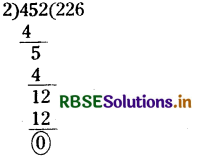
If sinhx = 3, then show that
x = loge(3 + √10) (Board New Model Paper).
Answer:
Given sin hx = 3
⇒ x = sinh-1 3 = loge (3 + \(\sqrt{3^2+1}\))
= loge (3 + √10)
(∵ sinh x = log (x + \(\sqrt{x^2+1}\)) ∀ x ∈ R)

Question 3.
Prove that
(i) tanh (x – y) = \(\frac{\tanh x-\tanh y}{1-\tanh x \tanh y}\)
Answer:
TS Inter 1st Year Maths 1A Solutions Chapter 9 Hyperbola Ex 9(a) 2

(ii) coth (x – y) = \(\frac{{coth} x \cdot {coth} y-1}{{coth} y-{coth} x}\)
Answer:
TS Inter 1st Year Maths 1A Solutions Chapter 9 Hyperbola Ex 9(a) 3

Question 4.
Prove that
(i) (cosh x – sinh x)n
= cosh (nx) – sinh (nx) for any n ∈R.
Answer:
TS Inter 1st Year Maths 1A Solutions Chapter 9 Hyperbola Ex 9(a) 4

(ii) (cosh x + sinh x)n = cosh (nx) + sinh (nx) for any n ∈ R.
Answer:
TS Inter 1st Year Maths 1A Solutions Chapter 9 Hyperbola Ex 9(a) 5

TS Inter 1st Year Maths 1A Solutions Chapter 9 Hyperbolic Functions Ex 9(a)

Question 5.
Prove that
\(\frac{\tanh x}{{sech} x-1}+\frac{\tanh x}{{sech} x+1}\) = -2cosechx for x ≠ 0.
Answer:
TS Inter 1st Year Maths 1A Solutions Chapter 9 Hyperbola Ex 9(a) 6

Question 6.
Prove that \(\frac{\cosh x}{1-\tanh x}+\frac{\sinh x}{1-{coth} x}\) = sinhx + coshx for x ≠ 0.
Answer:
TS Inter 1st Year Maths 1A Solutions Chapter 9 Hyperbola Ex 9(a) 7

Question 7.
For any x ∈ R, prove that cosh4 x – sinh4 x = cosh 2x.
Answer:
cosh4 x – sinh4 x
= (cosh2 x)2 – (sinh2 x)2
= (cosh2 x + sinh2 x) (cosh2 x – sinh2 x)
= cosh 2x (1) = cosh 2x

TS Inter 1st Year Maths 1A Solutions Chapter 9 Hyperbolic Functions Ex 9(a)

Question 8.
If u = loge \(\left\{\tan \left(\frac{\pi}{4}+\frac{\theta}{2}\right)\right\}\) and if cos θ > 0 then prove that cosh u = sec θ
Answer:
TS Inter 1st Year Maths 1A Solutions Chapter 9 Hyperbola Ex 9(a) 8

TS Inter 1st Year Chemistry Study Material Chapter 11 P బ్లాక్ మూలకాలు – 14వ గ్రూప్

Telangana TSBIE TS Inter 1st Year Chemistry Study Material 11th Lesson P బ్లాక్ మూలకాలు – 14వ గ్రూప్ Textbook Questions and Answers.

TS Inter 1st Year Chemistry Study Material 11th Lesson P బ్లాక్ మూలకాలు – 14వ గ్రూప్

అత్యంత లఘు సమాధాన ప్రశ్నలు

ప్రశ్న 1.
గ్రూపు 14 మూలకాల ఆక్సీకరణ స్థితులలో మార్పును చర్చించండి.
జవాబు:
14వ గ్రూపు మూలకాల బాహ్యతమ కర్పరంలో 4 ఎలక్ట్రానులు ఉన్నాయి. ఈ మూలకాలు కనబరచే సాధారణ ఆక్సీకరణ స్థితులు +4, + 2. కార్బన్ ఋణ ఆక్సీకరణ స్థితుల్ని కూడా చూపుతుంది.
+ 4 ఆక్సీకరణ స్థితిలో ఉన్న సమ్మేళనాలు సమయోజనీయ స్వభావం కలవిగా ఉంటాయి. భారతర మూలకాలలో +2 ఆక్సీకరణ స్థితిని చూపే ప్రవృత్తి పెరిగే క్రమం Ge < Sn < Pb. కార్బన్, సిలికాన్లు తరచుగా +4 ఆక్సీకరణ స్థితిని చూపుతాయి. జెర్మేనియం స్థిర సమ్మేళనాలను +4 స్థితిలో ఏర్పరుస్తుంది. టిన్ రెండు (+2, +4) ఆక్సీకరణ. స్థితులలోను సమ్మేళనాలను ఏర్పరుస్తుంది. లెడ్ సమ్మేళనాలు +2 స్థితిలో స్థిరమైనది.

ప్రశ్న 2.
క్రింది సమ్మేళనాలు నీటితో ఎలా ప్రవర్తిస్తాయి.
a) BCl3
b) CCl4
జవాబు:
a) BCl3 నీటితో చర్య పొంది H3BO3 ను ఏర్పరుస్తుంది.
BCl3 + 3 H2O → H3BO3 + 3HCl
b) CCl4 నీటితో చర్య పొందదు. నీటిలో కరుగదు. వేరే ప్రావస్థగా వుంటుంది.

TS Inter 1st Year Chemistry Study Material Chapter 11 P బ్లాక్ మూలకాలు – 14వ గ్రూప్

ప్రశ్న 3.
BCl3, SiCl4 ఎలక్ట్రాన్ కొరత ఉన్న సమ్మేళనాలా ? వివరించండి.
జవాబు:
BCl3 లో బోరాన్ బాహ్య కర్పరంలో ఎలక్ట్రాన్ అష్టకం లేదు. కనుక అది ఎలక్ట్రాన్ కొరత గల సమ్మేళనం.
SiCl4 లోని Si కు బాహ్య కర్పరంలో ఎలక్ట్రాన్ అష్టకం ఉన్నది. అది ఎలక్ట్రాన్ కొరత గల సమ్మేళనం కాదు.

ప్రశ్న 4.
క్రింది వాటిలో కార్బన్ సంకరీకరణాన్ని సూచించండి.
a) C\(\mathrm{O}_3^{-2}\)
b) వజ్రం
c) గ్రాఫైట్
d) పుల్లరీన్
జవాబు:
a) C\(\mathrm{O}_3^{-2}\) : …….. sp2 సంకరీకరణం
b) వజ్రం : ………… sp3 సంకరీకరణం
c) గ్రాఫైట్ : ……… sp2 సంకరీకరణం
d) పుల్లరీన్ : …….. sp2 సంకరీకరణం

ప్రశ్న 5.
CO ఎందుకు విషపూరితమైనది ? (March 2013)
జవాబు:
CO విషపూరితమైనది. అది రక్తంలోని హిమోగ్లోబిన్ తో కలిసి స్థిరమైన సంక్లిష్టం ఏర్పరుస్తుంది. అందువల్ల హీమోగ్లోబిన్
TS Inter 1st Year Chemistry Study Material Chapter 11 P బ్లాక్ మూలకాలు – 14వ గ్రూప్ 1
కార్బాక్సీ హిమోగ్లోబిన్ ఆక్సీహిమోగ్లోబిన్ కన్నా 300 రెట్లు అధిక స్థిరమైనది.

ప్రశ్న 6.
రూపాంతర (allotropy) అంటే ఏమిటి ? స్పటిక రూపంలోని కార్బన్ భిన్న రూపాంతరాలను తెలపండి. (March 2013)
జవాబు:
ఒకే మూలకం భిన్న భౌతిక రూపాలలో లభించుటను రూపాంతరత అంటారు.
కార్బన్ మూడు స్ఫటిక రూపాంతరాలలో లభిస్తోంది. అవి వజ్రం, గ్రాఫైట్, ఫుల్లరిన్.

ప్రశ్న 7.
కింది ఆక్సెడులను తటస్థ, ఆమ్ల, క్షార, ద్విస్వభావం గల వాటిగా వర్గీకరించండి.
a) CO
b) B2O3
c) SiO2
d) CO2
e) Al2O3
f) PbO2
g) Tl2O3
జవాబు:
a) CO – తటస్థ
b) B2O3 – ఆమ్ల
c) SiO2 – ఆమ్ల
d) CO2 – ఆమ్ల
e) Al2O3 – ద్విస్వభావ
f) PbO2 – ద్విస్వభావ
g) Tl2O3 – క్షార
e) Al2O3 – ద్విస్వభావ
f) PbO2 – ద్విస్వభావ
g) Tl2O3 – క్షార

TS Inter 1st Year Chemistry Study Material Chapter 11 P బ్లాక్ మూలకాలు – 14వ గ్రూప్

ప్రశ్న 8.
మనిషి (కృత్రిమంగా) తయారుచేసిన ఏవైనా రెండు సిలికేట్ల పేర్లు రాయండి.
జవాబు:

  1. గాజు
  2. సిమెంట

ప్రశ్న 9.
గ్రూపు 14 మూలకాల బాహ్య ఎలక్ట్రాన్ విన్యాసాన్ని రాయండి.
జవాబు:
గ్రూపు 14 మూలకాలు కార్బన్ (C); సిలికాన్ (Si); జెర్మేనియం (Ge); టిన్ (Sn) మరియు లెడ్ (Pb).
వాటి ఎలక్ట్రాన్ విన్యాసాలు :
కార్బన్ : 1s22s22p2 (Z = 6)
సిలికాన్ : 1s22s22p63s23p2 (Z = 14)
జెర్మేనియం : 1s22s22p63s23p63d104s24p2 (Z = 32)
టిన్ : 1s22s22p63s23p63d104s24p64d105s25p2 (Z = 50)
లెడ్ : 1s22s22p63s23p63d104s24p64d104f145s25p65d106s26p2 (Z = 82)
గ్రూపు 14 మూలకాల సాధారణ ఎలక్ట్రాన్ విన్యాసం ns2np2.

ప్రశ్న 10.
గ్రాఫైట్ కందెనలాగా ఎట్లా పనిచేస్తుంది ?
జవాబు:
గ్రాఫైట్ ద్వి జ్యామితీయ పొరల నిర్మాణం కలిగి ఉంటుంది. అంతేగాక ఈ పొరలు ఒకదానిపై ఒకటి జారుతూ ఉంటాయి. అందుకనే గ్రాఫైట్ కందెనగా పనిచేస్తుంది.

ప్రశ్న 11.
గ్రాఫైట్ మంచి వాహకం – వివరించండి.
జవాబు:
గ్రాఫైట్ ప్రతి కార్బన్ పరమాణువు వద్ద సంకరీకరణంలో పాల్గొనని p – ఆర్బిటాల్లో ఎలక్ట్రాన్ ఉంది. దీనినే స్వేచ్ఛా ఎలక్ట్రాన్ అంటారు. ఒక్కొక్క కార్బన్ పరమాణువు మూడు ఆసన్న కార్బన్ sp2 సంకర ఆర్బిటాల్లను ఉపయోగించుకొని మూడు సిగ్మా బంధాలను ఏర్పరుస్తుంది. నాలుగవ ఎలక్ట్రాన్ π బంధాన్ని ఏర్పరుస్తుంది. ఈ ఎలక్ట్రాన్లు మొత్తం పొర అస్థానీకృతం అవుతాయి. ఈ ఎలక్ట్రానులు చలనంలో ఉంటాయి. అందువల్ల గ్రాఫైట్ మంచి విద్యుద్వాహకం.

ప్రశ్న 12.
సిలికా నిర్మాణాన్ని వివరించండి.
జవాబు:
సిలికాన్ డై ఆక్సైడును సిలికా అంటారు. సిలికాన్ డై ఆక్సైడ్ సమయోజనీయ, త్రిమితీయ అల్లిక గల ఘనం. ఇందులో సిలికాన్ పరమాణువు సమయోజనీయ బంధంతో టెట్రా హెడ్రల్ రీతిలో నాలుగు ఆక్సిజన్ పరమాణువులతో కలిసి ఉంటుంది. ప్రతి ఆక్సిజన్ పరమాణువు ఇంకొక సిలికాన్ పరమాణువుతో సమయోజనీయ బంధంతో ఉంటుంది. మొత్తం స్ఫటికాన్ని బృహత్ అణువుగా భావించవచ్చు.
TS Inter 1st Year Chemistry Study Material Chapter 11 P బ్లాక్ మూలకాలు – 14వ గ్రూప్ 2

ప్రశ్న 13.
“సంశ్లేషణ వాయువు” అంటే ఏమిటి ?
జవాబు:
వేడిగానున్న కోక్ మీదకు నీటి ఆవిరిని పంపడం ద్వారా వ్యాపార పద్ధతిలో CO, H2 ల మిశ్రమాన్ని తయారుచేస్తారు. ఏర్పడిన CO, H2 ల మిశ్రమాన్ని సంశ్లేషణ వాయువు అంటారు.

ప్రశ్న 14.
“ప్రొడ్యూసర్ వాయువు” అంటే ఏమిటి ?
జవాబు:
CO, N2 ల మిశ్రమాన్ని ప్రొడ్యూసర్ గ్యాస్ అంటారు. దీని సంఘటనం CO = 33%, N2 = 64%, CO2 మరియు
H2 = 2.5%

ప్రశ్న 15.
వజ్రానికి అధిక ద్రవీభవన ఉష్ణోగ్రత ఉంటుంది. వివరించండి.
జవాబు:
వజ్రం త్రిజ్యామితీయ బృహదణు నిర్మాణం కలిగి ఉంటుంది. ప్రతి కార్బన్ sp3 సంకరీకరణం చెందుతుంది. ప్రతి కార్బన్ నాలుగు ఇతర కార్బన్ పరమాణువులతో sp3 సంకర ఆర్బిటాళ్ళతో బంధాలను ఏర్పరుస్తుంది. ఈ నిర్మాణం ప్రాదేశికంగా వ్యాపించి కార్బన్ పరమాణువులతో దృఢమైన త్రిమితీయ అల్లికను ఏర్పరుస్తుంది. ఇలా వ్యాపించి ఉన్న సమయోజనీయ బంధాలను విచ్ఛిన్నం చేయడం చాలా శక్తితో కూడుకున్న పని. అందువల్ల వజ్రానికి అధిక ద్రవీభవన ఉష్ణోగ్రత ఉంటుంది.

ప్రశ్న 16.
కిరణజన్య సంయోగ క్రియలో CO2 పాత్ర ఏమిటి ?
జవాబు:
కిరణజన్య సంయోగక్రియ ద్వారా పచ్చటి చెట్లు వాతావరణంలోని కార్బన్ డై ఆక్సైడ్ను గ్లూకోజ్ వంటి కార్బోహైడ్రేటులుగా మారుస్తాయి.
TS Inter 1st Year Chemistry Study Material Chapter 11 P బ్లాక్ మూలకాలు – 14వ గ్రూప్ 3

ప్రశ్న 17.
హరిత గృహ ప్రభావాన్ని ఏ విధంగా CO2 పెంచుతుంది ?
జవాబు:
శిలాజ ఇంధనాల దహనం పెరగడం, సిమెంట్ను ఉత్పత్తి చేయడానికి ఇటీవలి కాలంలో లైమ్ స్టోన్ వినియోగం బాగా పెరగడం వల్ల వాతావరణంలో CO2 భాగం పెరుగుతోంది. దీనివల్ల హరితగృహ ఫలితం పెరుగుతోంది.

ప్రశ్న 18.
సిలికోన్లు అంటే ఏమిటి ?
జవాబు:
సిలికోన్లు ఆర్గానో సిలికాన్ సమ్మేళనాలు. వీటిలో సిలికాన్ కు ఆక్సిజన్, కార్బన్లు బలంగా బంధింపబడి ఉంటాయి.
TS Inter 1st Year Chemistry Study Material Chapter 11 P బ్లాక్ మూలకాలు – 14వ గ్రూప్ 4

ప్రశ్న 19.
సిలికోన్ల ఉపయోగాలు వ్రాయండి.
జవాబు:
సిలికోన్ల ఉపయోగాలు :

  1. వాటర్ ఫ్రూఫ్ బట్టలు, కాగితాలను తయారుచేయడానికి వాడతారు.
  2. సిలికోన్ రబ్బరు ఉత్తమ విద్యున్నిరోధకం. అందువల్ల ఎలక్ట్రికల్ మోటార్లలో ఉపయోగిస్తారు.
  3. వీటికి రసాయన జడత్వం ఉన్నది. అందువలన అధిక ఉష్ణోగ్రతలను తట్టుకుంటాయి. ఈ కారణంగా వాటిని పెయింట్లలోనూ, పింగాణీలలోనూ ఉపయోగిస్తారు.
  4. ద్రవ సిలికోన్ల స్నిగ్ధత ఉష్ణోగ్రతతో మారదు. -40°C వద్ద కూడ ఇవి గడ్డ కట్టవు. అందువలన వీటిని విమానాలలో కందెనగా వాడతారు.
  5. సిలికోన్ నూనెలు అధిక స్థిరత్వం కలిగి ఉంటాయి. వేడిచేసినా కూడా ఆవిరి చెందవు. అందువలన వాటిని అధిక ఉష్ణోగ్రతల వద్ద ఆయిల్ బాథ్ మరియు అధిక శూన్యత పంపులలోనూ వాడతారు.

ఈ విధంగా ఆధునిక యుగంలో సిలికోన్లను అన్ని రంగాలలో వాడతారు.

ప్రశ్న 20.
తగరం (టిన్) మీద నీటి ప్రభావం ఏమిటి ?
జవాబు:
టిన్ నీటి ఆవిరిని వియోగం చెందించి డై ఆక్సైడు, డై హైడ్రోజన్లను ఏర్పరుస్తుంది.
TS Inter 1st Year Chemistry Study Material Chapter 11 P బ్లాక్ మూలకాలు – 14వ గ్రూప్ 5

TS Inter 1st Year Chemistry Study Material Chapter 11 P బ్లాక్ మూలకాలు – 14వ గ్రూప్

ప్రశ్న 21.
SiCl4 గురించి వ్రాయండి.
జవాబు:
సిలికాన్ టెట్రా క్లోరైడును సిలికాన్పై క్లోరిన్ చర్యవల్ల ఏర్పడుతుంది.
Si + 2Cl2 – SiCl4
SiCl4 బాష్పశీలి ద్రవం. నీటి అణువు ఇచ్చే ఒంటరి ఎలక్ట్రాన్ జంటను Si లోని d ఆర్బిటాల్ స్వీకరించి Si(OH)4 ఏర్పడుతుంది.
TS Inter 1st Year Chemistry Study Material Chapter 11 P బ్లాక్ మూలకాలు – 14వ గ్రూప్ 6

ప్రశ్న 22.
CO2 వాయువు కానీ SiO2 ఘనపదార్థం – వివరించండి.
జవాబు:
సిలికాన్ డై ఆక్సైడ్ త్రిమితీయ బృహదణు నిర్మాణం కలిగి ఉంటుంది. ప్రతి సిలికాన్ పరమాణువు నాలుగు ఆక్సిజన్ పరమాణువులతో చతుర్ముఖీయంగా నాలుగు సమయోజనీయ బంధాలతో బంధింపబడి ఉంటుంది. అందువలన SiO2 ఘనపదార్థంగా ఉంటుంది.

CO2 రేఖీయ అణువు. ఈ అణువులు విడివిడిగా ఉంటాయి. ఈ అణువుల మధ్య వాన్ డర్వాల్ బలాలు ఉంటాయి. అందువలన CO2 వాయువుగా ఉంటుంది.

ప్రశ్న 23.
ZSM – 5 ఉపయోగం వ్రాయండి.
జవాబు:
జియొలైట్లను ఉత్ప్రేరకాలుగా వాడతారు. ZSM-5 అనే జియోలైట్ను ఆల్కహాల్లను నేరుగా గాసోలిన్ మార్చడానికి ఉపయోగిస్తారు.

ప్రశ్న 24.
పొడి మంచు ఉపయోగం ఏమిటి ?
జవాబు:
ఘన CO2 ను పొడి మంచు అంటారు. ఐస్క్రీమ్, అతిశీతలమైన ఆహారపదార్థాల కోసం ప్రశీతకంగా ఉ పయోగిస్తున్నారు. బరువైనదీ, దహనానికి దోహదపడేదీ కనుక దీనిని మంటలను ఆర్పడానికి వాడతారు.

ప్రశ్న 25.
జలవాయువు (Water gas) ను ఎలా తయారుచేస్తారు ?
జవాబు:
వేడిగా నున్న కోక్ మీదకు నీటి ఆవిరిని పంపుట ద్వారా వ్యాపార పద్ధతిలో జలవాయువును తయారుచేస్తారు.
TS Inter 1st Year Chemistry Study Material Chapter 11 P బ్లాక్ మూలకాలు – 14వ గ్రూప్ 7

ప్రశ్న 26.
ప్రొడ్యూసర్ వాయువును ఎలా తయారుచేస్తారు ?
జవాబు:
కొలిమిని కోక్తో నింపి, దాని అడుగు భాగం నుండి వేడి గాలిని పంపుతారు. మొదట CO2 వాయువు ఏర్పడుతుంది.
CO2 కోల్ బెడ్ మీదుగా ప్రయాణించి CO గా క్షయకరణం చెందుతుంది.
CO, N2 ల మిశ్రమం బయటకు వస్తుంది.
C + O2 → CO2
C + O2 → 2CO

ప్రశ్న 27.
గ్రాఫైట్లో C − C బంధ దూరం, వజ్రంలో C – C బంధ దూరం కంటే తక్కువ – వివరించండి.
జవాబు:
గ్రాఫైట్ కార్బన్ C – C బంధ దూరం 141.5 pm గ్రాఫైట్లో కార్బన్ sp2 సంకరీకరణం చెంది ఉంటుంది. అందువల్ల మూడు సిగ్మా బంధాలను ఏర్పరుస్తుంది. నాల్గవ ఎలక్ట్రాన్ 7 బంధాన్ని ఏర్పరుస్తుంది. ద్విబంధ స్వభావం వల్ల C – C బంధ దూరం తక్కువ.
వజ్రంలో కార్బన్ sp3 ఆర్బిటాళ్ళతో C – C ఏకబంధాలను మాత్రమే ఏర్పరుస్తుంది. అందువల్ల C – C బంధ దూరం 154 pm.

ప్రశ్న 28.
వజ్రాన్ని అమూల్యమైన రాయిగా వాడతారు – వివరించండి.
జవాబు:
వజ్రానికి వక్రీభవన గుణకం గరిష్ఠంగా 2.45 ఉన్నది. కాంతి పతనమైనపుడు అధిక వక్రీభవన గుణకం వల్ల సంపూర్ణాంతర పరావర్తనం జరుగుతుంది. అందువల్ల వజ్రం కాంతి పడినపుడు ప్రకాశిస్తుంది. అందువల్ల వజ్రాన్ని అమూల్య రాయిగా వాడతారు.

ప్రశ్న 29.
కార్బన్ సంయోజకత నాలుగు కంటే ఎక్కువ ఎప్పుడూ చూపించదు. కానీ ఆ కుటుంబంలో మిగతా మూలకాలు
సంయోజకత ఆరు వరకు చూపిస్తాయి – వివరించండి.
జవాబు:
కార్బన్ బాహ్య కర్పరం 2వ కర్పరం. దీనిలో d ఆర్బిటాళ్ళు ఉండవు. అందువల్ల బాహ్య కర్పరంలో నాలుగు ఎలక్ట్రానులను ఉపయోగించుకొని నాలుగు బంధాలను మాత్రమే ఏర్పరుస్తుంది. కావున కార్బన్ సంయోజకత నాలుగుకు మించదు. మిగిలిన 14వ గ్రూపు మూలకాలు బాహ్య స్థాయిలో ఖాళీ d ఆర్బిటాళ్ళు అందుబాటులో ఉన్నాయి. అందువల్ల అవి ఎలక్ట్రాన్ జంటలను స్వీకరించగలవు. అధిక సమన్వయ సంఖ్యను చూపించగలవు.

ప్రశ్న 30.
ప్రొడ్యూసర్ వాయువు, జల వాయువు కంటె తక్కువ సామర్థ్యం గల ఇంధనం – వివరించండి.
జవాబు:
ప్రొడ్యూసర్ వాయువులో 33% CO మరియు 65% N2 ఉన్నాయి. నైట్రోజన్ దహనశీలి కాదు. అందువల్ల దాని కెలోరిఫిక్ విలువ 5439 కి.జౌ./మీ3.
జలవాయువులో CO మరియు H2 లు దహనశీలి వాయువులు. అందువల్ల జలవాయువులో దహనం చెందగల వాయువుల శాతం ఎక్కువ. దాని కెలోరిఫిక్ విలువ 13,000 కి.జౌ./మీ3.

ప్రశ్న 31.
Si\(F_6^{-2}\) తెలుసు కాని SiC\(l_6^{-2}\) తెలియదు వివరించండి.
జవాబు:

  1. Si+ అయాన్ సైజు పరిమితి వల్ల దాని చుట్టూ ఆరు పెద్ద క్లోరైడు అయాన్లకు సరిపడినంత చోటు లేకపోవుట.
  2. క్లోరైడు అయాన్ ఒంటరి జంట, si4+ ల మధ్య అన్యోన్య చర్య బలహీనమైనది.

లఘు సమాధాన ప్రశ్నలు

ప్రశ్న 32.
నిర్మాణాల ఆధారంగా వజ్రం, గ్రాఫైట్ల ధర్మాలలో తేడాలను వివరించండి.
జవాబు:
గ్రాఫైట్ :

1) గ్రాఫైట్ మృదువుగా వుండి, జారుడు స్వభావం కలిగి ఉంటుంది. కందెనగా ఉపయోగించవచ్చు.
కారణం : గ్రాఫైట్ ని ప్రంతి కార్బన్ (0 సంకరీకరణం చగ్రాఫైట్ పొరల నిర్మాణం కలిగి ఉండి, ఆ పొరలు ఒకదానిపై ఒకటి బలహీన వాండర్ వాల్ బలాలచే బంధించబడి ఉంటాయి. అందువల్లనే, ఒత్తిడి కలుగచేసినపుడు ఆ పొరలు ఒకదానిపై ఒకటి జారుతాయి. అందువలననే గ్రాఫైట్ మృదువుగా ఉంటుంది. కందెనగా ఉపయోగిస్తారు.

2) గ్రాఫైట్ ఉత్తమ ఉష్ణ వాహకం.
కారణం : గ్రాఫైట్లో స్వేచ్ఛా ఎలక్ట్రాన్ ఉంది. అది π బంధాన్ని ఏర్పరుస్తుంది. ఈ ఎలక్ట్రానులు మొత్తం పొర అంతా అస్థానీకృతం అవుతాయి. ఈ ఎలక్ట్రానులు చలనంలో ఉంటాయి. అందువల్ల గ్రాఫైట్ మంచి విద్యుద్వాహకం.

వజ్రం :

1) వజ్రం కఠినంగా ఉండి అరగదీసే రాయిగా పనిచేస్తుంది.
కారణం : వజ్రంలోని ప్రతి కార్బన్ sp3 సంకరీకరణం చెంది వుంటుంది. ప్రతి కార్బన్ నాలుగు ఇతర కార్బన్లతో sp3 – sp3 అతిపాతాల ద్వారా బలమైన బంధాలను ఏర్పరచడం వల్ల త్రిమితీయ బృహదణు నిర్మాణాన్ని పొందుతుంది. ఈ బంధాలను ఛేదించుట కష్టం. అందువల్ల వజ్రం కఠినం.

2) వజ్రం ఉష్ణ వాహకం కాదు.
కారణం : వజ్రంలోని కార్బన్ల వద్ద స్వేచ్ఛా ఎలక్ట్రానులు లేవు.
డైమండ్ మరియు గ్రాఫైట్ మధ్య భేదాలు :
TS Inter 1st Year Chemistry Study Material Chapter 11 P బ్లాక్ మూలకాలు – 14వ గ్రూప్ 8

ప్రశ్న 33.
క్రింది వాటిని వివరించండి.
a) PbCl2, Cl2 తో చర్య జరిగి, PbCl4 ఇస్తుంది
b) PbCl4 ఉష్ణ అస్థిర పదార్ధం
c) లెడ్ PbI4 ను ఏర్పరచదు
జవాబు:
a) PbCl2 లో Pb + 2 ఆక్సీకరణ స్థితిలో ఉన్నది. Cl2 బలమైన ఆక్సీకారిణి. అందువల్ల అది Pb+2 ను Pb+4 గా
ఆక్సీకరణం చేస్తుంది. కనుక PbCl2 ను Cl2, PbCl4 గా ఆక్సీకరణం చేస్తుంది.

b) జడ ఎలక్ట్రాన్ జంట ప్రభావం కారణంగా Pb++, Pb++++ కన్నా స్థిరమైనది. అంటే PbCl2, PbCl4 కన్నా స్థిరమైనది. అందువల్ల వేడి చేసినపుడు PbCl4 ను వేడి చేస్తే Cl2 ను కోల్పోయి PbCl2 గా మారుతుంది.
c) Pb+4 జడ ఎలక్ట్రాన్ జంట ప్రభావం కారణంగా అస్థిరం. అందువల్ల Pb+4 మంచి ఆక్సీకారిణి. I మంచి క్షయకారిణి. అందువల్ల Pb+4 ను Pb+2 గా క్షయీకరిస్తుంది. అందువల్ల PbI4 ఏర్పడదు.

TS Inter 1st Year Chemistry Study Material Chapter 11 P బ్లాక్ మూలకాలు – 14వ గ్రూప్

ప్రశ్న 34.
క్రింది వాటిని వివరించండి.
a) సిలికాన్ను మిథైల్ క్లోరైడ్తో కాపర్ సమక్షంలో అత్యధిక ఉష్ణోగ్రత వద్ద వేడి చేయబడింది.
b) SiO2 ను HF తో చర్య జరపడం
c) గ్రాఫైట్ కందెనగా పనిచేస్తుంది
d) వజ్రం అపఘర్షకంగా ఉంటుంది.
జవాబు:
a) 573K వద్ద కాపర్ ఉత్ప్రేరకం సమక్షంలో మిథైల్ క్లోరైడ్ను సిలికాన్ పైకి పంపితే అనేక రకాలైన మిథైల్ ప్రతిక్షేపిత క్లోరో సైలేనులు, Me SiCl3, Me2, SiCl2, Me3, SiCl చాలా తక్కువ పరిమాణంలో Me4 Si ఏర్పడతాయి.
TS Inter 1st Year Chemistry Study Material Chapter 11 P బ్లాక్ మూలకాలు – 14వ గ్రూప్ 9

b) SiOn ను HF తో చర్య జరపడం
SiO2 + 4HF → SiF4 + 2H2O
సిలికా HF లో కరిగి Silicon టెట్రా ఫ్లోరైడ్ను ఏర్పరుస్తుంది.

c) గ్రాఫైట్ ద్విజ్యామితీయ పొరల నిర్మాణం కలిగి ఉంటుంది. అంతేగాక, ఈ పొరలు ఒకదానిపై ఒకటి జారుతూ ఉంటాయి. అందుకనే గ్రాఫైట్ కందెనగా పనిచేస్తుంది.

d) వజ్రం త్రిజ్యామితీయ బృహదణు నిర్మాణం కలిగి ఉంటుంది. దీనిలో ప్రతి కార్బన్ పరమాణువు నాలుగు వేరు వేరు కార్బన్లతో బలమైన ఏకబంధాలతో బంధింపబడి ఉంటుంది. అందువల్ల వజ్రం కఠిన పదార్థం. అందువల్ల అపఘర్షకంగా ఉంటుంది.

ప్రశ్న 35.
మీరేమి అర్ధం చేసుకొన్నారు :
a) రూపాంతరత
b) జడజంట ప్రభావం
c) శృంఖలత్వం (catination)
జవాబు:
a) రూపాంతరత : ఒకే మూలకం రెండు లేక అంతకన్నా ఎక్కువ భౌతిక రూపాలలో లభించడాన్ని రూపాంతరత అంటారు.
డైమండ్, గ్రాఫైట్లు, కార్బన్ స్ఫాటిక రూపాంతరాలు. కోక్, కోల్, అస్ఫాటిక రూపాంతరాలు.

b) జడజంట ప్రభావం : బాహ్య కర్పరంలో ns2 ఎలక్ట్రాన్ జంట. బంధాలు ఏర్పరచడంలో పాల్గొనకపోవడాన్ని జడజంట ప్రభావం అంటారు. ఈ ప్రభావం కారణంగా తక్కువ విలువ గల ఆక్సీకరణ స్థితి అధిక ఆక్సీకరణ స్థితి కన్నా స్థిరమైనదిగా ఉంటుంది. ఒక గ్రూపు మూలకాలలో పైనుండి క్రిందకు, అల్ప ఆక్సీకరణ స్థితి స్థిరత్వం
పెరుగుతుంది.
13వ గ్రూపు మూలకాలలో +3 సాధారణ ఆక్సీకరణ స్థితి కాగా Tl లో +1 స్థితి స్థిరమైనది. అదే విధంగా 14వ గ్రూపు మూలకాలలో +4 సాధారణ ఆక్సీకరణ స్థితి కాగా Pb లో +2 స్థితి స్థిరమైనది.

c) శృంఖలత్వం :
ఏదేని మూలక పరమాణువులు తమలో తాము గొలుసుకట్టుగా ఏర్పడే స్వభావాన్ని శృంఖలత్వం అంటారు. ఈ ధర్మం కార్బన్కు అధికం. అందువల్ల కార్బన్ గొలుసులు, వలయాలు ఏర్పడతాయి.
TS Inter 1st Year Chemistry Study Material Chapter 11 P బ్లాక్ మూలకాలు – 14వ గ్రూప్ 10

ప్రశ్న 36.
సిలికోన్ల తయారీలో RSiCl3 ప్రారంభ పదార్థంగా వాడితే తయారైన క్రియాజన్యాల నిర్మాణాలను రాయండి.
జవాబు:
R SiCl3 + 3H2O → R Si (OH)3
జలవిశ్లేషణ ఉత్పన్నం సంఘననం చెందితే త్రిజ్యామితీయ సిలికోన్ ఏర్పడుతుంది.
TS Inter 1st Year Chemistry Study Material Chapter 11 P బ్లాక్ మూలకాలు – 14వ గ్రూప్ 11

ప్రశ్న 37.
జియొలైట్ల మీద సంక్షిప్తంగా రాయండి.
జవాబు:
అల్యూమినియం సిలికేటులను జియొలైట్లు అంటారు. త్రిమితీయంగా అల్లిక గల సిలికాన్ డై ఆక్సైడ్లో కొన్ని సిలికాన్ పరమాణువులను అల్యూమినియం పరమాణువులు స్థానభ్రంశం చేస్తే అల్యూమినియం సిలికేట్లు ఏర్పడతాయి. దీనికి రుణావేశం ఉంటుంది. Na+, K+ లేదా Ca++ కేటయాన్లు రుణావేశాన్ని తుల్యం చేస్తాయి.

ఉదా : ఫెల్డ్స్పర్ జియొలైటులు. పెట్రో కెమికల్ పరిశ్రమల్లో హైడ్రోకార్బన్లను భంజనం చేయడానికి, వాటి సాదృశీకరణ చర్యలకు జియొలైట్లను ఉత్ప్రేరకాలుగా విస్తృతంగా వాడతారు. ఉదా : ZSM-5 ఆల్కహాల్లను నేరుగా గాసోలీన్ గా మార్చడానికి ఉపయోగిస్తారు. కఠినజలం కఠినత్వాన్ని తగ్గించడానికి ఆర్ద్ర జియొలైట్లను అయాన్ వినిమయాలుగా ఉపయోగిస్తారు.

ప్రశ్న 38.
సిలికేట్ల మీద సంక్షిప్తంగా వ్రాయండి.
జవాబు:
సిలికేట్ల మూల నిర్మాణాత్మక యూనిట్ Si\(\mathrm{O}_4^{4-}\). ఇందులో సిలికాన్ పరమాణువు నాలుగు ఆక్సిజన్ పరమాణువులతో టెట్రాహెడ్రల్ రీతిలో బంధంలో కలిసి ఉంటాయి. సిలికేట్లలో ఆక్సిజన్ పరమాణువులను ఇతర యూనిట్లతో పంచుకోవడం ద్వారా శృంఖల, వలయ, షీట్ లేదా త్రిమితీయ నిర్మాణాలు ఏర్పడవచ్చు.

సిలికేట్ యూనిట్లలో రుణావేశం ధనావేశం గల లోహ అయానులతో తటస్థీకరించబడుతుంది. ఒకవేళ, యూనిట్ యొక్క నాలుగు మూలలు ఇతర టెట్రాహెడ్రల్ యూనిట్లతో పంచుకుంటే త్రిమితీయ అల్లిక నిర్మాణాన్ని పొందుతుంది.
TS Inter 1st Year Chemistry Study Material Chapter 11 P బ్లాక్ మూలకాలు – 14వ గ్రూప్ 12

ప్రశ్న 39.
సిలికోన్లు అంటే ఏమిటి ? అవి ఏ విధంగా పొందుతారు ?
జవాబు:

  1. సిలికోన్లు ఆర్గానో సిలికాన్ తరగతికి చెందిన అణుపుంజాలు.
  2. సిలికోన్లలో అనేక పర్యాయాలు పునరావృతమయ్యే R2SiO – యూనిట్ ఉంది.
  3. సిలికోన్ల తయారీకి ఆల్కైల్ లేదా ఎరైల్ ప్రతిక్షేపిత సిలికాన్ క్లోరైడులు Rn SiCl(4-n) ప్రారంభ పదార్థాలు. ఇందులో R ఆల్కైల్ లేదా ఎరైల్ సమూహం.
  4. 573 K వద్ద కాపర్ ఉత్ప్రేరకం సమక్షంలో మిథైల్ క్లోరైడును సిలికాన్ పైకి పంపితే అనేక రకాలైన మిథైల్ ప్రతిక్షేపిత క్లోరో సినులు ఏర్పడతాయి.
  5. డైమిథైల్ క్లోరో సిలేన్ (CH3)2 SiCl2 జలవిశ్లేషణం చెందగా ఏర్పడిన ఉత్పన్నాలు సంఘననం చెంది పొడవైన గొలుసుల అణుపుంజాలు ఇస్తాయి.

TS Inter 1st Year Chemistry Study Material Chapter 11 P బ్లాక్ మూలకాలు – 14వ గ్రూప్ 13
అణుపుంజీకరణం వల్ల గొలుసు ఏర్పడుతుంది.
TS Inter 1st Year Chemistry Study Material Chapter 11 P బ్లాక్ మూలకాలు – 14వ గ్రూప్ 14

ఉపయోగాలు :

  1. వీటిని సీల్ వేసే పదార్థాలుగా, గ్రీజులుగా, విద్యుత్ బంధకాలుగాను
  2. బట్టలపై జలనిరోధకంగా ఉపయోగిస్తారు.
  3. శస్త్ర చికిత్స సంబంధమైన, సౌందర్య సాధన ద్రవ్యాల తయారీ పరిశ్రమలలో వాడతారు.

ప్రశ్న 40.
ఫుల్లరీన్ మీద సంక్షిప్తంగా వ్రాయండి.
జవాబు:
ఫుల్లరీన్ కార్బన్ స్ఫాటిక రూపాంతరం
తయారుచేయుట : జడవాయువులైన హీలియం లేదా ఆర్గాన్ల సమక్షంలో గ్రాఫైట్ను విద్యుచ్ఛాపంతో వేడి చేసిన ఫుల్లరీన్ తయారవుతుంది.

బాష్పీభవనం చెందిన Cn చిన్న అణువులు ఘనీభవించడం వల్ల వచ్చిన మసిలాంటి పదార్థంలో ముఖ్యంగా C60 తక్కువ పరిమాణంలో C70 ఉంటాయి. కార్బన్ పరమాణువులు 350 ఆ పైన ఫుల్లరిన్లు లేశమాత్రం ఉంటాయి.

ఫుల్లరీన్లు పంజరాన్ని పోలిన అణువులు. C60 అణువుకు సాకర్ బంతిని పోలిన నిర్మాణం ఉండటం వల్ల దీనిని బక్ మినిష్టర్ ఫుల్లరీన్ అంటారు. దీనిలో ఆరు కార్బన్లున్న వలయాలు ఇరవై, ఐదు కార్బన్లున్న వలయాలు పన్నెండు ఉంటాయి. ఆరు కార్బన్ల వలయం ఆరు కార్బన్ల వలయం లేదా అయిదు కార్బన్ల వలయంతో సంలీనం చెందుతాయి. కానీ అయిదు కార్బన్ల వలయాలు ఆరు కార్బన్ల వలయాలతో మాత్రమే సంలీనం చెందుతాయి. అన్ని కార్బన్లు sp2 సంకరీకరణం చెంది ఉంటాయి.

ప్రతి కార్బన్ ఆసన్న కార్బన్లతో మూడు సిగ్మా బంధాలను ఏర్పరుస్తుంది. మిగిలిన ఎలక్ట్రాన్ అణు ఆర్బిటాల్ తో అస్థానీకృతమయి అణువుకు ఎరోమాటిక్ స్వభావం చేకూరుస్తుంది. ఈ బంతి ఆకృతి గల అణువుకు 60 శీర్షాలు ఉన్నాయి. ప్రతి శీర్షంను ఒక కార్బన్ పరమాణువు ఆక్రమించి ఉంటుంది. ఈ కార్బన్లకు ఏక, ద్విబంధాలు రెండు ఉండి C – C బంధ దూరాలు 143.5 pm, 138.3 pm లు ఉంటాయి.

TS Inter 1st Year Chemistry Study Material Chapter 11 P బ్లాక్ మూలకాలు – 14వ గ్రూప్

ప్రశ్న 41.
SiO2 నీటిలో ఎందుకు కరగదు ?
జవాబు:
సిలికాన్ డై ఆక్సెడ్ సమయోజనీయ, త్రిమితీయ అల్లిక గల ఘనం. ఇందులో సిలికాన్ పరమాణువు సమయోజనీయ బంధంతో టెట్రాహెడ్రల్ రీతిలో నాలుగు ఆక్సిజన్ పరమాణువులతో కలిసి ఉంటుంది.
సాధారణ స్థితిలో సిలికా దాదాపు చర్యాశీలత లేనిది. ఎందుకంటే Si – O బంధ ఎంథాల్పీ చాలా ఎక్కువ. అందువల్లనే అది నీటిలో కరగదు.

ప్రశ్న 42.
వజ్రం కఠినంగా ఎందుకు వుంటుంది ?
జవాబు:
డైమండ్ ప్రతి కార్బన్ sp3 సంకరీకరణం చెందుతుంది. ప్రతి కార్బన్ నాలుగు ఇతర కార్బన్ పరమాణువులతో sp3 సంకర ఆర్బిటాల్లను టెట్రా హెడ్రల్ రీతిలో ఉపయోగించుకొని బంధాలను ఏర్పరుస్తుంది. ఈ నిర్మాణం ప్రాదేశికంగా వ్యాపించి కార్బన్ పరమాణువులతో దృఢమైన త్రిమితీయ అల్లికను ఏర్పరుస్తుంది. ఇలా వ్యాపించి వున్న సమయోజనీయ బంధాలను విచ్ఛిన్నం చేయడం చాలా శక్తితో కూడుకున్న పని. అందువల్ల డైమండ్ (వజ్రం) కఠినమైనది.
TS Inter 1st Year Chemistry Study Material Chapter 11 P బ్లాక్ మూలకాలు – 14వ గ్రూప్ 15

ప్రశ్న 43.
కింది వాటిని వేడి చేసినపుడు ఏమి జరుగుతుంది ?
a) CaCO3
b) CaCO3, SiO2
c) CaCO3 అధికంగా కోక్
జవాబు:
a) కాల్షియం కార్బొనేటు విఘటనం చెంది CO2 విడుదలవుతుంది.
CaCO3 (ఘ) → CaO (ఘ) + CO2 (వా)

b) CaCO3 మరియు SiO2
CaCO3 విఘటనం చెందినపుడు ఏర్పడిన CaO తో SiO2 చర్యపొంది కాల్షియం సిలికేటు ఏర్పడుతుంది.
CaCO3 → CaO + CO2
CaO + SiO2 → CaSiO3

c) CaCO3 విఘటనం వల్ల ఏర్పడిన CaO తో కోక్ చర్య పొందుతుంది. కాల్షియం కార్బైడ్ ఏర్పడుతుంది.
CaCO3 → CaO + CO2
TS Inter 1st Year Chemistry Study Material Chapter 11 P బ్లాక్ మూలకాలు – 14వ గ్రూప్ 16

ప్రశ్న 44.
Na2CO3 ద్రావణాన్ని CO2 వాయువులో సంతృప్తం చేస్తే అవలంబనం అవుతుంది. ఎందువల్ల ?
జవాబు:
నీటిలో సోడియం బైకార్బొనేటు అల్పద్రావణీయత గలది. స్వల్పంగా కరుగుతుంది. దీనికి బై కార్బొనేటు అయాన్లు హైడ్రోజన్ బంధాల వల్ల పొలిమరీకరణం చెంది ఉంటుంది. Na2CO3 ద్రావణంలోని CO2 ను పంపితే అల్ప ద్రావణీయత కల సోడియం బై కార్బొనేటు ఏర్పడుతుంది. అందువల్ల NaHCO3 అవలంబనం చెందుతుంది.
Na2CO3 + H2O + CO2 → 2 NaHCO3

ప్రశ్న 45.
ఈ క్రింది చర్యలలో ఏమి జరుగుతుంది ?
a) తడిసున్నం ద్వారా CO2ను పంపడం
b) CaC2 ను N2 తో వేడిచేయడం
జవాబు:
a) తడిసున్నంలోనికి CO2 ను పంపితే నీటిలో కరగని CaCO3 ఏర్పడుతుంది. ద్రావణం పాలవలె మారుతుంది.
Ca(OH)2 + CO2 → CaCO3 + H2O + CO2
CO2 అధికంగా పంపితే కాల్షియం బైకార్బొనేటు ఏర్పడుతుంది. అందువల్ల CaCO3 కరుగుతుంది.
CaCO3 + H2O + CO2 → Ca(HCO3)2
Ca(HCO3)2 నీటిలో కరుగుతుంది.

b) వేడి చేసిన CaC2 మీదికి నైట్రోజన్ వాయువును పంపితే కాల్షియం సైనమైడ్ మరియు గ్రాఫైట్ల మిశ్రమం ఏర్పడుతుంది.
CaC2 + N2 → Ca CN2 + C
కాల్షియం సైనమైడ్, గ్రాఫైట్ల మిశ్రమాన్ని నైట్రోలిమ్ అంటారు.

ప్రశ్న 46.
గ్రూపు 14 లో కార్బన్ అసంగత స్వభావాన్ని గురించి వ్రాయండి.
జవాబు:
ఒక గ్రూపులోని మొదటి మూలకం మిగిలిన మూలకాల కంటే భిన్న ధర్మాలను చూపుతుంది. కార్బన్ కూడా గ్రూపులోని మిగిలిన మూలకాలతో పోలిస్తే భిన్నంగా ప్రవర్తిస్తుంది. దీనికి కారణం కార్బన్కు గల తక్కువ పరిమాణం, అధిక ఋణ విద్యుదాత్మకత, అధిక అయనీకరణ ఎంథాల్పీ, d – ఆర్బిటాళ్ళు లేకపోవటం.

  1. కార్బన్ ప్రకృతిలో స్వేచ్ఛా స్థితిలో లభిస్తుంది. మిగతా మూలకాలు ప్రకృతిలో స్వేచ్ఛా స్థితిలో దాదాపుగా దొరకవు.
  2. కార్బన్లో అందుబాటులో ఉండే d – ఆర్బిటాళ్ళు ఉండవు. మిగతా మూలకాలలో d – ఆర్బిటాళ్ళు అందుబాటులో ఉంటాయి.
  3. కార్బన్ అలోహం. దీని పరమాణు సైజు చాలా చిన్నది. అందువలన ఇది అధిక కోవలంటే స్వభావం ఉన్న సమ్మేళనాలను ఇస్తుంది.
  4. కార్బన్ కెటనేషన్ అనే విశిష్ట లక్షణం చూపిస్తుంది. ఈ లక్షణం కొంతవరకు సిలికాన్లో ఉంటుంది.
  5. కార్బన్ తన పరమాణువుల మధ్య బహు బంధాలను ఏర్పరచగలదు. అలాగే ఇతర మూలకాలతో కూడా బహు బంధాలను ఏర్పరచగలదు.
  6. కార్బన్ యొక్క హైడ్రైడ్లను హైడ్రోకార్బన్లు అంటారు. మిగిలిన మూలకాలు కూడా హైడ్రైడ్లను ఇస్తాయి. ఈ హైడ్రైడ్ స్థిరత్వం క్రమంగా తగ్గుతుంది.
  7. కార్బన్ క్షయకరణ సామర్థ్యం చాలా ఎక్కువ. మిగిలిన మూలకాల క్షయకరణ సామర్థ్యం తక్కువ.
  8. కార్బన్ – హాలోజన్ సమ్మేళనాలు జల విశ్లేషణం చెందవు. కాని మిగతా మూలకాలు టెట్రాహాలైడ్లు తేలిగ్గా జలవిశేషణం చెందుతాయి.

దీర్ఘ సమాధాన ప్రశ్నలు

ప్రశ్న 47.
సిలికోన్లు అంటే ఏమిటి ? వాటిని ఏ విధంగా తయారుచేస్తారు ? ఉదాహరణ ఇవ్వండి.
జవాబు:
సిలికోన్లు ఆర్గానో సిలికాన్ సమ్మేళనాలు. వీటిలో సిలికాన్కు ఆక్సిజన్, కార్బన్లు బలంగా బంధింపబడి ఉంటాయి. వీటి నిర్మాణాత్మక ఫార్ములా క్రింది విధంగా ఉంటుంది.
TS Inter 1st Year Chemistry Study Material Chapter 11 P బ్లాక్ మూలకాలు – 14వ గ్రూప్ 17
573 K వద్ద కాపర్ ఉత్ప్రేరకం సమక్షంలో మిథైల్ క్లోరైడును సిలికాన్ పైకి పంపితే అనేక రకాలైన మిథైల్ ప్రతిక్షేపిత క్లోరోసిలేనులు, ఏర్పడతాయి.

డై మిథైల్ డైక్లోరోసిలేన్ (CH3)2 SiCl2 జల విశ్లేషణ చెందగా ఏర్పడిన ఉత్పన్నాలు సంఘనన అణుపుంజీకరణం చెంది పొడవైన గొలుసుల అణుపుంజాలు ఇస్తాయి.
TS Inter 1st Year Chemistry Study Material Chapter 11 P బ్లాక్ మూలకాలు – 14వ గ్రూప్ 18
పొలిమర్ శృంఖలం పొడవును (CH3)3 SiCl ను కలిపి నియంత్రించవచ్చు.
TS Inter 1st Year Chemistry Study Material Chapter 11 P బ్లాక్ మూలకాలు – 14వ గ్రూప్ 19

ధర్మాలు :

అధ్రువ ఆల్కెల్ సమూహాలతో చుట్టుకొన్న సిలికోన్లు జలవికర్షణ స్వభావం ఉన్నవి.
వీటికి అధిక ఉష్ణ స్థిరత్వం కలదు. ఆక్సీకరణం, ఇతర రసాయన చర్యలను నిరోధిస్తాయి.

ఉపయోగాలు :

  1. సిలికోన్ రబ్బర్లు తయారీలో వాడతారు.
  2. వాటర్ ఫ్రూఫ్ బట్టలు, కాగితాలు తయారుచేయడానికి వాడతారు.
  3. విమానాలలో కందెనలుగాను, గ్రీజు తయారీలోను వాడతారు.
  4. వీటికి రసాయన జడత్వం ఉన్నది. అందువలన అధిక ఉష్ణోగ్రతలను తట్టుకొంటాయి. కనుక పెయింటులలోను, పింగాణీలలోను ఉపయోగిస్తారు.
  5. సీలు వేసే పదార్థాలుగా
  6. విద్యుత్ బంధకాలుగా ఉపయోగిస్తారు.
  7. -40°C వద్ద కూడా గడ్డ కట్టవు. అందువలన విమానాలలో కందెనగా ఉపయోగిస్తారు.

TS Inter 1st Year Chemistry Study Material Chapter 11 P బ్లాక్ మూలకాలు – 14వ గ్రూప్

ప్రశ్న 48.
సిలికా నిర్మాణాన్ని వివరించండి. అది
a) NaOH
b) HF తో ఏ విధంగా చర్య జరుపుతుంది ?
జవాబు:
సిలికాన్ డై ఆక్సైడ్ను సాధారణంగా సిలికా అంటారు. ఇది అనేక స్ఫాటిక రూపాలలో దొరుకుతుంది. క్వార్ట్జ్, క్రిస్టో బలైట్, ట్రిడిమైట్లు సిలికా యొక్క కొన్ని స్ఫటికాకారాలు. సిలికాన్ ఆక్సైడ్ సమయోజనీయ, త్రిమితీయ అల్లికగన ఘనం.

సిలికాన్ నిర్మాణం : సిలికాలో ప్రతి సిలికాన్ పరమాణువు నాలుగు ఆక్సిజన్ పరమాణువులతో ఏక సమయోజనీయ బంధంతో చతుర్ముఖీయంగా అమర్చబడి ఉంటుంది. ప్రతి ఆక్సిజన్ పరమాణువు రెండు సిలికాన్ పరమాణువుల మధ్య బంధింపబడి ఉంటుంది. ఈ విధంగా SiO2 బలమైన త్రిజ్యామితీయ బృహదణు నిర్మాణం కలిగి ఉంటుంది. సాధారణ స్థితిలో సిలికా దాదాపు చర్యాశీలత లేనిది. ఎందుకంటే Si – O బంధ ఎంథాల్ఫీ చాలా ఎక్కువ.

a) NaOH తో చర్య జరిపి సోడియం సిలికేటును ఏర్పరుస్తుంది.
SiO2 + 2 NaOH → Na2 SiO3 + H2O

b) HF తో చర్య జరిపి SiF4 ను ఏర్పరుస్తుంది.
SiO2 + 4 HF → SiF4 + 2H2O

ప్రశ్న 49.
కార్బన్ రూపాంతరాలపై వివరణ వ్రాయండి.
జవాబు:
కార్బన్ భిన్న రూపాలలో లభిస్తుంది. అవి స్పటిక, అస్ఫాటిక రూపాలు.

స్ఫాటిక రూపాలు : డైమండ్, గ్రాఫైట్, ఫుల్లరీన్
అస్ఫాటిక రూపాలు : కోక్, కోల్ మొదలైనవి.

డైమండ్ మరియు గ్రాఫైట్లు కార్బన్ యొక్క స్ఫటిక రూపాంతరాలు. డైమండ్ త్రిజ్యామితీయ బృహదణు నిర్మాణం కలిగి ఉంటుంది.
TS Inter 1st Year Chemistry Study Material Chapter 11 P బ్లాక్ మూలకాలు – 14వ గ్రూప్ 20
వజ్రం (డైమండ్) నిర్మాణం : వజ్రంలో ప్రతికార్బన్ పరమాణువు sp3 సంకరీకరణాన్ని పొందుతుంది. దానివలన ప్రతి కార్బన్ పరమాణువు మీద నాలుగు sp3 సంకర ఆర్బిటాళ్ళు ఏర్పడతాయి. ప్రతి కార్బన్ పరమాణువులోని నాలుగు sp3 సంకర ఆర్బిటాళ్ళు నాలుగు ఇతర కార్బన్ పరమాణువులతో బంధాలను ఏర్పరచుకుంటాయి. ప్రతి కార్బన్ పరమాణువు చతుర్ముఖీయ సౌష్ఠవాన్ని కలిగి ఉంటుంది. ఈ విధంగా కార్బన్ పరమాణువులు ఒకదానితో ఒకటి బంధింపబడి ఉండటం వలన పెద్ద అణువు ఏర్పడుతుంది.

దీనిలో C – C బంధదూరం 1.54 Ä, బంఢకోణం 190°28′

ఉపయోగాలు :

  1. ఆభరణాలలో విలువైన రాళ్ళుగా ఉపయోగిస్తారు.
  2. పాలరాయిని కోయడానికి ఉపయోగిస్తారు.
  3. టంగ్స్టన్ వంటి లోహాల నుండి అతి సన్నని తీగను తీయుటకు వాడతారు.

గ్రాఫైట్ నిర్మాణము : గ్రాఫైట్ ద్విజ్యామితీయ పొరల నిర్మాణాన్ని కల్గి ఉంటుంది. ఈ నిర్మాణం కార్బన్ పరమాణువులతో కూడిన షడ్భుజాకార వలయాలను కల్గి ఉంటుంది. గ్రాఫైట్లో ప్రతి కార్బన్ పరమాణువు sp2 సంకరీకరణాన్ని పొంది, మూడు ఇతర కార్బన్ పరమాణువులతో షడ్భుజాకార వలయాలుగా బంధించబడి ఉంటాయి. ఇటువంటి అనేక వలయాలు కలిసి ఒకే తలంలో ఉంటాయి. ఒంటరి ఎలక్ట్రాలు గల p ఆర్బిటాల్ ఈ తలానికి లంబంగా ఉంటుంది. ఈ p ఆర్బిటాళ్ళు ఒకదానితో ఒకటి కలిసిపోయి షడ్భుజాకార తలానికి పైన, క్రింద విస్తరించి ఉంటాయి. ఈ వలయాకారాలు ఒకదానిపై ఒకటి బలహీనమైన వాండర్వాల్ బలాలచే బంధించబడి ఉంటాయి. దీనిలో C – C బంధదూరం 1.42 రెండు వలయాల మధ్య దూరం 3.4 .
TS Inter 1st Year Chemistry Study Material Chapter 11 P బ్లాక్ మూలకాలు – 14వ గ్రూప్ 21

ఉపయోగాలు :

  1. కందెనగా ఉపయోగిస్తారు.
  2. లెడ్ పెన్సిళ్ళ తయారీలో ఉపయోగిస్తారు.
  3. గ్రాఫైట్ ఉత్తమ విద్యుద్వాహకము. అందువల్ల ఎలక్ట్రోడ్ల తయారీలో ఉపయోగిస్తారు.

ఫుల్లరీన్ : ఫుల్లరీన్ కార్బన్ స్పాటిక రూపాంతరం

తయారుచేయుట : జడవాయువులైన హీలియం లేదా ఆర్గాన్ల సమక్షంలో గ్రాఫైట్ను విద్యుచ్ఛాపంతో వేడి చేసిన ఫుల్లరీన్ తయారవుతుంది.

బాష్పీభవనం చెందిన Cn చిన్న అణువులు ఘనీభవించడం వల్ల వచ్చిన మసిలాంటి పదార్థంలో ముఖ్యంగా C60, తక్కువ పరిమాణంలో C70 ఉంటాయి. కార్బన్ పరమాణువులు 350 ఆ పైన పుల్లరిన్లు లేశమాత్రం ఉంటాయి.
ఫుల్లరీన్లు పంజరాన్ని పోలిన అణువులు. C60 అణువుకు సాకర్ బంతిని పోలిన నిర్మాణం ఉండటం వల్ల దీనిని బక్ మినిష్టర్ ఫుల్లరీన్ అంటారు. దీనిలో ఆరు కార్బన్లున్న వలయాలు ఇరవై, ఐదు కార్బన్లున్న వలయాలు పన్నెండు ఉంటాయి. .ఆరు కార్బన్ల వలయం ఆరు కార్బన్ల వలయం లేదా అయిదు కార్బన్ల వలయంతో సంలీనం చెందుతాయి. కానీ అయిదు కార్బన్ల వలయాలు ఆరు కార్బన్ల వలయాలతో మాత్రమే సంలీనం చెందుతాయి. అన్ని కార్బన్లు sp2 సంకరీకరణం చెంది ఉంటాయి.

ప్రతి కార్బన్ ఆసన్న కార్బన్లతో మూడు సిగ్మా బంధాలను ఏర్పరుస్తుంది. మిగిలిన ఎలక్ట్రాన్ ఆర్బిటాల్లతో అస్థానీకృతమయి అణువుకు ఎరోమాటిక్ స్వభావం చేకూరుస్తుంది. ఈ బంతి ఆకృతి గల అణువుకు 60 శీర్షాలు ఉన్నాయి. ప్రతి శీర్షంను ఒక కార్బన్ పరమాణువు ఆక్రమించి ఉంటుంది. ఈ కార్బన్లకు ఏక, ద్విబంధాలు రెండు ఉండి C – C బంధ దూరాలు 143.5 pm, 138.3 pm లు ఉంటాయి.

అస్ఫాటిక రూపాంతరాలు :

కోల్ : భూమిలో కొన్ని శతాబ్దాల క్రితం మట్టితో కప్పబడిపోయిన వృక్ష సంబంధమైన పదార్థాలు ఆక్సిజన్ సమక్షంలో అధిక పీడనం, ఉష్ణోగ్రతల వద్ద కృశించిపోయినపుడు కోల్ ఏర్పడుతుంది. కోల్లో కార్బన్, హైడ్రోజన్, ఆక్సిజన్, నైట్రోజన్ ఉంటాయి. 60% కార్బన్ ఉన్న కోలన్ను పీట్ అని 70% కార్బన్ ఉన్న కోల్న లిగ్నైట్ అని, 78% బిట్యూ మినస్ అని, 83% సెమి బిట్యూమినస్ కోల్, 90% కార్బన్ ఉన్నదాన్ని ఆంధ్ర సైట్ అని అంటారు.

కోక్ : కోల్న ఆక్సిజన్ లేని వాతావరణంలో విధ్వంసక స్వేదనం చర్యకు గురి చేసినపుడు భాష్పశీలి పదార్థాలయిన కోల్స్, అమ్మోనియా, బెంజీన్ లు ఏర్పడతాయి. మిగిలిన అవశేషాన్నే కోక్ అంటారు.

ఉపయోగాలు :

  1. కోల్ను ఇంధనంగా వాడతారు.
  2. కృత్రిమ పెట్రోలు తయారీలో వాడతారు.
  3. కోకను స్టీలు పరిశ్రమలో క్షయకారిణిగా వాడతారు.
  4. గ్రాఫైట్ను, వాటర్ సన్ను తయారుచేయడానికి వాడతారు.

ప్రశ్న 50.
కిందివాటిపై వివరణ వ్రాయండి.
ఎ) సిలికేట్లు
బి) జియోలైట్లు
సి) పుల్లరీన్లు
జవాబు:
ఎ) సిలికేట్లు : సిలికేట్ల మూల నిర్మాణాత్మక యూనిట్ Si\(\mathrm{O}_4^{4-}\). ఇందులో సిలికాన్ పరమాణువు నాలుగు ఆక్సిజన్ పరమాణువులతో టెట్రాహెడ్రల్ రీతిలో బంధంలో కలిసి ఉంటాయి. సిలికేట్లలో ఆక్సిజన్ పరమాణువులను ఇతర యూనిట్లతో పంచుకోవడం ద్వారా శృంఖల, వలయ, షీట్ లేదా త్రిమితీయ నిర్మాణాలు ఏర్పడవచ్చు.

సిలికేట్ యూనిట్లలో రుణావేశం ధనావేశం గల లోహ అయానులతో తటస్థీకరించబడుతుంది. ఒకవేళ, యూనిట్ యొక్క నాలుగు మూలలు ఇతర టెట్రాహెడ్రల్ యూనిట్లతో పంచుకుంటే త్రిమితీయ అల్లిక నిర్మాణాన్ని పొందుతుంది.
TS Inter 1st Year Chemistry Study Material Chapter 11 P బ్లాక్ మూలకాలు – 14వ గ్రూప్ 22

బి) జియోలైట్లు : అల్యూమినియం సిలికేటులను జియొలైట్లు అంటారు. త్రిమితీయంగా అల్లిక గల సిలికాన్ డై ఆక్సైడ్ కొన్ని సిలికాన్ పరమాణువులను అల్యూమినియం పరమాణువులు స్థానభ్రంశం చేస్తే అల్యూమినియం సిలికేట్లు ఏర్పడతాయి. దీనికి రుణావేశం ఉంటుంది. Na+, K+ లేదా Ca++ కేటయాన్లు రుణావేశాన్ని తుల్యం చేస్తాయి.
ఉదా : ఫెల్డ్ స్పార్ జియొలైటులు. పెట్రో కెమికల్ పరిశ్రమల్లో హైడ్రోకార్బన్లను భంజనం చేయడానికి, వాటి సాదృశీకరణ చర్యలకు జియొలైట్లను ఉత్ప్రేరకాలుగా విస్తృతంగా వాడతారు. ఉదా : ZSM – 5 ఆల్కహాల్లను నేరుగా గాసోలీన్ మార్చడానికి ఉపయోగిస్తారు. కఠినజలం కఠినత్వాన్ని తగ్గించడానికి ఆర్ద్ర జియొలైట్లను అయాన్ వినిమయాలుగా ఉపయోగిస్తారు.

సి) ఫుల్లరీన్లు : ఫుల్లరీన్ కార్బన్ స్పాటిక రూపాంతరం
తయారుచేయుట : జడవాయువులైన హీలియం లేదా ఆర్గాన్ల సమక్షంలో గ్రాఫైట్ను విద్యుచ్ఛాపంతో వేడి చేసిన ఫుల్లరీన్ తయారవుతుంది.

బాష్పీభవనం చెందిన Cn చిన్న అణువులు ఘనీభవించడం వల్ల వచ్చిన మసిలాంటి పదార్థంలో ముఖ్యంగా C60. తక్కువ పరిమాణంలో C70 ఉంటాయి. కార్బన్ పరమాణువులు 350 ఆ పైన పుల్లరిన్లు లేశమాత్రం ఉంటాయి.

ఫుల్లరీన్ లు పంజరాన్ని పోలిన అణువులు. C60 అణువుకు సాకర్ బంతిని పోలిన నిర్మాణం ఉండటం వల్ల దీనిని బక్ మినిష్టర్ ఫుల్లరీన్ అంటారు. దీనిలో ఆరు కార్బన్లున్న వలయాలు ఇరవై, ఐదు కార్బన్లున్న వలయాలు పన్నెండు ఉంటాయి. ఆరు కార్బన్ల వలయం. ఆరు కార్బన్ల వలయం లేదా అయిదు కార్బన్ల వలయంతో సంలీనం చెందుతాయి. కానీ అయిదు కార్బన్ల వలయాలు ఆరు కార్బన్ల వలయాలతో మాత్రమే సంలీనం చెందుతాయి. అన్ని కార్బన్లు sp2 సంకరీకరణం చెంది ఉంటాయి.

ప్రతి కార్బన్ ఆసన్న కార్బన్లతో మూడు సిగ్మా బంధాలను ఏర్పరుస్తుంది. మిగిలిన ఎలక్ట్రాన్ అణు ఆర్బిటాల్లతో అస్థానీకృతమయి అణువుకు ఎరోమాటిక్ స్వభావం చేకూరుస్తుంది. ఈ బంతి ఆకృతి గల అణువుకు 60 శీర్షాలు ఉన్నాయి. ప్రతి శీర్షంను ఒక కార్బన్ పరమాణువు ఆక్రమించి ఉంటుంది. ఈ కార్బన్లకు ఏక, ద్విబంధాలు రెండు ఉండి C – C బంధ దూరాలు 143.5 pm, 138.3 pm లు ఉంటాయి.

అదనపు పశ్నలు

ప్రశ్న 1.
14వ గ్రూపు మూలకాలలో
1) అధిక ఆమ్ల డై ఆక్సెడును ఏర్పరచేది
2) సాధారణంగా +2 ఆక్సీకరణ స్థితిలో ఏర్పడేది.
3) అర్థవాహక ఉపకరణాలలో ఉపయోగపడేది
జవాబు:
1) కార్బన్
2) లెడ్
3) సిలికాన్, జెర్మేనియం

ప్రశ్న 2.
డైమండ్ సమయోజనీయ స్వభావం కలది. అయినప్పటికి అధిక ద్రవీభవన ఉష్ణోగ్రత ఎందుకు ?
జవాబు:
ధృఢమైన C – C బంధాల అల్లికతో ఉన్న త్రిమితీయ నిర్మాణం డైమండ్కు ఉంటుంది. దృఢమైన C – C బంధాలను విచ్ఛిన్నం చేయడానికి చాలా శక్తి కావాలి. అందువల్ల దీని ద్రవీభవన ఉష్ణోగ్రత చాలా అధికం.

ప్రశ్న 3.
కార్బన్ మోనాక్సైడ్ నిర్మాణం వ్రాయండి.
జవాబు:
CO అణువులో ఒక సిగ్మా, రెండు π బంధాలు కార్బన్ ఆక్సిజన్ల మధ్య గలవు. :C ≡ O: కార్బన్ పై ఒంటరి ఎలక్ట్రాన్ ఉండుటవలన CO అణువు ఎలక్ట్రాన్ జంట దాతగా పనిచేస్తుంది.

ప్రశ్న 4.
IV A గ్రూపులో రూపాంతరతను చూపించని మూలకం ఏది ?
జవాబు:
లెడ్

ప్రశ్న 5.
కార్బన్ మోనాక్సైడ్ యొక్క అనువర్తనాలను రాయండి.
జవాబు:

  1. వాటర్స్, ప్రొడ్యూసర్గాస్, కోల్గాస్ల వంటి వాయు ఇంధనాలలో CO ముఖ్యమైన అనుఘటకం.
  2. అనేక లోహ ఆక్సైడ్లను క్షయకరణం చెందించి లోహాలుగా మారుస్తుంది.
  3. మాండ్ పద్ధతిలో Ni నిష్కర్షణలో CO ని లైగాండ్గా వాడతారు.

ప్రశ్న 6.
కార్బన్ డై ఆక్సైడ్ యొక్క అనువర్తనాలను రాయండి.
జవాబు:

  1. ఘనస్థితిలో ఉన్న CO2 ను డ్రై ఐస్ అంటారు. దీనిని ప్రశీతకంగా వాడతారు.
  2. ప్రయోగశాలలో శీతలీకరణిగా వాడతారు.
  3. యూరియాను తయారుచేయడానికి, జడవాతావరణాన్ని ఏర్పరచడానికి, క్షారాలను తటస్థీకరించడానికి వాడతారు.
  4. అగ్నిమాపక యంత్రాలలో వాడతారు.

ప్రశ్న 7.
CO2, SiO2 ధర్మాలలో భేదాలు వ్రాయండి.
జవాబు:
TS Inter 1st Year Chemistry Study Material Chapter 11 P బ్లాక్ మూలకాలు – 14వ గ్రూప్ 23

ప్రశ్న 8.
కార్బన్, సిలికాన్ల మధ్య గల పోలికలను రాయండి.
జవాబు:
TS Inter 1st Year Chemistry Study Material Chapter 11 P బ్లాక్ మూలకాలు – 14వ గ్రూప్ 24

ప్రశ్న 9.
పెన్సిళ్ళ తయారీలో కార్బన్ యొక్క ఏ రూపాంతరాన్ని వాడతారు ?
జవాబు:
గ్రాఫైట్ను పెన్సిళ్ళ తయారీలో వాడతారు.

ప్రశ్న 10.
లెడ్ యొక్క స్థిర ఆక్సీకరణ స్థితి ఏది ? కారణం ఏమిటి ?
జవాబు:
లెడ్ యొక్క స్థిర ఆక్సీకరణ స్థితి + 2 (జడ ఎలక్ట్రాన్ +4 ఆక్సీకరణ స్థితి అస్థిరమైనది. జంట ప్రభావం వల్ల చూపదు)

ప్రశ్న 11.
కార్బొరండం అనగా ఏమి ? ఇది ఎలా ఏర్పడుతుంది ?
జవాబు:
సిలికాన్ కార్బెడు కార్బొరండం అంటారు. విద్యుత్ కొలిమిలో సిలికాన్, కార్బన్లను కలిపి వేడి చేయడం ద్వారా దీనిని తయారుచేస్తారు.

TS Inter 1st Year Chemistry Study Material Chapter 11 P బ్లాక్ మూలకాలు – 14వ గ్రూప్

ప్రశ్న 12.
గ్రాఫైట్లో రెండు పొరల మధ్య దూరం ఎంత ? కారణం ఏమిటి ?
జవాబు:
గ్రాఫైట్లో రెండు పొరల మధ్య దూరం 3.35. గ్రాఫైట్ పొరల మధ్య బలహీన వాన్ డర్ వాల్ బలాలు ఉండటం వల్ల పొరల మధ్య దూరం ఎక్కువగా ఉంటుంది.

ప్రశ్న 13.
CO2మరియు SiO2 లలో ఉండే సంకరీకరణాలు ఏమిటి ?
జవాబు:
CO2 లో sp సంకరీకరణం ఉంటుంది. SiO2 లో sp3 సంకరీకరణం ఉంటుంది.

ప్రశ్న 14.
డైమండ్ కఠినంగా ఉండగా గ్రాఫైట్ మృదువుగా ఉంటుంది. ఎందువలన ?
జవాబు:
డైమండ్కు బృహదణు నిర్మాణం ఉంటుంది. అందువలన అది కఠినంగా ఉంటుంది. గ్రాఫైట్లో పొరల నిర్మాణం ఉంటుంది. అందువలన అది మృదువుగా ఉంటుంది.

ప్రశ్న 15.
సిలికా ఫార్ములా SiO2 గా ఎందుకు ఉంటుంది ?
జవాబు:
Si సిలికా నిర్మాణంలో ప్రతి టెట్రాహెడ్రన్ మూలమీద ఉన్న ఆక్సిజన్ను రెండు సిలికాన్ పరమాణువులు పంచుకుంటాయి. ప్రతి సిలికాన్ పరమాణువు శీర్షం వద్ద ఆక్సిజన్లో అర్ధ భాగాన్ని మాత్రమే ప్రదానం చేస్తుంది అన్నమాట. అందువలననే సిలికా ఫార్ములా SiO2 అవుతుంది.

ప్రశ్న 16.
క్వార్ట్జ్ అంటే ఏమిటి ?
జవాబు:
పరిశుద్ధ సిలికాను క్వార్ట్జ్ అంటారు.

ప్రశ్న 17.
ఆర్థో సిలికేట్స్, పైరో సిలికేట్స్ మరియు చైన్ సిలికేట్స్లోలో గల యూనిట్లను తెలపండి.
జవాబు:
ఆర్థో సిలికేట్లు : Si\(\mathrm{O}_4^{-4}\) యూనిట్లు
పైరో సిలికేట్లు : SiO-6 యూనిట్లు
చైన్ సిలికేట్లు : \(\mathrm{O}_3^{-4}\) యూనిట్లు

TS Inter 2nd Year Maths 2B Solutions Chapter 1 Circle Ex 1(c)

Students must practice this TS Intermediate Maths 2B Solutions Chapter 1 Circle Ex 1(c) to find a better approach to solving the problems.

TS Inter 2nd Year Maths 2B Solutions Chapter 1 Circle Exercise 1(c)

I.

Question 1.
Find the equation of the tangent at P of the circle S = 0 where P and S are given by
(i) P = (7, -5), S ≡ x2 + y2 – 6x + 4y – 12
Solution:
P = (7, -5), S ≡ x2 + y2 – 6x + 4y – 12
Comparing the equation x2 + y2 – 6x + 4y – 12 =0 with the general equation we have
2g = -6, 2f = 4 and c = -12
g = -3, f = 2, c = -12
∴Equation of tangent at P(x1, y1) to the circle S = 0 is given by xx1 + yy1 + g(x + x1) + f(y + y1) + c = 0
⇒ x(7) + y(-5) – 3(x + 7) + 2(y – 5) – 12 = 0
⇒ 4x – 3y – 43 = 0

(ii) P = (-1, 1), S ≡ x2 + y2 – 6x + 4y – 12
Solution:
P = (-1, 1), S ≡ x2 + y2 – 6x + 4y – 12
Comparing the equation x2 + y2 – 6x + 4y – 12 = 0 with the general equation S = 0, we get
2g = -6, 2f = 4 and c = -12
g = -3, f = 2, c = -12
∴ Equation of tangent at P(x1, y1) to S = 0 is xx1 + yy1 + g(x + x1) + f(y + y1) + c = 0
⇒ x(-1) + y(1) – 3(x – 1) + 2(y + 1) – 12 = 0
⇒ -4x + 3y – 7 = 0
⇒ 4x – 3y + 7 = 0

(iii) P = (-6, -9), S ≡ x2 + y2 + 4x + 6y – 39
Solution:
Given P = (-6, -9) = (x1, y1) and S ≡ x2 + y2 + 4x + 6y – 39 = 0
Also 2g = 4, 2f = 6 and c = -39
g = 2, f = 3, c = -39
∴ Equation of tangent at P(x1, y1) to S = 0 is xx1 + yy1 + g(x + x1) + f(y + y1) + c = 0
⇒ x(-6) + y(-9) + 2(x – 6) + 3(y – 9) – 39 = 0
⇒ -4x – 6y – 78 = 0
⇒ 2x + 3y + 39 = 0

(iv) P = (3, 4), S ≡ x2 + y2 – 4x – 6y + 11
Solution:
Given P = (3, 4) = (x1, y1) and S ≡ x2 + y2 – 4x – 6y + 11 = 0
2g = -4, 2f = -6 and c = 11
g = -2, f = -3, c = 11
∴ Equation of tangent at P(x1, y1) to S = 0 is xx1 + yy1 + g(x + x1) + f(y + y1) + c = 0
⇒ 3x + 4y – 2(x + 3) – 3(y + 4) + 11 = 0
⇒ x + y – 7 = 0

TS Inter 2nd Year Maths 2B Solutions Chapter 1 Circle Ex 1(c)

Question 2.
Find the equation of normal at P of the circle S = 0 where P and S are given by
(i) P = (3, -4), S ≡ x2 + y2 + x + y – 24
Solution:
P = (3, -4) = (x1, y1) and S ≡ x2 + y2 + x + y – 24 = 0
we have g = \(\frac{1}{2}\), f = \(\frac{1}{2}\), c = -24
∴ Equation of normal at (x1, y1) is (x – x1) (y1 + f) – (y – y1) (x1 + g) = 0
⇒ (x – 3) (-4 + \(\frac{1}{2}\)) – (y + 4) (3 + \(\frac{1}{2}\)) = 0
⇒ (x – 3) + (-7) – (y + 4) (7) = 0
⇒ -7x – 7y – 7 = 0
⇒ x + y + 1 = 0

(ii) P = (3, 5), S ≡ x2 + y2 – 10x – 2y + 6
Solution:
P = (3, 5) = (x1, y1) and S ≡ x2 + y2 – 10x – 2y + 6 = 0
2g = -10, 2f = -2, c = 6
g = -5, f = -1
∴ Equation of normal at (x1, y1) to S = 0 is (x – x1) (y1 + f) – (y – y1) (x1 + g) = 0
⇒ (x – 3) (5 – 1) – (y – 5) (3 – 5) = 0
⇒ 4(x – 3) + 2(y – 5) = 0
⇒ 4x + 2y – 22 = 0
⇒ 2x + y – 11 = 0

(iii) P = (1, 3), S ≡ 3(x2 + y2) – 19x – 29y + 76
Solution:
P = (1, 3) = (x1, y1) and S ≡ \(x^2+y^2-\frac{19}{3} x-\frac{29}{3} y+\frac{76}{3}=0\)
\(2 g=-\frac{19}{3}, 2 f=-\frac{29}{3}, c=\frac{76}{3}\)
\(g=-\frac{19}{6}, f=-\frac{29}{3}\)
∴ Equation of normal at (x1, y1) to S = 0 is (x – x1) (y1 + f) – (y – y1) (x1 + g) = 0
⇒ (x – 1) (3 – \(\frac{29}{6}\)) – (y – 3) (1 – \(\frac{19}{6}\)) = 0
⇒ (x – 1) (\(\frac{-11}{6}\)) – (y – 3) (\(\frac{-13}{6}\)) = 0
⇒ -11(x – 1) + 13(y – 3) = 0
⇒ -11x + 13y – 28 = 0
⇒ 11x – 13y + 28 = 0

(iv) P = (1, 2), S ≡ x2 + y2 – 22x – 4y + 25
Solution:
P = (1, 2) = (x1, y1) and S ≡ x2 + y2 – 22x – 4y + 25 = 0
2g = -22, 2f = -4 and c = 25
g = -11, f = -2
∴ Equation of normal at (x1, y1) to S = 0 is (x – x1) (y1 + f) – (y – y1) (x1 + g) = 0
⇒ (x – 1) (2 – 2) – (y – 2) (1 – 11) = 0
⇒ -(y – 2) (-10) = 0
⇒ y – 2 = 0
⇒ y = 2

II.

Question 1.
Find the length of the chord intercepted by the circle x2 + y2 – x + 3y – 22 = 0 on the line y = x – 3. (May. ’11)
Solution:
Given equation of circle is x2 + y2 – x + 3y – 22 = 0
comparing with general equation S = 0, we get
2g = -1, 2f = 3 and c = -22
g = \(-\frac{1}{2}\), f = \(\frac{3}{2}\)
TS Inter 2nd Year Maths 2B Solutions Chapter 1 Circle Ex 1(c) II Q1
Given line is y = x – 3 and L = x – y – 3 = 0.
AB is the chord intercepted by the line L = 0 on the circle.
CM = Perpendicular distance from C\(\left(\frac{1}{2},-\frac{3}{2}\right)\) to x – y – 3 = 0.
TS Inter 2nd Year Maths 2B Solutions Chapter 1 Circle Ex 1(c) II Q1.1
∴ AM = √24
and the length of the chord AB = 2 AM
= 2√24
= 4√6 units

TS Inter 2nd Year Maths 2B Solutions Chapter 1 Circle Ex 1(c)

Question 2.
Find the length of the chord intercepted by the circle x2 + y2 – 8x – 2y – 8 = 0 on the line x + y + 1 = 0.
Solution:
The Centre of the given circle is C(4, 1)
and radius = \(\sqrt{16+1+8}\) = 5
TS Inter 2nd Year Maths 2B Solutions Chapter 1 Circle Ex 1(c) II Q2
AB is the chord intercepted by the line x + y + 1 = 0 on the circle.
CM = Perpendicular distance from C(4, 1) to x + y + 1 = 0.
∴ CM = \(\left|\frac{4+1+1}{\sqrt{1^2+1^2}}\right|=\frac{6}{\sqrt{2}}\) = 3√2
In the ∆ACM, we have AM2 = AC2 – CM2
= 25 – 18
= 7
∴ AM = √7
∴ Length of the chord AB = 2 AM = 2√7 units.

Question 3.
Find the length of the chord formed by x2 + y2 = a2 on the line x cos α + y sin α = p.
Solution:
Centre of the circle x2 + y2 = a2 is C(0, 0) and radius = ‘a’
TS Inter 2nd Year Maths 2B Solutions Chapter 1 Circle Ex 1(c) II Q3
CM = Perpendicular distance from the centre C(0, 0) to the line x cos α + y sin α = p.
∴ CM = \(\left|\frac{0(\cos \alpha)+0(\sin \alpha)-p}{\sqrt{\cos ^2 \alpha+\sin ^2 \alpha}}\right|\) = p
In the ∆ACM, we have AM2 = AC2 – CM2 = a2 – p2
∴ AM = \(\sqrt{a^2-p^2}\)
and length of the chord AB = 2.AM = 2\(\sqrt{a^2-p^2}\)

Question 4.
Find the equation of the circle with centre (2, 3) and touch the line 3x – 4y + 1 = 0.
Solution:
TS Inter 2nd Year Maths 2B Solutions Chapter 1 Circle Ex 1(c) II Q4
If a given line touches the circle, then the perpendicular distance from the centre to the line is equal to the radius of the circle.
∴ Radius = perpendicular distance from C(2, 3) to the line 3x – 4y + 1 = 0.
∴ Radius = \(\left|\frac{3(2)-4(3)+1}{\sqrt{9+16}}\right|=\left|\frac{-5}{5}\right|\) = 1
∴ The equation of a circle with radius ‘1’ and centre (2, 3) is given by (x – 2)2 + (y – 3)2 = 12
∴ x2 + y2 – 4x – 6y + 12 = 0

TS Inter 2nd Year Maths 2B Solutions Chapter 1 Circle Ex 1(c)

Question 5.
Find the equation of the circle with centre (-3, 4) and touching y-axis.
Solution:
TS Inter 2nd Year Maths 2B Solutions Chapter 1 Circle Ex 1(c) II Q5
Equation of y-axis is x = 0 and given that the centre C = (-3, 4)
CM = perpendicular distance from C to y = axis
i.e., x = 0,
= |-3|
= 3
∴ The equation of a circle with centre (-3, 4) and radius ‘3’ is given by (x + 3)2 + (y – 4)2 = 9
x2 + y2 + 6x – 8y + 16 = 0

Question 6.
Find the equations of tangents to the circle x2 + y2 – 8x – 2y + 12 = 0 at the points whose ordinates are 1.
Solution:
Let P(x1, y1) be a point on the circle x2 + y2 – 8x – 2y + 12 = 0
given that ordinates of points is ‘1’ i.e., y1 = 1
∴ \(x_1^2\) + 1 – 8x1 – 2 + 12 – 0
\(x_1^2\) – 8x1 + 11 = 0 which is a quadratic equation.
TS Inter 2nd Year Maths 2B Solutions Chapter 1 Circle Ex 1(c) II Q6
∴ Points on the circle are P = (4 + √5, 1) and Q = (4 – √5, 1)
Equation of tangent at P(4 + √5, 1) is by the formula xx1 + yy1 + g(x + x1) + f(y + y1) + c = 0
⇒ x(4 + √5) + y – 4(x + 4 + √5) – 1(y + 1) + 12 = 0
⇒ 4x + √5x + y – 4x – 16 – 4√5 – y – 1 + 12 = 0
⇒ √5x – 4√5 – 5 = 0
⇒ x – 4 – √5 = 0
⇒ x = 4 + √5
Similarly the equation of tangent at Q(4 – √5, 1) is
x(4 – √5) + y – 4(x + 4 – √5) – 1(y + 1) + 12 = 0
⇒ 4x – √5x + y – 4x – 16 + 4√5 – y – 1 + 12 = 0
⇒ -√5x + 4√5 – 5 = 0
⇒ x – 4 + √5 = 0
⇒ x = 4 – √5
∴ The equation of tangents of the given circle at the points when ordinates are ‘1’ are given by x = 4 + √5, x = 4 – √5

TS Inter 2nd Year Maths 2B Solutions Chapter 1 Circle Ex 1(c)

Question 7.
Find the equations of the tangents of the circle x2 + y2 – 10 = 0 at the points whose abscissae are 1.
Solution:
Let P(x1, y1) be a point on the circle x2 + y2 – 10 = 0
given that abscissae are ‘1’
i.e., x1 = 1
1 + \(y_1^2\) – 10 = 0
y1 = ±3
Hence the points on the circle are P(1, 3), Q(1, -3).
Equation of tangent at the point P(1, 3) on the circle x2 + y2 – 10 = 0 is xx1 + yy1 – 10 = 0
x + 3y – 10 = 0
Similarly equation of tangent at the point Q(1, -3) on the circle x2 + y2 – 10 = 0 is xx1 + yy1 – 10 = 0
x – 3y – 10 = 0

III.

Question 1.
If x2 + y2 = c2 and \(\frac{x}{a}+\frac{y}{b}=1\) intersect at A and B then find \(\overline{\mathbf{A B}}\). Hence deduce the condition that the line touches the circle.
Solution:
Given x2 + y2 = c2 ……..(1)
and \(\frac{x}{a}+\frac{y}{b}=1\)
⇒ bx + ay – ab = 0 ……….(2)
Centre of the circle C = (0, 0) and the radius of the circle CA = ‘c’.
TS Inter 2nd Year Maths 2B Solutions Chapter 1 Circle Ex 1(c) III Q1
If the line touches the circle that is if the line becomes a tangent to the circle, then the perpendicular distance from (0, 0) to the given line is equal to the radius of the circle.
TS Inter 2nd Year Maths 2B Solutions Chapter 1 Circle Ex 1(c) III Q1.1

Question 2.
The line y = mx + c and the circle x2 + y2 = a2 intersect at A and B and if AB = 2λ then show that c2 = (1 + m2) (a2 – λ2).
Solution:
TS Inter 2nd Year Maths 2B Solutions Chapter 1 Circle Ex 1(c) III Q2
Centre of the circle C = (0, 0).
The line y = mx + c intersects the circle at A and B.
OM = Perpendicular distance from (0, 0) to mx – y + c = 0
TS Inter 2nd Year Maths 2B Solutions Chapter 1 Circle Ex 1(c) III Q2.1
TS Inter 2nd Year Maths 2B Solutions Chapter 1 Circle Ex 1(c) III Q2.2

TS Inter 2nd Year Maths 2B Solutions Chapter 1 Circle Ex 1(c)

Question 3.
Find the equation of the circle with centre (-2, 3) cutting a chord of length 2 units on 3x + 4y + 4 = 0. (Mar. ’11)
Solution:
TS Inter 2nd Year Maths 2B Solutions Chapter 1 Circle Ex 1(c) III Q3
Given the length of the chord AB = 2 units
∴ AM = 1 unit
CM = Perpendicular distance from the centre (-2, 3) to the line 3x + 4y + 4 = 0.
= \(\left|\frac{3(-2)+4(3)+4}{\sqrt{3^2+4^2}}\right|=\left|\frac{-6+12+4}{5}\right|=\frac{10}{5}=2\)
In the ΔACM, we have
AC2 = AM2 + CM2
= 1 + 4
= 5
∴ The equation of a circle with centre (-2, 3) and radius √5 units is (x + 2)2 + (y – 3)2 = 5
⇒ x2 + 4x + 4 + y2 – 6y + 9 = 5
⇒ x2 + y2 + 4x – 6y + 8 = 0

Question 4.
Find the equation of the tangent and normal at (3, 2) of the circle x2 + y2 – x – 3y – 4 = 0.
Solution:
Let S = x2 + y2 – x – 3y – 4 = 0 be the given circle, comparing with the general equation.
2g = -1, 2f = 3 and c = -4
∴ Equation of tangent at (x1, y1) to S = 0 is xx1 + yy1 + g(x + x1) + f(y + y1) + c = 0
⇒ x(3) + y(2) – \(\frac{1}{2}\)(x + 3) – \(\frac{3}{2}\)(y + 2) – 4 = 0
⇒ 3x + 2y – \(\frac{1}{2}\)(x + 3) – \(\frac{3}{2}\)(y + 2) – 4 = 0
⇒ 6x + 4y – x – 3 – 3y – 6 – 8 = 0
⇒ 5x + y – 17 = 0
Equation of normal at (x1, y1) to S = 0 is (x – x1) (y1 + f) – (y – y1)(x1 + g) = 0
⇒ (x – 3) (2 – \(\frac{3}{2}\)) – (y – 2) (3 – \(\frac{1}{2}\)) = 0
⇒ (x – 3) (\(\frac{1}{2}\)) – (y – 2) (\(\frac{5}{2}\)) = 0
⇒ x – 3 – 5y + 10 = 0
⇒ x – 5y + 7 = 0

TS Inter 2nd Year Maths 2B Solutions Chapter 1 Circle Ex 1(c)

Question 5.
Find the equation of the tangent and normal at (1, 1) of the circle 2x2 + 2y2 – 2x – 5y + 3 = 0.
Solution:
Given equation of circle is x2 + y2 – x – \(\frac{5}{2}\)y + \(\frac{3}{2}\) = 0
2g = -1, 2f = \(-\frac{5}{2}\) and c = \(\frac{3}{2}\)
The point (1, 1) = (x1, y1)
The equation of the tangent at (x1, y1) to S = 0 is xx1 + yy1 + g(x + x1) + f(y + y1) + c = 0
TS Inter 2nd Year Maths 2B Solutions Chapter 1 Circle Ex 1(c) III Q5

Question 6.
Prove that the tangent at (3, -2) of the circle x2 + y2 = 13 touches the circle x2 + y2 + 2x – 10y – 26 = 0 and find its point of contact
Solution:
The equation of tangent at (3, -2) to the circle x2 + y2 = 13 is x(3) + y(-2) – 13 = 0
3x – 2y – 13 = 0 ………..(1) [∵ By the formula, xx1 + yy1 – a2 = 0]
To show that (1) touches the circle x2 + y2 + 2x – 10y – 26 = 0.
We have to show that the perpendicular distance from the centre of the circle (-1, 5) to the line 3x- 2y – 13 = 0 is equal to the radius of the circle which is \(\sqrt{1+25+26}=\sqrt{52}\).
∴ The perpendicular distance from (-1, 5) to the line 3x – 2y – 13 = 0 is \(\left|\frac{3(-1)-2(5)-13}{\sqrt{9+4}}\right|\)
= \(\left|\frac{-26}{\sqrt{13}}\right|\)
= 2√13
= √52
Hence the tangent 3x – 2y – 13 = 0 touches the circle x2 + y2 + 2x – 10y – 26 = 0
Let P(h, k) be the point of contact between the tangent and the circle.
TS Inter 2nd Year Maths 2B Solutions Chapter 1 Circle Ex 1(c) III Q6
Then P(h, k) will be the foot of the perpendicular drawn from C(-1, 5) to 3x – 2y – 13 = 0.
So by the formula
TS Inter 2nd Year Maths 2B Solutions Chapter 1 Circle Ex 1(c) III Q6.1
∴ The point of contact of the line (1) to the circle x2 + y2 + 2x – 10y – 26 = 0 is (5, 1).

Question 7.
Show that the tangent at (-1, 2) of the circle x2 + y2 – 4x – 8y + 7 = 0 touches the circle x2 + y2 + 4x + 6y = 0 and also finds its point of contact. (New Model Paper and June ’10)
Solution:
Let S = x2 + y2 – 4x – 8y + 7 = 0 and S’ = x2 + y2 + 4x + 6y = 0,
comparing S = 0 with x2 + y2 + 2gx + 2fy + c = 0
we have 2g = -4, 2f = -8, c = 7
g = -2, f = -4, c = 7
Equation of tangent at (-1, 2) to the circle S = 0 is xx1 + yy1 + g(x + x1) + f(y + y1) + c = 0
⇒ x(-1) + y(2) + (-2)(x – 1) – 4(y + 2) + 7 = 0
⇒ -x + 2y – 2x + 2 – 4y – 8 + 7 = 0
⇒ -3x – 2y + 1 = 0
⇒ 3x + 2y – 1 = 0 ……….(1)
Centre of the circle S’ = x2 + y2 + 4x + 6y = 0 is (-2, -3)
If (1) touches S’ = 0, then the perpendicular distance from (-2, -3) to the line 3x + 2y -1 = 0 is equal to the radius of the circle.
Radius = \(\sqrt{4+9}=\sqrt{13}\)
Perpendicular distance from (-2, -3) to 3x + 2y – 1 = 0 is equal to \(\left|\frac{3(-2)+2(-3)-1}{\sqrt{9+4}}\right|=\left|\frac{-6-6-1}{\sqrt{13}}\right|=\sqrt{13}\)
Hence tangent at (-1, 2) to the circle S = 0 touches the circle S’ = 0.
Let P(h, k) be the point of contact of (1) and S’ = 0.
Then P(h, k) will be the foot of the perpendicular drawn from the centre (-2, -3) to the line 3x + 2y – 1 = 0.
By the formula
TS Inter 2nd Year Maths 2B Solutions Chapter 1 Circle Ex 1(c) III Q7
∴ The point of contact = (1, -1)

TS Inter 2nd Year Maths 2B Solutions Chapter 1 Circle Ex 1(c)

Question 8.
Find the equations of tangents to the circle x2 + y2 – 4x + 6y – 12 = 0 which are parallel to x + y – 8 = 0.
Solution:
Let S = x2 + y2 – 4x + 6y – 12 = 0 and comparing with x2 + y2 + 2gx + 2fy + c = 0 we get
g = -2, f = 3, c = -12
Centre of the circle = (2, -3)
and radius = \(\sqrt{4+9+12}\) = 5
The equation of any line parallel to x + y – 8 = 0 is of the form x + y + k = 0.
So the perpendicular distance from (2, -3) to x + y + k = 0 is equal to the radius.
∴ \(\left|\frac{2-3+k}{\sqrt{2}}\right|\) = 5
⇒ \(\left|\frac{k-1}{\sqrt{2}}\right|\) = 5
⇒ k – 1 = ±5√2
⇒ k = 1 ± 5√2
The equations of tangents to the circle S = 0 which are parallel to the line x + y – 8 = 0 are x + y + (1 ± 5√2) = 0.

Question 9.
Find the equations of the circle x2 + y2 + 2x – 2y – 3 = 0 which are perpendicular to 3x – y + 4 = 0.
Solution:
Centre of the circle x2 + y2 + 2x – 2y – 3 = 0 is (-1, 1) and radius = \(\sqrt{1+1+3}=\sqrt{5}\)
Equation of any line perpendicular to 3x – y + 4 = 0 is x + 3y + k = 0
If this is a tangent to the above circle then the perpendicular distance from (-1, 1) to the line x + 3y + k = 0 is equal to radius √5.
∴ \(\left|\frac{-1+3+\mathbf{k}}{\sqrt{1+9}}\right|\) = √5
⇒ \(\left|\frac{k+2}{\sqrt{10}}\right|\) = √5
⇒ k + 2 = ±5√2
⇒ k = -2 ± 5√2
∴ Equations of required tangents is x + 3y – 2 ± 5√2 = 0.

Question 10.
Find the equation of the tangents to the circle x2 + y2 – 4x – 6y + 3 = 0 which makes an angle of 45° with the X-axis.
Solution:
Centre of the circle x2 + y2 – 4x – 6y + 3 = 0 is (2, 3)
and radius = \(\sqrt{4+9-3}=\sqrt{10}\)
Since the tangents make an angle of 45° with X-axis we have
m = tan 45° = 1.
∴ The equation of tangent will be y = x + c
x – y + c = 0 ……….(1)
The perpendicular distance from (2, 3) to x – y + c = 0is equal to the radius of circle
∴ \(\left|\frac{2-3+c}{\sqrt{1+1}}\right|\) = √10
⇒ \(\left|\frac{c-1}{\sqrt{2}}\right|\) = √10
⇒ c – 1 = ±2√5
⇒ c = 1 ± 2√5
∴ Equations of required tangents are x – y + (1 ± 2√5) = 0

Question 11.
Find the equation of the circle passing through (-1, 0) and touching the line x + y – 7 = 0 at (3, 4).
Solution:
TS Inter 2nd Year Maths 2B Solutions Chapter 1 Circle Ex 1(c) III Q11
Let the circle passes through P(-1, 0) and touching the line x + y – 7 = 0 …….(1)
at Q(3, 4), suppose centre of the circle be C = (h, k)
Then PC = PQ
⇒ PC2 = PQ2
⇒ (h + 1)2 + k2 = (h – 3)2 + (k – 4)2
⇒ h2 + 2h + 1 + k2 = h2 – 6h + 9 + k2 – 8k + 16
⇒ 8h + 8k – 24 = 0
⇒ h + k – 3 = 0 ……..(2)
Slope of the line x + y – 7 = 0 is -1
and slope of CQ is = \(\frac{\mathrm{k}-4}{\mathrm{~h}-3}\)
Since CQ is perpendicular to the line x + y – 7 = 0
we have a product of slopes = -1
∴ (\(\frac{\mathrm{k}-4}{\mathrm{~h}-3}\)) (-1) = (-1)
⇒ k – 4 = h – 3
⇒ h – k + 1 = 0 ……….(3)
Solving (2) and (3)
2h – 2 = 0
⇒ h = 1
and -k + 2 = 0
⇒ k = 2
∴ Centre of the circle C(h, k) = C(1, 2)
and radius PC = \(\sqrt{(1+1)^2+(2-0)^2}\) = √8
Hence equation of a circle with centre (1, 2) and radius √8 is given by (x – 1)2 + (y – 2)2 = 8
⇒ x2 – 2x + 1 + y2 – 4y + 4 = 8
⇒ x2 + y2 – 2x – 4y – 3 = 0

TS Inter 2nd Year Maths 2B Solutions Chapter 1 Circle Ex 1(c)

Question 12.
Find the equation of the circle passing through (1, -1) touching the lines 4x + 3y + 5 = 0 and 3x – 4y – 10 = 0.
Solution:
Given lines are
4x + 3y + 5 = 0 ……..(1)
3x – 4y – 10 = 0 ………(2)
Since the circle touches the given lines which are perpendicular, centre of the circle lies on the bisectors of angles between the given lines.
The bisectors of angles between the given lines are
\(\frac{4 x+3 y+5}{\sqrt{16+9}} \pm \frac{3 x-4 y-10}{\sqrt{16+9}}=0\)
⇒ (4x + 3y + 5) ± (3x – 4y – 10) = 0
⇒ 4x + 3y + 5 + 3x – 4y – 10 = 0
⇒ 7x – y – 5 = 0 ……….(3)
or
4x + 3y + 5 – 3x + 4y + 10 = 0
⇒ x + 7y + 15 = 0 ………(4)
From (3) we have y = 7x – 5
and from (4), x = -(7y + 15)
If the centre lies on y = 7x – 5 then the centre will be of the form (k, 7k – 5).
∴ The perpendicular distance from (k, 7k – 5) to the line (1) is equal to the radius of the circle.
∴ \(\left|\frac{4 k+3(7 k-5)+5}{\sqrt{16+9}}\right|=\sqrt{(k-1)^2+(7 k-5+1)^2}\)
⇒ \(\frac{|4 k+21 \mathrm{k}-10|}{5}=\sqrt{(\mathrm{k}-1)^2+(7 \mathrm{k}-4)^2}\)
⇒ \(\frac{|25 k-10|}{5}=\sqrt{k^2-2 k+1+49 k^2-56 k+16}\)
⇒ |5k – 2| = \(\sqrt{50 k^2-58 k+17}\)
⇒ (5k – 2)2 = 50k2 – 58k + 17
⇒ 25k2 – 20k + 4 = 50k2 – 58k + 17
⇒ 25k2 – 38k + 13 = 0
⇒ 25k2 – 25k – 13k + 13 = 0
⇒ 25k(k – 1) – 13(k – 1) = 0
⇒ k = 1 or k = \(\frac{13}{25}\)
when k = 1, centre of the circle is [1, 7(1) – 5] = (1, 2)
and radius of the centre = \(\sqrt{(1-1)^2+(2+1)^2}\) = 3
∴ Equation of required circle is (x – 1)2 + (y – 2)2 = 32
⇒ x2 + y2 – 2x – 4y – 4 = 0
TS Inter 2nd Year Maths 2B Solutions Chapter 1 Circle Ex 1(c) III Q12
TS Inter 2nd Year Maths 2B Solutions Chapter 1 Circle Ex 1(c) III Q12.1

TS Inter 2nd Year Maths 2B Solutions Chapter 1 Circle Ex 1(c)

Question 13.
Show that x + y + 1 = 0 touches the circle x2 + y2 – 3x + 7y + 14 = 0 and find its point of contact. (May ’09)
Solution:
The equation of the given circle is x2 + y2 – 3x + 7y + 14 = 0 ………(1)
If the line x + y + 1 = 0 ……..(2) touches the circle (1)
then the perpendicular distance from the centre of the circle C\(\left(\frac{3}{2},-\frac{7}{2}\right)\) to the line x + y + 1 = 0 is equal to the radius of the circle.
Radius of the given circle = \(\sqrt{\frac{9}{4}+\frac{49}{4}-14}=\sqrt{\frac{2}{4}}=\frac{1}{\sqrt{2}}\)
Perpendicular distance from C\(\left(\frac{3}{2},-\frac{7}{2}\right)\) to the line x + y + 1 = 0 is \(\left|\frac{\frac{3}{2}-\frac{7}{2}+1}{\sqrt{1^2+1^2}}\right|=\left|-\frac{1}{\sqrt{2}}\right|=\frac{1}{\sqrt{2}}\)
Hence circle (1) touches line (2).
Let P(h, k) be the point of contact between the circle (1) and line (2).
Then P(h, k) will be the foot of the perpendicular drawn from C\(\left(\frac{3}{2},-\frac{7}{2}\right)\) to the line x + y + 1 = 0.
∴ By the formula
TS Inter 2nd Year Maths 2B Solutions Chapter 1 Circle Ex 1(c) III Q13
∴ The point of contact of the given line with the circle (1) is (2, -3).

TS Inter 1st Year Chemistry Study Material Chapter 10 P బ్లాక్ మూలకాలు – 13వ గ్రూప్

Telangana TSBIE TS Inter 1st Year Chemistry Study Material 10th Lesson P బ్లాక్ మూలకాలు – 13వ గ్రూప్ Textbook Questions and Answers.

TS Inter 1st Year Chemistry Study Material 10th Lesson P బ్లాక్ మూలకాలు – 13వ గ్రూప్

అత్యంత లఘు సమాధాన ప్రశ్నలు

ప్రశ్న 1.
బోరాన్, థాలియం ఆక్సిడేషన్ స్థితుల మార్పు విధానాన్ని చర్చించండి.
జవాబు:
IIIA గ్రూపు మూలకాల బాహ్య ఎలక్ట్రాన్ విన్యాసం ns2 np1. ఈ విన్యాసం వలన ఈ మూలకాలన్ని +3 ఆక్సిడేషన్ స్థితిని కనపరుస్తాయి. B, Al మినహా మిగిలిన అన్ని మూలకాలు +1 ఆక్సిడేషన్ స్థితిని చూపిస్తాయి. +3 ఆక్సీకరణ స్థితి యొక్క స్థిరత్వం B నుంచి Tl కు తగ్గుతుంది. +1 ఆక్సీకరణ స్థితి యొక్క స్థిరత్వం జడ ఎలక్ట్రాన్ జంట ప్రభావం వలన పై నుంచి క్రిందకు పెరుగుతుంది.

ప్రశ్న 2.
Tl Cl3 అధిక స్థిరత్వాన్ని ఎట్లా వివరిస్తారు ?
జవాబు:
TlCl3 అస్థిరమైనది జడ ఎలక్ట్రాన్ జంట ప్రభావం వలన Tl+3 అయాన్ అస్థిరమైనది. థాలియం +1 ఆక్సీకరణ స్థితిలో స్థిరంగా ఉంటుంది. కావున TlCl స్థిరమైనది.

TS Inter 1st Year Chemistry Study Material Chapter 10 P బ్లాక్ మూలకాలు – 13వ గ్రూప్

ప్రశ్న 3.
BF3 లూయీ ఆమ్లంగా ఎందుకు ప్రవర్తిస్తుంది ?
జవాబు:

  • BF3 ఎలక్ట్రాన్ కొరత గల సమ్మేళనం.
  • అష్టక విన్యాసం పొందటం కోసం ఇది ఎలక్ట్రాన్ జంటను స్వీకరిస్తుంది.
  • ఎలక్ట్రాన్ జంటల స్వీకర్తలను లూయీ ఆమ్లాలు అంటారు.
  • కావున BF3 లూయీ ఆమ్లంగా ప్రవర్తిస్తుంది.

ప్రశ్న 4.
బోరిక్ ఆమ్లం ప్రోటాన్ ఇచ్చే ఆమ్లమా ? వివరించండి.
జవాబు:

  • బోరిక్ ఆమ్లం ప్రోటాన్ ఇచ్చే ఆమ్లము కాదు. కాని ఇది లూయీ ఆమ్లంగా ప్రవర్తిస్తుంది.
  • ఇది ఎలక్ట్రాన్ జంటను హైడ్రాక్సిల్ అయాన్ నుంచి స్వీకరించి లూయీ ఆమ్లంగా పనిచేస్తుంది.
    B(OH)3 + 2HOH → [B(OH)4] + H3\(\mathrm{O}^{+}\)

ప్రశ్న 5.
బోరిక్ ఆమ్లాన్ని వేడిచేస్తే ఏమవుతుంది ?
జవాబు:
బోరిక్ ఆమ్లాన్ని 370K కంటే ఎక్కువ ఉష్ణోగ్రతకు వేడిచేస్తే మెటాబోరికామ్లం (HBO2) ఏర్పడుతుంది. దీనిని ఇంకా వేడిచేస్తే బోరిక్ ఆక్సైడ్ (B2O3) ఏర్పడుతుంది.
TS Inter 1st Year Chemistry Study Material Chapter 10 P బ్లాక్ మూలకాలు – 13వ గ్రూప్ 1

ప్రశ్న 6.
BF3, B\(H_4^{-}\) ల ఆకారాలను వర్ణించండి. ఈ కణాలలో బోరాన్ సంకరకరణం రాయండి.
జవాబు:

  • BF3 అణువు ఆకారం సమతల త్రిభుజాకారం. దీనిలో బోరాన్ sp2 సంకరీకరణం జరుపుకుంటుంది.
  • B\(\mathrm{H}_4^{-}\) అణువు ఆకారం టెట్రాహెడ్రల్. దీనిలో బోరాన్ sp3 సంకరీకరణం జరుపుకుంటుంది.

TS Inter 1st Year Chemistry Study Material Chapter 10 P బ్లాక్ మూలకాలు – 13వ గ్రూప్

ప్రశ్న 7.
Ga పరమాణు వ్యాసార్ధం Al కంటే ఎందుకు తక్కువ ఉంటుంది ? వివరించండి.
జవాబు:

  • గాలియంలో ఉపాంత్యకర్పరంలో పది 3d – ఎలక్ట్రాన్లు ఉంటాయి.
  • ఈ ఎలక్ట్రాన్ల వలన పరిరక్షక ప్రభావం తక్కువగా ఉంటుంది. కావున ‘Ga’ లో కేంద్రక ఆవేశం పెరుగును.
  • కావున Ga యొక్క పరమాణు వ్యాసార్ధం Al కంటే తక్కువగా ఉంటుంది.

ప్రశ్న 8.
జడజంట ప్రభావాన్ని వివరించండి.
జవాబు:
బాహ్యస్థాయి (ns) లోని ఎలక్ట్రాన్లను విడగొట్టి బంధంలో పాల్గొనకుండా చేసే ప్రభావాన్ని జడ ఎలక్ట్రాన్ జంట ప్రభావం అంటారు.

ప్రశ్న 9.
ఈ క్రింది సమీకరణాలను తుల్యంచేసి రాయండి.
a) BF3 + LiH →
b) B2H6 + H2O →
c) NaH + B2H6
d)
TS Inter 1st Year Chemistry Study Material Chapter 10 P బ్లాక్ మూలకాలు – 13వ గ్రూప్ 2
e)
TS Inter 1st Year Chemistry Study Material Chapter 10 P బ్లాక్ మూలకాలు – 13వ గ్రూప్ 3
జవాబు:
a) 2BF3 + 6LiH → B2H6 + 6LiF
b) B2H6 + 6H2O → 2 H3BO3 + 6H2
c) 2NaH + B2H6 → 2 NaBH4
d)
TS Inter 1st Year Chemistry Study Material Chapter 10 P బ్లాక్ మూలకాలు – 13వ గ్రూప్ 4
e)
TS Inter 1st Year Chemistry Study Material Chapter 10 P బ్లాక్ మూలకాలు – 13వ గ్రూప్ 5

ప్రశ్న 10.
బోరిక్ ఆమ్లం బహ్వణుకగా ఎందుకు ఉంటుంది ?
జవాబు:
బోరిక్ ఆమ్లం పొరలవంటి జాలక నిర్మాణాన్ని కలిగి ఉంటుంది. ఈ నిర్మాణంలో BO3 యూనిట్లు హైడ్రోజన్ బంధాలతో కలుపబడి బహ్వణుక (పాలిమర్) అణువుగా ఏర్పడుతుంది.

ప్రశ్న 11.
డైబోరేన్, బోరజీన్లలో బోరాన్ సంకరకరణం ఏమిటి ?
జవాబు:

  • డై బోరేన్లో బోరాన్ sp3 సంకరీకరణం జరుపుకుంటుంది.
  • బోరజీన్లో బోరాన్ sp2 సంకరీకరణం జరుపుకుంటుంది.

ప్రశ్న 12.
13 గ్రూప్ మూలకాల ఎలక్ట్రాన్ విన్యాసాన్ని రాయండి.
జవాబు:
13 గ్రూపు మూలకాల ఎలక్ట్రాన్ విన్యాసం
TS Inter 1st Year Chemistry Study Material Chapter 10 P బ్లాక్ మూలకాలు – 13వ గ్రూప్ 6

ప్రశ్న 13.
బోరజీన్ సాంకేతికాన్ని రాయండి. దాని సాధారణ నామం ఏమిటి?
జవాబు:

  • బోరజీనన్ను B3N3H6 అనే ఫార్ములాతో సూచిస్తారు.
  • దీని నిర్మాణం బెంజీన్ నిర్మాణాన్ని పోలి ఉండటం వలన దీనిని ఇనార్గానిక్ బెంజీన్ అని అంటారు.

ప్రశ్న 14.
(a) బోరాక్స్
(b) కోలిమనైట్ సాంకేతికాలు ఇవ్వండి.
జవాబు:
a) బోరాక్స్ ఫార్ములా Na2B4O7. 10H2O
b) కోలిమనైట్ ఫార్ములా Ca2B6O11 . 5H2O

ప్రశ్న 15.
అల్యూమినియం ఉపయోగాలు రెండు రాయండి.
జవాబు:

  • అల్యూమినియమ్న మిశ్రమ లోహాల తయారీలో ఉపయోగిస్తారు.
  • విమాన విడిభాగాల తయారీలో ఉపయోగిస్తారు.
  • పైపులు, ట్యూబులు, రాడ్లు, తీగలు వంటి వాటి తయారీలో ఉపయోగిస్తారు.
  • నిర్మాణాలలో, రవాణా పరిశ్రమల్లో కూడా దీనిని ఉపయోగిస్తారు.

ప్రశ్న 16.
కింది చర్యల్లో ఏమి జరుగుతుంది ?
(a) LiAlH4, BCl3 మిశ్రమాన్ని అనార్ద్ర ఈథర్లో వెచ్చబెట్టినప్పుడు
b) బోరాక్స్న H2SO4 తో వేడిచేసినప్పుడు
జవాబు:
a) LiAlH4, BCl3 మిశ్రమాన్ని అనార్ద్ర ఈథర్ వెచ్చబెట్టినపుడు డైబోరేన్ ఏర్పడుతుంది.
TS Inter 1st Year Chemistry Study Material Chapter 10 P బ్లాక్ మూలకాలు – 13వ గ్రూప్ 7
b) బోరాక్స్ను H2SO4 తో వేడిచేసినపుడు బోరిక్ ఆమ్లం ఏర్పడును.
Na2B4O7 + H2SO4 + 5H2O → Na2SO4 + 4H3BO3

ప్రశ్న 17.
ఆర్థోబోరిక్ ఆమ్ల నిర్మాణాన్ని గీయండి.
జవాబు:
ఆర్థోబోరిక్ ఆమ్లం నిర్మాణం :
TS Inter 1st Year Chemistry Study Material Chapter 10 P బ్లాక్ మూలకాలు – 13వ గ్రూప్ 8

TS Inter 1st Year Chemistry Study Material Chapter 10 P బ్లాక్ మూలకాలు – 13వ గ్రూప్

ప్రశ్న 18.
AlCl3 ద్విఅణుక నిర్మాణాన్ని రాయండి.
జవాబు:
AlCl3 ద్విఅణుక నిర్మాణం :
TS Inter 1st Year Chemistry Study Material Chapter 10 P బ్లాక్ మూలకాలు – 13వ గ్రూప్ 9

ప్రశ్న 19.
లోహ బోరైడ్లను (10B) రక్షణ కవచాలుగా వాడతారు. ఎందుకు ?
జవాబు:
లోహ బోరైడ్లకు (10B) న్యూట్రాన్లను శోషించుకొనే సామర్థ్యం కలదు. కావున వీనిని న్యూక్లియర్ పరిశ్రమలలో రక్షణ కవచాలుగా వాడతారు.

లఘు సమాధాన ప్రశ్నలు

ప్రశ్న 20.
అల్యూమినియంకు ద్విస్వభావికం ఉన్నదని రుజువు చేసే చర్యలు రాయండి.
జవాబు:
అల్యూమినియం ఆమ్ల మరియు క్షారద్రావణాలలో కరుగుతుంది. కావున దీనికి ద్విస్వభావికం కలదు.

  • విలీన ఆమ్లాలలో Al కరిగి H2 వాయువును విడుదల చేస్తుంది.
    2 Al + 6 HCl → 2 AlCl3 + 3H2
  • క్షారాలలో Al కరిగి H2 వాయువును విడుదలచేస్తుంది.
    2 Al + 2NaOH + 6H2O → 2 Na+ [Al (OH)4] + 3H2

ప్రశ్న 21.
ఎలక్ట్రాన్ కొరత గల సమ్మేళనాలంటే ఏమిటి ? BCl3 ఎలక్ట్రాన్ కొరత గల సమ్మేళనమా ? వివరించండి.
జవాబు:

  • అష్టక విన్యాసాన్ని పొందని కేంద్రక పరమాణువులు కలిగి ఉన్న అణువులను ఎలక్ట్రాన్ కొరత గల అణువులు అంటారు.
  • BCl3 ఎలక్ట్రాన్ కొరత గల సమ్మేళనం. దీనిలో కేంద్రకం B చుట్టూ 6 ఎలక్ట్రాన్లు మాత్రమే ఉంటాయి.
  • BCl3 అణువులోని కేంద్రక బోరాన్ పరమాణువు అష్టక విన్యాసాన్ని పొందలేదు.

ప్రశ్న 22.
BF3, B\(F_4^{-}\) లో B – F బంధ దూరాలు వరసగా 130 pm, 143 pm ఎందుకు వేరువేరుగా ఉన్నాయో కారణాలు సూచించండి.
జవాబు:
BF3 లో B పరమాణువు sp2 సంకరీకరణం జరుపుకుంటుంది. ఇది సమతల త్రిభుజాకృతిని కలిగి ఉంటుంది. BF3 లో బోరాన్ పరమాణువు ఫ్లోరిన్ నుంచి ఒక ఎలక్ట్రాన్ జంటను స్వీకరించి దానితో బాక్ బంధంలో పాల్గొంటుంది. కావున B – F బంధము కొంత ద్విబంధ స్వభావాన్ని కలిగి ఉంటుంది.

కాని B\(F_4^{-}\) లో B పరమాణువు sp3 సంకరీకరణం జరుపుకుంటుంది. ఇది టెట్రెహెడ్రల్ ఆకృతిని కలిగి ఉంటుంది. బోరాన్కు ఫ్లోరిన్కు మధ్య బాక్ బంధం ఉండదు.
కావున BF3 లో బంధ దూరం 130PPM ఉంటే B\(F_4^{-}\) లో 143 PPM ఉంటుంది.

ప్రశ్న 23.
B – Cl బంధానికి బంధ భ్రామకం ఉంది కాని BCl3 అణువుకు ద్విధ్రువ భ్రామకం సున్నా ఉంటుంది. వివరించండి.
జవాబు:
B – Cl బంధం దృవణ బంధం కావున బంధ భ్రామకం ఉంటుంది. కాని BCl3 అణువు సౌష్టవ నిర్మాణాన్ని కలిగి ఉంటుంది. మూడు B – Cl బంధ బ్రామకాలు వ్యతిరేక దిశలలో పనిచేయటం వలన మొత్తం ద్విద్రువ భ్రామకం సున్నాగా ఉంటుంది.
TS Inter 1st Year Chemistry Study Material Chapter 10 P బ్లాక్ మూలకాలు – 13వ గ్రూప్ 10

TS Inter 1st Year Chemistry Study Material Chapter 10 P బ్లాక్ మూలకాలు – 13వ గ్రూప్

ప్రశ్న 24.
బోరిక్ ఆమ్లం నిర్మాణాన్ని వివరించండి.
జవాబు:

  • బోరిక్ ఆమ్లం పొరలవంటి జాలక నిర్మాణాన్ని కలిగి ఉంటుంది.
  • ఈ నిర్మాణంలో BO3 యూనిట్లు హైడ్రోజన్ బంధాలతో కలపబడి ఉంటాయి.
  • కావున బోరిక్ ఆమ్లం బాహ్వణుక అణువుగా ఉంటుంది.

ఆర్థోబోరిక్ ఆమ్లం నిర్మాణం :
TS Inter 1st Year Chemistry Study Material Chapter 10 P బ్లాక్ మూలకాలు – 13వ గ్రూప్ 11

ప్రశ్న 25.
ఏమి జరుగుతుంది :
a) బోరాక్స్న ప్రబలంగా వేడిచేస్తే,
b) బోరిక్ ఆమ్లాన్ని నీటికి కలిపితే,
c) అల్యూమినియాన్ని సజల NaOH తో వేడిచేస్తే
d) అమ్మోనియాతో BF3 చర్య జరిపినప్పుడు
e) అర్థ అల్యూమినాను సజల NaOH ద్రావణంతో చర్య జరిపినప్పుడు
జవాబు:
a) బోరాక్స్న ప్రబలంగా వేడిచేస్తే చివరగా గాజువంటి పదార్థం ఏర్పడుతుంది.
TS Inter 1st Year Chemistry Study Material Chapter 10 P బ్లాక్ మూలకాలు – 13వ గ్రూప్ 12

b) బోరిక్ ఆమ్లంనకు నీటిని కలిపితే బోరిక్ ఆమ్లం నీటి నుంచి OH అయాన్లను స్వీకరిస్తుంది.
B(OH)3 + 2H2O → [B(OH)4] + H3O+

c) Al ను సజల NaOH తో వేడిచేస్తే సోడియం మెటా అల్యూమినేట్తో పాటు H2 వాయువు విడుదలవుతుంది.
TS Inter 1st Year Chemistry Study Material Chapter 10 P బ్లాక్ మూలకాలు – 13వ గ్రూప్ 13

d) BF3, ని NH3 లో చర్య జరిపినపుడు NH3 ఎలక్ట్రాన్ జంటను BF3 కి దానం చేస్తుంది. రెండింటి మధ్య సమన్వయ సమయోజనీయ బంధం ఏర్పడుతుంది.
BF3 + NH3 → [BF3 ← NH3] లేదా [BF3 . NH3]

e) ఆర్ద్ర అల్యూమినాను సజల NaOH ద్రావణంతో చర్య జరిపితే సోడియం మెటా అల్యూమినేట్ ఏర్పడుతుంది.
TS Inter 1st Year Chemistry Study Material Chapter 10 P బ్లాక్ మూలకాలు – 13వ గ్రూప్ 14

ప్రశ్న 26.
కారణాలు తెలపండి :
సోడియమ్ మెటా అల్యుమినేట్
a) అల్యూమినియం పాత్రలలో గాఢ HNO3 రవాణా చేయవచ్చు.
b) సజల NaOH, అల్యూమినియం ముక్కల మిశ్రమాన్ని మురుగు కాలువను తెరవడానికి వాడతారు.
c) అల్యూమినియం మిశ్రమలోహాన్ని విమానాలను తయారుచేయడానికి వాడతారు.
d) అల్యూమినియం పాత్రలను రాత్రంతా నీళ్ళలో పెట్టకూడదు.
e) అల్యూమినియం తీగలను ప్రసార కేబుల్ తయారీకి వాడతారు.
జవాబు:
a) Al మరియు గాఢ HNO3 కి మధ్య చర్యారాహిత్యం కలదు. అందువలన అల్యూమినియం పాత్రలలో గాఢ HNO3ని రవాణా చేయవచ్చు.

b) సజల NaOH అల్యూమినియమ్ చర్య జరిపి H2 వాయువును విడుదలచేస్తుంది. ఈ వాయు పీడనం వలన మురుగు కాలువలు తెరచుకుంటాయి. కావున సజల NaOH, Al మిశ్రమాన్ని మురుగు కాలువను తెరవటానికి వాడతారు.

c) Al తేలికయిన, బలమైన లోహం. గాలిలో క్షయం చెందదు. కావున దీనిని విమాన విడిభాగాలను తయారుచేయటానికి వాడతారు.

d) అల్యూమినియమ్ పాత్రలను రాత్రంతా నీటిలో పెట్టకూడదు. నీటిలోని లవణాలు పాత్ర ఉపరితలంపై ఉన్న ఆక్సైడ్ పొరతో చర్య జరిపి అల్యూమినియమ్ యొక్క చర్యాశీలతను పెంచుతాయి. దీనివలన Al నీటితో చర్య జరుపుతుంది.

e) అల్యూమినియమ్ తీగలను ప్రసార కేబుల్ తయారీకి వాడతారు. దీనికి కారణం దాని యొక్క మంచి విద్యుద్వాహకత.

ప్రశ్న 27.
Ga, ln, Tl లలో రుణవిద్యుదాత్మకత భేదం ఎందుకు ఎక్కువగా మారదో వివరించండి.
జవాబు:
Ga మరియు ln లలో d ఎలక్ట్రాన్ల వలన పరిరక్షక ప్రభావం తక్కువగా ఉంటుంది. అలాగే Tl లో ‘d’ మరియు ‘f’ ఎలక్ట్రాన్ల వలన పరిరక్షక ప్రభావం తక్కువగా ఉంటుంది. కావున Ga, ln, Tl ల యొక్క పరమాణు పరిమాణంలో పెద్దగా మార్పు ఉండదు. కాని కేంద్రక ఆవేశం మాత్రము పెరుగుతుంది. కావున ఈ మూడు మూలకాల ఋణవిద్యుదాత్మకత విలువలలో భేదం ఎక్కువగా మారదు.

ప్రశ్న 28.
సరైన ఉదాహరణతో బోరాక్స్ పూస పరీక్షను వివరించండి. (March 2013)
జవాబు:
బోరాక్సిని వేడిచేస్తే మొదట నీటి అణువులను కోల్పోయి ఉబ్బి పరిమాణంలో పెద్దదవుతుంది. ఇంకా వేడిచేస్తే అది పారదర్శక ద్రవంగా మారి ఘనీభవనం చెంది గాజులాంటి పదార్థంగా మారుతుంది. దీనిలో సోడియం బొరేట్ మరియు B2O3 ఉంటాయి. ఈ B2O3ను లోహ ఆక్సైడ్ తో కలిపి వేడి చేస్తే లోహ మెటాబొరేట్లు ఏర్పడతాయి. ఈ మెటాబొరేట్లు ప్రత్యేకమైన రంగును కలిగి ఉంటాయి. వచ్చిన రంగును బట్టి లవణంలోని కేటయాను గుర్తించవచ్చును.

Na2B4O7 + CoO → 2NaBO2 + Co (BO2)

ఆక్సీకరణ, క్షయకరణ జ్వాలలో వేడి చేసినపుడు ఒక్కొక్క లోహం ఒక్కొక్క రంగుగల మెటాబోరేట్లను ఏర్పరుస్తుంది. దీనిని బోరాన్ పూస పరీక్ష అంటారు.

ప్రశ్న 29.
డైబోరేన్ నిర్మాణాన్ని వివరించండి.
జవాబు:
డైబోరేన్ నిర్మాణము :

  • డైబోరేన్లో రెండు సమతల BH2 గ్రూపులు ఉంటాయి. ఈ రెండు BH2 గ్రూపులను కలుపుతూ రెండు H పరమాణువులు ఉంటాయి. రెండు బోరాన్ పరమాణువులకు అతకబడి ఉన్న నాలుగు H లను అంత్య హైడ్రోజన్లు అని, BH2 గ్రూపులను కలిపే రెండు H పరమాణువులను వారధి (బ్రిడ్జ్) H పరమాణువులని అంటారు.
  • B2H6 లో రెండు బోరాన్ పరమాణువులు sp3 సంకరీకరణం జరుపుకొని నాలుగు sp3 సంకర ఆర్బిటాళ్ళను ఏర్పరుస్తాయి. నాలుగు sp3 సంకర ఆర్బిటాళ్లలో ఒక ఆర్బిటాల్లో ఎలక్ట్రాన్ ఉండదు.
  • ప్రతి బోరాన్లోని రెండు బంధ ఎలక్ట్రాన్లు గల sp3 సంకర ఆర్బిటాల్స్లో రెండు హైడ్రోజన్ల యొక్క s ఆర్బిటాల్స్తో అతిపాతం చెంది సహజమైన B-H బంధాలు (2 – కేంద్రక 2 – ఎలక్ట్రాన్లు) ఏర్పడతాయి.
  • ఒక బోరాన్లోని బంధ ఎలక్ట్రాన్ గల sp3 సంకర ఆర్బిటాల్, వేరొక బోరాన్లోని ఖాళీ sp3 సంకర ఆర్బిటాల్ మరియు H యొక్క 1s ఆర్బిటాల్తో అతిపాతం చెంది B-H-B (బిడ్జ్ బంధాన్ని ఏర్పరుస్తాయి. ఈ విధంగా B2H6 లో రెండు B-H-B బ్రిడ్జ్ బంధాలు ఏర్పడతాయి. ఈ బంధాలనే బనానా బంధాలు అని లేదా 3-కేంద్రక-2-ఎలక్ట్రాన్ బంధాలని అంటారు.
    TS Inter 1st Year Chemistry Study Material Chapter 10 P బ్లాక్ మూలకాలు – 13వ గ్రూప్ 15

ప్రశ్న 30.
ఆమ్లాలతో అల్యూమినియం చర్యలను వివరించండి.
జవాబు:

  1. అల్యూమినియమ్ విలీన లేదా గాఢ HCl లో కరిగి H2 వాయువును విడుదలచేస్తుంది.
    2Al + 6HCl → 2AlCl3 + 3H2
  2. అల్యూమినియమ్ విలీన H2SO4 లో H2 ను విడుదలచేస్తుంది.
    2Al + 3H2SO4 → Al2 (SO4)3 + 3H2
  3. అల్యూమినియమ్ గాఢ H2SO4 లో కరిగి SO4 ను ఇస్తుంది.
    2Al + 6H2SO4 → Al2(SO4)3 + 3SO2 + 6H2O
  4. అతి విలీన HNO3ని అల్యూమినియమ్ NH4NO3 గా క్షయకరణం చేస్తుంది.
    8Al + 30HNO3 → 8Al (NO3)3 + 3NH4NO3 + 9H2O
  5. గాఢ HNO3 తో Al క్రియారహితం అవుతుంది. లోహపు ఉపరితలంపై పలుచని ఆక్సైడ్ పొర ఏర్పడటం వలన క్రియారాహిత్యం వస్తుంది.

TS Inter 1st Year Chemistry Study Material Chapter 10 P బ్లాక్ మూలకాలు – 13వ గ్రూప్

ప్రశ్న 31.
గ్రూపు 13లో బోరాన్ అసంగత ప్రవర్తనను సంక్షిప్తంగా రాయండి.
జవాబు:
బోరాన్ పరమాణు సైజు చిన్నది కావటం, అయొనైజేషన్ పొటెన్షియల్ ఎక్కువగా ఉండటం వలన మిగిలిన మూలకాలతో అసంగత ప్రవర్తనను చూపిస్తుంది. ఉదా :

  • బోరాన్ అలోహం, Al ద్వంద్వ స్వభావం గల లోహం Ga, ln, Tl లు లోహాలు.
  • బోరాన్ ఎల్లప్పుడు కోవలంట్ సమ్మేళనాలను ఇస్తుంది. కాని మిగిలిన మూలకాలు అయానిక సమ్మేళనాలను ఇస్తాయి.
  • బోరాన్కు సిలికాన్తో కర్ణ సంబంధం ఉంటుంది. మిగిలిన మూలకాలు ఈ కర్ణ సంబంధాన్ని చూపవు.
  • ఆమ్లాల నుండి బోరాన్ H2 ను స్థానభ్రంశం చేయదు. కాని మిగిలిన మూలకాలు H2 స్థానభ్రంశం చెందిస్తాయి. బోరాన్ ఆక్సైడ్ ఆమ్ల ఆక్సెడ్. కాని మిగిలిన మూలకాల ఆక్సైడ్లు ద్విస్వభావ ఆక్సైడ్లుగా గాని క్షార ఆక్సైడ్లుగా గాని ఉంటాయి.
  • సరళ బోరేట్లు, సిలికేటులు తేలికగా పాలిమరీకరణం చెంది పాలీ ఆమ్లాలను ఇస్తాయి. మిగిలిన మూలకాలు పాలిమర్ ఆమ్లాలను ఇవ్వవు.
  • బోరాన్ అత్యధిక కో వేలన్సీ 4. ఇతర మూలకాల అత్యధిక కోవలన్సీ 6.
  • స్థిరమైన కోవలంట్ హైడ్రేడ్లను ఇస్తుంది. మిగిలిన మూలకాలు స్థిరమైన హైడ్రైడ్లను ఇవ్వవు.

ప్రశ్న 32.
అల్యూమినియం సజల HNO3 తో చర్య జరుపుతుంది కాని గాఢ HNO3 తో చర్య జరపదు. వివరించండి.
జవాబు:
విలీన HNO3 తో అల్యూమినియమ్ చర్యజరిపి HNO3 ని NH4 NO3 గా క్షయకరణం చేస్తుంది.
8Al + 3OHNO3 → 8Al(NO3)3 + 3NH4NO3 + 9H2O

కాని గాఢ HNO3 కి అల్యూమినియమ్ను కలిపినపుడు లోహపు తలంపై పలుచని ఆక్సైడ్పొర ఏర్పడుతుంది.. ఈ. ఆక్సైడ్ పొర రక్షిత పొరగా పనిచేసి Al ని HNO3 తో చర్య జరగకుండా అడ్డుకుంటుంది. కావున గాఢ HNO3 తో Al క్రియారహితం అవుతుంది.

ప్రశ్న 33.
డైబోరేన్ ను తయారుచేసే రెండు పద్ధతులు రాయండి.
జవాబు:
డైబోరేన్ [B2H6] ను తయారుచేయు పద్ధతులు :
బోరాన్ ట్రై ఫ్లోరైడు లిథియమ్ అల్యూమినియమ్ హైడ్రైడ్తో డైఈథైల్ ఈథర్లో చర్య జరిపి డైబోరేన్ను తయారుచేస్తారు.
4BF3 + 3LiAlH4 → 2B2H6 + 3LiF + 3AlF3

  • ప్రయోగశాలలో సోడియం బోరోహైడ్రైడు, అయోడిన్ ఆక్సీకరణం చేసి డైబోరేన న్ను తయారుచేస్తారు.
    2NaBH4 + I2 → B2H6 + 2Nal + H2
  • పారిశ్రామికంగా డైబోరేన్ న్ను ఉత్పత్తి చేయడానికి BF3 ని సోడియం హైడ్రైడ్తో చర్య జరిపిస్తారు.
    TS Inter 1st Year Chemistry Study Material Chapter 10 P బ్లాక్ మూలకాలు – 13వ గ్రూప్ 16

ప్రశ్న 34.
డైబోరేన్ ఈ కింది వాటితో ఏ విధంగా చర్య జరుపుతుంది ?
a) H2O
b) CO
c) N(CH3)3
జవాబు:
a) డైబోరేన్ నీటితో చర్య : డైబోరేన్ నీటిలో జలవిశ్లేషణ చెంది బోరిక్ ఆమ్లాన్ని ఇస్తుంది.
TS Inter 1st Year Chemistry Study Material Chapter 10 P బ్లాక్ మూలకాలు – 13వ గ్రూప్ 17

b) డైబోరేన్ CO తో చర్య : డైబోరేన్ 1000°C ఉష్ణోగ్రత మరియు 2 atm పీడనం వద్ద CO తో చర్య జరిపి బోరేన్ కార్బోనైల్ను ఏర్పరుస్తుంది.
TS Inter 1st Year Chemistry Study Material Chapter 10 P బ్లాక్ మూలకాలు – 13వ గ్రూప్ 18

c) డైబోరేన్ N(CH3)3 తో చర్య : డైబోరేన్ N(CH3)3 తో చర్య జరిపి బోరాన్ సంకలితాన్ని ఏర్పరుస్తుంది.
TS Inter 1st Year Chemistry Study Material Chapter 10 P బ్లాక్ మూలకాలు – 13వ గ్రూప్ 19

ప్రశ్న 35.
Al2O3 ద్విస్వభావం కలదని సరైన చర్యలతో వివరించండి.
బోరాన్ సంకలితం
జవాబు:
Al2O3 కు ద్విస్వభావం కలదు. ఇది ఆమ్లాలతో మరియు క్షారాలతో చర్య జరిపి లవణాలను ఏర్పరుస్తుంది.
ఆమ్లాలతో చర్య : ‘Al2O3 ఆమ్లాలతో ఈ క్రింది విధంగా చర్య జరుపుతుంది.
Al2O3 +6HCl → 2AlCl3 + H2O
క్షారాలతో చర్య : Al2O3 క్షారాలతో ఈ క్రింది విధంగా చర్య జరుపుతుంది.
Al2O3 + 2NaOH → NaAlO2 + H2O

ప్రశ్న 36.
TS Inter 1st Year Chemistry Study Material Chapter 10 P బ్లాక్ మూలకాలు – 13వ గ్రూప్ 20
జవాబు:
TS Inter 1st Year Chemistry Study Material Chapter 10 P బ్లాక్ మూలకాలు – 13వ గ్రూప్ 21

దీర్ఘ సమాధాన ప్రశ్నలు

ప్రశ్న 37.
బోరాక్స్న, బోరిక్ ఆమ్లాన్ని ఎలా తయారుచేస్తారు ? వాటిమీద ఉష్ణం చర్యను వివరించండి.
జవాబు:
బోరాక్స్ తయారీ : బోరిక్ ఆమ్లంను వేడిచేయగా టెట్రాబోరిక్ ఆమ్లం ఏర్పడుతుంది. దీనిని NaOH తో చర్య జరపగా బోరాక్స్ ఏర్పడును.
TS Inter 1st Year Chemistry Study Material Chapter 10 P బ్లాక్ మూలకాలు – 13వ గ్రూప్ 22
బోరాకున్ను అధికంగా వేడిచేస్తే గాజులాంటి పదార్థంగా మారుతుంది. దీనినే బోరాక్స్ పూస అంటారు.
TS Inter 1st Year Chemistry Study Material Chapter 10 P బ్లాక్ మూలకాలు – 13వ గ్రూప్ 23
బోరిక్ ఆమ్లం తయారీ : బోరాక్స్ను గాఢ H2SO4 తో చర్య జరిపినపుడు బోరిక్ ఆమ్లం ఏర్పడుతుంది.
TS Inter 1st Year Chemistry Study Material Chapter 10 P బ్లాక్ మూలకాలు – 13వ గ్రూప్ 24
బోరిక్ ఆమ్లంను వేడిచేయగా మెటాబోరికామ్లం ఏర్పడుతుంది. దీనిని ఇంకా వేడిచేస్తే బోరిక్ ఆక్సైడ్ ఏర్పడుతుంది.
TS Inter 1st Year Chemistry Study Material Chapter 10 P బ్లాక్ మూలకాలు – 13వ గ్రూప్ 25

TS Inter 1st Year Chemistry Study Material Chapter 10 P బ్లాక్ మూలకాలు – 13వ గ్రూప్

ప్రశ్న 38.
డైబోరేన్ ను ఎలా తయారుచేస్తారు ? దాని నిర్మాణాన్ని వివరించండి.
జవాబు:
డైబోరేన్ [B2H6] ను తయారుచేయు పద్ధతులు :

  • బోరాన్ ట్రై ఫ్లోరైడ్ను లిథియమ్ అల్యూమినియమ్ హైడ్రైడ్తో డైఈథైల్ ఈథర్లో చర్య జరిపి డైబోరేన్ ను తయారుచేస్తారు.
    4BF3 + 3LiAlH4 → 2B2H6 + 3LiF + 3AlF3
  • ప్రయోగశాలలో సోడియం బోరోహైడ్రైడ్న, అయోడిన్తో ఆక్సీకరణం చేసి డైబోరేన్ తయారుచేస్తారు.
    2NaBH4 + I2 → B2H6 + 2Nal + H2
    పారిశ్రామికంగా డైబోరేన్ ను ఉత్పత్తి చేయడానికి BF3 ని సోడియం హైడ్రైడ్తో చర్య జరిపిస్తారు.
    TS Inter 1st Year Chemistry Study Material Chapter 10 P బ్లాక్ మూలకాలు – 13వ గ్రూప్ 26

డైబోరేన్ నిర్మాణము :

  • డైబోరేన్లో రెండు సమతల BH2 గ్రూపులు ఉంటాయి. ఈ రెండు BH2 గ్రూపులను కలుపుతూ రెండు H పరమాణువులు ఉంటాయి. రెండు బోరాన్ పరమాణువులకు అతకబడి ఉన్న నాలుగు H లను అంత్య హైడ్రోజన్లు అని, BH2 గ్రూపులను కలిపే రెండు H పరమాణువులను వారధి (బ్రిడ్జ్) H పరమాణువులని అంటారు.
  • B2H6 లో రెండు బోరాన్ పరమాణువులు sp3 సంకరీకరణం జరుపుకొని నాలుగు sp3 సంకర ఆర్బిటాళ్ళను ఏర్పరుస్తాయి. నాలుగు sp3 సంకర ఆర్బిటాళ్లలో ఒక ఆర్బిటాల్లో ఎలక్ట్రాన్ ఉండదు.
  • ప్రతి బోరాన్లోని రెండు బంధ. ఎలక్ట్రాన్లు గల sp3 సంకర ఆర్బిటాల్స్తో రెండు హైడ్రోజన్ల యొక్క s – ఆర్బిటాల్స్తో అతిపాతం చెంది సహజమైన B – H బంధాలు (2 – కేంద్రక 2 – ఎలక్ట్రాన్లు) ఏర్పడతాయి.
  • ఒక బోరాన్లోని బంధ ఎలక్ట్రాన్ గల sp3 సంకర ఆర్బిటాల్, వేరొక బోరాన్లోని ఖాళీ sp3 సంకర ఆర్బిటాల్ మరియు H యొక్క 1s ఆర్బిటాల్తో అతిపాతం చెంది B-H-B బ్రిడ్జ్ బంధాన్ని ఏర్పరుస్తాయి. ఈ విధంగా B2H6 లో రెండు B-H-B బ్రిడ్జ్ బంధాలు ఏర్పడతాయి. ఈ బంధాలనే బనానా బంధాలు అని లేదా 3-కేంద్రక-2-ఎలక్ట్రాన్ బంధాలని అంటారు.
    TS Inter 1st Year Chemistry Study Material Chapter 10 P బ్లాక్ మూలకాలు – 13వ గ్రూప్ 27

ప్రశ్న 39.
డైబోరేన్ను తయారుచేసే ఏవైనా రెండు పద్ధతులు రాయండి. అది ఈ కింది వాటితో ఏ విధంగా చర్య జరుపుతుంది?
a) కార్బన్ మోనాక్సైడ్
b) అమ్మోనియా
జవాబు:
డైబోరేన్ [B2H6] ను తయారుచేయు పద్ధతులు :

  • బోరాన్ ట్రై ఫ్లోరైడ్ను లిథియమ్ అల్యూమినియమ్ హైడ్రైడ్ డైఈథైల్ ఈథర్లో చర్య జరిపి డైబోరేన్ను తయారుచేస్తారు.
    4BF3 + 3LiAlH4 → 2B2H6 + 3LiF + 3AlF3
  • ప్రయోగశాలలో సోడియం బోరోహైడ్రైడ్న, అయోడిన్తో ఆక్సీకరణం చేసి డైబోరేన్ ను తయారుచేస్తారు.
    2NaBH4 + I2 → B26 + 2Nal + H2
  • పారిశ్రామికంగా డైబోరేన్ను ఉత్పత్తి చేయడానికి BF3 ని సోడియం హైడ్రైడ్తో చర్య జరిపిస్తారు.
    TS Inter 1st Year Chemistry Study Material Chapter 10 P బ్లాక్ మూలకాలు – 13వ గ్రూప్ 28

a) డైబోరేన్ కార్బన్ మోనాక్సైడ్తో చర్య : డైబోరేన్ 1000°C ఉష్ణోగ్రత మరియు 22atm పీడనం వద్ద CO తో చర్య జరిపి బోరేన్ కార్బనైల్ అనే బోరాన్ సంకలితాన్ని ఏర్పరుస్తుంది.
TS Inter 1st Year Chemistry Study Material Chapter 10 P బ్లాక్ మూలకాలు – 13వ గ్రూప్ 29

b) డైబోరేన్ అమ్మోనియాతో చర్య డైబోరేన్ అమ్మోనియాతో చర్యనొంది మొదట B6H6. 2NH3 ని ఇస్తుంది. దీనినే
(BH2(NH3)2)+ B\(\mathrm{H}_4^{-}\) గా కూడా వ్రాయవచ్చు. దీనిని ఇంకా వేడిచేస్తే బోరజీన్ ఏర్పడుతుంది. బోరజీన్కు బెంజీన్ వంటి వలయ నిర్మాణం ఉంటుంది. కావున దీనిని ఇనార్గానిక్ బెంజీన్ అని కూడా అంటారు.
TS Inter 1st Year Chemistry Study Material Chapter 10 P బ్లాక్ మూలకాలు – 13వ గ్రూప్ 30

TS Inter 1st Year Political Science Notes Chapter 12 Forms of Governments

Here students can locate TS Inter 1st Year Political Science Notes Chapter 12 Forms of Governments to prepare for their exam.

TS Inter 1st Year Political Science Notes Chapter 12 Forms of Governments

→ Government formulates, expresses and realizes the will of the State.

→ Government is described as the executive organ of the State.

→ Government consists of three organs i.e. Legislature, Executive and Judiciary.

→ Legislature Makes laws, the Executive executes laws and Judiciary interprets laws.

→ Aristotle classified Governments into normal and perverted forms.

→ Aristotle says that monarchy, aristocracy and polity are the normal forms of Government. Tyranny, oligarchy and democracy are the perverted forms of Government.

TS Inter 1st Year Political Science Notes Chapter 12 Forms of Governments

→ “Unitary Government is one in which one central power habitually exercises the supreme legislative authority.” -A.V. Dicey

→ The term ‘Federation’ is derived from the Latin word ‘Foedus’ which means ‘treaty’ or ‘agreement’.

→ “Federation is an association of states that forms a new one.” – Hamilton

→ Collective responsibility is the salient feature of the Parliamentary form of Government.

→ Presidential form of Government is known as single Executive Government.

→ Montesque advocated ‘the theory of separation of powers’, that is based on ‘checks and balance.’

TS Inter 1st Year Political Science Notes Chapter 12 ప్రభుత్వం – రకాలు

→ రాజ్యానికి ముఖ్యసాధనం ప్రభుత్వం.

→ రాజ్యము యొక్క లక్ష్యాలను, ఆశయాలను రూపొందించి, అమలుపరిచేందుకు తోడ్పడే సాధనమే ప్రభుత్వం.

→ ప్రభుత్వం మూడు అంగాలను కలిగి ఉంటుంది. అవి 1) శాసననిర్మాణశాఖ 2) కార్యనిర్వాహకశాఖ 3) న్యాయశాఖ,

→ శాసననిర్మాణశాఖ శాసనాలను రూపొందిస్తుంది. కార్యనిర్వాహకశాఖ శాసనాలను అమలు చేస్తుంది. న్యాయశాఖ శాసనాలకు అర్థవివరణ ఇస్తుంది. మరియు నిష్పక్షపోతంగా న్యాయాన్ని ప్రసాదిస్తుంది.

→ ఏ వ్యవస్థలో రాజ్యము యొక్క సర్వాధికారాలను ఒకే కేంద్రీయ అధికార వ్యవస్థ వాడుకగా వినియోగిస్తుందో ఆ వ్యవస్థనే “ఏకకేంద్ర ప్రభుత్వము” అని ఎ.వి.డైసీ మహాశయుడు పేర్కొన్నాడు.

→ సమాఖ్య ప్రభుత్వాన్ని ఆంగ్లంలో ‘ఫెడరేషన్’ అని అంటారు. ఈ పదం ‘ఫోడస్’ అనే లాటిన్ పదము నుండి గ్రహించబడింది. ఫోడస్ అనగా ‘ఒప్పందము’ లేదా ‘ఒడంబడిక’ అని అర్థం.

TS Inter 1st Year Political Science Notes Chapter 12 Forms of Governments

→ సమాఖ్య ప్రభుత్వము యొక్క లక్షణం ‘లిఖిత, దృఢ, ఉన్నత రాజ్యాంగం మరియు కేంద్ర – రాష్ట్ర ప్రభుత్వాల మధ్య స్పష్టమైన, నిర్దిష్టమైన అధికారాల పంపిణి.

→ పార్లమెంటరీ ప్రభుత్వ వ్యవస్థలో కార్యనిర్వాహక వర్గం శాసనసభ నుండి ఎన్నుకోబడి, శాసనసభ యొక్క విశ్వాసాన్ని కలిగి ఉన్నంత కాలం అధికారంలో కొనసాగుతుంది.
ఉదా : ఇంగ్లాండ్ మరియు ఇండియా.

→ అధ్యక్షతరహా ప్రభుత్వ వ్యవస్థలో కార్యనిర్వాహక వర్గం తన చర్యలకు శాసననిర్మాణ శాఖకు ఎటువంటి బాధ్యత వహించదు. ఉదా : అమెరికా.

TS Inter 1st Year Maths 1A Solutions Chapter 10 Properties of Triangles Ex 10(b)

Students must practice these TS Intermediate Maths 1A Solutions Chapter 10 Properties of Triangles Ex 10(b) to find a better approach to solving the problems.

TS Inter 1st Year Maths 1A Properties of Triangles Solutions Exercise 10(b)

(Note : All problems in this exercise have reference to ∆ABC)

I.
Question 1.
Express Σ r1 cot \(\frac{\mathrm{A}}{2}\) in terms of s. (Mar. 2006)
Answer:
We have r1 = s tan \(\frac{\mathrm{A}}{2}\)
∴ Σ r1 cot\(\left(\frac{\mathrm{A}}{2}\right)\)
= Σ s tan\(\left(\frac{\mathrm{A}}{2}\right)\) cot\(\frac{\mathrm{A}}{2}\)
= Σs = s + s + s = 3s

TS Inter 1st Year Maths 1A Solutions Chapter 10 Properties of Triangles Ex 10(b)

Question 2.
Show that Σ a cot A = 2 (R + r).
Answer:
L.H.S. = Σ a cot A
= Σ 2R sin A \(\frac{\cos A}{\sin A}\)
= Σ 2R cos A
= 2R Σ cos A
= 2R (cos A + cos B + cos C)
TS Inter 1st Year Maths 1A Solutions Chapter 10 Properties of Triangles Ex 10(b) 1

Question 3.
In ∆ ABC, prove that
r1 + r2 + r3 – r = 4R (Mar. 2006)
Answer:
TS Inter 1st Year Maths 1A Solutions Chapter 10 Properties of Triangles Ex 10(b) 2

TS Inter 1st Year Maths 1A Solutions Chapter 10 Properties of Triangles Ex 10(b)

Question 4.
In ∆ ABC, prove that
r + r1 + r2 – r3 = 4R cos C. (May 2006)
Answer:
TS Inter 1st Year Maths 1A Solutions Chapter 10 Properties of Triangles Ex 10(b) 3

Question 5.
If r + r1 + r2 = r3, then show that C = 90°
Answer:
Given r + r1 + r2 = r3
We have given that r1 + r2 = r3 – r
r1 + r2 = 4R sin\(\frac{\mathrm{A}}{2}\) cos\(\frac{\mathrm{B}}{2}\) cos\(\frac{\mathrm{C}}{2}\) + 4R sin\(\frac{B}{2}\) cos\(\frac{C}{2}\) cos\(\frac{A}{2}\)
TS Inter 1st Year Maths 1A Solutions Chapter 10 Properties of Triangles Ex 10(b) 4

TS Inter 1st Year Maths 1A Solutions Chapter 10 Properties of Triangles Ex 10(b)

II.
Question 1.
Prove that
4 (r1r2 + r2r3 + r3r1) = (a + b + c)2
Answer:
r1r2 + r2r3 + r3r1
TS Inter 1st Year Maths 1A Solutions Chapter 10 Properties of Triangles Ex 10(b) 5

Question 2.
Prove that
\(\left(\frac{1}{r}-\frac{1}{r_1}\right)\left(\frac{1}{r}-\frac{1}{r_2}\right)\left(\frac{1}{r}-\frac{1}{r_3}\right)=\frac{a b c}{\Delta^3}=\frac{4 R}{r^2 s^2}\)
Answer:
TS Inter 1st Year Maths 1A Solutions Chapter 10 Properties of Triangles Ex 10(b) 6

Question 3.
Prove that r(r1 + r2 + r3) = ab + bc + ca – s2 – s2
Answer:
L.H.S. = r(r1 + r2 + r3)
TS Inter 1st Year Maths 1A Solutions Chapter 10 Properties of Triangles Ex 10(b) 7
= \(\frac{\Delta^2}{\Delta^2}\) [(s2 + s2 + s2) – s(b + c) – s(a + c) – s (a + b) + bc + ca + ab]
= [3s2 – 2s (a + b + c) + bc + ca + ab]
= 3s2 – 2s (2s) + ab + bc + ca
= ab + bc + ca – s2
= R.H.S.

TS Inter 1st Year Maths 1A Solutions Chapter 10 Properties of Triangles Ex 10(b)

Question 4.
Show that \(\Sigma \frac{r_1}{(s-b)(s-c)}=\frac{3}{r}\).
Answer:
TS Inter 1st Year Maths 1A Solutions Chapter 10 Properties of Triangles Ex 10(b) 8

Question 5.
Show that
(r1 + r2) tan\(\frac{C}{2}\) = (r3 – r)cot\(\frac{C}{2}\) = c.
Answer:
TS Inter 1st Year Maths 1A Solutions Chapter 10 Properties of Triangles Ex 10(b) 9

Question 6.
Show that
r1 r2 r3 = r3 cot2\(\frac{A}{2}\) cot2\(\frac{B}{2}\) cot2\(\frac{C}{2}\)
Answer:
TS Inter 1st Year Maths 1A Solutions Chapter 10 Properties of Triangles Ex 10(b) 10

TS Inter 1st Year Maths 1A Solutions Chapter 10 Properties of Triangles Ex 10(b)

III.
Question 1.
Show that cos A + cos B + cos C = 1 + \(\frac{\mathbf{r}}{\mathbf{R}}\)
Answer:
TS Inter 1st Year Maths 1A Solutions Chapter 10 Properties of Triangles Ex 10(b) 11

Question 2.
Show that cos2\(\frac{A}{2}\) + cos2\(\frac{B}{2}\) + cos2\(\frac{C}{2}\) = 2 + \(\frac{\mathbf{r}}{2 R}\). (Mar. 2005)
Answer:
TS Inter 1st Year Maths 1A Solutions Chapter 10 Properties of Triangles Ex 10(b) 12

TS Inter 1st Year Maths 1A Solutions Chapter 10 Properties of Triangles Ex 10(b)

Question 3.
Show that
sin2\(\frac{A}{2}\) + sin2\(\frac{B}{2}\) + sin2\(\frac{C}{2}\) = 1 – \(\frac{r}{2 R}\)
Answer:
TS Inter 1st Year Maths 1A Solutions Chapter 10 Properties of Triangles Ex 10(b) 13

Question 4.
Show that
(i) a = (r2 + r3) \(\sqrt{\frac{r r_1}{r_2 r_3}}\)
Answer:
TS Inter 1st Year Maths 1A Solutions Chapter 10 Properties of Triangles Ex 10(b) 14

TS Inter 1st Year Maths 1A Solutions Chapter 10 Properties of Triangles Ex 10(b)

(ii) ∆ = r1r2\(\sqrt{\frac{4 R-r_1-r_2}{r_1+r_2}}\)
Answer:
TS Inter 1st Year Maths 1A Solutions Chapter 10 Properties of Triangles Ex 10(b) 15

Question 5.
Prove that
r12 + r22 + r32 + r2 = 16R2 – (a2 + b2 + c2).
Answer:
(r1 + r2 + r3 – r)2 = [(r1 + r2 + r3 – r]2
= (r1 + r2 + r3)2 – 2r(r1 + r2 + r3)r + r2
= (r12 + r22 + r32 + r2) – 2r(r1 + r2 + r3) + 2(r1 r2 + r2 r3 + r3 r1)
But using results r1 + r2 + r3 – r = 4R and
r1 r2 + r2r3 + r3r1 = s2
We have 16R2 = (r12 + r22 + r32 + r2) – 2r(r1 + r2 + r3) + 2s2 …………………….. (1)
Now 2r(r1 + r2 + r3)
TS Inter 1st Year Maths 1A Solutions Chapter 10 Properties of Triangles Ex 10(b) 16
= 2 (ab + bc + ca) – 2s2
= 2(ab + bc + ca – s2) ……………….. (2)
∴ From (1)
r12 + r22 + r32 + r2 = 16R2 + 2(ab + bc + ca – s2) – 2s2
= 16R2 + 2(ab + bc + ca) – 4s2
= 16R2 = [4s2 – 2 (ab + bc + ca)]
= 16R2 – {(a + b + c)2 – 2(ab + bc + ca)}
= 16R2 – (a2 + b2+ c2)

TS Inter 1st Year Maths 1A Solutions Chapter 10 Properties of Triangles Ex 10(b)

Question 6.
If P1, P2, P3 are altitudes drawn from vertices A, B, C to the opposite sides of a triangle respectively, then show that
(i) \(\frac{1}{p_1}+\frac{1}{p_2}+\frac{1}{p_3}=\frac{1}{r}\)
(ii) \(\frac{1}{p_1}+\frac{1}{p_2}-\frac{1}{p_3}=\frac{1}{r_3}\) and
(iii) P1.P2.p3 = \(\frac{(a b c)^2}{8 R^3}=\frac{8 \Delta^3}{a b c}\) (Mar.2010)
Answer:
TS Inter 1st Year Maths 1A Solutions Chapter 10 Properties of Triangles Ex 10(b) 17

(i)
TS Inter 1st Year Maths 1A Solutions Chapter 10 Properties of Triangles Ex 10(b) 18

(ii)
TS Inter 1st Year Maths 1A Solutions Chapter 10 Properties of Triangles Ex 10(b) 19

(iii)
TS Inter 1st Year Maths 1A Solutions Chapter 10 Properties of Triangles Ex 10(b) 20

Question 7.
If a = 13, b = 14, c = 15 show that R = \(\frac{65}{8}\) r = 4, r1 = \(\frac{21}{2}\), r2 = 12 and r3 = 14. (Mar. 14) (Board New Model Paper) (March 2015-A.P)
Answer:
Given a = 13, b = 14, c = 15
We have s = \(\frac{a+b+c}{2}\) = \(\frac{13+14+15}{2}\) = 21
s – a = 21 – 13 = 8; s – b = 21 – 14 = 7;
s – c = 21 – 15 = 6
TS Inter 1st Year Maths 1A Solutions Chapter 10 Properties of Triangles Ex 10(b) 21
∴ The values are R = \(\frac{65}{8}\), r = 4, r1 = \(\frac{21}{2}\), r2 = 12 and r3 = 14.

TS Inter 1st Year Maths 1A Solutions Chapter 10 Properties of Triangles Ex 10(b)

Question 8.
If r1 = 2, r2 = 3, r3 = 6 and r = 1, Prove that a = 3, b = 4 and c = 5. (March 2015-T.s) (Mar. 09, Oct. 97)
Answer:
We have given r = 1, r1 = 2, r2 = 3 and r3 = 6 and ∆2 = r . r1.r2.r3 = (1) (2) (3) (6) = 36
⇒ ∆ = 6
Now r = \(\frac{\Delta}{s}\) ⇒ s = \(\frac{\Delta}{r}\) = 6
r1 = \(\frac{\Delta}{s-a}\) ⇒ 2 = \(\frac{6}{s-a}\)
⇒ s – a = 3 ⇒ 6 – a = 3 ⇒ a = 3
r1 = \(\frac{\Delta}{s-b}\) ⇒ 2 = \(\frac{6}{s-b}\)
⇒ s – b = 2
⇒ b = 4
r1 = \(\frac{\Delta}{s-c}\) ⇒ 2 = \(\frac{6}{s-c}\)
⇒ s – c = 1
⇒ c= 5
∴ a= 3, b = 4, c = 5.

TS Inter 2nd Year Maths 2B Solutions Chapter 1 Circle Ex 1(b)

Students must practice this TS Intermediate Maths 2B Solutions Chapter 1 Circle Ex 1(b) to find a better approach to solving the problems.

TS Inter 2nd Year Maths 2B Solutions Chapter 1 Circle Exercise 1(b)

I.

Question 1.
Locate the position of the point P with respect to the circle S = 0 when
(i) P(3, 4) and S ≡ x2 + y2 – 4x – 6y – 12 = 0
Solution:
Let S ≡ x2 + y2 – 4x – 6y – 12 = 0
and given P = (3, 4) = (x1, y1), g = -2, f = -3.
Then S11 = \(\mathrm{x}_1^2+\mathrm{y}_1^2+2 \mathrm{gx_{1 }}+2 f \mathrm{y}_1+\mathrm{c}\)
= 32 + 42 + 2g(3) + 2f(4) – 12
= 9 + 16 + 6(-2) + 8(-3) – 12
= 25 – 12 – 24 – 12 < 0 and S11 < 0
∴ Point P(3, 4) lies in the interior of the circle S = 0.

(ii) P(1, 5) and S ≡ x2 + y2 – 2x – 4y + 3 = 0
Solution:
Let S ≡ x2 + y2 – 2x – 4y + 3 = 0
we have 2g = -2 and 2f = -4
g = -1 and f = -2
Given P(1, 5) = (x1, y1) and S11 = \(\mathrm{x}_1^2+\mathrm{y}_1^2+2 \mathrm{gx_{1 }}+2 f \mathrm{y}_1+\mathrm{c}\)
= 12 + 52 + 2(-1)(1) + 2(-2)(5) + 3
= 1 + 25 – 2 – 20 + 3
= 7 > 0
∴ Point P(1, 5) lies in the exterior of the circle S = 0.

TS Inter 2nd Year Maths 2B Solutions Chapter 1 Circle Ex 1(b)

(iii) P(4, 2) and S ≡ 2x2 + 2y2 – 5x – 4y – 3 = 0
Solution:
P(4, 2) = (x1, y1), S ≡ x2 + y2 – \(\frac{5}{2}\)x – 2y – \(\frac{3}{2}\) = 0
2g = \(-\frac{5}{2}\) ⇒ g = \(-\frac{5}{4}\)
and 2f = -2 ⇒ f = -1
∴ S11 = \(\mathrm{x}_1^2+\mathrm{y}_1^2+2 \mathrm{gx_{1 }}+2 f \mathrm{y}_1+\mathrm{c}\)
= 16 + 4 + (\(-\frac{5}{2}\))(4) + 2(-1)(2) – \(\frac{3}{2}\)
= 20 – 10 – 4 – \(\frac{3}{2}\)
= 6 – \(\frac{3}{2}\)
= \(\frac{9}{2}\) > 0
S11 > 0
∴ P(4, 2) lies in the exterior of the circle S = 0.

(iv) P(2, -1) and S ≡ x2 + y2 – 2x – 4y + 3 = 0
Solution:
P(2, -1) = (x1, y1), 2g = -2; 2f = -4, c = 3
S11 ≡ \(\mathrm{x}_1^2+\mathrm{y}_1^2+2 \mathrm{gx_{1 }}+2 f \mathrm{y}_1+\mathrm{c}\)
= 4 + 1 + (-2)(2) + (-4)(-1) + 3
= 5 – 4 + 4 + 3
= 8 > 0
∴ Since S11 > 0, the point P lies in the exterior of the circle S = 0.

Question 2.
Find the power of the point P with respect to the circle S = 0 when
(i) P = (5, -6) and S ≡ x2 + y2 + 8x+ 12y + 15
Solution:
Given P = (5, -6) = (x1, y1) and S ≡ x2 + y2 + 8x + 12y + 15
we have 2g = 8, 2f = 12, c = 15
The power of the point P (5, -6) w.r.t. circle S = 0 is
S11 = \(\mathrm{x}_1^2+\mathrm{y}_1^2+2 \mathrm{gx_{1 }}+2 f \mathrm{y}_1+\mathrm{c}\)
= 25 + 36 + 8(5) + 12(-6) + 15
= 61 + 40 – 72 + 15
= 44
∴ The power of the point P w.r.t. the given circle is 44.

(ii) P = (-1, 1) and S ≡ x2 + y2 – 6x + 4y – 12
Solution:
Given P = (-1, 1) = (x1, y1) and S ≡ x2 + y2 – 6x + 4y – 12 = 0
S11 = \(\mathrm{x}_1^2+\mathrm{y}_1^2+2 \mathrm{gx_{1 }}+2 f \mathrm{y}_1+\mathrm{c}\)
= 1 + 1 – 6(-1) + 4(1) – 12
= 2 + 6 + 4 – 12
= 0
∴ Power of the point P(-1, 1) w.r.t. the given circle is ‘0’.

(iii) P = (2, 3) and S ≡ x2 + y2 – 2x + 8y – 23
Solution:
Given P = (2, 3) = (x1, y1) and S ≡ x2 + y2 – 2x + 8y – 23
S11 = \(\mathrm{x}_1^2+\mathrm{y}_1^2+2 \mathrm{gx_{1 }}+2 f \mathrm{y}_1+\mathrm{c}\)
= \(x_1^2+y_1^2-2 x_1+8 y_1-23\)
= 4 + 9 – 2(2) + 8(3) – 23
= 13 – 4 + 24 – 23
= 10
∴ Power of the point P(2, 3) w.r.t. S = 0 is 10.

(iv) P = (2, 4) and S ≡ x2 + y2 – 4x – 6y – 12
Solution:
Given P = (2, 4) = (x1, y1) and S ≡ x2 + y2 – 4x – 6y – 12 = 0
S11 = \(\mathrm{x}_1^2+\mathrm{y}_1^2+2 \mathrm{gx_{1 }}+2 f \mathrm{y}_1+\mathrm{c}\)
= \(x_1^2+y_1^2-4 x_1-6 y_1-12\)
= 4 + 16 – 4(2) – 6(4) – 12
= 20 – 8 – 24 – 12
= -24
∴ Power of the point P(2, 4) w.r.t. S = 0 is -24.

TS Inter 2nd Year Maths 2B Solutions Chapter 1 Circle Ex 1(b)

Question 3.
Find the length of the tangent from P to the circle S = 0 when
(i) P = (-2, 5) and S ≡ x2 + y2 – 25
Solution:
Length of the tangent from a point P(x1, y1) to the given circle S = 0 is \(\sqrt{S_{11}}\)
given P(x1, y1) = (-2, 5)
∴ \(\sqrt{S_{11}}\) = \(\sqrt{x_1^2+y_1^2-25}\)
= \(\sqrt{4+25-25}\)
= 2 units

(ii) P = (0, 0) and S ≡ x2 + y2 – 14x + 2y + 25
Solution:
Given P = (0, 0) = (x1, y1) and S ≡ x2 + y2 – 14x + 2y + 25 = 0
∴ The length of the tangent from P to S = 0 is
\(\sqrt{\mathrm{S}_{11}}=\sqrt{\mathrm{x}_1^2+\mathrm{y}_1^2-14 \mathrm{x}_1+2 \mathrm{y}_1+25}\)
= \(\sqrt{0+0-0+0+25}\)
= 5 units

(iii) P = (2, 5) and S ≡ x2 + y2 – 5x + 4y – 5
Solution:
Given P = (2, 5) = (x1, y1) and S ≡ x2 + y2 – 5x + 4y – 5 = 0
∴ The length of the tangent from P to S = 0 is
\(\sqrt{S_{11}}=\sqrt{x_1^2+y_1^2-5 x_1+4 y_1-5}\)
= \(\sqrt{4+25-5(2)+4(5)-5}\)
= \(\sqrt{29-10+20-5}\)
= √34 units

II.

Question 1.
If the length of the tangent from (5, 4) to the circle x2 + y2 + 2ky = 0 is 1 then find ‘k’.
Solution:
Given P = (5, 4) = (x1, y1) and S ≡ x2 + y2 + 2ky = 0 is the given circle.
Given that the length of the tangent from P(5, 4) to S = 0 is ‘1’.
∴ \(\sqrt{S_{11}}\) = 1
⇒ \(\sqrt{\mathrm{x}_1^2+\mathrm{y}_1^2+2 \mathrm{ky}_1}\) = 1
⇒ \(\sqrt{25+16+8 k}\) = 1
⇒ \(\sqrt{41+8 k}\) = 1
⇒ 41 + 8k = 1
⇒ 8k = -40
⇒ k = -5

Question 2.
If the length of the tangent from (2, 5) to the circle x2 + y2 – 5x + 4y + k = 0 is √37 then find k.
Solution:
Given P = (2, 5) = (x1, y1) and S ≡ x2 + y2 – 5x + 4y + k = 0
Given \(\sqrt{S_{11}}=\sqrt{37}\)
⇒ \(\sqrt{x_1^2+y_1^2-5 x_1+4 y_1+k}=\sqrt{37}\)
⇒ \(\sqrt{4+25-10+20+k}=\sqrt{37}\)
⇒ \(\sqrt{k+39}=\sqrt{37}\)
⇒ k + 39 = 37
⇒ k = -2

III.

Question 1.
If a point P is moving such that the lengths of tangents drawn from P to the circles x2 + y2 – 4x – 6y – 12 = 0 and x2 + y2 + 6x + 18y + 26 = 0 are in the ratio 2 : 3, then find the equation of the locus of P. (Mar. ’09)
Solution:
The given equations of circles are
x2 + y2 – 4x – 6y – 12 = 0 ………(1)
x2 + y2 + 6x + 18y + 26 = 0 ……….(2)
Let P (x1, y1) be any point on the locus and \(\overline{\mathrm{PT}_1}, \overline{\mathrm{PT}_2}\) are the lengths of tangents drawn from P to the circles (1) and (2) then we have \(\frac{\overline{\mathrm{PT}_1}}{{\overline{\mathrm{PT}_2}}}=\frac{2}{3}\)
⇒ \(\text { 3. } \overline{\mathrm{PT}_1}=2 \overline{\mathrm{PT}_2}\)
⇒ \(9 \mathrm{PT}_1^2=4 \mathrm{PT}_2^2\)
⇒ 9[\(x_1^2+y_1^2\) – 4x1 – 6y1 – 12] = 4[\(x_1^2+y_1^2\) + 6x1 + 18y1 + 26]
⇒ \(5 x_1^2+5 y_1^2\) – 60x1 – 126y1 – 212 = 0
∴ The equation of locus of P is 5(x2 + y2) – 60x – 126y – 212 = 0

TS Inter 2nd Year Maths 2B Solutions Chapter 1 Circle Ex 1(b)

Question 2.
If a point P is moving such that the lengths of tangents drawn from P to the circles x2 + y2 + 8x + 12y + 15 = 0 and x2 + y2 – 4x – 6y – 12 = 0 are equal then find the equation of the locus of P.
Solution:
The given equations of circles are
x2 + y2 + 8x + 12y + 15 = 0 ……….(1)
and x2 + y2 – 4x – 6y – 12 = 0 ……….(2)
Let P (x1, y1) be any point on the locus such that the lengths of tangents \(\overline{\mathrm{PT}_1}\) and \(\overline{\mathrm{PT}_2}\) are equal.
∴ \(\overline{\mathrm{PT}_1}=\overline{\mathrm{PT}_2}\)
⇒ \(\mathrm{PT}_1{ }^2=\mathrm{PT}_2{ }^2\)
⇒ \(x_1^2+y_1^2\) + 8x1 + 12y1 + 15 = \(x_1^2+y_1^2\) – 4x1 – 6y1 – 12
⇒ 12x1 + 18y1 + 27 = 0
⇒ 4x1 + 6y1 + 9 = 0
∴ The equation to the locus of P is 4x + 6y + 9 = 0.

TS Inter 2nd Year Maths 2B Solutions Chapter 1 Circle Ex 1(a)

Students must practice this TS Intermediate Maths 2B Solutions Chapter 1 Circle Ex 1(a) to find a better approach to solving the problems.

TS Inter 2nd Year Maths 2B Solutions Chapter 1 Circle Exercise 1(a)

I.

Question 1.
Find the equations of circles with centre C and radius r where
(i) C = (2, -3), r = 4
Solution:
Given C = (2, -3) = (h, k) and r = 4,
we have equation of circle as (x – h)2 + (y – k)2 = r2
(x – 2)2 + (y + 3)2 = 42
x2 + 4 – 4x + y2 + 9 + 6y = 16
x2 + y2 – 4x + 6y – 3 = 0

(ii) C = (-1, 2), r = 5
Solution:
Given C = (-1, 2) = (h, k) and r = 5, then
the equation of circle is (x – h)2 + (y – k)2 = r2
(x + 1)2 + (y – 2)2 = 52
x2 + y2 + 2x – 4y + 1 + 4 = 25
x2 + y2 + 2x – 4y – 20 = 0

(iii) C = (a, -b), r = a + b
Solution:
Given C = (a, -b) = (h, k) and r = a + b
we have the equation of circle as (x – h)2 + (y – k)2 = r2
(x – a)2 + (y + b)2 = (a + b)2
x2 + y2 – 2ax + 2by + a2 + b2 – (a + b)2 = 0
x2 + y2 – 2ax + 2by – 2ab = 0

(iv) C = (-a, -b), r = \(\sqrt{a^2-b^2}\) (|a| > |b|)
Solution:
Given C = (h, k) = (-a, -b) and r = \(\sqrt{a^2-b^2}\)
then the equation of circle is (x + a)2 + (y + b)2 = a2 – b2
x2 + y2 + 2ax + 2by + a2 + b2 – a2 + b2 = 0
x2 + y2 + 2ax + 2by + 2b2 = 0

(v) C = (cos α, sin α), r = 1
Solution:
Given C = (cos α, sin α) = (h, k) and r = 1
we have the equation of the circle as
(x – cos α)2 + (y – sin α)2 = 12
x2 + y2 – 2x cos α – 2y sin α + cos2α + sin2α – 1 = 0
x2 + y2 – 2x cos α – 2y sin α + 1 – sin2α + sin2α – 1 = 0
x2 + y2 – 2x cos α – 2y sin α = 0

TS Inter 2nd Year Maths 2B Solutions Chapter 1 Circle Ex 1(a)

(vi) C = (-7, -3), r = 4
Solution:
Given C = (-7, -3) = (h, k) and r = 4,
we have the equation of the circle as (x + y)2 + (y + 3)2 = 42
x2 + y2 + 14x + 6y + 49 + 9 – 16 = 0
x2 + y2 + 14x + 6y + 42 = 0

(vii) C = (\(\frac{-1}{2}\), -9), r = 5
Solution:
Given C = (\(\frac{-1}{2}\), -9) = (h, k) and r = 5,
the equation of the circle is (x – h)2 + (y – k)2 = r2
(x + \(\frac{1}{2}\))2 + (y + 9)2 = 0
x2 + y2 + x + 18y + \(\frac{1}{4}\) + 81 – 25 = 0
x2 + y2 + x + 18y + \(\frac{1}{4}\) + 56 = 0
4x2 + 4y2 + 4x + 72y + 225 = 0

(viii) C = \(\left(\frac{5}{2},-\frac{4}{3}\right)\), r = 6
Solution:
Given C = \(\left(\frac{5}{2},-\frac{4}{3}\right)\) = (h, k) and r = 6,
the equation of the circle is (x – h)2 + (y – k)2 = r2
\(\left(x-\frac{5}{2}\right)^2+\left(y+\frac{4}{3}\right)^2=6^2\)
x2 + y2 – 5x + \(\frac{8}{3} y+\frac{25}{4}+\frac{16}{9}\) – 36 = 0
36(x2 + y2) – 180x + 96y – 1007 = 0
∴ Equation of circle is 36(x2 + y2) – 180x + 96y – 1007 = 0

(ix) C = (1, 7), r = \(\frac{5}{2}\)
Solution:
The equation of the circle is (x – h)2 + (y – k)2 = r2
where C = (h, k) = (1, 7) and r = \(\frac{5}{2}\)
(x – 1)2 + (y – 7)2 = \(\frac{25}{4}\)
x2 + y2 – 2x – 14y + 50 = \(\frac{25}{4}\)
4(x2 + y2) – 8x – 56y + 200 – 25 = 0
4(x2 + y2) – 8x – 56y + 175 = 0

(x) C = (0, 0), r = 9
Solution:
Given C = (0, 0) = (h, k) and r = 9,
the equation of the circle is (x – h)2 + (y – k)2 = r2
x2 + y2 = 81

Question 2.
Find the equation of the circle passing through the origin and having the centre at (-4, -3).
Solution:
Let C = (-4, -3) and O(0, 0) be any point on the circumference of the circle.
Then OC = r will be the radius
∴ r = \(\sqrt{(0+4)^2+(0+3)^2}=\sqrt{16+9}\) = 5
The equation of a circle with centre (-4, -3) and radius ‘5’ is
(x + 4)2 + (y + 3)2 = 25
x2 + y2 + 8x + 6y + 16 + 9 – 25 = 0
x2 + y2 + 8x + 6y = 0

Question 3.
Find the equation of the circle passing through (2, -1) having the centre at (2, 3).
Solution:
Given C = (2, 3) and P = (2, -1)
∴ Radius of the circle PC = \(\sqrt{(2-2)^2+(3+1)^2}\) = 4
∴ The equation of the circle with centre (2, 3) and radius ‘4’ is
(x – 2)2 + (y – 3)2 = 42
x2 + y2 – 4x – 6y + 4 + 9 = 16
x2 + y2 – 4x – 6y – 3 = 0

Question 4.
Find the equation of the circle passing through (-2, 3) and having the centre at (0, 0).
Solution:
Given C = (0, 0) and P = (-2, 3)
We have radius PC = \(\sqrt{4+9}=\sqrt{13}\) = r
∴ Equation of circle with C(0, 0) and radius √13 is x2 + y2 = 13.

Question 5.
Find the equation of the circle passing through (3, 4) and having the centre at (-3, 4). (Mar. ’12)
Solution:
Given C = (-3, 4) and P = (3, 4)
The radius of the circle PC = \(\sqrt{(3+3)^2+(4-4)^2}\) = 6
∴ The equation of the circle with C = (-3, 4) and radius 6 is
(x + 3)2 + (y – 4)2 = 62
x2 + y2 + 6x – 8y + 9 + 16 – 36 = 0
x2 + y2 + 6x – 8y – 11 = 0

Question 6.
Find the value of ‘a’ if 2x2 + ay2 – 3x + 2y – 1 = 0 represents a circle and also find its radius. (Mar. ’13)
Solution:
If the given equation 2x2 + ay2 – 3x + 2y – 1 = 0 represents a circle then
coefficient of x2 = coefficient of y2
and the coefficient of the xy term is ‘0’.
2 = a
∴ a = 2
and the equation of circle is 2x2 + 2y2 – 3x + 2y – 1 = 0
TS Inter 2nd Year Maths 2B Solutions Chapter 1 Circle Ex 1(a) I Q6

Question 7.
Find the values of a and b if ax2 + bxy + 3y2 – 5x + 2y – 3 = 0 represents a circle. Also, find the radius and centre of the circle. (New Model Paper)
Solution:
Given ax2 + bxy + 3y2 – 5x + 2y – 3 = 0 represents a circle,
we have coefficient of x2 = coefficient of y2
and coefficient of xy term = 0
∴ a = 3 and b = 0
∴ Equation of circle is 3x2 + 3y2 – 5x + 2y – 3 = 0
TS Inter 2nd Year Maths 2B Solutions Chapter 1 Circle Ex 1(a) I Q7

Question 8.
If x2 + y2 + 2gx + 2fy – 12 = 0 represents a circle with centre (2, 3) find g, f, and its radius. (May ’11)
Solution:
Given x2 + y2 + 2gx + 2fy – 12 = 0 represents a circle with centre (2, 3) we have
(-g, -f) = (2, 3)
g = -2, f = -3
∴ Radius of the circle = \(\sqrt{g^2+f^2-c}\)
= \(\sqrt{4+9+12}\)
= 5

TS Inter 2nd Year Maths 2B Solutions Chapter 1 Circle Ex 1(a)

Question 9.
If x2 + y2 + 2gx + 2fy = 0 represents a circle with centre (-4, -3) then find g, f, and the radius of the circle.
Solution:
Centre = (-g, -f) = (-4, -3) (given)
g = 4 and f = 3
∴ Radius of the circle = \(\sqrt{g^2+f^2-c}\)
= \(\sqrt{16+9}\)
= 5

Question 10.
If x2 + y2 – 4x + 6y + c = 0 represents a circle with radius 6 then find the value of c. (Mar. ’09)
Solution:
Centre of the given circle = (2, -3)
and radius = 6 (given)
\(\sqrt{g^2+f^2-c}\) = 6
\(\sqrt{4+9-c}\) = 6
13 – c = 36
c = -23

Question 11.
Find the centre and radius of each of the circles whose equations are given below:
(i) x2 + y2 – 4x – 8y – 41 = 0
Solution:
x2 + y2 – 4x – 8y – 41 = 0
Comparing the given equation with x2 + y2 + 2gx + 2fy + c = 0, we have
2g = -4 and 2f = -8
∴ Centre = (-g, -f) = (2, 4)
Radius = \(\sqrt{g^2+f^2-c}=\sqrt{4+16+41}=\sqrt{61}\)

(ii) 3x2 + 3y2 – 5x – 6y + 4 = 0
Solution:
3x2 + 3y2 – 5x – 6y + 4 = 0
Writing the given equation in the standard form
\(x^2+y^2-\frac{5}{3} x-2 y+\frac{4}{3}=0\)
Compared with the standard equation, we get
TS Inter 2nd Year Maths 2B Solutions Chapter 1 Circle Ex 1(a) I Q11(ii)

(iii) 3x2 + 3y2 + 6x – 12y – 1 = 0
Solution:
3x2 + 3y2 + 6x – 12y – 1 = 0
Writing the given equation in the standard form, x2 + y2 + 2x – 4y – \(\frac{1}{3}\) = 0
∴ Centre = (-1, 2) and
radius = \(\sqrt{1+4+\frac{1}{3}}=\sqrt{\frac{16}{3}}=\frac{4}{\sqrt{3}}\)

(iv) x2 + y2 + 6x + 8y – 96 = 0
Solution:
x2 + y2 + 6x + 8y – 96 = 0
Centre = (-g, -f) = (-3, -4),
since 2g = 6, 2f = 8
and radius = \(\sqrt{9+16+96}=\sqrt{121}\) = 11

(v) 2x2 + 2y2 – 4x + 6y – 3 = 0
Solution:
2x2 + 2y2 – 4x + 6y – 3 = 0
Writing the given equation in the standard form,
x2 + y2 – 2x + 3y – \(\frac{3}{2}\) = 0
2g = -2, 2f = 3
g = -1, f = \(\frac{3}{2}\)
Centre = (-g, -f) = (1, \(-\frac{3}{2}\))
Radius = \(\sqrt{g^2+f^2-c}\)
= \(\sqrt{1+\frac{9}{4}+\frac{3}{2}}=\sqrt{\frac{19}{4}}=\frac{\sqrt{19}}{2}\)

(vi) 2x2 + 2y2 – 3x + 2y – 1 = 0
Solution:
2x2 + 2y2 – 3x + 2y – 1 = 0
Writing the given equation in the standard form \(x^2+y^2-\frac{3}{2} x+y-\frac{1}{2}=0\), we get
TS Inter 2nd Year Maths 2B Solutions Chapter 1 Circle Ex 1(a) I Q11(vi)

(vii) \(\sqrt{1+m^2}\) (x2 + y2) – 2cx – 2mcy = 0 (June ’10)
Solution:
Writing the given equation in the standard
TS Inter 2nd Year Maths 2B Solutions Chapter 1 Circle Ex 1(a) I Q11(vii)
TS Inter 2nd Year Maths 2B Solutions Chapter 1 Circle Ex 1(a) I Q11(vii).1

(viii) x2 + y2 + 2ax – 2by + b2 = 0
Solution:
x2 + y2 + 2ax – 2by + b2 = 0
Compared with the general equation we get
2g = 2a and 2f = -2b
g = a and f = -b
∴ Centre = (-g, -f) = (-a, b)
radius = \(\sqrt{g^2+f^2-c}=\sqrt{a^2+b^2-b^2}\) = a

TS Inter 2nd Year Maths 2B Solutions Chapter 1 Circle Ex 1(a)

Question 12.
Find the equations of circles for which the points given below are the endpoints of a diameter.
(i) (1, 2), (4, 6)
Solution:
Equation of circle having A(x1, y1) and B(x2, y2) as extremities (endpoints) of the diameter is (x – x1) (x – x2) + (y – y1) (y – y2) = 0
∴ Taking A(x1, y1) = (1, 2) and B(x2, y2) = (4, 6)
We have the equation of a circle having A, B as extremities of the diameter is (x – 1) (x – 4) + (y – 2) (y – 6) = 0
x2 – 5x + 4 + y2 – 8y + 12 = 0
x2 + y2 – 5x – 8y + 16 = 0

(ii) (-4, 3), (3, -4)
Solution:
Take A(x1, y1) = (-4, 3) and B(x2, y2) = (3, -4)
We have equation of required circle as (x – x1) (x – x2) + (y – y1) (y – y2) = 0
(x + 4) (x – 3) + (y – 3) (y + 4) = 0
x2 + x – 12 + y2 + y – 12 = 0
x2 + y2 + x + y – 24 = 0

(iii) (1, 2), (8, 6)
Solution:
Take A = (1, 2) and B = (8, 6),
we have the equation of circle in the form (x – x1) (x – x2) + (y – y1) (y – y2) = 0
(x – 1) (x – 8) + (y – 2) (y – 6) = 0
x2 – 9x + 8 + y2 – 8y + 12 = 0
x2 + y2 – 9x – 8y + 20 = 0

(iv) (4, 2), (1, 5)
Solution:
Taking A = (4, 2) and B = (1, 5),
we have the equation of circle in the required form (x – x1) (x – x2) + (y – y1) (y – y2) = 0
(x – 4) (x – 1) + (y – 2) (y – 5) = 0
x2 – 5x + 4 + y2 – 7y + 10 = 0
x2 + y2 – 5x – 7y + 14 = 0

(v) (7, -3), (3, 5)
Solution:
Taking A = (7, -3) and B = (3, 5),
we have the equation of circle in the required form (x – x1) (x – x2) + (y – y1) (y – y2) = 0
(x – 7) (x – 3) + (y + 3) (y – 5) = 0
x2 – 10x + 21 + y2 – 2y – 15 = 0
x2 + y2 – 10x – 2y + 6 = 0

(vi) (1, 1), (2, -1)
Solution:
Taking A = (1, 1) and B = (2, -1),
we get the equation of circle in the required form (x – x1) (x – x2) + (y – y1) (y – y2) = 0
(x – 1) (x – 2) + (y – 1) (y + 1) = 0
x2 – 3x + 2 + y2 – 1 = 0
x2 + y2 – 3x + 1 = 0

(vii) (0, 0), (8, 5)
Solution:
Taking A = (0, 0) and B = (8, 5),
we get the equation of circle in the required form (x – x1) (x – x2) + (y – y1) (y – y2) = 0
(x – 0) (x – 8) + (y – 0) (y – 5) = 0
x2 – 8x + y2 – 5y = 0
x2 + y2 – 8x – 5y = 0

(viii) (3, 1), (2, 7)
Solution:
Taking A = (3, 1) and B = (2, 7),
the equation of circle in the required form is (x – x1) (x – x2) + (y – y1) (y – y2) = 0
(x – 3) (x – 2) + (y – 1) (y – 7) = 0
x2 – 5x + 6 + y2 – 8y + 7 = 0
x2 + y2 – 5x – 8y + 13 = 0

TS Inter 2nd Year Maths 2B Solutions Chapter 1 Circle Ex 1(a)

Question 13.
Obtain the parametric equation of each of the following circles.
(i) x2 + y2 = 4
Solution:
Given equation is in the form x2 + y2 = r2
centre C(h, k) = (0. 0), and the radius of the circle is r = 2
The parametric equations of the given circle are x = h + r cos θ, y = k + r sin θ
x = 2 cos θ, y = 2 sin θ, (0 ≤ θ ≤ 2π)

(ii) 4(x2 + y2) = 9
Solution:
The given equation can be written as x2 + y2 = \(\frac{9}{4}\)
Centre of the circle C(h, k) = (0, 0) and radius = \(\frac{3}{2}\)
∴ The parametric equations of the given circle are x = h + r cos θ, y = k + r sin θ
x = \(\frac{3}{2}\) cos θ, y = \(\frac{3}{2}\) sin θ, (0 ≤ θ ≤ 2π)

(iii) 2x2 + 2y2 = 7
Solution:
The given equation can be written as x2 + y2 = \(\frac{7}{2}\)
Centre of the circle C(h, k) = (0, 0) and radius = \(\sqrt{\frac{7}{2}}\)
∴ The parametric equations of the given circle are x = h + r cos θ, y = k + r sin θ
x = \(\sqrt{\frac{7}{2}}\) cos θ, y = \(\sqrt{\frac{7}{2}}\) sin θ, (0 ≤ θ ≤ 2π)

(iv) (x – 3)2 + (y – 4)2 = 82
Solution:
From the given equation,
centre C(h, k) = (3, 4) and radius r = 8
∴ Parametric equations are x = h + r cos θ, y = k + r sin θ
x = 3 + 8 cos θ, y = 4 + 8 sin θ, (0 ≤ θ ≤ 2π)

(v) x2 + y2 – 4x – 6y – 12 = 0 (Mar. ’11)
Solution:
Centre of the given circle C(h, k) = (2, 3)
and radius = \(\sqrt{4+9+12}\) = 5
∴ Parametric equations are x = h + r cos θ, y = k + r sin θ
x = 2 + 5 cos θ, y = 3 + 5 sin θ, (0 ≤ θ ≤ 2π)

(vi) x2 + y2 – 6x + 4y – 12 = 0 (Mar. ’10)
Solution:
Centre of the given circle C(h, k) = (3, -2)
and radius = \(\sqrt{4+9+12}\) = 5
∴ Parametric equations are x = h + r cos θ, y = k + r sin θ
x = 3 + 5 cos θ, y = -2 + 5 sin θ, (0 ≤ θ ≤ 2π)

II.

Question 1.
If the abscissae of points A, B are the roots of the equation x2 + 2ax – b2 = 0 and ordinates of A, B are the roots of y2 + 2py – q2 = 0 then find the equation of circle for which \(\overline{\mathrm{AB}}\) is a diameter.
Solution:
Let A(x1, y1) and B(x2, y2) be the extremities of diameter \(\overline{\mathrm{AB}}\) of a circle.
Abscissae of points A, B are x1, x2 which are the roots of x2 + 2ax – b2 = 0.
∴ x1 + x2 = -2a, and x1x2 = -b2
Similarly given that ordinates of A, B are y1, y2 which are the roots of y2 + 2py – q2 = 0, then
y1 + y2 = -2p and y1y2 = -q2
∴ The equation of a circle with A, B as the extremities of diameter is (x – x1) (x – x2) + (y – y1) (y – y2) = 0
x2 – x(x1 + x2) + x1x2 + y2 – y(y1 + y2) + y1y2 = 0
x2 – x(-2a) – b2 + y2 – y(-2p) – q2 = 0
x2 + 2ax – b2 + y2 + 2py – q2 = 0
x2 + y2 + 2ax + 2py – (b2 + q2) = 0

Question 2.
(i) Show that A(3, -1) lies on the circle x2 + y2 – 2x + 4y = 0. Also, find the other end of the diameter through A.
Solution:
Substituting x = 3, y = -1 in LHS of the equation of circle we have
32 + (-1)2 – 2(3) + 4(-1)
= 9 + 1 – 6 – 4
= 0
and A(3, -1) lies on the circle x2 + y2 – 2x + 4y = 0
Centre of the circle is, C = (1, -2)
Let the other end of the diameter be B(h, k).
Then C is the midpoint of AB.
∴ \(\frac{\mathrm{h}+3}{2}\) = 1 and \(\frac{\mathrm{k}-1}{2}\) = -2
h = -1 and k = -3
∴ The other end of the diameter through A is B = (-1, -3).

(ii) Show that A(-3, 0) lies on x2 + y2 + 8x + 12y + 15 = 0 and find the other end of the diameter through A.
Solution:
Substituting x = -3, y = 0 in LHS of the given equation of circle we have
(-3)2 + 02 + 8(-3) + 12(0) + 15
= 9 – 24 + 15
= 0
Hence the point A(-3, 0) lies on x2 + y2 + 8x + 12y + 15 = 0
Let B (h, k) be the end of the diameter \(\overline{\mathrm{AB}}\).
The centre ‘C’ of the given circle is C = (-4, -6)
Since c is the midpoint of the diameter \(\overline{\mathrm{AB}}\).
we have \(\frac{\mathrm{h}-3}{2}\) = -4 and \(\frac{\mathrm{k}+0}{2}\) = -6.
h = -5 and k = -12
∴ The other end of the diameter is (-5, -12).

TS Inter 2nd Year Maths 2B Solutions Chapter 1 Circle Ex 1(a)

Question 3.
Find the equation of the circle which passes through (2, -3) and (-4, 5) and has the centre on 4x + 3y + 1 = 0.
Solution:
Let the equation of the required circle be
x2 + y2 + 2gx + 2fy + c = 0 ……….(1)
Since (1) passes through (2, -3) we have
22 + (-3)2 + 2g(2) + 2f(-3) + c = 0
4g – 6f + c = -13 ……….(2)
Similarly (1) passes through (-4, 5) we have
(-4)2 + 52 + 2g(-4) + 2f(5) + c = 0
16 + 25 – 8g + 10f + c = 0
8g – 10f – c = 41 ………..(3)
Also given that the centre of the circle (1)
i.e., (-5, -f) lies on the line 4x + 3y + 1 = 0, we have
-4g – 3f + 1 = 0
4g + 3f – 1 = 0 ……….(4)
From equations (2) and (3)
4g – 6f + c = -13 and 8g – 10f – c = 41
12g – 16f = 28
3g – 4f = 7 ………(5)
Solving equations (4) and (5) we get
TS Inter 2nd Year Maths 2B Solutions Chapter 1 Circle Ex 1(a) II Q3
TS Inter 2nd Year Maths 2B Solutions Chapter 1 Circle Ex 1(a) II Q3.1
g = 1, f = -1
∴ From equation (3)
8(1) – 10(-1) – c = 41
-c = 41 – 18 = 23
c = -23
Hence from (1), the equation of the required circle is x2 + y2 + 2(1)x + 2(-1)y – 23 = 0
x2 + y2 + 2x – 2y – 23 = 0

Question 4.
Find the equation of a circle that passes through (4, 1), (6, 5) and has the centre on 4x + 3y – 24 = 0. (Mar. ’12)
Solution:
Let the equation of the required circle be
x2 + y2 + 2gx + 2fy + c = 0 ………(1)
The centre of the circle is (-g, -f)
Since (1) passes through (4, 1) we have
42 + 12 + 2g(4) + 2f(1) + c = 0
8g + 2f + c = -17 ………(2)
Also since (1) passes through the point (6, 5) we have
62 + 52 + 2g(6) + 2f(5) + c = 0
12g + 10f + c = -61 ……….(3)
Given that the centre (-g, -f) lies on the line 4x + 3y – 24 = 0, we have
-4g – 3f – 24 – 0
4g + 3f = -24 ……….(4)
From (2) and (3)
8g + 2f + c = – 17 and 12g + 10f + c = -61
We have -4g – 8f – 44 = 0
g + 2f + 11 = 0 ……….(5)
Solving (4) and (5)
TS Inter 2nd Year Maths 2B Solutions Chapter 1 Circle Ex 1(a) II Q4
g = -3, f = -4
Substituting in (2) we get
8(-3) + 2(-4) – c = -17
-24 – 8 + c = -17
c = – 17 + 32 = 15
∴ From (1), the equation of the required circle is x2 + y2 + 2(-3)x + 2(-4)y + 15 = 0
x2 + y2 – 6x – 8y + 15 = 0

Question 5.
Find the equation of the circle which is concentric with x2 + y2 – 6x – 4y – 12 = 0 and passing through (-2, 14).
Solution:
The equation of the given circle is
x2 + y2 – 6x – 4y – 12 = 0 ………(1)
The equation of the circle which is concentric with the given circle (1) is
x2 + y2 – 6x – 4y + λ = 0 ……….(2)
where λ is a constant.
Circle (2) is passing through (-2, 14), and hence
4 + 196 + 12 – 56 + λ = 0
λ + 156 = 0
λ = -156
∴ The equation of a circle that is concentric with a circle (1) is x2 + y2 – 6x – 4y – 156 = 0.

TS Inter 2nd Year Maths 2B Solutions Chapter 1 Circle Ex 1(a)

Question 6.
Find the equation of the circle whose centre the lies on X-axis and passes through (-2, 3) and (4, 5). (Mar. ’10)
Solution:
Let the equation of a circle whose centre lies on the X-axis be
x2 + y2 + 2gx + c = 0 ………(1)
Since the circle passes through (-2, 3) we have
4 + 9 – 4g + c = 0
4g – c – 13 = 0 ……….(2)
Also, circle (1) passes through (4, 5) we have
16 + 25 + 8g + c = 0
8g + c + 41 = 0 ………(3)
Solving (2) and (3) we get
TS Inter 2nd Year Maths 2B Solutions Chapter 1 Circle Ex 1(a) II Q6
∴ From (1) we have the equation of the circle is
\(x^2+y^2+2\left(-\frac{7}{3}\right) x-\frac{67}{3}=0\)
3(x2 + y2) – 14x – 67 = 0

Question 7.
If ABCD is a square then show that the points A, B, C, and D are concyclic. (May ’09)
Solution:
Given that ABCD is a square
and Let AB = BC = CD = DA = a.
TS Inter 2nd Year Maths 2B Solutions Chapter 1 Circle Ex 1(a) II Q7
The two adjacent sides \(\overline{\mathrm{AB}}, \overline{\mathrm{AD}}\) are taken as coordinate axes.
∴ A = (0, 0), B = (a, 0), C = (a, a), D = (0, a).
Let the equation of the circle passing through A, B, D be
x2 + y2 + 2gx + 2fy + c = 0 ……….(1)
since (1) passes through (0, 0) we have c = 0
since (1) passes through B(a, 0), we have
a2 + 0 + 2g(a) + 2f(0) + c = 0
a2 + 2ga = 0 (∵ c = 0)
g = \(\frac{-a^2}{2 a}=\frac{-a}{2}\)
since (1) passes through C(0, a) we have
0 + a2 + 2g(0) + 2f(a) + c = 0
a2 + 2fa = 0 (∵ c = 0)
∴ The equation of the circle passing through points A, B, and D is
\(\mathrm{x}^2+\mathrm{y}^2-2\left(\frac{\mathrm{a}}{2}\right) \mathrm{x}-2\left(\frac{\mathrm{a}}{2}\right) \mathrm{y}=0\) …….(1)
Substituting the point C(a, a) in LHS of (2)
a2 + a2 – a2 – a2 = 0
equation (2) is satisfied.
Hence points A, B, C, D are concyclic.

III.

Question 1.
Find the equation of the circle passing through each of the following three points.
(i) (3, 4), (3, 2), (1, 4)
Solution:
Here (x1, y1) = (3, 4), (x2, y2) = (3, 2), (x3, y3) = (1, 4)
c1 = \(-\left(x_1^2+y_1^2\right)\)
= -(9 + 16)
= -25
c2 = \(-\left(x_2^2+y_2^2\right)\)
= -(9 + 4)
= -13
c3 = \(-\left(x_3^2+y_3^2\right)\)
= -(1 + 16)
= -17
The equation of a circle passing through the given three points is
TS Inter 2nd Year Maths 2B Solutions Chapter 1 Circle Ex 1(a) III Q1(i)
-4(-51 + 13) – 25(12 – 2)
= 3(18) – 4(-38) – 250
= 54 + 142 – 250
= -44
∴ Equation of required circle is -4(x2 + y2) + 16x + 24y – 44 = 0
x2 + y2 – 4x – 6y + 11 = 0

(ii) (1, 2), (3, -1), (5, -6)
Solution:
Let (x1, y1) = (1, 2), (x2, y2) = (3, -4), (x3, y3) = (5, -6)
c1 = \(-\left(x_1^2+y_1^2\right)\)
= -(1 + 4)
= -5
c2 = \(-\left(x_2^2+y_2^2\right)\)
= -(9 + 16)
= -25
c3 = \(-\left(x_3^2+y_3^2\right)\)
= -(24 + 36)
= -61
The equation of a circle passing through the given three points is
TS Inter 2nd Year Maths 2B Solutions Chapter 1 Circle Ex 1(a) III Q1(ii)
TS Inter 2nd Year Maths 2B Solutions Chapter 1 Circle Ex 1(a) III Q1(ii).1
= 1(244 – 150) – 2(-183 + 125) – 5(-18 + 20)
= 94 – 2(-58) – 10
= 94 + 116 – 10
= 200
∴ Equation of required circle is 8(x2 + y2) – 176x – 32y + 200 = 0
x2 + y2 – 22x – 4y + 25 = 0.

(iii) (2, 1), (5, 5), (-6, 7)
Solution:
(x1, y1) = (2, 1), (x2, y2) = (5, 5), (x3, y3) = (-6, 7)
c1 = \(-\left(x_1^2+y_1^2\right)\)
= -(4 + 1)
= -5
c2 = \(-\left(x_2^2+y_2^2\right)\)
= -(25 + 25)
= -50
c3 = \(-\left(x_3^2+y_3^2\right)\)
= -(36 + 49)
= -85
The equation of the circle passing through the above three non-collinear points is given by
TS Inter 2nd Year Maths 2B Solutions Chapter 1 Circle Ex 1(a) III Q1(iii)
TS Inter 2nd Year Maths 2B Solutions Chapter 1 Circle Ex 1(a) III Q1(iii).1
= -150 + 725 – 325
= 725 – 475
= 250
∴ Equation of required circle is 50(x2 + y2) + 50x – 600y + 250 = 0
x2 + y2 + x – 12y + 5 = 0.

(iv) (5, 7), (8, 1), (1, 3) (June ’10)
Solution:
(x1, y1) = (5, 7), (x2, y2) = (8, 1), (x3, y3) = (1, 3)
c1 = \(-\left(x_1^2+y_1^2\right)\)
= -(25 + 49)
= -74
c2 = \(-\left(x_2^2+y_2^2\right)\)
= -(64 + 1)
= -65
c3 = \(-\left(x_3^2+y_3^2\right)\)
= -(1 + 9)
= -10
The equation of the required circle passing through the above points is
TS Inter 2nd Year Maths 2B Solutions Chapter 1 Circle Ex 1(a) III Q1(iv)
TS Inter 2nd Year Maths 2B Solutions Chapter 1 Circle Ex 1(a) III Q1(iv).1
= 5(-10 + 195) – 7(-80 + 65) – 74(24 – 1)
= 5(185) – 7(-15) – 74(23)
= 925 + 105 – 1702
= -672
Equation of required circle is -36(x2 + y2) + 348x + 228y – 672 = 0
3(x2 + y2) – 29x – 19y + 56 = 0.

TS Inter 2nd Year Maths 2B Solutions Chapter 1 Circle Ex 1(a)

Question 2.
(i) Find the equation of the circle passing through (0, 0) and making intercepts 4, 3 on the X-axis and Y-axis respectively.
Solution:
Let the equation of the required circle be
x2 + y2 + 2gx + 2fy + c = 0 ……….(1)
Since the circle passes through the origin, c = 0
Given that the X-intercept = 4
TS Inter 2nd Year Maths 2B Solutions Chapter 1 Circle Ex 1(a) III Q2(i)
∴ The equation of the required circle is x2 + y2 + 2(±2)x + 2(±\(\frac{3}{2}\))y = 0
x2 + y2 ± 4x ± 3y = 0.

(ii) Find the equation of the circle passing through (0, 0) and making 6 units on the X-axis and intercepting 4 units on the Y-axis.
Solution:
Let the equation of the required circle be
x2 + y2 + 2gx + 2fy + c = 0 ……….(1)
If this passes through (0, 0) then c = 0.
Given that the X-intercept = 6
\(2 \sqrt{g^2-c}\) = 6
4g2 = 36
g = ±3
and Y-intercept = 4
\(2 \sqrt{\mathrm{f}^2-\mathrm{c}}\) = 4
4f2 = 16
f2 = 4
f = ±2
∴ Equation of the required circle is x2 + y2 + 2(±3)x + 2(±2)y = 0
x2 + y2 ± 6x ± 4y = 0.

Question 3.
Show that the following four points in each of the following are concyclic and find the equation of the circle on which they lie.
(i) (1, 1) (-6, 0), (-2, 2), (-2, -8) (New Model Paper)
Solution:
To show that the given four points are concyclic, we have first to find the equation of the circle passing through the points
A(1, 1) = (x1, y1), B(-6, 0) = (x2, y2) and C(-2, +2) = (x3, y3) and verify whether the fourth point D(-2, -8) lies on the circle.
c1 = \(-\left(\mathrm{x}_1^2+\mathrm{y}_1^2\right)\)
= -(1 + 1)
= -2
c2 = \(-\left(\mathrm{x}_2^2+\mathrm{y}_2^2\right)\)
= -(36 + 0)
= -36
c3 = \(-\left(\mathrm{x}_3^2+\mathrm{y}_3^2\right)\)
= -(4 + 4)
= -8
The equation of the circle passing through points A, B, C is given by
TS Inter 2nd Year Maths 2B Solutions Chapter 1 Circle Ex 1(a) III Q3(i)
= 1(0 + 72) – 1(48 – 72) – 2(-12 + 0)
= +72 + 24 + 24
= 120
∴ The equation of the circle passing through the points A, B, C is -10(x2 + y2) – 40x – 60y + 120 = 0
(x2 + y2) + 4x + 6y – 12 = 0
Substituting D(-2, -8) in LHS of above equation we get
4 + 64 – 8 – 48 – 12 = 0
Hence the given points A, B, C, D are concyclic.

(ii) (1, 2) (3, -4), (5, -6), (19, 8) (May ’11)
Solution:
Let A(1, 2) = (x1, y1), B = (3, -4) = (x2, y2), C = (5, -6) = (x3, y3) and D (19, 8).
To show that A, B, C, D are concyclic we have to find the equation of the circle passing through A, B, and C and verify whether D satisfies the resulting equation.
c1 = \(-\left(x_1^2+y_1^2\right)\)
= -(1 + 4)
= -5
c2 = \(-\left(x_2^2+y_2^2\right)\)
= -(9 + 16)
= -25
c3 = \(-\left(x_3^2+y_3^2\right)\)
= -(25 + 36)
= -61
The equation of the circle passing through points A, B, C is given by
TS Inter 2nd Year Maths 2B Solutions Chapter 1 Circle Ex 1(a) III Q3(ii)
= 1(244 – 150) – 2(-183 + 125) – 5(-18 + 20)
= 94 + 116 – 10
= 200
∴ The equation of the circle passing through A, B, C is 8(x2 + y2) – 176x – 32y + 200 = 0
x2 + y2 – 22x – 4y + 25 = 0.
Substituting (19, 8) in LHS of the above equation
(19)2 + 64 – 22(19) – 4(8) + 25 = 0
361 + 64 – 418 – 32 + 25 = 0
Hence points A, B, C, D are concyclic.

(iii) (1, -6) (5, 2), (7, 0), (-1, -4)
Solution:
Let A(1, -6) = (x1, y1), B = (5, 2) = (x2, y2), C = (5, -6) = (x3, y3) and D(-1, -4)
We first find the equation passing through points A, B, C.
c1 = \(-\left(x_1^2+y_1^2\right)\)
= -(1 + 36)
= -37
c2 = \(-\left(x_2^2+y_2^2\right)\)
= -(25 + 4)
= -29
c3 = \(-\left(x_3^2+y_3^2\right)\)
= -(49 + 0)
= -49
The equation of the circle passing through points A, B, C is
TS Inter 2nd Year Maths 2B Solutions Chapter 1 Circle Ex 1(a) III Q3(iii)
\(\left|\begin{array}{lll}
\mathbf{x}_1 & \mathbf{y}_1 & \mathrm{c}_1 \\
\mathbf{x}_2 & \mathbf{y}_2 & \mathrm{c}_2 \\
\mathrm{x}_3 & \mathbf{y}_3 & \mathrm{c}_3
\end{array}\right|=\left|\begin{array}{ccc}
1 & -6 & -37 \\
5 & 2 & -29 \\
7 & 0 & -49
\end{array}\right|\)
= 1(-98) + 6(-245 + 203) – 37(-14)
= -98 + 6(-42) + 518
= -98 – 252 + 518
= -350 + 518
= 168
∴ The equation of the circle passing through the points A, B, C is -24(x2 + y2) + 144x – 96y + 168 = 0
(x2 + y2) – 6x + 4y – 7 = 0 represents a circle.
Substituting D(-1, -4) in LHS of above equation
1 + 16 + 6 – 16 – 7 = 0, the equation is satisfied.
Hence points A, B, C, D are concyclic.

(iv) (9, 1), (7, 9), (-2, 12), (6, 10)
Solution:
Let A = (9, 1) = (x1, y1), B = (7, 9) = (x2, y2) C = (-2, 12) = (x3, y3) and D = (6, 10)
We first find the equation of a circle passing through points A, B, C.
To show that the four points A, B, C, D are concyclic
we verify whether point D lies on the circle or not.
c1 = \(-\left(x_1^2+y_1^2\right)\)
= -(81 + 1)
= -82
c2 = \(-\left(x_2^2+y_2^2\right)\)
= -(49 + 81)
= -130
c3 = \(-\left(x_3^2+y_3^2\right)\)
= -(4 + 144)
= -148
The equation of the circle passing through points A, B, C is
TS Inter 2nd Year Maths 2B Solutions Chapter 1 Circle Ex 1(a) III Q3(iv)
TS Inter 2nd Year Maths 2B Solutions Chapter 1 Circle Ex 1(a) III Q3(iv).1
= 9(-1332 + 1560) – 1(-1036 – 260) – 82(84 + 18)
= 9(228) + 1296 – 82(102)
= 2052 + 1296 – 8364
= 3348 – 8364
= -5016
∴ The equation of the circle passing through A, B, C is 66(x2 + y2) – 396y – 5016 = 0
x2 + y2 – 6y – 76 = 0
Substituting D(6, 10) in LHS of the above equation. We get
36 + 100 – 60 – 76 = 0
∴ Points A, B, C, D are concyclic.

TS Inter 2nd Year Maths 2B Solutions Chapter 1 Circle Ex 1(a)

Question 4.
If (2, 0), (0, 1), (4, 5), and (0, c) are concyclic then find c.
Solution:
Let A = (2, 0) = (x1, y1), B = (0, 1) = (x2, y2) and C = (4, 5) = (x3, y3)
We have to find the equation of a circle passing through A, B, C.
c1 = \(-\left(x_1^2+y_1^2\right)\)
= -(4 + 0)
= -4
c2 = \(-\left(x_2^2+y_2^2\right)\)
= -(0 + 1)
= -1
c3 = \(-\left(x_3^2+y_3^2\right)\)
= -(16 + 25)
= -41
The equation of the circle passing through points A, B, C is given by
TS Inter 2nd Year Maths 2B Solutions Chapter 1 Circle Ex 1(a) III Q4
= 2(-41 + 5) – 4(-4)
= 2(-36) + 16
= -72 + 16
= -56
∴ The equation of the circle passing through the points A, B, C is -12(x2 + y2) – 52x + 68y – 56 = 0
12(x2 + y2) – 52x – 68y + 56 = 0
3(x2 + y2) – 13x – 17y + 14 = 0
Given that four points A(2, 0), B(0, 1), C(4, 5), and D(0, c) are concyclic, point D must lie on the above circle.
3(c2) – 13(0) – 17(c) + 14 = 0
3c2 – 17c + 14 = 0
3c2 – 14c – 3c + 14 – 0
3c(c – 1) – 14(c – 1) = 0
c = 1 or c = \(\frac{14}{3}\)
c = 1 is not admissive and hence c = \(\frac{14}{3}\).

Question 5.
Find the equation of the circumcircle of the triangle formed by the straight lines given in each of the following.
(i) 2x + y = 4, x + y = 6, x + 2y = 5
Solution:
Circumcircle is a circle that passes through the three vertices of the triangle.
Let L1 = 2x + y – 4 = 0
L2 = x + y – 6 = 0
L3 = x + 2y – 5 = 0
Suppose L1, L2; L2, L3; L3, L1 intersect at A, B and C respectively.
Consider a curve whose equation is
k(2x + y – 4) (x + y – 6) + l(x + y – 6) (x + 2y – 5) + m(x + 2y – 5) (2x + y – 4) = 0 ……….(1)
We can verify that the curve passes through A, B, C. So it represents a circle.
If equation (1) represents a circle then
coefficient of x2 = coefficient of y2
2k + l + 2m = k + 2l + 2m
k – l = 0 ………..(2)
coefficient of xy = 0
3k + 3l + 5m = 0 ………(3)
solving k – l + 0m = 0 and 3k + 3l + 5m = 0, we get
TS Inter 2nd Year Maths 2B Solutions Chapter 1 Circle Ex 1(a) III Q5(i)
\(\frac{k}{-5}=\frac{l}{-5}=\frac{m}{6}\)
So the required equation is -5(2x + y – 4)(x + y – 6) – 5(x + y – 6) (x + 2y – 5) + 6(x + 2y – 5) (2x + y – 4) = 0
-5[2x2 + 2xy – 12x + xy + y2 – 6y – 4x – 4y + 24] – 5[x2 + 2xy – 5x + xy + 2y2 – 5y – 6x – 12y + 30] + 6[2x2 + xy – 4x + 4xy + 2y2 – 8y – 10x – 5y + 20] = 0
-3x2 – 3y2 + 51x + 57y – 150 = 0
x2 + y2 – 17x – 19y + 50 = 0

(ii) x + 3y – 1 = 0, x + y + 1 = 0, 2x + 3y + 4 = 0
Solution:
Circumcircle is a circle that passes through the three vertices of the triangle.
Let L1 = x + 3y – 1 = 0
L2 = x + y + 1 = 0
L3 = 2x + 3y + 4 = 0
Suppose L1, L2; L2, L3; L3, L1 intersect at A, B and C respectively.
Consider a curve whose equation is
k(x + 3y – 1) (x + y + 1) + l(x + y + 1)(2x + 3y + 4) + m(2x + 3y + 4) (x + 3y – 1) = 0 ……….(1)
We can verify that the curve passes through A, B, C. So it represents a circle.
If equation (1) represents a circle then
coefficient of x2 = coefficient of y2
k + 2l + 2m = 3k + 3l + 9m
2k + l + 7m = 0 ………(2)
coefficient of xy is zero.
4k + 5l + 9m = 0 ……….(3)
Solving (2) and (3), we get
TS Inter 2nd Year Maths 2B Solutions Chapter 1 Circle Ex 1(a) III Q5(ii)
TS Inter 2nd Year Maths 2B Solutions Chapter 1 Circle Ex 1(a) III Q5(ii).1
So the required equation is
-13(x + 3y – 1) (x + y + 1) + 5(x + y + 1) (2x + 3y + 4) + 3(2x + 3y + 4) (x + 3y – 1) = 0
-13[x2 + xy + x + 3xy + 3y2 + 3y – x – y – 1] + 5[2x2 + 3xy + 4x + 2xy + 3y2 + 4y + 2x + 3y + 4] + 3[2x2 + 3xy + 4x + 6xy + 9y2 + 12y – 2x – 3y – 4] = 0
3x2 + 3y2 + 36x + 36y + 21 = 0
x2 + y2 + 12x + 12y + 7 = 0

(iii) 5x – 3y + 4 = 0, 2x + 3y – 5 = 0, x + y = 0
Solution:
Circumcircle is a circle that passes through the three vertices of the triangle.
Let L1 = 5x – 3y + 4 = 0
L2 = 2x + 3y – 5 = 0
L3 = x + y = 0
Suppose L1, L2; L2, L3; L3, L1 intersect at A, B and C respectively.
Consider a curve whose equation is
k(5x – 3y + 4) (2x + 3y – 5) + l(2x + 3y – 5) (x + y) + m(x + y) (5x – 3y + 4) = 0 ………(1)
We can verify that the curve passes through A, B, C. So it represents a circle.
If equation (1) represents a circle then
coefficient of x2 = coefficient of y2
10k + 2l + 5m = -9k + 3l – 3m
19k – l + 8m = 0 ……….(2)
coefficient of xy is zero.
9k + 5l + 2m = 0 ……….(3)
Solving (2) and (3) we get
TS Inter 2nd Year Maths 2B Solutions Chapter 1 Circle Ex 1(a) III Q5(iii)
TS Inter 2nd Year Maths 2B Solutions Chapter 1 Circle Ex 1(a) III Q5(iii).1
So the required equation is
-21(5x – 3y + 4) (2x + 3y – 5) + 17(2x + 3y – 5) (x + y) + 52(x + y) (5x – 3y + 4) = 0
-21[10x2 + 15xy – 25x – 6xy – 9y2 + 15y + 8x + 12y – 20] + 17[2x2 + 2xy + 3xy + 3y2 – 5x – 5y] + 52[5x2 – 3xy + 4x + 5xy – 3y2 + 4y] = 0
84(x2 + y2) + 480x – 444y + 420 = 0
7(x2 + y2) + 40x – 37y + 35 = 0
49(x2 + y2) + 280x – 259y + 245 = 0

(iv) x – y – 2 = 0, 2x – 3y + 4 = 0, 3x – y + 6 = 0
Solution:
Circumcircle is a circle that passes through the three vertices of the triangle.
Let L2 = x – y – 2 = 0
L2 = 2x – 3y + 4 = 0
L3 = 3x – y + 6 = 0
Suppose L1, L2; L2, L3; L3, L1 intersect at A, B and C
consider a curve whose equation is
k(x – y – 2) (2x – 3y + 4) + l(2x – 3y + 4) (3x – y + 6) + m(3x – y + 6)(x – y – 2) = 0 ………(1)
We can verify that the curve passes through A, B, C.
So we find k, l, and m such that equation (1) represents a circle, Hence
coefficient of x2 = coefficient of y2
2k + 6l + 3m = 3k + 3l + m
k – 3l – 2m = 0
coefficient of xy term = 0
-5k – 11l – 4m = 0
5k + 11l + 4m = 0 ……….(3)
Solving (2) and (3) we get
TS Inter 2nd Year Maths 2B Solutions Chapter 1 Circle Ex 1(a) III Q5(iv)
Hence from (1), the equation of a circle is
5(x – y – 2) (2x – 3y + 4) – 7(2x – 3y + 4) (3x – y + 6) + 13(3x – y + 6) (x – y – 2) = 0
5[2x2 – 3xy + 4x – 2xy + 3y2 – 4y – 4x + 6y – 8] – 7[6x2 – 12xy + 12x – 9xy + 3y2 – 18y + 12x – 4y + 24] + 13[3x2 – xy + 6x – 3xy + y2 – 6y – 6x + 2y – 12] = 0
7x2 + 7y2 – 168x + 112y – 364 = 0
x2 + y2 – 24x + 16y – 52 = 0

Question 6.
Show that the locus of the point of intersection of the lines x cos α + y sin α = a, x sin α – y cos α = b (α is a parameter) is a circle.
Solution:
The given lines are
x cos α + y sin α = a ………(1)
x sin α – y cos α = b ……….(2)
Let (x, y) be the point of intersection of (1) and (2).
The locus of the point (x, y) is obtained by eliminating a from equations (1) and (2).
Squaring and adding (1) and (2), we get
(x cos α + y sin α) (x sin α – y cos α) = a2 + b2
x2 cos2α + y2 sin2α + 2xy cos α sin α + x2 sin2α + y2 cos2α – 2xy cos α sin α = a2 + b2
x2 (cos2α + sin2α) + y2 (sin2α + cos2α) = a2 + b2
x2 + y2 = a2 + b2
∴ The locus of the point of intersection of the given lines is x2 + y2 = a2 + b2 is a circle.

TS Inter 2nd Year Maths 2B Solutions Chapter 1 Circle Ex 1(a)

Question 7.
Show that the locus of a point such that the ratio of the distance of it from two given points is constant k(≠ ±1) is a circle.
Solution:
Let P(x1, y1) be any point on the locus
and A = (-a, 0), B = (a, 0) be the two given points.
Given that PA : PB = k : 1
TS Inter 2nd Year Maths 2B Solutions Chapter 1 Circle Ex 1(a) III Q7

TS Inter 1st Year Chemistry Study Material Chapter 9 S బ్లాక్ మూలకాలు

Telangana TSBIE TS Inter 1st Year Chemistry Study Material 9th Lesson S బ్లాక్ మూలకాలు Textbook Questions and Answers.

TS Inter 1st Year Chemistry Study Material 9th Lesson S బ్లాక్ మూలకాలు

అత్యంత లఘు సమాధాన ప్రశ్నలు

ప్రశ్న 1.
ఆవర్తన పట్టికలో కర్ణ సంబంధం ఉండటానికి గల కారణాలను తెలపండి.
జవాబు:
ఆవర్తన పట్టికలో Li – Mg, Be – Al, B – Si ల మధ్య కర్ణ సంబంధం ఉంటుంది. దీనికి కారణం

  1. మూలక పరమాణు పరిమాణం సమానంగా ఉండటం.
  2. వాటి ఋణవిద్యుదాత్మకత విలువలు సమానంగా ఉండటం.
  3. మూలకాలకు ఒకే ద్రువణ సామర్ధ్యం (ఆవేశం / వ్యాసార్థాల నిష్పత్తి) ఉండటం.

ప్రశ్న 2.
K, Rb ల ఎలక్ట్రాన్ విన్యాసాలను పూర్తిగా రాయండి.
జవాబు:
ఎలక్ట్రాన్ విన్యాసాలు
K (Z = 19) – 1s2 2s2 2p6 3s2 3p6 4s1
Rb (Z = 37) – 1s2 2s2 2p6 3s2 3p6 3d10 4s2 4p6 5s1

TS Inter 1st Year Chemistry Study Material Chapter 9 S బ్లాక్ మూలకాలు

ప్రశ్న 3.
లిథియమ్ లవణాలు చాలావరకు ఆర్ద్రీకృతమై ఉంటాయి. ఎందుకు ?
జవాబు:
Li అయాన్ యొక్క పరమాణు పరిమాణం తక్కువ మరియు హైడ్రేషన్ తీవ్రత ఎక్కువ. కావున Li లవణాలు చాలా వరకు ఆర్ద్రీకృతమై ఉంటాయి. ఉదా : LiCl 2H2O

ప్రశ్న 4.
క్షారలోహాలలో దేనికి అసాధారణ సాంద్రత ఉంటుంది ? గ్రూపు 1 మూలకాల సాంద్రతల మార్పులో క్రమం ఏమిటి ?
జవాబు:
‘K’ మూలకానికి అసాధారణ సాంద్రత ఉంటుంది. దీని సాంద్రత Na కన్నా తక్కువ ఉంటుంది. K యొక్క స్ఫటిక జాలకంలో అంతర పరమాణుక దూరాలు ఎక్కువగా ఉంటాయి.
IA group మూలకాల సాంద్రత క్రమం పెరుగుతుంది. అంటే Li < Na > K < Rb < Cs

ప్రశ్న 5.
సోడియమ్ కంటే లిథియమ్ నీటితో జరిపే చర్యాతీక్షణత తక్కువ. కారణాలను తెలపండి.
జవాబు:
లిథియమ్కు పరమాణు పరిమాణం తక్కువ మరియు హైడ్రేషన్ శక్తి ఎక్కువ. కావున Na కంటె Li నీటితో జరిపే చర్యా తీక్షణత తక్కువ.

ప్రశ్న 6.
క్షారలోహాల హాలైడ్లలో లిథియమ్ అయొడైడ్ అత్యధిక కోవలెంట్ ధర్మం కలది. కారణాలను తెలపండి.
జవాబు:
క్షారలోహాల హాలైడ్లలో లిథియమ్ అయొడైడ్ అత్యధిక కోవలెంట్ ధర్మం కలది. కారణం

  1. Li+ కు పరమాణు పరిమాణం తక్కువ.
  2. Li+కు ద్రువణతా సామర్థ్యం ఎక్కువ.
  3. I అయాన్ యొక్క పరిమాణం మిగిలిన హాలైడ్ అయాన్ల పరిమాణం కన్నా ఎక్కువ ఉండటం వలన దీనికి విస్తారం చేయు సామర్థ్యం ఎక్కువ.

ప్రశ్న 7.
క్షారలోహ హైడ్రోజన్ కార్బొనేట్ కంటే లిథియమ్ హైడ్రోజన్ కార్బొనేట్ ఏ విధంగా విభేదిస్తుంది ?
జవాబు:
లిథియమ్ హైడ్రోజన్ కార్బొనేట్ ఘనరూపంలో లభ్యం కాదు. కాని మిగిలిన క్షారలోహ హైడ్రోజన్ కార్బొనేట్లు ఘన పదార్థాలుగా ఏర్పడతాయి.

ప్రశ్న 8.
ఏవైనా రెండు క్షారమృత్తిక లోహాల ఎలక్ట్రానిక్ విన్యాసాలను పూర్తిగా రాయండి.
జవాబు:
Be(Z = 4) – 1s2 2s2
Mg (Z = 12) – 1s2 2s2 2p6 3s2
Ca (Z = 20) – 1s2 2s2 2p6 3s2 3p6 4s2

ప్రశ్న 9.
క్షారమృత్తిక లోహాల ద్రవీభవన, బాష్పీభవన స్థానాల మార్పుల గురించి చెప్పండి.
జవాబు:
క్షార మృతిక లోహ పరమాణువులు తక్కువ అయనీకరణ శక్తి కలిగి ఉండటం వల్ల వీటి ద్రవీభవన, బాష్పీభవన స్థానాలు సరైన క్రమంలో ఉండవు.

TS Inter 1st Year Chemistry Study Material Chapter 9 S బ్లాక్ మూలకాలు

ప్రశ్న 10.
గ్రూపు 2 మూలకాలు జ్వాలకు కలిగించే స్వాభావిక రంగులు ఏమిటి ?
జవాబు:
గ్రూపు 2 మూలకాలు జ్వాలకు కలిగించే స్వాభావిక రంగులు
TS Inter 1st Year Chemistry Study Material Chapter 9 S బ్లాక్ మూలకాలు 1

ప్రశ్న 11.
మెగ్నీషియమ్ లోహాన్ని గాలిలో మండిస్తే ఏం జరుగుతుంది ?
జవాబు:
Mg లోహాన్ని గాలిలో మండిస్తే కాంతివంతంగా మండి MgO మరియు Mg3N3 లను ఏర్పరచును.
2Mg + O2 → 2Mgo (మెగ్నీషియం ఆక్సైడ్)
3Mg + N2 → Mg3N2 (మెగ్నీషియం నైట్రైడ్)

ప్రశ్న 12.
లిథియమ్ కార్బొనేటికి మిగిలిన క్షారలోహాల కార్బొనేట్ల వలె ఉష్ణ స్థిరత్వం లేదు. వివరించండి.
జవాబు:
Li కు పరమాణు పరిమాణం తక్కువ మరియు ధృవణ సామర్థ్యం ఎక్కువ. కావున Li2CO3 తొందరగా విఘటనం చెంది స్థిరమైన Li2O మరియు CO2 లను ఏర్పరచును. కావున లిథియమ్ కార్బొనేట్కు మిగిలిన క్షారలోహాల కార్బొనేట్ల వలె ఉష్ణ స్థిరత్వం లేదు. Li2CO3 → Li2O + CO2

ప్రశ్న 13.
గ్రూపు 2 లోహాలు ద్రవ అమ్మోనియాలో అమ్మోనియేటెడ్ లోహ అయాన్లు ఏర్పడటానికి తుల్య సమీకరణాన్ని రాయండి.
జవాబు:
M + (x + y) NH3 → [M(NH3)x]2+ + 2 [e(NH3)y]

ప్రశ్న 14.
క్షారమృత్తిక లోహాల ఫ్లోరైడ్లు నీటిలో ఆయా క్లోరైడ్ కంటే అల్ప ద్రావణీయత కలిగి ఉన్నవి. ఎందుకు ?
జవాబు:
ఫ్లోరైడ్ అయాన్ యొక్క పరిమాణం తక్కువ మరియు జాలక శక్తి ఎక్కువ. కావున క్షారమృత్తిక లోహాల ఫ్లోరైడ్లు నీటిలో ఆయా క్లోరైడ్ కంటే అల్ప ద్రావణీయత కలిగి ఉన్నవి.

ప్రశ్న 15.
ఆర్ద్ర Mg(NO3)2 ని వేడిచేస్తే ఏమౌతుంది ? దానికి తుల్య సమీకరణాన్ని ఇవ్వండి.
జవాబు:
ఆర్ద్ర Mg(NO3)2 లవణాన్ని వేడిచేయగా మొదట అనార్ద్ర Mg(NO3)2 ఏర్పడుతుంది. దీనిని తిరిగి వేడిచేస్తే ఆక్సైడ్ ఏర్పడుతుంది.
TS Inter 1st Year Chemistry Study Material Chapter 9 S బ్లాక్ మూలకాలు 2

ప్రశ్న 16.
క్షారమృత్తిక లోహ హైడ్రాక్సైడ్ జల ద్రావణీయత గ్రూపులో పైనుంచి కిందికి పెరుగుతుంది. ఎందుకో చెప్పండి.
జవాబు:
క్షార మృత్తిక లోహ గ్రూపులో (IIA) పై నుండి క్రిందకుపోయే కొలది సాధ్రీకరణోష్ణం కంటే స్ఫటిక జాలక శక్తి అధికంగా తగ్గడం వల్ల వీటి హైడ్రాక్సైడ్ జల ద్రావణీయత క్రమంగా పెరుగుతుంది.

ప్రశ్న 17.
క్షారమృత్తిక లోహాల కార్బొనేట్ల, సల్ఫేట్ల జలద్రావణీయత గ్రూపులో కిందికి పోయినకొద్దీ ఎందుకు తగ్గుతుంది?
జవాబు:
గ్రూపులో పై నుంచి క్రిందకు పరమాణు పరిమాణం పెరుగుతుంది. కావున కార్బొనేట్, సల్ఫేట్ల యొక్క జాలక మరియు హైడ్రేషన్ ఎంథాల్పీలు తగ్గుతాయి. హైడ్రేషన్ ఎంథాల్పీలో తగ్గుదల జాలక ఎంథాల్పీలో తగ్గుదల కన్నా ఎక్కువగా ఉంటుంది. కావున క్షార మృత్తిక లోహాల కార్బొనేట్ల, సల్ఫేట్ల జలద్రావణీయత పై నుంచి క్రిందకు తగ్గుతాయి.

ప్రశ్న 18.
పోర్ట్లాండ్ సిమెంట్ సగటు సంఘటనాన్ని తెలపండి.
జవాబు:
పోర్ట్లాండ్ సిమెంట్ సంఘటనం :
TS Inter 1st Year Chemistry Study Material Chapter 9 S బ్లాక్ మూలకాలు 3

ప్రశ్న 19.
సిమెంట్కి జిప్సమ్ని ఎందుకు కలుపుతారు ?
జవాబు:
సిమెంట్కు జిప్సమ్ కలుపుట వలన సెట్టింగ్ నెమ్మదిగా జరిగి సిమెంట్ తగినంతగా గట్టిపడుతుంది.

ప్రశ్న 20.
ప్రకృతిలో క్షారలోహాలు స్వేచ్ఛా స్థితిలో ఎందుకు దొరకవు ? (March 2013)
జవాబు:
క్షారలోహాలు చాలా చురుకైనవి. అందుచేత అవి స్వేచ్ఛా స్థితిలో దొరకవు. ఎప్పుడూ సంయోగస్థితిలోనే దొరుకుతాయి. Na మరియు K లు విస్తారంగా దొరికే క్షారలోహాలు.

ప్రశ్న 21.
సాల్వే పద్ధతిలో పొటాషియమ్ కార్బొనేట్ని తయారుచేయలేం. ఎందుకు ?
జవాబు:
అమ్మోనియం బై కార్బొనేట్ను సంతృప్త KCl కలిపితే KHCO3 అవక్షేపం ఏర్పడుతుంది. కాని అట్లేర్పడ్డ KHCO3 అధిక ద్రావణీయత కలిగి ఉంటుంది. కావున పొటాషియమ్ కార్బొనేట్ను సాల్వే పద్దతిలో తయారు చేయలేము.

ప్రశ్న 22.
కాస్టిక్ సోడా ముఖ్యమైన ఉపయోగాలను వివరించండి.
జవాబు:
కాస్టిక్ సోడా యొక్క ఉపయోగాలు

  1. సబ్బు, కాగితం, కృత్రిమ సిల్క్ మరియు అనేక రసాయన పదార్థాల భారీ తయారీల్లో ఉపయోగిస్తారు.
  2. పెట్రోలియం శుద్ధి చేయడంలో ఉపయోగిస్తారు.
  3. బాక్సెట్ను శుద్ధి చేయడంలో ఉపయోగిస్తారు.
  4. శుద్ధ కొవ్వులను, నూనెలను తయారుచేయటానికి ఉపయోగిస్తారు.
  5. ప్రయోగశాలలో కారకంగా ఉపయోగిస్తారు.

ప్రశ్న 23.
సోడియమ్ కార్బొనేట్ ముఖ్య ఉపయోగాలను వివరించండి.
జవాబు:
సోడియమ్ కార్బొనేట్ ముఖ్య ఉపయోగాలు

  1. మృదుజలాన్ని తయారుచేయటానికి, నేలను శుభ్రపరచటానికి Na2CO3 ను వాడతారు.
  2. లాండ్రీలలో Na2CO3 ను వాడతారు.
  3. గాజు, సబ్బు, బొరాక్స్. కాస్టిక్ సోడాల తయారీలో వాడతారు.
  4. కాగితం, రంగులు, వస్త్ర పరిశ్రమలలో వాడతారు.

TS Inter 1st Year Chemistry Study Material Chapter 9 S బ్లాక్ మూలకాలు

ప్రశ్న 24.
పొడిసున్నం ముఖ్య ఉపయోగాలను వివరించండి.
జవాబు:
పొడిసున్నం ఉపయోగాలు

  1. చక్కెరను శుద్ధి చేయుటలో ఉపయోగిస్తారు.
  2. రంజన ద్రవ్యాలను తయారుచేయటంలో వాడతారు.
  3. సిమెంట్ తయారీలో వాడతారు.
  4. Na2CO3, NaOH ల తయారీలో ఉపయోగిస్తారు.

ప్రశ్న 25.
(i) BeCl2 (బాష్పం)
(ii) BeCl2 (ఘనపదార్థం) ల నిర్మాణాలను గీయండి.
జవాబు:
i) BeCl2 (బాష్పం) 1200K వద్ద రేఖీయ రూపంలో ఉండును.
Cl – Be – Cl

ii) ఘనస్థితిలో BeCl2 శృంఖల నిర్మాణం కలిగి ఉండును.
TS Inter 1st Year Chemistry Study Material Chapter 9 S బ్లాక్ మూలకాలు 4

ప్రశ్న 26.
ప్లాస్టర్ ఆఫ్ పారిస్ ప్రాముఖ్యతను వివరించండి.
జవాబు:

  1. ప్లాస్టర్ ఆఫ్ పారిస్ని గృహ నిర్మాణాల్లోను, ప్లాస్టర్లోను ఉపయోగిస్తారు.
  2. ఎముకలు విరిగినా, నొప్పులు పట్టినా శరీర అవయవాలను కదలిక లేకుండా చేయడానికి దీనిని వాడతారు.
  3. దంత వైద్యంలో దీనిని వాడతారు.

TS Inter 1st Year Chemistry Study Material Chapter 9 S బ్లాక్ మూలకాలు

ప్రశ్న 27.
క్షారమృత్తిక లోహాల కార్బొనేట్లలో దేనికి అధిక ఉష్ణ స్థిరత్వం ఉంటుంది ? ఎందుకు ?
జవాబు:
క్షారమృత్తిక లోహాల కార్బొనేట్లలో BaCO3 కు అధిక ఉష్ణస్థిరత్వం ఉంటుంది. కారణం Ba+2 అయాన్ యొక్క పరిమాణం ఎక్కువ కావటం వలన ద్రువణ సామర్థ్యం తక్కువగా ఉంటుంది. అందువలన BaCO3 త్వరగా విఘటనం చెందదు. కావున BaCO3 కు ఉష్ణస్థిరత్వం ఎక్కువగా ఉంటుంది.

ప్రశ్న 28.
కింది చర్యలకు తుల్య సమీకరణాలను రాయండి.
i) Na2O2 నీరు రసాయన చర్య
ii) నీటితో K2O చర్య
జవాబు:
i) Na2O2 + 2H2O → 2 NaOH + H2O2
ii) K2O + H2O → 2KOH

లఘు సమాధాన ప్రశ్నలు

ప్రశ్న 29.
ఆక్సీకరణ జ్వాలకు క్షారలోహాలు, వాటి సమ్మేళనాలు స్వాభావిక రంగులను ఇస్తాయి. కారణాలను వివరించండి.
జవాబు:
క్షారలోహాలు, వాటి సమ్మేళనాలు ఆక్సీకరణ జ్వాలకు స్వాభావిక రంగులను ఇస్తాయి. జ్వాల నుంచి ఉష్ణాన్ని గ్రహించి బాహ్య ఆర్బిటాల్ ఎలక్ట్రానన్ను పై శక్తిస్థాయికి ఉత్తేజపరుస్తాయి. ఉత్తేజిత ఎలక్ట్రాన్ స్థాయికి పడినప్పుడు వికిరణాలను ఉద్గారిస్తుంది. ఈ వికిరణాలు దృశ్య కాంతి ప్రాంతంలో ఉంటాయి. కావున ఇవి రంగులను ప్రదర్శిస్తాయి.

ప్రశ్న 30.
కాంతి విద్యుత్ ఘటాల ఎలక్ట్రోడ్లుగా సీసియమ్, పొటాషియమ్ ఏ ధర్మాలు ఉపయోగపడతాయి ?
జవాబు:
సీసియమ్, పొటాషియమ్లలో అయనీకరణ శక్తులు తక్కువగా ఉంటాయి. కాంతితో ఈ లోహాలను చర్య జరిపినపుడు ఆ లోహ పరమాణువులు ఎలక్ట్రాన్ కోల్పోవుటకు సరైన శక్తిని శోషించుకొంటాయి. కావున సీసియమ్, పొటాషియమ్లు కాంతి విద్యుద్ఘాటాల ఎలక్ట్రోడ్లుగా ఉపయోగపడతాయి.

ప్రశ్న 31.
క్షార లోహాలు గాలితో చర్యపై లఘు వ్యాఖ్యను రాయండి.
జవాబు:
క్షార లోహాలు గాలిలో చురుగ్గా మండి ఆక్సైడ్లను ఇస్తాయి. లిథియమ్ మోనాక్సైడ్నస్తుంది. 4Li + O2 → 2Li2O (లిథియమ్ మోనాక్సైడ్) సోడియమ్ ఆక్సిజన్తో మితంగాచర్య జరిపితే మోనాక్సైడ్ను, అధికంగా చర్యజరిపితే పెరాక్సైడ్ను ఏర్పరుస్తుంది.
4 Na + O2 (మితంగా) → 2Na2O (సోడియమ్ మోనాక్సైడ్)
2Na + O2 (అధికంగా) → Na2O2 (పెరాక్సైడ్)
మిగిలిన లోహాలు ఆక్సిజన్లో చర్య జరిపి సూపరాక్సైడ్లను ఏర్పరుస్తాయి.
M + O2 → MO2 (సూపరాక్సైడ్)

ప్రశ్న 32.
కింది లోహాలు ఒక్కొక్కదానికి ఏవైనా రెండు ఉపయోగాలను రాయండి.
(i) లిథియమ్
(ii) సోడియమ్
జవాబు:
i) లిథియమ్ ఉపయోగాలు.
a) మిశ్రమ లోహాల తయారీలో వాడతారు. ఉదా : Li – Pb మిశ్రమ లోహం మోటార్ ఇంజన్లలో బేరింగ్లుగా వాడతారు. Li – Al మిశ్రమ లోహాలు విమాన భాగాల తయారీలో వాడతారు.
b) Li ను ఉష్ణకేంద్రక చర్యలలోను, విద్యుత్ రసాయన ఘటాల తయారీలోను వాడతారు.

ii) సోడియమ్ లోహం – ఉపయోగాలు.
a) కర్బన రసాయన చర్యల్లో కారకంగా వాడతారు.
b) మిశ్రమ లోహాల తయారీలో వాడతారు.
c) శీతలకారిగా వాడతారు.
d) ఐసోప్రీన్ ను పాలిమరీకరణం చెందించి రబ్బర్ ఏర్పడటంలో ఉత్ప్రేరకంగా వాడతారు.

TS Inter 1st Year Chemistry Study Material Chapter 9 S బ్లాక్ మూలకాలు

ప్రశ్న 33.
వాషింగ్ సోడా ధర్మాలను రాయండి.
జవాబు:
వాషింగ్ సోడా ధర్మాలు :

  • Na2CO3 . 10H2O (డెకా హైడ్రేట్) ను వాషింగ్ సోడా అంటారు. ఇది తెల్లని, రంగులేని, స్ఫటిక ఘనపదార్థం.
  • ఇది నీటిలో కరుగుతుంది.
  • దీనిని వేడిచేయగా నీటి అణువులను కోల్పోయి మోనోహైడ్రేట్గా మారును. దీనిని 373K కంటే ఎక్కువగా వేడిచేసినపుడు సోడా యాషన్ను ఏర్పరచును.
    TS Inter 1st Year Chemistry Study Material Chapter 9 S బ్లాక్ మూలకాలు 5
  • Na2CO3 జలద్రావణం CO2 ను శోషించుకొని సోడియం బై కార్బొనేట్ను ఇస్తుంది.
    Na2CO3 + H2O + CO2 → 2NaHCO3
  • NO2CO3 ఆమ్లాలతో చర్య జరిపి CO2 వాయువును ఇస్తుంది.
    Na2CO3 + 2HCl → 2NaCl + H2O + CO2
    ఆనయాన్ జలవిశ్లేషణం వలన Na2CO3 జలద్రావణానికి క్షారస్వభావం ఉంటుంది. \(\mathrm{CO}_3^{-2}\) + H2O → HC\(\mathrm{O}_3^{-}\) + OH

ప్రశ్న 34.
సోడియమ్ కార్బొనేట్ ఉపయోగాలను రాయండి.
జవాబు:
సోడియమ్ కార్బొనేట్ ముఖ్య ఉపయోగాలు

  1. మృదుజలాన్ని తయారుచేయటానికి, నేలను శుభ్రపరచటానికి Na2CO3 ను వాడతారు.
  2. లాండ్రీలలో Na2CO3 ను వాడతారు.
  3. గాజు, సబ్బు, బొరాక్స్, కాస్టిక్ సోడాల తయారీలో వాడతారు.
  4. కాగితం, రంగులు, వస్త్ర పరిశ్రమలలో వాడతారు.

TS Inter 1st Year Chemistry Study Material Chapter 9 S బ్లాక్ మూలకాలు

ప్రశ్న 35.
ముడి సోడియమ్ క్లోరైడ్ నుంచి శుద్ధ లవణాన్ని మీరు ఎట్లా తయారుచేస్తారు ?
జవాబు:
ముడి సోడియమ్ క్లోరైడ్ నుంచి శుద్ధ లవణాన్ని తయారుచేయుట.

  1. ముడి NaCl నుంచి శుద్ధ లవణం చేయటానికి ముడి లవణాన్ని ముందుగా వీలైనంత కనీస నీటిలో కరిగించి, తరువాత వడబోస్తారు. నీటిలో కరగని మలినాలను తీసివేస్తారు.
  2. ద్రావణంలోనికి హైడ్రోజన్ క్లోరైడ్ వాయువును పంపి సంతృప్తపరుస్తారు. శుద్ధ NaCl స్ఫటికాలు వేరుపడతాయి.
  3. కాల్షియమ్ క్లోరైడ్, మెగ్నీషియమ్ క్లోరైడ్లు NaCl కంటే అధిక ద్రావణీయత కలవి కాబట్టి ద్రావణంలో మిగిలిపోతాయి.

ప్రశ్న 36.
కాష్టనర్-కెల్నర్ పద్ధతి గురించి మీకేమి తెలుసు ? దానిలో ఉన్న సూత్రాన్ని రాయండి.
జవాబు:
కాష్టనర్-కెల్నర్ ఘటంలో NaCl ను విద్యుద్విశ్లేషణ చేసి NaOH ను తయారుచేస్తారు. ఈ పద్ధతిలో మెర్క్యురీ కాథోడ్గాను, కార్బన్ ఆనోడ్గాను పనిచేస్తాయి. కాథోడ్ వద్ద ఏర్పడ్డ Na లోహం మెర్క్యురీతో సంయోగం చెంది సోడియమ్ ఎమాల్గమ్ను ఇస్తుంది. ఆనోడ్ వద్ద క్లోరిన్ వాయువు వెలువడుతుంది.
కాథోడ్ :
TS Inter 1st Year Chemistry Study Material Chapter 9 S బ్లాక్ మూలకాలు 6
ఆనోడ్ : Cl → \(\frac{1}{2}\) Cl2 + e ఎమాల్గము నీటిలో అభిచర్య జరిపితే సోడియమ్ హైడ్రాక్సైడ్, హైడ్రోజన్ వాయువు వస్తాయి.
2Na – ఎమాల్గమ్ + 2H2O → 2NaOH + 2Hg + H2

ప్రశ్న 37.
కాస్టిక్ సోడా అనువర్తనాలను రాయండి.
జవాబు:
కాస్టిక్ సోడా యొక్క ఉపయోగాలు

  1. సబ్బు, కాగితం, కృత్రిమ సిల్క్ మరియు అనేక రసాయన పదార్థాల భారీ తయారీల్లో ఉపయోగిస్తారు.
  2. పెట్రోలియం శుద్ధి చేయడంలో ఉపయోగిస్తారు.
  3. బాక్సెట్ను శుద్ధి చేయడంలో ఉపయోగిస్తారు.
  4. శుద్ధ కొవ్వులను, నూనెలను తయారుచేయటానికి ఉపయోగిస్తారు.
  5. ప్రయోగశాలలో కారకంగా ఉపయోగిస్తారు.

TS Inter 1st Year Chemistry Study Material Chapter 9 S బ్లాక్ మూలకాలు

ప్రశ్న 38.
Na+, K+ అయాన్ల ప్రాముఖ్యతను జీవరసాయన శాస్త్రంలో చెప్పండి.
జవాబు:

  1. కణాల్లోని కర్బన అణువులలో ఉన్న ఋణావేశాలను లోహ అయాన్లపై ఉండే ఆవేశాలు తుల్యం చేస్తాయి.
  2. కణాలలో ద్రవాభిసరణ పీడనాన్ని కూడా నిలకడగా ఉంచటానికి ఈ అయాన్లు సహయపడతాయి.
  3. కణపు పొరకు అటు, ఇటు రెండు పక్కల Na+, K+ అయాన్ లుంటాయి. దీని వలన కణంలో విద్యుత్ శక్మం ఏర్పడుతుంది. Na+ అయాన్లుండటం వలన గ్లూకోజ్ కణం లోపలికి వెళుతుంది. అధికంగా ఉన్న Na+ అయాన్లు బహిష్కృతమవుతాయి.
  4. పొటాషియమ్ అయాన్లు కణాంతర్భాగంలో గ్లూకోజ్ జీవన క్రియల్లో దోహదపడతాయి. ప్రోటీన్ సంశ్లేషణలోనూ, కొన్ని నిర్దిష్టమైన ఎంజైములు ఉత్తేజితమవటానికి సహాయపడుతుంది.

ప్రశ్న 39.
Mg లోహం ముఖ్య ఉపయోగాలను చెప్పండి.
జవాబు:
Mg లోహం ముఖ్య ఉపయోగాలు

  • Mg లోహం Al, Zn, Mn మరియు Sn లలో ముఖ్యమైన మిశ్రమ లోహాలను ఏర్పరచును.
  • మిల్క్ ఆఫ్ మెగ్నీషియమ్ను ఆమ్ల విరోధిగా వాడతారు.
  • టూత్పేస్ట్లలో ఉపయోగిస్తారు.
  • ఇన్ సెండియర్ బాంబ్లు మరియు సిగ్నలలో Mg ని ఉపయోగిస్తారు.
  • Mg పొడి మరియు రిబ్బన్లను ఫ్లాష్ బల్బులలో ఉపయోగిస్తారు.

ప్రశ్న 40.
Be(OH)2 ద్విస్వభావ పదార్థం అని రుజువు చేయండి.
జవాబు:
బెరిలియమ్ హైడ్రాక్సైడ్ ఆమ్లాలతోను, క్షారాలతోను చర్య జరుపుతుంది. కాబట్టి దానికి ద్విస్వభావం ఉంటుంది.
TS Inter 1st Year Chemistry Study Material Chapter 9 S బ్లాక్ మూలకాలు 7

ప్రశ్న 41.
బెరిలియమ్ అసంగత ప్రవర్తన గురించి ఒక వ్యాఖ్యను రాయండి.
జవాబు:
బెరిలియమ్ అసంగత ప్రవర్తన.
బెరిలియమ్ అదే గ్రూపులోని ఇతర లోహాలతో పోలిస్తే అసంగత ప్రవర్తనని చూపిస్తుంది.

  1. బెరిలియమ్ పరమాణు, అయానిక పరిమాణాలు తక్కువగా ఉండటం వలన, ఇది ఎక్కువగా కోవలెంట్ సమ్మేళనాలను ఇస్తుంది. ఈ సమ్మేళనాలు తేలిగ్గా జలవిశ్లేషణ చెందుతాయి.
  2. Be సమన్వయ సంఖ్య 4. కాని మిగిలిన మూలకాలు d – ఆర్బిటాళ్ళను ఉపయోగించుకొని సమన్వయ సంఖ్య 6ను ప్రదర్శిస్తాయి.
  3. బెరిలియమ్ ఆక్సైడ్లు, హైడ్రాక్సైడ్లు ద్వి స్వభావాన్ని ప్రదర్శిస్తాయి.

ప్రశ్న 42.
Be, Al తో కర్ణ సంబంధం కలిగి ఉంటుంది. చర్చించండి.
జవాబు:
బెరిలియమ్, అల్యూమినియాతో కర్ణసంబంధాన్ని కలిగి ఉంటుంది.

  1. Al మాదిరిగానే Be కూడా ఆమ్లాలతో చర్య జరపదు.
  2. Be (OH)2 మరియు Al (OH)3 రెండు కూడా క్షారంలో కరిగి బేరిలేట్ అయాన్ [Be(OH)4]2- మరియు అల్యూమినేట్ అయాన్ (Al (OH4)] లను ఏర్పరుస్తాయి.
  3. వాయు ప్రావస్థలో బెరిలియమ్, అల్యూమినియమ్ క్లోరైడ్లకు వంతెన నిర్మాణాలు ఉంటాయి.
  4. Be, Al రెండు కూడా సంక్లిష్టాలను ఏర్పరుస్తాయి.
  5. Be, Al క్లోరైడ్లు లూయీ ఆమ్లాలుగా పనిచేస్తాయి.

TS Inter 1st Year Chemistry Study Material Chapter 9 S బ్లాక్ మూలకాలు

ప్రశ్న 43.
ప్లాస్టర్ ఆఫ్ పారిస్ అంటే ఏమిటి ? దాని మీద లఘు వ్యాఖ్యను రాయండి.
జవాబు:
కాల్షియమ్ సల్ఫేట్ హెమిహైడ్రేటిని (CaSO4 . \(\frac{1}{2}\)H2O) ప్లాస్టర్ ఆఫ్ పారిస్ అంటారు.
తయారి : జిప్సమ్ CaSO4. 2H2O ని 393 K వద్ద వేడిచేసి దీనిని తయారు చేస్తారు.
2(CaSO4 . 2H2O) → 2 (CaSO4) . H2O + 3H2O

393K కంటే అధిక ఉష్ణోగ్రతల వద్ద ప్లాస్టర్ ఆఫ్ పారిస్ నన్ను వేడిచేస్తే అనార్ద్ర CaSO, ఏర్పడుతుంది. దీనినే “డెడ్ బరస్ట్ ప్లాస్టర్” అంటారు.
ప్లాస్టర్ ఆఫ్ పారిస్కు తగినంత నీరు కలిపితే ప్లాస్టిక్ పదార్థం లాంటిది ఏర్పడుతుంది. ఈ పదార్థం 5 నుంచి 15 నిమిషాలలో గట్టిపడుతుంది.

ఉపయోగాలు :

  • దీనిని గృహ నిర్మాణాల్లోను, ప్లాస్టర్లలోను అతి ఎక్కువగా ఉపయోగిస్తారు.
  • ఎముకలు విరిగినా, నొప్పులు పట్టినా శరీర అవయవాలను కదలిక లేకుండా చేయటానికి దీనిని వాడతారు.
  • దంతవైద్యంలో దీనిని వాడతారు.

ప్రశ్న 44.
రసాయన ప్రవృత్తిలో మెగ్నీషియమ్ లిథియమ్ ఏ రకంగా సారూప్యతను చూపిస్తుంది ?
జవాబు:
రసాయన ప్రవృత్తిలో Mg, Li ల సారూప్యత.

  1. Li, Mg లు నీటితో నెమ్మదిగా చర్య జరుపుతాయి. వాటి ఆక్సైడ్లు, హైడ్రాక్సైడ్లు తక్కువగా కరుగుతాయి.
  2. అవి రెండూ నైట్రోజన్లో చర్య జరిపి నైట్రైడ్లను ఏర్పరుస్తాయి.
  3. Li, Mg లు రెండూ కూడా ఆక్సిజన్తో చర్య జరిపి మోనాక్సైడ్లను ఏర్పరుస్తాయి.
  4. Li, Mg కార్బొనేట్లు వేడిచేస్తే తేలిగ్గా విఘటనం చెంది ఆక్సైడ్లను, CO2 ను ఇస్తాయి.
  5. LiCl, MgCl2 లు రెండూ చెమ్మగిల్లే పదార్థాలే. సజల ద్రావణాల నుంచి వాటి హైడ్రేట్లు LiCl. 2H2O, MgCl2 . 8H2O, స్ఫటికీకరణం చెందుతాయి.

ప్రశ్న 45.
ద్రవ అమ్మోనియాలో క్షార లోహాలను కరిగిస్తే, ద్రావణానికి వివిధ రంగులు వస్తాయి. ఈ రకమైన రంగుల్లో మార్పుకు కారణాలను వివరించండి.
జవాబు:

  • క్షారలోహాలు ద్రవ అమ్మోనియాలో కరిగి ముదురు నీలిరంగు ద్రావణాలను ఇస్తాయి. ఈ ద్రావణాలకు విద్యుద్వాహక లక్షణం ఉంటుంది.
    M + (x + y) NH3 → [M(NH3)x]+ + [e (NH3)4]
  • ఈ నీలిరంగు ద్రావణంలో అమ్మోనియాలో ఎలక్ట్రాన్ కలిసి ఉంటుంది. ఈ ఎలక్ట్రాన్ దృగ్గోచర ప్రాంతంలో కాంతిని శోషించుకుంటుంది. కాబట్టి ద్రావణానికి నీలి రంగు వస్తుంది.
  • ఈ ద్రావణాలు పారా అయస్కాంత ధర్మాన్ని కలిగి ఉంటాయి.
  • గాఢ ద్రావణాన్ని వేడిచేస్తే నీలంరంగు కంచు రంగుగా మారుతుంది. ద్రావణం డయా అయస్కాంత ధర్మాన్ని కలిగి ఉంటుంది.

TS Inter 1st Year Chemistry Study Material Chapter 9 S బ్లాక్ మూలకాలు

ప్రశ్న 46.
i) సోడియమ్ లోహాన్ని నీటిలో వేస్తే ఏమి జరుగుతుంది ?
ii) సోడియమ్ లోహానికి గాలిని స్వేచ్ఛగా సరఫరా చేస్తే ఏమి జరుగుతుంది?
జవాబు:
i) సోడియం లోహాన్ని నీటిలో వేస్తే H2 వాయువును విడుదల చేస్తుంది.
2Na + 2H2O → 2 NaOH + H2

ii) సోడియమ్ లోహానికి గాలిని స్వేచ్ఛగా సరఫరా చేస్తే సోడియమ్ పెరాక్సైడ్ ఏర్పడుతుంది.
2Na + O2 → Na2O2

ప్రశ్న 47.
కింది వాటికి కారణాలేమిటి ?
i) Na2CO3 జల ద్రావణం క్షార ధర్మం కలిగి ఉంటుంది.
ii) క్షార లోహాలను, వాటి గలన క్లోరైడ్లని విద్యుద్విశ్లేషణ చేసి తయారుచేస్తారు.
జవాబు:
i) Na2CO3 జల ద్రావణం క్షార స్వభావం కలిగి ఉంటుంది. నీటిలో ఆనయానిక్ జలవిశ్లేషణ జరిగి OH అయాన్లు విడుదలవుతాయి. జలద్రావణం pH > 7 కావున ద్రావణం క్షార స్వభావం కలిగి ఉండును.
Na2CO3 → 2Na+ + C\(\mathrm{O}_3^{2-}\)
C\(\mathrm{O}_3^{2-}\) + H2O → HC\(\mathrm{O}_3^{-}\) + OH

ii) క్షారలోహాలు బలమైన క్షయకరణులు. కావున రసాయన క్షయకరణ పద్ధతుల ద్వారా వీటిని తయారుచేయలేము. క్షారలోహ లవణ జల ద్రావణాలను విద్యుద్విశ్లేషణ చేస్తే క్షార లోహాలకు బదులుగా కాథోడ్ వద్ద H2 వాయువు విడుదలవుతుంది. కావున గలన క్లోరైడ్లను విద్యుద్విశ్లేషణ చేయటం ద్వారా మాత్రమే మనము క్షారలోహాలను తయారుచేస్తాము. ఉదా : గలన NaCl ను విద్యుద్విశ్లేషణ చేసి Na లోహాన్ని తయారుచేస్తాము.

ప్రశ్న 48.
కింది పరిశీలనలను మీరు ఎట్లా వివరిస్తారు ?
i) BeO దాదాపు కరగదు, కానీ BeSO4 నీటిలో కరుగుతుంది.
ii) BaO నీటిలో కరుగుతుంది, కానీ BaSO4 కరగదు.
జవాబు:
BeO లో జాలక ఎంథాల్పీ, హైడ్రేషన్ ఎంథాల్పీ కన్నా ఎక్కువగా ఉంటుంది. కావున అది నీటిలో కరగదు. కాని BeSO4 లో జాలక ఎంథాల్పీ హైడ్రేషన్ ఎంథాల్పీ కన్నా తక్కువగా ఉంటుంది. కావున అది నీటిలో కరుగుతుంది.

BaO లో జాలక ఎంథాల్పీ, హైడ్రేషన్ ఎంథాల్పీ కన్నా తక్కువగా ఉంటుంది. కావున అది నీటిలో కరుగుతుంది. BaSO4 లో జాలక ఎంథాల్పీ, హైడ్రేషన్ ఎంథాల్పీ కన్నా ఎక్కువగా ఉంటుంది. కావున అది నీటిలో కరగదు.

దీర్ఘ సమాధాన ప్రశ్నలు

ప్రశ్న 49.
కింది అంశాలపరంగా క్షారలోహాలను ఒకే గ్రూపులో చేర్చడాన్ని సమర్థించండి.
i) ఎలక్ట్రానిక్ విన్యాసం,
ii) క్షయకరణి స్వభావం,
iii) ఆక్సైడ్లు, హైడ్రాక్సైడ్లు
జవాబు:
i) ఎలక్ట్రానిక్ విన్యాసం
TS Inter 1st Year Chemistry Study Material Chapter 9 S బ్లాక్ మూలకాలు 8

  • క్షార లోహాల బాహ్య కక్షలో ఎలక్ట్రాన్ విన్యాసం ns1
  • అన్ని మూలకాలు వేలన్సీ కక్షలో ఒక ఎలక్ట్రానన్ను కలిగి ఉంటాయి.
  • ఒకే ఎలక్ట్రాన్ విన్యాసం కలిగి ఉండటం వలన ధర్మాలలో సారూప్యత కనిపిస్తుంది. కావున క్షారలోహాలన్నీ ఒకే గ్రూపులో ఉండటాన్ని సమర్థించవచ్చు.

ii) క్షయకరణ స్వభావం

  • క్షారలోహాలు బలమైన క్షయకరణులు
  • Li అధిక క్షయకరణ స్వభావం కలది. ‘Na’ తక్కువ క్షయకరణ స్వభావం కలది.
  • క్షయకరణ స్వభావానికి ప్రమాణ విద్యుత్ పొటన్షియల్ (E0) ఒక కొలమానం.
  • Li కు అధిక హైడ్రేషన్ ఎంథాల్పీ కలదు. దీనికి అధిక రుణాత్మక E° విలువ కలదు. కావున ఇది బలమైన క్షయకారిణి.

iii) a) ఆక్సైడ్లు : అన్ని క్షార లోహాలు మంచి క్షయకారిణులు. కాబట్టి వాటిని ఒకే గ్రూపులో ఉంచారు. క్షార లోహాలు గాలిలో చురుగ్గా మండి ఆక్సైడ్లను ఇస్తాయి. లిథియమ్ మోనాక్సైడ్నస్తుంది. 4Li + O2 → 2Li2O (లిథియమ్ మోనాక్సైడ్) సోడియమ్ ఆక్సిజన్ మితంగాచర్య జరిపితే మోనాక్సైడు, అధికంగా చర్యజరిపితే పెరాక్సైడ్ను ఏర్పరుస్తుంది.

4 Na + O2 (మితంగా) → 2Na2(సోడియమ్ మోనాక్సైడ్)
2 Na + O2 (అధికంగా) → 2Na2(పెరాక్సైడ్)
మిగిలిన లోహాలు ఆక్సిజన్తో చర్య జరిపి సూపరాక్సైడ్లను ఏర్పరుస్తాయి.
M + O2 → MO2 (సూపరాక్సైడ్)
క్షారలోహ అయాన్ పరిమాణం పెరిగిన కొలది జాలక శక్తి పెరుగుతుంది. కాబట్టి సూపరాక్సైడ్ స్థిరత్వం పెరుగుతుంది.

b) హైడ్రాక్సైడ్లు : క్షారలోహ ఆక్సైడ్లు జల విశ్లేషణ జరిపి హైడ్రాక్సైడ్లు ఏర్పరచును.
M2O + H2O → 2MOH
M2O2 + 2H2O → 2MOH + H2O2
2MO2 + 2H2O → 2MOH + H2O2 + O2 (M = క్షార లోహం)

  • ఇవి రంగులేని స్ఫటిక ఘన పదార్ధాలు.
  • ఇవి బలమైన క్షారాలు మరియు నీటిలో కరిగి ఉష్ణాన్ని విడుదల చేయును. కాబట్టి ఆక్సైడ్, హైడ్రాక్సైడ్ ధర్మాల పరంగా క్షారలోహాలను ఒకే గ్రూపులో చేర్చడం సమంజసం.

TS Inter 1st Year Chemistry Study Material Chapter 9 S బ్లాక్ మూలకాలు

ప్రశ్న 50.
లిథియము, మిగిలిన క్షార లోహాలకు మధ్య తేడాలపై వ్యాసాన్ని రాయండి.
జవాబు:
గ్రూపులో ఇతర మూలకాలలో పోలిస్తే లిథియమ్ అసాధారణ ధర్మాలు ప్రదర్శిస్తుంది. లిథియమ్ అసాధారణ ప్రవర్తనకు
కారణాలు.

  1. అత్యంత తక్కువ పరమాణు సైజు, అయానిక సైజు ఉండటం.
  2. అత్యధిక ద్రువణ సామర్థ్యం ఉండటం.
    వీటి ఫలితంగా లిథియమ్ సమ్మేళనాలకు కోవలెంట్ ధర్మాలు ఎక్కువవుతాయి. కావున అవి కర్బన ద్రావణుల్లో కరుగుతాయి.

లిథియమ్ అసాధారణ ధర్మాలు :

  1. లిథియమ్ మిగిలిన క్షారలోహాల కంటే గట్టిగా ఉంటుంది.
  2. క్షార లోహాల్లో Li అత్యల్ప చర్యాశీలత కలది. గాలిలో మండిస్తే మోనాక్సైడ్ను ఏర్పరుస్తుంది.
  3. లిథియమ్ నేరుగా N2 తో సంయోగం చెందుతుంది. ఏ ఇతర క్షారలోహం N2 తో చర్య జరపదు.
  4. లిథియమ్ హైడ్రోజన్ కార్బొనేట్ ఘనరూపంలో లభ్యం కాదు. మిగిలిన మూలకాలు ఘన హైడ్రోజన్ కార్బొనేట్లను ఏర్పరుస్తాయి.
  5. లిథియమ్ నైట్రేట్ను వేడిచేస్తే లిథియమ్ ఆక్సైడ్ ఏర్పడుతుంది. ఇతర క్షారలోహాల నైట్రేట్లు విఘటనం చెంది నైట్రైట్లను ఇస్తాయి.
    4 LiNO3 → 2 Li2O + 4 NO2 + O2
    2MaNO3 → 2MaNO2 + O2
  6. LiF, Li2O లు వాటి అనురూప క్షారలోహాల సమ్మేళనాలకంటే నీటిలో సాపేక్షంగా తక్కువగా కరుగుతాయి.

ప్రశ్న 51.
సోడియమ్ కార్బొనేట్ని తయారుచేయడం, దాని ధర్మాలను చర్చించండి.
జవాబు:
సోడియమ్ కార్బొనేట్ను సాధారణంగా సాల్వే పద్ధతిలో తయారు చేస్తారు. ఈ పద్ధతిలో Na2CO3 ను క్రింది విధంగా తయారు చేస్తారు.

  1. అమ్మోనియా ద్రావణంలోనికి CO2 వాయువును పంపితే అమ్మోనియం బై కార్బొనేట్ ఏర్పడుతుంది.
    NH3 + H2O + CO2 → NH4HCO3
  2. ఏర్పడిన అమ్మోనియమ్ బైకార్బొనేట్ను సోడియమ్ క్లోరైడ్తో చర్య జరిపిస్తే సోడియమ్ బైకార్బొనేట్ ఏర్పడుతుంది.
    NH4HCO3 + NaCl → NH4Cl + NaHCO3
  3. సోడియమ్ బైకార్బొనేట్ను వేడిచేస్తే సోడియమ్ కార్బొనేట్ ఏర్పడుతుంది.
    TS Inter 1st Year Chemistry Study Material Chapter 9 S బ్లాక్ మూలకాలు 9

ధర్మాలు :

  • సోడియమ్ కార్బొనేట్ తెల్లని, స్ఫటిక పదార్థం.
  • Na2CO3 . 10H2O ను డెకాహైడ్రేట్ అంటారు. దీనిని వాషింగ్ సోడా అంటారు.
  • 373 K కంటే ఎక్కువ ఉష్ణోగ్రతల వద్ద దీనిని వేడిచేస్తే పూర్తిగా అనార్ద్రంగా తయారవుతుంది. దీనినే సోడాయాష్ అంటారు.
    TS Inter 1st Year Chemistry Study Material Chapter 9 S బ్లాక్ మూలకాలు 10
  • Na2CO3 లోని కార్బొనేట్ భాగం నీటిలో జలవిశ్లేషణ చెంది క్షార ద్రావణాన్ని ఇస్తుంది.
    C\(\mathrm{O}_3^{2-}\) + H2O → HC\(\mathrm{O}_3^{-}\) + OH
  • ఇది ఆమ్లాలతో చర్య జరిపి, CO2 వాయువును ఇస్తుంది. Na2CO3 + 2HCl → 2 Nacl + H2O + CO2

ప్రశ్న 52.
కింది అంశాలపరంగా క్షార మృత్తికలోహాల సారూప్యతను చర్చించండి.
i) ఎలక్ట్రానిక్ విన్యాసం,
ii) ఆర్ద్రీకరణోషాలు,
iii) ఆక్సైడ్లు, హైడ్రాక్సైట్ల స్వభావాలు
జవాబు:
i) ఎలక్ట్రానిక్ విన్యాసం :
TS Inter 1st Year Chemistry Study Material Chapter 9 S బ్లాక్ మూలకాలు 11

  • క్షారమృత్తిక లోహాల సాధారణ ఎలక్ట్రాన్ విన్యాసం ns2.
  • ఈ మూలకాల వేలన్సీ కక్ష s – ఆర్బిటాల్లో రెండు ఎలక్ట్రాన్లు ఉంటాయి. కావున ఈ మూలకాల ధర్మాలలో సారూప్యత కనిపిస్తుంది.

ii) ఆర్ద్రీకరణోష్టాలు

  • క్షార మృత్తిక లోహాల ఆర్ద్రీకరణోష్టాలు లోహ అయాన్ పరిమాణం పెరిగేకొలది తగ్గుతాయి.
    Be2+ > Mg+2 > Ca+2 > Sr+2 > Ba+2
  • క్షార లోహ అయాన్ల ఆర్ద్రీకరణోష్టాల కంటే క్షార మృత్తిక లోహాలకు ఆర్ద్రీకరణోష్టాలు ఎక్కువగా ఉంటాయి.

iii) a. ఆక్సైడ్లు

  • క్షారమృత్తిక లోహాలు ఆక్సిజన్లో మండి మోనాక్సైడ్లను ఏర్పరుస్తాయి.
  • BeO ద్విస్వభావ సంయోజనీయ ఆక్సైడ్. మిగతా ఆక్సైడ్లు అయానిక క్షార స్వభావం కలిగి ఉంటాయి.

b. హైడ్రాక్సైడ్లు

  • BéO తప్ప మిగిలిన ఆక్సైడ్లు జల విశ్లేషణ చేసినపుడు హైడ్రాక్సెడ్లు ఏర్పడతాయి.
  • క్షారలోహ హైడ్రాక్సైడ్ కంటే క్షార మృత్తికలోహ హైడ్రాక్సెడ్లు తక్కువ క్షార స్వభావం కలిగి ఉంటాయి.
  • Be(OH)2 ద్విస్వభావ పదార్థం అంటే ఇది ఆమ్లాలతోనూ, క్షారాలతోనూ చర్య జరుపుతుంది.

ప్రశ్న 53.
క్షారమృత్తిక లోహాల
i) కార్బొనేట్లు
ii) సల్ఫేట్లు
iii)నైట్రేట్ల గురించి చర్చించండి.
జవాబు:
i) కార్బొనేట్లు

  • క్షార మృత్తిక లోహాలు MCO3 రకమైన కార్బొనేట్లను ఏర్పరుస్తాయి.
    నీటిలో కరిగే లోహ లవణ ద్రావణాలకు Na2CO3 ద్రావణాన్ని కలిపి ఈ కార్బొనేట్లను తయారుచేస్తారు.
  • గ్రూపులో పై నుంచి క్రిందకు పరమాణు సంఖ్య పెరిగే కొలది కార్బనేట్ల ద్రావణీయతలు తగ్గుతాయి.
  • ఈ కార్బొనేట్లు వేడిచేయగా వియోగం చెంది CO2 ను ఏర్పరచును.

ii) సల్ఫేట్లు

  • క్షార మృత్తిక లోహాలు MSO4 రకమైన సల్ఫేట్లను ఏర్పరుస్తాయి.
  • ఇవి తెల్లని ఘన పదార్థాలు. ఉష్ణ స్థిరమైనవి.
  • Be+2, Mg+2 కు ఆర్ద్రీకరణోష్ణం ఎక్కువ. అందువలన BeSO4 మరియు MgSO4 లు నీటిలో కరుగుతాయి.
  • CaSO4 నుంచి BaSO4 కు ద్రావణీయత తగ్గును.

iii) నైట్రేట్లు

  • క్షారమృత్తిక లోహాలు M(NO3)2 రకమైన నైట్రేట్లను ఏర్పరుస్తాయి.
  • ఇవి కార్బొనేట్లను సజల HNO3 తో చర్యజరపడం ద్వారా ఏర్పడతాయి.
  • Mg(NO3)2 ఆరు నీటి అణువులతో స్పటికీకరణం చెందును. Ba(NO3)2 అనార్ధమైనవి.
  • ఈ నైట్రేట్లను వేడిచేయగా ఆక్సైడ్లను ఏర్పరచును.
    2 M(NO3)2 → 2MO + 4NO2 + O2

TS Inter 1st Year Chemistry Study Material Chapter 9 S బ్లాక్ మూలకాలు

ప్రశ్న 54.
క్షారలోహాల సాధారణ భౌతిక, రసాయన ధర్మాలు ఏమిటి ?
జవాబు:
భౌతిక ధర్మాలు :

  • క్షారలోహాలన్నీ తెల్లని మెత్తని తేలికైన లోహాలు.
  • సైజు ఎక్కువగా ఉండటం వలన సాంద్రత తక్కువగా ఉంటుంది.
  • వీటి ద్రవీభవన, బాష్పీభవన స్థానాలు తక్కువగా ఉంటాయి.
  • క్షారలోహాలు, వాటి లవణాలు ఆక్సీకరణ జ్వాలకు విలక్షణమైన రంగునిస్తాయి.
  • ఇవి బలమైన క్షయకరణులు

రసాయన ధర్మాలు :

  • O2 తో చర్య : క్షారలోహాలన్నీ ఆక్సిజన్లో వేడిచేసినపుడు ఆక్సైడ్లను ఇస్తాయి. లిథియమ్ O2 తో మోనాక్సైడు, సోడియమ్ పెరాక్సైడ్ను, మిగిలిన మూలకాలతో సూపరాక్సైడ్లను ఏర్పరుస్తాయి.
  • H2 తో చర్య : క్షారలోహాలు 300-600°C వద్ద H2 తో సంయోగం చెంది హైడ్రైడ్లనిస్తాయి.
    TS Inter 1st Year Chemistry Study Material Chapter 9 S బ్లాక్ మూలకాలు 12
  • ఈ హైడ్రైడ్లన్నీ అయానిక పదార్థాలు.

నీటితో చర్యాశీలత : క్షారలోహాలు నీటితో తీవ్రమైన చర్య జరుపుతాయి. ఈ చర్యలో H2 వాయువు విడుదలవుతుంది.
2M + 2H2O → 2MOH + H2 (M = క్షార లోహం)

హాలోజన్లతో చర్య : క్షారలోహాలు హాలోజన్లతో సంయోగం చెంది ద్విగుణాత్మక సమ్మేళనాలనిస్తాయి.
2M + X2 → 2MX (M = క్షార లోహం)
క్షారలోహాల హాలైడ్ల న్నీ అయానిక సమ్మేళనాలే.

ప్రశ్న 55.
క్షార మృత్తిక లోహాల సాధారణ ధర్మాలని, వాటిలోని క్రమతను గురించి చర్చించండి.
జవాబు:
i) ఎలక్ట్రానిక్ విన్యాసం :
TS Inter 1st Year Chemistry Study Material Chapter 9 S బ్లాక్ మూలకాలు 13

  • క్షారమృత్తిక లోహాల సాధారణ ఎలక్ట్రాన్ విన్యాసం ns2.
  • ఈ మూలకాల వేలన్సీ కక్ష s – ఆర్బిటాల్లో రెండు ఎలక్ట్రాన్లు ఉంటాయి. కావున ఈ మూలకాల ధర్మాలలో సారూప్యత కనిపిస్తుంది.

ii) ఆర్ద్రీకరణోష్టాలు

  • క్షార మృత్తిక లోహాల ఆర్ద్రీకరణోష్టాలు లోహ అయాన్ పరిమాణం పెరిగేకొలది తగ్గుతాయి.
    Be2+ > Mg+2 > Ca+2 > Sr+2 > Ba+2
  • క్షార లోహ అయాన్ల ఆర్ద్రీకరణోష్టాల కంటే క్షార మృత్తిక లోహాలకు ఆర్ద్రీకరణోష్టాలు ఎక్కువగా ఉంటాయి.

iii) a. ఆక్సైడ్లు

  • క్షారమృత్తిక లోహాలు ఆక్సిజన్లో మండి మోనాక్సైడ్లను ఏర్పరుస్తాయి.
  • BeO ద్విస్వభావ సంయోజనీయ ఆక్సైడ్. మిగతా ఆక్సైడ్లు అయానిక క్షార స్వభావం కలిగి ఉంటాయి.

b. హైడ్రాక్సైడ్లు

  • BeO తప్ప మిగిలిన ఆక్సైడ్లు జల విశ్లేషణ చేసినపుడు హైడ్రాక్సైడ్లు ఏర్పడతాయి.

i) కార్బొనేట్లు

  • క్షార మృత్తిక లోహాలు MCO3 రకమైన కార్బొనేట్లను ఏర్పరుస్తాయి.
  • నీటిలో కరిగే లోహ లవణ ద్రావణాలకు Na2CO3 ద్రావణాన్ని కలిపి ఈ కార్బొనేట్లను తయారుచేస్తారు.
  • గ్రూపులో పై నుంచి క్రిందకు పరమాణు సంఖ్య పెరిగే కొలది కార్బొనేట్ల ద్రావణీయతలు తగ్గుతాయి.
  • ఈ కార్బొనేట్లు వేడిచేయగా వియోగం చెంది CO2 ను ఏర్పరచును.
    TS Inter 1st Year Chemistry Study Material Chapter 9 S బ్లాక్ మూలకాలు 14

ii) సల్ఫేట్లు

  • క్షార మృత్తిక లోహాలు MSO4 రకమైన సల్ఫేట్లను ఏర్పరుస్తాయి.
  • ఇవి తెల్లని ఘన పదార్థాలు. ఉష్ణ స్థిరమైనవి.
  • Be+2; Mg+2 కు ఆర్ద్రీకరణోష్ణం ఎక్కువ. అందువలన BeSO4 మరియు MgSO4 లు నీటిలో కరుగుతాయి.
  • CaSO4 నుంచి BaSO4 కు ద్రావణీయత తగ్గును.

iii) నైట్రేట్లు

  • క్షారమృత్తిక లోహాలు M(NO3)2 రకమైన నైట్రేట్లను ఏర్పరుస్తాయి.
  • ఇవి కార్బొనేట్లు సజల HNO3 తో చర్య ద్వారా ఏర్పడతాయి.
  • Mg(NO3)2 ఆరు నీటి అణువులతో స్పటికీకరణం చెందును. Ba(NO3)2 అనార్ధమైనవి.
  • ఈ నైట్రేట్లను వేడిచేయగా ఆక్సైడ్లను ఏర్పరచును.
    2 M(NO3)2 → 2MO + 4NO2 + O2

ప్రశ్న 56.
సాల్వే పద్దతిలో జరిగే వివిధ చర్యలను చర్చించండి.
జవాబు:
సోడియమ్ కార్బొనేట్ను సాధారణంగా సాల్వే పద్ధతిలో తయారు చేస్తారు. ఈ పద్ధతిలో Na2CO3 ను క్రింది విధంగా తయారు చేస్తారు.

  1. అమ్మోనియా ద్రావణంలోనికి CO2 వాయువును పంపితే అమ్మోనియం బై కార్బొనేట్ ఏర్పడుతుంది.
    NH3 + H2O + CO2 → NH4HCO3
  2. ఏర్పడిన అమ్మోనియమ్ బైకార్బొనేట్ను సోడియమ్ క్లోరైడ్తో చర్య జరిపిస్తే సోడియమ్ బైకార్బొనేట్ ఏర్పడుతుంది. Na4HCO3
    NH4Cl + NaHCO3
  3. సోడియం బైకార్బొనేటును వేడిచేస్తే సోడియం కార్బొనేటు ఏర్పడుతుంది.
    TS Inter 1st Year Chemistry Study Material Chapter 9 S బ్లాక్ మూలకాలు 15

ధర్మాలు :

  • సోడియమ్ కార్బొనేట్ తెల్లని, స్ఫటిక పదార్థం.
  • Na2CO3 . 10H2O ను డెకా హైడ్రేట్ అంటారు. దీనిని వాషింగ్ సోడా అంటారు.
  • 373 K కంటే ఎక్కువ ఉష్ణోగ్రతల వద్ద దీనిని వేడిచేస్తే పూర్తిగా అనార్ధంగా తయారవుతుంది. దీనినే సోడాయాష్ అంటారు.
    TS Inter 1st Year Chemistry Study Material Chapter 9 S బ్లాక్ మూలకాలు 16
  • Na2CO3 లోని కార్బొనేట్ భాగం నీటిలో జలవిశ్లేషణ చెంది క్షార ద్రావణాన్ని ఇస్తుంది.
    C\(\mathrm{O}_3^{2-}\) + H2O →HC\(\mathrm{O}_3^{-}\) + OH

ప్రశ్న 57.
సోడియమ్ క్లోరైడ్ నుంచి కింది వాటిని ఎట్లా తయారుచేస్తారు ?
i) సోడియమ్ లోహం
ii) సోడియమ్ హైడ్రాక్సైడ్
iii)సోడియమ్ పెరాక్సైడ్
iv) సోడియమ్ కార్బొనేట్
జవాబు:
సోడియమ్ క్లోరైడ్ నుంచి Na లోహం తయారుచేయుట
గలన NaCl ను విద్యుద్విశ్లేషణ చేయగా Na లోహం ఏర్పడును.
2NaCl → 2Na + Cr
కాథోడ్ వద్ద 2Na+ + 2e → Na
ఆనోడ్ వద్ద 2Cl → Cl2 + 2e

సోడియమ్ క్లోరైడ్ నుంచి NaOH తయారుచేయుట
NaCl జలద్రావణాన్ని విద్యుద్విశ్లేషణ చేయగా NaOH ఏర్పడును.
NaCl → Na+ + Cl
H2O → H+ + OH
ఆనోడ్ వద్ద 2Cl → Cl2 + 2e
కాథోడ్ వద్ద 2H,sup>+ + 2e → H2
Na+ + OH → NaOH

NaCl నుంచి సోడియమ్ పెరాక్సైడ్ను తయారుచేయుట
మొదట గలన NaCl ను విద్యుద్విశ్లేషణ చేసి Na లోహం తయారుచేస్తారు. Na ను అదిక 0 తో మండిస్తే సోడియమ్ పెరాక్సైడ్ ఏర్పడుతుంది.
2Na + O2 → Na2O2

NaCl నుంచి సోడియమ్ కార్బొనేట్ను తయారుచేయుట
అమ్మోనియా ద్రావణంలోకి CO2 వాయువును పంపితే అమ్మోనియం బై కార్బొనేట్ ఏర్పడుతుంది. అమ్మోనియం బై కార్బొనేట్ను NaCl తో చర్య జరిపితే సోడియమ్ బైకార్బొనేట్ ఏర్పడుతుంది. సోడియమ్ బై కార్బొనేటును వేడిచేస్తే సోడియమ్ కార్బొనేటు ఏర్పడుతుంది.
TS Inter 1st Year Chemistry Study Material Chapter 9 S బ్లాక్ మూలకాలు 17

ప్రశ్న 58.
i) మెగ్నీషియమ్ని గాలిలో వేడిచేస్తే
ii) పొడిసున్నాన్ని సిలికాతో వేడిచేస్తే
iii) తడిసున్నంతో క్లోరిన్ చర్య
iv) కాల్షియమ్ నైట్రేట్ని బాగా వేడిచేస్తే, ఏం జరుగుతుంది ?
జవాబు:
i) Mg ని గాలిలో మండించినపుడు కాంతివంతంగా మండి MgO మరియు Mg3N2 లను ఏర్పరచును.
2Mg + O2 → 2MgO (మెగ్నీషియమ్ ఆక్సైడ్)
3Mg + N2 → Mg3N2 (మెగ్నీషియమ్ నైట్రెడ్)

ii) పొడిసున్నాన్ని సిలికాతో వేడిచేస్తే కాల్షియమ్ సిలికేట్ ఏర్పడుతుంది.
CaO + SiO2 → CaSiO3

iii) తడిసున్నం క్లోరిన్తో చర్య జరిపి బ్లీచింగ్ పౌడర్ను ఏర్పరచును.
TS Inter 1st Year Chemistry Study Material Chapter 9 S బ్లాక్ మూలకాలు 18
iv) కాల్షియమ్ నైట్రేట్ను బాగా వేడిచేస్తే అది విఘటనం చెంది CaO, NO2 మరియు O2 లను ఏర్పరచును.
2 Ca(NO3)2 → 2CaO + 4NO2 + O2

ప్రశ్న 59.
జీవశాస్త్ర ప్రవాహికల్లో సోడియమ్, పొటాషియమ్, మెగ్నీషియమ్, కాల్షియమ్ల సార్ధకతను వివరించండి. (March 2013)
జవాబు:
జీవశాస్త్ర ప్రవాహికల్లో Na, Kల పాత్ర

  1. కణాల్లోని కర్బన అణువులలో ఉన్న ఋణావేశాలను లోహ అయాన్లపై ఉండే ఆవేశాలు తుల్యం చేస్తాయి.
  2. కణాలలో ద్రవాభిసరణ పీడనాన్ని కూడా నిలకడగా ఉంచటానికి ఈ అయాన్లు సహాయపడతాయి.
  3. కణపు పొరకు అటు, ఇటు రెండు పక్కల Na+, K+ అయాన్ లుంటాయి. దీని వలన కణంలో విద్యుత్ శక్మం ఏర్పడుతుంది. Na+ అయాన్లుండటం వలన గ్లూకోజ్ కణం లోపలికి వెళుతుంది. అధికంగా ఉన్న Na+ అయాన్లు బహిష్కృతమవుతాయి.
  4. పొటాషియమ్ అయాన్లు కణాంతర్భాగంలో గ్లూకోజ్ జీవన క్రియల్లో దోహదపడతాయి. ప్రోటీన్ సంశ్లేషణలోనూ, కొన్ని నిర్దిష్టమైన ఎంజైములు ఉత్తేజితమవటానికి సహాయపడుతుంది.

జీవశాస్త్రంలో Mg పాత్ర :

  1. జంతు కణాలలో Mg+2 అయాన్ల గాఢత ఎక్కువగా ఉంటుంది.
  2. ఫాస్ఫోహైడ్రోలేజ్లు, ఫాస్పోట్రాన్స్ఫరేజ్లు వంటి ఎంజైములలో Mg+2 ఉంటుంది. ఈ ఎంజైములు ATP చర్యలలో పాల్గొని శక్తిని విడుదల చేస్తాయి.
  3. క్లోరోఫిల్ చెట్లలోని ఆకుపచ్చ పదార్థం. ఇందులో Mg+2 ఉంటుంది.

జీవశాస్త్రంలో Ca పాత్ర

  1. మన శరీరంలో 99% కాల్షియమ్ అయాన్లు ఎముకలు మరియు దంతాల తయారీలో ఉపయోగపడతాయి.
  2. రక్త స్కందనములో మరియు కణపొర అయాన్ బదిలీ కార్యక్రమంలో ఈ అయాన్ ముఖ్య పాత్ర వహిస్తుంది.
  3. కాల్షియమ్ అయాన్లు గుండె క్రమంగా కొట్టుకొనే ప్రక్రియలో మరియు కండరాల సంకోచ ప్రక్రియలో కూడా ముఖ్యపాత్రను వహిస్తాయి.

TS Inter 1st Year Chemistry Study Material Chapter 9 S బ్లాక్ మూలకాలు

ప్రశ్న 60.
సిమెంట్ని గురించి కొన్ని వాక్యాలు రాయండి.
జవాబు:

  • సిమెంట్ ఒక ముఖ్యమైన నిర్మాణోపయోగకరమైన పదార్థం. దీనిని 1824లో జోసఫ్ ఆస్పిడిన్ మొట్టమొదటగా ఇంగ్లాండ్లో ప్రవేశపెట్టాడు. దీనినే పోర్ట్లాండ్ సిమెంట్ అంటారు.
  • పొర్ట్ లాండ్ సిమెంట్ సగటు సంఘటనం కింది విధంగా ఉంటుంది. Ca0, 50-60%, SiO2, 20 – 25%; Al2O3, 5 – 10%; MgO, 2 – 3%; Fe2O3, 1 – 2%; SO3, 1 – 2%
  • మంచిరకం సిమెంట్ సిలికా (SiO2) కి అల్యూమినా (Al2O3) కి ఉండే నిష్పత్తి 2.5 నుంచి 4.0 మధ్యలో
    ఉండాలి.
  • బంకమట్టిని సున్నంతో కలిపి బాగా వేడిచేస్తే అవి ద్రవీభవించి, చర్య జరిపి “సిమెంట్ క్లింకర్” ని ఏర్పరుస్తాయి. ఈ క్లింకర్ను 2-3% జిప్సమ్ కలిపితే సిమెంట్ వస్తుంది.
  • సిమెంటు నీటిని కలిపితే గట్టి పదార్థంగా ఏర్పడుతుంది. ఈ ప్రక్రియను “సెట్టింగ్ ఆఫ్ సిమెంట్” అంటారు.

సిమెంట్ ఉపయోగాలు :

  • సిమెంటు కాంక్రీట్ మరియు ప్రబలిత కాంక్రీట్లలో ఉపయోగిస్తారు.
  • ప్లాస్టరింగ్లో ఉపయోగిస్తారు.
  • వారధులను, డ్యామ్లను, భవంతులను నిర్మించుటకు ఉపయోగిస్తారు.

TS Inter 1st Year Maths 1A Solutions Chapter 10 Properties of Triangles Ex 10(a)

Students must practice these TS Intermediate Maths 1A Solutions Chapter 10 Properties of Triangles Ex 10(a) to find a better approach to solving the problems.

TS Inter 1st Year Maths 1A Properties of Triangles Solutions Exercise 10(a)

(Note : All problems in this exercise refer to ∆ABC)

I.
Question 1.
Show that Σa (sin B – sin C) = 0
Answer:
L.H.S. = Σa (sin B – sin C)
= Σa \(\left(\frac{b}{2 R}-\frac{c}{2 R}\right)\) (∵ a = 2R sin A, b = 2R sin B, c = 2R sin C)
= \(\frac{1}{2 R}\) Σa(b – c)
= \(\frac{1}{2 R}\) [a(b – c) + b(c – a) + c(a – b)]
= 0 = R.H.S.

TS Inter 1st Year Maths 1A Solutions Chapter 10 Properties of Triangles Ex 10(a)

Question 2.
If a = √3 + 1 cm, ∠B = 30°, ∠C = 45°, then find c.
Answer:
Given ∠B = 30°, ∠C = 45°, a = √3 + 1, we have ∠A = 180° – (30 + 45) = 180° – 75° = 105°
TS Inter 1st Year Maths 1A Solutions Chapter 10 Properties of Triangles Ex 10(a) 1

Question 3.
If a = 2 cm, b = 3 cm, c = 4 cm, then find cos A.
Answer:
Given a = 2cm, b = 3 cm, c = 4 cm.
cos A = \(\frac{b^2+c^2-a^2}{2 b c}\)
= \(\frac{9+16-4}{2(3)(4)}=\frac{21}{24}=\frac{7}{8}\)

Question 4.
If a = 26 cm, b = 30 cm and cos C = \(\frac{63}{65}\) then find c. (Mar. 2011)
Answer:
By the formula c2 = a2 + b2 – 2ab cos C
c22 = (26)2 + (30)2 – 2 (26) (30)
= 676 + 900 – 1512
= 1576 – 1512 = 64
c = 8 cm

Question 5.
If the angles are in the ratio 1:5:6, then find the ratio of its sides. (May 2007)
Answer:
Given A : B : C = 1 : 5 : 6
∴ \(\frac{\mathrm{A}}{1}=\frac{\mathrm{B}}{5}=\frac{\mathrm{C}}{6}\) = B = C 1 “ 5 “ 6
A + B + C = 180° ;
⇒ A + 5A + 6A = 180°
⇒ 12 A = 180° ⇒ A = 15°
Ratio of sides = a : b : c
= sin A : sin B : sin C
= sin 15° : sin 75° : sin 90°
= \(\frac{\sqrt{3}-1}{2 \sqrt{2}}: \frac{\sqrt{3}+1}{2 \sqrt{2}}\) : 1
= √3 – 1 : √3 + 1 : 2√2

Question 6.
Prove that 2(bc cos A + ca cos B + ab cos C) = a2 + b2 + c2. (Mar. 2005)
Answer:
L.H.S. = Σ 2bc cos A
= Σ 2bc \(\left(\frac{b^2+c^2-a^2}{2 b c}\right)\)
= Σ (b2 + c2 – a2)
= b2 + c2 – a2 + c2 + a2
= a2 + b2 + c2
= R.H.S.

Question 7.
Prove that \(\frac{a^2+b^2-c^2}{c^2+a^2-b^2}=\frac{\tan B}{\tan C}\)
Answer:
Use c2 = a2 + b2 – 2ab cos C and
b2 = c2 + a2 – 2ca cos B in L.H.S. then
TS Inter 1st Year Maths 1A Solutions Chapter 10 Properties of Triangles Ex 10(a) 2

TS Inter 1st Year Maths 1A Solutions Chapter 10 Properties of Triangles Ex 10(a)

Question 8.
Prove that (b + c) cos A + (c + a) cos B + (a + b) cos C = a + b + c.
Answer:
L.H.S. = (b + c) cos A + (c + a) cos B + (a + b) cos C
= (b cos A + a cos B) + (c cos A + a cos C) + (b cos C + c cos B)
= c + b + a = a + b + c = R.H.S. (Use projection formula)

Question 9.
Prove that (b – a cos C) sin A = a cos A sin C. (Mar. 2006)
Answer:
L.H.S. = (b – a cos C) sin A
= (a cos C + c cos A – a cos C) sin A
= c cos A sin A
= 2R sin C cos A sin A
= (2R sin A) cos A sin C
= a cos A sin C = R.H.S.

Question 10.
If 4, 5 are two sides of a triangle and the included angle is 60°, find its area.
Answer:
Let a = 4, b = 5 both sides and angle between them be C = 60° then area of ∆ABC,
∆ = \(\frac{1}{2}\) ab sin C
= \(\frac{1}{2}\) (4) (5) sin 60°
= 10 \(\left(\frac{\sqrt{3}}{2}\right)\) = 5√3 sq. cm.

Question 11.
Show that b cos2 \(\frac{C}{2}\) + c cos2 \(\frac{B}{2}\) = s.
Answer:
TS Inter 1st Year Maths 1A Solutions Chapter 10 Properties of Triangles Ex 10(a) 3

Question 12.
If \(\frac{a}{\cos A}=\frac{b}{\cos B}=\frac{c}{\cos C}\), then show that ∆ABC is equilateral.
Answer:
TS Inter 1st Year Maths 1A Solutions Chapter 10 Properties of Triangles Ex 10(a) 4
⇒ tan A = tan B = tan C
⇒ A = B = C
⇒ ∆ ABC is an equilateral triangle.

II.
Question 1.
Prove that a cos A + b cos B + c cos C = 4R sin A sin B sin C.
Answer:
L.H.S. = a cos A + b cos B + c cos C
= Σ a cos A
= Σ 2R sin A cos A
= R Σ sin 2A
= R [sin 2A + sin 2B + sin 2C]
= R [sin 2A + 2 sin (B + C) cos (B – C)]
= R [2 sinA cosA + 2 sin A cos(B – C)]
(∵ A + B + C = 180° ⇒ sin (B + C) = sin A)
= 2R sin A [cos A + cos (B – C)]
= 2R sin A[- cos(B + C) + cos(B – C)]
= 2R sin A [cos (B – C) – cos (B + C)]
= 2R sin A (2 sin B sin C)
= 4R sin A sin B sin C = R.H.S.

TS Inter 1st Year Maths 1A Solutions Chapter 10 Properties of Triangles Ex 10(a)

Question 2.
Prove that Σa3 sin (B – C) = 0.
Answer:
L.H.S. = Σa3 sin (B – C)
= Σa2. a sin (B – C)
= Σa2 (2R sin A) sin (B – C)
= 2R Σa2 sin A sin (B – C)
= R Σa2 2 sin (B + C) . sin (B – C)
(∵ A + B + C = π, sin (B + C) = sin A)
= R Σa2 2(sin2B – sin2C)
TS Inter 1st Year Maths 1A Solutions Chapter 10 Properties of Triangles Ex 10(a) 5

Question 3.
Prove that
\(\frac{a \sin (B-C)}{b^2-c^2}=\frac{b \sin (C-A)}{c^2-a^2}=\frac{c \sin (A-B)}{a^2-b^2}\)
Answer:
TS Inter 1st Year Maths 1A Solutions Chapter 10 Properties of Triangles Ex 10(a) 6

Question 4.
Prove that Σa2 \(\frac{\sin (B-C)}{\sin B+\sin C}\) = 0
Answer:
TS Inter 1st Year Maths 1A Solutions Chapter 10 Properties of Triangles Ex 10(a) 7
= Σ a(b – c)
= a(b – c) + b(c – a) + c(a – b)
= 0 = R.H.S.

TS Inter 1st Year Maths 1A Solutions Chapter 10 Properties of Triangles Ex 10(a)

Question 5.
Prove that
\(\frac{a}{b c}+\frac{\cos A}{a}=\frac{b}{c a}+\frac{\cos B}{b}=\frac{c}{a b}+\frac{\cos C}{c}\)
Answer:
TS Inter 1st Year Maths 1A Solutions Chapter 10 Properties of Triangles Ex 10(a) 8

Question 6.
Prove that
\(\frac{1+\cos (A-B) \cos C}{1+\cos (A-C) \cos B}=\frac{a^2+b^2}{a^2+c^2}\)
Answer:
TS Inter 1st Year Maths 1A Solutions Chapter 10 Properties of Triangles Ex 10(a) 9

Question 7.
If C = 60°, then show that
(i) \(\frac{a}{b+c}+\frac{b}{c+a}\) = 1
(ii) \(\frac{b}{c^2-a^2}+\frac{a}{c^2-b^2}\) = 0
Answer:
C = 60° ⇒ c2 = a2 + b2 – 2ab cos C
= a2 + b2 – 2ab (cos 60°)
= a2 + b2 – 2ab (½)
= a2 + b2 – ab ……………….. (1)

(i)
TS Inter 1st Year Maths 1A Solutions Chapter 10 Properties of Triangles Ex 10(a) 10

TS Inter 1st Year Maths 1A Solutions Chapter 10 Properties of Triangles Ex 10(a)

(ii)
TS Inter 1st Year Maths 1A Solutions Chapter 10 Properties of Triangles Ex 10(a) 12

Question 8.
If a : b : c = 7 : 8 : 9, find cos A : cos B : cos C.
Answer:
TS Inter 1st Year Maths 1A Solutions Chapter 10 Properties of Triangles Ex 10(a) 18

Question 9.
Show that
\(\frac{\cos A}{a}+\frac{\cos B}{b}+\frac{\cos C}{c}=\frac{a^2+b^2+c^2}{2 a b c}\)
Answer:
TS Inter 1st Year Maths 1A Solutions Chapter 10 Properties of Triangles Ex 10(a) 14

Question 10.
Prove that (b – a) cos C + c (cos B – cos A)
= c sin \(\left(\frac{A-B}{2}\right)\) cosec \(\left(\frac{A+B}{2}\right)\)
Answer:
L.H.S. = (b – a) cos C + c (cos B – cos A)
= b cos C – a cos C + c cos B – c cos A
= (b cos C + c cos B) – (a cos C + c cos A)
= a – b
= 2R (sin A – sin B)
(using Projection and sine rule)
TS Inter 1st Year Maths 1A Solutions Chapter 10 Properties of Triangles Ex 10(a) 15

TS Inter 1st Year Maths 1A Solutions Chapter 10 Properties of Triangles Ex 10(a)

Question 11.
Express a sin2\(\frac{C}{2}\) + c sin2 \(\frac{A}{2}\) in terms of s, a, b, c.
Answer:
TS Inter 1st Year Maths 1A Solutions Chapter 10 Properties of Triangles Ex 10(a) 16

Question 12.
If b + c = 3a, then find the value of cot \(\frac{B}{2}\) cot \(\frac{C}{2}\).
Answer:
2s = a + b + c = a + 3a = 4a ⇒ s = 2a
TS Inter 1st Year Maths 1A Solutions Chapter 10 Properties of Triangles Ex 10(a) 17

Question 13.
Prove that
(b + c) cos \(\left(\frac{B+C}{2}\right)\) = a cos \(\left(\frac{B-C}{2}\right)\).
Answer:
TS Inter 1st Year Maths 1A Solutions Chapter 10 Properties of Triangles Ex 10(a) 18

TS Inter 1st Year Maths 1A Solutions Chapter 10 Properties of Triangles Ex 10(a)

Question 14.
In a ∆ABC show that \(\frac{b^2-c^2}{a^2}=\frac{\sin (B-C)}{\sin (B+C)}\)
Answer:
TS Inter 1st Year Maths 1A Solutions Chapter 10 Properties of Triangles Ex 10(a) 19

III.
Question 1.
Prove that
(i) cot \(\frac{A}{2}\) + cot \(\frac{B}{2}\) + cot \(\frac{C}{2}\) = \(\frac{s^2}{\Delta}\)
Answer:
Using the formulae
TS Inter 1st Year Maths 1A Solutions Chapter 10 Properties of Triangles Ex 10(a) 21

(ii) tan\(\frac{A}{2}\) + tan \(\frac{B}{2}\) + tan\(\frac{C}{2}\) = \(\frac{b c+c a+a b-s^2}{\Delta}\)
Answer:
TS Inter 1st Year Maths 1A Solutions Chapter 10 Properties of Triangles Ex 10(a) 22

TS Inter 1st Year Maths 1A Solutions Chapter 10 Properties of Triangles Ex 10(a)

(iii)
TS Inter 1st Year Maths 1A Solutions Chapter 10 Properties of Triangles Ex 10(a) 20
Answer:
TS Inter 1st Year Maths 1A Solutions Chapter 10 Properties of Triangles Ex 10(a) 23

Question 2.
Show that
(i) Σ(a + b) tan\(\left(\frac{A-B}{2}\right)\) = 0.
Answer:
We have Napler’s analogy as
TS Inter 1st Year Maths 1A Solutions Chapter 10 Properties of Triangles Ex 10(a) 25

TS Inter 1st Year Maths 1A Solutions Chapter 10 Properties of Triangles Ex 10(a)

(ii) \(\frac{b-c}{b+c}\) cot \(\frac{A}{2}\) + \(\frac{b+c}{b-c}\) tan \(\frac{A}{2}\) = 2 cosec (B – C).
Answer:
We have using Napler’s rule
TS Inter 1st Year Maths 1A Solutions Chapter 10 Properties of Triangles Ex 10(a) 25

Question 3.
(i) If sin θ = \(\frac{a}{b+c}\), then show that cos θ = \(\frac{2 \sqrt{b c}}{b+c}\) cos \(\frac{A}{2}\). (May 2014, Mar.12)
Answer:
We have cos2θ = 1 – sin2θ
= 1 – \(\frac{a^2}{(b+c)^2}\)
TS Inter 1st Year Maths 1A Solutions Chapter 10 Properties of Triangles Ex 10(a) 26

(ii) If a = (b + c) cos θ, then prove that sin θ = \(\frac{2 \sqrt{b c}}{b+c}\) cos \(\frac{A}{2}\).
Answer:
TS Inter 1st Year Maths 1A Solutions Chapter 10 Properties of Triangles Ex 10(a) 27

TS Inter 1st Year Maths 1A Solutions Chapter 10 Properties of Triangles Ex 10(a)

(iii) For any angle θ, show that
a cos θ = b cos (C + θ) + c cos (B – θ).
Sol.
R.HS. = b cos (C + θ) + c cos (B – θ)
= b (cos C cos θ – sin C sin θ) + c(cos B cos θ + sin B sin θ)
= (b cos C + C cos B) cos θ – sin θ(- c sin B – b sin C)
= a cos θ + sin θ(- b sin C + c sin B)
= a cos θ +(- 2R sin B sin θ sin C + 2R sin B sin C sin θ)
= a cos θ (∵ a = b cos C + c cos B)

Question 4.
If the angles of ∆ ABC are in A.P. and b : c = √3 : √2 , then show that A = 75°.
Answer:
Given A, B, C are in A.P
⇒ 2B = A + C
∴ A + B + C = π ⇒ 3B = π ⇒ B = 60°
Also b : c = √3 : √2
TS Inter 1st Year Maths 1A Solutions Chapter 10 Properties of Triangles Ex 10(a) 28

Question 5.
If \(\frac{a^2+b^2}{a^2-b^2}\) = \(\frac{\sin C}{\sin (A-B)}\), prove that ∆ABC is either isosceles or right angled.
Answer:
TS Inter 1st Year Maths 1A Solutions Chapter 10 Properties of Triangles Ex 10(a) 29
⇒ 2R sin A cos A = 2R sin B cos B
⇒ R sin 2A = R sin 2B
⇒ sin 2A – sin 2B = 0
∴ ∆ ABC is isosceles.
(or) 2A = 180° – 2B ⇒ A + B = 90°
Hence A ≠ B
⇒ ∆ABC is a right angled triangle.
∴ ∆ ABC is either isosceles or right angled.

TS Inter 1st Year Maths 1A Solutions Chapter 10 Properties of Triangles Ex 10(a)

Question 6.
If cos A + cos B + cos C = \(\frac{3}{2}\), then show that the triangle is equilateral.
Answer:
TS Inter 1st Year Maths 1A Solutions Chapter 10 Properties of Triangles Ex 10(a) 30

Question 7.
If cos2 A + cos2 B + cos2 C = 1, then show that ∆ ABC is right angled.
Answer:
Given cos2 A + cos2 B + cos2 C = 1 ……………. (1)
∴ cos2 A + cos2 B + cos2 C
= cos2 A + cos2 B + 1 – sin2 C
= 1 + cos2 A + cos (B + C) cos (B – C).
= 1 + cos2 A – cos A cos (B – C)
= 1 + cos A [cos (A) – cos (B – C)]
= 1 – cos A [cos (B + C) + cos (B – C)]
= 1 – 2 cos A cos B cos C
(∵ A + B + C = π, cos (B + C) = – cos A)
∴ 1 – 2 cos A cos B cos C = 1
⇒ 2 cos A cos B cos C = 0
⇒ A = 90° or B = 90° or C = 90°
⇒ ∆ ABC is right angled.

Question 8.
If a2 + b2 + c2 = 8R2, then prove that the triangle is right angled. (June 2001)
Answer:
Given a2 + b2 + c2 = 8R2
⇒ 4R2 (sin2 A + sin2 B + sin2 C) = 8R2
⇒ sin2 A + sin2 B + sin2 C = 2 ………………. (1)
Consider sin2 A + sin2 B + sin2 C
= sin2 A + sin2 B + 1 – cos2 C
= 1 + sin2 A + sin2 B – cos2 C
= 1 + sin2 A – (cos2 C – sin2 B)
= 1 + sin2 A – cos (B + C) cos (B – C)
= 1 + sin2 A + cos A cos (B – C)
(∵ cos (B + C) = cos (180 – A)° = – cos A)
= 1 + 1 – cos2 A + cos A cos (B – C)
= 2 + cos A [cos (B – C) – cos A]
= 2 + cos A [cos (B – C) + cos (B + C)]
= 2 + 2 cos A cos B cos C ……………… (2)
∴ From (1) we have
2 + 2 cos A cos B cos C = 2
⇒ 2 cos A cos B cos C = 0
⇒ cos A = 0 or cos B = 0 or cos C = 0
⇒ A = \(\frac{\pi}{2}\) or B = \(\frac{\pi}{2}\) or C = \(\frac{\pi}{2}\)
∴ ∆ ABC is right angled.

TS Inter 1st Year Maths 1A Solutions Chapter 10 Properties of Triangles Ex 10(a)

Question 9.
If cot \(\frac{A}{2}\), cot \(\frac{B}{2}\), cot \(\frac{C}{2}\) are in A.P., then prove that a, b, c are in A.P.
Answer:
cot \(\frac{A}{2}\), cot \(\frac{B}{2}\), cot \(\frac{C}{2}\) are in A.P.
⇒ \(\frac{s(s-a)}{\Delta}, \frac{s(s-b)}{\Delta}, \frac{s(s-c)}{\Delta}\) are in A.P.
⇒ (s – a), (s – b), (s – c) are in A.P.
⇒ – a, – b, – c are in A.P.
⇒ a, b, c are in A.P.

Question 10.
If sin2\(\frac{A}{2}\), sin2\(\), sin2\(\) are in H.P., then show that a, d, c are in H.P.
Answer:
TS Inter 1st Year Maths 1A Solutions Chapter 10 Properties of Triangles Ex 10(a) 31

Question 11.
If C = 90°, then prove that
\(\frac{a^2+b^2}{a^2-b^2}\) sin (A – B) = 1.
Answer:
Given C = 90° and c2 = a2 + b2 – 2ab cos C.
⇒ c2 = a2 + b2
TS Inter 1st Year Maths 1A Solutions Chapter 10 Properties of Triangles Ex 10(a) 32

Question 12.
Show that \(\frac{a^2}{4}\) sin 2C + \(\frac{a^2}{4}\) sin 2A = ∆.
Answer:
TS Inter 1st Year Maths 1A Solutions Chapter 10 Properties of Triangles Ex 10(a) 33
= 2R2 sin2 A sin C cos C + 2R2 sin2 C sin A cos A
= 2R2 sin A sin C (sin A cos C + cos A sin C)
= 2R2 sin A sin C sin (A + C)
= 2R2 sin A sin C sin B
(∵ A + B + C = π ⇒ sin (A + C) = sin B)
= ∆ = R.H.S.

TS Inter 1st Year Maths 1A Solutions Chapter 10 Properties of Triangles Ex 10(a)

Question 13.
A lamp post is situated at the middle point M of the side AC of a triangular plot ABC with BC = 7 m, CA = 8 m and AB = 9 m. Lamp post subtends an angle 15° at the point B. Find the height of the lamp post.
Answer:
TS Inter 1st Year Maths 1A Solutions Chapter 10 Properties of Triangles Ex 10(a) 34
Let MR = h be the height of the lamp post and MR = h.
From ∆BMR, tan 15° = \(\frac{\mathrm{h}}{\mathrm{BM}}\)
∴ h = (2 – √3) BM ……………… (1)
TS Inter 1st Year Maths 1A Solutions Chapter 10 Properties of Triangles Ex 10(a) 35

Question 14.
Two ships leave a port at the same time. One goes 24 km per hour in the direction N 45° E and other travel 32 kms per hour in the direction S 75° E. Find the distance between the ships at the end of 3 hours.
Answer:
TS Inter 1st Year Maths 1A Solutions Chapter 10 Properties of Triangles Ex 10(a) 36
The first ship goes 24 km/hr.
∴ After 3 hrs. first ship goes 72 kms.
The second ship goes 32 km/hr.
∴ After 3 hrs. second ship goes 96 kms.
Let AB = x be the distance between the ships.
From the geometry of the figure ∠AOB = 60°
Using cosine rule in ∆AOB we have
cos 60° = \(\frac{(72)^2+(96)^2-x^2}{2(72)+(96)}\)
⇒ \(\frac{1}{2}\) = \(\frac{5184+9216-x^2}{13824}\)
⇒ 13824 = 28800 – 2x2
⇒ 2x2 = 14976
⇒ x2 = 7488
⇒ x = 86.4 (approximate)
At the end of 3 hours the difference between the ships is 86.4 kms.

TS Inter 1st Year Maths 1A Solutions Chapter 10 Properties of Triangles Ex 10(a)

Question 15.
A tree stands vertically on the slant of the hill. From a point A on the ground 35 metres down the hill from the base of the tree, the angle of elevation of the top of the tree is 60°. If the angle of elevation of the foot of the tree from A is 15°, then find the height of the tree.
Answer:
TS Inter 1st Year Maths 1A Solutions Chapter 10 Properties of Triangles Ex 10(a) 37
Let BC = h be the height of the tree. AL is the slant of hill.
Let BD = x and AD = y and given AB = 35 m
∴ From ∆ADB, sin 15° = \(\frac{x}{35}\)
⇒ x = 35\(\left(\frac{\sqrt{3}-1}{2 \sqrt{2}}\right)\)
Also cos 15° = \(\frac{\mathrm{y}}{35}\)
TS Inter 1st Year Maths 1A Solutions Chapter 10 Properties of Triangles Ex 10(a) 38

Question 16.
The upper 3/4th portion of a vertical pole subtends an angle tan-13/5 at a point in the horizontal plane through its foot and at a distance of 40 m from the foot. Given that the vertical pole is at a height less than 100 m from the ground, find its height.
Answer:
TS Inter 1st Year Maths 1A Solutions Chapter 10 Properties of Triangles Ex 10(a) 39
From the figure AB is the vertical pole of height ‘h’.
∠BCD = θ, suppose ∠DCA = α and ∠BCA = β.
Also AC = 40 m ; given tan θ = 3/5
TS Inter 1st Year Maths 1A Solutions Chapter 10 Properties of Triangles Ex 10(a) 40

TS Inter 1st Year Maths 1A Solutions Chapter 10 Properties of Triangles Ex 10(a)

Question 17.
AB is a vertical pole with B at the ground level and A at the top. A man finds that the angle of elevation of the point A from a certain point C on the ground is 60°. He moves away from the pole along the line BC to a point D such that CD = 7 m. From D, the angle of elevation of the point A is 45°. Find the height of the pole.
Answer:
TS Inter 1st Year Maths 1A Solutions Chapter 10 Properties of Triangles Ex 10(a) 41
Let AB = ‘h’ be the height of the pole.
Given CD = 7
∠ACB = 60°, ∠ADB = 45° and line BC = x.
TS Inter 1st Year Maths 1A Solutions Chapter 10 Properties of Triangles Ex 10(a) 42

Question 18.
Let an object be placed at some height h cm and let P and Q be two points of observation which are at a distance of 10 cm apart on a line inclined at angle 15° to the horizontal. If the angles of elevation of the object from P and Q are 30° and 60° respectively then find h.
Answer:
TS Inter 1st Year Maths 1A Solutions Chapter 10 Properties of Triangles Ex 10(a) 43
Let AB = h cm be the height of the tower P and Q are points of observations.
From the geometry of the figure ∠BPA = 30° given ∠BPQ = 15°. Also ∠PQB = 135°.
∴ ∠PBQ = 30°, PQ = 10 cm (given).
In the ∆PQB, applying sine rule.
TS Inter 1st Year Maths 1A Solutions Chapter 10 Properties of Triangles Ex 10(a) 44

TS Inter 1st Year Political Science Notes Chapter 4 Political Concepts

Here students can locate TS Inter 1st Year Political Science Notes Chapter 4 Political Concepts to prepare for their exam.

TS Inter 1st Year Political Science Notes Chapter 4 Political Concepts

→ The term “Law” is used to mean uniform rules of conduct enforced by a Sovereign Political Authority.

→ Law regulates the external behavior of human beings.

→ Law has six sources: 1) Customs 2) Religion 3) Judicial Decisions 4) Scientific Commentaries 5) Equity and 6) Legislature.

TS Inter 1st Year Political Science Notes Chapter 4 Political Concepts

→ Law is of different kinds.

→ Law is closely related to morality. At the same time, it differs from morality.

TS Inter 1st Year Political Science Notes Chapter 4 రాజనీతి భావనలు

→ వ్యక్తుల బాహ్య ప్రవర్తనను నియంత్రించటానికి అత్యంత అవసరమైన సాధనమే చట్టం.

→ ‘సార్వభౌముని ఆజ్ఞే చట్టం’ అని జాన్ ఎరిస్కిన్ మహాశయుడు పేర్కొన్నాడు.

→ చట్టం ప్రజల అభిప్రాయానికి అనుగుణంగా రూపొందించబడుతుంది.

→ చట్టాలు బలప్రయోగంతో అమలు చేయబడతాయి. ఇవి నిర్బంధమైన, శిక్షాత్మక స్వభావాన్ని కలిగి ఉంటాయి.

→ చట్టం నిర్దిష్టమైనది, ఖచ్ఛితమైనది, విశ్వవ్యాప్తమైనది.

→ ప్రొఫెసర్ హాలండ్ ప్రకారం చట్టానికి ఆరు ఆధారాలున్నాయి.
అవి : 1) ఆచారాలు 2) మతం 3) న్యాయమూర్తుల తీర్పులు 4) శాస్త్రీయమైన వ్యాఖ్యానాలు 5) సమత లేదా సమబద్ధత 6) శాసనసభలు.

→ ‘సమత అనే పదానికి నిష్పక్షపాతం, న్యాయం మొదలగు సూత్రాలను పర్యాయపదాలుగా వాడుతున్నారు.

→ శాసనసభలను, చట్టం యొక్క ప్రత్యక్ష ఆధారంగా భావిస్తారు.

→ సహజ చట్టాన్ని దైవిక న్యాయంగా కూడా వ్యవహరిస్తారు.

→ రాజ్యం యొక్క మౌలిక శాసనాన్ని ‘రాజ్యాంగ శాసనం’ అని అంటారు.

→ ప్రపంచ దేశాల మధ్య గల సంబంధాలను నియంత్రించే చట్టాన్ని అంతర్జాతీయ చట్టం అని అంటారు.

TS Inter 1st Year Political Science Notes Chapter 4 Political Concepts

→ ‘Liberty’ అనే ఇంగ్లీషు పదం ‘లిబర్’ అనే లాటిన్ పదం నుండి గ్రహించబడింది. లిబర్ అనగా ‘ఆంక్షల నుండి విముక్తి’ అని అర్థం.

→ ‘మితిమీరని ప్రభుత్వ పరిపాలనే స్వేచ్ఛ’ అని సిలీ మహాశయుడు పేర్కొన్నాడు.

→ ‘స్వేచ్ఛ అంటే ఎటువంటి ఆంక్షలు లేకపోవటం కాదు. వ్యక్తి మూర్తిమత్వ వికాసంలోనే స్వేచ్ఛ ఇమిడి ఉంటుంది’ అని మహాత్మాగాంధీ పేర్కొన్నారు.

→ పౌరస్వేచ్ఛ ప్రజలకు పౌరహక్కుల రూపంలో ప్రసాదించబడుతుంది.

→ ఒక జాతి సర్వస్వతంత్రంగా జీవించటాన్నే జాతీయ స్వేచ్ఛ అని అంటారు.

→ రాజ్యము యొక్క, ప్రభుత్వము యొక్క కార్యకలాపాలలో పాల్గొనేందుకు పౌరులందరికి అవకాశాలను కల్పించడమే రాజకీయ స్వేచ్ఛ.

→ ప్రతి ఒక్కరూ తమ జీవనోపాధిని తామే సంపాదించుకోగలగటాన్ని ఆర్థిక స్వేఛ్ఛ అని అంటారు.

→ సమానత్వం అనే పదం నిరపేక్షమైన సమాన ఆదరణను సూచిస్తుంది.

→ సమాజంలో ప్రజలందరిని ఎటువంటి జాతి, మత, కుల, వర్గ, వర్ణ విచక్షణ లేకుండా సమభావంతో గౌరవించటాన్ని సాంఘిక సమానత్వం అని అంటారు.

→ రాజ్యములో నివసించే పౌరులందరికి రాజకీయ హక్కులను సమానంగా ప్రసాదించటాన్ని రాజకీయ సమానత్వం అంటారు.

→ స్వేచ్ఛ – సమానత్వం పరస్పర సంబంధం కలిగి ఉంటాయని’ లాస్కీ మహాశయుడు పేర్కొన్నాడు.

→ జస్టిస్ అనే ఆంగ్లపదం ‘జస్’ (Jus) అనే లాటిన్ పదము నుండి గ్రహించబడింది. జస్ అనగా ‘బంధించి ఉంచటం’ లేదా ‘కలిపి ఉంచటం’ అని అర్థం.

→ ప్రతి వ్యక్తి తన పని తాను చేసుకుంటూ, ఇతరుల వ్యవహారాలలో జోక్యం చేసుకోకపోవడమే న్యాయం” అని ప్లేటో మహాశయుడు పేర్కొన్నాడు.

→ న్యాయానికి సంబంధించి రెండు ప్రధాన భావనలు ఉన్నాయి. అవి :

  1. సంఖ్యాత్మక భావన
  2. క్షేత్రగణిత భావన.

→ యోగ్యతా ప్రాతిపదికపై రాజ్య సంపదను వ్యక్తుల మధ్య పంపిణీ చేయటాన్ని వితరణ న్యాయం అని

→ న్యాయానికి ప్రధానంగా నాలుగు ఆధారాలు ఉన్నాయి. అవి :

  1. ప్రకృతి
  2. నైతికత
  3. మతము
  4. ఆర్థికాంశాలు

→ న్యాయం ఐదు రకాలుగా వర్గీకరించబడింది. అవి సహజ, ఆర్థిక, సామాజిక, రాజకీయ, చట్టబద్ధమైన న్యాయాలు.

→ ప్రపంచంలో లభించే సహజ వనరులను ప్రతి ఒక్కరూ వినియోగించుకునే హక్కు సూత్రంగా ప్రతిపాదించబడినదే సహజ న్యాయసూత్రం.

→ ఆర్థికన్యాయం ఆదాయంలో విపరీత వ్యత్యాసాలను తొలగించాలని ప్రతిపాదిస్తుంది.

TS Inter 1st Year Political Science Notes Chapter 4 Political Concepts

→ ‘చట్టం దృష్టిలో ప్రజలంతా సమానులే’ అని సామాజిక న్యాయం విశ్వసిస్తుంది.

→ రాజ్యాంగ శాసనం ద్వారా ఏర్పడిందే చట్టబద్ధమైన న్యాయం.