Note Making Inter 2nd Year English Grammar

For systematic learning, students can include AP Inter 2nd Year English Grammar with Answers and Note Making in English Inter 1st Year in their daily study routine.

AP Inter 2nd Year English Note Making with Answers

A note is a brief record of ideas or facts. Note making is the skill of capturing the most important information from any text in a concise, well-structured, and easy-to-revise format, Note Making helps to make selective, purpose-driven notes so that you learn quickly without getting lost.

Examples

Questiopn 1.
Make notes using the passage given below:

Holidays give students rare, unhurried time. Reading during this break strengthens attention, grows vocabulary, and offers calm, screen-free relaxation. Yet many children drift away from books because of powerful distractions – mobile games, streaming shows, or constant notifications. Access can be another barrier: library fees, the cost of new books, or uncertainty about which titles are age-appropriate. A simple plan overcomes most hurdles. Fix a short daily reading slot of 20-30 minutes, preferably at the same hour. Use the “five-finger rule” to choose the right level – if five words on a page are too hard, try another book. Mix genres so reading stays fresh: stories, biographies, science comics, travel writing, even magazines. Create social nudges – reading buddies, family read-alouds, or a weekly book-share. Schools can support with classroom libraries, book talks, and reading journals; parents help most by modeling the habit themselves, limiting screen time, and letting children choose. With steady practice, holidays turn into a launchpad for deeper comprehension, creativity, and confidence that lasts through the year.
Answer:
Title : Reading Habit in Holidays

1. Why read in holidays (value)

  • 1.1 ↑ attention span; ↑ vocab
  • 1.2 Calm, screen-free relaxn
  • 1.3 Launchpad for yr-round learning

2. Barriers

  • 2.1 Distractors → phone/games/OTT notifs
  • 2.2 Access: lib. fees; cost of new bks
  • 2.3 Choice: unsure of age-fit titles

3. Simple plan (how)

  • 3.1 Daily slot 20-30 mins (same hour)
  • 3.2 “5-finger rule” → right diff. level
  • 3.3 Mix genres : stories/biographies/sci-comics/travel/magazines
  • 3.4 Social nudges : reading buddy; family read-aloud; weekly book-share

4. Support system

  • 4.1 School → class library; book talks; reading journals
  • 4.2 Parents → model reading; limit screens; allow child choice.

5. Outcomes

  • 5.1 → comprehension; creativity; confidence
  • 5.2 → Habit sustains beyond holidays

Key (abbr/symbols):
lib. = library; bks = books; diff. = difficulty; mins = minutes; relaxn = relaxation; ↑ = increase/improve; → = leads to/result; OTT = streaming.

Note Making Inter 2nd Year English Grammar

Question 2.
MIND MAPPING is another technique of Making Notes :

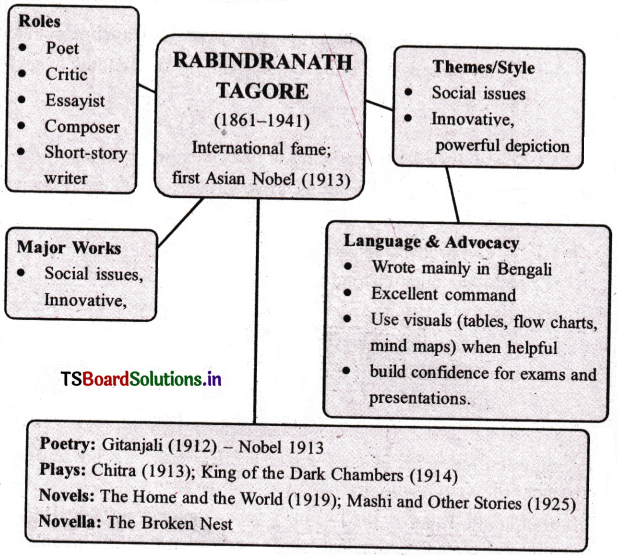
Look at the following passage about Rabindranath Tagore and with the help of Mind Mapping, how one can make notes:

Rabindranath Tagore (1861-1941), most eminent modern Bengali poet was also a critic, essayist, composer and author of short fiction and innovative in Bengali literature. He is known outside India principally in English translation. Gitanjali, a song offering (1912), his free verse recreations of his Bengali poems modelled on medieval Indian devotional lyrics, won the Nobel Prize for Literature in 1913, its first award to an Asian. Representative translations followed, of philosophical plays such as Chitra (1913) and The King of the Dark Chambers (1914) and his novels The Home and the World (1919) and Gora (1924). His short fiction often comments powerfully and courageously on Indian and social concerns, in the collections Hungry Stones (1916) Broken Ties (1925) and The House Warming (1965) and in the novella The Broken Nest brought out his powerful depiction of social issues. Tagore had an excellent command of English, but he wrote primarily in Bengali and tirelessly encouraged other writers of the Indian vernaculars. (The Oxford Companion to English Literature)
Answer:
Note Making Inter 2nd Year English Grammar 1

Read the passage and make notes:

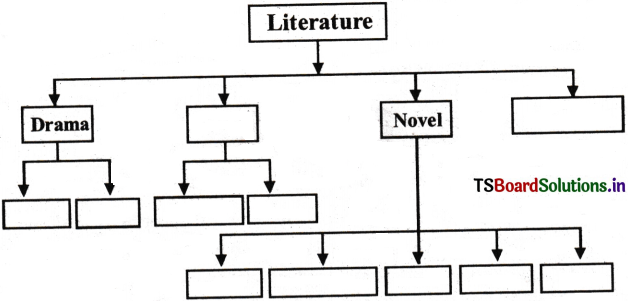
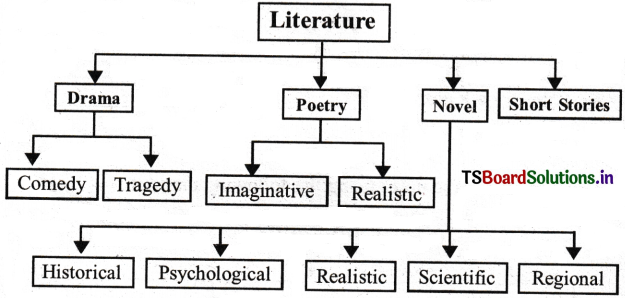
The word ‘Literature’ is really hard to define. Many interpretations are made about the word. But all are incomplete. Some opine that literature is the mirror of life, some others say that it is the criticism of life. Whatever may be the controversy about the word, we may say that literature is that which reflects life. The branches of literature are poetry, drama, novel and short stories. Poetry is of two kinds, imaginative and realistic. Drama is either a comedy or a tragedy.

Novels are also of many kinds historical, psychological, realistic, scientific and regional. Short story is one which stands very close to life despite a little scope.
Your Answer
Title of text : __________________
Make Notes (use headings/subheadings, indents, symbols & abbreviations)

Main Idea

  • Literature = ___________________

Views about Literature (very brief points)

  • ___________________________
  • ___________________________
  • ___________________________

Branches of Literature

  • Poetry → Kinds :
  • Drama → Types :
  • Novel → Kinds :
  • Short Story → Note :

(OR)

You can also make notes using the following diagram.
Note Making Inter 2nd Year English Grammar 2

Answer :
Title of text: Literature
Make Notes (use headings/subheadings, indents, symbols & abbreviations)

Main Idea:

  • Literature = That which reflects life.

Views about Literature (very brief points)

  • Literature is the mirror of life.
  • Literature is the criticism of life.
  • Literature reflects life despite controversies.

Branches of Literature

  • Poetry → Kinds : Imaginative, Realistic
  • Drama → Types : Comedy, Tragedy
  • Novel → Kinds : Historical, Psychological, Realistic,’ Scientific, Regional
  • Short Story → Note : Close to life despite little scope

(OR)
Note Making Inter 2nd Year English Grammar 3

Note Making Inter 2nd Year English Grammar

Exercise

Make Notes for the following exercises.

Question 1.
Photosynthesis is the process by which chlorophyll-containing, organisms – green plants and algae – capture energy in the form of light and convert it to chemical energy. Almost all the energy available for life in the earth’s biosphere – the zone in which life can exist – is made available through photosynthesis.

In the first stage of photosynthesis, chlorophyll absorbs sunlight. Chlorophyll is the green substance in leaves, which is able to trap the energy of sunlight and use it in the process of making carbohydrates.

Within the leaf, there is a small amount of water. The energy, which the chlorophyll has trapped of the sun, is used to split the water in the leaf into hydrogen and oxygen. Most of the oxygen is released into the air. In the second stage, the chlorophyll uses the energy absorbed from sunlight to combine the hydrogen (which is obtained by splitting the water) with carbon dioxide (which the leaf obtained from the air). Then, after several complicated changes, the hydrogen and the carbon dioxide are combined in such a way that a carbohydrate is produced. This carbohydrate is called glucose. Later, using glucose as its most important building material, the plant can make substances called amino acids and proteins. These chemicals are needed for the growth of both plants and animals.

Something else happens during photosynthesis that is of the greatest importance to us. A constant supply of oxygen is released into the air by plants. At the same time, carbon dioxide, which would poison us if we breathed too much of it, is nearly all used up.

Photosynthesis is one of the most important chemical processes in the world. This is because it is the primary method of food manufacture, and the primary method of oxygen manufacture.
(Adaptedfrom Funk and Wagnall’s New Encyclopedia)
Answer:
Photosynthesis

  • Definition : Process where chlorophyll-containing organisms capture light energy and convert it into chemical energy.
  • Importance: Supplies energy for all life on Earth.

Stages of Photosynthesis:

1. First Stage

  • Chlorophyll absorbs sunlight.
  • Water in the leaf splits: Produces hydrogen and oxygen.
  • Oxygen: Released into the air.

2. Second Stage

  • Hydrogen + Carbon Dioxide: Combined using sunlight energy.
  • Glucose produced: Used to create amino acids and proteins.

Key Products

  • Oxygen: Released into the air (important for respiration).
  • Provides energy and building blocks for plant and animal growth.

Significance

  • Oxygen supply: Essential for animal life.
  • Carbon dioxide removal: Reduces harmful CO2 levels in the atmosphere.

Question 2.
Intensive reading is aimed at mastering the structures and vocabulary apart from reading for comprehension. The pupils have more opportunities to learn the aspects of the language through intensive reading. If properly carried out, even non-native speakers of English may develop themselves better users of English than the native speakers of English in writing. Intensive reading can also be done in the absence of the teachers. So, by spending more time on intensive reading, one may get language skills in English. And the only practicable means of learning a foreign language as a second language is through intensive reading. The intensive reading has some prerequisites like: the readers should be able to identify the words and sentences spoken orally and acquire sufficient speed in reading.

In intensive reading, the pupils pay attention to almost all aspects of language. And further the effort of learning the language is supplemented by extensive reading. Extensive readers should be interesting stories. Magazines, newspapers and variety of story books will form the material for extensive reader. The two main themes of extensive reading are reading for pleasure and reading for information. Extensive readers facilitate passive vocabulary in the learners. And it also consolidates active vocabulary. So, the teachers should regularly give some assignment and thus forcing the students to library. Sending the students to library can be done as a means of assertive punishment also. As the students read more and more books, their power of phonic analysis improves and makes the learner to pronounce any word that he sees for the first time. Group discussion also can be done on extensive reader.
Answer:
Reading Techniques:

Intensive Reading

  • Objective : Master structures and vocabulary, beyond mere comprehension.
  • Advantages :
    • Enhances language skills (writing, especially).
    • Can be done without a teacher.
    • Helps in language learning, especially for non-native speakers.
    • Prerequisites: Ability to recognize words, read quickly.

Extensive Reading

  • Objective : Read for pleasure and information.
  • Materials :
    • Stories, magazines, newspapers, and books.
  • Benefits :
    • Increases passive vocabulary.
    • Strengthens active vocabulary.
  • Activities :
    • Group discussions.
    • Library visits.
    • Assignments and reading tasks to improve pronunciation and phonic skills.

Note Making Inter 2nd Year English Grammar

Question 3.
Language that we use keeps the human being in an exalted position when compared to other living things. Language is needed for all the people irrespective of their status. And, it is used from our birth till death. Language is a means of communication. We use the language as a medium through which thoughts are conveyed from person to person. It is considered a means of social control. No society can function without language. Language is part and parcel of our life. We cannot imagine a society without language. If no language, then the progress of mankind will be blocked. We will be deprived all the niceties of life that we enjoy now. Habit formation is necessary for language learning and using. Learning a language involves establishing the links between the language forms and their meanings.

The process of establishing the link between the forms and meanings are three, namely, (i) the form, (ii) the meaning and (iii) their association. In speaking, the speaker associates the exact form with the meaning that he knows, and in understanding he associates the meaning with the form he’leamed from others. The speaker of the language is conscious of the words he uses and form meaningful sentences that can make the listener understand. All the time the speaker adjusts the sounds to meaningful words and words to meaningful sentences. Language has three functions. The first one is the informative function, where information is communicated. The second function of the language is expressive, where we express our feelings, emotions and our opinions. The third function of the language is directive, where we teach others, give advice etc. So, for meaningful life we require language.
Answer:
Title of Text: Language and its Importance

Main Idea

  • Language = Essential for communication and social control.

Views about Language (very brief points)

  • Language is used from birth till death.
  • It is a means of communication and social control.
  • Society cannot function without language.
  • Language is crucial for human progress.

Branches of Language Learning

  • Habit Formation → Necessary for learning and using language.
  • Links Between Forms and Meanings → The process involves form, meaning, and association.
  • Speaking → Associating forms with meanings.
  • Understanding → Associating meaning with the learned form.

Functions of Language

  • Informative → Communicates information.
  • Expressive → Expresses feelings, emotions, and opinions.
  • Directive → Teaches, advises, and guides.

Important Notes:

  • Language is crucial for a meaningful life.
  • The speaker adjusts sounds and words to convey meaning.

Question 4.
Body shaming is a harmful behaviour where people criticize others based on their physical appearance. This includes making negative comments about someone’s weight, height, skin colour, or other physical traits.

Body shaming can take many forms such as: weight-based shaming: This is one of the most common forms, where people are criticized for being “too fat” or “too thin.” People often comment on someone’s weight without realizing how hurtful it can be. Comments like “Why are you so fat?” or “You look like a stick” are examples of weight-based shaming. Skin Colour Shaming: India has a deep-rooted issue with colorism, where people are judged for having darker skin tones, with people often making comments like “You’ll look better if you lighten your skin.” This type of shaming is not only hurtful but also promotes a harmful preference for fair skin over darker skin. Height Shaming: Tall or short, people can face body shaming based on their height. Comments like “Why are you so short?” or “Do you play basketball because you’re tall?” may seem innocent but can make teenagers feel out of place or self-conscious about their height. Face and Features Shaming: Teenagers often face comments about their facial features, such as nose shape, jawline, or even acne.

Remarks like “Your nose is too big” or “Why do you have so many pimples?” can deeply affect a teenager’s self-Confidence. Social media often promotes unrealistic beauty standards, making young people feel that they must look a certain way to be accepted. Influencers and celebrities post edited pictures that show only their “perfect” sides, leading teenagers to feel pressured to look the same. Unfortunately, this creates a cycle where teenagers compare themselves to these impossible standards and feel inferior when they cannot match them. Moreover, trolls and cyberbullies on social media leave hurtful comments on people’s pictures, furthering body shaming. Movies often show heroes and heroines with fair skin, slim bodies, and certain “ideal” features. Characters who don’t fit these standards are often cast as sidekicks, comedians, or villains, indirectly telling the audience that only certain looks are acceptable for “good” or “successful” people. This sets a high and unrealistic standard for teenagers, who may feel pressured to look like these stars. Some might even resort to extreme diets, over-exercising, or skin- lightening treatments to match these unrealistic standards. (https://en.wikipedia.org/wiki/Bodv shaming!
Answer:
Title of Text: Body Shaming.

Main Idea

  • Body Shaming = Harmful behavior of criticizing others based on their physical appearance.

Views about Body Shaming (very brief points)

  • Includes criticism of weight, height, skin color, and facial features.
  • Often occurs on social media, movies, and by peers.
  • Promotes unrealistic beauty standards and self-doubt.

Types of Body Shaming

  • Weight-Based Shaming → Criticizing for being too fat or too thin.
  • Skin Color Shaming → Judging people for having darker skin tones (colorism).
  • Height Shaming → Making comments about being too tall or too short.
  • Face and Features Shaming → Criticizing facial features like nose shape or acne.

Impacts of Body Shaming

  • Creates pressure to meet unrealistic beauty standards.
  • Affects self-confidence, especially among teenagers.
  • Encourages harmful .behaviors Hk©.extreme, dieting or skin treatments.

Social Influence

  • Social media and celebrities promote edited, unrealistic standards.
  • Movies set beauty standards by casting only those who fit certain looks.

Important Notes

  • Body shaming can lead to long-lasting negative effects on mental health.
  • It’s important to challenge these beauty standards and promote body positivity.

Note Making Inter 2nd Year English Grammar

Question 5.
The healthy eating plate is a guide to eating balanced meals, especially for individuals with diabetes. It emphasizes portion control across three main food groups and advises limiting food intake if overweight. To create a healthy plate, start with a small plate or bowl about the size of your outstretched hand: Vegetables: Fill half your plate with a variety of vegetables, either cooked pr raw. Include vegetables of different colors to ensure a range of nutrients. Avoid counting tubers like potatoes as vegetables, as they are starches that can raise blood sugar levels significantly. Starches: Reserve one-quarter of your plate for whole grains and healthy starches, which contain fiber and have a milder effect on blood sugar than refined starches like white rice, bread, or pasta. If refined starches are preferred, consume them in smaller portions.

Protein: Use the remaining quarter for lean protein sources such as beans, nuts, yogurt, fish, eggs, and poultry. These can be eaten alone or incorporated into dishes like soups, salads, and stews. Red meat should be eaten rarely, if at all. Additionally: Use healthy oils, such as sunflower or safflower oil, while avoiding processed oils like margarine or vegetable shortening. For beverages, plain water is best. Coffee or tea without sugar is acceptable. Avoid sugary drinks entirely, and limit fruit juice, as it can rapidly raise blood sugar. Whole fruits with natural fiber are a better alternative. Eating slowly, appreciating food, and stopping when satisfied rather than full are also essential habits. Some people find that replacing starches with proteins and vegetables aids in weight loss and stabilizes blood sugar levels. Hence, use a small plate and divide it as follows: half for vegetables, a quarter for protein, and a quarter for healthy starches.
(Source:https://youtu.be t4WdZLwCdU7?si=Cy518Y_3Dlap8ew6)
Answer:
Title of Text: Healthy Eating Plate

Main Idea

  • Healthy Eating Plate = A guide for balanced meals, especially for individuals with diabetes.

Views about Healthy Eating (very brief points)

  • Focuses on portion control across three main food groups.
  • Advises limiting food intake for overweight individuals.
  • Emphasizes using a small plate for meal division.

Components of the Healthy Plate

  • Vegetables → Half of the plate should be filled with a variety of vegetables (cooked or raw). Avoid tubers (like potatoes).
  • Starches → One-quarter of the plate for whole grains and healthy starches (e.g., brown rice, whole grain pasta).
  • Protein → One-quarter of the plate for lean proteins (e.g., beans, nuts, yogurt, fish, eggs, poultry).

Additional Guidelines

  • Use healthy oils (e.g., sunflower or safflower oi!) and avoid processed oils (e.g., margarine).
  • Beverages: Water is best, and tea or coffee without sugar is acceptable. Avoid sugary drinks and limit fruit juice.
  • Eat slowly and stop when satisfied (not full).
  • Replace starches with proteins and vegetables for weight loss and better blood sugar control.

Question 6.
Nature is a master storyteller, and nowhere is this more evident than in the changing seasons. Among all seasons, Summer and Winter stand at opposite ends of the spectrum, each bringing its own unique charm, character, and experiences. Together they shape our daily lives, habits, moods, and even our relationships with family and friends.

Summer is a season of warmth, energy, and abundance. Long sunny days fill the world with golden light, and temperatures rise to levels perfect for outdoor activities. Children play freely in parks, families head to beaches and swimming pools, and the air is filled with laughter and excitement. It is the season of barbecues, picnics, and evening gatherings under the open sky. Nature generously offers an abundance of fresh fruits during summer- juicy berries, sweet melons, mangoes, and peaches refresh both body and spirit. People dress lightly in cotton and bright colours, reflecting the cheerful mood of the season. Schools remain closed, making summer the most awaited time for students to relax, travel, and explore new experiences.

Winter, in contrast, wraps the world in a quiet, peaceful stillness. Cold temperatures, shorter daylight hours, and snowfall in many regions transform the landscape into a silver wonderland. Outdoor life slows down considerably as people seek warmth indoors. Families gather around fireplaces, sharing hot drinks like tea, coffee, and soups. Cozy sweaters, blankets, and warm clothing become daily companions. Indoor activities like reading, board games, cooking, and storytelling bring families closer together. Winter festivals and celebrations add colour and warmth to the cold months.

Despite their differences, both seasons share something beautiful and universal—they offer precious time for families to bond, for individuals to relax, and for loved ones to create memories that last a lifetime.
Answer:
Title of Text : Summer and Winter

Main Idea

  • Summer and Winter = Opposite seasons that bring unique experiences and shape our daily lives.

Views about Summer and Winter (very brief points)

  • Summer = Warmth, energy, and abundance.
  • Winter = Quiet, peaceful stillness, with cold temperatures and snowfall.

Characteristics of Summer

  • Long sunny days and warm temperatures.
  • Outdoor activities: children playing, families at beaches/pools.
  • Abundant fresh fruits: berries, melons, mangoes, peaches.
  • People dress in light clothing and bright colours.
  • Schools closed; students relax, travel, and explore.

Characteristics of Winter

  • Cold temperatures, shorter days, and snowfall.
  • Outdoor life slows down; people seek warmth indoors.
  • Indoor activities: reading, board games, cooking, storytelling.
  • Winter festivals and celebrations bring warmth and colour. Shared Beauty of Summer and Winter
  • Both seasons offer precious time for family bonding and creating lasting memories.

Note Making Inter 2nd Year English Grammar

Question 7.
The First Industrial Revolution kicked off in Britain in the late 1700s, powered by the invention of the steam engine and the mechanization of textile production. Imagine a world where everything is done by hand – then, suddenly, machines begin to take over. This era brought the birth of factories, and people from rural areas moved to cities, hoping to find work in these newly constructed industrial hubs. The Industrial Revolution fundamentally altered the way people lived and worked, making products available at unprecedented scales.

Building on steam power, the Second Industrial Revolution was marked by the rise of electricity, steel, and chemical industries. This is the era that saw the birth of modern mass production. Thanks to inventions like the electric light bulb, telegraph and telephone the Second Industrial Revolution sped up urbanization and reshaped entire economies.

The Third Industrial Revolution, often referred to as the Digital Revolution, began in the latter half of the 20th century. This revolution was powered by computers, internet technology, and automation. The world became “smaller,” as the internet connected people, information, and services across the globe in an instant. The Third Industrial Revolution changed how we work, communicate, and live, creating the digital age and laying the foundation for our current tech-driven world.

We are currently in the midst of the Fourth Industrial Revolution, where the fusion of physical, digital, and biological systems is transforming the world even faster. AI, machine learning, 5G networks, biotechnology, and blockchain are at the . heart of this revolution, making technologies smarter and more interconnected. The Fourth Industrial Revolution is marked by rapid changes that promise to reshape industries, redefine jobs’, and even challenge our notions of what it means to be human. (Source: https://ied.eu/prbiect-updates/the-4-industrial- revolutions/)
Answer:
Title of Text: The Four Industrial Revolutions

Main Idea

  • Industrial Revolutions = Major shifts in technology, economy, and society.

Views about Industrial Revolutions (very brief points)

  • First Industrial Revolution: Steam power and mechanization of textile production.
  • Second Industrial Revolution : Electricity, steel, and mass production.
  • Third Industrial Revolution : Computers, internet, and automation.
  • Fourth Industrial Revolution : Fusion of physical, digital, and biological systems.

The Four Industrial Revolutions

  • First Industrial Revolution → Invention of the steam engine, mechanization of textile production, rise of factories.
  • Second Industrial Revolution → Rise of electricity, steel, chemical industries, and mass production.
  • Third Industrial Revolution → Digital Revolution, powered by computers, the internet, and automation.
  • Fourth Industrial Revolution → Fusion of physical, digital, and biological systems, powered by AI, machine learning, and blockchain.

Key Characteristics of the Fourth Industrial Revolution

  • Fast transformation of industries, jobs, and human understanding.
  • Technologies : AI, 5G, biotechnology, blockchain, and machine learning.

Question 8.
Civic sense refers to the sense of responsibility that every citizen feels towards the society and the public spaces they share with others. It is the awareness that one’s actions affect not just oneself but the entire community. A person with good civic sense respects public property, follows traffic rules, keeps surroundings clean, and behaves in a manner that promotes the well-being of all. Unfortunately, civic sense remains one of the most neglected values in Indian society today, despite rapid economic and technological progress.

The absence of civic sense is visible everywhere around us. People litter roads and public places without hesitation. Garbage is dumped in open spaces and water bodies, causing severe pollution. Traffic rules are violated openly, leading to accidents and chaos on roads. Public property such as benches, walls, and transport facilities are damaged carelessly. Noise pollution is created through unnecessary use of loudspeakers and vehicle horns. All these actions collectively degrade the quality of life for every citizen.

The root cause of poor civic sense lies in inadequate education and upbringing. Children who are not taught the importance of social responsibility from an early age grow into adults who are indifferent to public welfare. Schools, families, and communities all share the responsibility of nurturing civic values in young minds.

Several steps can be taken to improve civic sense among citizens. Civic education must be made a compulsory part of school curriculum. Awareness campaigns through media, street plays, and community programmes can bring about attitudinal change. Strict enforcement of laws related to littering, traffic violations, and public property damage will create accountability. Most importantly, every citizen must realize that a clean, orderly, and ha’rmonious society begins with their own individual behaviour.

A nation truly progresses when its citizens take pride in both their rights and their responsibilities.
Answer:
Title of Text: Civic Sense

Main Idea

  • Civic Sense = The responsibility citizens feel towards society and public spaces.

Views about Civic Sense (very brief points)

  • Civic sense affects the well-being of the entire community.
  • It includes respecting public property, following traffic rules, and keeping surroundings clean.

Absence of Civic Sense

  • Littering in roads and public places.
  • Dumping garbage in open spaces and water bodies, causing pollution.
  • Violation of traffic rules leading to accidents.
  • Damaging public property carelessly.
  • Creating noise pollution through loudspeakers and vehicle horns.

Root Cause of Poor Civic Sense

  • Lack of adequate education and upbringing.
  • Children not taught social responsibility grow into indifferent adults.

Steps to Improve Civic Sense

  • Make civic education part of the school curriculum.
  • Conduct awareness campaigns through media and community programs.
  • Strict enforcement of laws on littering, traffic Violations, and public property damage.
  • Foster individual responsibility for a clean, orderly, and harmonious society.

Important Notes

  • A nation’s progress depends on citizens taking pride in their rights and responsibilities.

Note Making Inter 2nd Year English Grammar

Question 9.
Unified Payments Interface (UPI) and other digital payment tools have changed how we pay for groceries, tuition fees, cab rides, and even street-side tea. The biggest advantage is speed: money moves instantly, twenty-four hours a day, with a simple scan of a QR code or a tap on a contact. Because transaction histories are stored in apps, it’s easier to track expenses, split bills with friends, and budget weekly pocket money. Digital payments also reduce the need to carry cash, lower the risk of loss or theft, and help small shops accept money without card machines. Cashback offers, automatic bill reminders, and linking to savings accounts can nudge better money habits.

However, convenience comes with responsibilities. Fraudsters rely on urgency, confusion, and trust. No legitimate service asks you to enter a PIN to receive money; payment PINs are only for sending. Never share OTPs, screen-share with strangers, or click shortened links that ask for banking details. Keep SIM cards locked with a PIN; a SIM-swap can hijack accounts. Always verify the merchant name that appears before you confirm a transfer, and prefer your saved “trusted” payees for large amounts. On borrowed or public phones, avoid logging into payment apps. Turn on app-level biometrics and enable instant transaction alerts through SMS and email.

For everyday discipline, set a monthly digital spending cap and review the passbook view every Sunday. Reconcile small autopay subscriptions that you no longer use. Update KYC only inside the official app or website, not via links from messages. When a payment fails, wait for the reversal instead of trying repeatedly. Finally, remember that digital trails matter: they help resolve disputes but also reflect your habits. Treat your financial data like your front-door key – guard it, label it, and use it carefully.
Answer:
Title of Text: Unified Payments Interface (UPI) and Digital Payments

Main Idea

  • UPI and digital payments = Faster, more convenient, and safer way to pay.

Views about Digital Payments (very brief points)

  • Speed and convenience: Instant transactions, 24/7 availability.
  • Easy to track expenses, split bills, and budget.
  • Reduces need for cash and card machines.

Advantages of Digital Payments

  • Speed and instant money transfer.
  • Track expenses and set better money habits.
  • Reduces the risk of theft and loss.
  • Helps small businesses accept payments without card machines.
  • Cashback offers and automatic bill reminders promote financial discipline.

Responsibilities and Security in Digital Payments

  • Avoid sharing PINs, OTPs, or banking details with strangers.
  • Use trusted payees and verify merchant names before transferring large sums.
  • Keep SIM cards locked with.a PIN to prevent hijacking.
  • Enable app-level biometrics and instant transaction alerts.

Good Practices for Digital Payments

  • Set a monthly spending cap and review transactions regularly.
  • Reconcile autopay subscriptions that are no longer used. –
  • Update KYC only through official channels.
  • Avoid logging into payment apps on borrowed-pr public phones.
  • Wait for payment reversal if a transaction fails.

Important Notes

  • Guard your financial data like a key – treat it carefully and responsibly.
  • Digital payment trails can resolve disputes but also reflect your financial habits.

Question 10.
Social media helps us learn, connect, and express opinions, but it also spreads rumours faster than facts. Misinformation thrives on four ingredients: speed, emotion, novelty, and gaps in our knowledge. Posts that provoke outrage or fear are shared quickly, while corrections arrive late. To protect yourself, slow down at the moment of emotion. Ask: Who benefits if I believe this? Does the claim have a date, location, and source I can verify? Screenshots without links, cropped images, and voice notes with anonymous “insiders” deserve extra scepticism.

Simple verification steps go a long way. Search a key sentence in quotes to see if credible news outlets have reported it. Check the account’s history: is it new, posting only extreme content, or using stolen profile pictures? Look for hallmarks of manipulation – mismatched shadows in images, unusual blinking or teeth in videos, or audio that does not match lip movement. When a claim involves health, law, or finance, prioritise official sources and expert bodies over influencer opinions.

Being a responsible user means not amplifying doubtful material. If a forward feels urgent, it’s a red flag. Add friction: wait ten minutes; often the urge passes. When you do share, include the source and date so others can judge reliability. In groups, set norms: “No forwards without links,” or a weekly slot for fact-checks. Schools and families can run short workshops on , confirmation bias – how we favour information that supports what we already believe.

Finally, remember that silence can be strength. You don’t have to comment on every issue to be informed. Curate your feed: follow a few quality sources instead of dozens of noisy ones, and use platform tools to report harmful content. Digital citizenship is not just about freedom to post; it is about discipline to verify, contextualise, and, when needed, refrain.
Answer:
Title of Text : Responsible Social Media Usage

Main Idea

  • Social media = Helps connect and express opinions but also spreads misinformation quickly.

Views about Misinformation (very brief points)

  • Misinformation spreads through speed, emotion, novelty, and gaps in knowledge.
  • Posts triggering fear or outrage spread faster than corrections. Steps to Protect Yourself
  • Slow down when emotional; ask who benefits from your belief.
  • Verify claims: check date, location, and source.
  • Be sceptical of screenshots, cropped images, and anonymous sources.

Verification Tips

  • Search key sentences to find credible reports.
  • Check the account’s history for credibility.
  • Watch for signs of manipulation: mismatched shadows, odd blinking, or lip-sync issues in videos.
  • Prioritize expert sources over influencers for health, law, or finance claims.

Responsible Social Media Use

  • Don’t amplify doubtful material; if it’s urgent, wait before sharing.
  • Add friction by waiting before forwarding posts.
  • Share the source and date when sharing information.
  • Set group norms: e.g., “No forwards without links” or a weekly fact-check session.

Additional Steps for Education

  • Schools and families can teach about confirmation bias and responsible media consumption.

Important Notes

  • Silence can be a form of strength; don’t feel pressured to comment on everything.
  • Curate your feed by following quality sources and reporting harmful content.

Question 11.
Disasters turn hazards into human loss when exposure and vulnerability are high. India faces cyclones, floods, earthquakes, droughts, heatwaves, and landslides. The Disaster Management Cycle emphasises continuous action across four phases: mitigation, preparedness, response, and recovery. Mitigation reduces risk before events: land-use zoning, coastal embankments, retrofitting schools and hospitals, enforcing building codes in seismic zphes,’ restoring wetlands and mangroves, and risk-informed infrastructure. Preparedness builds capacity: hazard mapping, early-warning systems (IMD, INCOIS), stockpiling relief, drills in schools, mock exercises with NDRF/SDRF, community task forces, and public awareness on evacuation routes and first aid.

Response activates when alerts escalate: Incident Command Systems coordinate search, rescue, and relief; evacuation shelters provide water, sanitation, and health services; special attention goes to elderly, children, and persons with disabilities; and rapid needs assessments guide resource deployment. Recovery begins as waters recede or tremors stop: debris clearance, damage assessments, cash and livelihood assistance, rebuilding homes with “build back better” standards, restoring services (power,. roads, telecom), and psychosocial support. Post-disaster reviews capture lessons for policy and budgets. Linking the phases creates resilience: mitigation lowers impact, preparedness speeds response, effective response shortens recovery, and recovery invests in better mitigation. Communities are strongest when local knowledge, science, and governance align.
Answer:
Title of Text : Disaster Management Cycle

Main Idea

  • Disaster Management = A continuous cycle to reduce risks, prepare, respond, and recover from disasters.

Views about Disasters (very brief points)

  • Disasters occur when hazards (cyclones, floods, earthquakes) lead to high human loss due to exposure and vulnerability.
  • India faces various types of disasters: cyclones, floods, earthquakes, droughts, heatwaves, and landslides.

Disaster Management Cycle Phases

Mitigation → Reduces risk before events:

  • Land-use zoning, coastal embankments.
  • Retrofitting schools/hospitals.
  • Enforcing building codes in seismic zones.
  • Restoring wetlands and mangroves.
  • Risk-informed infrastructure.

Preparedness → Builds capacity :

  • Hazard mapping and early-warning systems (IMD, INCOIS).
  • Stockpiling relief and community task forces.
  • Drills in schools and mock exercises with NDRF/SDRF.
  • Public awareness on evacuation routes and first aid.

Response → Activated during alerts:

  • Incident Command Systems for search, rescue, and relief.
  • Evacuation shelters with essential services (water, sanitation, health).
  • Special attention to vulnerable groups (elderly, children^ disabilities).
  • Rapid needs assessments guide resource deployment.

Recovery → Begins after the event:

  • Debris clearance and damage assessments.
  • Cash and livelihood assistance.
  • Rebuilding homes with “build back better” standards.
  • Restoring services (power, roads, telecom).
  • Psychosocial support and post-disaster reviews.

Linking the Phases

  • Mitigation lowers impact, preparedness speeds response.
  • Effective response shortens recovery, recovery invests in better mitigation.
  • Communities are strongest when local knowledge, science, and governance align.

Note Making Inter 2nd Year English Grammar

Question 12.
All living organisms are composed of cells, the fundamental units of life. However, not all cells are structured the same way. Based on their internal complexity, all cells fall into one of two major categories: prokaryotic or eukaryotic.

Despite their differences, both cell types share some essential components that are necessary for life. Every cell is enclosed by a plasma membrane, which acts as a selective barrier between the cell’s interior and the outside world. Inside the membrane is the cytoplasm, a jelly-like substance that fills the cell. Both prokaryotes and eukaryotes use DNA (deoxyribonucleic acid) as their genetic blueprint to store information. They also both contain ribosomes, which are tiny structures responsible for building proteins according to the instructions from the DNA.

The primary distinction between the two lies in their internal organization. Prokaryotic cells, found in organisms like bacteria and archaea, are structurally simpler and typically smaller. Their most defining feature is the absence of a nucleus. Instead, their genetic material, a single circular chromosome, is located in a region of the cytoplasm called the nucleoid. Prokaryotic cells also lack other membrane-bound organelles, meaning their internal components are not separated into compartments.

In contrast, eukaryotic cells are generally larger and more complex. These cells, which make up all other forms of life including plants, animals, fungi, and protists, have a true nucleus. This membrane-enclosed organelle houses the cell’s DNA, keeping it separate from the rest of the cytoplasm. Furthermore, eukaryotic cells contain a variety of other specialized, membrane- bound organelles, such as the mitochondria for energy production, the endoplasmic reticulum for processing proteins and lipids, and the Golgi apparatus for packaging and transport.
Answer:
Title of Text: Prokaryotic and Eukaryotic Cells

Main Idea

  • All living organisms are composed of cells, which can be either prokaryotic or eukaryotic.

Views about Prokaryotic and Eukaryotic Cells (very brief points)

  • Both cell types share essential components: plasma membrane, cytoplasm, DNA, and ribosomes.
  • Prokaryotic cells are simpler and smaller, while eukaryotic cells are larger and more complex.

Prokaryotic Cells

  • Found in bacteria and archaea.
  • Lack membrane-bound organelles.
  • No nucleus; DNA is in the nucleoid.
  • Simpler structure, typically smaller.

Eukaryotic Cells

  • Found in plants, animals, fungi, and protists.
  • Have a true nucleus with membrane-enclosed DNA.
  • Contain specialized, membrane-bound organelles (e.g., mitochondria, endoplasmic reticulum, Golgi apparatus).
  • Larger and more complex structure.
Human Health and Disease Questions and Answers AP Inter 2nd Year Zoology Chapter 6

Reviewing AP Inter 2nd Year Zoology Study Material Chapter 6 Human Health and Disease Questions and Answers can help students prepare confidently for exams.

AP Inter 2nd Year Zoology 6th Lesson Human Health and Disease Questions and Answers

IV. Very Short Answer Questions

Question 1.
What measures would you take to prevent vector-borne diseases?
Answer:
Vector-borne diseases can be controlled by reducing the breeding of disease-carrying vectors and maintaining good hygiene.

  1. Prevent water stagnation and keep the surroundings clean.
  2. Use mosquito nets, mosquito repellents, and insecticide sprays.
  3. Follow proper sanitation and waste disposal practices.
  4. Eliminate mosquito breeding sites through regular vector control measures.

Question 2.
What are the common symptoms of typhoid?
Answer:
Common symptoms of typhoid are:

  • Persistent high fever
  • Weakness and tiredness
  • Pain in the abdomen
  • Reduced appetite
  • Headache
  • Constipation or diarrhoea

Question 3.
Mention the symptoms of Ascariasis.
Answer:
Symptoms of Ascariasis include:

  • Internal bleeding
  • Muscle pain
  • Fever
  • Anaemia
  • Intestinal blockage in severe infections

Question 4.
Name the pathogen that causes filariasis and mention the organs where they live in the infected person.
Answer:

  1. Filariasis is caused by filarial worms such as Wuchereriabancrofti and Brugia malavi.
  2. These parasites inhabit the lymphatic vessels, particularly those of the lower limbs and genital organs, resulting in swelling known as elephantiasis.

Question 5.
Name the genera of fungi that cause Ringworm in humans and mention its symptoms.
Answer:

  1. Ringworm is caused by fungi belonging to the genera Microsporum, Trichophyton, and Epidermophyton.
  2. Symptoms: It produces dry, scaly patches on the skin, scalp, and nails, accompanied by intense itching, especially in warm and moist body folds.

Question 6.
Name the primary and secondary lymphoid organs in humans.
Answer:
Primary lymphoid organs:

  • Bone marrow
  • Thymus

Secondary lymphoid organs:

  • Spleen
  • Lymph nodes
  • Tonsils
  • Peyer’s patches (in the intestine)

Question 7.
What is an autoimmune disease? Give one example.
Answer:
An autoimmune disease is a disorder in which the body’s immune system mistakenly attacks its own cells and tissues instead of protecting them. Example: rheumatoid arthritis, where the immune system attacks the joints.

Human Health and Disease Questions and Answers AP Inter 2nd Year Zoology Chapter 6

Question 8.
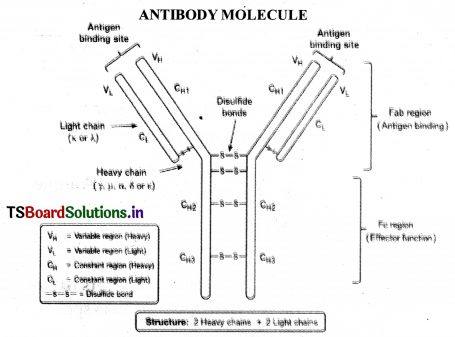
Draw a well-labelled diagram of an antibody molecule.
Answer:
Human Health and Disease Questions and Answers AP Inter 2nd Year Zoology Chapter 6 1

Question 9.
What is Metastasis?
Answer:

  1. Metastasis is the process in which cancer cells break away from the original tumour and spread to distant parts of the body through the bloodstream or lymphatic system.
  2. These cells establish secondary tumours, making cancer more dangerous.

Question 10.
How is a cancerous cell different from a normal cell?
Answer:

FeatureNormal CellCancerous Cell
Cell division1. Controlled and regulated.1. Uncontrolled and rapid.
Response to growth signals2. Responds normally to growth signals.2. Ignores growth-regulating signals.
Spread3. Remains at its original location.3. Can spread to other organs (metastasis).
Shape and structure4. Uniform and regular.4. Irregular and abnormal.


V. Short Answer Questions

Question 1.
Explain the disease Amoebiasis with regards to its pathogen, symptoms, carrier, and mode of infection.
Answer:
Amoebiasis (Amoebic dysentery) is an intestinal disease caused by a protozoan parasite that affects the digestive system.

  • Pathogen: The disease is caused by Entamoeba histolytica, which lives in the large intestine of humans.
  • Symptoms: Common symptoms include constipation, abdominal pain, stomach cramps, and in severe cases, stools containing mucus and blood.
  • Carrier: Houseflies act as mechanical carriers, transferring the parasite from contaminated material to food.
  • Mode of Infection: The infection spreads by consuming food or water contaminated with faecal matter containing the parasite. Houseflies help transmit the cysts from infected faeces to food.

Question 2.
How does the transmission of each of the following diseases take place?
(a) Amoebiasis
(b) Malaria
(c) Ascariasis
(d) Pneumonia
Answer:
(a) Amoebiasis: Transmitted by consuming food or water contaminated with cysts of Entamoeba histolytica. Houseflies act as mechanical carriers by transferring cysts from infected faeces to food.

(b) Malaria: Spread through the bite of an infected female Anopheles mosquito, which injects the Plasmodium parasite into the human bloodstream.

(c) Ascariasis: Occurs by swallowing eggs of Ascaris lumbricoides present in contaminated food, drinking water, or soil.

(d) Pneumonia: Transmitted through respiratory droplets or aerosols released by an infected person during coughing or sneezing. It may also spread through contaminated eating utensils.

Question 3.
Expand the following abbreviations to their full forms :
(a) MALT
(b) CMI
(c) AIDS
(d) NACO
Answer:
(a) MALT: Mucosa-Associated Lymphoid Tissue – a lymphoid tissue associated with mucosal surfaces, constituting nearly 50% of the body’s lymphoid tissue.
(b) CMI: Cell-Mediated Immunity – an acquired immune response mediated mainly by T-lymphocytes.
(c) AIDS: Acquired Immunodeficiency Syndrome – a disease caused by the Human Immunodeficiency Virus (HIV) that weakens the immune system.
(d) NACO: National AIDS Control Organisation – the Indian organization that works with government and non-government agencies to create awareness, prevent HIV/AIDS, and implement control programmes.

Question 4.
What is innate immunity? What are its barriers?
Answer:
Innate immunity is the body’s natural, non-specific defence mechanism that is present from birth. It provides the first line of protection against invading pathogens by preventing their entry and destroying them through various defence barriers.

Types of Barriers:
i) Physical Barriers:

  1. The skin serves as the first protective barrier against microorganisms.
  2. Mucous membranes lining the respiratory, gastrointestinal, and urogenital tracts trap and prevent microbes from entering the body.

ii) Physiological Barriers: These include hydrochloric acid (HCl) in the stomach, saliva, and tears, which destroy microbes or inhibit their growth.

iii) Cellular Barriers: Certain white blood cells (leucocytes) such as neutrophils, monocytes, macrophages, and natural killer (NK) cells eliminate pathogens through phagocytosis and other defence mechanisms.

iv) Cytokine Barriers: Virus-infected cells release interferons, which protect neighbouring healthy cells from viral infection.

Human Health and Disease Questions and Answers AP Inter 2nd Year Zoology Chapter 6

Question 5.
Explain the term “Addiction” in respect of drugs and alcohol abuse.
Answer:
Addiction is a psychological dependence on drugs or alcohol in which a person repeatedly seeks these substances to experience pleasure, euphoria, or a temporary sense of well-being.

  • Compulsive Use: The affected person continues to consume drugs or alcohol repeatedly, even when it is harmful or unnecessary.
  • Increased Tolerance: With repeated use, the body becomes tolerant, requiring progressively higher doses to produce the same effect.
  • Vicious Cycle: Continued use creates a cycle of dependence, making it increasingly difficult for the individual to stop without assistance.
  • Dependence: Long-term addiction results in physical and psychological dependence. Stopping the substance may produce withdrawal symptoms such as anxiety, nausea, sweating, restlessness, and discomfort.

Question 6.
Differentiate between Innate and Acquired Immunity.
Answer:

FeatureInnate ImmunityAcquired Immunity
Type of Defense1. Provides a non-specific defense against pathogens.1. Provides a specific defense directed against particular pathogens.
Time of Origin2. Naturally present from birth.2. Develops after birth following exposure to specific antigens.
Mechanism3. Protects the body through physical, physiological, cellular, and cytokine barriers, preventing the entry and spread of foreign agents.3. Acts by recognizing specific antigens, activating lymphocytes, and developing immunological memory.
Response Type4. Produces an immediate, uniform response against invading organisms without. specificity.4. Shows a slow primary response during first exposure and a rapid, stronger secondary (anamnestic) response upon subsequent exposure.
Key Components5. Includes skin, mucous membranes, stomach acid, saliva, tears, neutrophils, macrophages, natural killer cells, and interferons.5. Mainly involves B-lymphocytes (produce antibodies) and T-lymphocytes (cell- mediated immune response).


VI. Long Answer Questions

Question 1.
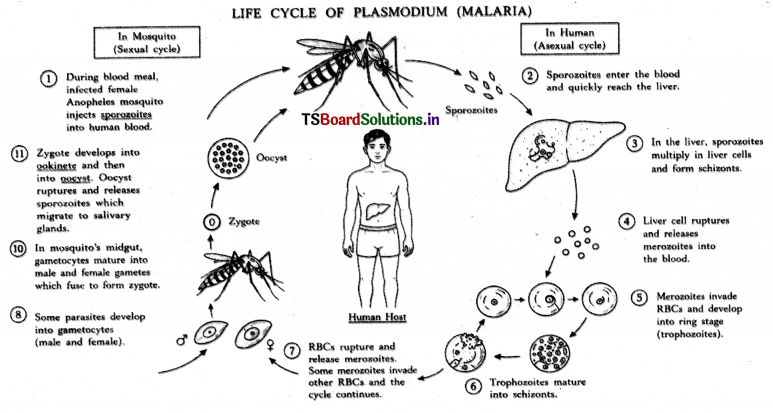
Describe the life cycle of Plasmodium with a labelled diagram.
Answer:

  1. The life cycle of Plasmodium is completed in two hosts: humans and the female Anopheles mosquito.
  2. The cycle starts when an infected female Anopheles mosquito bites a person and injects sporozoites into the bloodstream.
  3. These sporozoites travel to the liver, enter liver cells, and multiply repeatedly to produce merozoites.
  4. The merozoites leave the liver and invade red blood cells (RBCs), where they multiply again and finally rupture the RBCs.
  5. The bursting of RBCs releases a toxic pigment called haemozoin, which is responsible for the periodic chills and high fever seen in malaria.
  6. Some merozoites differentiate into gametocytes inside RBCs. When another female Anopheles mosquito feeds on the infected person, it ingests these gametocytes.
  7. Inside the mosquito, gametocytes develop into male and female gametes. Fertilization forms a zygote, which develops into an ookinete and later into an oocyst. The oocyst produces numerous sporozoites.
  8. The newly formed sporozoites migrate to the salivary glands of the mosquito. During its next bite, they are injected into another human host, thereby repeating the life cycle.
  9. Among all malaria parasites, Plasmodium falciparum causes the most severe form of malaria. Mosquito bite → Sporozoites → Liver → Merozoites → RBC cycle → Gametocytes → Mosquito →Gametes → Zygote → Oocyst → Sporozoites

Human Health and Disease Questions and Answers AP Inter 2nd Year Zoology Chapter 6 2

Question 2.
What is Immunity? Describe the various types of immunity.
Answer:
Immunity is the body’s natural ability to protect itself from disease-causing microorganisms. It is provided by the immune system, which identifies and destroys harmful pathogens.
1. Innate Immunity: Innate immunity is a non-specific defense mechanism that is present from birth. It protects the body by preventing the entry and spread of foreign organisms.

Types of Barriers:

Physical barriers:
1. Skin acts as the first protective barrier against pathogens.
2. Mucous membranes lining the respiratory, digestive, and urogenital tracts trap microorganisms and prevent their entry.

  • Physiological barriers: Stomach acid, saliva, and tears destroy microbes or inhibit their growth.
  • Cellular barriers: White blood cells such as neutrophils, monocytes, macrophages, and natural killer (NK) cells eliminate invading pathogens through phagocytosis.
  • Cytokine barriers: Virus-infected cells produce interferons, which protect neighbouring cells from viral infection.

2. Acquired Immunity Acquired immunity is a pathogen-specific defense system that develops after exposure to antigens and possesses immunological memory.

  • During the first exposure, the body produces a primary immune response, which is relatively slow and less intense.
  • During subsequent exposures, a secondary (anamnestic) immune response is produced, which is much faster and stronger due to immunological memory.

Acquired immunity mainly involves two types of lymphocytes:

B-Lymphocytes:
1. Produce antibodies that circulate in the blood and destroy pathogens.
2. This is known as humoral immunity.

T-Lymphocytes:

  1. They do not produce antibodies directly but help B cells and destroy infected cells.
  2. They are responsible for cell-mediated immunity (CMI) and also play a major role in organ transplant rejection.

3. Active and Passive Immunity: Acquired immunity is further classified into Active Immunity and Passive Immunity.

Active Immunity:

  1. Develops when the body is exposed to antigens such as living or dead microbes or their products.
  2. The body produces its own antibodies.
  3. It develops gradually but provides long-lasting protection.

Passive Immunity:

  1. Occurs when preformed antibodies are transferred directly from another individual.
  2. It provides immediate protection, but the protection is temporary.
  3. Examples include IgA antibodies present in colostrum passed from mother to infant and maternal antibodies transferred through the placenta to the developing foetus.

Human Health and Disease Questions and Answers AP Inter 2nd Year Zoology Chapter 6

Question 3.
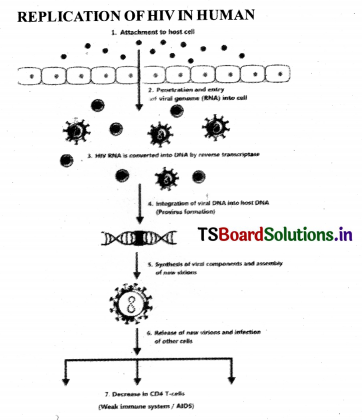
Explain the transmission of Human Immunodeficiency Virus (HIV) and its replication in man with the help of diagram.
Answer:
Human Immunodeficiency Virus (HIV) is a retrovirus containing an RNA genome enclosed within an envelope. It causes Acquired Immunodeficiency Syndrome (AIDS) by weakening the body’s immune system.
1. Transmission of HIV: HIV spreads only through infected body fluids and not by casual contact.
The major modes of transmission are:

  • Unprotected sexual contact with an infected individual.
  • Transfusion of infected blood or blood products.
  • Sharing contaminated needles or syringes, especially among intravenous drug users.
  • Mother-to-child transmission during pregnancy, childbirth, or breastfeeding.

Human Health and Disease Questions and Answers AP Inter 2nd Year Zoology Chapter 6 3

2. Replication of HIV in Humans :

  • Entry into Macrophages: HIV first enters macrophages, where it begins its multiplication.
  • Reverse Transcription: Inside the host cell, the viral RNA is converted into DNA with the help of the enzyme reverse transcriptase.
  • Integration: The newly formed viral DNA integrates into the host cell DNA and becomes a provirus.
  • Formation of New Viruses: Using the host cell machinery, the provirus directs the synthesis of viral RNA and proteins, which assemble into new HIV particles.
  • Infection ofT-Lymphocytes: The newly formed viruses infect helper T-lymphocytes (CD4 cells) and continue multiplying within them.
  • Progressive Destruction: Large numbers of viruses are released, infecting additional CD4 cells and causing a steady decline in their number.

3. Effect on the Immune System :

  • As the CD4 (helper T-cell) count decreases, the immune system becomes weak and less effective.
  • The infected individual becomes highly susceptible to opportunistic infections caused by bacteria, viruses, fungi, and parasites.
  • Continuous destruction of helper T-cells eventually results in immunodeficiency, making the body unable to defend itself against common infections.

Question 4.
Explain cancer with reference to its causes, diagnosis and treatment.
Answer:
Cancer is a disorder in which body cells divide abnormally and uncontrollably, resulting in the formation of tumours. Malignant tumours invade nearby tissues and spread to other parts of the body through metastasis.
1. Causes of Cancer :

  • Carcinogens: Cancer develops due to cancer-causing agents called carcinogens, which transform normal cells into cancer cells.
  • Physical Agents: Exposure to ionizing radiation (X-rays and gamma rays) and non¬ionizing radiations (UV rays) can damage DNA and initiate cancer.
  • Chemical Agents: Chemicals, especially those present in tobacco smoke, are major contributors to cancers such as lung cancer.
  • Biological Agents: Certain oncogenic viruses and the activation of proto-oncogenes (cellular oncogenes) may also trigger cancer development.

2. Diagnosis of Cancer :

  • Early Detection: Early diagnosis greatly improves the chances of successful treatment.
  • Biopsy and Histopathology: A small tissue sample is collected and examined microscopically to confirm the presence of cancer.
  • Blood and Bone Marrow Tests: These investigations, particularly useful in leukaemia, help detect abnormal blood cell counts.
  • Imaging Techniques: Methods such as X-rays, CT scans, and MRI are used to locate and identify tumours inside the body.
  • Molecular Diagnosis: Advanced molecular techniques help detect genetic susceptibility and identify cancer at an early stage.

3. Treatment of Cancer: Cancer treatment usually involves one or more of the following methods:

  • Surgery: Removal of the tumour by surgical operation.
  • Radiotherapy: High-energy radiation is used to destroy cancer cells.
  • Chemotherapy: Anti-cancer drugs are administered to kill rapidly dividing cancer cells. Hair loss and other side effects may occur.
  • Immunotherapy: Biological agents such as interferons are used to stimulate the immune system to recognize and destroy cancer cells.

Question 5.
Describe the commonly abusing drugs by drawing their chemical structures.
Answer:
Commonly abused drugs are broadly classified into opioids, cannabinoids, and coca alkaloids. Most of these substances are obtained from flowering plants and mainly affect the central nervous system (CNS), leading to addiction.
1. Opioids: Opioids bind to specific opioid receptors present in the brain and gastrointestinal tract, thereby reducing pain and producing sedation.

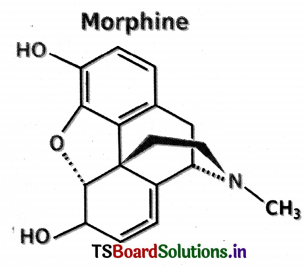
Morphine:

  1. Obtained from the latex of the plant Papaver somniferum.
  2. It is a powerful pain-relieving (analgesic) drug and sedative used in medicine.
  3. Chemically, it possesses a complex multi-ring structure.

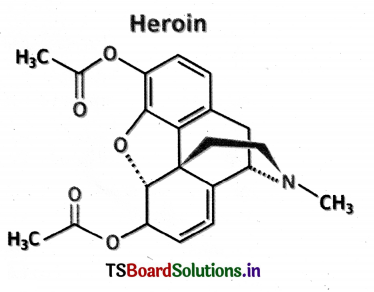
Heroin (Smack):

  1. Chemically known as Diacetylmorphine.
  2. It is produced by acetylation of morphine.
  3. It acts as a strong CNS depressant, slowing body functions and causing severe addiction.

Human Health and Disease Questions and Answers AP Inter 2nd Year Zoology Chapter 6 4

2. Cannabinoids: Cannabinoids act on receptors mainly present in the brain, affecting memory, mood, coordination, and behaviour.
Human Health and Disease Questions and Answers AP Inter 2nd Year Zoology Chapter 6 5

Source:

  1.  Obtained from the plant Cannabis sativa.
  2. Common products include marijuana, hashish, ganja, and charas.

Active Compound: The principal active chemical is Tetrahydrocannabinol (THC).

Effects :

  1. They influence the cardiovascular system.
  2. Produces euphoria, hallucinations, and altered perception.

Structure: Cannabinoids possess a phenolic ring attached to a long hydrocarbon chain.

3. Coca Alkaloids (Cocaine):

  • Source: Cocaine is extracted from the South American plant Erythroxylum coca.
  • Action: It blocks the reuptake of dopamine, increasing its concentration in the brain.

Effects:

  1. Produces alertness, excitement, increased energy, and euphoria.
  2. Excessive use may result in hallucinations and nervous disorders.

4. Other Commonly Abused Substances:

  • Hallucinogens: Plants such as Atropa belladonna and Datura contain hallucinogenic compounds that alter perception and produce hallucinations.
  • Misused Medicinal Drugs: Certain prescribed medicines like barbiturates, amphetamines, and benzodiazepines are often abused despite their therapeutic use.
  • Tobacco: Tobacco contains nicotine, which increases heart rate and blood pressure. Long-term consumption is associated with cancer and several respiratory diseases.

Question 6.
Describe the harmful effects caused by alcohol and drug abuse. Discuss its prevention and control measures.
Answer:
Alcohol and drug abuse, especially among adolescents, can lead to serious physical, mental, emotional, and social problems.
1. Harmful Effects:

  • Immediate and serious effects: Abuse of drugs or alcohol may cause reckless behaviour, violence, coma, heart failure, respiratory failure, brain damage, or even death. 1
  • Warning signs in young people: Common signs include poor academic performance, frequent absenteeism, poor personal hygiene, social isolation, depression, and aggressive behaviour.
  • Spread of infectious diseases: Sharing contaminated needles can transmit infections such as HIV/AIDS and Hepatitis B.
  • Long-term health effects: Continuous use damages the liver (cirrhosis), brain, nervous system, and during pregnancy it may also harm the developing foetus.

Effects of steroid abuse in sports :

  1. Females: Masculinisation and irregular menstrual cycles.
  2. Males: Reduced sperm count and enlargement of breasts (gynecomastia).
  3. Adolescents: Stunted growth and severe acne.

Social and financial consequences: Addiction may result in theft, family conflicts, emotional stress, poor relationships, and financial difficulties.

2. Prevention and Control Measures :

  • Avoid peer pressure: Adolescents should resist negative influences and develop confidence to make healthy choices.
  • Education and counselling: Awareness programmes and counselling help young people manage stress, accept failures positively, and adopt healthy habits such as sports, reading, and yoga.
  • Seek support: Individuals should approach parents, teachers, friends, or counsellors for guidance and emotional support.
  • Recognise warning signs early: Parents and teachers should identify behavioural changes at an early stage and take timely corrective action.
  • Professional treatment: People affected by addiction should receive help from doctors, psychologists, rehabilitation centres, and de-addiction programmes. With proper treatment, counselling, and determination, recovery is possible.

Human Health and Disease Questions and Answers AP Inter 2nd Year Zoology Chapter 6

I. Multiple Choice Questions

Question 1.
Diseases are broadly grouped into infectious and non-infectious diseases. In the list given below, identify the infectious diseases.
i) Cancer
ii) Pneumonia
iii) AIDS
iv) Arthritis
1. i and ii
2. ii and iii
3. iii and iv
4. ii and iv
Answer:
2. ii and iii

Question 2.
Find out the correct option with regards to the disease and its causative pathogen.

a) Elephantiasisi) Bacteria
b) Amoebiasisii) Plasmodium
c) Malariaiii) Entamoeba histolytica
d) Pneumoniaiv) Wuchereria

1. a-i, b-ii, c-iii, d-iv
2. a-iv, b-iii, c-ii, d-i
3. a-ii, b-iii, c-i, d-iv
4. a-iii, b-i, c-iv, d-ii
Answer:
2. a-iv, b-iii, c-ii, d-i

a) Elephantiasisiv) Wuchereria
b) Amoebiasisiii) Entamoeba histolytica
c) Malariaii) Plasmodium
d) Pneumoniai) Bacteria

Question 3.
Which of the following is a pair of viral diseases?
1. Ringworm and AIDS
2. Common cold and Pneumonia
3. AIDS and Common cold
4. Typhoid and Malaria
Answer:
3. AIDS and Common cold

Question 4.
The substance produced by a cell in viral infection that can protect other cells from further infection is :
1. Serotonin
2. Histamine
3. Interferon
4. Lysozyme
Answer:
3. Interferon

Question 5.
The number of Heavy and Light peptide chains present in Antibody molecule is
1. H2,L2
2.H3,L1,
3. H1, L3
4.H3,L3
Answer:
1. H2,L2

Human Health and Disease Questions and Answers AP Inter 2nd Year Zoology Chapter 6

Question 6.
Which of the following is mainly responsible for graft rejection in transplantation of
1. Inflammatory immune response
2. Autoimmune response
3. Cell-mediated immune response
4. Humoral immune response
Answer:
3. Cell-mediated immune response

Question 7.
Match List – I with List – II.

List – IList – II
a) Interferonsi) T-Lymphocytes
b) Colostrumii) Innate Immunity
c) Antibody-mediated immunityiii) Passive immunity
d) Cell-mediated immunityiv) B-Lymphocytes

1. a-ii, b-iv, c-i, d-iii
2. a-ii, b-iii, c-iv, d-i
3. a-iii, b-i, c-iii, d-i
4. a-i, b-ii, c-iii, d-iv
Answer:
2. a-ii, b-iii, c-iv, d-i

List – IList – II
a) Interferonsii) Innate Immunity
b) Colostrumiii) Passive immunity
c) Antibody-mediated immunityiv) B-Lymphocytes
d) Cell-mediated immunityi) T-Lymphocytes

Question 8.
The exaggerated response of the immune system to certain antigens present in the environment is called
1. Active Immunity
2. Passive Immunity
3. Autoimmunity
4. Allergy
Answer:
4. Allergy

Question 9.
Which of the following factors does not cause transmission of HIV infection?
1. Sharing of household items
2. Transfusion of contaminated blood
3. Sexual contact with an infected person
4. Sharing of infected needles
Answer:
1. Sharing of household items

Question 10.
The Cancer-causing genes are
1. Structural genes
2. Oncogenes
3. Functional genes
4. Expressor genes
Answer:
2. Oncogenes

Question 11.
The drug ‘Heroin’ is synthesized by.
1. Glycosylation of morphine
2. Nitration of morphine
3. Methylation of morphine
4. Acetylation of morphine
Answer:
4. Acetylation of morphine

Question 12.
Match List – I with List – II.

a) Cocainei) Effective sedative in surgery
b) Heroinii) Cannabis sativa
c) Morphineiii) Erythroxylum coca
d) Marijuanaiv) Papaver somniferum

1. a-iv, b-iii, c-i, d-ii
2. a-i, b-iii, c-ii, d-iv
3. a-ii, b-i, c-iii, d-iv
4. a-iii, b-iv, c-i, d-ii
Answer:
4. a-iii, b-iv, c-i, d-ii

a) Cocaineiii) Erythroxylum coca
b) Heroiniv) Papaver somniferum
c) Morphinei) Effective sedative in surgery
d) Marijuanaii) Cannabis sativa

Question 13.
Which one of the following pairs of disease can spread through blood transfusion?
1. Hepatitis and AIDS
2. Ascariasis and malaria
3. Hay fever and AIDS
4. Cholera and hepatitis
Answer:
1. Hepatitis and AIDS

II. Fill in the Blanks

1. Typhoid fever could be confirmed by…………………….. test.
Answer:
Widal test

2. Common cold differs with pneumonia as that virus do not infect ……………………………. .
Answer:
Lungs

3. Colostrum secreted by mother during the initial days ¿flactation has abundant ………………………. to protect the infant.
Answer:
antibodies

Human Health and Disease Questions and Answers AP Inter 2nd Year Zoology Chapter 6

4. The principle of immunisation or vaccination is based on the property …………………… of the immune system.
Answer:
Memory

5. The antibodies produced to allergies are of ………………………….. type.
Answer:
IgE

6. RNA genome ofthe HIV replicates to form vfral DNA with the help of enzyme ………………………. .
Answer:
Reverse Transcriptase

7. Heroin commonly called ………………………. .
Answer:
Smack

8. Smoking increases …………………….. content in blood and reduces the concentration of haem bound oxygen.
Answer:
Carbon monoxide (CO).

III. One Word Answer Questions

Question 1.
The overall ability of the host to fight the disease-causing organisms is called?
Answer:
Immunity

Question 2.
Which toxic substance is responsible for the chill and high fever recurring every three to four days in malarial fever?
Answer:
Haemozoin

Question 3.
Among non-infectious diseases, which disease is a major cause of death?
Answer:
Cancer

4. Subsequent encounter with the same pathogen elicits a highly intensified response in the body. This response is called?
Answer:
Secondary or Anamnestic Response

Question 5.
Which technique accurately detects pathological and physiological changes in the living tissue by using strong magnetic field and non-ionizing radiation?
Answer:
Magnetic Resonance Imaging (MRI)

Question 6.
Name the drug which is a very effective sedative and painkiller, and is very useful in patients who have undergone surgery?
Answer:
Morphine

Question 7.
A psychological attachment to certain effects, such as euphoria and temporary feeling of well-being, associated with drugs and alcohol is called?
Answer:
Addiction.

Objective Questions

Question 1.
Health refers to a condition of complete physical, mental and social well-being rather than merely the absence of:
1. Growth
2. Immunity
3. Disease
4. Fitness
Answer:
3. Disease

Question 2.
Disease is a condition that interferes with the normal functioning of:
1. Tissues only
2. Organs only
3. Body and mind
4. Cells only
Answer:
3. Body and mind

Question 3.
Organisms responsible for causing infectious diseases are known as :
1. Hormones
2. Enzymes
3. Pathogens
4. Nutrients
Answer:
3. Pathogens

Question 4.
The most common mode of transmission of communicable diseases is through :
1. Water contamination
2. Soil only
3. Sound
4. Air
Answer:
4. Air

Question 5.
Malaria is caused by:
1. Virus
2. Fungi
3. Protozoa
4. Bacteria
Answer:
3. Protozoa

Question 6.
Typhoid is caused by :
1. Protozoa
2. Fungus
3. Bacteria
4. Virus
Answer:
3. Bacteria

Human Health and Disease Questions and Answers AP Inter 2nd Year Zoology Chapter 6

Question 7.
The bacterium responsible for typhoid is :
1. HTV
2. Vibrio cholerae
3. Salmonella Typhi
4. Plasmodium
Answer:
3. Salmonella Typhi

Question 8.
Cholera mainly spreads through:
1. Skin contact
2. Air
3. Insects only
4. Water contamination
Answer:
4. Water contamination

Question 9.
Which of the following diseases is caused by a virus?
1. Malaria
2. Tuberculosis
3. AIDS
4. Typhoid
Answer:
3. AIDS

Question 10.
AIDS is caused by:
1. Bacteria
2. DNA virus
3. Protozoa
4. Retroviruses
Answer:
4. Retroviruses

Question 11.
HIV mainly attacks:
1. Platelets
2. WBCs (T-lymphocytes)
3. Neurons
4. RBCs
Answer:
2. WBCs (T-lymphocytes)

Question 12.
The full form of AIDS is:
1. Antibody Induced Disease System
2. Acute Infectious Disease Syndrome
3. Acquired Immune Deficiency Syndrome
4. Autoimmune Disorder System
Answer:
3. Acquired Immune Deficiency Syndrome

Question 13.
The immune system mainly protects the body from:
1. Nutrients
2. Hormones
3. Pathogens
4. Enzymes
Answer:
3. Pathogens

Question 14.
Vaccination provides:
1. Genetic immunity
2. Artificial active immunity
3. No immunity
4. Natural passive immunity
Answer:
2. Artificial active immunity

Question 15.
Antibodies are produced by:
1. Platelets
2. Neurons
3. WBCs
4. RBCs
Answer:
3. WBCs

Question 16.
The body’s primary protective barrier consists of:
1. T-cells
2. Skin and mucous membrane
3. B-cells
4. Antibodies
Answer:
2. Skin and mucous membrane

Question 17.
Which disease is commonly spread by houseflies?
1. Cholera
2. Malaria
3. Dengue
4. AIDS
Answer:
1. Cholera

Question 18.
Dengue is transmitted through:
1. Tick
2. Aedes mosquito
3. Housefly
4. Anopheles
Answer:
2. Aedes mosquito

Question 19.
Antibiotics are effective against:
1. Fungi only
2. Bacteria
3. Viruses
4. All pathogens
Answer:
2. Bacteria

Question 20.
Penicillin belongs to which category?
1. Vitamin
2. Antibiotic
3. Enzyme
4. Hormone
Answer:
2. Antibiotic

Question 21.
Overuse of antibiotics results in:
1. Faster cure
2. Resistance in bacteria
3. No effect
4. Immunity increase
Answer:
2. Resistance in bacteria

Human Health and Disease Questions and Answers AP Inter 2nd Year Zoology Chapter 6

Question 22.
Which disease is caused by Plasmodium?
1. AIDS
2. Cholera
3. Malaria
4. Typhoid
Answer:
3. Malaria

Question 23.
Chills accompanied by fever are commonly seen in:
1. Allergy
2. Malaria
3. Cancer
4. AIDS
Answer:
2. Malaria

Question 24.
Cancer is marked by:
1. Mutation only
2. No division
3. Uncontrolled cell division
4. Controlled cell division
Answer:
3. Uncontrolled cell division

Question 25.
Tumours that spread to other parts of the body are called:
1. Stable
2. Benign
3. Normal
4. Malignant
Answer:
4. Malignant

Question 26.
Benign tumours are:
1. Viral
2. Infectious
3. Non-spreading
4. Spreading
Answer:
3. Non-spreading

Question 27.
Smoking can lead to:
1. Lung cancer
2. Heart health
3. No effect
4. Immunity increase
Answer:
1. Lung cancer

Question 28.
Drug addiction mainly affects the:
1. Muscles
2. Skeletal system
3. Nervous system
4. Digestive system
Answer:
3. Nervous system

Question 29.
Excessive alcohol consumption mainly damages the:
1. Brain
2. Liver
3. Kidney
4. Heart
Answer:
2. Liver

Question 30.
Immunization helps in:
1. Preventing disease
2. Mutation
3. Spreading disease
4. Causing disease
Answer:
1. Preventing disease

Question 31.
Allergy is caused due to:
1. Mutation
2. Weak immunity
3. Infection
4. Hypersensitivity
Answer:
4. Hypersensitivity

Question 32.
Pathogens can enter the body through:
1. Skin
2. Digestive tract
3. Respiratory tract
4. All of these
Answer:
4. All of these

Question 33.
Which disease spreads through air?
1. Malaria
2. Typhoid
3. Tuberculosis
4. Cholera
Answer:
3. Tuberculosis

Question 34.
Cell-mediated immunity is mainly carried out by:
1. RBCs
2. Platelets
3. T-cells
4. B-cells
Answer:
3. T-cells

Question 35.
Which of the following is a vector-borne disease?
1. Allergy
2. AIDS
3. Cancer
4. Malaria
Answer:
4. Malaria

Question 36.
Hepatitis mainly affects which organ?
1. Heart
2. Kidney
3. Lung
4. Liver
Answer:
4. Liver

Human Health and Disease Questions and Answers AP Inter 2nd Year Zoology Chapter 6

Question 37.
The incubation period refers to the duration between:
1. Infection and symptoms
2. Birth and death
3. Treatment and cure
4. Exposure and recovery
Answer:
1. Infection and symptoms

Question 38.
Preventive measures include:
1. Vaccination
2. Hygiene
3. Clean water
4. All of these
Answer:
4. All of these

Question 39.
Good health depends upon:
1. Hygiene
2. Mental balance
3. Nutrition
4. All of these
Answer:
4. All of these

Question 40.
The malaria parasite first enters and multiplies in: .
1. Kidney cells
2. Liver cells
3. Muscle cells
4. RBCs
Answer:
2. Liver cells

Question 41.
Rupture of infected RBCs during malaria releases:
1. Hormones
2. Antibodies
3. Enzymes only
4. Toxins causing fever
Answer:
4. Toxins causing fever

Question 42.
Typhoid is diagnosed using:
1. PCR
2. ELISA
3. Widal test
4. X-ray
Answer:
3. Widal test

Question 43.
The HIV stage in which multiplication occurs without symptoms is:
1. Recovery phase
2. Latent phase
3. Acute phase
4. Final stage
Answer:
2. Latent phase

Question 44.
Activation of B-lymphocytes results in the production of:
1. Enzymes
2. Nutrients
3. Hormones
4. Antibodies
Answer:
4. Antibodies

Question 45.
T-lymphocytes mainly participate in:
1. Digestion
2. Humoral immunity
3. Circulation
4. Cell – mediated immunity
Answer:
4. Cell – mediated immunity

Question 46.
Vaccines stimulate the body to produce:
1. Hormones
2. Enzymes
3. Antibodies
4. Antigens
Answer:
3. Antibodies

Question 47.
Which disease is transmitted through contaminated food and water?
1. Cancer
2. Allergy
3. AIDS
4. Cholera
Answer:
4. Cholera

Question 48.
Dengue virus is transmitted by:
1. Housefly
2. Female Anopheles mosquito
3. Tick
4. Aedes mosquito
Answer:
4. Aedes mosquito

Question 49.
Allergy results from an exaggerated immune response to:
1. Hormones
2. Allergens
3. Vitamins
4. Nutrients
Answer:
2. Allergens

Question 50.
The substances released during allergic reactions are called:
1. Antibodies
2. Hormones
3. Histamines
4. Enzymes
Answer:
3. Histamines

Question 51.
Agents responsible for causing cancer are known as:
1. Allergens
2. Carcinogens
3. Antibiotics
4. Pathogens
Answer:
2. Carcinogens

Question 52.
Uncontrolled cell division in cancer occurs due to:
1. Hormones
2. Enzymes
3. Mutation in genes
4. Normal genes
Answer:
3. Mutation in genes

Question 53.
Which of the following is used in the treatment of cancer?
1. Antibiotics
2. Vaccination
3. Chemotherapy
4. Dialysis
Answer:
3. Chemotherapy

Question 54.
Alcohol addiction mainly affects the functioning of:
1. Muscles
2. Liver
3. Bones
4. Skin
Answer:
2. Liver

Question 55.
Malaria can be effectively controlled by:
1. Maintaining hygiene
2. Killing mosquitoes; All of these
3. Preventing water stagnation
4. All of these
Answer:
4. All of these

Question 56.
Which of the following diseases is caused by bacteria?
1. Dengue
2. Tuberculosis
3. AIDS
4. Malaria
Answer:
2. Tuberculosis

Question 57.
Passive immunity is obtained through:
1. Mutation
2. Infection
3. Antibody transfer
4. Vaccination
Answer:
3. Antibody transfer

Question 58.
Colostrum provides immunity to the newborn because of the presence of:
1. Enzymes
2. Hormones
3. Nutrients
4. Antibodies
Answer:
4. Antibodies

Human Health and Disease Questions and Answers AP Inter 2nd Year Zoology Chapter 6

Question 59.
Which of the following diseases is caused by a virus?
1. Cholera
2. Dengue
3. Tuberculosis
4. Typhoid
Answer:
2. Dengue

Question 60.
Antibiotics are ineffective against:
1. Protozoa
2. Viruses
3. Fungi
4. Bacteria
Answer:
2. Viruses

Question 61.
Misuse of antibiotics results in:
1. Faster cure
2. Immunity increase
3. No effect
4. Resistance
Answer:
4. Resistance

Question 62.
The immune system identifies foreign substances as:
1. Hormones
2. Enzymes
3. Antigens
4. Nutrients
Answer:
3. Antigens

Question 63.
Which disease spreads through sexual contact?
1. Cholera
2. Typhoid
3. Malaria
4. AIDS
Answer:
4. AIDS

Question 64.
HIV transmission can be prevented by:
1. Sterilized needles
2. Safe blood transfusion
3. Safe sex practices
4. All of these
Answer:
4. All of these

Question 65.
Which of the following is an autoimmune disorder?
1. Allergy
2. Diabetes
3. AIDS
4. Cancer
Answer:
2. Diabetes

Question 66.
HIV reduces immunity by specifically destroying:
1. RBCs
2. T-helper cells
3. Platelets
4. B-cells
Answer:
2. T-helper cells

Question 67.
In which form does the malaria parasite enter the human body?
1. Gamete
2. Sporozoite
3. Zygote
4. Larva
Answer:
2. Sporozoite

Question 68.
The release of toxic substances during malaria leads to:
1. Fever with chills
2. Vomiting
3. Cough
4. Diarrhea
Answer:
1. Fever with chills

Question 69.
The Widal test is commonly used to diagnose:
1. Malaria
2. Typhoid
3. AIDS
4. Dengue
Answer:
2. Typhoid

Question 70.
Through which process does cancer spread from one organ to another?
1. Mutation
2. Metastasis
3. Isolation
4. Immunity
Answer:
2. Metastasis

Question 71.
Benign tumors are different from malignant tumors because they:
1. Spread rapidly
2. Cause infection
3. Do not spread
4. Are viral
Answer:
3. Do not spread

Question 72.
Smoking raises the risk of:
1. Heart disease
2. Lung cancer
3. Respiratory diseases
4. All of these
Answer:
4. All of these

Question 73.
Drug abuse affects neurotransmitters present in the:
1. Heart
2. Brain
3. Liver
4. Kidney
Answer:
2. Brain

Question 74.
Vaccination provides long-term immunity by producing:
1. Antigens
2. Enzymes
3. Memory cells
4. Hormones
Answer:
2. Enzymes

Question 75.
The type of immune response developed after vaccination is known as:
1. Passive immunity
2. Active immunity
3. Artificial immunity
4. Natural immunity
Answer:
2. Active immunity

Question 76.
The transmission of diseases through vectors is known as:
1. Direct transmission
2. Indirect transmission
3. Genetic transmission
4. Passive transmission
Answer:
2. Indirect transmission

Question 77.
Which stage of HIV infection is characterized by the absence of symptoms?
1. Acute phase
2. Finalphase
3. Latentphase
4. Recovery phase
Answer:
3. Latentphase

Question 78.
Which of the following has the greatest weakening effect on the immune system?
1. Vaccination
2. HTV infection
3. Nutrition
4. Exercise
Answer:
2. HTV infection

Question 79.
In which condition does the immune system fail to recognize the body’s own cells?
1. Infection
2. Autoimmune disease
3. Cancer
4. Allergy
Answer:
2. Autoimmune disease

Question 80.
The ability of pathogens to withstand the effects of drugs is called:
1. Immunity
2. Mutation
3. Resistance
4. Isolation
Answer:
3. Resistance

Human Health and Disease Questions and Answers AP Inter 2nd Year Zoology Chapter 6

Question 81.
Which is the most effective way to prevent communicable diseases?
1. Antibiotics
2. Hygiene and vaccination
3. Isolation only
4. Mutation
Answer:
2. Hygiene and vaccination

Form Filling a Life Skill Inter 2nd Year English Grammar

For systematic learning, students can include AP Inter 2nd Year English Grammar with Answers and Form Filling a Life Skill in English Inter 1st Year in their daily study routine.

AP Inter 2nd Year English Form Filling a Life Skill with Answers

A form is a document with spaces in which answers to questions can be written or information can be recorded in an organized way. (Acc. to Cambridge English Dictionary)

Forms are a fundamental and essential part of modern life. It is a lifelong skill-from birth registrations to end-of-life paperwork-needed for school/college admissions, scholarship applications, and employment as well. They are used to collect standardized information for a wide range of purposes.

Whatever the type of form it may be, all forms can, in general, be divided into two types

I. Physical forms
II. Digital or Online Forms

  1. Academic Forms: Admission forms, scholarship applications, exam registration forms, etc.
  2. Job-Related Forms : Job application forms, internship forms.
  3. Official Forms : Aadhar enrollment form, Passport application, voter ID registration, driver’s license application, etc.
  4. Bank Forms: Account opening form, cheques, deposit slip, loan application, etc.
  5. Common Forms: Railway reservation form, APSRTC bus pass form, yoga registration form, etc.

Bank Forms :

People can make bank transactions such as depositing or withdrawing money, transferring funds, paying bills, or applying for loans. To perform these activities, customers fill in different bank forms – for example, deposit slips, withdrawal slips, Demand Draft (DD) forms.

Common Bank Forms and Their Purpose :

TypePurposeExample
DepositTo keep money in the bankCash deposit in Savings Account
WithdrawalTo take money from the bankUsing withdrawal slip/Cheque/ATM
TransferTo send money to othersNEFT / RTGS / UPI
LoanTo borrow money from bankPersonal Loan / Education Loan / Home Loan
PaymentTo pay billsElectricity bill or mobile recharge

Deposit Form :

A deposit form is used to deposit money into the customer’s bank account. It helps the bank record the transaction correctly and ensures that the money is credited to the right account. Every deposit slip requires the customer to write essential details such as name of the account holder, account number, date, amount, and type of deposit (cash or cheque).

Look at the following filled in form for your understanding.

Form Filling a Life Skill Inter 2nd Year English Grammar 1

Practice:

Dr. D. Parvathi Devi went to the State Bank of India and deposited an amount of Rs. 10000 (in 500/- denomination) in her SB (savings bank) account today. Her account number is 23013023011, and her mobile number is 940000940.

Form Filling a Life Skill Inter 2nd Year English Grammar 2

Answers:

  1. 17-06-2026 (Exam Date)
  2. Form Filling a Life Skill Inter 2nd Year English Grammar 11 (SB)
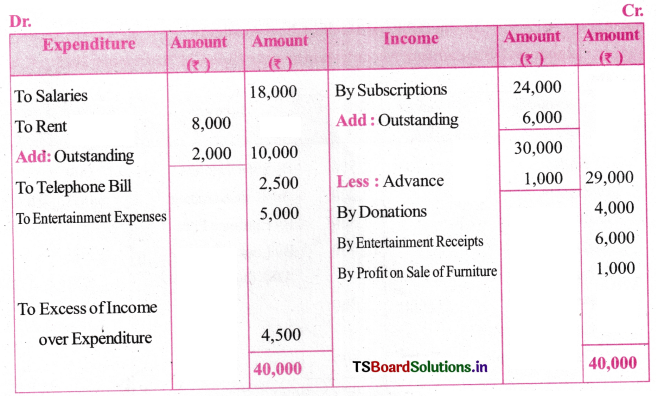
  3. 23013023011
  4. D. Parvathi Devi
  5. 940000940
  6. Ten Thousand Rupees
  7. 10000
  8. 10000
  9. 20
  10. Dr. D. Parvathi Devi

Form Filling a Life Skill Inter 2nd Year English Grammar

Withdrawl Form :

A withdrawal form is used to withdraw small/medium amounts in cash at the branch. It is a small slip given by your bank branch to take cash from your own account at the counter-without using a cheque or ATM card or when you don’t have your ATM card, or ATM limit is not enough- It’s valid only in the same branch.

Note : It is a must to take our Passbook along with us at the time of visiting bank to withdraw money.

Have a look at the below filled withdrawal form :

Form Filling a Life Skill Inter 2nd Year English Grammar 3

Practice:

Mr. S. Ravi Kumar went to Bank of Baroda to withdraw an amount of Rs. 12,000/- from his account on 15 June 2026. His account no. is 250150320320. Fill in the below form using the given details.

Form Filling a Life Skill Inter 2nd Year English Grammar 4

Answers:

  1. 250150320320
  2. 15-06-2026
  3. Twelve Thousand Rupees
  4. 12,000/-
  5. S. Ravi Kumar

Withdrawing Money Through Cheques :

A cheque is one of the most common and important tools of withdrawing money used in the banking system. It is a written order issued by an account holder (called the drawer) to their bank, instructing the bank to pay a specific amount of money to a person or organization (called the payee) from their account. With this facility, customers can draw large amounts of money.

Types of Cheques

  1. Bearer Cheque – Payable to the person holding the cheque.
  2. Order Cheque – Payable only to the person whose name is written on the cheque.
  3. Crossed Cheque – Can only be deposited into a bank account, not taken directly.

Let’s see the Activity :

Form Filling a Life Skill Inter 2nd Year English Grammar 5

Practice:

Mr. K. Kalyan is an employee in a company. His employer Y. Sunanda issued a cheque for an amount of Rs. 25000/- to K. Kalyan today towards his salary. Fill the following cheque leaf using the above details.

Form Filling a Life Skill Inter 2nd Year English Grammar 6

Answers:

  1. K. Kalyan
  2. 07-06-2026 (Exam Date)
  3. Twenty-five Thousand Rupees
  4. 25000/-
  5. Y. Sunanda

Demand Draft :

A Demand Draft is a prepaid bank instrument used to pay money to someone (the payee) in another place or the same city. Since the bank collects money first and then issues the DD, it’s considered safer than cash and more reliable than cheques (cheques can bounce; DDs don’t). While issuing DDs, banks levy charges (usually a minimum amount) which is called Exchange / Commission.

DD is generally used for – College/Exam fees, application forms, government payments, when the receiver demands a guaranteed mode of payment.

Example :

Form Filling a Life Skill Inter 2nd Year English Grammar 7

Practice:

Mr. N. George has taken admission for B.Tech at JNTU Anantapuram. He applied for a DD for Rs. 30000/- (in Rs. 500/- denomination) to be paid towards admission fee to The Registrar, JNTU, Anantapuram payable at SBI, Anantapuram by visiting SBI, Main Branch, Kurnool. He resides at 12-25, Teachers Colony, Kurnool.

The exchange to be paid towards the fee is 150/- (in Rs. 50/-denomination)

Form Filling a Life Skill Inter 2nd Year English Grammar 8

Answers:

  1. Kurnool
  2. 05-06-2026(Exam Date)
  3. N. George
  4. 30000/-
  5. 150/-
  6. Thirty Thousand Rupees
  7. Anantapuram
  8. 30150/-
  9. 500 × 60 = 30000, 50 × 3 = 150
  10. N. George

Form Filling a Life Skill Inter 2nd Year English Grammar

Post Office Deposit Form :

Money can be deposited and withdrawn and can perform different services by visiting a nearby post office similar to the banks.

Let’s study the following filled-in post office deposit form and practice the exercise that follows.

Form Filling a Life Skill Inter 2nd Year English Grammar 9

Practice:

You are D. Ramesh. Your sister V. Lakshmi Devi has asked you to deposit an amount of Rs. 5200 in her savings bank account at Ongole post office. Her account no. is 1256231245. She resides at 22/32, Main Bazar, Ongole, and her mobile number is 8500500500.

Form Filling a Life Skill Inter 2nd Year English Grammar 10

Answers:

  1. Form Filling a Life Skill Inter 2nd Year English Grammar 11 (SB)
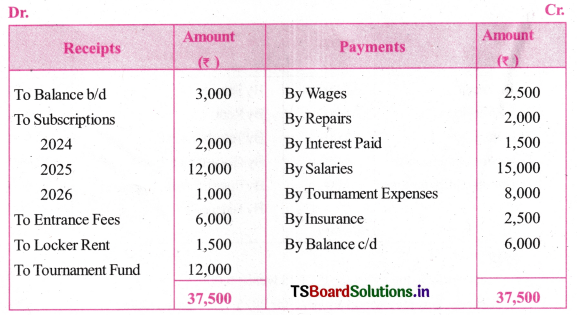
  2. Ongole
  3. 1256231245
  4. 03-06-2026(Exam Date)
  5. V. Lakshmi Devi
  6. Five Thousand two Hundred Rupees
  7. 5200/-
  8. D. Ramesh
  9. D. Ramesh, 22/32, Main Bazar, Ongole
  10. 8500500500

Post Office Withdrawal Form:

Form Filling a Life Skill Inter 2nd Year English Grammar 12

Practice:

Mr. Nagaraju sent Mr. Sri Pranav to Eluru post office as a messenger to withdraw an amount of Rs. 7000/- from his post office savings bank account on 15-12-2025. His account number is 120030022330 and his mobile no. is 8855882564. Fill in the below given form with the above details.

Form Filling a Life Skill Inter 2nd Year English Grammar 13

Answers:

  1. Eluru
  2. 15-12-2025
  3. Form Filling a Life Skill Inter 2nd Year English Grammar 11 (SB)
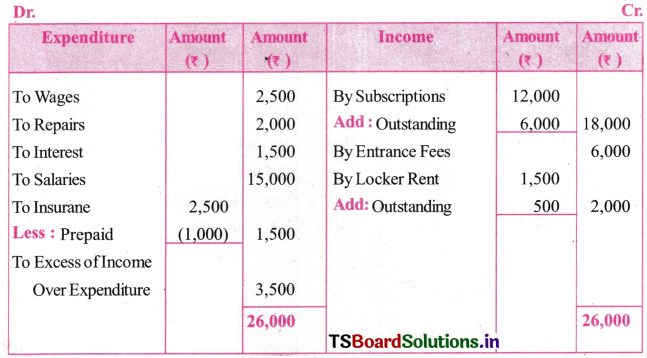
  4. 120030022330
  5. 7000/-
  6. Seven Thousand Rupees
  7. Nagaraju
  8. Sri Pranav
  9. Sri Pranav
  10. 8855882564

Form Filling a Life Skill Inter 2nd Year English Grammar

APSRTC BUS PASS FORM:

Form Filling a Life Skill Inter 2nd Year English Grammar 14

Practice:

Kum. A. Keerthi D/o A. Rangaiah has joined her Intermediate course in M.RC. at Govt Junior College, Piduguralla, Palnadu District for the AY. 2025-26 with admission No. 25231. Her date of birth is 09/01/2009. She wants to travel to her college from Guttikonda. Her address is 1-102, Temple Street, Guttikonda and her mobile no. is 7220220123.

Form Filling a Life Skill Inter 2nd Year English Grammar 15

Answers:

  1. A. Keerthi, A. Rangaiah
  2. 09/01/2009
  3. Female
  4. 7220220123
  5. 1-102, Temple Street, Guttikonda, Piduguralla, Palnadu District
  6. Piduguralla, M.P.C, 25231
  7. Palnadu, Govt. Junior College
  8. 2025-26
  9. Guttikonda to Govt Junior College, Piduguralla
  10. A. Keerthi

Form Filling a Life Skill Inter 2nd Year English Grammar

Railway Reservation Form:

The Indian Railway Reservation System lets you book a confirmed seat or berth on a chosen train, date, class, and quota. – You can reserve tickets online through the IRCTC website/app by searching trains, checking availability, entering passenger details, and paying via UPI/cards; an e-ticket with a PNR (10-digit reference) is sent by SMS/email. Booking is also possible at station counters using a requisition form. Ticket status may show CNF (confirmed), RAC (shared seat, may confirm later), or WL (waiting). Before departure, railways prepare the reservation chart, which finalizes allotments. It is essential to carry a valid photo ID with your ticket, follow coach rules, and if any cancellation we may cancel tickets for which a refund may be issued according to the rules prescribed by IRCTC.

Below is the pre-filled railway reservation Form for your understanding. Observe it and do the exercise that follows.

Form Filling a Life Skill Inter 2nd Year English Grammar 16

Practice:

Mr. B. Vijaya Bhaskar aged 45, is a resident of 2-27, A-Camp, Vijayawada wanted to visit Varanasi along with his wife Smt. Bharathi (aged 40). He booked two tickets (Sleeper Class) on 10 May 2026 to travel on 05 July 2026 from Vijayawada to Varanasi Junction by Ganga Kaveri Express Train No. 12669. His mobile no. is 6996992330. Fill the given form with the above details.

Form Filling a Life Skill Inter 2nd Year English Grammar 17

Answers:

  1. 12669
  2. 05 July 2026
  3. Sleeper Class
  4. Two
  5. 6996992330
  6. Varanasi Junction
  7. B. Vijaya Bhaskar, Indian, M, 45, Bharathi, Indian, F, 40
  8. B. Vijaya Bhaskar, 2-27, A-Camp, Vijayawada
  9. 10 May 2026
  10. B. Vijaya Bhaskar

Form Filling a Life Skill Inter 2nd Year English Grammar

Other Forms

a) Subscription Forms

Practice:

R. Sampath Kumar wants to subscribe to the Science Reporter monthly magazine for one year. His address is 1-007, King Street, Nellore and his email id is [email protected]. Fill in the given subscription form using the above details with the help of your teacher.

Form Filling a Life Skill Inter 2nd Year English Grammar 18

Answer:

  1. 1 Yr (₹ 750.00)
  2. R. SAMPATH KUMAR
  3. 1-007, King Street, Nellore
  4. [email protected]
  5. R. Sampath Kumar

Digital/Online Forms

Digital or online forms are electronic versions of paper forms that we fill on a phone or computer. They are used for college admissions, scholarships, competitive-exam registrations, bank KYC, ticket booking, and government services.

Exercise

Question 1.
Mr. Karunakar went to Union Bank to withdraw an amount of Rs. 15000/- from his savings account on 05/10/2025. His account no. is 0138100236. Fill in the form using above details.

Form Filling a Life Skill Inter 2nd Year English Grammar 19

Answer:

  1. 05/10/2005
  2. Karunakar
  3. Fifteen Thousand Rupees
  4. 15000/-
  5. 0138100236

Question 2.
N. Vangmayi visited Ashok Nagar Branch of Union Bank today and deposited Rs. 56600/- (in 500/- and 100/- denominations) into the account of Ms. V. Radhika’s account. Ms. V. Radhika Account no. is 013950010050012 and her PAN no. is SSMPD6696E.

Form Filling a Life Skill Inter 2nd Year English Grammar 20

Answer:

  1. 06-06-2026
  2. Ashok Nagar
  3. SSMPD6696E
  4. V. Radhika
  5. 013950010050012
  6. 113
  7. 2
  8. 56600/-
  9. Fifty Six Thousand Six Hundred Rupees
  10. N. Vangmayi

Question 3.
Kiran Kumar a resident of Rajahmundry went to Main Branch of Axis Bank to apply for a DD for Rs. 8200 on 22/02/2026 to be paid in favour of The Manager M/s Nagarjuna Company, Srikakulam payable at Srikakulam Branch. The exchange to be paid towards the charges is Rs. 50/-. (in 500/- and 50/- denomination)

Form Filling a Life Skill Inter 2nd Year English Grammar 21

Answer:

  1. Rajahmundry
  2. 22/02/2026
  3. Manager M/sNagarjuna Company, Srikakulam
  4. 8200/-
  5. 50/-
  6. 8250/-
  7. Srikakulam
  8. Eight Thousand Two Hundred Rupees
  9. 500 × 16 = 8000, 50 × 5 = 250
  10. Kiran Kumar

Form Filling a Life Skill Inter 2nd Year English Grammar

Question 4.
Y. Chethana visited Main Branch of Canara Bank today to deposit Rs. 12400/-in her savings bank account no. 10855678862 (in Rs. 500/- and 200/- denomination). Her mobile number is 9123523516. Fill in the form using the given details.

Form Filling a Life Skill Inter 2nd Year English Grammar 22

Answer:

  1. 03-06-2026 (Exam Date)
  2. Main Branch
  3. 10855678862
  4. Y. Chethana
  5. 9123523516
  6. Twelve Thousand Four Hundred Rupees
  7. 12400/-
  8. 24
  9. 2
  10. Y. Chethana

Question 5.
Bogolu Bharath Kumar, resident of VR Colony, Nandyala wishes to join Gym and Fitness Centre. So, he approached the nearest gym canter, The Fitness Habit on 31/12/2026 and filled in his membership application form and paid cash in advance for a month. His Date of Birth is 28/02/1999 and his mobile no. is 7668669660.

Form Filling a Life Skill Inter 2nd Year English Grammar 223

Answer:

  1. Bogolu
  2. Bharath Kumar
  3. 28/02/1999
  4. VR Colony, Nandyala
  5. 7668669660
  6. Form Filling a Life Skill Inter 2nd Year English Grammar 11
  7. Form Filling a Life Skill Inter 2nd Year English Grammar 11
  8. Form Filling a Life Skill Inter 2nd Year English Grammar 11
  9. Bogolu Bharath Kumar
  10. 31/12/2026

Form Filling a Life Skill Inter 2nd Year English Grammar

Question 6.
You are assisting at an Aadhaar Seva Kendra on 12-10-2025. Applicant Chinthala Yamini D/o Chinthala Rajendra an Indian resident (Aadhaar No. 348576219012, Mobile 9876543210, Email yaminichinthala @example.com) requests an address update due to shifted residence. Her new residence address is D.No. 12-8, Sri Lakshmi Residency, MIG-2, APHB Colony, Bhagyanagar, Markapur, Andhra Pradesh, PIN 518004 and her date of birth is 14/09/2009. Fill in the details using the Aadhar Enrolment/ Update Form.

Form Filling a Life Skill Inter 2nd Year English Grammar 25

NOTE: This format is applicable for Pol documents at St. Nos. 17,20,21,22,31 & 31: Pol documents at SI. Nos. 23,24, 27, 38, 44 & 45: POR documents at SI. Nos. 13 & 14/DOB documents at SI. Nos. 4, 5, 14 & 15 of Schedule II of the Aadhaar (Enrolment and Update) Regulations, 2016, as amended from time to time.
Answer:

  1. 12-10-2025
  2. Resident
  3. Update Request
  4. 348576219012
  5. Chinthala Yamini
  6. Chinthala Rajendra
  7. D.No. 12-8, Sri Lakshmi Residency, MIG-2, APHB Colony, Bhagyanagar, Markapur, Andhra Pradesh
  8. 518004
  9. 14/09/2009
  10. Chinthala Yamini

Accounting for Not-For-Profit Organisations Questions and Answers AP Inter 2nd Year Accounts Chapter 2

Reviewing AP Inter 2nd Year Accounts Study Material Chapter 2 Accounting for Not-For-Profit Organisations Questions and Answers can help students prepare confidently for exams.

AP Inter 2nd Year Accountancy 2nd Lesson Accounting for Not-For-Profit Organisations Questions and Answers

I. Fill in the blanks

Question 1.
The main objective of a non-trading organisation is to provide ____.
Answer:
Service

Question 2.
____ Account resembles the Cash Book of a trading concern.
Answer:
Receipts & Payments

Question 3.
____ Account resembles the Profit & Loss Account of a trading concern.
Answer:
Income & Expenditure

Question 4.
The excess of income over expenditure is called ____.
Answer:
Surplus

Question 5.
The excess of expenditure over income is called ___.
Answer:
Deficit

II. Very Short Answer Questions

Question 1.
What is a Non-Trading Concern?
Answer:
A Non-Trading Concern is an organisation established to provide services to society or its members rather than to make a profit. Examples include charitable trusts, sports clubs, libraries, and educational institutions.

Question 2.
What is Capital Expenditure? Explain with an example.
Answer:
Capital Expenditure is the money spent on acquiring long-term assets that are useful for more than one accounting year. Examples include the purchase of land, buildings, furniture, or motor vehicles.

Question 3.
What is a Capital Receipt? Give an example.
Answer:
A Capital Receipt is an amount received that increases the capital of the organisation and does not occur regularly. Examples include capital fund, bank loans, and proceeds from the sale of assets.

Question 4.
Describe Revenue Receipts with one example.
Answer:
Revenue Receipts are amounts received during the normal activities of the organisation and are received regularly. An example is subscriptions collected from members.

Accounting for Not-For-Profit Organisations Questions and Answers AP Inter 2nd Year Accounts Chapter 2

Question 5.
Write about Revenue Expenditure with one example.
Answer:
Revenue Expenditure refers to the expenses incurred for the routine operations of the organisation. Examples include salaries, rent, wages, and insurance expenses.

Question 6.
Write a short note on Legacies.
Answer:

  1. Legacies are amounts received by an organisation through the will of a deceased person.
  2. They are non-recurring in nature and are treated as capital receipts, which are shown on the liabilities side of the Balance Sheet.

Question 7.
What is a Subscription?
Answer:

  1. A Subscription is the amount paid regularly by the members of a non-trading organisation.
  2. It is one of the major sources of income and is recorded on the credit side of the Income & Expenditure Account.

Question 8.
What are Donations? Mention the types of donations.
Answer:
Donations are amounts received by non-trading organisations from the general public.

Types of Donations:

  1. General Donation – Considered as income of the organisation.
  2. Specific Donation – Treated as a liability and utilised only for the purpose for which it is received.

III. Short Answer Questions

Question 1.
Write any four differences between Trading and Non-Trading Concerns.
Answer:

BasisTrading OrganisationsNon-Trading Organisations
ObjectiveEstablished to earn profitsEstablished to provide services
Sources of FundsCapital invested by ownersCapital fund, donations, and subscriptions
Financial StatementsTrading A/c, Profit & Loss A/c, and Balance SheetReceipts & Payments A/c, Income & Expenditure A/c, and Balance Sheet.
ResultShows Net Profit or Net LossShows Surplus or Deficit

Question 2.
Write any four differences between Receipts & Payments A/c and Income & Expenditure A/c.
Answer:

BasisReceipts & Payments A/cIncome & Expenditure A/c
NatureIt is a Real AccountIt is a Nominal Account
Items RecordedRecords all receipts and paymentsRecords only revenue incomes and revenue expenses
BasisPrepared on a cash basisPrepared on an accrusal basis
Closing ResultDisplays the closing cash and bank balanceDisplays the surplus or deficit for the year

Question 3.
Explain the term Donations and classify them with examples.
Answer:
Donations are amounts received from the public to support the activities and objectives of a non-trading organisation.

Classification:

  1. General Donation
    1. Received for meeting the general expenses of the organisation.
    2. Credited to the Income & Expenditure Account. Example: Donation received from the public for the regular activities of a club.
  2. Specific Donation
    1. Received for a particular or specified purpose,
    2. Shown on the liabilities side of the Balance Sheet. Example: Donation collected for a Building Fund.

Question 4.
How do you prepare an Income & Expenditure Account from a Receipts & Payments Account?
Answer:
Steps involved in preparing the Income & Expenditure Account:

  1. Ignore the opening and closing balances of cash and bank.
  2. Take only revenue receipts and revenue expenses, excluding all capital items.
  3. Include only the incomes and expenses that relate to the current accounting year.
  4. Make necessary adjustments for outstanding and prepaid expenses.
  5. Adjust non-cash items such as depreciation and profit or loss on the sale of fixed assets.
  6. The final balance indicates either the surplus or deficit for the accounting year.

IV. Long Answer Questions

Question 1.
Distinguish between Trading and Non-Trading Concerns.
Answer:

BasisTrading OrganisationsNon-Trading Organisations
ObjectiveFormed to earn profitsFormed to provide services
Sources of FundsCapital invested by the ownersCapital fund, donations, and subscriptions
Financial StatementsTrading A/c, Profit & Loss A/c, and Balance SheetReceipts & Payments A/c, Income & Expenditure A/c, and Balance Sheet
ResultShows Net Profit or Net LossShows Surplus or Deficit
Main ActivityEngaged in buying and selling of goodsEngaged in providing services only
Accounting FocusGives importance to profit earningGives importance to rendering services to members or the public
OwnersOwned by individuals or partnersManaged by a committee or trustees; there are no owners
ExamplesBusiness firmsClubs, schools, hospitals, and charitable institutions


Exercises

Question 1.
Prepare Receipts & Payments Account from the following particulars
Opening Cash in Hand – 5,000
Subscriptions – 22,000
Tournament Expense – 5,000
Investment – 7,000
Sunday Expenses – 4,500
Electricity Charges – 5,000
Opening Cash at Bank – 14,000
Donations – 8,000
Rent Paid – 8,000
Locker Rent Received – 2,000
Salaries – 40,000
Closing Cash in Hand – 5,500
Solution:
Receipts & Payments Account
Accounting for Not-For-Profit Organisations Questions and Answers AP Inter 2nd Year Accounts Chapter 2 1

Question 2.
Prepare a Receipt & Payment Account.

Opening cash balance – 6000
Stationery – 1000
Entrance fees – 4000
Newspapers purchase – 600
Telephone bill paid – 1200
Subscriptions – 8000
Insurance paid – 800
Donations – 4000
Solution:
Receipts & Payments Account
Accounting for Not-For-Profit Organisations Questions and Answers AP Inter 2nd Year Accounts Chapter 2 2

Accounting for Not-For-Profit Organisations Questions and Answers AP Inter 2nd Year Accounts Chapter 2

Question 3.
Prepare the Income and Expenditure Account of Leela Chess Academy for the year ended 31st December 2025 from the following particulars.

Receipts & Payments Account
Accounting for Not-For-Profit Organisations Questions and Answers AP Inter 2nd Year Accounts Chapter 2 13
Adjustments:
Salaries outstanding at the end of the year: ₹ 1,000
Subscriptions due for the year 2025: ₹ 4,000.
Book value of furniture sold: ₹ 3,000.
Solution:
In the Books of Leela Chess Academy
Income & Expenditure Account for the year ended 31st December 2025
Accounting for Not-For-Profit Organisations Questions and Answers AP Inter 2nd Year Accounts Chapter 2 3

Question 4.
From the following Receipts & Payments Account of Vaishali Trust, prepare the Income & Expenditure Account for the year ended 31st March 2025.
Accounting for Not-For-Profit Organisations Questions and Answers AP Inter 2nd Year Accounts Chapter 2 14

Adjustments:
1. Subscriptions due as on 31.03.2025 were ₹ 6,000;
2. Subscriptions received in advance for 2025-26 were ₹ 1,000.
3. Rent outstanding as on 31.03.2025 was ₹ 2,000.
4. Book value of furniture sold was ₹ 4,000.
Solution:
In the Books of Vaishali Trust
Income & Expenditure Account for the year ended 31st March 2025
Accounting for Not-For-Profit Organisations Questions and Answers AP Inter 2nd Year Accounts Chapter 2 4

Question 5.
From the following Receipts & Payments Account of Hasini Chess Academy, prepare the Income & Expenditure Account for the year ending 31st December 2025.

Receipts and Payments Account of Hasani Chess Academy
Accounting for Not-For-Profit Organisations Questions and Answers AP Inter 2nd Year Accounts Chapter 2 15

Adjustments:
1. Subscriptions outstanding for the year 2025: ₹ 6,000
2. Prepaid Insurance: ₹ 1,000
3. Locker Rent due: ₹ 500
Solution:
In the Books of Hasini Chess Academy
Income & Expenditure Account for the year ended 31st December 2025
Accounting for Not-For-Profit Organisations Questions and Answers AP Inter 2nd Year Accounts Chapter 2 5

Question 6.
From the following Receipts and Payments Account of Abhay Cricket Academy, prepare the Income & Expenditure Account for the year ending 31st December 2024.

Receipts and Payments Account of Abhay Cricket Academy
Accounting for Not-For-Profit Organisations Questions and Answers AP Inter 2nd Year Accounts Chapter 2 16
Adjustments:
1. Donations are to be capitalized
2. Subscriptions due as on 31.12.2024: ₹ 5,000.
3. Depreciate Sports Material at 10% per annum.
Solution:
In the Books of Abhay Cricket Academy
Income & Expenditure Account for the year ended 31st December 2024
Accounting for Not-For-Profit Organisations Questions and Answers AP Inter 2nd Year Accounts Chapter 2 6

Question 7.
From the following Receipts & Payments Account of Vijayawada Sports Club, prepare the Income & Expenditure Account for the year ended 31st December 2025.

Receipts & Payments Account of Vijayawada Sports Club
Accounting for Not-For-Profit Organisations Questions and Answers AP Inter 2nd Year Accounts Chapter 2 17
Adjustments:
1. Subscriptions receivable for the year 2025: ₹ 6,000
2. Capitalize 50% of the Entrance Fees
3. Depreciate Furniture at 10%
Solution:
In the Books of Vijayawada Sports Club
Income & Expenditure Account for the year ended 31st December 2025
Accounting for Not-For-Profit Organisations Questions and Answers AP Inter 2nd Year Accounts Chapter 2 7

Accounting for Not-For-Profit Organisations Questions and Answers AP Inter 2nd Year Accounts Chapter 2

Question 8.
From the following Receipts & Payments Account of Visakha Charitable Trust, prepare the Income & Expenditure Account for the year ended 31st March 2025.

Receipts & Payments Account of Visakha Charitable Trust
Accounting for Not-For-Profit Organisations Questions and Answers AP Inter 2nd Year Accounts Chapter 2 18

Adjustments:
1. Subscriptions received in advance: ₹ 2,000
2. Prepaid Insurance: ₹ 500
3. Salaries outstanding: ₹ 2,000
Solution:
In the Books of Visakha Charitable Trust
Income & Expenditure Account for the year ended 31st March 2025
Accounting for Not-For-Profit Organisations Questions and Answers AP Inter 2nd Year Accounts Chapter 2 8

Question 9.
From the following Receipts & Payments Account of Guntur Sports Club, prepare the Income & Expenditure Account for the year ended 31st December 2024.

Receipts & Payments Account of Guntur Sports Club
Accounting for Not-For-Profit Organisations Questions and Answers AP Inter 2nd Year Accounts Chapter 2 19
Adjustments:
1. Subscriptions to be received: ₹ 4,000
2. Salaries unpaid: ₹ 2,000
3. Insurance prepaid: ₹ 1,000
4. Donations & Entrance Fees are to be capitalized.
Solution:
In the Books of Guntur Sports Club
Income & Expenditure Account for the year ended 31st December 2024
Accounting for Not-For-Profit Organisations Questions and Answers AP Inter 2nd Year Accounts Chapter 2 9

Question 10.
From the following Receipts & Payments Account of Vizianagaram Cultural Club, prepare the Income & Expenditure Account for the year ended 31st December 2025.

Receipts & Payments Account of Vizianagaram Cultural Club
Accounting for Not-For-Profit Organisations Questions and Answers AP Inter 2nd Year Accounts Chapter 2 20
Adjustments:
1. Subscriptions due for the year 2025: ₹ 1,000
2. Book value of Furniture sold: ₹ 1,500
3. Salaries payable as on 31-12-2025: ₹ 2,000
4. Depreciate Cycle at 10%.
Solution:
Accounting for Not-For-Profit Organisations Questions and Answers AP Inter 2nd Year Accounts Chapter 2 10

Question 11.
From the following Receipts and Payments Account of Geetansh Cultural Club, prepare the Income and Expenditure Account for the year ended 31st December 2025.

Receipts and Payments Account of Geetansh Cultural Club
Accounting for Not-For-Profit Organisations Questions and Answers AP Inter 2nd Year Accounts Chapter 2 21
Adjustments:
1. Subscriptions outstanding for 2025: ₹ 1,500
2. Salaries outstanding: ₹ 1,000
3. Depreciate Musical Instruments at 10%.
4. 50% of Entrance Fees is to be treated as capital receipt.
Solution:
In the Books of Geetansh Cultural Club
Income & Expenditure Account for the year ended 31st December 2025
Accounting for Not-For-Profit Organisations Questions and Answers AP Inter 2nd Year Accounts Chapter 2 11

Question 12.
From the following Receipts and Payments Account of Babajee Educational Society, prepare the Income and Expenditure Account for the year ended 31st December 2025.

Accounting for Not-For-Profit Organisations Questions and Answers AP Inter 2nd Year Accounts Chapter 2 22
Adjustments:
1. Subscriptions outstanding for 2025: ₹ 2,000
2. Subscriptions 2024: ₹ 1000
3. Rent paid in advance ₹ 400
4. Salaries outstanding as on 31 Dec 2025: ₹ 1,200
Solution:
In the Books of Babajee Educational Society
Income & Expenditure Account for the year ended 31st December 2025
Accounting for Not-For-Profit Organisations Questions and Answers AP Inter 2nd Year Accounts Chapter 2 12

Resume Writing Inter 2nd Year English Grammar

For systematic learning, students can include AP Inter 2nd Year English Grammar with Answers and Resume Writing in English Inter 1st Year in their daily study routine.

AP Inter 2nd Year English Resume Writing with Answers

A resume is a short, clear, and well-organized summary of your education, skills, and achievements. It is the first impression you give to an employer when you apply for a job, internship, or even a scholarship. The word “resume” comes from the French word meaning summary.

The main purpose of a resume is to show your suitability for a specific role. Unlike casual descriptions of yourself, a resume is a professional document that highlights your strengths and helps you stand out.

A good resume should be brief, relevant, clear and honest.

Structure of a Resume:

A well-organized resume helps the employer quickly find the important information about you. Most resumes follow a standard format with clear sections, so your information is easy to read and professional.

A resume usually contains the following sections :

1. Header / Contact Information

  • Your full name, phone number, email address, and optionally your Linkedln profile.
  • Make sure your email is professional (avoid nicknames or infor-mal addresses).

2. Objective

  • A short sentence or two about your goals and what you hope to achieve in this role.
  • Example : “To secure a summer internship in marketing where I can apply my communication skills and learn new strategies.”

3. Education

  • List your academic qualifications in reverse chronological order (most recent first).
  • Include the name of the institution, course, year, and percentage or grade if required.

4. Work Experience / Internships

  • Include part-time jobs, internships, or volunteer experience relevant to the position.
  • Mention your role, organization, and main responsibilities or achievements.

5. Skills

  • Highlight relevant technical, language, or interpersonal skills.
  • Example : MS Word, Excel, Teamwork, Time Management

6. Achievements / Awards

  • Any recognition you have received in academics, sports, or other activities.

7. Hobbies / Interests

  • Include hobbies that show positive qualities, like leadership, creativity, or teamwork.

8. References

  • You can write “Available on request” unless a specific reference is required.

9. Declaration and Signature

  • You assure that all the information provided by you is true to your knowledge and sign the resume along with mentioning the relevant place and date.

Example :
I hereby declare that all the information provided above is true to the best of my knowledge and belief.
Place : [City]
Date : [DD/MM/YYYY]
Signature : ____________

Resume Writing Inter 2nd Year English Grammar

Sample Resume 1 : Fresh Intermediate Student

Name : Ananya Reddy
Phone : 98765 43210
Email : [email protected]

Objective :
To secure a part-time position in a local library where 1 can improve my communication and organizational skills.

Education :

  • Intermediate (10+2) – St. Mary’s Junior College, 2025 – 88%
  • SSC – St. Mary’s High School, 2023 – 90%

Skills :

  • MS Word and PowerPoint
  • Basic computer skills
  • Communication and teamwork

Achievements / Awards :

  • First Prize, Inter-school Debate Competition, 2024
  • Certificate of Merit in Science Olympiad, 2023

Hobbies / Interests :

  • Reading novels and short stories
  • Painting and sketching

References : Available on request

Declaration :
I hereby declare that all the information provided above is true to the best of my knowledge and belief.

Place : [City]
Date : [DD/MM/YYYY]
Signature : ____________

Sample Resume 2 : Recent Graduate

Name : Rahul Sharma

Phone : 91234 56789

Email : [email protected]
Linkedln : linkedin.com/in/rahulsharma

Objective :
To obtain an entry-level marketing position in a dynamic organization where I can apply my creative and analytical skills to achieve business growth.

Education :

  • B.Com (Commerce) – Andhra University, 2025 – 8.5 CGPA
  • Intermediate (10+2) – Sri Chaitanya Junior College, 2022 – 90%
  • SSC – St. Paul’s High School, 2020 – 92%

Work Experience / Internships:

  • Marketing Intern, Bright Ideas Pvt. Ltd., June – August 2024
    • Assisted in creating social media campaigns
    • Conducted market research and competitor analysis

Skills :

  • Digital Marketing Basics
  • MS Excel, Word, PowerPoint
  • Communication and Teamwork

Achievements / Awards :

  • Best Project Presentation Award, B.Com, 2025
  • Volunteer of the Year, College Cultural Club, 2023

Hobbies / Interests :

  • Blogging on travel and lifestyle
  • Photography

References : Available on request

Declaration :
I hereby declare that all the information provided above is true to the best of my knowledge and belief.
Place : [City]
Date : [DD/MM/YYYY]
Signature : ____________

Resume Writing Inter 2nd Year English Grammar

Exercise

Question 1.
Software Developer

Arjun Mehta recently graduated with a B.Tech in Computer Science from Andhra University, securing a 9.1 CGPA. During college, he developed several small apps and websites, and completed a 3-month internship at Tech Solutions Pvt. Ltd., assisting in coding and debugging projects. Arjun is skilled in Java, Python, HTML, and CSS. He enjoys solving puzzles, participating in hackathons, and reading technology blogs. Arjun aspires to work as a software developer in a dynamic IT company where he can contribute to innovative projects and enhance his programming skills.
Answer:
ARJUN MEHTA

Phone : [Insert Phone Number]
Email : [email protected]
Linkedln : linkedin.com/in/arjunmehta
Location : Andhra Pradesh, India

1. Objective
Highly motivated B.Tech graduate seeking a Software Developer position in a dynamic IT environment. Aiming to contribute to innovative projects while utilizing and further enhancing my programming skills in Java, Python, and web technologies.

2. Education

  • B.Tech in Computer Science and Engineering | 2022 – 2026 Andhra University, Visakhapatnam
  • CGPA : 9.1 / 10.0
  • Intermediate (12th Grade) | [Insert Year] [Name of Institution]
  • Percentage/Grade : [Insert Details]
  • Secondary School Certificate (10th Grade) | [Insert Year] [Name of Institution]
  • Percentage/Grade : [Insert Details]

3. Work Experience / Internships

Tech Solutions Pvt. Ltd. | Software Engineering Intern
Duration : 3 Months

  • Assisted the development team in writing clean, efficient code for client-side applications.
  • Contributed to the debugging process, identifying and resolving software defects to improve system stability.
  • Collaborated with senior developers to document project requirements and technical specifications.

4. Skills

  • Programming Languages : Java, Python
  • Web Technologies : HTML5, CSS3, JavaScript
  • Technical Skills : Coding; Debugging, Application Development
  • Interpersonal Skills : Problem-solving, Adaptability, Team Collaboration

5. Achievements / Awards

  • Successfully developed and deployed several personal web applications and mobile apps.
  • Active participant in university-level and regional Hackathons.
  • Consistently maintained a high academic standing (Top 5% of the batch).

6. Hobbies / Interests

  • Problem Solving : Regularly solving complex logic puzzles and algorithmic challenges.
  • Technology Trends : Avid reader of technology blogs to stay updated on emerging software trends.
  • Competitive Programming : Participating in coding contests to sharpen technical proficiency.

7. References : Available on request.

8. Declaration and Signature
I hereby declare that all the information provided above is true to the best of my knowledge and belief.

Place : [Insert City]
Date : [Insert Date]
Signature : (ARJUN MEHTA)

Resume Writing Inter 2nd Year English Grammar

Question 2.
Doctor

Dr. Priya Rangan recently completed her MBBS from Osmania Medical College with distinction. During her studies, she volunteered in community health camps and assisted senior doctors in patient care. Priya has strong analytical skills, excellent communication, and a caring attitude. She enjoys reading medical journals, practicing yoga, and mentoring junior students. Her goal is to work in a hospital as a junior doctor, gaining experience and providing compassionate healthcare to patients.
Answer:
DR. PRIYA RANGAN

Phone : [Insert Phone Number]
Email : [email protected]
Linkedln : linkedin. com/in/privarangan
Location : Hyderabad, India

1. Objective
Compassionate and dedicated MBBS graduate seeking a Junior Doctor position to provide high-quality patient care. Committed to gaining clinical experience in a fast-paced hospital environment while applying strong analytical and communication skills to improve patient outcomes.

2. Education

  • MBBS (Bachelor of Medicine, Bachelor of Surgery) | [Year of Completion] Osmania Medical College, Hyderabad
  • Result : Graduated with Distinction
  • Higher Secondary School (Class 12) | [Insert Year] [Name of Institution]
  • Result : [Insert Percentage/Grade]

3. Work Experience / Internships
Osmania General Hospital / Community Health Centers | Medical Intern/Volunteer

  • Clinical Assistance : Assisted senior residents and consultants in daily rounds, patient diagnosis, and developing treatment plans.
  • Patient Care : Provided direct care and monitored vital signs for patients in various departments.
  • Community Outreach : Volunteered in community health camps, providing basic medical screenings and health education to underserved populations.
  • Documentation : Maintained accurate patient records and assisted in medical history taking and physical examinations.

4. Skills

  • Technical : Clinical Diagnosis, Patient Monitoring, Basic Life Support (BLS).
  • Soft Skills : Excellent Communication, Empathy, Analytical Thinking, Team Collaboration.
  • Languages : English, Hindi, Telugu.

5. Achievements / Awards

  • Awarded Distinction for academic excellence throughout the MBBS program.
  • Recognized for outstanding contribution during community health camp initiatives.
  • Consistently ranked among the top students in clinical rotations.

6. Hobbies / Interests

  • Continuous Learning : Regularly reading medical journals to stay updated on the latest healthcare advancements.
  • Mentorship : Mentoring junior medical students in clinical skills and academic subjects.
  • Wellness : Practicing yoga for mental focus and physical fitness.

7. References : Available on request

8. Declaration and Signature
I hereby declare that all the information provided above is true to the best of my knowledge and belief.

Place : [Insert City]
Date : [Insert Date]
Signature : (DR. PRIYA RANGAN)

Question 3.
Teacher

Karan Reddy completed his B.Ed from Sri Chaitanya College of Education and has a strong passion for teaching young learners. During college, he interned at a local school, conducting lessons in English and Mathematics, and received positive feedback from both students and mentors. Karan is skilled in lesson planning, classroom management, and using educational technology. He enjoys reading, storytelling, and participating in educational workshops. He aims to work as a high school teacher, helping students learn effectively and develop confidence in their abilities.
Answer:
KARAN REDDY
Phone : [Your Phone Number]
Email : [email protected]
Linkedln : linkedin.eom/m/karanreddy
Location : [Your City, State]

1. Objective
Dedicated and passionate B.Ed. graduate seeking a position as a High School Teacher to leverage my skills in lesson planning and educational technology. I aim to foster an engaging learning environment that helps students develop academic excellence and personal confidence.

2. Education

  • Bachelor of Education (B.Ed.) Sri Chaitanya College of Education | [Year of Completion] Grade/Percentage : [Insert Score]
  • [Degree Name, e.g., B.A. or B.Sc. in English/Maths]
    [University Name] | [Year of Completion] Grade/Percentage : [Insert Score]
  • Higher Secondary Education [School/College Name] | [Year of Completion] Grade/Percentage : [Insert Score]

3. Work Experience / Internships
Teaching Intern | [School Name, Location] /Duration, e.g., Jan 2025-April 2025]

  • Conducting comprehensive lessons in English and Mathematics for young learners.
  • Received positive evaluations from’mentors and students for clarity in instruction.
  • Managed classroom dynamics effectively to ensure a productive learning atmosphere.
  • Assisted in the development of curriculum-aligned lesson plans and assessments.

4. Skills

  • Technical : Educational Technology (EdTech) Tools, MS Word, Excel, PowerPoint.
  • Language : English, [Other Languages, e.g., Telugu, Hindi].
  • Interpersonal : Classroom Management, Lesson Planning, Student Mentoring, Communication.

5. Achievements / Awards

  • Received “Positive Feedback Commendation” from mentors during teaching internship.
  • [Add any academic awards or certificates from college],
  • [Add any participation certificates from educational workshops].

6. Hobbies / Interests

  • Reading : Keeping updated with educational trends and literature.
  • Storytelling : Using creative narratives to simplify complex concepts for students.
  • Professional Development : Regularly participating in educational workshops and seminars.

7. References : Available on request

8. Declaration and Signature
I hereby declare that all the information provided above is true to the best of my knowledge and belief.

Place : [Your City]
Date : [DD/MM/YYYY]
Signature : (KARAN REDDY)

Resume Writing Inter 2nd Year English Grammar

Question 4.
Journalist

Meera Srinivasan graduated with a BA in English and Journalism from Andhra University, scoring 88%. She interned with a local newspaper, writing articles on social issues and conducting interviews. Meera is skilled in creative writing, news reporting, editing, and social media management. She enjoys blogging, photography, and debating. Her goal is to work as a reporter or content writer, using her writing skills to inform and engage readers.
Answer:
MEERA SRINIVASAN
Phone : +91 [Your Phone Number]
Email : [email protected]
Linkedln : linkedin.com/in/meerasrinivasan
Location : [Your City, State]

1. Objective
To secure a position as a Reporter or Content Writer where I can utilize my writing, reporting, and editing skills to produce impactful stories that inform and engage a wide audience.

2. Education

  • B.A. in English and Journalism Andhra University | [Year of Completion] Percentage : 88%
  • Higher Secondary School Certificate (Class XII) [School/ College Name] | [Year of Passing] Percentage : [Insert Percentage]
  • Secondary School Certificate (Class X) [School Name] | [Year of Passing] Percentage : [Insert Percentage]

3. Work Experience / Internships
Journalism Intern | [Local Newspaper Name, Location] [Duration, e.g., June 2025 – August 2025]

  • Researched and authored feature articles focusing on various social issues.
  • Conducted professional interviews with community members and local officials for news stories.
  • Assisted the editorial team in fact-checking and proofreading drafts for publication.
  • Contributed to daily newsroom activities and met strict deadlines for print cycles.

4. Skills

  • Technical : Creative Writing, News Reporting, Editing, Social Media Management.
  • Software : Content Management Systems (CMS), MS Office, Basic Photo Editing.
  • Interpersonal : Strong Communication, Interviewing, Public Speaking, and Teamwork.

5. Achievements / Awards

  • Academic Excellence : Graduated with a high distinction (88%) from Andhra University.
  • Best Article in College Magazine or Debate Competition Winner.

6. Hobbies / Interests

  • Blogging : Writing personal opinion pieces and essays on current trends.
  • Photography : Capturing visual narratives to complement written content.
  • Debating : Developing logical arguments and staying updated . on global affairs.

7. References : Available on request

8. Declaration and Signature
I hereby declare that all the information provided above is true to the best of my knowledge and belief.

Place : [Your City]
Date : [DD/MM/YYYY]
Signature : (MEERA SRINIVASAN)

Question 5.
Chef

Md. Aftab completed a Diploma in Culinary Arts from the International Institute of Culinary Arts. During his training, he interned at a five- star hotel, assisting with menu planning, food preparation, and kitchen management. Aftab is skilled in baking, international cuisines, and kitchen hygiene. He enjoys experimenting with new recipes, watching cooking shows, and attending culinary workshops. Aftab aspires to work as a chef in a reputed restaurant or hotel, creating innovative dishes and refining his culinary skills.
Answer:
MD. AFTAB
Phone : +91 [Your Phone Number]
Email : [email protected]
Linkedln : linkedin.com/in/mdaftab
Location : [Your City, State]

1. Objective
To work as a Chef in a reputed restaurant or hotel where I can apply my expertise in international cuisines and kitchen management to create innovative dishes and contribute to the establishment’s culinary excellence.

2. Education

  • Diploma in Culinary Arts International Institute of Culinary Ar ts | [Year of Completion] Grade/Percentage : [Insert Score]
  • Higher Secondary Education (Class XII) [School/Board Name] | [Year of Completion] Grade/Percentage : [Insert Score]
  • Secondary School Education (Class X) [School/Board Name] | [Year of Completion] Grade/Percentage : [Insert Score]

3. Work Experience / Internships
Culinary Intern | [Five-Star Hotel Name, Location] [Duration, e.g., July 2025 – December 2025]

  • Assisted senior chefs with daily menu planning and high- volume food preparation.
  • Gained hands-on experience in maintaining strict kitchen hygiene and safety standards.
  • Supported kitchen management tasks, including inventory tracking and station organization.
  • Collaborated with the culinary team to ensure timely and high-quality service during peak hours.

4. Skills

  • Technical : International Cuisines, Professional Baking, Knife Skills, Food Plating.
  • Operational : Kitchen Management, Food Safety & Hygiene (HACCP), Menu Development.
  • Interpersonal : Team Collaboration, Adaptability, Time Management, Attention to Detail.

5. Achievements / Awards

  • Successfully completed intensive culinary training at the International Institute of Culinary Arts.
  • [Insert any specific recognition, e. g., “Employee of the Month” during internship or culinary competition award].
  • Certification in Food Safety and Kitchen Hygiene.

6. Hobbies / Interests

  • Culinary Experimentation : Developing and testing original recipes at home.
  • Continuous Learning : Attending professional culinary workshops and staying updated via cooking shows and food journals.
  • Food Styling : Exploring creative ways to enhance the visual appeal of dishes.

7. References : Available on request

8. Declaration and Signature
I hereby declare that all the information provided above is true to the best of my knowledge and belief.

Place : [Your City]
Date : [DD/MM/YYYY]
Signature : (MD. AFTAB)
Resume Writing Inter 2nd Year English Grammar

Question 6.
Civil Engineer

Mary Ratnamala recently graduated with a B.Tech in Civil Engineering from JNTU, securing a 8.7 CGPA. During her studies, she worked on several college projects involving building design, structural analysis, and sustainable construction. Mary completed a two-month internship at GreenBuild Pvt. Ltd., assisting in site surveys and project documentation. She is skilled in AutoCAD, MS Excel, project planning, and teamwork. Mary enjoys sketching architectural designs, reading about modern infrastructure, and volunteering for environmental initiatives. She aims to work as a civil engineer in a reputed firm, contributing to innovative and sustainable construction projects.
Answer:
MARY RATNAMALA
Phone : [Insert Phone Number]
Email : [Insert Professional Email]
Linkedln : [Link to Profile (Optional)]
Location : [Insert City, State]

1. Objective
Dedicated and detail-oriented Civil Engineering graduate seeking an entry-level position in a reputed firm. I aim to contribute to innovative and sustainable construction projects while applying my technical skills in structural analysis and building design to achieve organizational goals.

2. Education

  • Bachelor of Technology (B.Tech) in Civil Engineering Jawaharlal Nehru Technological University (JNTU) | [Insert Year of Passing]
    CGPA : 8.7/10

3. Work Experience / Internships
Civil Engineering Intern GreenBuild Pvt. Ltd. | [Insert Dates of Internship]

  • Assisted in conducting detailed site surveys and field inspections.
  • Managed project documentation and maintained accurate records for ongoing construction tasks.
  • Supported the senior engineering team in ensuring compliance _ with sustainable construction standards.

College Projects

  • Building Design & Structural Analysis : Developed comprehensive architectural layouts and performed load calculations.
  • Sustainable Construction Study : Researched and implemented eco-friendly materials and methods in project simulations.

4. Skills

  • Technical : AutoCAD, Structural Analysis, Building Design, Site Surveying.
  • Software : MS Excel (Advanced), MS Office Suite, Project Planning Tools.
  • Interpersonal : Teamwork, Effective Communication, Problem-Solving, Time Management.

5. Achievements / Awards

  • Secured a high academic standing with an 8.7 CGPA at JNTU.
  • Successfully completed multiple technical projects focused on modern infrastructure.
  • [Optional : Insert any specific academic or extracurricular awards here].

6. Hobbies / Interests

  • Creativity : Sketching architectural designs and conceptualizing modem building aesthetics.
  • Continuous Learning : Reading about the latest advancements in modem infrastructure and smart cities.
  • Community Service : Volunteering for environmental initiatives and sustainability drives.

7. References : Available on request

8. Declaration and Signature
I hereby declare that all the information provided above is true to the best of my knowledge and belief.

Place : [Insert City]
Date : [Insert Date]
Signature : (MARY RATNAMALA)

Question 7.
Graphic Designer

Anika Sharma completed her BFA in Graphic Design from the National Institute of Design. During college, she worked on branding, poster design, and digital illustrations, and interned at Creative Minds Studio for three months. She is skilled in Adobe Photoshop, Illustrator, Canva, and visual storytelling. Anika enjoys photography, sketching, and exploring art exhibitions. Her,goal is to work as a graphic designer in a creative agency, designing compelling visual content for brands and campaigns.
Answer:
ANIKA SHARMA

Phone : [Insert Phone Number] |
Email : [Insert Professional Email]
Linkedln : [Link to Profile] |
Portfolio : [Link to Portfolio/Behance]

1. Objective
Passionate and creative Graphic Design graduate seeking a position at a creative agency. I aim to leverage my skills in visual storytelling, branding, and digital illustration to design compelling visual content for impactful brands and campaigns.

2. Education

  • Bachelor of Fine Arts (BFA) in Graphic Design National Institute of Design (NID) | [Insert Year of Passing]
  • Key coursework : Typography, Brand Identity, Visual Communication, and Digital Media.

3. Work Experience / Internships
Graphic Design Intern Creative Minds Studio j [Insert Dates of Internship]

  • Collaborated with the design team to develop branding assets and marketing collateral.
  • Assisted in the creation of high-impact poster designs and digital illustrations for diverse clients.
  • Contributed to brainstorming sessions for creative campaigns, ensuring visual consistency across platforms.

Freelance / College Projects

  • Brand Identity Project : Developed a complete visual identity system, including logo design and color palettes.
  • Digital Illustration Series : Created a series of custom illustrations focusing on modern storytelling techniques.

4. Skills

  • Software : Adobe Photoshop, Adobe Illustrator, Canva, Adobe InDesign.
  • Design : Branding, Poster Design, Digital Illustration, Typography, Layout Design.
  • Interpersonal : Visual Storytelling, Creative Thinking, Adaptability, Team Collaboration.

5. Achievements / Awards

  • Successfully completed a competitive three-month internship at a recognized design studio.
  • Showcased design work in university exhibitions and portfolio reviews.
  • [Optional : Insert any specific design competition wins or academic honors here].

6. Hobbies / Interests

  • Photography : Capturing urban landscapes and portraits to study composition and lighting.
  • Sketching : Maintaining a daily sketchbook to refine hand-drawn illustration skills.
  • Art Exploration : Regularly visiting art exhibitions and galleries to stay updated on contemporary visual trends.

7. References : Available on request.

8. Declaration and Signature
I hereby declare that all the information provided above is true to the best of my knowledge and belief.

Place : [Insert City]
Date : [Insert Date]
Signature : (ANIKA SHARMA)

Resume Writing Inter 2nd Year English Grammar

Question 8.
Entrepreneur – Rohan Verma

Rohan Verma Recently graduated with a BBA from Hyderabad Business School. While in college, he co-founded a small startup selling eco-friendly stationery, managing marketing, finance, and customer service. He is skilled in leadership, digital marketing, communication, and problem-solving. Rohan enjoys reading business books, attending workshops, and mentoring peers in entrepreneurship. His aim is to expand his startup into a successful business and develop innovative products that help protect the environment.
Answer:
ROHAN VERMA

Phone : [Your Phone Number]
Email : [email protected]
Linkedln : linkedin.com/in/rohanverma
Location : Hyderabad, India

1. Objective
Dedicated and environmentally conscious BBA graduate seeking to leverage leadership and digital marketing expertise to expand a sustainable startup and develop innovative, eco-friendly products that contribute to environmental protection.

2. EDUCATION

  • Bachelor of Business Administration (BBA) Hyderabad Business School Graduated : [Year] Result : [Percentage/ CGPA]

3. WORK EXPERIENCE / INTERNSHIPS
Co-Founder & Manager | Eco-Friendly Stationery Startup [Month, Year] – Present

  • Co-founded a sustainable stationery brand focused on reducing plastic waste.
  • Managed end-to-end operations, including Finance, Customer Service, and Supply Chain.
  • Developed and executed Digital Marketing strategies that increased brand awareness and sales.
  • Led a small team to ensure product quality and timely delivery to customers.

4. SKILLS

  • Leadership & Team Management
  • Digital Marketing & Brand Strategy
  • Strategic Problem-Solving
  • Effective Communication & Mentoring
  • Financial Planning & Budgeting

5. ACHIEVEMENTS / AWARDS

  • Successfully launched and scaled a student-led startup during college.
  • Recognized for academic excellence and active participation in entrepreneurship cells.
  • Successfully mentored peers in developing business models for college competitions.

6. HOBBIES / INTERESTS

  • Reading : Deeply interested in business strategy and personal development books.
  • Mentoring : Providing guidance to aspiring entrepreneurs on startup fundamentals.
  • Workshops : Regularly attending industry seminars on sustainability and innovation.

7. REFERENCES : Available on request.

8. DECLARATION AND SIGNATURE
I hereby declare that all the information provided above is true to the best of my knowledge and belief.

Place : Hyderabad
Date : 06/04/2026
Signature : (ROHAN VERMA)

Question 9.
Athlete

Priyanka Das is a professional athlete specializing in track and field. She completed her schooling at Delhi Public School and trained at the National Sports Academy for five years. Priyanka has won state and national-level competitions in sprinting and long jump. She is skilled in endurance training, team collaboration, and maintaining fitness regimes. Priyanka enjoys yoga, nutrition research, and mentoring younger athletes. Her goal is to represent India in international competitions and inspire young athletes to pursue sports professionally.
Answer:
PRIYANKA DAS

Phone : [Your Phone Number]
Email : [email protected]
Linkedln : linkedin.com/in/privankadas-athlete
Location : Delhi, India

1. OBJECTIVE
Dedicated professional athlete aiming to represent India in international track and field competitions while leveraging expertise in sprinting and long jump to inspire and mentor the next generation of sports professionals.

2. EDUCATION

  • Professional Athletic Training National Sports Academy Duration: 5 Years
  • High School Certificate Delhi Public School (DPS) Result : [Percentage/Grade]

3. WORK EXPERIENCE / INTERNSHIPS
Professional Athlete | Track and Field (Sprinting & Long Jump) [Year] – Present

  • Maintained rigorous daily fitness and technical training regimes to compete at elite levels.
  • Collaborated with coaches and sports scientists to optimize performance and recovery.
  • Mentorship : Voluntarily guided and trained younger athletes at the academy on technique and mental discipline.
  • Managed personal nutrition and endurance programming to ensure peak physical condition for competition seasons.

4. SKILLS

  • Technical : Advanced Sprinting Technique, Long Jump Mechanics, Endurance Training. .
  • Interpersonal : Team Collaboration, Leadership, Discipline, and Resilience.
  • Specialized : Nutrition Planning, Fitness Regime Management, Injury Prevention.

5. ACHIEVEMENTS / AWARDS

  • National Level Winner : Gold/Silver/Bronze medalist in [Specific Event, e.g., 100 m/Long Jump].
  • State Level Champion : Multiple-time winner at various state-level track and field meets.
  • Academy Excellence : Recognized for consistent performance and dedication during 5 years of training at the National Sports Academy.

6. HOBBIES / INTERESTS

  • Yoga : Practiced for flexibility, mental focus, and recovery.
  • Nutrition Research : Staying updated on the latest scientific studies regarding sports performance and diet.
  • Community Mentoring : Assisting local youth sports programs to encourage athletic participation.

7. REFERENCES : Available on request

8. DECLARATION AND SIGNATURE
I hereby declare that all the information provided above is true to the best of my knowledge and belief.

Place : Delhi
Date : 06/04/2026
Signature : (PRIYANKA DAS)

Resume Writing Inter 2nd Year English Grammar

Question 10.
Environmental Scientist

Aditya Rao completed his M.Sc in Environmental Science from Osmania University with a specialization in biodiversity conservation. During his studies, he participated in field research on wetland ecosystems and interned with the Green Earth Foundation, conducting environmental impact assessments. He is skilled in data analysis, research methodologies, GIS mapping, and environmental reporting. Aditya enjoys hiking, wildlife photography, and volunteering in conservation projects. His career goal is to work in environmental research and policy-making to protect ecosystems, and promote sustainable development.
Answer:
ADITYA RAO

Phone : [Your Phone Number]
Email : [email protected]
Linkedln : linkedin.com/in/adityarao
Location : Hyderabad, India

1. Objective
Dedicated Environmental Science post-graduate with a specialization in biodiversity conservation. Seeking a research or policy-making role to apply expertise in GIS mapping and impact assessments toward protecting ecosystems and promoting sustainable development.

2. Education

  • M.Sc. in Environmental Science (Specialization : Biodiversity Conservation) Osmania University, Hyderabad [Year of Completion] | [Percentage/CGPA]
  • [Name of Bachelor’s Degree] [Name of Institution/ University] [Year of Completion] | [Percentage/CGPA]

3. Work Experience / Internships

  • Environmental Intern Green Earth Foundation | [Start Date] – [End Date]
  • Conducted comprehensive Environmental Impact Assessments (EIA) for various projects.
  • Assisted in data collection and environmental reporting for sustainability initiatives.
  • Field Researcher (Academic Project) Osmania University | [Project Duration]
  • Performed on-site field research focusing on wetland ecosystems.
  • Analyzed biological data to monitor ecosystem health and species diversity.

4. Skills

  • Technical : GIS Mapping, Data Analysis, Research Methodologies, Environmental Reporting.
  • Soft Skills : Analytical Thinking, Problem Solving, Project Management, Collaborative Research.
  • Languages : English, Telugu, Hindi.

5. Achievements / Awards

  • [Insert Academic Award or Certificate, e.g., “Ranked top 5% in M.Sc. Batch”]
  • [Insert Research Publication or Seminar Presentation if applicable]

6. Hobbies / Interests

  • Wildlife Photography : Capturing biodiversity to document species and habitats.
  • Hiking : Regular outdoor exploration to study varying terrains and local flora.
  • Volunteering : Active participant in community-led conservation and reforestation projects.

7. References : Available on request.

8. Declaration and Signature
I hereby declare that all the information provided above is true to the best of my knowledge and belief.

Place : [Your City]
Date : [DD/MM/YYYY]
Signature : (ADITYA RAO)

Cloze Test Inter 2nd Year English Grammar

For systematic learning, students can include AP Inter 2nd Year English Grammar with Answers and Cloze Test in English Inter 1st Year in their daily study routine.

AP Inter 2nd Year English Cloze Test with Answers

The word “cloze” comes from the idea of “closure” in reading – our mind automatically tries to fill in missing information to make sense of a text.

A Cloze Test is a type of exercise in which a passage is given with certain missing words, and students are required to fill in the blanks with the most suitable words. It reflects the knowledge in grammar and vocabulary focused on the skill of Reading.

Examples

Example 1.
Riya is a bright student. She always ____(1)____ her homework on time. She is very good ____(2)____ mathematics and often helps her friends. Her teachers are proud (3) her.
Options :
1. does / do / did
2. in / at / on
3. of / for / with
Answers:
1. does
2. at
3. of

Example 2.
Global warming is one of the biggest challenges faced by humanity today. It is mainly caused ____ (1)____ the emission of greenhouse gases. These gases trap heat in the atmosphere, leading ____(2)____ rising temperatures. Unless urgent steps are taken, the consequences ____(3)____ be disastrous for all living beings.
Options :
1. by / from / with
2. to / for / in
3. will / would / should
Answers:
1. by
2. to
3. will

Example 3.
Technology has become an essential part of modem life. The internet has not only ____(1)____ communication faster but also opened new opportunities for learning and business. However, excessive use of digital devices ____(2)____ harmful effects on health. Therefore, it is ____(3)____ to strike a balance between the use of technology and maintaining real-life interactions.
Options :
1. made / make / making
2. have / has / had
3. important / importance / importantly
Answers:
1. made
2. has
3. important

Cloze Test Inter 2nd Year English Grammar

Practice

Practice these exercises to get more acquainted with the Cloze Test.

Question 1.
Health is the greatest wealth. A person who ____(1)____ fit and healthy can enjoy life fully. Balanced diet and regular exercise play an important role ____(2)____ maintaining good health. We must also drink clean water and avoid junk food, which often is ____(3)____ for the body.

Mental health is equally important; one should practice activities like yoga and meditation to stay ____(4)____. In the end, discipline and healthy habits always help us to remain ____(5)____ in life.
Options :
1. is / are / was
2. at / in / for
3. harmful / harmfully / harm
4. calm / sadness / tiring
5. successful / failure / success
Answers:
1. is
2. in
3. harmful
4. calm
5. successful

Question 2.
Jill was walking to her class slowly. She was worried ____(1)____ the History test she would have to ____(2)____ that morning. As she was reaching the classroom, a piece of paper suddenly fluttered down and ____(3)____ near her feet. As Jill glanced down at the paper, her heart nearly ____(4)____ a beat. It was the History test paper complete ____(15____ answers!
Options :
1. with / about / along
2. take / get / do
3. came / landed / went
4. slowed / missed / got
5. in / for / with
Answers:
1. about
2. take
3. landed
4. missed
5. with

Question 3.
Oliver set out to walk to London. He had nothing in his pocket but a crust of bread. When that ____(1)____ gone, he had to beg for food. He slept wherever he could find shelter. When the weather was fine, he ____(2)____ on a field or under a hedge. He was cold, tired, hungry and ragged. His feet ____(3)____ torn and bleeding. ____(4)____ on he went for seven days. Then, early one morning, he ____(5)____ the little town of Barnet, not far from London.
(From the abridged version of OBver Twist by Charles Dickens)
Options :
1. is / was / were
2. sleep / slept / sleeping
3. was / are / were
4. but / and / so
5. enter / entering / entered
Answers:
1. was
2. slept
3. were
4. but
5. entered

Cloze Test Inter 2nd Year English Grammar

Question 4.
However, I didn’t care. As ____(1)____ student of history, I had read Hiuen Tsang’s book Si-Yu-Ki. Before Tsang’s travel to India, everybody discouraged him from making the journey on foot, but he ____(2)____ to listen and decided to go. In time he became ____(3)____ for his seventeen-year-long journey to India. Taking ____(4)____ from Tsahg, I told my family, ‘I want to do engineering. Come what may, I am ready for the ____(5)____ of my actions.’
(From Three Thousand Stitches by Sudha Murty)
Options :
1. a / an / the
2. agreed / refused / nodded
3. fancy / famous / notorious
4. courage / courageous / courageously
5. complete / complicated / consequences
Answers:
1. a
2. refused
3. famous
4. courage
5. consequences

Question 5.
We live in a galaxy that is about one hundred thousand light-years across and ____(1)____ slowly rotating; the stars in its spiral arms orbit ____(2)____ its centre about once every several hundred million years. Our sun is just ____(3)____ ordinary, average-sized, yellow star, near the inner edge ____(4)____ one of the spiral arms. We have certainly come a long way since Aristotle and Ptolemy, when we thought ____(5)____ the earth was the centre of the universe!
(From A Brief History of Time by Stephen Hawking)
Options :
1. is / are / was
2. about / around / along
3. a / an / the
4. of / on / with
5. this / that / than
Answers :
1. is
2. around
3. an
4. of
5. that

Exercise

Complete the following cloze test by filling in the blanks with the suitable words given below.

Note : If you find the passage interesting, you can continue reading and enjoy the books mentioned in the brackets, at the end of each passage. All the best!

Question 1.
If we want to make ____(1)____, let’s put ourselves out to do things for ____(2)____ people-things that require time, energy, unselfishness and thoughtfulness. When the Duke of Windsor was Prince of Wales, he was scheduled to tour South America, and ____(3)____ he started out on that tour he spent months studying Spanish ____(4)____ that he could make public talks in the language of the country; and the South Americans ____(5)____ him for it.
(From How to Win Friends and Influence People by Dale Carnegie)
Options :
1. friends / enemies t relatives
2. our / your / other
3. after / before / during
4. and / so / but
5. lovely / loved / lovingly
Answers:
1. friends
2. other
3. before
4. so
5. loved

Question 2.
There are also echoes of Einstein in Hawking on a ____(1)____ personal level. Their natural inquisitiveness and extraordinary intellects failed to shine ____(2)____ the constraints of early, formal education. On a related note, ____(3)____ men found their mathematical knowledge sometimes ____(4)____ behind the advances in their theoretical thinking. In other words, both have at times struggled to conquer the maths that ____(5)____ the phenomenan they can visualize in their minds.
(From How to Think Like Stephen Hawking by Daniel Smith)
Options :
1. more / most / many
2. without / within / with other
3. each / both / other
4. lag / lagged / lagging
5. explains / examples / enters
Answers:
1. more
2. within
3. both
4. lagged
5. explains

Cloze Test Inter 2nd Year English Grammar

Question 3.
Looking back on my days as ____(1)____ young scientist, I am aware that one of the most constant and powerful urges I experienced was my ____(2)____ to be more than what I was at that moment. I desired to feel more, learn more, express more. I desired to ____(3)____ improve, purify, expand. I never used any outside influence to advance my career. All I had was the inner urge to seek more within ____(4)____ . The key to my motivation has always been to look at how far I had still to go rather than how far I had come. After all, what is life but a ____(5)____ of unsolved problems, ambiguous victories, and amorphous defeats ?
(From Wings of Fire An Autobiography by A. P. J. Abdul Kalam)
Options :
1. an / a / the
2. desire / need / demand
3. growth / grow / grew
4. himself / myself / yourself
5. mixture / medium / mobile
Answers:
1. a
2. desire
3. grow
4. myself
5. mixture

Question 4.
Technology is great if we’re in control of it. It’s not so great if it takes control ____(1)____ us. For example, if you have to write a research paper, you might sit down at your computer and use Google to look ____(2)____ the information you need. However, if you’re not very disciplined, you might end up surfing the Web instead of writing that paper. In that case, Google and the Internet will have taken ____(3)____ pulling you out of your state of flow.

It has been scientifically shown that if we continually ask our brains ____(4)____ switch back and forth between tasks, we waste time, make more mistakes, and’remember less ____(5)____ what we’ve done.
(From Ikigai by Hector Garcia & Francis Miralles)
Options :
1. of / on / for
2. in / up / at
3. under / over / into
4. to / in / of
5. on / at / of
Answers:
1. of
2. up
3. over
4. to
5. of

Question 5.
A business executive ____(1)____ me that he puts his dependence upon the “emergency powers of the human brain.” It is his theory, and a ____(2)____ one, that a human being possesses extra powers that may be tapped and ____(3)____ under emergency situations. In the ordinary conduct of day-by-day living, these emergency powers ____(4)____ dormant, but under extraordinary circumstances the personality is able, when called upon, to deliver extra power if ____(5)____.
(From The Power of Positive Thinking by Dr. Norman Vincent Peale)
Options :
1. tell / told / telling
2. sound / sounded / sounding
3. utilize / utilized / utilization
4. lies / lie / lied
5. needed / need / needing
Answers:
1. told
2. sound
3. utilized
4. lie
5. needed

Cloze Test Inter 2nd Year English Grammar

Question 6.
The baby elephant wasn’t out of place in our home in north India ____(1)____. India is where elephants belong, and in any case our house was full of pets ____(2)____ home by Grandfather, who was in the Forest Service. ____(3)____ the cassowary bird was different. No one had ever seen such a bird before-not in India, atleast. Grandfather had picked it up ____(4)____ a voyage to Singapore, where he’d been given the bird by a rubber planter who’d got it from a Dutch ____(5)____ who’d got it from a man in Indonesia.
(From The Elephant and the Cassowary by Ruskin Bond)’
Options :
1. but / because / so
2. brought / bring / bringing
3. so/but/or
4. for/in/on r
5. trade / trader / trading
Answers:
1. because
2. brought
3. but
4. on
5. trader

Question 7.
Rogers, summoned before the court, had ____(1)____ little to tell. He had been busy all the morning about household duties and with the ____(2)____ of lunch. He had taken cocktails on to the terrace before lunch and had ____(3)____ gone up to remove his things from the attic to another room. He had not looked ____(4)____ of the window during the morning and had seen nothing that could have any bearing upon the death of General Macarthur. He would swear definitely that there ____(5)____. been eight china figures upon the dining-table when he laid the table for lunch.
(From And Then There Were None by Agatha Christie)
Options :
1. vary / very / verify
2. preparation / prepare / preparedness
3. than / then / there
4. from / out / in
5. had / have / has
Answers:
1. very
2. preparation
3. then
4. out
5. had

Question 8.
‘No more delays, comrades!’ cried Napoleon when the footprints had been examined. ‘There is work to be done. This very morning we ____(1)____ rebuilding the windmill, and we will ____(2)____ all through the winter, rain or shine. We will teach this miserable traitor that he cannot ____(3)____ our work so easily. Remember, comrades, there must be no alteration in our plans: they shall be carried ____(4)____ to the day. Forward, comrades! Long live the windmill ! Long ____(5)____ Animal Farm !’
(From Artimal Farm by George Orwell)
Options :
1. begin / began / begins
2. build / built / builds
3. do / undo / redo
4. on / out / with
5. lives / live/leave
Answers :
1. begin
2. build
3. undo
4. out
5. live

Question 9.
He could not ____(1)____ the green of the shore now but only the tops of the blue hills that showed white as ____(2)____ they were snow-capped and the clouds that looked like high snow mountains above them. The sea was very dark and the light ____(3)____ prisms in the water. The ____(4)____ of the plankton were annulled now by the high sun and it was only the great deep prisms in the blue water that the old man saw now with his lines going straight down ____(5)____ the water that was a mile deep.
(From The Old Man And The Sea by Ernest Hemingway)
Options :
1. see / saw / seen
2. though / through / thought
3. make / made / making
4. flecks / flicks / fleas
5. in / into / on
Answers :
1. see
2. though
3. made
4. flecks
5. into

Cloze Test Inter 2nd Year English Grammar

Question 10.
‘Listen to me ____(1)____. I will give you fifty copies of this and you will take them to the army camp at Belliali. The poor fellows there cannot have any ____(2)____ of what is happening in the world since they are not allowed to listen in to truth, but only to the cock-and-bull stories that the British War Department ____(3)____. Our boys must ____(4)____ the truth. They must know where Subhas Babu is, where the Indian National Army is stationed, and what is to be done. It is our duty to propagate ____(5)____ wherever it may be. Has not Mahatmaji told us so ?’
(From Waiting for the Mahatma by R.K. Narayan)
Options :
1. careful / carefully / caring
2. nation / notion / negotiation
3. issue / issues / issuing
4. know / knows / have been knowing
5. true / truth / truly
Answers :
1. carefully
2. notion
3. issues
4. know
5. truth

Conversation Practice Inter 2nd Year English Grammar

For systematic learning, students can include AP Inter 2nd Year English Grammar with Answers and Conversation Practice in English Inter 1st Year in their daily study routine.

AP Inter 2nd Year English Conversation Practice with Answers

Conversation is a two-way communication whether formal or informal exchange of thoughts, ideas or feelings between two or more people, often involving spoken words but also possible through writing or other media.

Examples

Question 1.
Conversation between two students on the first day of college :
Answer:
Ravi : Hello! My name is Ravi. Is this your first day at college?
Arun : Hi, Ravi! Yes, this is my first day. I’m Arun. Nice to meet you.
Ravi : Nice to meet you too. Which course have you joined?
Arun : I have joined MPC. What about you?
Ravi : I am also in MPC. That means we will be classmates!
Arun : Oh, that’s great. Do you know where our classroom is?
Ravi : I think it is on the second floor. Let’s go and check together.
Arun : Sure. By^he way, where are you from?
Ravi : I’m from Rajahmundry. And you?
Arun : I’m from Bapatla. This is the first time I am staying away from home.
Ravi : Same here. I was a bit nervous, but now I feel better after meeting you.
Arun : Yes, me too. Let’s sit together in the class.
Ravi : That’s a good idea. We can also help each other with studies.
Arun : Definitely. I think our college life is going to be exciting.
Ravi : Yes, let’s enjoy it and also study well.

Question 2.
Conversation between a bank clerk and a customer about opening a bank account.
Answer:
Customer : Good morning. I would like to open a bank account.
Clerk : Good morning, sir. Sure, what type of account would you like to open?
Customer : I want to open a savings account.
Clerk : Alright. Do you have your Aadhaar card and PAN card with you?
Customer : Yes, I have both documents here.
Clerk : Great. You also need to submit two passport-size photographs.
Customer : I have them ready. Anything else required?
Clerk : You will also need to fill out this application form.
Customer : Okay, may I fill it out here?
Clerk : Yes, please sit at the counter and complete it.
Customer : How much is the minimum deposit for opening the account?
Clerk : The minimum deposit is Rs. 1000.
Customer : Alright, I will deposit the amount today.
Clerk : Very good. Once you submit the form and deposit the amount, your account will be opened.
Customer : Thank you for your help.
Clerk : You’re welcome, Sir.

Conversation Practice Inter 2nd Year English Grammar

Question 3.
Conversation between you and your sister about staying safe from cyber crime :
Answer:
You : Hi, sister! What are you doing on your phone?
Sister : I’m just browsing social media and chatting with my friends.
You : That’s fine, but you must also be careful of cyber crimes which are increasing these days.
Sister : Really? What should I do to stay safe?
You : First, never share your personal details like address, phone number, photos or passwords online.
Sister : Oh, I sometimes give my email ID on random websites. Is that safe?
You : No, you should avoid that. Only use trusted websites.
Sister : Okay, I will remember that. What else should I follow?
You : Don’t click on unknown links or attachments. They may contain viruses or scams.
Sister : God! That sounds dangerous. What should I do now?
You : You should use strong passwords and change them regularly.
Sister : Thank you for the suggestions. I will be more careful from now on.
You : Good. Being alert is the best way to protect yourself from cyber crime.

Question 4.
Conversation between you and your father about reading newspaper regularly :
Answer:
You : Good morning, Dad!
Father : Good morning, dear. What are you doing so early?
You : I’m just checking my phone. By the way, do you read newspaper every day?
Father : Yes, I do. It has been my habit for many years. Why did you ask?
You : I think I should also start reading newspaper regularly.
Father : That’s a very good thought. Reading newspapers keeps you updated with current affairs.
You : Yes, and it will also help me in improving my vocabulary and grammar.
Father : Correct. It is very useful for competitive exams too.
You : Sometimes I feel reading on the phone is enough. What do you say?
Father : Online news is quick, but newspapers give detailed and reliable information.
You : I understand, Dad. I will spend at least thirty minutes reading newspaper from tomorrow.
Father : Excellent! Make it a habit. It will surely benefit you in the long run.
You : Thank you, Dad. I will follow your advice sincerely.

Question 5.
Conversation between you and your lecturer expressing your gratitude and respect on his transfer to another college :
Answer:
You : Good morning, sir. May I come in?
Lecturer : Good morning. Yes, please come in.
You : Sir, I heard that you are going to be transferred to another college. Is it true?
lecturer : Yes, I will be joining the new college next month.
You : Sir, I felt a little sad when I heard this news.
Lecturer : Oh, I see. I will also miss my students here.
You : Sir, You have taught us with great patience and care. We are very grateful to you.
Lecturer : That is very kind of you. I’m happy that my efforts were useful.
You : Sir, your guidance has helped me not only in studies but also in building confidence.
Lecturer : I’m glad to hear that. It means a lot to a teacher.
You : Wherever you are, we always respect you, Sir.
Lecturer : Thank you so much. I too will carry your memories with me.
You : We will miss you, Sir. Please do visit us whenever you can.
Lecturer : Surely, I will. All the best for your future.

Conversation Practice Inter 2nd Year English Grammar

Exercise

Question 1.
Construct a dialogue between a shopkeeper and a customer who wants to buy a Laptop.
Answer:
Customer : Good afternoon! I’m looking to buy a laptop. Can you help me?
Shopkeeper : Good afternoon! Of course. What kind of laptop are you looking for? Any specific features or uses in mind?
Customer : I need something for work, light gaming, and browsing. It should be lightweight and have good battery life, \yith at least 8GB of RAM.
Shopkeeper : Based on that, I’d recommend the Dell Inspiron 15. It has an i5 processor, 8GB RAM, 512GB SSD, and a 15.6-inch Full HD display. It’s priced at 50,000 rupees.
Customer : That sounds good. Does it have a decent display for watching movies? .
Shopkeeper : Yes, the display is Full HD with anti-glare, so it’s perfect for streaming movies or working in bright environments.
Customer : Great! Is it good for light gaming as well?
Shopkeeper : It has integrated Intel UHD Graphics, which is fine for light gaming and casual use, but for more intense gaming, you’d need something with a dedicated GPU.
Customer : That’s perfect for me. How’s the battery life?
Shopkeeper : The battery lasts around 8-10 hours with regular use, which is great for long working hours or travel.
Customer : I’ll take it! Can I pay by card?
Shopkeeper : Absolutely! I’ll process your payment now. Thank you for your purchase!

Question 2.
Imagine you got a seat in a college located far from your hometown. Construct a dialogue between you and your mother about a healthy lifestyle in the hostel.
Answer:
You : Mom, I’ve got a seat in that college I applied to, but it’s really far from home. I’ll be staying in a hostel.
Mother : That’s such great news, my dear! But I’m a bit worried about you staying away from home. How will you manage everything, especially your health?
You : Don’t worry, Mom. I’ll do my best to stay healthy. I’ll try cooking for myself whenever I can.
Mother : Cooking for yourself is a great idea! That way, you can control what you eat. Make sure to eat balanced meals – plenty of vegetables, fruits, and proteins. Hostel food can sometimes be unhealthy. .
You : I know, I’ll try to avoid unhealthy snacks and eat more home-cooked food. I’ll also try to stay active by doing some exercise every day.
Mother : Exercise is very important. Even if it’s just a little bit of walking or yoga in the mornings, it’ll help keep you fit and keep stress at bay.
You : Definitely. I’ll also make sure I drink enough water, especially with all the studying and activities I’ll have.
Mother : Water is key! Staying hydrated helps with focus and energy. Also, try to keep a routine, and don’t skip meals. It’s easy to get caught up with college work and forget to eat.
You : I’ll make sure I eat three proper meals a day. I’ll also try to get good sleep, even though the schedule might be busy.
Mother : Sleep is crucial. You need enough rest to concentrate on your studies and stay healthy. Make sure you don’t stay up too late studying or using your phone.
You : I’ll stick to a sleep routine. I’ll keep my phone away an hour before bed and try to unwind with a book instead.
Mother : I’m so proud of you. Remember, your health should always come first. If you ever feel stressed or unwell, don’t hesitate to reach out. I’m always here for you.
You : Thanks, Mom! I’ll take care of myself. I’ll keep you updated and come to you if I need anything.

Conversation Practice Inter 2nd Year English Grammar

Question 3.
Create a Conversation between a student and a lecturer about the competitive exams that can’be written after Intermediate.
Answer:
Student : Good morning, Professor! I wanted to ask about the competitive exams I can write after completing my intermediate studies.
Lecturer : Good morning! Sure, I can help with that. What stream are you in? It will help me suggest the right exams for you.
Student : I’m in the science stream, studying physics, chemistry, and mathematics.
Lecturer : Great! For engineering, you can appear for JEE Main and JEE Advanced. These are the most popular exams. Have you considered them?
Student : Yes, I have heard of JEE. Are there any other exams for engineering?
Lecturer : Apart from JEE, there are state-level exams like BITSAT, VITEEE, and private university exams. They also offer great opportunities for engineering admissions.
Student : What if I want to go into medicine? Are there exams for that?
Lecturer : Yes, for medical fields, the NEET exam is the key. It’s required for MBBS, BDS, and other medical courses in India. There are also exams for pharmacy like GPAT.
Student : Are there exams for law and management as well?
Lecturer : For law, the CLAT is the most common, and there’s also AILET for Delhi University. For management, the CAT exam is widely recognized, but you can also consider MAT and XAT.
Student : That’s really helpful! Are there any other exams related to government jobs?
Lecturer : Yes, after intermediate, you can take exams like NDA for defence, and SSC for various government jobs. UPSC is for civil services, but that’s after graduation.
Student : Thanks so much, Professor! This clears up a lot of things for me.
Lecturer : You’re welcome! I’m glad I could help. Don’t hesitate to ask if you need more information.

Question 4.
Write a dialogue between a student and the Principal of the college. The student requests the principal for a field trip.
Answer:
Student : Good morning, Principal. I hope you’re doing well.
Good morning, dear. I’m doing well, thank you for asking. How can I help you today?
Student : I wanted to ask if it would be possible to organize a field trip for our class. We’ve been studying a particular topic, and it would be great to see it in real life.
That sounds interesting! Which topic are you referring to, and how do you think a field trip would enhance your learning experience?
Student : We’ve been studying environmental science, and there’s a nature reserve nearby that would offer hands-on experience. Visiting it would help us understand the concepts of biodiversity and conservation better.
Principal : I see. It’s always great to see students eager to learn outside the classroom. Have you discussed this with your teacher? What are their thoughts on the trip?
Student : Yes, we’ve spoken to our teacher about it, and they’re fully supportive. They think it’s a fantastic idea and would even help in organizing the trip.
Principal : That’s good to hear. Organizing a field trip involves quite a bit of planning. Do you have a proposed date, and have you considered the logistics like transportation and safety measures?
Student : We’re thinking of going next month. As for transportation, we could hire a bus, and our teacher has volunteered to stay with us throughout the trip to ensure safety.
Principal : It sounds like you’ve thought this through. I’ll need to consult with the administration to ensure we have the budget and necessary approvals. I’ll also need to see how many students will be attending.
Student : Thank you! We’re hoping for a group of about 30 students, and we’re willing to contribute a small fee to cover the expenses.
Principal : Alright, I’ll review the details and discuss it with the relevant departments. I’ll get back to you within a few days. Please ensure you have permission slips ready for the students.
Student : Thank you so much for considering it, Principal. We’re all excited about the opportunity!
Principal : You’re welcome. I appreciate your initiative, and I’ll do my best to make it happen. Stay tuned for further updates!

Conversation Practice Inter 2nd Year English Grammar

Question 5.
Create a conversation between two brothers discussing the etiquette to be followed in social media.
Answer:
Brother 1 : Hey, have you seen how some people post on social media? It’s getting out of hand sometimes.
Brother 2 : I know, right? It’s like some people forget there’s a called privacy. They share everything – personal fights, drama. It’s like they want everyone to their business.
Brother 1 : Exactly! And then they wonder why people comment negatively. It’s important to think before posting. It’s about maintaining respect and not oversharing.
Brother 2 : Yeah, it’s all about boundaries. It’s okay to share the good stuff, like family events or achievements, but you don’t need to air dirty laundry or make everything a public spectacle.
Brother 1 : Definitely Also, I think people should be careful about how they comment on others’ posts. It’s so easy to misinterpret something online, and one wrong comment can lead to a lot of drama.
Brother 2 : For sure. Always think before typing. It’s better to avoid arguments, especially if it’s just over something trivial. Plus, there’s no “tone of voice” online, so things can come off harsher than intended.
Brother 1 : True. And don’t get me started on tagging people in pictures without asking first. That’s a major no-no.
Brother 2 : I agree. Not everyone wants to be tagged in everything. It’s always best to ask before posting a photo of someone else, especially if it’s a more private moment.
Brother 1 : Also, what about those posts where people constantly promote products or brands? I mean, it’s fine, but it’s just too much sometimes. Social media is for connecting, not for constant advertising.
Brother 2 : Yeah, it’s like, if someone is constantly selling stuff, it feels less personal and more like a business page. You have to balance it out, keep it friendly and authentic:
Brother 1 : Exactly. Social media should be fun and respectful. It’s about sharing experiences and ideas, not just putting on a show or trying to make money off your followers.
Brother 2 : Totally. If everyone followed these basic rules, social media could be a much better place. It’s all about being mindful of others and staying true to yourself.
Brother 1 : Couldn’t agree more. Let’s keep it positive, keep it respectful!

Question 6.
Create a conversation between you and your lecturer about the pros and cons of AI.
Answer:
Student : Good afternoon, Professor. I’ve been reading a lot about AI recently and wanted to ask your opinion on it. What do you. think are the main benefits?
Lecturer : Good afternoon! AI certainly has many advantages. For one, it can help improve efficiency. Tasks that once took a lot of time can be automated, allowing us to focus on more complex issues. It’s also being used in fields like healthcare to assist in diagnosis and treatment plans.
Student : That’s true. AI has really revolutionized healthcare. But do you think there are any risks associated with it?
Lecturer : Definitely. One of the biggest concerns is job displacement. As more tasks get automated, some workers could lose their jobs. There’s also the issue of privacy; with AI systems collecting vast amounts of data, there’s potential for misuse.
Student : I can see how privacy could be a major concern. With all the data being collected, it feels like personal boundaries are being blurred. Do you think AI could become too advanced for us to control?
Lecturer : It’s a possibility. If AI systems become more autonomous, they could act in ways we don’t anticipate. It’s important to set strict regulations to ensure that AI development stays within ethical and safe boundaries. Without oversight, we risk losing control.
Student : That’s definitely something to consider. But do you think AI can improve our lives in other ways, like in education or daily tasks?
Lecturer : Absolutely. In education, AI can personalize learning- experiences. It can help create customized learning paths for students, identify where they’re struggling, and provide real-time feedback. It’s also used in smart home devices to automate tasks like managing energy or controlling the environment.
Student : That sounds pretty helpful. On the flip side, though, there’s also the concern of over-reliance on AI. Could people become too dependent on it?
Lecturer : Yes, that’s another valid concern. Over-dependence could lead to a loss of critical thinking or problem-solving skills. It’s crucial that we strike a balance between using AI for efficiency and maintaining our own abilities to think and act independently.
Student : I think you’re right. It’s about balance. On a positive note, could AI help us solve global problems, like climate change or poverty?
Lecturer : Yes, AI has the potential to be a powerful tool in addressing global challenges. It can analyze vast amounts of data to predict climate patterns, optimize energy usage, or even improve agricultural methods, However, like with any tool, it depends on how we use it.
Student : So, it really comes down to how we manage and direct AI, doesn’t it? The pros and cons are both significant, but with the right control, we could harness its power for good.
Lecturer : Exactly. If we approach AI responsibly, it can offer incredible benefits. It’s up to us, as a society, to ensure that it’s used ethically and that its development is aligned with the greater good.

Conversation Practice Inter 2nd Year English Grammar

Question 7.
Construct a dialogue between a customer and the clerk at the railway reservation counter where the customer wants to get a reservation.
Answer:
Customer : Good morning! I’d like to make a reservation for a train ticket, please.
Clerk : Good morning! Of course. Where are you traveling to, and for what date?
Customer : I’m traveling to Bangalore, and I need a ticket for the 15th of April.
Clerk : Let me check the available trains for that date… Alright, there are a few options. Would you prefer a morning or evening train?
Customer : A morning train would be ideal. Do you. have any available trains around 8 AM?
Clerk : Yes, we have a train departing at 7:45 AM. It’s a direct train to Bangalore and should reach by 3:30 PM. Does that work for you?
Customer : That sounds perfect. Can I get a second-class sleeper ticket for that train?
Clerk : Let me check… Yes, there are available sleeper class tickets. How many tickets would you like to book?
Customer : Just one ticket, please.
Clerk : Alright. May I have your ID and contact details for the booking?
Customer : Sure. Here’s my ID card, and my phone number is 9876543210.
Clerk : Thank you. Your reservation is confirmed for the 7 :45 AM train to Bangalore on the 15th of April. The total fare is 450. Would you like to pay now?
Customer : Yes, I’ll pay by card. Thank you for your help!
Clerk : You’re welcome! Your ticket will be processed shortly. Here’s your receipt. Have a safe journey!

Letter Writing Inter 2nd Year English Grammar

For systematic learning, students can include AP Inter 2nd Year English Grammar with Answers and Letter Writing in English Inter 1st Year in their daily study routine.

AP Inter 2nd Year English Letter Writing with Answers

Letter writing is one of the oldest and most reliable forms of communication. Though today we live in the age of instant messaging, emails, and social media, the skill of writing a good letter remains as important as ever. Letter Writing is not merely just beginning with “Dear Sir/Madam” and ending with “Yours faithfully”, it is an art of expressing thoughts clearly, politely, and effectively.

Types of Letters

1. Formal Letters

A formal letter is a written message used for official, professional, or business communication. It follows a fixed structure, polite language, and a respectful tone. Formal letters are written to people with whom we do not have a close personal relationship.

Formal letters are commonly used for communication with government officials, institutions, organizations, companies, schools, or employers.

2. Informal Letters

Introduction
An informal letter is a personal letter written to friends, family members, or relatives. It is written in a friendly and conversational style and does not require a very strict format like formal letters.

3. Email Writing

Email (Electronic Mail) is a modern method of communication sent through the internet. It is widely used for academic, professional, and personal communication. Emails allow people to send messages quickly and efficiently to individuals or groups anywhere in the world.

In educational and professional contexts, email writing requires clarity, politeness, and proper structure. A well-written email helps convey information effectively and maintains a professional tone.

Parts of a Letter

Part of the LetterWhere to Write ?What to Write ?In Which ?Why ?
1. Sender’s AddressTop left comer of the letterWriter’s complete addressFormal & Informal lettersTo show where the letter came from and where the reply should be sent
2. DateBelow the sender’s addressDate when the letter is writtenFormal & Informal lettersTo indicate the time of writing the letter
3. Receiver’s Address (Inside Address)Below the dateName, designation and address of the receiverFormal lettersTo clearly identify the person receiving the letter
4. SalutationBelow the receiver’s addressGreeting to the readerFormal & Informal lettersTo politely address the reader
5. Subject LineBelow the SalutationShort statement showing the purpose of the letterFormal lettersTo help the reader quickly understand the topic
6. IntroductionFirst paragraph of the bodyReason for writing the letterFormal & Informal lettersTo introduce the purpose of the letter clearly
7. Main ContentMiddle paragraph of the bodyDetailed explanation or informationFormal & Informal lettersTo communicate the main message
8. ConclusionLast paragraph of the bodyFinal request, hope or closing thoughtFormal & Informal lettersTo politely end the message
9. Subscription (complementary close)After the body of the letterPolite closing phraseFormal & Informal lettersTo end the letter respectfully
10. Signature /NameBelow the subscriptionWriter’s name or signatureFormal & Informal lettersTo identify the sender of the letter
11. SuperscriptionOn the envelope of the letterName and address of the receiverInformal lettersTo ensure the letter reaches the correct person
12. EnclosuresBelow the signature (usually left side)List of documents attached with the letterFormal lettersTo inform the reader about additional documents included

Subscription In Letter Writing
(Formal & Informal)

Type of LetterTo Whom You WriteSalutation UsedCorrect Subscription (Complimentary Close)Example
Unknown person (name not known)Dear Sir / Dear MadamYours faithfullyYours faithfully, Rakesh
Formal LetterKnown person (name known)Dear Mr. Rao / Dear Ms. PriyaYours sincerelyYours sincerely, Rakesh
Very respectful official (collector, principal, judge etc.)Dear Sir / Respected SirRespectfully yoursRespectfully yours, Rakesh
Professional but neutral communication (business correspondence, job applications, inquiries, or customer communication.)Dear Sir / Dear MadamYours trulyYours truly, Rakesh
Informal LetterFriendDear RaviYour friendYour friend, Rakesh
Close friendDear RahulYours lovingly / with love


Yours affectionately / Affectionately


yours

Yours lovingly, Rakesh
Parents / family membersDear Mother / Dear FatherWith love, Rakesh
RelativesDear Uncle / Dear AuntAffectionately yours, Rakesh

Letter Writing Inter 2nd Year English Grammar

Letter Layouts:

1. Contemporary Letter Format (Modern Usage)

a) Fully Blocked Format (Standard modern format)

Features

Letter Writing Inter 2nd Year English Grammar 2 Everything aligned to the left
Letter Writing Inter 2nd Year English Grammar 2 No indentation
Letter Writing Inter 2nd Year English Grammar 2 Clean and professional
Letter Writing Inter 2nd Year English Grammar 2 Preferred in offices, emails, and official letters

Used in

Letter Writing Inter 2nd Year English Grammar 2 Business letters
Letter Writing Inter 2nd Year English Grammar 2 Official correspondence
Letter Writing Inter 2nd Year English Grammar 2 Government communication

Fully Blocked Format (Standard modern format)

Letter Writing Inter 2nd Year English Grammar 1

b) Email Letter Format
(Most common contemporary form)

Features

Letter Writing Inter 2nd Year English Grammar 2 No address book
Letter Writing Inter 2nd Year English Grammar 2 Uses Form, To subject
Letter Writing Inter 2nd Year English Grammar 2 Short paragraphs
Letter Writing Inter 2nd Year English Grammar 2 Polite but concise tone

Structure

  1. Subject Line
  2. Salutation
  3. Body
  4. Closing
  5. Signature

Letter Writing Inter 2nd Year English Grammar 3

Letter Writing Inter 2nd Year English Grammar

2. Traditional Format

Features

  • Alignment : Most text is left-aligned, but date, closing, and signature are placed at the right or center.
  • Look : Slightly more formal/traditional than full block.

Uses :

  • Government communications
  • Legal notices
  • Business partnership proposals Traditional Format (Indented / Blocked with indentation)

Letter Writing Inter 2nd Year English Grammar 4

Email Format

Part of EmailMeaningPurposeExample
ToEmail address of the main recipientPerson who should receive and respond to the emailprincipal@abc college.edu
Cc (Carbon Copy)Additional recipientsOthers who should receive the email for informationhod@abccollege. edu
Bcc (Blind Carbon Copy)Hidden recipientsRecipients whose addresses are not visible to others[email protected]
SubjectTitle of the emailBriefly explains the purpose of the emailRequest for Leave
SalutationGreeting at the beginningShows politeness and respectDear Sir,
BodyMain message of the emailContains information or requestI am writing to request leave for two days.
AttachmentFile added to the emailSends documents, images, or files along with the emailAssignment.pdf
ClosingEnding wordsPolitely ends the emailRegards
SignatureSender’s detailsIdentifies the senderRamesh Kumar, B.A. II Year

Letter Writing Inter 2nd Year English Grammar

Model Letters

1. Formal Letters

Question 1.
Letter to the Editor about the problem of plastic pollution.
Answer:
H.No. 12/334
Lake View Colony, Chennai – 600 042
17th September, 2026
The Editor
The Hindu, Chennai

Dear Sir / Madam,

Subject : Increasing problem of plastic pollution

I am a concerned citizen of this city. Through the columns of your respected newspaper, I would like to draw the attention of the public and the authorities concerned to the growing problem of plastic pollution in our city.

Plastic waste is seen everywhere. It blocks drains and makes our surroundings dirty. Rivers and lakes are getting polluted. Many stray animals eat plastic and fall sick or die. Though the government has banned single-use plastic, the rules are not properly followed. Many people still use plastic carelessly.

If this problem continues, it will cause serious damage to our environment. Therefore, the authorities should strictly enforce the ban on plastic. They should also conduct awareness programmes to educate people. Citizens must cooperate by using cloth bags and other eco-friendly materials.

I hope the authorities concerned will take immediate action to control this problem.

Yours sincerely
(Signature)
Prasanthi Pilli

Question 2.
Letter of Request for information about admission procedure.
Answer:
H.No. 34-3-16,
Bank Colony,
Mandapeta – 533 308
9th May, 2027
The Principal
Government Degree College
Mandapeta

Sir / Madam

Subject: Request for information about admission procedure I am I. Arpitha. I have recently passed my Intermediate examination with First Class. I wish to seek admission into the undergraduate programme at your esteemed college for . the academic year 2026-27.

I understand that your college has a good reputation for academic excellence, experienced faculty, and a disciplined learning environment. I am very interested in continuing my higher studies at your institution, as I believe it will help me develop my knowledge and skills for a successful future.

I kindly request you to provide me with the necessary details regarding the admission procedure, eligibility criteria, and the undergraduate courses offered by your college. I would also like to know the important dates related to admissions, such as the last date for submitting applications and the schedule of counselling, if any.

In addition, I request information about the fee structure, including tuition fees and other charges. I would also like to know whether hostel facilities are available for outstation students and the related fees.
I shall be grateful to you for your kind response at the earliest.

Yours obediently,
(Signature)
Arpitha

Question 3.
Write a letter to the Manager of a bank requesting the issue of a new ATM card.
Answer:
H.No. 12-3-45
Gandhi Nagar,
Vijayawada – 520003
9th March, 2026
The Manager
State Bank of India
M.G Road Branch,
Vijayawada – 520 001

Dear Sir/Madam,

Subject : Request for issue of a new ATM card

I am Pateswari. I am a savings account holder in your bank. My account number is 200011013432.1 would like to inform you that my ATM card has been lost/damaged, and therefore I am unable to use ATM services.

I kindly request you to issue me a new ATM card at the earliest. I will complete any formalities required for issuing the new card.

I shall be grateful for your prompt action in this matter.

Thank you,
Yours faithfully,
(Signature)
S. Pateswari,
Mobile : 9876543210

Letter Writing Inter 2nd Year English Grammar

2. Informal Letters

Question 1.
Letter to a Friend about your summer vacation.
Answer:
H.No. 6-3-45
Eden Gardens
Kolkata – 700021
09th March, 2026

Dear Friend,

I hope you are doing well. I am writing this letter to tell you about how I spent my summer vacation this year.

During the vacation, I visited my grandparents’ village. The weather there was pleasant, and the surroundings were calm and beautiful. I spent most of my time playing with my cousins, helping my grandparents in the garden, and enjoying the fresh air. We also visited a nearby temple and some interesting places around the village.

In addition to this, I spent some time reading books and improving my English skills. In the evenings, we played outdoor games such as cricket and badminton. The vacation was both relaxing and enjoyable, and it gave me a refreshing break from my studies.

I hope you also had a wonderful vacation. Do write back and tell me how you spent your holidays.

Convey my regards to your parents.

Yours lovingly,
Vijay T

Address on the envelope,
Jeevan Ijjina,
Dr.No 1-2-34
Kaluvapuwu Center, Mandapeta.

Question 2.
Letter to a Friend about Career Plans
Answer:
H.No. 12-3-221
Teachers Colony
Visakhapatnam – 530002.
09th May, 2026

Dear Arpitha,

I hope you are doing well find in good health. I am writing this letter to share my future plans with you.

After completing my Intermediate studies, I have decided to pursue Computer Science Engineering. I have always been interested in computers and technology. Learning how software is developed and how technology helps people excites me a lot. My dream is to become a software developer and work on useful and innovative projects in the future.

I am currently gathering information about good colleges and courses. I plan to work hard and achieve my goal I believe that choosing the right course and institution is very important for a successful career.

I would love to know about your future plans as well. If possible, we could choose colleges in the same city and stay together. It would be wonderful to support and encourage each other during our college life.

Do write back soon and share your thoughts. Take care.

Yours affectionately,
Glory

Address on the envelope :
Arpitha I,
Dr. No 23-15-26,
Near Ravi Chettu, Alamuru.

Question 3.
Letter of Invitation
Answer:
H.No. 5-10-17
Railway Colony
Tirupati-517501
13th September, 2027

Dear Kiran,

I hope you are doing well and in good health. I am very excited to invite you to my birthday party, which is going to be celebrated on 20th September at 6 p.m. at my house.

We have made special arrangements to make the evening enjoyable. There will be fun games, lively music and many, delicious dishes prepared at home. I am inviting only my close relatives and a few friends to keep the celebration simple and joyful. You are one of my closest friends, and your presence means a lot to me. That is- why I am specially inviting you to join the celebration.

Please try to come a little early so that we can spend some quality time together and relive our happy memories. I am sure we will have a lot of fun and laughter. The party will not feel complete without you.

Do make it a point to attend and let me know your confirmation soon. Convey my regards to your parents.

With love and best wishes,

Yours lovingly,
Mallikarjun

Address on the envelope
Kiran. A, Dr.No 1-2-34
Near Suruchi Sweets, Rajamahendravaram.

Letter Writing Inter 2nd Year English Grammar

3. Email Writing

Question 1.
Email Enquiring About a Course
Answer:
To : [email protected]
Cc : ____
Bcc : ____
Subject : Enquiry about Spoken English Course

Dear Sir/Madam,

I am Rahul Kumar, an Intermediate student who is interested in improving my English communication skills. I came to know that your institute offers Spoken English courses that help students develop confidence in speaking and communication.

I would like to know more details about the Spoken English course offered by your institute. Kindly provide information regarding the course duration, fee structure, class timings, and the starting date of the next batch. I would also like to know whether the course includes training in pronunciation, vocabulary development, and public speaking.

I believe that this course will help me improve my fluency and confidence in English, which will be useful for my higher studies and future career. I would be grateful if you could send me the required details at your earliest convenience.

Thank you for your time and consideration. I look forward to your response.

Regards,
Rahul Kumar
Intermediate Student
Mobile : XXXXXXXX
Contact : +91-9876543210
Email : [email protected]

Question 2.
Email requesting recounting of your marks in a subject in the Intermediate Public Examination.
Answer:
To : [email protected]
Cc : ____
Bcc : ____
Subject: Request for Recounting of Marks – [Ravi Kumar / 1234567890]

Dear Sir / Madam,

I am a student of Intermediate Second Year under the Board of Intermediate Education, Andhra Pradesh. I recently received my results for the Intermediate Public Examination, and I believe that the marks awarded to me in English may not reflect my performance in the examination.

Therefore, I kindly request you to arrange for recounting of my marks for the above-mentioned subject. I am confident that the recounting process will clarify any possible error in the calculation of marks.

My details are as follows :
Name : Ravi Kumar
Hall Ticket Number : 1234567890
College : Government Junior College, Mandapeta.

I have submitted the required application and fee for recounting. I request you to kindly process my request at the earliest.

Thank you for your time and consideration.

Regards,
Ravi Kumar
Intermediate Second Year
Government Junior College, Mandapeta.
Mobile : 9876543210

Letter Writing Inter 2nd Year English Grammar

Exercise

Question 1.
Write a letter to the Controller of Examinations, Board of Intermediate Education.
You are a student of Intermediate Second Year at a junior college in Andhra Pradesh. The Intermediate Public Examination (IPE) is approaching, but you have not yet received your Roll Number (Hall Ticket) card. Write a letter requesting the Controller of Examinations to issue the roll number card at the earliest. Mention your course, college name, and other necessary details.
Answer:
To,
The Controller of Examinations,
Board of Intermediate Education,
Andhra Pradesh.
October 24, 2023

Subject: Request for issuance of Roll Number (Hall Ticket) for IPE March 2024 – Regarding.

Respected Sir/Madam,

I am writing to bring to your kind notice that I am a student of Intermediate Second Year, pursuing the MPC (Maths, Physics, Chemistry) stream at Government Junior College, Vijayawada.

As the Intermediate Public Examinations (IPE) are approaching, my fellow students have already received their Hall Tickets. However, I have not yet received my Roll Number card. I have verified my details with the college office, and they have confirmed that my examination fee was paid on time and the application was successfully processed.

Without the Hall Ticket, I am feeling quite anxious as it is a mandatory document for appearing in the board examinations.

My details for your reference are as follows:
Name : [Your Full Name]
Father’s Name : [Your Father’s Name]
College Name : [Your College Name], [Location]
Course/Group : [e.g., MPC / BiPC / CEC]
First Year Roll Number : [Your 1st Year Roll Number]
Aadhaar Number : [Your Aadhaar Number]

I earnestly request you to look into the matter and issue my Roll Number card at the earliest to avoid any inconvenience during the examinations. I have attached a copy of the fee payment receipt for your perusal.

Thanking you,
Yours faithfully,
(Signature)

[Your Full Name]
Student of Intermediate Second Year
Phone : [Your Phone Number]

Question 2.
Write a letter to the Principal of your college.
You have completed your Intermediate course and wish to apply for admission to a university for higher studies. Write a letter requesting the Principal to issue your Transfer Certificate (TC) and Bonafide Certificate. Mention your course, year of study, and reason for requesting the certificates.
Answer:
[Your Name] .
[Your Roll Number / ID]
[Your Phone Number]
[Your Email Address]
[Date]

To The Principal,

[Name of your College],
[City, State].

Subject: Request for issuance of Transfer Certificate (T.C.) and Bonafide Certificate.

Respected Sir/Madam,

I am writing, to formally request the issuance of my Transfer Certificate (T.C.) and Bonafide Certificate. I have successfully completed my Intermediate education in the [Mention your stream, e.g., MPC/BiPC/CEC] stream at this institution during ‘ the academic years [e.g., 2024-2026].

Having cleared my final examinations, I am now applying for admission to a university to pursue my higher studies. The university requires these original documents to complete my enrollment process and verify my academic standing.

I have cleared all my pending dues with the college library and laboratory departments. I would be very grateful if you could process my certificates at the earliest to ensure I meet my university application deadlines.

Thank you for your time, guidance, and the support provided by this institution during my course of study.

Yours sincerely,
(Signature)
[Your Full Name]

Letter Writing Inter 2nd Year English Grammar

Question 3.
Write a letter to your friend describing your experience of a recent educational trip.
You recently visited Hyderabad along with your classmates and teachers as part of a college educational tour. During the trip,_ you visited important places such as Salar Jung Museum, Charminar, and Birla Science Museum. Describe your travel experience, the places you visited, and what you learned from the trip.
Answer:
[Your City/Town]
[Date]

Dear [Friend’s Name],

I hope this letter finds you in good health and high spirits. I’m writing to tell you all about the incredible educational tour I just returned from. Last week, our college organized a trip to Hyderabad for our class, and it was truly an unforgettable experience.

We traveled together with our teachers, and the atmosphere was full of excitement from the moment we boarded the bus. Our first stop was the Salar Jung Museum. I was amazed by the massive collection of artifacts; seeing the famous veiled Rebecca statue and the musical clock in person was a highlight. It felt like walking through centuries of global history in just a few hours.

We also visited the iconic Charminar. Climbing up to see the view of the bustling Laad Bazar below gave me a real sense of the city’s vibrant heritage and architectural brilliance. To balance the historical side of the trip, we spent time at the Birla Science Museum. The interactive exhibits and the Dinosaurium were fascinating – it made complex scientific concepts much easier to understand.

This trip was more than just a sightseeing tour. I learned so much about the Nizams’ culture, the importance of preserving our national heritage, and even some new scientific facts. Beyond the learning, the time spent bonding with classmates and teachers away from the classroom made the journey even more special.

I really wish you could have been there with us. I’ve taken plenty of photos and can’t wait to show them to you when we meet!

Warm regards,
[Your Name]

Question 4.
Write a letter to your elder brother or sister about your future plans.
You are an Intermediate student thinking about your career. Write a letter explaining what you want to become in the future and the reasons for choosing that career. Also mention how you plan to work hard and achieve your goal.
Answer:
[Your Address]
[City, State, Zip Code]
[Date]

Dearest [Brother/Sister’s Name],

I hope this letter finds you in great health and spirits. Everything is going well here, though my schedule has become quite busy as I navigate my final year of Intermediate studies. Since you have always been my guide and confidant, I wanted to share my thoughts with you regarding my future career plans.

After much reflection and research, I have decided that I want to pursue a career in Digital Design and Educational Technology.

The reason I chose this path is my growing fascination with how visual information can simplify complex learning. I’ve realized that while textbooks are essential, many students struggle to grasp difficult concepts through text alone. I want to build a career where I can create high-quality visual aids, like 3D mind maps and structured diagrams, to make education more engaging and accessible for everyone. Seeing a difficult topic become clear through a well-designed visual gives me a great sense of accomplishment.

I am fully aware that reaching this goal requires significant effort. To achieve this, I have started focusing on improving my technical skills alongside my academic subjects. I am dedicating time to learning advanced graphic design software and studying the principles of visual communication. I plan to maintain a strict study schedule to ensure I score well in my board exams while also building a portfolio of my creative work.
Your journey has always inspired me to aim high, and I hope to make you proud by turning this passion into a successful profession. I would love to hear your thoughts and any advice you might have for me as I take these next steps.

Please convey my regards to everyone at home. I look forward to hearing from you soon.

With lots of love,
[Your Name]

Letter Writing Inter 2nd Year English Grammar

Question 5.
Write an email requesting library membership.
You are Rahul Kumar, an Intermediate First Year student of Government Junior College, Vijayawada. Write an email to the librarian at [email protected] requesting library membership to use the library for your studies and competitive exam preparation.
Answer:
Subject: Request for Library Membership – Rahul Kumar (Inter 1st Year) ,
To : [email protected]

Dear Sir/Madam,

I am Rahul Kumar, currently studying in Intermediate First Year at Government Junior College, Vijayawada.

I am writing to formally request a library membership fertile current academic year. As I am focusing on both my college Curriculum and preparing for upcoming competitive examinations, I believe having access to the library’s extensive collection of reference books and journals would be immensely beneficial to my studies.

I would appreciate it if you could guide me through the registration process and let me know if there are any specific documents or fees required to obtain my library card.

Thank you for your time and assistance. I look forward to your positive response.

Sincerely,
Rahul Kumar
Intermediate First Year
Roll No : [Your Roll Number]
Government Junior College, Vijayawada

Question 6.
Write an email requesting correction in mark sheet.
You are Anitha Reddy, an Intermediate Second Year student of Narayana Junior College, Guntur. Write an email to the Board of Intermediate Education at [email protected] requesting correction of an error in your Intermediate First Year mark sheet, mentioning your name, hall ticket number, college name, and correct details.
Answer:
Subject: Request for Correction in Intermediate First Year Marks
Memo – Anitha Reddy

Dear Sir/Madam,

I am writing to formally request a correction in my Intermediate First Year mark sheet. I am currently an Intermediate Second Year student at Narayana Junior College, Guntur.

Upon receiving my First Year marks memo, I noticed a clerical error regarding my [mention the specific field here, e.g., Date of Birth / Father’s Name / Marks in Physics],

Below are my details for your reference:

Name : Anitha Reddy
Hall Ticket Number : [Insert Your Hall Ticket Number]
College Name: Narayana Junior College, Guntur
Incorrect Detail on Marks Memo : [Mention the error as it appears now]
Correct Detail to be Updated : [Mention the correct information]

I have attached a scanned copy of my SSC (10th Class) certificate and the current Intermediate First Year marks memo as supporting documents for the necessary verification.

I request you to kindly rectify this error at the earliest and issue a corrected marks memo, as this document is crucial for my future academic records.

Thank you for your time and assistance.

Yours sincerely,
Anitha Reddy
Mobile : [Insert Phone Number]
Narayana Junior College, Guntur

Letter Writing Inter 2nd Year English Grammar

Question 7.
Write an email requesting information about volunteering opportunities in an NGO.
You are Suresh Reddy, an Intermediate Second Year student of ABC Junior College, Visakhapatnam. Write an email to the coordinator of Helping Hands Foundation at [email protected] requesting information about volunteering opportunities for students during your summer vacation.
Answer:
Subject: Inquiry Regarding Summer Volunteering Opportunities for Students
To : [email protected]
From : [email protected]

Dear Coordinator,

I hope this email finds you well.

My name is Suresh Reddy, and I am currently an Intermediate Second Year student at ABC Junior College, Visakhapatnam.

I have been following the impactful work that the Helping Hands Foundation does for our community, and I am very interested in contributing to your mission.

As my summer vacation is approaching, I would like to utilize my time productively by volunteering with your organization.

Could you please provide information regarding:
Available Roles : Are there specific programs or tasks suited for Student volunteers?

Duration : What is the minimum time commitment required during the summer months?

Application Process : Are there any specific forms or documents I need to submit to enroll?

Location : Are there opportunities available locally in Visakhapatnam, or are they remote/field-based ?

I am eager to learn, hard-working, and passionate about social service. I believe this experience would be incredibly valuable for my personal growth and would allow me to give back to society in a meaningful way.

Thank you for your time and for the wonderful work you do. I look forward to hearing from you soon.

Best regards,
Suresh Reddy
Intermediate Second Year
ABC Junior College, Visakhapatnam
Phone: +91 XXXXX XXXXX.

Evolution Questions and Answers AP Inter 2nd Year Zoology Chapter 5

Reviewing AP Inter 2nd Year Zoology Study Material Chapter 5 Evolution Questions and Answers can help students prepare confidently for exams.

AP Inter 2nd Year Zoology 5th Lesson Evolution Questions and Answers

IV. Very Short Answer Questions

Question 1.
What is Convergent evolution?
Answer:
Convergent evolution is the evolutionary process in which unrelated organisms independently develop similar structures or adaptations because they live under similar environmental conditions, even though they do not share a recent common ancestor. Example: Wings of birds and insects.

Question 2.
What are Mutations?
Answer:
Mutations are alterations in the DNA sequence that result in changes in an organism’s genotype and may also affect its phenotype.

Question 3.
What is the significance of Coelacanth fish?
Answer:
The significance of Coelacanth lies in the following:

  1. It is regarded as a “living fossil” because it was believed to be extinct but was discovered alive in 1938.
  2. It provides valuable evidence for evolution, particularly the transition from fishes to amphibians due to its lobe-finned structure.

Evolution Questions and Answers AP Inter 2nd Year Zoology Chapter 5

Question 4.
What is founder effect?
Answer:

  1. Founder effect is a form of genetic drift in which a new population is established by a small group of individuals.
  2. As a result, the new population shows reduced genetic diversity and different allele frequencies compared to the original population.

Question 5.
What are the two key concepts of Darwin’s theory of Evolution?
Answer:
The two fundamental ideas of Darwin’s theory are:

  1. Branching Descent: All organisms originate from common ancestors and gradually diversify over time, producing new species and evolutionary branches.
  2. Natural Selection: Organisms possessing advantageous variations are better adapted to their environment. They survive and reproduce successfully, passing these favourable traits to future generations.

V. Short Answer Questions

Question 1.
Explain the Hardy-Weinberg principle.
Answer:
The Hardy-Weinberg principle states that allele frequencies within a population remain constant from one generation to the next when no evolutionary forces act upon it. This stable condition is known as genetic equilibrium.

1. Mathematical Expression: For a gene with two alleles, A and a:

  • If p represents the frequency of allele A and q represents the frequency of allele a, then p + q = 1
  • Frequency of homozygous dominant individuals (AA) = p2
  • Frequency of homozygous recessive individuals (aa) = q2
  • Frequency of heterozygous individuals (Aa) = 2pq
  • Therefore, p2 + 2pq + q2 = 1

2. Evolutionary Significance: Any deviation from the expected Hardy-Weinberg frequencies indicates that evolutionary changes are occurring within the population.

3. Factors Disturbing Genetic Equilibrium :

  • Gene migration (Gene flow): Movement of alleles into or out of a population.
  • Genetic drift: Random fluctuations in allele frequencies.
  • Mutation: Sudden changes in genetic material.
  • Genetic recombination: Formation of new gene combinations during gamete production
  • Natural selection: Differential survival and reproduction of individuals with favourable traits.

Question 2.
Give an account of the evolution of Man.
Answer:

  1. Human evolution is a gradual process that traces the development of modern humans from primitive primate ancestors over millions of years.
  2. Early primates such as Dryopithecus and Ramapithecus (about 15 million years ago) were hairy, ape-like forms. Dryopithecus was more ape-like, whereas Ramapithecus showed more human-like characteristics.
  3. Later, Australopithecus (around 3-4 million years ago) appeared in East Africa. They walked upright, used simple tools, and mainly fed on fruits.
  4. Homo habilis was the first human-like species. It possessed a brain capacity of approximately 650 – 800 cc and is called the “handyman” because of its tool-making ability.
  5. Homo erectus (about 1.5 million years ago) had a larger brain of nearly 900 cc, walked completely upright, used fire, and probably consumed meat.
  6. Neanderthal man (100,000 – 10,000 years ago) had a brain size of about 1400 cc. They used animal skins for clothing and practiced burial of the dead, indicating social organization.
  7. Finally, Homo sapiens evolved in Africa during the last Ice Age (about 75,000 – 10,000 years ago) and later spread across the globe, developing advanced language, culture, and intelligence.

Evolution Questions and Answers AP Inter 2nd Year Zoology Chapter 5

Question 3.
Explain Miller’s experiment of chemical evolution.
Answer:

  1. Miller designed a closed experimental setup containing methane (CH4), ammonia (NH3), hydrogen (H2), and water (H2O) to simulate primitive Earth conditions.
  2. Water was heated to generate water vapour, while electric sparks were passed through the gaseous mixture to imitate lightning.
  3. The steam mixed continuously with methane, ammonia, and hydrogen gases inside the apparatus.
  4. The electrical discharges supplied energy, and the vapours were cooled and condensed repeatedly, creating a continuous cycle.
  5. After several days, a dark brown coloured solution accumulated in the system.
  6. Analysis revealed the presence of organic molecules, including amino acids such as glycine and alanine, which are basic building blocks of proteins.
  7. The experiment demonstrated that essential organic compounds can be synthesized from non-living substances under primitive Earth conditions, supporting the theory of chemical evolution.

Question 4.
Explain adaptive radiation with suitable examples.
Answer:

  1. Adaptive radiation is an evolutionary phenomenon in which multiple species evolve from a common ancestor within a specific geographical region and adapt to different ecological niches.
  2. These species arise from a shared ancestral stock and gradually diversify to exploit different habitats and resources.
  3. A classic example is Darwin’s finches, where various finch species evolved from a common seed-eating ancestor and developed distinct beak types suited to different food habits.
  4. Another example is the Australian marsupials, which evolved from a common ancestral form and adapted to a wide range of habitats in Australia.
  5. Under similar environmental pressures, some organisms may evolve comparable adaptations, as seen in placental mammals and marsupials such as the placental wolf and Tasmanian wolf.

Question 5.
Explain the homologous and analogous organs with suitable examples.
Answer:
I) Homologous Organs: Homologous organs are structures that share a common origin and basic structural plan but perform different functions. They are evidence of divergent evolution, where related organisms evolve in different directions to meet different environmental demands.

Examples:

  • Forelimbs of whale, bat, cheetah, and human-same structural pattern but different functions such as swimming, flying, running, and grasping.
  • Hearts or brains of vertebrates,
  • Thorns of Bougainvillea and tendrils of Cucurbita.

II) Analogous Organs: Analogous organs are structures that differ in origin and anatomy but perform similar functions.
They arise through convergent evolution, where unrelated organisms independently develop similar adaptations.

Examples:

  • Wings of birds and butterflies → same function (flight) but different structure.
  • Eyes of octopuses and mammals → same function (vision) but different evolutionary origin.
  • Flippers of penguins and dolphins.
  • Sweet potato (root) and potato (stem) → both functioning as food storage organs.

I. Multiple Choice Questions

Question 1.
The following is incorrect regarding the conditions of the atmosphere on early Earth.
1. High Temperature
2. Reduced atmosphere
3. Volcanic storms
4. Free Oxygen
Answer:
4. Free Oxygen

Question 2.
Darwin’s finches is an example for the concept of
1. Convergent evolution
2. Adaptive radiation
3. Connecting link
4. Homology
Answer:
2. Adaptive radiation

Question 3.
Match the following.

A) Convergent evolution1. Resistant organisms
B) Adaptive radiation2. Forelimbs of Man, Whale
C) Divergent evolution3. Darwin’s finches
D) Anthropogenic action4. Eye of octopus and mammals

A B C D
1) 4 3 2 1
2) 1 2 3 4
3) 2 1 4 3
4) 3 4 2 1
Answer:
1) 4 3 2 1

A) Convergent evolution4. Eye of octopus and mammals
B) Adaptive radiation3. Darwin’s finches
C) Divergent evolution2. Forelimbs of Man, Whale
D) Anthropogenic action1. Resistant organisms

Question 4.
The biggest dinosaur that lived on Earth is
1. Ichthyosaurus
2. Tyrannosaurus rex
3. Brachiosaurus
4. Triceratops
Answer:
2. Tyrannosaurus rex

Question 5.
The idea of mutation was first introduced by
1. Gregor Johan Mendel
2. Hugo de Vries
3. Lamarck
4. Malthus
Answer:
2. Hugo de Vries

Question 6.
Which of the following are indicators of the industrial pollution?
1. Lichens
2. Bacteria
3. Viruses
4. Insects
Answer:
1. Lichens

Evolution Questions and Answers AP Inter 2nd Year Zoology Chapter 5

Question 7.
Match the following.

A) Use and disuse theory1. Alfred Russell Wallace
B) Natural Selection2. Lamarck
C) Malaya Archipelago3. Darwin
D) Big Bang theory4. Origin of Universe

A B C D
1) 2 3 1 4
2) 4 2 1 3
3) 3 2 1 4
4) 2 1 4 3
Answer:
1) 2 3 1 4

A) Use and disuse theory2. Lamarck
B) Natural Selection3. Darwin
C) Malaya Archipelago1. Alfred Russell Wallace
D) Big Bang theory4. Origin of Universe

Question 8.
Which of the following will not affect the Hardy-Weinberg equilibrium
1. Genetic drift
2. Genetic recombination
3. Natural selection
4. Constant gene pool
Answer:
4. Constant gene pool

Question 9.
Identify the type of natural selection which favours medium/intermediate phenotypes
1. Directional
2. Stabilising
3. Disruptive
4. Artificial
Answer:
2. Stabilising

Question 10.
Assertion: During the Industrial Revolution in England, the population of white-winged moths increased while the dark-winged moths decreased.
Reason: Dark-winged moths were better camouflaged against the soot-darkened tree trunks, making them less likely to be eaten by the predators.
1. If both assertion and reason are true and reason is the correct explanation of assertion.
2. If both assertion and reason are true but reason is not the correct explanation of assertion.
3. If assertion is true but reason is false.
4. If Assertion is false and Reason is true.
Answer:
4. If Assertion is false and Reason is true.

Question 11.
Identify the correct sequence of evolution of man.
1. Ramapithecus – Dryopithecus – Homo habilis – Neanderthal
2. Dryopithecus – Homo habilis – Homo erectus – Homo sapiens
3. Australopithecus – Ramapithecus – Neanderthal – Dryopithecus
4. Homo erectus – Homo habilis – Dryopithecus – Homo sapiens
Answer:
2. Dryopithecus – Homo habilis – Homo erectus – Homo sapiens

II. Fill in the Blanks

1. Darwin’s finches were found in the ………………………… island.
Answer:
Galapagos

2. The wings of the butterfly and bird are example for …………………… organs.
Answer:
Analogous

3. Placental wolf and Tasmanian wolf are examples of ……………………….. .
Answer:
Convergent evolution

4. Sudden change in allele frequency by chance is called ……………………………. .
Answer:
Genetic drift

5. The theory which says the life came from outer space is ………………………………. .
Answer:
Panspermia

III. One Word Answer Questions

Question 1.
Who proposed that life formed from pre-existing non-living molecules?
Answer:
Oparin and Haldane.

Question 2.
Who conducted the sterilized flask experiments to disprove the theory of spontaneous generation?
Answer:
Louis Pasteur.

Evolution Questions and Answers AP Inter 2nd Year Zoology Chapter 5

Question 3.
What do homologous organs indicate?
Answer:
Common ancestry/ Divergent evolution.

Question 4.
What is the size of the brain of Homo erectus?
Answer:
Around 900 cc.

Question 5.
When did the first cellular form of life appear on Earth?
Answer:
2000 million years ago.

Objective Questions

Question 1.
Evolution is described as the gradual change in the characteristics of organisms over:
1. Space
2. Cells
3. Individuals
4. Generations
Answer:
4. Generations

Question 2.
Who proposed the theory of natural selection?
1. Lamarck
2. Darwin
3. Mendel
4. Watson
Answer:
2. Darwin

Question 3.
Organs that perform the same function but have different origins are known as:
1. Analogous
2. Homologous
3. Vestigial
4. Mutated
Answer:
1. Analogous

Question 4.
The human appendix is considered an example of:
1. Active organ
2. Vestigial organ
3. Mutation
4. Drift
Answer:
2. Vestigial organ

Question 5.
Evolution takes place at the level of:
1. Individual
2. Population
3. Cell
4. Tissue
Answer:
2. Population

Question 6.
The branch of science that deals with the study of fossils is called:
1. Paleontology
2. Morphology
3. Cytology
4. Ecology
Answer:
1. Paleontology

Question 7.
Natural selection primarily acts on:
1. Genotype
2. Phenotype
3. DNA
4. Chromosomes
Answer:
2. Phenotype

Question 8.
Adaptive radiation refers to the evolution of:
1. Same species
2. Different species from common ancestor
3. Mutations
4. Isolated species
Answer:
2. Different species from common ancestor

Question 9.
The primary source of new genes in a population is:
1. Mutation
2. Drift
3. Selection
4. Isolation
Answer:
1. Mutation

Question 10.
Homologous organs provide evidence for:
1. Convergent evolution
2. Divergent evolution
3. Mutation
4. Drift
Answer:
2. Divergent evolution

Evolution Questions and Answers AP Inter 2nd Year Zoology Chapter 5

Question 11.
The wings of birds and insects are examples of:
1. Homologous organs
2. Analogous organs
3. Vestigial organs
4. Mutations
Answer:
2. Analogous organs

Question 12.
Darwin carried out his famous study on finches in:
1. India
2. Galapagos Islands
3. Africa
4. Europe
Answer:
2. Galapagos Islands

Question 13.
Fossils are most commonly found in:
1. Igneous rocks
2. Metamorphic rocks
3. Sedimentary rocks
4. Lava
Answer:
3. Sedimentary rocks

Question 14.
The process involving changes in allele frequency is known as:
1. Growth
2. Isolation
3. Mutation
4. Evolution
Answer:
4. Evolution

Question 15.
The study of embryonic similarities among organisms supports:
1. Common ancestry
2. Isolation
3. Mutation
4. Drift
Answer:
1. Common ancestry

Question 16.
Which example demonstrates divergent evolution from a common ancestor?
1. Butterfly wing and bird wing
2. Bird wing and insect wing
3. Human arm and whale flipper
4. Fish fins only
Answer:
3. Human arm and whale flipper

Question 17.
Gradual change in a population through natural selection is known as:
1. Drift
2. Evolution
3. Mutation
4. Isolation
Answer:
2. Evolution

Question 18.
Which provides molecular evidence for evolution?
1. Habitat
2. DNA similarities
3. Fossils
4. Organs
Answer:
2. DNA similarities

Question 19.
A common structural plan in different organisms indicates:
1. Mutation
2. Homology
3. Analogy
4. Isolation
Answer:
2. Homology

Question 20.
Who proposed the inheritance of acquired characters?
1. Wallace
2. Lamarck
3. Darwin
4. Mendel
Answer:
2. Lamarck

Question 21.
According to Lamarck, traits acquired during life are:
1. Mutated
2. Ignored
3. Inherited
4. Lost
Answer:
3. Inherited

Question 22.
The survival of organisms mainly depends on their ability to:
1. Adapt to the environment
2. Grow larger
3. Stop reproduction
4. Avoid mutation
Answer:
1. Adapt to the environment

Question 23.
Which of the following is NOT considered evidence for evolution?
1. Morphology
2. DNA similarity
3. Photosynthesis
4. Fossils
Answer:
3. Photosynthesis

Question 24.
Differences in finch beaks are mainly associated with:
1. Food habits
2. Mutation only
3. Colour
4. Size Only
Answer:
1. Food habits

Evolution Questions and Answers AP Inter 2nd Year Zoology Chapter 5

Question 25.
Evolution is a continuous process occurring over:
1. Seconds
2. Hours
3. Generations
4. Days
Answer:
3. Generations

Question 26.
Which option best represents convergent evolution?
1. Same structure
2. Same DNA
3. Same origin
4. Same Function, different origin
Answer:
4. Same Function, different origin

Question 27.
Vestigial organs are evidence of:
1. Evolutionary history
2. Mutation
3. Isolation
4. Drift
Answer:
1. Evolutionary history

Question 28.
An organ that has lost its original function but persists due to ancestry is called:
1. Functional organ
2. Mutated organ
3. Vestigial organ
4. Analogous organ
Answer:
3. Vestigial organ

Question 29.
Evidence comparing structural features of organisms is known as:
1. Genetic
2. Morphological
3. Fossil
4. Molecular
Answer:
2. Morphological

Question 30.
Darwin’s theory rejected the idea that species are:
1. Changing
2. Constant
3. Variable
4. Adaptive
Answer:
2. Constant

Question 31.
The major force responsible for natural selection is:
1. Environmental pressure
2. Drift
3. Mutation
4. Isolation
Answer:
1. Environmental pressure

Question 32.
Under Hardy-Weinberg equilibrium, allele frequencies remain unchanged when there is n0:
1. Population
2. Reproduction
3. Evolutionary force
4. Mutation
Answer:
3. Evolutionary force

Question 33.
The expression p2 + 2pq + q2 = 1 represents the distribution of: ‘
1. Mutations
2. Genotypes
3. Phenotypes
4. Genes
Answer:
2. Genotypes

Question 34.
Genetic drift is the change in allele frequency due to:
1. Selection
2. Migration
3. Chance events
4. Mutation
Answer:
3. Chance events

Question 35.
Genetic drift is more significant in populations that are:
1. Growing
2. Stable
3. Large
4. Small
Answer:
4. Small

Question 36.
Gene flow in a population occurs because of:
1. Drift
2. Selection
3. Migration
4. Mutation
Answer:
3. Migration

Question 37.
Which factor helps maintain genetic variation within a population?
1. Selection
2. Isolation
3. Mutation
4. Drift
Answer:
3. Mutation

Question 38.
Reproductive isolation is essential for:
1. Drift
2. Speciation
3. Mutation
4. Migration
Answer:
2. Speciation

Question 39.
Speciation due to geographical separation is termed:
1. Drift
2. Artificial
3. Sympatric
4. Allopatric
Answer:
4. Allopatric

Question 40.
Speciation that occurs within the same geographical area is called:
1. Adaptive
2. Artificial
3. Sympatric
4. Allopatric
Answer:
3. Sympatric

Evolution Questions and Answers AP Inter 2nd Year Zoology Chapter 5

Question 41.
Behavioral differences preventing mating result in:
1. Drift
2. Selection
3. Isolation
4. Mutation
Answer:
3. Isolation

Question 42.
The frequency of the recessive allele (q) can be calculated from:
1. p2
2.2pq
3. q2
4. p
Answer:
3. q2

Question 43.
If q2 = 0.25, then q equals:
1. 1
2. 0.25
3. 0.5
4. 0.75
Answer:
3. 0.5

Question 44.
Which factor tends to reduce genetic variation?
1. Mutation
2. Recombination
3. Migration
4. Genetic drift
Answer:
4. Genetic drift

Question 45.
Which of the following is a post-zygotic reproductive barrier?
1. Temporal isolation
2. Behavioral isolation
3. Mechanical isolation
4. Hybrid sterility
Answer:
4. Hybrid sterility

Question 46.
Hybrid sterility prevents:
1. Fertilization
2. Viable offspring reproduction
3. Mutation
4. Migration
Answer:
2. Viable offspring reproduction

Question 47.
The bottleneck effect is an example of:
1. Isolation
2. Mutation
3. Genetic drift
4. Selection
Answer:
3. Genetic drift

Question 48.
Loss of variation due to a sharp decline in population size is known as:, .
1. Selection
2. Mutation
3. Gene flow
4. Bottleneck effect
Answer:
4. Bottleneck effect

Question 49.
Evolutionary changes are generally slow because they occur over:
1. Seconds
2. Hours
3. Days
4. Generations
Answer:
4. Generations

Question 50.
Formation of a new species is called:
1. Isolation
2. Mutation
3. Drift
4. Speciation
Answer:
4. Speciation

Question 51.
Which factor does NOT disturb Hardy-Weinberg equilibrium?
1. Migration
2. Mutation
3. Random mating
4. Selection
Answer:
3. Random mating

Question 52.
Large populations are least affected by:
1. Migration
2. Mutation
3. Selection
4. Genetic drift
Answer:
4. Genetic drift

Question 53.
A change in the gene pool over time leads to:
1. Isolation
2. Evolution
3. Stability
4. Mutation only
Answer:
2. Evolution

Question 54.
Random changes in allele frequencies are mainly caused by:
1. Migration
2. Mutation
3. Selection
4. Genetic drift
Answer:
4. Genetic drift

Question 55.
Migration of individuals into a population results in:
1. Gene flow
2. Drift
3. Isolation
4. Mutation
Answer:
1. Gene flow

Evolution Questions and Answers AP Inter 2nd Year Zoology Chapter 5

Question 56.
Evolution ultimately leads to:
1. Stability
2. Diversity
3. Uniformity
4. Isolation
Answer:
2. Diversity

Question 57.
Which force decreases genetic diversity?
1. Migration
2. Mutation
3. Recombination
4. Genetic drift
Answer:
4. Genetic drift

Question 58.
If p = 0.6 and q = 0.4, the heterozygous frequency (2pq) is:
1. 0.16
2. 0.48
3. 0.24
4. 0.36
Answer:
2. 0.48

Question 59.
A sudden reduction in population size causing random allele loss is called:
1. Mutation
2. Gene flow
3. Founder effect
4. Bottleneck effect
Answer:
4. Bottleneck effect

Question 60.
Which condition most strongly disturbs Hardy-Weinberg equilibrium?
1. No mutation
2. Large population size
3. Natural selection
4. Random mating
Answer:
3. Natural selection

Question 61.
The introduction of new alleles from another population is known as:
1. Drift
2. Selection
3. Mutation
4. Gene flow
Answer:
4. Gene flow

Question 62.
Evolution can occur without necessarily producing adaptation through:
1. Gene flow
2. Natural selection
3. Mutation
4. Genetic drift
Answer:
4. Genetic drift

Question 63.
If only individuals with extreme traits survive while intermediates are eliminated, it is called:
1. Artificial selection
2. Directional selection
3. Stabilizing selection
4. Disruptive selection
Answer:
4. Disruptive selection

Question 64.
A post-zygotic reproductive barrier reducing fitness of offspring is:
1. Mechanical isolation
2. Temporal isolation
3. Behavioral isolation
4. Hybrid breakdown
Answer:
4. Hybrid breakdown

Question 65.
When a small group colonizes a new area and establishes a population, the resulting genetic change is mainly due to:
1. Isolation
2. Founder effect
3. Mutation
4. Natural selection
Answer:
2. Founder effect

Evolution Questions and Answers AP Inter 2nd Year Zoology Chapter 5

Question 66.
Hardy-Weinberg equilibrium assumes mating in a population is:
1. Seasonal
2. Restricted
3. Selective
4. Random
Answer:
4. Random

Molecular Basis of Inheritance Questions and Answers AP Inter 2nd Year Zoology Chapter 4

Reviewing AP Inter 2nd Year Zoology Study Material Chapter 4 Molecular Basis of Inheritance Questions and Answers can help students prepare confidently for exams.

AP Inter 2nd Year Zoology 4th Lesson Molecular Basis of Inheritance Questions and Answers

IV. Very Short Answer Questions

Question 1.
What are VNTRs?
Answer:

  1. VNTRs (Variable Number of Tandem Repeats) are DNA sequences that act as important genetic markers.
  2. The number of VNTR repeats differs among individuals, making them useful in DNA fingerprinting.

Question 2.
List out any two applications of DNA fingerprinting technology.
Answer:
Applications of DNA Fingerprinting:

  1. Forensic investigations
  2. Medico-legal cases
  3. Pedigree analysis

Question 3.
What is DNA polymorphism?
Answer:

  1. DNA polymorphism refers to genetic variation caused by mutations.
  2. When an inheritable mutation occurs frequently within a population, it is termed DNA polymorphism.

Molecular Basis of Inheritance Questions and Answers AP Inter 2nd Year Zoology Chapter 4

V. Short Answer Questions

Question 1.
Write the salient features of the Human Genome Project (HGP).
Answer:
Important Features of the Human Genome Project:

  1. The human genome is composed of chromosomes containing nearly three billion nucleotide base pairs.
  2. An average human gene contains about 3000 base pairs, although gene sizes vary greatly. The largest known gene codes for dystrophin.
  3. The total number of genes in humans is estimated to be around 30,000, and about 99.9% of
    nucleotide sequences are identical among all humans.
  4. The functions of nearly 50% of the identified genes are still unknown.
  5. Less than 2% of the genome is involved in coding proteins.
  6. A major portion of the genome consists of repetitive DNA sequences.
  7. These repetitive sequences may not have direct coding functions but are important for understanding chromosome evolution and dynamics.
  8. Chromosome 1 contains the highest number of genes (2968), whereas the Y chromosome contains the fewest (231).
  9. Around 1.4 million SNPs (Single Nucleotide Polymorphisms) occur in humans and help in disease mapping and evolutionary studies.

Question 2.
Describe the steps involved in DNA fingerprinting technology.
Answer:
DNA Fingerprinting-Procedure:

  1. Collection of DNA: DNA is isolated from sources such as blood, saliva, semen, hair roots, or tissues. If needed, DNA is amplified using cloning techniques or PCR.
  2. Fragmentation of DNA: DNA is cut into smaller fragments at specific locations using restriction endonucleases.
  3. Separation of DNA Fragments: The DNA fragments are separated by agarose gel electrophoresis. Smaller fragments move faster and travel farther through the gel.
  4. Denaturation: The double-stranded DNA is converted into single strands using heat or alkaline chemicals.
  5. Blotting: DNA fragments are transferred from the gel onto a nylon membrane. This transfer process is known as Southern blotting.
  6. Hybridization with DNA Probes: Radioactively labelled DNA probes complementary to the target sequences are added. These probes bind to matching DNA fragments.
  7. Probe Hybridization: After binding occurs, excess probes are removed, leaving only DNA- probe hybrids on the membrane.
  8. Autoradiography and DNA Fingerprint Formation: The membrane exposed to photographic film. Radioactive signals produce characteristic bands that form the individual’s DNA fingerprint.

VI. Long Answer Questions

Question 1.
Why is the Human Genome Project called a mega project?
Answer:
The Human Genome Project (HGP) is regarded as a mega project because of its enormous scope, high expenditure, long duration, and the vast amount of genetic information it generated. It demanded worldwide cooperation, significant financial support, and sophisticated computational technologies.

The following points explain why it is considered a mega project:
1. Huge Number of Base Pairs: The human genome consists of nearly 3 × 10⁹ base pairs, making it extremely large and complex. Identifying and sequencing every base pair across all chromosomes was an enormous scientific challenge unlike any previous genetic research.

2. Enormous Financial Investment: The project required substantial funding. If sequencing a single base pair cost about $3, the estimated expenditure for the entire project would have been approximately $9 billion. Such an extraordinary financial commitment makes it a true mega project.

3. Extended Time Period: Completing a project of this scale required careful planning and many years of work. Initiated in 1990, the Human Genome Project was successfully completed in 2003, taking nearly 13 years.

4. Massive Data Generation and Bioinformatics: The project produced an enormous volume of genetic data. If this information were printed, assuming each book contained 1,000 pages with 1,000 letters per page, nearly 3,300 books would be needed to store the genetic information from a single human cell. Managing, storing, and analyzing such data required advanced computer systems, leading to the development of the field of Bioinformatics.

5. Global and Multidisciplinary Collaboration: A project of this magnitude could not be accomplished by a single nation or institution. It involved international cooperation under the coordination of the U.S. Department of Energy and the National Institutes of Health (NIH), with major contributions from the United Kingdom, Japan, France, Germany, and China. Scientists from diverse fields, including biology, computer science, engineering, and mathematics, worked together to achieve its objectives.

6. Significant Scientific and Medical Impact: The Human Genome Project revolutionized biological and medical research. It enabled scientists to identify the genetic basis of numerous diseases, improved preventive healthcare, and supported the development of personalized medicine and pharmacogenomics, greatly benefiting human health and scientific advancement.

Molecular Basis of Inheritance Questions and Answers AP Inter 2nd Year Zoology Chapter 4

Question 2.
Write an essay on DNA Fingerprinting.
Answer:
1. DNA Fingerprinting: DNA fingerprinting is a technique used to identify individuals based on the unique pattern of their DNA. Since every person (except identical twins) possesses a distinct DNA profile, this method is highly reliable for identification.

  • DNA fingerprinting is also referred to as DNA typing or genetic fingerprinting.
  • It is extensively used in forensic investigations, paternity and maternity testing, and individual identification.
  • DNA samples can be collected from blood, saliva, semen, hair roots, tissues, bones, or other biological materials.
  • Although more than 99% of the nearly 3 billion base pairs in human DNA are identical, the remaining variations make each individual unique.
  • Except for identical twins, no two individuals possess the same DNA sequence.
  • These variable DNA regions are known as Restriction Fragment Length Polymorphisms (RFLPs) or Variable Number Tandem Repeats (VNTRs).
  • The pattern of VNTRs differs from one individual to another, making them useful for identification.
  • The DNA fingerprinting technique was developed by Sir Alec Jeffreys while studying the myoglobin gene.

2. Procedure of DNA Fingerprinting. DNA fingerprinting involves the following steps:

Isolation of DNA: DNA is extracted from biological samples such as blood, saliva, semen, hair roots, or tissues. If required, the extracted DNA is amplified using cloning or DNA amplification techniques.

Digestion of DNA: The isolated DNA is cut into smaller fragments at specific recognition sites using restriction endonuclease enzymes.

Separation of DNA Fragments by Gel Electrophoresis: The DNA fragments are loaded onto an agarose gel and subjected to an electric field. Smaller DNA fragments migrate faster and travel farther through the gel than larger fragments.

Denaturation of DNA: The double-stranded DNA is separated into single strands using alkaline chemicals or by heating.

Southern Blotting: The separated DNA fragments are transferred from the gel onto a nylon membrane by placing the membrane over the gel and allowing absorbent paper to draw the DNA onto it. This transfer process is known as Southern blotting.

Identification Using DNA Probes: Radioactively labelled DNA probes, which are complementary to specific DNA sequences, are added. These probes bind to the matching DNA fragments through hydrogen bonding.

3. Hybridisation with DNA Probe: After hybridisation, the excess probes are washed away. The nylon membrane containing the DNA-probe hybrids is then covered with photographic (X-ray) film.

4. Development of the DNA Fingerprint: The radioactive probes expose the photographic film, producing dark bands that correspond to specific DNA fragments. The unique arrangement of these bands forms the DNA fingerprint of an individual.

5. Applications of DNA Fingerprinting :

  • Forensic Science: Used to identify criminals and establish the identity of suspects.
  • Medico-Legal Cases: Helps determine biological relationships such as paternity and maternity.
  • Anthropological Research: Assists in studying human evolution, ancestry, and migration patterns.
  • Pedigree Analysis: Used to trace inheritance patterns across generations.
  • Taxonomy: Helps in studying phylogenetic relationships among organisms.
  • Wildlife Conservation: Assists in maintaining genetic records and conserving endangered species.

I. Multiple Choice Questions

Question 1.
Which chromosome in the human genome has the highest number of genes?
1. Chromosome 1
2. Chromosome 10
3. Chromosome X
4. Chromosome Y
Answer:
1. Chromosome 1

Question 2.
Expressed Sequence Tags (ESTs) refer to.
1. Novel DNA sequences
2. Genes expressed as RNA
3. Variable Number of Tandem Repeats
4. DNA polymorphism
Answer:
2. Genes expressed as RNA

Question 3.
DNA polymorphism forms the basis of
1. Genetic mapping
2. DNA fingerprinting
3. Both genetic mapping and DNA fingerprinting
4. Translation
Answer:
3. Both genetic mapping and DNA fingerprinting

Molecular Basis of Inheritance Questions and Answers AP Inter 2nd Year Zoology Chapter 4

Question 4.
Match the following List – I with List-II with reference to salient features of Human Genome.

List-IList – II
a) Chromosome Yi) 1.4 million locations
b) Single-base DNA differencesii) 3000 bases
c) Average geneiii) 231 genes
d) Codes for proteinsiv) Less than 2% of the genome

Choose the correct answer from the options given below.
1. a-ii, b-iii, c-i, d-iv
2. a-ii, b-i, c-iv, d-ii
3. a-iii, b-i, c-ii, d-iv
4. a-i, b-iv, c-ii, d-iii
Answer:
3. a-iii, b-i, c-ii, d-iv

Question 5.
The largest known human gene is located on
1. Chromosome 1
2. Chromosome X
3. Chromosome 2
4. Chromosome 21
Answer:
2. Chromosome X

Question 6.
Given below are two statements. One labelled as Assertion (A) and the other is labelled as Reason (R).
Assertion (A): Mutations in non – coding DNA sequences keep on accumulating generation after generation and form one of the basis of variability/ polymorphism.
Reason (R): Mutations in non – coding DNA sequences may not have any immediate effect/impact in an individual’s reproductive ability.
In the light of above statements, choose the most appropriate answer from the options
given below.
1. Both A and R are correct, and R is the correct explanation of A.
2. Both A and R are correct, but R is not the correct explanation of A.
3. A is not correct, but R is correct.
4. A is correct, but R is not correct.
Answer:
1. Both A and R are correct, and R is the correct explanation of A.

Question 7.
Given below are two statements.
Statement I: DNA fingerprinting is the basis of paternity testing in case of disputes.
Statement II: DNA polymorphisms are inheritable from parents to children.
In the light of above statements, choose the most appropriate answer from the options given below.
1. Both statement I and statement II are true.
2. Statement I is false, but statement II is true.
3. Statement I is true, but statement II is false.
4. Both statement I and statement II are false.
Answer:
1. Both statement I and statement II are true.

Question 8.
The sequence of chromosome 1 was completed only in
1. April, 2003
2. October, 1990
3. May, 2006
4. December, 2000
Answer:
3. May, 2006

Question 9.
Which of the following is incorrect w.r.t. satellite DNA?
1. These sequences normally do not code for any proteins
2. They form a large portion of human genome.
3. These sequences show high degree of polymorphism.
4. They cannot be used as identification tool in forensic applications.
Answer:
4. They cannot be used as identification tool in forensic applications.

Question 10.
In the technique of DNA fingerprinting, hybridized DNA fragments can be detected by,
1. Gel electrophoresis
2. Restriction endonucleases
3. Western blotting
4. Autoradiography
Answer:
4. Autoradiography

Molecular Basis of Inheritance Questions and Answers AP Inter 2nd Year Zoology Chapter 4

II. Fill in the Blanks

1. In HGP, the DNA fragments were sequenced using automated DNA sequencers that worked on the principle of a method developed by …………………………. .
Answer:
Frederick Sanger

2. Scientists have identified about ………………………. million locations where single base DNA differences occur in humans.
Answer:
1.4

3. Polymorphism (variation at genetic level) arises due to …………………….. .
Answer:
Mutations.

4. In simple terms, if an inheritable mutation is observed in a population at high frequency, it is referred to as ………………….. .
Answer:
DNA polymorphism

5. ………………………… per cent of base sequence among humans is the same.
Answer:
99.9

III. One Word Answer Questions

Question 1.
How many base pairs are present in the human genome?
Answer:
Approximately 3164.7 million base pairs

Question 2.
Who did initially developed the technique of DNA fingerprinting?
Answer:
Alec Jeffreys

Molecular Basis of Inheritance Questions and Answers AP Inter 2nd Year Zoology Chapter 4

Question 3.
Name the class of satellite DNA to which VNTR belongs.
Answer:
Mini-satellite DNA

Question 4.
Which sequences make up a very large portion of the human genome?
Answer:
Repeated DNA sequences

Question 5.
Name the vectors used for cloning DNA fragments during DNA sequencing.
Answer:
BAC (Bacterial Artificial Chromosome) and YAC (Yeast Artificial Chromosome)

Objective Questions

Question 1.
Human Genome Project (HGP) was launched in
1. 1985
2. 1990
3. 1995
4. 2000
Answer:
2. 1990

Question 2.
Human Genome Project is called a
1. Mini project
2. Micro project
3. Mega project
4. Pilot project
Answer:
3. Mega project

Question 3.
The human genome contains approximately
1. 3 × 10⁶ base pairs
2. 3 × 10⁸ base pairs
3. 3 × 10⁹ base pairs
4. 3 × 10¹² base pairs
Answer:
3. 3 × 10⁹ base pairs

Question 4.
One of the main goals of HGP was to identify approximately
1. 2,000 – 5,000 genes
2. 10,000 – 15,000 genes
3. 20,000 – 25,000 genes
4. 50,000 – 60,000 genes
Answer:
3. 20,000 – 25,000 genes

Question 5.
Human Genome Project was completed in
1. 1998
2. 2000
3. 2003
4. 2006
Answer:
3. 2003

Molecular Basis of Inheritance Questions and Answers AP Inter 2nd Year Zoology Chapter 4

Question 6.
HGP was coordinated mainly by
1. WHO
2. U.S. Department of Energy and NIH
3. UNESCO
4. NASA
Answer:
2. U.S. Department of Energy and NIH

Question 7.
Bioinformatics mainly deals with
1. Protein synthesis
2. Data storage, retrieval, and analysis
3. Cell division
4. Photosynthesis
Answer:
2. Data storage, retrieval, and analysis

Question 8.
Expressed Sequence Tags (ESTs) represent
1. Non-coding DNA
2. Genes expressed as RNA
3. Satellite DNA
4. Introns
Answer:
2. Genes expressed as RNA

Question 9.
Sequence annotation refers to
1. DNA digestion
2. Assigning functions to DNA sequences
3. DNA replication
4. RNA translation
Answer:
2. Assigning functions to DNA sequences

Question 10.
DNA fragments during HGP were cloned using
1. Viruses only
2. BAC and YAC vectors
3. Plasmids only
4. Cosmids only
Answer:
2. BAC and YAC vectors

Question 11.
BAC stands for
1. Bacterial Artificial Chromosome
2. Basic Artificial Chromosome
3. Biological Artificial Chromosome
4. Bacterial Active Chromosome
Answer:
1. Bacterial Artificial Chromosome

Question 12.
YAC stands for
1. Yeast Artificial Chromosome
2. Young Artificial Chromosome
3. Yeast Active Chromosome
4. Yellow Artificial Chromosome
Answer:
1. Yeast Artificial Chromosome

Molecular Basis of Inheritance Questions and Answers AP Inter 2nd Year Zoology Chapter 4

Question 13.
Automated DNA sequencing was based on the method developed by
1. Watson
2. Crick
3. Frederick Sanger
4. Mendel
Answer:
3. Frederick Sanger

Question 14.
Alignment of DNA sequences was mainly done using
1. Manual calculation
2. Computer programs
3. Microscope
4. Centrifuge
Answer:
2. Computer programs

Question 15.
The sequence of chromosome 1 was completed in
1. 2003
2. 2004
3. 2005
4. 2006
Answer:
4. 2006

Question 16.
Human genome contains
1. 3164.7 million base pairs
2. 3000 million base pairs
3. 2000 million base pairs
4. 5000 million base pairs
Answer:
1. 3164.7 million base pairs

Question 17.
Average size of a human gene is about
1. 300 bp
2. 3000 bp
3. 30,000 bp
4. 3 lakh bp
Answer:
2. 3000 bp

Question 18.
Largest known human gene is
1. Hemoglobin
2. Insulin
3. Dystrophin
4. Collagen
Answer:
3. Dystrophin

Question 19.
Almost identical nucleotide sequence among humans is
1. 90%
2. 95%
3. 98%
4. 99.9%
Answer:
4. 99.9%

Question 20.
More than …………………………. of discovered genes have unknown functions.
1. 10%
2. 25%
3. 50%
4. 90%
Answer:
3. 50%

Molecular Basis of Inheritance Questions and Answers AP Inter 2nd Year Zoology Chapter 4

Question 21.
Less than …………………………. of human genome codes for proteins.
1. 2%
2. 5%
3. 10%
4. 20%
Answer:
1. 2%

Question 22.
Most of the human genome consists of
1. Protein-coding genes
2. Repeated sequences
3. Ribosomal genes
4. tRNA genes
Answer:
2. Repeated sequences

Question 23.
The chromosome having the maximum number of genes is
1. Chromosome 21
2. Chromosome 1
3. Chromosome X
4. Chromosome Y
Answer:
2. Chromosome 1

Question 24.
The chromosome having the fewest genes is
1. Chromosome 18
2. Chromosome 10
3. Chromosome Y
4. Chromosome X
Answer:
3. Chromosome Y

Question 25.
SNP stands for
1. Single Nucleotide Polymorphism
2. Satellite Nuclear Protein
3. Sequence Number Pattern
4. Single Nuclear Protein
Answer:
1. Single Nucleotide Polymorphism

Question 26.
Scientists identified about ……………………………. million SNP locations in humans.
1. 0.5
2. 1.4
3. 2.5
4. 3.0
Answer:
2. 1.4

Question 27.
DNA fingerprinting mainly compares
1. RNA molecules
2. Protein sequences
3. DNA polymorphism
4. Lipids
Answer:
3. DNA polymorphism

Question 28.
DNA fingerprinting is based on
1. Translation
2. DNA polymorphism
3. Replication
4. Mutation only
Answer:
2. DNA polymorphism

Question 29.
Repetitive DNA is also called
1. Satellite DNA
2. Messenger DNA
3. Coding DNA
4. Template DNA
Answer:
1. Satellite DNA

Question 30.
Satellite DNA is separated by
1. PCR
2. Gel electrophoresis
3. Density gradient centrifugation
4. Chromatography
Answer:
3. Density gradient centrifugation

Question 31.
DNA fingerprinting is highly useful in
1. Blood grouping only
2. Forensic science
3. Plant breeding only
4. Tissue culture
Answer:
2. Forensic science

Question 32.
DNA fingerprinting is widely used in
1. Paternity testing
2. Weather forecasting
3. Blood circulation studies
4. Photosynthesis
Answer:
1. Paternity testing

Molecular Basis of Inheritance Questions and Answers AP Inter 2nd Year Zoology Chapter 4

Question 33.
DNA polymorphism mainly arises due to
1. Nutrition
2. Mutation
3. Pollution
4. Temperature
Answer:
2. Mutation

Question 34.
DNA polymorphism is more common in
1. Coding DNA
2. Non-coding DNA
3. rRNA only
4. tRNA only
Answer:
2. Non-coding DNA

Question 35.
DNA fingerprinting technique was developed by
1. Frederick Sanger
2. Watson
3. Alec Jeffreys
4. Mendel
Answer:
3. Alec Jeffreys

Question 36.
Alec Jeffreys used ……………………… as a probe.
1. mRNA
2. Satellite DNA
3. Plasmid DNA
4. tRNA
Answer:
2. Satellite DNA

Question 37.
VNTR stands for
1. Variable Number of Tandem Repeats
2. Variable Nucleotide Tandem Region
3. Viral Number Tandem Repeat
4. Variable Nuclear Tandem Repeat
Answer:
1. Variable Number of Tandem Repeats

Question 38.
VNTR belongs to
1. Microsatellite
2. Minisatellite
3. Macrosatellite
4. Megasatellite
Answer:
2. Minisatellite

Question 39.
DNA digestion in fingerprinting is carried out by
1. DNA polymerase
2. Restriction endonucleases
3. Ligase
4. Helicase
Answer:
2. Restriction endonucleases

Question 40.
DNA fragments are separated by
1. PCR
2. Electrophoresis
3. Centrifugation
4. Hybridization
Answer:
2. Electrophoresis

Question 41.
Transfer of DNA fragments to a membrane is called
1. Translation
2. Blotting
3. Replication
4. Annealing
Answer:
2. Blotting

Molecular Basis of Inheritance Questions and Answers AP Inter 2nd Year Zoology Chapter 4

Question 42.
Hybridized DNA fragments are detected by
1. Centrifugation
2. Electrophoresis
3. Autoradiography
4. PCR
Answer:
3. Autoradiography

Principles of Inheritance and Variation Questions and Answers AP Inter 2nd Year Zoology Chapter 3

Reviewing AP Inter 2nd Year Zoology Study Material Chapter 3 Principles of Inheritance and Variation Questions and Answers can help students prepare confidently for exams.

AP Inter 2nd Year Zoology 3rd Lesson Principles of Inheritance and Variation Questions and Answers

IV. Very Short Answer Questions

Question 1.
What is Pleiotropy? Give an example.
Answer:

  1. Pleiotropy A condition in which a single gene influences more than one phenotypic character.
  2. Example: Phenylketonuria (PKU) in humans.

Question 2.
What is polygenic inheritance? Give an example.
Answer:

  1. Polygenic inheritance refers to the combined action of two or more genes on a single trait.
  2. Example: Human skin colour.

Question 3.
What is aneuploidy?
Answer:
Aneuploidy is a chromosomal condition in which an individual possesses an abnormal chromosome number due to the addition or loss of one or more chromosomes.

Question 4.
What is Klinefelter’s syndrome?
Answer:

  1. Klinefelter’s syndrome is a genetic disorder caused by trisomy of the 23rd chromosome pair. The karyotype is 47, XXY. Males possess an additional X chromosome and show the presence of a Barr body.
  2. Common features include underdeveloped gonads, decreased fertility, and enlargement of breasts (gynecomastia).

Principles of Inheritance and Variation Questions and Answers AP Inter 2nd Year Zoology Chapter 3

Question 5.
What is Turner’s syndrome?
Answer:

  1. Turner’s syndrome is a genetic disorder caused by monosomy of the sex chromosomes; the karyotype is 45, XO, and Barr bodies are absent.
  2. Characteristic features include short stature, gonadal dysgenesis, webbed neck, broad chest, and widely spaced nipples.

Question 6.
What is Down’s syndrome?
Answer:

  1. Down’s syndrome is a chromosomal disorder characterized by delayed physical growth and intellectual development.
  2. It occurs due to the presence of an extra copy of chromosome 21 (Trisomy 21).

Question 7.
Define the terms ‘point mutation’ and ‘frame-shift mutation’.
Answer:

  1. Point Mutation: A mutation involving a change in a single nucleotide or base pair of DNA, which may alter the structure or function of a protein.
  2. Frameshift Mutation: A mutation caused by the insertion or deletion of one or more nucleotides, resulting in a shift of the reading frame and alteration of the amino acid sequence. ‘

V. Short Answer Questions 

Question 1.
Explain sex determination in human beings.
Answer:
Sex determination in humans:

  1. Humans exhibit the XX-XY type of sex determination.
  2. Out of the 23 chromosome pairs, 22 pairs are autosomes and 1 pair is made up of sex chromosomes.
  3. Females possess the karyotype 44XX, while males possess 44XY.
  4. Females produce only one type of gamete carrying the X chromosome, whereas males produce two types of sperms carrying X or Y chromosomes.
  5. Female gametes contain 22A+X; male gametes contain either 22A+X or 22A+Y.
  6. Fertilization of the ovum by an X-bearing sperm results in a female child (44XX).
  7. Fertilization by a Y-bearing sperm produces a male child (44XY).
  8. Therefore, the type of sperm that fertilizes the ovum determines the sex of the child.
  9. Each pregnancy has an equal 50% chance of producing either a male or female offspring.

Question 2.
Mention any two autosomal Mendelian disorders and write their symptoms.
Answer:
1. Haemophilia:

  • Haemophilia is a sex-linked recessive genetic disorder that affects the blood’s ability to clot properly.
  • Individuals suffering from this condition experience prolonged and excessive bleeding even from minor cuts or injuries.
  • The deficiency of specific clotting factors leads to difficulty in stopping bleeding.
  • This disorder is more commonly observed in males, as they have only one X chromosome.

2. Colour Blindness:

  • Colour blindness is a sex-linked genetic disorder in which an individual has difficulty distinguishing between certain colours, especially red and green.
  • It occurs due to defects in the cone cells of the retina responsible for colour vision.
  • This condition does not affect overall vision but impairs the ability to identify colours correctly.
  • It is also more frequently found in males than in females.

Question 3.
Describe male heterogamety and female heterogamety method of sex deter¬mination with suitable examples.
Answer:
A. Male Heterogamety: In this system, males produce two types of gametes while females produce only one type. It occurs in two forms:
1. XX-XO Type :

  • Found in bugs, grasshoppers, and cockroaches.
  • Female genotype: AAXX and produces only AX gametes.
  • Male genotype: AAXO and produces AX and AO gametes in equal proportions.
  • The sperm determines the sex of the offspring.

Principles of Inheritance and Variation Questions and Answers AP Inter 2nd Year Zoology Chapter 3 1

2. XX-XY type:

  • Found in humans and Drosophila.
  • Female genotype: AAXX and produces only AX gametes.
  • Male genotype: AAXY and produces AX and AY gametes.
  • The sperm carrying X or Y chromosome determines the sex of the offspring.

Principles of Inheritance and Variation Questions and Answers AP Inter 2nd Year Zoology Chapter 3 2

B. Female Heterogamety: In this type, females produce two kinds of gametes, while males produce only one type. It occurs in two forms:
1. ZO-ZZTvpe:

  • Seen in moths and some butterflies.
  • Males produce only AZ gametes.
  • Female produces AZ and AO ova.
  • The ovum determines the sex of the offspring.

Principles of Inheritance and Variation Questions and Answers AP Inter 2nd Year Zoology Chapter 3 3

2. ZW-ZZ Type:

  • Found in certain fishes, reptiles, and birds.
  • Female produces AZ and AW ova.
  • Male produces only AZ sperms.
  • The ovum carrying Z or W chromosome decides the sex of the progeny.

Principles of Inheritance and Variation Questions and Answers AP Inter 2nd Year Zoology Chapter 3 4

Principles of Inheritance and Variation Questions and Answers AP Inter 2nd Year Zoology Chapter 3

Question 4.
Explain the haplodiploid System of Sex determination in honey bees.
Answer:
The haplodiploid mechanism of sex determination in honey bees depends on the number of chromosome sets present.
1. Females (Queen and Workers):

  • Females develop from fertilized eggs formed by the fusion of sperm and ovum.
  • They are diploid (2n = 32 chromosomes).

2. Males (Drones) ;

  • Males arise from unfertilized eggs through parthenogenesis.
  • They are haploid (n = 16 chromosomes).

3. Sperm Formation: Drones produce sperms through mitotic divisions.
4. Family Relationship:

  • Drones have no father because they originate from unfertilized eggs.
  • However, they possess a grandfather and can have grandsons.

Thus, in honeybees, sex is determined by chromosome number (haploid or diploid) rather than by sex chromosomes.

Question 5.
What is Thalassemia? Explain the two types of Thalassemia in detail.
Answer:

  1. Thalassemia is an autosomal recessive blood disorder inherited when both parents carry the defective gene.
  2. It results from mutation or deletion of genes responsible for globin chain synthesis.
  3. Reduced globin production leads to abnormal haemoglobin formation and causes anaemia.

Types of Thalassemia :
a) Alpha (α) Thalassemia:

  • Characterized by reduced synthesis of α-globin chains.
  • Controlled by HBA1 and HBA2 genes located on chromosome 16.
  • Since four α-globin genes are present (two from each parent), severity depends on the number of affected genes.
  • Greater gene deletions result in a more severe condition.

b) Beta (β) Thalassemia :

  • Characterized by reduced synthesis of β – globin chains.
  • Controlled by the HBB gene located on chromosome 11.
  • The disorder develops when one or both β – globin genes are mutated.

VI. Long Answer Questions

Question 1.
Write an essay on common genetic disorders in humans.
Answer:
Common Genetic Disorders: Many human diseases arise due to abnormalities in genes or chromosomes. These disorders are broadly classified into:
I. Mendelian Disorders II. Chromosomal Disorders.
1. Mendelian Disorders: These disorders follow Mendelian inheritance patterns and are usually caused by mutations in a single gene (monogenic disorders). They may be autosomal or sex-linked. Examples: Haemophilia, Sickle-cell anaemia, Phenylketonuria, Colourblindness, Thalassemia, Cystic fibrosis, Albinism, etc.

1. Haemophilia:

  • Haemophilia is commonly known as a bleeding disorder because blood fails to clot normally after injury.
  • Haemophilia A results from deficiency of clotting factor VIII.
  • Haemophilia B results from deficiency of clotting factor IX.
  • Both A and B are X-linked recessive disorders.
  • Haemophilia C is an autosomal recessive disorder caused by deficiency of clotting factor XI.
  • Haemophilia A and B may skip generations.
  • The disorder is rare in females because two recessive genes are required.
  • It is more frequently observed in males.

2. Sickle-cell Anaemia:

  • Sickle-cell anaemia is an autosomal recessive disorder caused by a defective gene located on chromosome 11.
  • It is expressed in the homozygous condition.
  • Symptoms include weakness, pain, organ damage due to internal bleeding, and sometimes paralysis.
  • The disorder results from the substitution of glutamic acid by valine at the sixth position of the beta-globin chain.
  • Red blood cells become sickle-shaped and rigid.
  • These cells may block capillaries while passing through them.
  • Heterozygous individuals may occasionally show mild symptoms but possess increased resistance to malaria.

3. Phenylketonuria (PKU):

  • Phenylketonuria was first described by A. Foiling.
  • It is an autosomal recessive metabolic disorder.
  • The responsible gene is located on chromosome 12.
  • Patients lack the enzyme phenylalanine hydroxylase, which converts phenylalanine into tyrosine.
  • As a result, phenylalanine is converted into phenylpyruvic acid.
  • Accumulation of phenyl ketones may lead to mental retardation.

4. Colour Blindness:

  • Colour blindness is an X-linked recessive disorder.
  • Protanopia refers to red colour blindness.
  • Deuteranopia refers to green colour blindness.
  • Affected individuals cannot distinguish red from green colours.
  • The Ishihara colour test is commonly used for diagnosis.
  • Tritanopia is associated with blue colour blindness and is autosomal in nature.

5. Thalassemia:

  • Thalassemia is an autosomal recessive disorder affecting haemoglobin synthesis.
  • α-globin genes are located on chromosome 16.
  • β – globin genes are located on chromosome 11.
  • Defective globin synthesis damages red blood cells.
  • RBC count decreases, leading to anaemia.

6. Cystic Fibrosis:

  • Cystic fibrosis is an autosomal recessive disorder.
  • The defective gene is present on the long arm of chromosome 7.
  • It affects the movement of salt and water across cell membranes.

Symptoms:

  • Increased sodium and chloride levels in sweat.
  • Mucus becomes thick, sticky, and viscous.
  • Mucus accumulates in organs such as lungs, pancreas, and intestinal tract.
  • Without treatment, patients may die before reaching five years of age.

Principles of Inheritance and Variation Questions and Answers AP Inter 2nd Year Zoology Chapter 3

Question 2.
Write an essay on sex determination;
Answer:
Chromosomal Theory of Sex Determination: In most animals, sex is determined by a pair of chromosomes known as sex chromosomes or allosomes.
The two major sex chromosomes are the X chromosome and Y chromosome.
There are two major systems of chromosomal sex determination:
I. Male Heterogametic Method
II. Female Heterogametic Method
Male Heterogametic Method: In this system, males produce two kinds of gametes, while females produce only one type.
Principles of Inheritance and Variation Questions and Answers AP Inter 2nd Year Zoology Chapter 3 5

1. XX-XO Type:

  • Found in grasshoppers, bugs, and cockroaches.
  • Females possess two X chromosomes, whereas males have only one X chromo¬some.’
  • The unpaired X chromosome determines maleness.
  • Female karyotype is AAXX and male karyotype is AAXO.
  • All ova contain the AX complement.
  • Sperms are of two types:
  1. 50% contain AX
  2. 50% contain AO
  • The sex of the offspring depends on the sperm that fertilizes the ovum.

2. XX-XY Type:

  • Found in humans and Drosophila.
  • Females are homogametic with genotype AAXX and produce only AX ova.
  • Males are heterogametic with genotype AAXY. homo sapiens
  • Half the sperms carry AX, and the other half carry AY.
  • The fertilizing sperm determines the sex of the offspring.
  • Fertilization by AX sperm produces a female child (AAXX).
  • Fertilization by AY sperm produces a male child (AAXY).

Principles of Inheritance and Variation Questions and Answers AP Inter 2nd Year Zoology Chapter 3 6

II. Female Heterogametic Method: In this type, females produce two kinds of ova, while males produce only one type of sperm. Two forms are recognized:
1. ZO – ZZ Type:

  • Found in moths (Fumea) and certain butterflies.
  • Females are heterogametic with one Z chromosome.
  • Males are homogametic with ZZ chromosomes
  • Female karyotype is AAZO and male karyotype is AAZZ.
  • The ovum determines the sex of the of Spring.
  • Fertilization of an AO ovum produces a female.
  • Fertilization of an AZ ovum produces a male.

Principles of Inheritance and Variation Questions and Answers AP Inter 2nd Year Zoology Chapter 3 7

2. ZW-ZZ Type:

  • Found in birds, reptiles, and some fishes.
  • Females are heterogametic with ZW chromosomes.
  • Males are homogametic with ZZ chromosomes.
  • Female karyotype is AAZW and male karyotype is AAZZ.
  • The ovum that gets fertilized determines the sex of the offspring.

Principles of Inheritance and Variation Questions and Answers AP Inter 2nd Year Zoology Chapter 3 8

I. Multiple Choice Questions

Question 1.
Given below are two statements.
Statement I: When many alleles of a single gene govern a character, it is called polygenic inheritance.
Statement II: In polygenic inheritance, the effect of each allele is additive. In the light of the above statements, choose the correct answer from the options given below.
1. Both statement I and statement II are true.
2. Statement I is false, but statement II is true.
3. Statement I is true, but statement II is false.
4. Both statement I and statement II are false.
Answer:
2. Statement I is false, but statement II is true.

Question 2.
The phenomenon of pleiotropy refers to
1. Presence of two alleles, each of the two alleles controlling a single trait.
2. More than two genes affecting a single character.
3. Presence of several alleles of a single gene controlling a single trait.
4. A single gene affecting multiple phenotypic expression.
Answer:
4. A single gene affecting multiple phenotypic expressions.

Question 3.
If a colour blind female marries a man whose mother was also colour blind, what are the chances of her progeny having colour blindness?
1. 25%
2. 50%
3. 75%
4. 100%
Answer:
4. 100%

Question 4.
Which one of the following symbols represents mating between relatives in human pedigree analysis?

  1. Principles of Inheritance and Variation Questions and Answers AP Inter 2nd Year Zoology Chapter 3 9

2.

3.

4.
Answer:
4. Principles of Inheritance and Variation Questions and Answers AP Inter 2nd Year Zoology Chapter 3 12

Question 5.
Which of the following is not an autosome linked recessive trait?
1. Thalassemia
2. Phenylketonuria
3. Haemophilia
4. Sickle-cell anaemia.
Answer:
3. Haemophilia

Principles of Inheritance and Variation Questions and Answers AP Inter 2nd Year Zoology Chapter 3

Question 6.
Inheritance of skin colour in humans is an example of
1. Codominance
2. Multiple allelism
3. Polygenic inheritance
4. Chromosomal aberration.
Answer:
3. Polygenic inheritance

Question 7.
Match List I with List II

List IList II
a) Down’s syndromei) Chromosome 1
b) α-thalassemiaii) Karyotype of 47, XXY
c) α-thalassemiaiii) Trisomy of 21
d) Klinefelter’s syndromeiv) Chromosome 16

Choose the correct answer from the options given below
1. a – ii, b – iii, c – i, d – iv
2. a – ii, b – iii, c – iv, d – i
3. a – iii, b – iv, c – i, d – ii
4. a – iii, b – iv, c – ii, d – i
Answer:
3. a – iii, b – iv, c – i, d – ii

Question 8.
Which of the following statements are correct about Klinefelter’s Syndrome?
i) This disorder was first described by Langdon Down (1866).
ii) Such an individual has overall masculine development; however, the feminine development is also expressed.
iii) The affected individual is short-statured.
iv) Physical, psychomotor, and mental development is retarded.
v) Such individuals are sterile.
1. ii and v only
2. i and iv only
3. i and ii only
4. iii and iv only
Answer:
1. ii and v only

Question 9.
Thalassemia and sickle cell anaemia are caused due to a problem in globin molecule synthesis. Select the correct statement.
1. Both are due to a quantitative defect in globin chain synthesis.
2. Thalassemia is due to less synthesis of globin molecules.
3. Sickle cell anaemia is due to quantitative problem of globin molecules.
4. Both are due to a qualitative defect in globin chain synthesis.
Answer:
2. Thalassemia is due to less synthesis of globin molecules.

Question 10.
Haplodiploid system of sex determination is found in
1. Birds
2. Drosophila
3. Honeybee
4. Grasshoppers
Answer:
2. Drosophila

Question 11.
Assertion: The possibility of a female becoming a haemophilic is extremely rare.
Reason: Mother of such a female has to be at least carrier, and the father should be haemophilic (unviable in the later stage of life). ( 1 )
1. If both Assertion and Reason are true and Reason is the correct explanation of Assertion.
2. If both Assertion and Reason are true but Reason is not the correct explanation of Assertion.
3. If Assertion is true but Reason is false.
4. If Assertion is false and Reason is true.
Answer:
2. If both Assertion and Reason are true but Reason is not the correct explanation of Assertion.

Question 12.
Broad palm with single palm crease is visible in a person suffering from
1. Klinefelter’s syndrome
2. Thalassemia
3. Down’s syndrome
4. Turner’s syndrome
Answer:
3. Down’s syndrome

Principles of Inheritance and Variation Questions and Answers AP Inter 2nd Year Zoology Chapter 3

Question 13.
Which of the following is incorrect with reference to the honey bees?
1. Males do not have father and thus cannot have sons, but have a grandfather and can have grandsons.
2. An unfertilised egg develops as a male bee by means of parthenogenesis.
3. A fertilised egg develops as female bee.
4. Gametes are produced by meiosis in drones.
Answer:
4. Gametes are produced by meiosis in drones.

Question 14.
A disorder caused by an autosomal primary non-disjunction is
1. Klinefelter’s syndrome
2. Turner’s syndrome
3. Sickle cell anaemia
4. Down’s syndrome
Answer:
4. Down’s syndrome

Question 15.
A human female with Turner’s syndrome is characterized by ( 3 )
1. Monosomy of 18
2. Presence of an additional copy of X chromosome, i.e., 47 with XXY
3. Absence of one of the X chromosomes, i.e., 45 with XO
4. Trisomy of 18
Answer:
3. Absence of one of the X chromosomes, i.e., 45 with XO

II. Fill in the Blanks

1. A person who is suffering from phenylketonuria lacks an enzyme that converts the amino acid phenylalanine into ……………………… .
Answer:
Tyrosine

2. In addition to recombination, ……………………………… is another phenomenon that leads to variation in DNA.
Answer:
Mutation.

3. Sickle-cell anaemia is caused by the substitution of glutamic acid (Glu) ……………………… at the sixth position of the beta globin chain of the haemoglobin molecule.
Answer:
Valine (VAL)

4. Henking gave a name to a specific nuclear structure that present in 50 per cent of sperms in few insects as the ………………………. .
Answer:
X body.

5. Failure of segregation of chromosomes during cell division cycle results in the gain or loss of a chromosome(s) called ……………………….. .
Answer:
Aneuploidy.

III. One Word Answer Questions

Question 1.
Which type of sex determination is found in Grasshoppers?
Answer:
XO Type

Principles of Inheritance and Variation Questions and Answers AP Inter 2nd Year Zoology Chapter 3

Question 2.
Which Mendelian disorder is controlled by two closely linked genes HBA1 and HBA2 on chromosome 16?
Answer:
α -Thalassemia

Question 3.
Which syndrome is characterized by presence of rudimentary ovaries and lack of other secondary sexual characters?
Answer:
Turner’s syndrome

Question 4.
Accumulation of which substances in brain results in mental retardation in an individual suffering from PKU?
Answer:
Phenylpyruvic acid and other derivatives of phenylalanine.

Question 5.
Name the type of mutations which are caused due to deletions and insertions of base pairs of DNA.
Answer:
Frame-shift mutations

Objective Questions

Question 1.
When genes are arranged on a chromosome, the arrangement is known as:
1. Spiral
2. Ovoid
3. Linear
4. Radial
Answer:
3. Linear

Question 2.
The blood group B possesses:
1. B antigen in plasma
2. B antigens on RBCs
3. B antibodies in plasma
4. A antigen on RBC
Answer:
2. B antigens on RBCs

Principles of Inheritance and Variation Questions and Answers AP Inter 2nd Year Zoology Chapter 3

Question 3.
Another term used for codominance is:
1. Equal dominance
2. Mutual dominance
3. Paternal character
4. Maternal dominance
Answer:
1. Equal dominance

Question 4.
Down syndrome results from:
1. Tetrasomy of 22nd chromosome
2. Trisomy of 21st chromosome
3. Monosomy of 21st chromosome
4. Polysomy of 9th chromosome
Answer:
2. Trisomy of 21st chromosome

Question 5.
Factors responsible for heredity are known as:
1. Tissues
2. Cells
3. Genes
4. Zygotes
Answer:
3. Genes

Question 6.
Satellite DNA is widely used in :
1. Genetic engineering
2. Forensic science
3. Sex determination
4. Organ transplantation
Answer:
2. Forensic science

Question 7.
The branch of biology that studies heredity:
1. Ethology
2. Physiology
3. Genetics
4. Psychology
Answer:
3. Genetics

Question 8.
Which of the following fields does NOT belong to genetics?
1. Study of heredity
2. Study of evolution
3. Study o f variation
4. Study of transmission of characters
Answer:
2. Study of evolution

Principles of Inheritance and Variation Questions and Answers AP Inter 2nd Year Zoology Chapter 3

Question 9.
When a single gene influences multiple traits, the phenomenon is called:
1. Incomplete dominance
2. Pleiotropy
3. Epistasis
4. Codominance
Answer:
3. Epistasis

Question 10.
Identify the genetic disorder among the following:
1. Cholera
2. Sickle cell anaemia
3. Diabetes
4. Typhoid
Answer:
3. Diabetes

Question 11.
The blood group lacking antigens on RBC surface is:
1. B group
2. AB group
3. A group
4. O group
Answer:
4. O group

Question 12.
AB antigens are chemically:
1. Glycoproteins
2. Lipids
3. Proteins
4. Sugar polymers
Answer:
4. Sugar polymers

Question 13.
In O blood group, RBCs possess:
1. A antigen
2. B antigen
3. No antigens
4. A, B antigens
Answer:
3. No antigens

Question 14.
Anti-A and Anti-B antibodies belong to:
1. Ig E type
2. Ig G type
3. Ig M type
4. Ig I type
Answer:
3. Ig M type

Question 15.
The genotype IAIB corresponds to:
1. B group
2. AB group
3. O group
4. A group
Answer:
2. AB group

Question 16.
Genes controlling Rh factor are located on:
1. 12th chromosome
2. 1st chromosome
3. 21st chromosome
4. 9th chromosome
Answer:
2. 1st chromosome

Question 17.
In codominance, the phenotype displays:
1. Maternal character
2. Both paternal and maternal characters equally
3. Neither (1) nor (2)
4. Paternal character
Answer:
2. Both paternal and maternal characters equally

Question 18.
If the genotypic ratio is 1:2:1 under codominance. the phenotypic ratio be conies:
1. 3:1
2. 3
3. 1: 2: 1
4. 1:3
Answer:
3. 1: 2: 1

Principles of Inheritance and Variation Questions and Answers AP Inter 2nd Year Zoology Chapter 3

Question 19.
Human skin colour demonstrates:
1. Multiple allelism
2. Polygenic inheritance
3. Multiple phenotypes
4. Pleiotropy
Answer:
2. Polygenic inheritance

Question 20.
Genes responsible for skin colour but lacking pigment production are termed:
1. Neutral genes
2. Non-pigment genes
3. Submissive genes
4. Pleiotropic genes
Answer:
1. Neutral genes

Question 21.
Chromosomes involved in sex determination are called:
1. Polysomes
2. Allosomes
3. Autosomes
4. Pleasomes
Answer:
2. Allosomes

Question 22.
Human beings exhibit which sex-determination pattern?
1. ZZ – ZO type
2. XX – YY type
3. ZW – ZZ type
4. XX – XO type
Answer:
2. XX – YY type

Question 23.
How many X chromosomes are present in a normal human female?
1. Eight
2. Four
3. Two
4. Six
Answer:
3. Two

Question 24.
The X: A ratio in a normal female Drosophila is :
1. 0.5
2. 1.0
3. 1.5
4. 0.67
Answer:
3. 1.5

Question 25.
Sex-linked genes are found on :
1. Y-chromosome
2. Autosomes
3. X or Y chromosome
4. X-chromosome
Answer:
1. Y-chromosome

Question 26.
Colour blindness, haemophilia and Duchenne muscular dystrophy show:
1. X- linked dominant inheritance
2. X- linked recessive inheritance
3. Y-linked inheritance
4. XY-linked dominant inheritance
Answer:
2. X-linked recessive inheritance

Question 27.
The largest identified human gene is:
1. Melanin gene
2. Dystrophin gene
3. Insulin gene
4. Chromatin gene
Answer:
2. Dystrophin gene

Question 28.
Diseases produced due to mutations in a single gene are known as :
1. Nutritional disorders
2. Chromosomal diseases
3. Mendelian disorders
4. Hormonal diseases
Answer:
3. Mendelian disorders

Question 29.
Haemophilia ‘A’ occurs due to deficiency of:
1. Clotting factor XI
2. Clotting factor IX
3. Clotting factor VIII
4. Clotting factor X
Answer:
3. Clotting factor VIII

Principles of Inheritance and Variation Questions and Answers AP Inter 2nd Year Zoology Chapter 3

Question 30.
PKU results from deficiency of:
1. Phenylalanine carboxylase
2. Phenylalanine hydroxylase
3. Phenylalanine dehydrogenase
4. Phenylalanine hydroxylase
Answer:
2. Phenylalanine hydroxylase

Question 31.
The approximate number of chemical base pairs in human DNA is:
1. 8 billion
2. 3 2 billion
3. 2.2 billion
4. 3.8 billion
Answer:
2. 3 2 billion

Question 32.
In the Human Genome Project, cloning leads to :
1. Fragmentation of DNA
2. Amplification of DNA
3. Segregation of DNA
4. Mutation of DNA
Answer:
2. Amplification of DNA

Question 33.
DNA sequencing technique was developed by:
1. Frederick Sanor
2. Frederick Sanger
3. National Institute of Health
4. Ion wilmot
Answer:
2. Frederick Sanger

Question 34.
The number of genes present on chromosome 1 is :
1. 8296
2. 2968
3. 6928
4. 9268
Answer:
2. 2968

Question 35.
The genotype responsible for intersex Drosophila is :
1. 2A+XXX
2. 2A+XXY
3. 3A+XXY
4. 2A+XY
Answer:
3. 3A+XXY

Question 36.
The chromosome constitution of a male grasshopper is :
1. 2A+YY
2. 2A+XO
3. 2A+XY
4. 2A+XX
Answer:
2. 2A+XO

Question 37.
Sickle-cell anaemia is caused due to :
1. Change of Amino Acid in either α or β chain of Haemoglobin
2. Change of Amino Acid in β-chain of Haemoglobin
3. Change of Amino Acid in α-chain of Haemoglobin
4. Change of Amino Acid in both α and β chain of Haemoglobin
Answer:
2. Change of Amino Acid in β-chain of Haemoglobin

Question 38.
Drosophila melanogaster possesses :
1. 3 pairs of autosomes and 3 pairs of sex chromosomes
2. 3 pairs of autosomes and 1 pair of sex chromosomes
3. 2 pairs of autosomes and 1 pair of sex chromosomes
4. 1 pair of autosomes and 3 pairs of sex chromosomes
Answer:
2. 3 pairs of autosomes and 1 pair of sex chromosomes

Question 39.
Barr body is associated with :
1. Autosome of female
2. Sex chromosome of female
3. Sex chromosome of male
4. Autosome of male
Answer:
2. Sex chromosome of female

Principles of Inheritance and Variation Questions and Answers AP Inter 2nd Year Zoology Chapter 3

Question 40.
Human skin colour inheritance is an example of:
1. Pleiotropy
2. Sex-linked inheritance
3. Polygenic inheritance
4. Multiple allelism
Answer:
3. Polygenic inheritance

Question 41.
The XX-XO type of male heterogamety occurs in :
1. Moths
2. Grasshoppers
3. Drosophila
4. Butterflies
Answer:
2. Grasshoppers

Question 42.
Minisatellites or VNTRs are mainly utilized in :
1. Polymerase Chain Reaction (PCR)
2. Gene mapping
3. DNA fingerprinting
4. Gene therapy
Answer:
3. DNA fingerprinting

Question 43.
In Alpha Thalassemia, the HBA1 gene is located on chromosome :
1. 8
2. 16
3. 9
4. 22
Answer:
2. 16

Question 44.
A woman with blood group O has two brothers, one with blood group A and another with blood group B. The possible genotypes of her parents are :
1. IAIB – I°I°
2. IAI° – IAI°
3. I°I° – IAI°
4. IAI° – IBI°
Answer:
4. IAI° – IBI°

Question 45.
Identify the true statements regarding Klinefelter syndrome.
A) Feminine sexual development is not completely suppressed
B) Karyotype is 44, XXY
C) Male negative for Barr body
D) Secondary sexual characters are well developed
1. A & B
2. B & C
3. C & D
4. B & D
Answer:
1. A & B

Question 46.
In a heterozygous individual, equal expression of both alleles in the phenotype is known as:
1. Rh factor
2. Colour blindness
3. A & B blood types
4. AB blood type
Answer:
4. AB blood type

Question 47.
In colour blindness inheritance, the trait from a colour-blind man is transmitted to :
1. Son
2. Grandson
3. Granddaughter
4. Daughter
Answer:
4. Daughter

Question 48.
A normal woman whose father is colour blind marries a normal man. Their sons will be :
1. All colour blind
2. 50% colour blind
3. 75% colour blind
4. All normal
Answer:
2. 50% colour blind

Question 49.
Inheritance involving many genes in humans is seen in :
1. Sickle cell anaemia
2. Phenylketonuria
3. Skin colour
4. Colour blindness
Answer:
3. Skin colour

Question 50.
Barr body is present in :
1. Ovum
2. Somatic cell of male
3. Somatic cell of female
4. Sperm
Answer:
3. Somatic cell of female

Question 51.
“Cri-du-Chat” syndrome results from a chromosomal structural change
1. Translocation
2. Males produce two types of gametes while females produce one type of gamete
3. Females produce two types of gametes
4. Males as well as females produce two types of gametes
Answer:
3. Females produce two types of gametes

Question 52.
The sex determination mechanism found in poultry birds is:
1. Hormonalmethod
2. XX – XY method
3. ZW – ZZ method
4. XO method
Answer:
3. ZW – ZZ method

Principles of Inheritance and Variation Questions and Answers AP Inter 2nd Year Zoology Chapter 3

Question 53.
In Drosophila, factors essential for male fertility are located on :
1. X chromosome, Autosomes
2. Autosomes
3. X chromosome
4. Y chromosome
Answer:
4. Y chromosome

Question 54.
In the ZW-ZZ pattern of sex determination:
1. Males produce two types of gametes
2. Males produce two types of gametes while females produce one type of gamete
3. Females produce two types of gametes
4. Male as well as female produce two types of gametes
Answer:
3. Females produce two types of gametes

Question 55.
Drumstick body occurs in certain :
1. Fibroblasts of females
2. Fibroblasts of males
3. Neutrophils of females
4. Neutrophils of males
Answer:
3. Neutrophils of females

Question 56.
In honey bees, equal chromosome numbers are found in :
1. Unfertilized egg and queen
2. Drone and ovum
3. Drone and worker
4. Queen and drone
Answer:
2. Drone and ovum

Question 57.
Y-linked genes:
1. Exist in the homozygous state in males
2. Exist in the hemizygous state in females
3. Exist in the hemizygous state in males
4. Exist in the homozygous state in females
Answer:
3. Exist in the hemizygous state in males

Question 58.
A trait that is not associated with Y-linked inheritance :
1. Genes are always hemizygous
2. Webbing of toes is found only in males
3. Genes pass from father to son
4. Genes are dominant or recessive in expression
Answer:
4. Genes are dominant or recessive in expression

Question 59.
If the father is non-bald and the mother is bald, the probability of sons becoming bald is :
1. 0%
2. 50%
3. 25%
4. 100%
Answer:
4. 100%

Question 60.
If a human male somatic cell contains a single Barr body, the genotype is:
1. XO
2. XXY
3. XXXY
4. XYY
Answer:
2. XXY

Question 61.
If mother has blood group B and father has blood group A, the offspring may be:
1. O group
2. A group
3. AB
4. Any of the above
Answer:
4. Any of the above

Question 62.
Polydactyly in humans is due to:
1. Sex-linked recessive gene
2. Autosomal recessive gene
3. Autosomal dominant gene
4. Sex-linked dominant gene
Answer:
3. Autosomal dominant gene

Question 63.
Which symbol and its meaning are correctly matched in human pedigree analysis?
1. O = unaffected male
2. ♦ = male affected
Principles of Inheritance and Variation Questions and Answers AP Inter 2nd Year Zoology Chapter 3 13 = meeting between relatives
4. □ = unaffected female
Answer:
Principles of Inheritance and Variation Questions and Answers AP Inter 2nd Year Zoology Chapter 3 13 = meeting between relatives