AP Inter 1st Year Maths Exercise 2b Solutions

Referring to the AP Inter 1st Year Maths Study Material Chapter 2 Relations and Functions Exercise 2b Solutions makes it easier to understand complex problems.

AP Inter 1st Year Maths Relations and Functions Solutions Exercise 2b

I.

Question 1.
A = {1, 2, 3, 5} and B = {4, 6, 9}. Define a relation R from A to B by R = {(x, y): the difference between x and y is odd; x e A, y ∈ B}. Write R in roster form.
Solution:
Given A = {1, 2, 3, 5}, B= {4, 6, 9}
R = {(x, y): the difference between x & y is odd; x ∈ A, y ∈ B}.
Roster form of R = {(1, 4), (1, 6), (2, 9), (3, 4), (3, 6), (5, 4), (5, 6)}.

Question 2.
Determine the domain and range of the relation R defined by R = {(x, x + 5): x ∈ {0, 1, 2, 3, 4, 5}}.
Solution:
Given R = {(x, x + 5): x ∈ {0, 1, 2, 3, 4, 5}}
The roster form of R = {(0, 5), (1, 6), (2, 7), (3, 8), (4, 9), (5, 10)}
Domain of R = {0, 1, 2, 3, 4, 5}; Range of R = {5, 6, 7, 8, 9, 10}

Question 3.
Write the relation R = {(x, x3) : x is a prime number less than 10} in roster form.
Solution:
Given R = {(x, x3) ; x is a’prime number less than 10}
The prime numbers less than 10 are 2, 3, 5 & 7
∴ The roster form R = {(2, 8), (3, 27), (5, 125), (7, 343)}

Question 4.
Let A = (x, y, z) and B = (1, 2). Find the number of relations from A to B.
Solution:
Given A = {x, y, z} & B = {1, 2}
A × B = {(x, 1), (x, 2), (y, 1), (y, 2), (z, 1), (z, 2)}
n (A × B) = 6, n(B) = 2, the number of subsets of A × B is 26.
The number of relations from A to B is 26.

AP Inter 1st Year Maths Exercise 2b Solutions

Question 5.
Let R be the relation on Z defined by R = ((a,b): a, b ∈ Z, a – b is an integer). Find the domain and range of R.
Solution:
Given R = {(a, b): a, b ∈ Z, a – b is an integer}
∴ Domain of R = Z, Range of R = Z

II.

Question 1.
Let A = {1, 2, 3,…, 14}. Define a relation R from A to A by R = {(x, y) : 3x – y = 0, where x, y ∈ A). Write down its domain, codomain and range,
Solution:
A relation R from A to A is given by R = {(x, y) ; 3x – y = 0, where x, y ∈ A}
The roster form is given by R = {(1, 3), (2, 6), (3, 9), (4, 12)}
The domain of R = {1, 2, 3, 4}
The whole set A is the co-domain of the relation R.
∴ Co-domain of R = {1, 2, 3, 14}
The range of R = {3, 6, 9, 12}.

Question 2.
Define a relation R on the set N of natural numbers by R = {(x, y) : y = x + 5, x is a natural number less than 4; x, y ∈ N}. Depict this relationship using roster form. Write down the domain and the range.
Solution:
Given R = {(x, y): y = x + 5, x < 4;x, y ∈ N)
⇒ x = 1, 2, 3 R = {(1, 6), (2, 7), (3, 8)}
The domain of R = {1, 2, 3},
The range of R = {6, 7, 8}

Question 3.
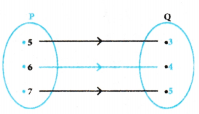
The Fig. shows a relationship between the sets P and Q. Write this relation,
i) in set-builder form ii) roster form. What is its domain and range ?
Solution:
Given P = {5, 6, 7} Q = {3, 4, 5}
i) The set builder form
R = {(x, y): y = x – 2 for x = 5, 6, 7}
AP Inter 1st Year Maths Exercise 2b Solutions 1
ii) The roster form R = {(5, 3), (6, 4), (7, 5)}
Domain of R = {5, 6, 7}
Range of R = {3, 4, 5}

Question 4.
Let A = {1, 2, 3, 4, 6}. Let R be the relation on A is defined by {(a, b): a , b ∈ A, b is exactly divisible by a}.
(i) Write R in roster form
(ii) Find the domain of R
(iii) Find the range of R.
Solution:
Given A = {1, 2, 3, 4, 6} and R = {(a, b) : a, b ∈ A, b is exactly divisible by a}
i) The roster form R = {(1, 1), (1, 2), (1, 3), (1, 4), (1, 6), (2, 2) (2, 4) (2, 6), (3, 3), (3, 6), (4, 4), (6, 6)}
ii) Domain of R = {1, 2, 3, 4, 6}
iii) Range of R = {1, 2, 3, 4, 6}
AP Inter 1st Year Maths Exercise 2a Solutions

Referring to the AP Inter 1st Year Maths Study Material Chapter 2 Relations and Functions Exercise 2a Solutions makes it easier to understand complex problems.

AP Inter 1st Year Maths Relations and Functions Solutions Exercise 2a

I.

Question 1.
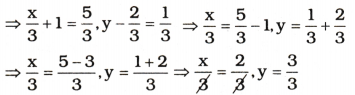
If (\(\frac{x}{3}\) + 1, y – \(\frac{2}{3}\)) = \(\left(\frac{5}{3}, \frac{1}{3}\right)\), find the values of x and y.
Solution:
Given (\(\frac{x}{3}\) + 1, y – \(\frac{2}{3}\)) = \(\left(\frac{5}{3}, \frac{1}{3}\right)\)
AP Inter 1st Year Maths Exercise 2a Solutions 1
∴ x = 2, y = 1.

Question 2.
If the set A has 3 elements and the set B = {3, 4, 5}, then find the number of elements in (A × B),
Solution:
Given number of elements in A = 3 ⇒ n(A) = 3 ; Given B = {3, 4, 5} ⇒ n(B) = 3
Number of elements in A × B = (Number of elements in A) × (Number of elements in B)
n(A × B) = n(A) × n(B) = 3 × 3 = 9
Number of elements in (A × B) =9

Question 3.
If G = {7, 8} and H = {5, 4, 2}, find G × H and H × G.
Solution:
Given G = {7, 8}; H = {5, 4, 2}
G × H = {7, 8} × {5, 4, 2} = {(7, 5), (7, 4), (7, 2), (8, 5),(8, 4), (8, 2)}
H × G = {5, 4, 2} × {7,8} = {(5, 7), (5, 8), (4, 7), (4, 8), (2,7), (2, 8)}

Question 4.
State whether each of the following statements are true or false. If the statement is false, rewrite the given statement correctly.
i) If P = (m, n} and 9 = In, ni}, then P × g = j(m, n),(n, m)|.
ii) If A and B are two non-empty sets, then A × B is a non-empty set of ordered pairs (x, y) such that x ∈ A and y ∈ B.
iii) If A = {1, 2}, B = {3, 4}, then A × (B ∩ Φ) = Φ.
Solution:
i) False; P × Q = {m, n} ×{n,m} = {(m, n), (m, m), (n, n), (n, m)}
ii) True; Because A × B is a non-empty set of ordered pairs (x, y) such that x ∈ A and y ∈ B.
iii) True; Because B ∩ Φ = Φ ⇒ A × (B ∩ Φ ) = A × Φ = Φ.

Question 5.
If A = (-1, 1), find A × A × A.
Solution:
Given A = {-1, 1}
A × A = {-1, 1} × {-1, 1} = {(-1, -1), (-1, 1), (1, -1), (1, 1)}
A × A × A = {(-1,-1), (-1, 1), (1, -1), (1, 1)} × {-1,1}
= {(-1, -1, -1), (-1, -1, 1), (-1, 1, -1), (-1, 1, 1), (1, -1, -1), (1,-1,1) (1,1-1), (1, 1, 1)}

Question 6.
If A × B = {(a, x),(a , y), (b, x), (b, y)}. Find A and B.
Solution:
Given A x B = {(a, x), (a, y), (b, x), (b, y)}
A = set of first elements of A × B = {a, b};
B = set of second elements of A × B = {x, y}.

Question 7.
Let A = {1, 2) and B = {3, 4). Write A × B. How many subsets will A × B have? List them.
Solution:
Given A = {(1, 2), B = {3, 4} ; A × B = {(1, 3), (1, 4), (2, 3), (2, 4)} ⇒ n (A × B) = 4
The number of subsets of A × B = 24 = 16
Subsets of A × B = { }, {(1, 3)}, {(1,4)}, {(2, 3)}, {(2, 4)}
{(1,3), (1, 4)}, {(1, 3), (2, 3)}, {(1, 3), (2, 4)}, {(1, 4), (2, 3)}
{(1, 4), (2, 4)}, {(2, 3), (2, 4)}, {(1, 3), (1, 4), (2, 3)}
{(1, 3), (1, 4), (2, 4)}, {(1, 3), (2, 3), (2, 4)}, {(1, 4), (2,3), (2, 4)}, {(1, 3), (1, 4), (2, 3), (2, 4)}.

AP Inter 1st Year Maths Exercise 2a Solutions

Question 8.
Let A and B be two sets such that n(A) = 3 and n(B) = 2. If (x, 1), (y, 2), (z, 1) are in A × B, find A and B, where x, y and z are distinct elements.
Solution:
Given A & B are 2 sets such that n(A) = 3 & n(B) = 2
Given (x, 1), (y, 2), (z, 1) lies in A × B
⇒ A = {x, y, z}, B = {1, 2}

Question 9.
The Cartesian product A × A has 9 elements among which are found (-1, 0) and (0,1). Find the set A and the remaining elements of A × A.
Solution:
Given (-1, 0) and (0, 1) are in the cartesian product of A × A having 9 elements.
∴ n(A × A) = 9 ⇒ n(A) × n(A) = 9 ⇒ n(A) = 3.
∴ A = {-1, 0, 1}
A × A = {-1, 0, 1} × {-1, 0, 1} = {(-1, -1), (-1, 0), (-1, 1), (0, -1), (0, 0), (0, 1), (1, -1), (1, 0), (1, 1)}

II.

Question 1.
Let A = (1, 2), B = (1, 2, 3, 4), C = (5, 6| and D = (5, 6, 7, 8). Verify that
(i) A × (B ∩ C) – (A × B) ∩ (A × C).
(ii) A × C is a subset of B × D.
Solution:
Given A = {1, 2}, B = {1, 2, 3, 4}, C = {5, 6} 8s D = {5, 6, 7, 8}
i) B ∩ C = {1, 2, 3, 4} ∩ {5, 6} = { }
A × (B ∩ C)= A × Φ = Φ
A × B = {(1, 1), (1, 2), (1, 3), (1, 4), (2, 1), (2, 2), (2, 3), (2, 4)}
A × C = {(1, 5), (1, 6), (2, 5) (2, 6)}
(A × B) ∩ (A × C) = Φ
∴ A × (B ∩ C) = Φ
(A × B) ∩ (A ∩ C) = Φ
∴ A × (B ∩ C) = (A × B) ∩ (A × C)

ii) A × C = {1, 2} × {5, 6} = {(1, 5), (1, 6), (2, 5) (2, 6)}
B × D = {1, 2, 3, 4} × {5, 6, 7, 8} = {(1, 5), (1, 6), (1, 7), (1, 8), (2, 5), (2, 6), (2, 7), (2, 8), (3, 5), (3, 6) (3, 7), (3, 8), (4, 5), (4, 6), (4, 7), (4, 8)}
A × C a is subset of B × D

Sets MCQ AP Inter 1st Year Maths Chapter 1

Practice AP Inter 1st Year Maths Study Material Chapter 1 Sets MCQ to identify your strengths and weak areas.

AP Inter 1st Year Maths Sets MCQ

Question 1.
List of elements of the set {x : x is an integer, x3 ≤ 50}
1) {2, 3, 4}
2) {1, 3, 4}
3) {1, 2, 3}
4) {1, 2, 4}
Solution:
We look integer x such that x3 ≤ 50
Cube of integers : 13 = 1, 23 = 8, 33 = 27, 43 = 64 (exceeds 50).
So the integers are : x = 1, 2, 3.

Question 2.
Set-builder form of {1, 2, 3, 4} is
1) {x : x is a positive integer, x2 < 30}.
2) {x : x is a positive integer, x2 + 1 < 20}.
3) {x : x is a positive integer, x2 – 1 < 15}.
4) {x : x is a positive integer, 2x < 20}.
Try each :
1) x2 < 30 : includes more than {1, 2, 3, 4}.
2) x2 + 1 < 20 : x < 4 works, lets check : 1 → 2, 2 → 5, 3 → 10, 4 → 17.
3) x2 – 1 < 15: 1 → 0, 2 3, 3 → 8, 4 → 15 but it includes more value like 5.
4) 2x < 20 : includes more values.

Question 3.
Which of the following statement is true ?
1) {a, b} ⊂ {x : x is a vowel in the English alphabet}
2) {1, 2, 3, 4} ⊂ {1, 2, 3}
3) {5} ∈ {4, 5, 6}
4) {2, 3) ∈ {1, {2, 3}, 4, 5}
Solution:
1) X “b” is not a vowel
2) X false
3) X because {5} ∈ {4, 5, 6} but {5} is not an element
4) ✓ true.

Sets MCQ AP Inter 1st Year Maths Chapter 1

Question 4.
The set builder form of interval [-4, 5) is
1) {x : x is an integer -4 < x < 5}
2) {x : x is an integer -4 < x < 5}
3) {x : x is an integer -4 < x < 5}
4) {x : x is an integer -4 < x < 5}
Solution:
Set builder form of interval [- 4, 5)
We need : integers x such that – 4 < x < 5.

Question 5.
A = (1, 2, 3, 4, 5), B = (4, 5, 6, 7, 8), then (A – B) ∪ (B – A)
1) {1, 2, 3, 4, 5, 6, 7, 8}
2) {1, 2, 3, 6, 7, 8}
3) {1, 2, 4, 5, 6}
4) {2, 4, 6, 8}
Solution:
A – B = {1, 2, 3}; B – A = {6, 7, 8}; (A – B) ∪ (B – A) = {1, 2, 3, 6, 7, 8}.

Question 6.
If A = (1, 2, 3, 4}, B = {2, 3, 4}, C = {3, 4, 5, 6} then A ∩ (B ∪ C)
1) {2, 3, 4}
2) {1, 2, 3, 4}
3) {3, 4, 5, 6}
4) {1, 6}
Solution:
B ∪ C = {2, 3, 4, 5, 6}; A ∩ (B ∪ C) = {2, 3, 4}.

Question 7.
Which of the following is false ?
1) (A’)’ = A
2) A ∪ A’ = Φ
3) (A ∪ B)’ = A’ ∩ B’
4) Φ = U (U is universal set)
Solution:
1) (A’)’ = A – True (law of double complement)
2) A ∪ A’ = Φ – False, should be universal set.
3) (A ∪ B)’ = A’ ∩ B’- True (De Morgan’s law)
4) f = U – True

Question 8.
If U = (1, 2, 3, 4, 5) and A = (2, 3), then Φ’ ∩ A =
1) Φ
2) U
3) A
4) {1, 4, 5}
Solution:
Φ = U, so Φ ‘ ∩ A = U ∩ A = A.

Question 9.
U = {x : x is a natural number 1 < x < 15} and A = 1 < x < 15) then A’ = ____________
1) {2, 3, 5, 7, 11, 13}
2) {4, 6, 8, 9, 10, 12, 14}
3) {2, 3, 4, 5, 7, 11, 13}
4) {2, 4, 6, 8, 10, 12, 14}
Solution:
Given : U = {x : x is a natural number and 1 < x < 15}
U = {2, 3, 4, 5, 6, 7, 8, 9, 10, 11, 12, 13, 14}
A = {x : x is a prime number and 1 < x < 15}
A = {2, 3, 5, 7, 11, 13}
So, A’ = U – A = {4, 6, 8, 9, 10, 12, 14}.

Sets MCQ AP Inter 1st Year Maths Chapter 1

Question 10.
Which of the following is not a subset of (a, b, c, d} ?
1) Φ
2) {a, b}
3) {d, e}
4) {b, d}
Solution:
Let’s analyse :
1) Φ – ✓ Always a subset of any set.
2) {a, b} – ✓ All elements are present in the set.
3) {d, e} – X “e” is not in {a, b, c, d}.
4) {b, d} – ✓ Both elements are present in the set.
∴ {d, e} is not a subset.

AP Inter 1st Year Maths Exercise 1g Solutions

Referring to the AP Inter 1st Year Maths Study Material Chapter 1 Sets Exercise 1g Solutions makes it easier to understand complex problems.

AP Inter 1st Year Maths Sets Solutions Exercise 1g

Question 1.
If X and Y are two sets such that n(X) & 17, n(Y) = 23 and n(X ∪ Y) = 38, find n(X ∩ Y),
Solution:
Given that, n(X) = 17; n(Y) = 23; n(X ∪ Y) = 38
We know that, n(X ∪ Y) = n(X) + n(Y) – n(X ∩ Y)
⇒ 38 = 17 + 23 – n(X ∩ Y)
⇒ 38 = 40 – n(X ∩ Y)
⇒ n(X ∩ Y) = 40 – 38 = 2
∴ n(X ∩ Y) = 2.

Question 2.
If X and Y are two sets such that X ∪ Y has 18 elements, X has 8 elements and Y has 15 elements, how many elements does X ∩ Y have ?
Solution:
n(X ∪ Y) = n(X) + n(Y) – n(X ∩ Y)
⇒ 18 = 8 + 15 – n(X ∩ Y)
⇒ 18 = 23 – n(X ∩ Y)
⇒ n(X ∩ Y) = 23 – 18 = 5
∴ n(X ∩ Y) = 5 elements.

Question 3.
In a group of 400 people, 250 can speak Hindi and 200 can speak English. How many people can speak both Hindi and English ?
Solution:
Let No. of people in a group be = 400 = n(H ∪ E)
No. of people who can speak Hindi = 250 = n(H)
No. of people who can speak English = 200 = n(E)
No. of people who can speak both = x = n(H ∩ E)
According to n(H ∪ E) = n(H) + n(E) – n(H ∩ E)
400 = 250 + 200 – x
400 = 450 – x
x = 450 – 400 = 50
∴ n(H ∩ E) = 50
∴ 50 people can speak both Hindi and English.

AP Inter 1st Year Maths Exercise 1g Solutions

Question 4.
If S and T are two sets such that S has 21 elements. T has 32 elements and S ∩ T has 11 elements how many elements does S ∪ T have ?
Solution:
Given that n(S) = 21, n(T) = 32 and n(S ∩ T) = 11
We know that principle of inclusion & exclusion
n(S ∪ T) = n(S) + n(T) – n(S ∩ T)
⇒ n(S ∪ T) = 21 + 32 – 11 = 42
∴ 42 elements are in S ∪ T.

Question 5.
IfX and Yare two sets such that Xhas 40 elements, XuYhas 60elements and X ∩ Y has 10 elements, how many elements does Y have ?
Solution:
Given that, X has 40 elements = n(X) = 40
(X ∪ Y) has 60 elements = n(X ∪ Y) = 60
(X ∩ Y) has 10 elements = n(X ∩ Y)= 10
We know that, n(X ∪ Y) = n(X) + n(Y) – n(X ∩ Y)
⇒ 60 = 40 + n(Y) – 10
⇒ 60 = 30 + n(Y)
⇒ n(Y) = 60 – 30 = 30
∴ Y has 30 elements.

Question 6.
In a group of 70 people, 37 like coffee, 52 like tea and each person likes at least one of the two drinks. How many people like both coffee and tea ?
Solution:
Let No. of people in group n(C ∪ T) = 70
No. of people who likes coffee n(C) = 37
No. of people who likes tea n(T) = 52
Let No. of people who likes both n(C ∩ T) = x
Since everyone likes at least one, we know that
n(C ∪ T) = n(C) + n(T) – n(C ∩ T)
⇒ 70 = 37 + 52 – x
⇒ x = 89 – 70
⇒ x = 19
∴ ‘19’ people like both coffee and tea.

Question 7.
In a group of 65 people, 40 like cricket, 10 like both cricket and tennis. How many like tennis only and not cricket ? How many like tennis ?
Solution:
Total no. of people in a group n(C ∪ T) = 65
No. of people who likes only cricket n(C) = 40
No. of people who likes both cricket and tennis
n(C ∩ T) = 10
We know that,
n(C ∪ T) = n(C) + n(T) – n(C ∩ T)
⇒ 65 = 40 + n (T) – 10
⇒ n(T) = 65 – 30
⇒ n(T) = 35
So, 35 people like tennis (include both cricket)
Now, n(T) = n(T – C) + n(C ∩ T)
35 = n(T – C) + 10
⇒ n(T – C) = 35 – 10 = 25
∴ So, 25 people like only tennis.

AP Inter 1st Year Maths Exercise 1g Solutions

Question 8.
In a committee, 50 people speak French. 20 speak Spanish and 10 speak both Spanish and French. How many speak at least one of these two languages?
Solution:
Given that,
No. of people who speaks French n(F) = 50,
No. of people who speaks Spanish n (S) = 20
No. of people who speaks both Spanish and French n(S ∩ F) = 10
We know that
n(S ∪ F) = n(F) + n(S) – n(S ∩ F)
n(S ∪ F) = 50 + 20 – 10 = 60
∴ 60 people speak at least one of these two languages.

AP Inter 1st Year Maths Exercise 1f Solutions

Referring to the AP Inter 1st Year Maths Study Material Chapter 1 Sets Exercise 1f Solutions makes it easier to understand complex problems.

AP Inter 1st Year Maths Sets Solutions Exercise 1f

I.

Question 1.
Decide, among the following sets, which sets are subsets of one and another.
A = {x : x ∈ R and X satisfy x2 -8X+12 = 0}
B = {2, 4, 6}, C = {2, 4, 6. 8, ….. }, D = {6}.
Solution:
A = {x : x ∈ R and x satisfies x2 – 8x + 12}
2 and 6 are the only solutions of x2 – 8x + 12 = 0. ∴ A = {2, 6)
B = {2, 4, 6}, C = {2, 4, 6, 8, ……..}, D = {6}. ∴ D ⊂ A ⊂ B ⊂ C
Hence, A ⊂ B, A ⊂ C, B ⊂ C, D ⊂ A, D ⊂ B, D ⊂ C.

Question 2.
In each of the following, determine whether the statement is true or false. If it is true, prove it. If it is false, give an example.
i) If x ∈ A and A ∈ B, then x ∈ B.
ii) If A ⊂ B and B ∈ C, then A ∈ C.
iii) If A ⊂ B and B ⊂ C, then A ⊂ C.
iv) If A ⊄ B and B ⊄ C, then A ⊂ C.
v) If x ∈ A and A ⊄ B, then x ∈ B.
vi) If A ⊂ B and x ∉ B, then x ∈ A.
Solution:
i) False
Let A = {1, 2} and B = {1, {1, 2), {3}}.
Now 2 ∈ {1, 2} and {1, 2} ∈ {{3}, 1, {1, 2}}.
∴ A ∈ B. However, 2 ∉ {{3}, 1, {1, 2}}

ii) False
Let A = {2}, B = (0, 2} and C = {1, {0, 2}, 3}. As A ⊂ B.
∴ B ∈ C. However, A ∉ C.

iii) True
Let A ⊂ B and B ⊂ C.
Let x ∈ A ⇒ x ∈ B [∵ A ⊂ B]
⇒ x ∈ C [∵ B ⊂ C]
∴ A ⊂ C.

iv) False
Let A = {1, 2, 9} and B = {0, 6, 8} and C = {0, 1, 2, 6, 9}
Accordingly, A ⊄ B and B ⊄ C. However, A ⊂ C

v) False
Let A = {1, 2} and B = {1, 3}. Here x = 2 ⊄ A and A ct B but x ∉ B.

vi) True
A ⊂ B ⇒ all elements of A are in B.
∴ If x ∈ B; it means x is not an element of B.
∵ all elements of A are also in B.
If x is not in B, it cannot be in A.

AP Inter 1st Year Maths Exercise 1f Solutions

Question 3.
Show that if A ⊂ B, then (C – B) ⊂ (C – A).
Solution:
Let A c B. To show that C – B ⊂ C – A.
Let x ∈ C – B
⇒ x ∈ C and x ∉ B
⇒ x ∈ C and x ∉ A [A ⊂ B]
⇒ x ∈ C – A
∴ C – B ⊂ C – A.

Question 4.
Show that A ∩ B = A ∩ C need not imply B = C.
Solution:
Let A = {0, 1}, B = {0, 2, 3} and C = {0, 4, 5}
Accordingly, A ∩ B = {0} and A ∩ C = {0}
Here, A ∩ B = A ∩ C = {0}
However, B ≠ C [2 ∈ B and 2 ∉ C].

II.

Question 1.
Let A, B and C be the sets such that A ∪ B = A ∪ C and A ∩ B = A ∩ C. Show that B = C.
Solution:
Given that A ∪ B = A ∪ C and A ∩ B = A ∩ C
Let x ∈ B
⇒ x ∈ A ∪ B [∵ B ⊂ A ∪ B]
⇒ x ∈ A ∪ C [∵ A ∪ B = A ∪ C]
⇒ x ∈ A or x ∈ C
⇒ If x ∈ A then x ∈ A ∩ B [∵ x ∈ B]
⇒ x ∈ A ∩ C [∵ A ∩ B = A]
⇒ x ∈ C
∴ B ⊂ C
Similarly, we can show that C ⊂ B
Hence B = C.

Question 2.
Show that the following four conditions are equivalent.
i) A ⊂ B
ii) A – B = Φ
iii) A ∪ B = B
iv) A ∩ B = A
Solution:
To prove (i) is equivalent to (ii)
From (i) A ⊂ B.
It means that all elements of A are in B. i.e., there is no element of A that is not in B. i.e., A – B = Φ (which is (ii)).
Thus (i) ⇔ (ii).
To prove (i) is equivalent to (iii).
From (i) A ⊂ B.
It means that all elements of A are in B.
Then A ∪ B = set of all elements of A and B = B (which is (iii)).
Thus, (i) ⇔ (iii).
To prove (i) is equivalent to (iv) :
From (i) A ⊂ B.
It means that all elements of A are in B.
Then A ∩ B = Set of all elements common to A and B.
= A (which is (iv)).
Thus, (i) ⇔ (iv)
We have proved that (i) ⇔ (ii), (i) ⇔ (iii) and (i) ⇔ (iv).
Thus, (i) ⇔ (ii) ⇔ (iii) ⇔ (iv).

Question 3.
Show that for any sets A and B.
Solution:
A = (A ∩ B) ∪ (A – B) and A ∪ (B – A) = (A ∪ B).
Solution:
i) To show that A = (A ∩ B) ∪(A-B).
Consider R.H.S. = (A ∩ B) ∪ (A – B).
= (A ∩ B) ∪ (A ∩ B’) (∵ By Def.of difference of sets A – B = A ∩ B’).
= A ∩ (B ∪ B’) [∵ By distributive law],
= A ∩ U [∵ A ∪ A’ – U].
= A = L.H.S
∴ A = (A ∩ B) ∪ (A – B).

ii) To show that A ∪ (B – A) = (A ∪ B)
Consider A ∪ (B – A)
= A ∪ (B ∩ A’) (∵ By def. of difference of sets, A – B = A ∩ B’).
= (A ∪ B) ∩ (A ∪ A’) [∵ By the distributive law],
= (A ∪ B) ∩ U (∵ A ∪ A’ = U).
= A ∪ B
∴ A ∪ (B – A) = A ∪ B.

Question 4.
Using properties of sets, show that
i) A ∪ (A ∩ B) = A
ii) A ∩ (A ∪ B) = A.
Solution:
i) To show that, A ∪ (A ∩ B) = A
We know that,
A ⊂ A
A ∩ B ⊂ A
∴ A ∪ (A ∩ B) ⊂ A …………(1)
Also, A ⊂ A ∪ (A ∩ B) ………….(2)
From (1) and (2), A ∪ (A ∩ B) = A

ii) To show : A ∩ (A ∪ B) = A
A ∩ (A ∪ B) = (A ∩ A) ∩ (A ∪ B) = A ∪ (A ∩ B) = A {From (i)}.

AP Inter 1st Year Maths Exercise 1f Solutions

Question 5.
Let A and B be sets. If A ∩ X = B ∩ X = Φ and A ∪ X = B ∪ X for some set X, show that A = B. (Hints : A = A ∩ (A ∪ X), B = B ∩ (B ∪ X) and use Distributive law)
Solution:
Given A and B be two sets such that A ∩ X = B ∩ X = Φ and A ∪ X = B ∪ X for some set X.
To show that A = B
It can be seen that
A = A ∩ (A ∪ X) = A ∩ (B ∪ X) [∵ A ∪ X = B ∪ X]
= (A ∩ B) ∪ (A ∩ X) [Distributive law]
= (A ∩ B) ∪ Φ [ A ∩ X = Φ]
= (A ∩ B) ……….(1)

Now, B = B ∩ (B ∪ X)
= B ∩ (A ∪ X)
= (B ∩ A) ∪ (B ∩ X)
= (B ∩ A) ∪ Φ
= (B ∩ A) …………(2)
Hence, from (1) 8s (2), we obtain A = B.
Find sets A, B and C such that A ∩ B, B ∩ C and A ∩ C are non-empty sets and
A ∩ B ∩ C = Φ.
Let A = {0, 1}, B = {1, 2} and C = {2, 0}
Accordingly, A ∩ B = {1}, B ∩ C = {2} & A ∩ C = {0}
A ∩ B, B ∩ C and A ∩ C are non-empty.
However, A ∩ B ∩ C = Φ

AP Inter 1st Year Maths Exercise 1e Solutions

Referring to the AP Inter 1st Year Maths Study Material Chapter 1 Sets Exercise 1e Solutions makes it easier to understand complex problems.

AP Inter 1st Year Maths Sets Solutions Exercise 1e

I.

Question 1.
If U = {1. 2, 3, 4. 5. 6, 7. 8, 9}, A = {2, 4, 6, 8} and B = {2, 3, 5, 7}.
Verify that (i) (A ∪ B)’ = A’ ∩ B’ (ii) (A ∩ B)’ = A’ ∪ B’
Solution:
Given U = {1, 2, 3, 4, 5, 6, 7, 8, 9}, A = {2, 4, 6, 8} & B = {2, 3, 5, 7}
i) A ∪ B = {2, 3, 4, 5, 6, 7, 8}
(A ∪ B}’ = U – (A ∪ B) = {1, 9}
A = {1, 3, 5, 7, 9}, B’ = {1, 4, 6, 8, 9}
A’ ∩ B’ = {1, 9}
(A ∪ B)’ = A’ ∩ B’.

ii) A ∩ B = {2}
(A ∩ B)’ = {1, 3, 4, 5, 6, 7, 8, 9}
A’ ∪ B’ = {1, 3, 5, 7,9} ∪ {1, 4, 6, 8, 9} = {1, 3, 4, 5, 6, 7, 8, 9}
(A ∩ B)’ = A’ ∪ B’.

Question 2.
Let U be the set of all triangles in a plane. If A is the set of all triangles with atleast one angle different from 60°, what is A’?
Solution:
Given U be the set of all triangles in a plane.
A is the set of all triangles with atleast one angle different from 60°.
A’ is the set of all equilateral triangles.

AP Inter 1st Year Maths Exercise 1e Solutions

Question 3.
Fill in the blanks to make each of the following a true statement.
(i) A ∪ A’ = …………….
(ii) Φ’ ∩ A= …………….
(iii) A ∩ A’ = ………………..
(iv) U’ ∩ A = …………………
Solution:
i) A ∪A’ = U.
ii) Φ’ ∩ A = U ∩ A = A.
iii) A ∩ A’ = Φ.
iv) U’ ∩ A = Φ ∩ A = Φ.

II.

Question 1.
If U = {a, b, c, d, e,f, g, h}, find the complements of the following sets.
(i) A = {a, b, c)
(ii) B = {d, e, f, g)
(iii) C = [a, c, e, g]
(iv) D = {f, g, h, a)
Solution:
Given U = {a, b, c, d, e, f, g, h}; A = {a, b, c}; B = {d, e, f, g}; C = {a, c, e, g}; D = {f, g, h, a}
i) A’ = {d, e, f, g, h}.
ii) B’ = {a, b, c, h}.
iii) C’ = {b, d, f, h}.
iv) D’ = {b, c, d, e}.

Question 2.
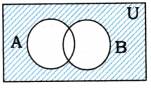
Draw appropriate Venn diagram for each of the following.
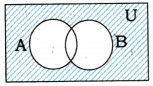
(i) (A ∪B)’
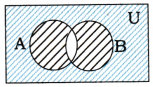
(ii) A’ ∩ B’
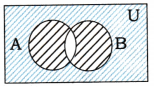
(iii) (A ∩ B)’
(iv) A’ ∪B’
Solution:
i) (A ∪ B)’
AP Inter 1st Year Maths Exercise 1e Solutions 1

ii) A’ ∩ B’
AP Inter 1st Year Maths Exercise 1e Solutions 2

iii) (A ∩ B)’
AP Inter 1st Year Maths Exercise 1e Solutions 3

iv) A’ ∪ B’
AP Inter 1st Year Maths Exercise 1e Solutions 4

III.

Question 1.
Let U = {1, 2, 3, 4, 5, 6, 7, 8, 9}. A = {1, 2. 3, 4}, B = {2. 4, 6, 8} and C = {3, 4, 5, 6).
Find (i) A’ (ii) B’ (iii) (A ∪ C)’ (iv) (A ∪ B)’
Solution:
Let U = {1, 2, 3, 4, 5, 6, 7, 8, 9}, A = {1, 2, 3, 4}, B = {2, 4, 6, 8}, C = {3, 4, 5, 6}
i) A’ = U – A = {1, 2, 3, 4, 5, 6, 7, 8, 9} – {1, 2, 3, 4} = {5, 6, 7, 8, 9}.
ii) B’ = U – B = {1, 2, 3, 4, 5, 6, 7, 8, 9} – {2, 4, 6, 8} = {1, 3, 5, 7, 9}.
iii) A ∪ C = {1, 2, 3, 4, 5, 6}
(A ∪ C)’ = U – (A ∪ C) = {1, 2, 3, 4, 5, 6, 7, 8, 9} – {1, 2, 3, 4, 5, 6} = {7, 8, 9).
iv) A ∪ B = {1, 2, 3, 4, 6, 8}
(A ∪ B)’ = {5, 7, 9}.
v) (A’)’ = A = {1, 2, 3, 4}.
vi) B – C = {2, 8}
(B – C)’ = {1,3, 4, 5, 6, 7, 9}.

AP Inter 1st Year Maths Exercise 1e Solutions

Question 2.
Taking the set of natural numbers as the universal set, write down the • complements of the following sets.
i) {x : x is an even natural number}.
ii) {x : x is an odd natural number}
iii) {x : x is a positive multiple of 3}.
iv) (x : x is a prime number}
v) (x : x is a natural number divisible by 3 and 5}.
vi) {x : x is a perfect square}.
vii) {x : x is a perfect cube},
viii) {x : x + 5 = 8}.
ix) {x : 2x + 5 = 9}.
x) {x : x > 7}.
xi) {x : x ∈ N and 2x +1 > 10}.
Solution:
Given U = N = {1, 2, 3, }
i) (x : x is an even natural number}’ = {x : x is an odd natural number}.
ii) {x : x is an odd natural number}’ = (x : x is an even natural number}.
iii) {x : x is a positive multiple of 3}’ = {x: x ∈ N and x is not a multiple of 3}.
iv) {x : x is a prime number}’ = {x : x is a positive composite number and x = 1}.
v) {x : x is a natural number divisible by 3 & 5} = {x : x is a natural number that is not divisible by 3 & 5 }.
vi) {x : x is a perfect square} = {x : x ∈ N and x is not a perfect square}.
vii) {x : x is a perfect cube} = (x : x ∈ N and x is not a perfect cube}.
viii) {x : x + 5 = 8} = {x : x ∈ N and x ≠ 3}.
ix) { x : 2x + 5 = 9} = {x : x ∈ N and x ≠ 2}.
x) {x : x ≥ 7} = {x : x ∈ N and x < 7}.
xi) {x : x ∈ N and 2x + 1 > 10} = {x : x ∈ N and x ≤ 9/2}.

AP Inter 1st Year Maths Exercise 1d Solutions

Referring to the AP Inter 1st Year Maths Study Material Chapter 1 Sets Exercise 1d Solutions makes it easier to understand complex problems.

AP Inter 1st Year Maths Sets Solutions Exercise 1d

I.

Question 1.
Let A = {a, b}, B = {a, b, c}. Is A ⊂ B? What is A ∪ B?
Solution:
Given A {a, b) and B {a, b, C). Yes, A ⊂ B
∴ A ∪ B = {a, b, c) = B.

Question 2.
If A and B are two sets such that A ⊂ B, then what is A ∪ B?
Solution:
Given A and B are two sets such that A ⊂ B then A ∪ B = B.

Question 3.
Which of the following pairs of sets are disjoint.
i) {1, 2, 3, 4} and {x : x is a natural number and 4 ≤ x ≤ 6}.
Solution:
Let A = {1, 2, 3, 4), B = {4, 5, 6).
A ∩ B = {4} ∴ Given pair of sets are not disjoint.

ii) {a, e, i, o, u} and (c, d, e, f}.
Solution:
Let A = {a, e, i, o, u), B = {c, d, e, f)
A ∩ B = {e} ∴ Given pair of sets are not disjoint.

iii) {x: x is an even Integer} and {x: x is an odd Integer}.
Solution:
Let A = {x: x is an even integer), B = {x : x is an odd integer)
A ∩ B = Φ ∴ Given pair of sets are disjoint.

Question 4.
If x = {a, b, c, d} and Y = {f, b, d, g} find
i) X – Y
ii) Y – X
iii) X ∩ Y.
Solution:
Given X = {a,b, c, d}; Y = {f, b, d, g)
i) X – Y = {a, c}.
ii) Y – X = {f, g).
iii) X ∩ Y = (b, d}.

Question 5.
If R is the set of real numbers and 9 is the set of rational numbers, then what is R – Q ?
Solution:
Given, R : set of real numbers.; Q : set of rational numbers.
R – Q = set of irrational numbers.

AP Inter 1st Year Maths Exercise 1d Solutions

Question 6.
State whether each of the following statement is true or false. Justify your answer.
i) {2, 3, 4, 5} and {3, 6} are disjoint sets.
ii) {a, e, i, o, u) and {a, b, c, d} are disjoint sets.
iii) (2, 6, 10, 14} and {3, 7, 11, 15} are disjoint sets.
iv) }2, 6, 10} and {3, 7, 11} are disjoint sets.
Solution:
i) False, because 3e { 2, 3, 4, 5} & 3 ∈ {3, 6}.
ii) False, because a € {a, e, i, o, u} & a ∈ (a, b, c, d}.
iii) True, because {2, 6, 10, 14} ∩ {3, 7, 11, 15} = Φ.
iv) True, because {2, 6, 10} ∩ {3, 7, 11} = Φ.

II.

Question 1.
Find the union of each of the following pairs of sets.
i) X = {1, 3, 5}, Y = {1, 2, 3}.
ii) A = [a, e, i, o, u}, B = {a, b, c}.
iii) A = {x : x is a natural number and multiple of 3},
B = {x : x is a natural number less than 6}.
iv) A = {x : x is a natural number and 1 < x < 6},
B = {x : x is a natural number and 6 < x < 10}.
v) A= {1, 2, 3}, B = f
Solution:
i) X = (1, 3, 5}, Y = {1, 2, 3}
X ∪ Y = {1, 3, 5} ∪ {1, 2, 3} = {1, 2, 3, 5}.

ii) A = {a, e, i, o, u}, B = {a, b, c}
∴ A ∪ B = {a, e, i, o, u} ∪ {a, b, c} = {a, b, c, e, i, o, u}.

iii) A = {x : x is a natural number and multiple of 3} = {3, 6, 9, }
B = {x : x is a natural number less than 6} = {1, 2, 3, 4, 5}
A ∪ B = {x : x = 1, 2, 3, 4, 5 and a multiple of 3}.

iv) A = {x : x is a natural number and 1 < x < 6} = {2, 3, 4, 5, 6}
B = {x : x is a natural number and 6 < x < 10} = {7, 8, 9}
A ∪ B = {2,3, 4, 5, 6, 7, 8, 9}.

v) A = {1, 2, 3}, B = Φ; A ∪ B = {1, 2, 3}.

Question 2.
Find the intersection of each pair of sets of question 1 above.
Solution:
i) X = {1, 3, 5}, Y = {1, 2, 3} ⇒ X ∩ Y = {1, 3, 5} ∩ {1, 2, 3} = {1, 3}.
ii) A = {a, e, i, o, u}, B = {a, b, c} A ∩ B = {a}.
iii) A = {3, 6, 9, }, B = {1, 2, 3, 4, 5} ⇒ A ∩ B = {3}.
iv) A = {2, 3, 4, 5, 6}, B = {7, 8, 9} ⇒ A ∩ B = {} = Φ.
v) A = {1, 2, 3}, B = Φ ⇒ A ∩ B = Φ.

Question 3.
If A = {1, 2, 3, 4}, B = {3, 4, 5, 6}, C = {5, 6, 7, 8} and D = {7, 8, 9, 10); find
(i) A ∪ B
(ii) A ∪ C
(iii) B ∪ C
(iv) B ∪ D
(v) A ∪ B ∪ C
(vi) A ∪ B ∪ D
(vii) B ∪ C ∪ D
Solution:
Given A = {.1, 2, 3, 4}, B = {3, 4, 5, 6}, C = {5, 6, 7, 8} and D = {7, 8, 9, 10}
i) A ∪ B = {1, 2, 3, 4, 5, 6}.
ii) A ∪ C = {1, 2, 3, 4, 5, 6, 7, 8}.
iii) B ∪ C = {3,4, 5, 6, 7, 8}.
iv) B ∪ D = {3, 4, 5, 6, 7, 8, 9, 10}.
v) A ∪ B ∪ C = {l,2,3, 4, 5, 6} ∪ {5, 6, 7, 8} = {1, 2, 3, 4, 5, 6, 7, 8}.
vi) A ∪ B ∪ D = {1,2, 3, 4, 5, 6} ∪ {7, 8, 9, 10} ={1,2, 3, 4, 5, 6, 7, 8, 9, 10}
vii) B ∪ C ∪ D = {3, 4, 5, 6, 7, 8} ∪ {7, 8, 9, 10} = {3, 4, 5, 6, 7, 8, 9, 10}.

Question 4.
If A = {3. 5, 7. 9, 11}, B = {7, 9, 11, 13}, C = {11, 13, 15} and D = {15, 17};
find (i) A ∩ B
(ii) B ∩ C
(iii) A ∩ C ∩ D
(iv) A ∩ C
(v) B ∩ D
(vi) A ∩ (B ∪ C)
(vii) A ∩ D
(viii) A ∩ (B ∪ D)
(ix) (A ∩ B) ∩ (B ∪ C)
(x) (A ∪ D) ∩ (B ∪ C)
Solution:
Given A = {3, 5, 7, 9, 11}, B = {7, 9, 11, 13}, C = {11, 13, 15} and D = {15, 17}
i) A ∩ B = {7, 9, 11}.
ii) B ∩ C = {11, 13}.
iii) A ∩ C ∩ D = (A ∩ C) ∩ D = {11} ∩ {15, 17} = Φ
iv) A ∩ C = {11}.
v) B ∩ D = Φ (or) { }
vi) A ∩ (B ∪ C) = {3, 5, 7, 9, 11} ∩ {7, 9, 11, 13, 15} = {7, 9, 11}.
vii) A ∩ D = { } = Φ.
viii) A ∩ (B ∪ D) = {3, 5, 7, 9, 11} ∩ {7, 9, 11, 13, 15, 17} = {7, 9, 11}.
ix) (A ∩ B) ∩ (B ∪ C) = {7, 9, 11} ∩ {7, 9, 11, 13, 15} = {7, 9, 11}.
x) (A ∪ D) ∩ (B ∪ C) = {3, 5, 7, 9, 11, 15, 17} ∩ {7,9, 11, 13, 15} = {7, 9, 11, 15}.

III.

Question 1.
If A = {x : x is a natural number}, B = {x : x is an even natural number)
C = {x : x is an odd natural number} and D = [x : x is a prime number},
Find (i) A ∩ B (ii) A ∩ C (iii) A ∩ D (iv) B ∩ C (v) B ∩ D (vi) C ∩ D
Solution:
A = {x : x is a natural number};
B = {x : x is an even natural number}
C = {x ; x is an odd natural number};
D = {x ; x is a prime number}

i) A ∩ B = {x : x is an even natural number} = B.
ii) A ∩ C = {x : x is an odd natural number) = C.
iii) A ∩ D = {x : x is a prime number} = D.
iv) B ∩ C = Φ.
v) B ∩ D = { 2 }.
vi) C ∩ D = {x : x is an odd prime number}.

AP Inter 1st Year Maths Exercise 1d Solutions

Question 2.
If A = {3, 6, 9, 12, 15, 18, 21},
B = {4, 8, 12, 16, 20},
C = {2, 4, 6, 8, 10, 12, 14, 16},
D = {5, 10, 15, 20};
Find (i) A – B (ii) A – C (iii) A – D (iv) B – A (v) C – A (vii) B – C (viii) B – D (ix) C – B (x) D – B (xi) C – D
Solution:
Given A = {3, 6, 9, 12, 15, 18, 21},
B = {4, 8, 12, 16, 20},
C = {2, 4, 6, 8, 10, 12, 14, 16},
D = {5, 10, 15, 20}.
i) A – B = {3, 6, 9, 15, 18, 21}.
ii) A – C = {3, 9, 15, 18, 21}.
iii) A – D = {3, 6, 9, 12, 18, 21}.
iv) B – A = {4, 8, 16, 20}.
v) C – A = {2, 4, 8, 10, 14, 16}.
vi) D – A = {5, 10, 20}.
vii) B – C = {20}.
viii) B – D = {4, 8, 12, 16}.
ix) C – B = {2, 6, 10, 14}.
x) D – B = {5, 10, 15}.
xi) C – D = {2, 4, 6, 8, 12, 14, 16}.
xii) D – C = {5, 15, 20}.

AP Inter 1st Year Maths Exercise 1c Solutions

Referring to the AP Inter 1st Year Maths Study Material Chapter 1 Sets Exercise 1c Solutions makes it easier to understand complex problems.

AP Inter 1st Year Maths Sets Solutions Exercise 1c

Question 1.
Make correct statements by filling the symbol a or <z in the blank spaces,
i) {2, 3, 4 }…{1, 2, 3, 4, 5}.
Solution:
⊂

ii) {a, b, c }…{b, c, d}.
Solution:
⊄

iii) {x : x is a student of Class XI of your school}…{x : x is a student of your school}.
Solution:
⊂

iv) {r : x is a circle in the plane} … {x : r is a circle in the same plane with radius 1 unit}.
Solution:
⊄

v) {x : x is a triangle in a plane} … {x : x is a rectangle in the plane}.
Solution:
⊄

vi) (x : x is an equilateral triangle in a plane}…{x : x is a triangle in the same plane}
Solution:
⊂

vii) {x : x is an even natural number} . . . {x : x is an integer}.
Solution:
⊂

Question 2.
Examine whether the following statements are true or false.
i) ( a, b } ⊄ { b, c, a }.
ii) { a, e } ⊂ { x : x is a vowel in the english alphabet}.
iii) { 1, 2, 3 } ⊂ { 1, 3, 5 }.
iv) { a } ⊂ { a, b, c }.
v) { a } ∈ { a, b, c }.
vi) { x : x is an even natural number less than 6} ⊂ { x : x is a natural number which divides 36}.
Solution:
i) False, each element of {a, b} is also an element of {b, c, a}.
ii) {a, e} ⊂ {x : x is a vowel in the english alphabet} is true.
iii) {1, 2, 3} ⊂ {1, 3, 5} is false because 2 ∉ {1, 3, 5}.
iv) True because each element of {a} is also an element of {a, b, c}.
v) False the elements of {a, b, c} are a, b, c therefore {a} ⊂ {a, b, c}.
vi) True {2, 4} ⊂ {1, 2, 3, 4, 6, 9, 12, 18, 36}.

Question 3.
Let A = { 1, 2, { 3, 4 }, 5 }. Which of the following statements are incorrect and why?
i) {3, 4} ⊂ A
Solution:
The statement {3, 4} ⊂ A is incorrect because 3e {3, 4} but 3 ∈ A.

ii) {3, 4} ∈ A
Solution:
The statement {3, 4} ∈ A is correct because {3, 4} is an element of A.

iii) {{3, 4}} ⊂ A
Solution:
The statement {{3, 4}} ⊂ A is correct because {3, 4} ∈ {{3, 4}} ∈ A.

iv) 1 ∈ A
Solution:
The statement 1 ∈ A is correct because 1 is an element of A.

v) 1 ⊂ A
Solution:
The statement 1 ⊂ A is incorrect because an element of a set can never be a subset of itself.

AP Inter 1st Year Maths Exercise 1c Solutions

vi) {1, 2, 5} ⊂ A
Solution:
The statement {1,2, 5} ⊂ A is correct because each element of {1, 2, 5} is also an element of A.

vii) {1, 2, 5} ∈ A
Solution:
The statement {1, 2, 5} ∈ A is incorrect because {1, 2, 5} is not an element of A.

viii) {1, 2, 3} ⊂ A
Solution:
The statement {1, 2, 3} ⊂ A is incorrect because 3 ∈ {1, 2, 3} but 3 ∉ A.

ix) Φ ∈ A
Solution:
The statement Φ ∈ A is incorrect because Φ is not an element of A.

x) Φ ⊂ A
Solution:
The statement Φ ⊂ A is correct because Φ is a subset of every set.

xi) {Φ} ⊂ A
Solution:
The statement {Φ} ⊂ A is incorrect because Φ ∈ {Φ} but Φ ∉ A.

Question 4.
Write down all the subsets of the following sets.
i) {a}
Solution:
The subsets of { a} are Φ and {a}.

ii) {a, b}
Solution:
The subsets of {a, b} are Φ, { a}, { b } & {a, b}.

iii) {1, 2, 3}
Solution:
The subsets of {1, 2, 3} are (j) , {1}, {2}, {3}, {1, 2}, {2, 3}, {1, 3} and {1, 2, 3}.

iv) Φ
Solution:
The subset of Φ is Φ .

Question 5.
Write the following as intervals.
(i) (x : x ∈ R, – 4 < x < 6}.
(ii) {x : x ∈ R, – 12 < x < -10}.
(iii) {x : x ∈ R, 0 < x < 7}.
(iv) {x : x ∈ R, 3 < x < 4}.
Solution:
i) {x : x ∈ R, -4 < x < 6} = (-4, 6]
ii) {x : x ∈ R, -12 < x < – 10} = (-12, -10)
iii)(x : x ∈ R, 0 < x < 7} = [0, 7).
iv) {x : x ∈ R, 3 < x < 4} = [3, 4],

Question 6.
Write the following intervals in set-builder form.
(i) (- 3, 0)
(ii) [6,12]
(iii) (6, 12]
(iv) [-23, 5)
Solution:
i) (-3, 0) = {x : x ∈ R and -3 < x < 0 }.
ii) [6, 12] = {x : x ∈ R and 6 < x < 12 }.
iii) (6, 12] = {x : x ∈ R and 6 < x < 12}.
iv) [-23, 5) = {x : x ∈ R and -23 < x < 5}.

Question 7.
What universal set(s) would you propose for each of the following?
i) The set of right triangles.
ii) The set of isosceles triangles.
Solution:
i) The universal set for the set of right triangles is the set of all triangles.
ii) The universal set for the set of isosceles triangles is the set of all polygons.

AP Inter 1st Year Maths Exercise 1c Solutions

Question 8.
Given the sets A = {1, 3, 5}, B = {2, 4, 6} and C = {0, 2, 4, 6, 8}, which of the following may be considered as universal set (s) for all the three sets A, B and C.
i) (0, 1, 2, 3, 4, 5, 6).
ii) Φ
iii) {0, 1, 2, 3, 4, 5, 6, 7, 8, 9, 10}.
iv) {1, 2, 3, 4, 5, 6, 7, 8}.
Solution:
i) A ⊂ {0, 1, 2, 3, 4, 5, 6}, B ⊂ {0, 1, 2, 3, 4, 5, 6}, C ⊄ {0, 1, 2, 3, 4, 5, 6}
∴ {0, 1, 2, 3, 4, 5, 6} cannot be the universal set of the sets A, B, & C.

ii) A ⊄ Φ, B ⊄ Φ, C ⊄ Φ
∴ Φ cannot be the universal set of the sets A, B & C.

iii) A ⊂ {0, 1, 2, 3, 4, 5, 6, 7, 8, 9, 10};
B ⊂ {0, 1, 2, 3, 4, 5, 6, 7, 8, 9, 10}
C ⊂ {0, 1, 2, 3, 4, 5, 6, 7, 8, 9, 10}
∴ The set {0, 1, 2, 3, 4, 5, 6, 7, 8, 9, 10} is the universal set for the sets A, B & C.

iv) A ⊂ {1, 2, 3, 4, 5, 6, 7, 8};
B ⊂ {1, 2, 3, 4, 5, 6, 7, 8}
C ⊄ {1, 2, 3, 4, 5, 6, 7, 8}
The set {1, 2, 3, 4, 5, 6, 7, 8} cannot be the universal set for the sets A, B & C.

AP Inter 1st Year Maths Exercise 1b Solutions

Referring to the AP Inter 1st Year Maths Study Material Chapter 1 Sets Exercise 1b Solutions makes it easier to understand complex problems.

AP Inter 1st Year Maths Sets Solutions Exercise 1b

Question 1.
Which of the following are examples of the null set.
i) Set of odd natural numbers divisible by 2.
ii) Set of even prime numbers.
iii) {x : x is a natural numbers, x < 5 and x > 7}.
iv) {y : y is a point common to any two parallel lines}.
Solution:
i) Set of odd natural numbers divisible by 2 is a null set because no odd number is divisible by 3.
ii) Set of even prime numbers is not a null set because 2 is an even prime number.
iii) {x : x is a natural numbers, x < 5 & x > 7}isa null set.
iv) {y : y is a point common to any two parallel lines} is a null set.

Question 2.
Which of the following sets are finite or infinite ?
i) The set of months of a year.
ii) {1, 2, 3, …….}
iii) {1, 2, 3, ……. 99, 100).
iv) The set of positive integers greater than 100.
v) The set of prime numbers less than 99.
Solution:
i) The set of months of a year is a finite set because it has 12 elements.
ii) {1, 2, 3, ……..} is an infinite set because it has infinite number of natural numbers.
iii) Given set is a finite set because it has 100 elements.
iv) Given set is an infinite set because it has infinite elements.
v) Given set is a finite set because prime numbers < 99 are finite.

Question 3.
State whether each of the following set is finite or infinite.
i) The set of lines which are parallel to the X-axis.
ii) The set of letters in the English alphabet.
iii) The set of numbers which are multiple of 5.
iv) The set of animals living on the earth.
v) The set of circles passing through the origin (0, 0).
Solution:
i) The set of lines which are parallel to the X-axis is an infinite set because lines parallel to the X-axis are infinite.
ii) The set of letters in the English alphabet is a finite set because it has 26 elements.
iii) The set of numbers which are multiples of 5 is an infinite set because multiples of 5 are infinite in numbers.
iv) The set of animals living on the earth is a finite set because animals living on the earth is finite.
v) The set of circles passing through the origin (0, 0) is an infinite set because the number of circles passing through the origin is infinite.

Question 4.
In the following state whether A = B or not.
i) A = {a, b, c, d} B = (d, c, b, a)
ii) A = {4, 8, 12, 16} B = {8, 4, 16, 18}
iii) A = {2, 4, 6, 8, 10} B = {x : x is a positive even integer and x < 10}
iv) A = {x : x is a multiple of 10} B = {10, 15, 20, 25, 30, ….}
Solution:
i) A = B because every element in A is element in B and every element in B is element in A.
ii) A ≠ B because 12 ∈ A but 12 ∉ B.
iii) A = {2, 4, 6, 8, 10}, B = {2, 4, 6, 8, 10} ∴ A = B
iv) A = {10, 20, 30, …………}, B = {10, 15, 20, 25, 30, …….}
A ≠ B because 15 ∈ B, but 15 ∉ A.

AP Inter 1st Year Maths Exercise 1b Solutions

Question 5.
Are the following pair of sets equal ? Give reasons,
i) A = {2, 3}, B = {x : x is a solution of x2 + 5x + 6 = 0}.
ii) A = {x : x is a letter in the word FOLLOW},
B = {y: y is a letter in the word WOLF}.
Solution:
i) A = {2, 3}, B = {x : x is a solution of x2 + 5x + 6 = 0} = {-2, -3}
B = {-2, -3} ∴ A ≠ B
ii) A = {F, O, L, W}, B = [W, O, L, F} ∴ A = B.

Question 6.
From the sets given below, select equal sets.
A = {2, 4, 8, 12},
B = {1, 2, 3, 4},
C = {4, 8, 12, 14},
D = {3, 1, 4, 2}
E = (-1, 1}, F = {0, a},
G = {1, -1}, H = (0, 1}
Solution:
Two sets are equal if they contain exactly the same elements, regardless of order.
B = D, E = G.

AP Inter 1st Year Maths Exercise 1a Solutions

Referring to the AP Inter 1st Year Maths Study Material Chapter 1 Sets Exercise 1a Solutions makes it easier to understand complex problems.

AP Inter 1st Year Maths Sets Solutions Exercise 1a

Question 1.
Which of the following are sets? Justify your answer.
i) The collection of all the months of a year beginning with the letter J.
Solution:
The collection of all the months of a year beginning with the letter J is a set because it is well defined.

ii) The collection of ten most talented writers of India.
Solution:
The collection of ten most talented writers of India is not a set because it is not well defined.

iii) A team of eleven best cricket batsmen of the world.
Solution:
A team of eleven best cricket batsmen of the world is not a set because it is not well defined.

iv) The collection of all boys in your class.
Solution:
The collection of all boys in my class is a set because it is well-defined.

v) The collection of all natural numbers less than 100.
Solution:
The collection of all natural numbers less than 100 is a set because it is well-defined.

AP Inter 1st Year Maths Exercise 1a Solutions

vi) A collection of novels written by the writer Munshi Prem Chand.
Solution:
A collection of novels written by the writer Munshi Prem Chand is a set because it is well defined.

vii) The collection of all even integers.
Solution:
The collection of all even integers is a set because it is well defined.

viii) The collection of questions in this chapter.
Solution:
The collection of questions in this chapter is a set because it is well defined,

ix) A collection of most dangerous animals of the world.
Solution:
A collection of most dangerous animals of the world is not a set because it is not well defined.

Question 2.
Let A = {1, 2, 3, 4, 5, 6}. Insert the appropriate symbol ∈ or ∉ in the blank spaces,
i) 5 … A
ii) 8 … A
iii) 0 … A
iv) 4 … A
v) 2 … A
vi) 10 … A
Solution:
i) ∈
ii) ∉
iii) ∉
iv) ∈
v) ∈
vi) ∉

Question 3.
Write the following sets in roster form.
i) A = (x : x is an integer and – 3 < x < 7}.
ii) B = {x: x is a natural number less than 6}.
iii) C = {x: x is a two-digit natural number such that the sum of its digits is 8}.
iv) D = {x: x is a prime number which is divisor of 60).
v) E = {The set of all letters in the word TRIGONOMETRY}
vi) F = {The set of all letters in the word BETTER}.
Solution:
i) A = {-3, -2,-1, 0, 1, 2, 3, 4, 5, 6}.
ii) B = {1, 2, 3, 4, 5}.
iii) C = {17, 26, 35, 44, 53, 62, 71, 80}.
iv) D = {2, 3, 5}.
v) E = {T, R, I, G, O, N, M, E, Y}.
vi) F = {B, E, T, R}.

Question 4.
Write the following sets in the set-builder form.
i) {3, 6, 9, 12}
ii) {2, 4, 8, 16, 32}
iii) {5, 25, 125, 625}
iv) {2, 4, 6 , ………..}
v) {1, 4, 9, …………. 100}
Solution:
i) {x : x is a natural number multiple of 3 and x ≤ 15}.
ii) {x : x = 2n where n ∈ N & 1 ≤ n ≤ 5}.
iii) {x : x = 5n where ne N & 1 ≤ n ≤ 4}.
iv) { x : x is an even natural number}.
v) { x : x = n2, 1 ≤ n ≤ 10}.

Question 5.
List all the elements of the following sets.
i) A = {x : x is an odd natural number).
ii) B = {x : x is an integer, –\(\frac{1}{2}\) < x < \(\frac{9}{2}\)}.
iii) C = {x : x is an integer, x2 ≤ 4).
iv) D = {x : x is a letter in the word “LOYAL”}.
v) E = {x : x is a month of a year not having 31 days},
vi) F = {x : x is a consonant in the English alphabet which precedes k}.
Solution:
i) A = {1,3, 5, 7, ……….}.
ii) B = {0, 1,2, 3, 4}.
iii) C = {-2, -1, 0, 1, 2}.
iv) D = {L, O, Y, A},
v) E = {February, April, June, September, November},
vi) F = { b, c, d, f, g, h, j}

AP Inter 1st Year Maths Exercise 1a Solutions

Question 6.
Match each of the set on the left in the roster form with the same set on the right described in set-builder form.

(i) {1, 2, 3, 6}(a) {x : x is a prime number and a divisor of 6}
(ii) {2, 3}(b) (x : x is an odd natural number less than 10}
(iii) {M, A, T, H, E, I, C, S}(c) {x : x is a natural number and a divisor of 6}
iv) {1, 3, 5, 7, 9}(d) {x : x is a letter of the word MATHEMATICS}.

Answer:

(i) {1, 2, 3, 6}(c) {x : x is a natural number and a divisor of 6}
(ii) {2, 3}(a) {x : x is a prime number and a divisor of 6}
(iii) {M, A, T, H, E, I, C, S}(d) {x : x is a letter of the word MATHEMATICS}.
iv) {1, 3, 5, 7, 9}(b) (x : x is an odd natural number less than 10}

TS 10th Class Telugu Guide 10th Lesson గోలకొండ పట్టణము

Telangana SCERT 10th Class Telugu Guide Telangana 10th Lesson గోలకొండ పట్టణము Textbook Questions and Answers.

TS 10th Class Telugu 10th Lesson Questions and Answers Telangana గోలకొండ పట్టణము

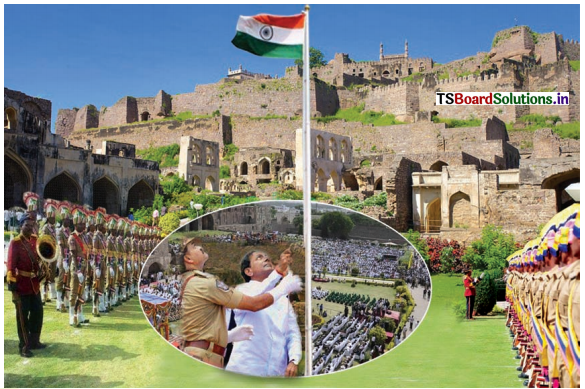
చిత్రాన్ని చూడండి – ఆలోచించి చెప్పండి (T.B. P.No. 95)

TS 10th Class Telugu Guide 10th Lesson గోలకొండ పట్టణము 1

ప్రశ్నలు – జవాబులు

ప్రశ్న 1.
పై చిత్రంలో ఏం కనిపిస్తున్నది ?
జవాబు:
పై చిత్రంలో జెండా వందనం జరుగుచున్నది. జెండా ఎగురవేయుచున్నారు.

ప్రశ్న 2.
జెండా ఎగురవేస్తున్నవారు ఎవరు ?
జవాబు:
జెండా ఎగురవేస్తున్నది తెలంగాణ రాష్ట్ర నూతన ముఖ్యమంత్రి శ్రీ కల్వకుంట్ల చంద్రశేఖరరావు.

TS 10th Class Telugu Guide 10th Lesson గోలకొండ పట్టణము

ప్రశ్న 3.
జెండాను ఎక్కడ ఎగురవేశారు ? ఎందుకు ?
జవాబు:
జెండాను గోలకొండ కోట దగ్గర ఎగురవేశారు. చారిత్రాత్మక కట్టడమైన గోలకొండ దగ్గర ఎగురవేస్తే ప్రజలకు పాలన దగ్గరవుతుందని అక్కడ ఎగుర వేశారు.

ప్రశ్న 4.
గోలకొండ కోట ప్రత్యేకతలు మీకేమైనా తెలుసా ?
జవాబు:
తెలుసు. కోటకు చుట్టూ పెద్దపెద్ద పటిష్టమైన గోడలు ఉన్నాయి. వీటినే బురుజులు అంటారు. శత్రువుల దాడి నుండి రక్షణ కల్పిస్తాయి ఈ బురుజులు.

ఆలోచించండి – చెప్పండి (T.B. P.No. 98)

పట్టణమనగా గోలకొండ పట్టణమనియే ………..
విహారభూమిగా నుండెను.

ప్రశ్న 1.
ఆజంఖాను ఎవరు ? ఆయన గొప్పతనం ఏమిటి ?
జవాబు:
గోలకొండ పట్టణ నిర్మాణ పథకమునకు కర్త. గొప్ప ఇంజనీరు. ఆయన పట్టణం యొక్క రూపురేఖలను దిద్దినారు. పట్టణాన్ని పెక్కుభాగాలుగా విభజించారు.

ప్రశ్న 2.
పట్టణం అలంకార భూయిష్టంగా ఉండడం అంటే ఏమిటి?
జవాబు:
ఇబ్రహీం కుతుబ్షా సరదార్లను, భాగ్యవంతులను కోట లోపల మేడలు కట్టవలసినదిగా ఆజ్ఞాపించాడు. అందరూ ఉత్సాహంతో ఈ పనిచేసిరి. అంటే పట్టణం అంతా అందంగా అలంకారముతో కూడి ఉన్నదని అర్థం.

ప్రశ్న 3.
గోలకొండ కోట ఎందుకు అచ్చెరువు గొల్పుతున్నది?
జవాబు:
గోలకొండ పట్టణములో ఉద్యానవన నిర్మాణము నందు విలక్షణమయి, ఆకర్షణీయమైనట్టివి మిద్దెల మీది తోటలు (Roof gardens) భవనముల పైభాగం ఎంతో నైపుణ్యంతో రూపురేఖలు దిద్ది, తీర్చి, రమ్యోద్యానములను మనోహరంగా నిర్మించారు. ఈ ఉద్యానవనమునకు నీటిని సప్లయిచేయు విధానము, అందులో నీటి కాలువలు, జలాశయములు, కేళా కూళులు, జలపాతములు అచ్చెరువు గొల్పుచుండెను.

ఆలోచించండి – చెప్పండి (T.B. P.No. 101)

హైదరాబాదునగరము…. ఓడలవ్యాపారము చేయుచుండెను.

ప్రశ్న 1.
గోలకొండ వదిలి సామాన్యజనం హైదరాబాదుకు ఎందుకు వెళ్ళి ఉంటారు ?
జవాబు:
గోలకొండ పట్టణంలో జనాభా ఒత్తిడి ఎక్కువ అయ్యింది. ప్రజలకు కావలసిన నీటివసతి కూడా చాలలేదు. అందువల్ల కొందరు పాదుషాలు, గొప్పవారు, కొందరు వర్తకులు, హైదరాబాదులో నివసించేవారు. హైదరాబాదు నిర్మాణం క్రమంగా అభివృద్ధి చెందడంతో గోలకొండ ప్రాధాన్యం తగ్గింది.

అందువల్ల గోలకొండలోని వర్తకులు, సర్దారులు సామాన్యజనం గోలకొండను వదలి, హైదరాబాదులో నివసించేవారు. పట్టణంలోకి రాడానికి పోడానికి, కొత్తవారికి అధికారుల అనుమతి కావలసి వచ్చేది. కొత్తవారు కోటలోకివస్తే అధికారులు వారి శరీరాన్ని అంతా వెతికేవారు. దానితో సామాన్యులు గోలకొండ వదలి, హైదరాబాదుకు వెళ్ళి ఉంటారు.

TS 10th Class Telugu Guide 10th Lesson గోలకొండ పట్టణము

ప్రశ్న 2.
గోలకొండ పట్టణంలో వర్తక వాణిజ్యాలు ఎట్లా సాగాయి ?
జవాబు:
పట్టణములోని బజార్లలో చిల్లర వస్తువులు, తిను బండారములు, విలాస వస్తువులు, నగలు, నాణెములు విరివిగా అమ్మబడుచుండెను. వ్యాపారులు విదేశములతో వర్తకము చేయుచు కుబేరులతో సములయి ఉండిరి. అప్పుడీ పట్టణములో దొరకని వస్తువే లేదు. వజ్రాలకు గోలకొండ పుట్టినిల్లే గదా !

భారతభూమి నలుమూలల నుండి వర్తకం సాగు చుండెను. విదేశముల నుండి వచ్చెడి సరుకులు మచిలీపట్టణము నుండి నేరుగా గోలకొండకు వచ్చు చుండెను. ఇది కేంద్రంగా తెలంగాణమునంతకును ప్రాకుచుండెను. ఇబ్రహీం కులీకుతుబ్షా కాలములో తెలంగాణ ఈజిప్టు వలె ప్రపంచపు అంగడిగా నుండెను.

ప్రశ్న 3.
గోలకొండ పట్టణంలోకి రాకపోకల విషయంలో ఎందుకు జాగ్రత్తలు తీసుకునేవారు ?
జవాబు:
గోలకొండ పట్టణంలోనికి రాకపోకల విషయంలో జాగ్రత్తలు వహించేవారు. క్రొత్తవారు వచ్చినచో వానికి ప్రవేశం దుర్లభం.వానికి దారోగా యొద్ది నుండి అనుమతిపత్రం ఉండాలి. లేదా రాజోద్యోగులలో ఎవ్వని పరిచయమయినా ఉండాలి.

క్రొత్తవారు రాగానే వానివద్ద ఉప్పుగాని, పొగాకుగాని ఉన్నదే మోనని వళ్ళు, బట్టలు బాగా తడవి చూచెదరు. దీనివల్ల రెవిన్యూ బాగా వచ్చేది. రెండు మూడు రోజుల వరకు అనుమతి వచ్చేది కాదు. సాకులు చెప్పి ద్వారరక్షకులు వానినుండి లాభం పొందటానికి ప్రయత్నించేవారు.

ఆలోచించండి – చెప్పండి (T.B. P.No. 103)

గోలకొండ పాదుషాలలో ………. వైభవములు, ఠీవి పరిసమాప్తి జెందెను.

ప్రశ్న 1.
గోలకొండ పాదుషాలు జీవకారుణ్యం గలవారని, ప్రకృతి ప్రేమికులని ఎట్లా చెప్పగలవు ?
జవాబు:
గోలకొండ లోపలి కోటలో ఉత్తర భాగమునందు జింకల వనము ఒకటి ఉండెను. ఈ జింకల గుంపును ఎవరునూ కొట్టకూడదు. బాధింపకూడదు అని రాజాజ్ఞ ఉండెను. పట్టణములో ద్రాక్షతోటలు ఉండెను. ద్రాక్ష నుండి ద్రాక్షాసవము తయారుచేసి త్రాగుచుండిరి. ఈ విషయములను బట్టి గోలకొండ పాదుషాలు జీవకారుణ్యం కలవారని, ప్రకృతి ప్రేమికులని చెప్పవచ్చును.

ప్రశ్న 2.
పట్టణాల్లో జనాభా ఎందుకు పెరుగుతుంది ?
జవాబు:
మంచి వసతులు, సౌకర్యాలు ఉంటాయి. మనిషి భోగజీవి. సుఖాలకు ఎక్కువ ప్రాధాన్యత ఇస్తాడు. ఇవన్నీ పట్టణాలలో ఉంటాయి. అందుకని పల్లెల నుండి పట్టణాలకు తరలివెళ్ళడం వలన పట్టణాలలో జనాభా పెరుగుతుంది.

ఇవి చేయండి

I. అవగాహన – ప్రతిస్పందన

ప్రశ్న 1.
గోలకొండ పట్టణము పాఠం ఆధారంగా నాటి చరిత్ర, సంస్కృతికి సంబంధించిన అంశాలు ఎట్లా ఉండేవని భావిస్తున్నారు ? చర్చించండి.
జవాబు:
పట్టణమనగా గోలకొండ పట్టణమనియే దక్షిణాపథమున ప్రసిద్ధి. గోలకొండ దుర్గమనగా ఒక్క కోట కాదు. మూడు కోటలు. గోలకొండ పట్టణ నిర్మాణ పథక మునకు కర్త ఆజంఖాన్ అను ఇంజనీరు అని తెలియుచున్నది. ఇతడే పట్టణము యొక్క రూపు రేఖలను దిద్దినవాడు. గోలకొండ పట్టణములో ఏనుగులు, ఒంటెలు, గుఱ్ఱాలు అధిక సంఖ్యలో నుండి పట్టణములో సందడిగా సంచరించుచుండెను.

గోలకొండ పట్టణం అలంకార భూయిష్టముగా ఉంటుంది. గోలకొండ పట్టణములో ఉద్యానవన నిర్మాణమునందు విలక్షణమయి, ఆకర్షణీయమైనట్టివి మిద్దెల మీది తోటలు భవనముల పైభాగము ఎంతో మనోహరంగా నిర్మించినారు. ఈ విధంగా ఆనాటి చరిత్ర, సంస్కృతి మనకు తెలుస్తోంది.

ప్రశ్న 2.
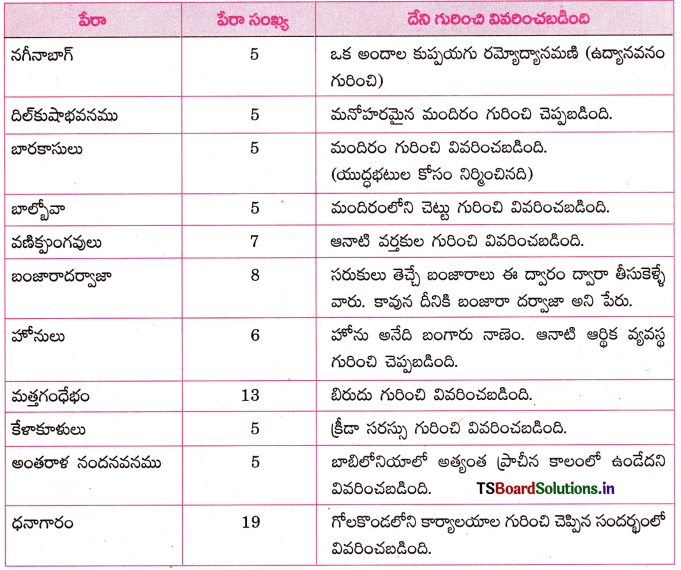
క్రింద ఇచ్చిన పదాలు ఏయే పేరాల్లో ఉన్నాయో గుర్తించి, పట్టికలో వివరించి రాయండి.
జవాబు:
TS 10th Class Telugu Guide 10th Lesson గోలకొండ పట్టణము 2

TS 10th Class Telugu Guide 10th Lesson గోలకొండ పట్టణము

ప్రశ్న 3.
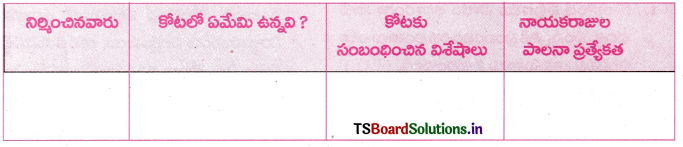
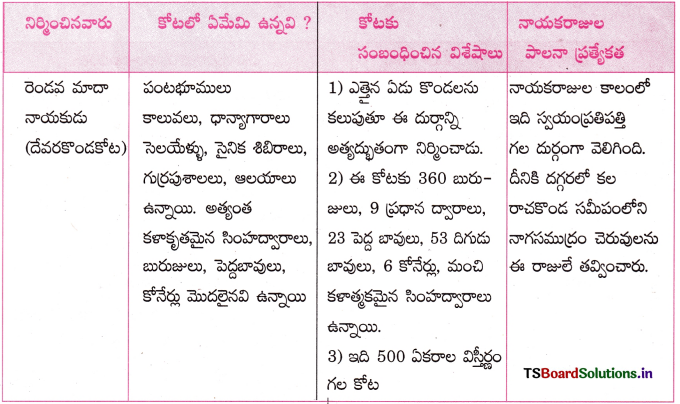
క్రింది పేరా చదవండి. పట్టిక రాయండి.

భారతదేశంలోని ప్రసిద్ధి చెందిన కోటల్లో దేవరకొండ కోట ఒకటి. రేచర్ల నాయకరాజుల పరిపాలనలో ఈ కోట ఎంతో గొప్పగా విరాజిల్లినది. రెండవ మాదా నాయకుడు ఈ కోటను నిర్మించారు. ఎత్తైన ఏడు కొండలను కలుపుతూ ఈ దుర్గాన్ని అత్యద్భుతంగా నిర్మించాడు. ఐదువందల ఎకరాల పైగా విస్తీర్ణంగల ఈ కోటలో పంట భూములు, కాలువలు, ధాన్యాగారాలు, సెలయేళ్ళు, సైనిక శిబిరాలు, గుర్రపుశాలలు, ఆలయాలు ఉన్నాయి.

ఈ కోటకు 360 బురుజులు ఉన్నాయి. 9 ప్రధానద్వారాలు, 23 పెద్దబావులు, 53 దిగుడు బావులు, 6 కోనేర్లు ఉన్నాయి. అత్యంత కళాకృతమైన సింహద్వారాలు ఉన్నాయి. మన పాఠ్యపుస్తకాల మొదటి పేజీలో కనిపించే విశిష్టమైన ‘పూర్ణకుంభ’ చిహ్నం ఇక్కడే లభించింది. ఈ కోటయొక్క విశేషం ఏమిటంటే ఏ శత్రురాజు దీన్ని ఆక్రమించుకోలేకపోయాడు. నాయకరాజుల కాలంలో ఇది స్వయంప్రతిపత్తిగల దుర్గంగా వెలిగింది. దీనికి దగ్గరలో కల రాచకొండ సమీపంలోని నాగసముద్రం చెరువులను ఈ రాజులే తవ్వించారు.
TS 10th Class Telugu Guide 10th Lesson గోలకొండ పట్టణము 3
జవాబు:
TS 10th Class Telugu Guide 10th Lesson గోలకొండ పట్టణము 4

II. వ్యక్తీకరణ – సృజనాత్మకత

ప్రశ్న 1.
క్రింది ప్రశ్నలకు ఐదేసి వాక్యాల్లో జవాబులు రాయండి.

అ) “గోలకొండ పాదుషాలు సాహిత్య పోషకులు” అనడానికి ఉదాహరణలు తెలుపండి. (Mar. ’15)
(లేదా)
గోలకొండ నవాబుల సాహిత్య సేవ ఎట్టిది ? (Mar. ’18)
(లేదా)
ఇబ్రహీం కుతుబ్షా సాహిత్య పిపాస గూర్చి వివరించండి. (June ’18)
జవాబు:
“గోలకొండ పాదుషాలలో ఇబ్రాహీం కుతుబుషా విద్యా ప్రియుడు. ఈతని ఆస్థానములో కవులు, పండితులు హిందువులలో, మహ్మదీయులలో ఉండిరి. విద్యాగోష్ఠి సదా సాగుచుండెను. పాదుషా వారు పండితులను బాగుగా సన్మానించుచుండిరి. ఇబ్రాహీం కుతుబ్షా చాలాకాలము విజయనగరము నందు రాజాదరణమున పెరిగినవాడగుటచే ఆంధ్ర భాషా మాధుర్యమును గ్రోలినవాడు ఆంధ్రభాష యందు అభిమానము గలిగి, ఆంధ్ర కవులను సత్కరించుచుండెను. అద్దంకి గంగాధర కవి “తపతీ సంవరణోపాఖ్యాన” కావ్యమును రచించి ఈ పాదుషాకు అంకితమిచ్చియున్నాడు.

ఇబ్రాహీం పాదుషా మహబూబునగరు జిల్లాలో నివశించు చుండిన ఆసూరి మరింగంటి సింగరాచార్య మహాకవికి “మత్తగంధేభసితఛత్ర ముత్తమాశ్వ హాటకాంబర చతురంతయాన యగ్రహారములను” ఇచ్చి సత్కరించినాడు. సుల్తాన్ ఇబ్రాహీం పాదుషా సేనానియగు అమీర్ ఖాన్ మొట్టమొదటి అచ్చతెనుగు కబ్బమగు “యయాతిచరిత్ర”కు కృతిభర్తయయి, ఆ కావ్యమును రచించిన పొన్నగంటి తెలగనార్యుని సత్కరించినాడు.

TS 10th Class Telugu Guide 10th Lesson గోలకొండ పట్టణము

ఆ) నాటి తెలంగాణలో కూడా తెలుగు భాష ఉచ్చ స్థితిలో ఉందని ఎట్లా చెప్పగలరు ?
జవాబు:
ఇబ్రహీం కుతుబ్షా తెలుగుభాష తియ్యదనం తెలిసినవాడు. తెలుగు భాషయందు అభిమానంతో తెలుగు కవులను, పండితులను సత్కరించేవాడు. అద్దంకి గంగాధర కవి రచించిన ‘తపతీ సంవరణో పాఖ్యాన కావ్యము’ వీరికి అంకితమివ్వబడినది. వీరు మహాకవి ఆసూరి మరింగంటి సింగరాచార్యను చతురంతయాన అగ్రహారాలను ఇచ్చి సత్కరించారు.

మొట్టమొదటి అచ్చ తెనుగు కావ్యం ‘యయాతి చరిత్ర’ దీనిని పొన్నగంటి తెలగనార్యులు రచించారు. ఈ కావ్యానికి కృతిభర్త ఇబ్రహీం పాదుషా సేనాని అమీర్ ఖాన్. దీనిని రచించిన కవిని ఘనంగా సత్కరించారు. దీనిని బట్టి నాటి తెలంగాణలో కూడా తెలుగు భాష ఉచ్చస్థితిలో ఉందని చెప్పవచ్చు.

ఇ) “తెలంగాణము ఈజిప్టువలె ప్రపంచపు అంగడి” అనడానికి కారణాలు రాయండి.
జవాబు:
పట్టణములోని బజార్లలో చిల్లర వస్తువులు, తిను బండారములు, విలాస వస్తువులు, నగలు, నాణెములు విరివిగా అమ్మబడుచుండెను. వ్యాపారులు విదేశములతో వర్తకము చేయుచు కుబేరులతో సములయి ఉండిరి. అప్పుడీ పట్టణములో దొరకని వస్తువే లేదు. వజ్రాలకు గోలకొండ పుట్టినిల్లే గదా ! భారతభూమి నలుమూలల నుండి వర్తకం సాగు చుండెను.

విదేశముల నుండి వచ్చెడి సరుకులు మచిలీపట్టణం నుండి నేరుగా గోలకొండకు వచ్చు చుండెను.ఇది కేంద్రంగా తెలంగాణమునంతకును ప్రాకుచుండెను. ఇబ్రహీం కులీకుతుబ్షా కాలములో తెలంగాణము ఈజిప్టు వలె ప్రపంచపు అంగడిగా నుండెను.

ఈ) ఈనాడు పట్టణాలలో జనాభా అధికమవడం వలన కలిగే ఇబ్బందులు ఏమిటి ?
జవాబు:
ప్రజలు వలసపోవటం : బ్రతుకు తెరువుకోసం, ఉపాధి కోసం ఎక్కువమంది పల్లె ప్రజలు నగరాలకు వలస పోవటం.

జనాభా పెరుగుదల : విద్యా, ఉద్యోగ అవకాశాలు, వైద్య సదుపాయాలు నగరాల్లో ఎక్కువగా ఉంటాయని ప్రజలు నగరాలకు వెళ్ళడంతో విపరీతంగా జనాభా పెరగటం.
రద్దీ పెరగటం : ప్రమాదాలు జరగటం, ఎప్పుడూ రోడ్లు రద్దీగా ఉండడంతో ప్రతిరోజు ప్రమాదాలు ఎక్కువగా జరగటం.

నీటి సమస్య : చెరువులు భూమి ఆక్రమణలకు గురియై భూగర్భ జలాలు తగ్గి త్రాగునీటికి, వాడుక నీటికీ కొరత ఏర్పడటం, ఉన్న చెరువులు, బావులు అవసరాలకు చాలకపోవటం.
కాలుష్యం పెరగటం : వాహనాలు, కర్మాగారాల్లో ఇంధనం ఎక్కువగా వాడటం, మురుగునీటి సౌకర్యాలు లేకపోవటంతో జల కాలుష్యం, వాయు కాలుష్యం, ధ్వని కాలుష్యం పెరగటం.

ధరల పెరుగుదల : జనాభా పెరగటంతో వస్తువులకు గిరాకీ పెరిగి ధరలు విపరీతంగా పెరిగిపోవటం.
విదేశీ సంస్కృతి ప్రభావం : భిన్న సంస్కృతుల ప్రజలు ఒక్కచోట ఉండటంతో ప్రజలు విదేశీ వ్యామోహానికి గురికావటం.
సగటు మనిషి పడేపాట్లు : ఇరుకు ఇళ్ళల్లో, అధిక ధరలతో, రణగొణ ధ్వనులతో, నీటి వసతులు లేక, నిరంతరం జీవనపోరాటం చేస్తూ పద్మవ్యూహం లాంటి నగరంలో సగటు మనిషి, ఎన్నో అగచాట్లు పడుతున్నాడు. క్లిష్ట సమస్యలను మానసిక సంఘర్షణ తో ఎదుర్కోవటంతో నేడు నగర జీవితం నరక ప్రాయంగా మారుతుంది.

ప్రశ్న 2.
క్రింది ప్రశ్నకు పది వాక్యాల్లో జవాబు రాయండి.

అ) గోలకొండ పట్టణము విశిష్టతను తెలుపండి.
జవాబు:
పట్టణమంటే గోలకొండ పట్టణమే అనే ప్రఖ్యాతి పొందింది. అందుకు కారణం గోలకొండ యొక్క అందచందాలు, వైభవం, విశిష్టతలు.

అందచందాలు : గోలకొండ పట్టణ నిర్మాణ పథకకర్త ఆజంఖాన్, పట్టణాన్ని మొహల్లాలుగా విభజించారు. వీధులు విశాలంగా ఉంటాయి. భాగ్యవంతులు, సరదార్ల మేడలు కోట లోపల ఉంటాయి. పట్టణానికి ఆ భవనాలన్నీ అలంకారాలుగా ఉంటాయి. నగీనాబాగ్ ఒక అందాలకుప్ప అయిన ఉద్యానవనం.

షాహిమహలులు అనే రాజహర్మ్యములు చాలా అందమైనవి. దిల్కుషా భవన సౌందర్యం వర్ణనాతీతం. ఉద్యానవన నిర్మాణాలు గోలకొండ పట్టణం అందచందాలను చాలా పెంచాయి. మిద్దెలమీది తోటలు శిల్పకళా నిపుణత్వానికి గీటు రాళ్ళు. ఈ ఉద్యానవనాలకు నీరు సరఫరా చేసే కాలువలు, జలాశయాలు, కేళాకూళులు, జలపాతాలు చూసి ఆశ్చర్యపడని వారుండరు. బాల్బోవా వృక్షం పట్టణం అందాలను పెంచింది.

వైభవం : గోలకొండ పట్టణం వజ్రాలకు పుట్టినిల్లు. అక్కడి వ్యాపారులు మహాధనవంతులు. దేశవిదేశాలతో ఎగుమతి దిగుమతి వాణిజ్యం చేసేవారు. అప్పుడా పట్టణంలో దొరకని వస్తువు లేదు. వజ్రాల వ్యాపారం, ఓడల వ్యాపారం కూడా జోరుగా సాగేది.

విశిష్టత : కవులు, పండితులను పోషించేవారు. అనేక గ్రంథాలను రచింపచేసి, అంకితం పుచ్చు కొనేవారు. కవులను ఘనంగా సన్మానించేవారు. అగ్రహారాలిచ్చేవారు. జంతు ప్రేమికులు. ద్రాక్ష తోటలు పెంచేవారు. ఉమ్రావులు విలాసవంతంగా జీవించే వారు. శిక్షలు కఠినం.

TS 10th Class Telugu Guide 10th Lesson గోలకొండ పట్టణము

ప్రశ్న 3.
క్రింది అంశాన్ని గురించి సృజనాత్మకంగా ప్రశంసిస్తూ రాయండి.

అ) ఏదైనా ఒక పట్టణం లేదా ఊరి చారిత్రక/సాంస్కృతిక విశేషాలతో వ్యాసం రాయండి.
జవాబు:
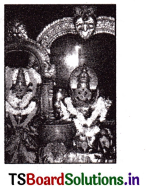
పర్యాటక క్షేత్రం – ఆదిలాబాద్ జిల్లా బాసర
పవిత్ర గోదావరీ నదికి సుమారు అరవై మైళ్ళ దూరంలో ఒక ఋష్యాశ్రమం ఉండేది. దానిని వ్యాస మహర్షి స్థాపించడం చేత దానికి “వ్యాసపురి” అని పేరు వచ్చింది. తరువాత ‘వాసర’ అని పిలువబడుతుండేది.

కాలక్రమంలో అదే ‘బాసర’ అని ప్రసిద్ధిపొందింది. ఇక్కడ సరస్వతీ దేవి దేవాలయం ఉంది. ఉత్తర భారతదేశంలో కాశ్మీరంలో, దక్షిణ భారతదేశంలో తెలంగాణలోని ఆదిలాబాద్ జిల్లాలో ఉన్న బాసరలో మాత్రమే సరస్వతీ దేవి దేవాలయాలు ఉన్నాయి. సాక్షాత్ నారాయణాంశతో జన్మించిన వేదవ్యాస మహర్షి మహాభారత భాగవతాది అష్టాదశ పురాణాలు, వ్యాఖ్యాన గ్రంథాలు రచించి, నాలుగు వేదాలను పరిష్కరించి మానవాళికి అందించిన మహోన్నతుడు.

అటువంటి వేదవ్యాసునికే ఒకసారి మనశ్శాంతి లేక సకల మునిగణ సేవితుడై ఉత్తరభారతదేశ యాత్రచేసి, దండకారణ్యానికి వచ్చాడట. కలిదోష నివారణ చేయగలిగిన గౌతమీ నదిలో స్నానం చేసి, సంధ్యా వందనము వంటి అనుష్ఠానాలను పూర్తిచేసుకుని, అమ్మను ప్రార్థించి సాకారముగా ఇక్కడనే నెలకొని ఉండమని శ్రీ సరస్వతీ దేవిని ప్రార్థించాడు. ప్రతిరోజూ గౌతమీ నదిలో స్నానము చేసి మూడు గుప్పెడులతో ఇసుక ను తెచ్చి ఒక చోట ఉంచేవాడు.
TS 10th Class Telugu Guide 10th Lesson గోలకొండ పట్టణము 5
క్రమంగా అది మూడు మూర్తు లుగా మారి శ్రీ మహాసరస్వతీ, శ్రీ మహాలక్ష్మీ, శ్రీ మహాకాళి రూపాలతో ఆవిర్భ వించింది. అందులో శ్రీ మహా సరస్వతిని అధి దేవతగా మిగిలిన దేవతలను పరివార దేవతలుగా ఆరాధించేవాడు. తరువాతి కాలంలో తురుష్కులు దండయాత్రలలో ఈ మందిరాన్ని నాశనం చేయటం జరిగింది.
TS 10th Class Telugu Guide 10th Lesson గోలకొండ పట్టణము 6

వీరశైవులైన ‘మాక్కజీ పటేలు’ సమూహము వాళ్ళను ఎదిరించారు. శిథిలమైన దేవాలయం పునరుద్ధరించబడింది. శృంగేరి పీఠాధిపతి శ్రీ జగద్గురు శ్రీ విద్యారణ్య భారతీ స్వామి వారు శ్రీ సరస్వతీ దేవిని పునఃప్రతిష్ఠ చేసి పునరుద్ధరించారు. ఇక్కడ దత్తమందిరము, గణేశ మందిరము, ఏకవీర మందిరము, పాతాళేశ్వర మందిరము,

ఆంజనేయ మందిరము’ ఉన్నాయి. శ్రీ సరస్వతీదేవి ఆలయము కేంద్రంగా ఇంద్రేశ్వరము, సూర్యేశ్వరము, నారాయణేశ్వరము మొదలైన ఆలయ సముదాయ ముతో కూడిన మహాక్షేత్రము బాసర. ఇక్కడ ప్రతి సంవత్సరము విజయదశమికి, శివరాత్రికి ఉత్సవాలు జరుగుతాయి. అనేకమంది భక్తులు ఇక్కడకు వచ్చి శ్రీ సరస్వతీదేవిని దర్శించి, ఆమె అనుగ్రహంతో పిల్లలకు విద్యాభ్యాసాలు జరుపుకుంటారు. పల్లె వాసుల జాతరలు, శుభకార్యాలు కూడా జరుగు తుంటాయి.

III. భాషాంశాలు

పదజాలం

1. క్రింది వాటిని సొంతవాక్యాల్లో ప్రయోగించండి.

అ) పుట్టినిల్లు
జవాబు:
భారతదేశం కళలకు పుట్టినిల్లు.

ఆ) పాటుపడడం
జవాబు:
తెలంగాణ రాష్ట్ర ఏర్పాటుకు ఎందరో వీరులు పాటుపడ్డారు.

ఇ) పీడవదలడం
జవాబు:
కంసుని వధతో ఆ రాజ్యానికి పీడవదిలింది.

ఈ) తలదాచుకోవడం
జవాబు:
కాశ్మీరీ పండిట్లు ఢిల్లీ పురవీధుల్లో తలదాచుకున్నారు.

2. క్రింది పదాలను వివరించి రాయండి.

అ) పటాటోపము : మితిమీరిన వస్త్రాలంకారణాన్ని పటాటోపం అని అంటారు. ‘పటము’ అనగా వస్త్రము అని అర్థం అనగా బాగా అలంకరించుకొని హడా వుడిగా తిరుగు అని భావం.

ఆ) అగ్రహారం : ఇబ్రహీం పాదుషా మహబూబునగరు జిల్లాలో నివసించుచుండిన ఆసూరి మరింగంటి సింగరాచార్య మహాకవికి “మత్తగంధేభసితఛత్ర ముత్త మాశ్వ హాటకాంబర చతురంతయాన అగ్రహార ములను” ఇచ్చి సత్కరించినాడు.

ఇ) బంజారాదర్వాజా : పట్టణంలోనికి సరుకంతయు బంజారాదర్వాజా ద్వారానే వచ్చుచుండును. బంజారాలు అనబడు లంబాడీలు ధాన్యము, ఉప్పు మొదలగునవి తెచ్చుచుండుటచే ప్రవేశద్వారమునకు బంజారా దర్వాజా అను పేరు వచ్చినది.

TS 10th Class Telugu Guide 10th Lesson గోలకొండ పట్టణము

ఈ) ధర్మశాల : పుణ్యాన్ని పొందదలచి యాత్రికులకు, బాటసారులకు, అనాథలకు ఆశ్రయాన్ని కల్పించేందుకు నిర్మించబడిన వసతి గృహాలను ధర్మశాలలు అని అంటారు. ఇవి ఎక్కువగా పుణ్యక్షేత్రాల్లో కనిపిస్తాయి. వీటిలో కులమతాలకు అతీతంగా జనులు ఆశ్రయం పొందుతారు.

వ్యాకరణాంశాలు

1. క్రింది వాక్యాలలో సంధి పదాలను విడదీసి అవి ఏ సంధులో రాయండి.

అ) పండుగ దినాలలో దేవాలయాలు భక్తులతో కిట కిటలాడుతాయి.
జవాబు:
దేవ + ఆలయాలు = దేవాలయాలు (సవర్ణదీర్ఘ సంధి)

ఆ) మధురలోని రమ్యోద్యానములు చూపరుల మనస్సు లను ఆకట్టుకుంటాయి.
జవాబు:
రమ్య + ఉద్యానములు = రమ్యోద్యానములు (గుణ సంధి)

ఇ) ఛత్రపతి శివాజీ అశ్వారూఢుడు అయి శత్రువులను సంహరించాడు.
జవాబు:
‘అశ్వ + ఆరూఢుడు = అశ్వారూఢుడు (సవర్ణదీర్ఘ సంధి)

ఈ) రాజాజ్ఞ లేనిదే ఏ కార్యక్రమాలు జరుపరు.
జవాబు:
రాజ + రాజాజ్ఞ (సవర్ణదీర్ఘ సంధి)

బహువ్రీహి సమాసము

క్రింది సమాసపదాలను వాటి విగ్రహవాక్యాలను పరిశీలించండి.

అ) ఆజానుబాహుడు – జానువుల వరకు బాహువులు కలవాడు.
ఆ) ముక్కంటి – మూడు కన్నులు కలవాడు.
ఇ) గరుడ వాహనుడు – గరుడుడు వాహనముగా కలవాడు.
ఈ) చతుర్ముఖుడు – నాలుగు ముఖాలు కలవాడు.
ఉ) పద్మాక్షి – పద్మం వంటి కన్నులు కలది.

పై పదాలలో మొదటి పదానికి గాని రెండవ పదానికి గాని ప్రాధాన్యం లేదు. రెండు పదాలు మరో పదం యొక్క అర్థాన్ని స్ఫురింపజేస్తున్నాయి. ఇలా మరో పదం యొక్క అర్థానికి ప్రాధాన్యం ఉన్న సమాసాన్ని “బహువ్రీహి” సమాసం అంటారు.

ఉదా : ‘చక్రపాణి’ అనే సమాసపదంలో ‘చక్రము’ అనే పదానికి ప్రాధాన్యం లేదు. ‘పాణి’ (చేయి) అనే పదానికి కూడా ప్రాధాన్యం లేదు. చక్రము పాణియందు కలిగిన వానికి ప్రాధాన్యం ఉన్నది. ఇట్లా సమాసంలో పదాల ద్వారా వచ్చే మరో పదము యొక్క అర్థానికి ప్రాధాన్యం ఉన్నది కాబట్టి ఇది బహువ్రీహి సమాసం.
అన్యపదార్థ ప్రాధాన్యం బహువ్రీహి.

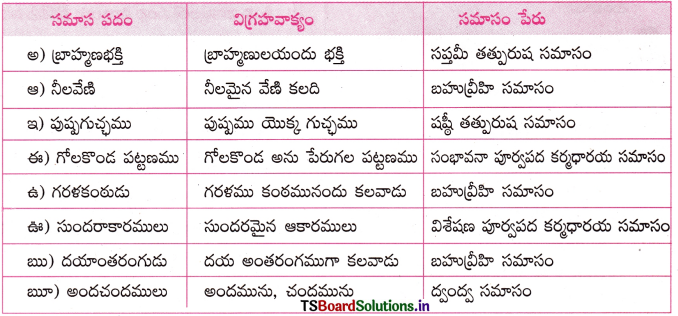
2. క్రింది సమాస పదాలకు విగ్రహవాక్యాలు రాసి, సమాసాలను రాయండి.

ఉదా : యయాతిచరిత్ర – యయాతి యొక్క చరిత్ర – షష్ఠీ తత్పురుష సమాసం.

TS 10th Class Telugu Guide 10th Lesson గోలకొండ పట్టణము 7

3. క్రింది వాక్యాలను వ్యవహారభాషలోనికి మార్చండి.

ఉదా : పట్టణము అలంకారముగానుండుటకు
అందరును ఉత్సాహముతో పాటుపడిరి.
పట్టణం అలంకారంగా ఉండడానికి అందరూ
ఉత్సాహంతో పాటుపడ్డారు.

అ) ఈ మందిరము నందే పారశీకపు రాయబారికిని, అతని అనుచరవర్గమునకును బస ఏర్పాటు చేసిరి.
జవాబు:
ఈ మందిరము నందే పారశీకపు రాయబారికి, అతని అనుచర వర్గానికి బస ఏర్పాటు చేసిరి.

ఆ) నీటి కాలువలు, జలాశయములు, జలపాతములు అచ్చెరువు గొల్పుచుండెను.
జవాబు:
నీటి కాలువలు, జలాశయాలు, జలపాతాలు ఆశ్చర్యం గొల్పుతాయి.

ఇ) పెద్ద అధికారుల యొక్కయు మందిరములన్నియు లోపలి కోటలో నుండుచుండును.
జవాబు:
పెద్ద అధికారుల మందిరాలన్నీ కోటలో ఉండేవి.

ఈ) వజ్రములకు గోలకొండ పుట్టినిల్లే గదా !
జవాబు:
“వజ్రాలకు గోలకొండ పుట్టిల్లు” కదా !

TS 10th Class Telugu Guide 10th Lesson గోలకొండ పట్టణము

ఉ) పట్టణములోనికి సరుకంతయు బంజారాదర్వాజా ద్వారానే వచ్చుచుండును.
జవాబు:
పట్టణంలోనికి సరుకంతా బంజారాదర్వాజా ద్వారా వచ్చును.

ప్రాజెక్టు పని

మీ జిల్లాలోని వివిధ కోటల చిత్రాలు లేదా మీరు చూసిన కోట/ప్రాచీన గుడి / కట్టడం ఆధారంగా నివేదిక రాయండి. ప్రదర్శించండి.
జవాబు:
నివేదిక

నేను చూసిన ప్రాచీన కట్టడం వరంగల్లు నగరం. వరంగల్లును ఓరుగల్లు అని, ఏకశిలా నగరం అని పిలిచేవారు. హైదరాబాద్కు 80 కి.మీ. దూరంలో ఉన్నది. వరంగల్లు, హనుమకొండ, ఖాజీపేటలు కలిసే ఉంటాయి.

వరంగల్లు 42 గ్రామ పంచాయితీలతో 1 మిలియన్ జనాభాను మించిపోయింది. కాకతీయులు 1195 నుండి 1323 వరకు పరిపాలన సాగించారు.
స్వయంభూ దేవాలయం ఇక్కడ ఉంది. రెండవ ప్రతాప రుద్రుని తర్వాత ముసునూరి నాయకులు పరి పాలించారు. వేయిస్తంభాల గుడి ప్రసిద్ధమైన గుడి. ఇక్కడ NIIT వరంగల్, కాకతీయ యూనివర్శిటీ, కాకతీయ మెడికల్ కాలేజి (కాళోజి హెల్త్ యూని వర్శిటీ) ప్రసిద్ధ విశ్వవిద్యాలయాలు ఉన్నాయి. గ్రానైట్ క్వారీలు ఎక్కువగా ఉన్నాయి.

బతుకమ్మ పండుగ ఘనంగా జరుపుతారు. 9 రోజులపాటు రకరకాల పూలతో అలంకారం చేస్తారు. భద్రకాళి గుడి, కాకతీయ శిల్పాలు, ఏకశిలా గుట్ట, రామప్ప దేవాలయం మొదలైనవి ప్రసిద్ధమైనవి. కాక తీయుల కోట ఎంతో గొప్పది. ఇటీవల మా పాఠశాల వారు వరంగల్లు జిల్లాలోని ముఖ్యమైన ప్రదేశములను మాకు చూపారు. అందరూ గర్వించ దగ్గ నగరం వరంగల్లు.

సూక్తి : చరిత్ర స్వదేశాభిమానాన్ని నేర్పే చక్కనైన సాధనం

మీకు తెలుసా ?

గోల్కొండ కోటను బండరాళ్ళతో కట్టారు. గోల్కొండ కైవారము నాలుగు మైళ్ళను మించి ఉంటుంది. దీనికి ఎనిమిది బురుజులున్నవి. ఈ బురుజులన్నియు శతఘ్నుల స్థావరములు. మొగలు సైన్యం సర్వశక్తియుక్తులను కూడ దీసుకొని తొమ్మిది నెలలు శ్రమించి ఒక్క బురుజును మాత్రమే కూల్చగలిగిరి. ఐతే ఆ బురుజు స్థానమున ఒక్క రాత్రిలో మరొక బురుజును కుతుబ్షాహీ సైనికాధికారులు కట్ట గలిగిరి. గోల్కొండ కోటలో కొండశిఖరమున ‘బాలహిస్సారు’ అను ప్రాసాదమున్నది.

దానికి పోవు మార్గమునకు, కోట ప్రాకారమునకు అమర్చిన ద్వారముకడ ఒక రాతి గుండున్నది. ఆ రాతిపై నిలచి చప్పట్లు కొట్టిన ఆ శబ్దము బాలహిస్సారు లోనికి స్పష్టంగ వినిపించును. అట్లు ప్రతిధ్వనించు ఏర్పాటును నిర్మాణములోనే కల్పించిరి. ఇవి అన్నియు మానవుని ప్రజ్ఞ వలన నెలకొన్న అమర్పులు.

మూలం : కె.వి. భూపాల్రావు రాసిన ‘మహామంత్రి మాదన్న కథ’లోనిది.

విశేషాంశములు

1. బురుజులు : కోటగోడయందుండు దిబ్బ. శత్రురక్షణ దృష్టిలో ప్రత్యేకంగా చేపట్టిన నిర్మాణం. ఇక్కడి నుండి శత్రువుల కదలికలను గమనించవచ్చు. శత్రువులపై దాడిచేసే సందర్భంలో ఇక్కడ ఫిరంగులను పెట్టి కాలుస్తారు.

2. ఇబ్రహీం కుతుబ్షా : 1550 – 1580 సంవత్సరాల మధ్య గోలకొండ రాజ్యాన్ని పరిపాలించిన మాలిక్ ఇబ్రాహీం కుతుబ్షాహీ రాజు. జనవ్యవహారంలో ‘మల్కిభరాం’ గా ప్రసిద్ధుడు. పరిపాలనాదక్షుడు. తెలుగు భాష పట్ల మమకారాన్ని ప్రకటించాడు. తెలుగు కావ్యాన్ని అంకితం పొందిన ముస్లింరాజు ఇతడే. గోలకొండ రాజ్యంలో ఉద్యోగి సారంగు తమ్మయ తన తపతీ సంవరణోపాఖ్యానాన్ని ఇబ్రహీం కుతుబ్షాకు అంకితం ఇచ్చాడు. ఈ రాజు 1578 లో పురానా పూలు నిర్మించాడు.

3. కులీకుతుబ్షా : 1580 – 1612 సంవత్సరాల మధ్య గోలకొండ రాజ్యాన్ని పరిపాలించిన కులీ కుతుబ్షా హైదరాబాద్ నగర నిర్మాత. చక్కని కవి. హైదరాబాద్ ప్రాంతానికి ప్రత్యేకమైన ‘దక్కనీ ఉర్దూ’ ను ప్రోత్సహించాడు.ఈ మాండలికంలో దాదాపు 1800 పుటల కవిత్వాన్ని రచించాడు. తెలుగులోనూ కవిత్వాన్ని రచించినట్టు చెబుతారు. అవి లభ్యంకాలేదు.

4. మేనా : పెళ్ళి ఉరేగింపు వాహనాలలో ఒకటి, ఇది పల్లకి వలెనే ఉంటుంది కానీ పల్లకి అంత సున్నిత మైనది కాదు. మోటారు వాహనాలు లేని రోజుల్లో వధూవరులను ఇందులో కూర్చుండబెట్టి మనుషులు మోసేవారు.
5. హోన్ను : గోలకొండ కుతుబ్షాహి రాజ్యంలో ప్రధానమైన నాణెం హోన్ను. ఇది బంగారు నాణెం. విదేశీయులు దీన్నే పెగోడా అనేవారు.

ముఖ్య పదాలు – అర్థాలు

I

కైవారము = చుట్టూరా, వందిస్తోత్రము
అధికసంఖ్య = ఎక్కువ సంఖ్య
జనసమ్మర్ధం = ఎక్కువ జనాభా కలిగి ఉండటం
సొంపు = ఆనందం
రమ్యోద్యానములు = అందమైన ఉద్యానవనములు
మున్నగునవి = మొదలగునవి
హర్మ్యము = ఎత్తైన మేడ
ఉపాహారము = అల్పాహారము (టిఫిన్)
కేళాకూళులు = క్రీడా సరస్సులు

TS 10th Class Telugu Guide 10th Lesson గోలకొండ పట్టణము

II

హూను = సుమారు 4 రూపాయిల విలువగల బంగారు నాణెం
సర్ధారు = శూరుడు
పానీయ జలము = త్రాగునీరు
హవుజు = భవనం
అంగడి = దుకాణము
పైఠన్ = జలతారు
దారోగా = పై అధికారి
పుట్టి = 20 మణుగులు
తటాకము = చెరువు
వణికుంగవులు = శ్రేష్ఠులైన వ్యాపారులు
కౌశల్యము = నేర్పు
పణం = పందెం
దుర్లభము = కష్టము

III

పాదుషా = చక్రవర్తి
ఇభము = ఏనుగు
హాలకము = బంగారము
శస్త్రము = విసరకుండా యుద్ధం చేసే ఆయుధం – గద, కత్తి మొదలైనవి.
ఠీవి = దర్జా
అంబరము = ఆకాశము
వాఙ్మయము = భాష
సురటీ = విసనకర్ర
బోయీ = పల్లకి మోసేవాడు
భీతి = భయము
మాధుర్యము = తియ్యదనము, మధురత్వము
సత్కరించుట = గౌరవించట
కావ్యము = కబ్బము
పెక్కు = చాలా
పక్వము = పంట
ధ్వజము = జెండా
అశ్వము = గుఱ్ఱము
పదాతివర్గం = కాలి బలగం
యుద్ధభీతి = యుద్ధ భయం
పానుపు = పరుపు, పడక
మనోజ్ఞము = అందము
ఆకర్షణీయము = అందము
పరిసమాప్తి = ముగింపు, అంతము

పాఠం ఉద్దేశం

తెలంగాణలో చారిత్రక కట్టడాలకు కొదువ లేదు. వీటిలో గోలకొండ ఘనమైన చారిత్రకప్రాధాన్యం సంతరించు కొన్నది. ఈ పట్టణం యొక్క ప్రాశస్త్యం… నాటి కోటల నిర్మాణం… మంచి నీటి వసతుల కల్పన… అద్భుత సాంకేతిక నిర్మాణాలు… పట్టణంలో జరిగిన ప్రపంచస్థాయి వర్తక, వ్యాపారాలు… ఆహారపుటలవాట్లు, కోటలో జరిగిన కార్య కలాపాలు, స్థాపించిన పరిశ్రమలు, గోలకొండ పట్టణ ప్రాముఖ్యతతోపాటు 1940ల నాటి తెలంగాణ వచన రచనా శైలిని తెలుపడమే ఈ పాఠం ఉద్దేశం.

పాఠ్యభాగ వివరాలు

ఈ వ్యాసం ఆదిరాజు వీరభద్రరావు రాసిన ‘మన తెలంగాణము’ అనే వ్యాససంపుటి లోనిది.

రచయిత పరిచయం

రచయిత : ఆదిరాజు వీరభద్రరావు
జననం : 16.11.1890
మరణం : 28.9.1973
జన్మస్థలం : ఖమ్మంజిల్లా మధిర తాలూకా

ఇతర రచనలు : ప్రాచీనాంధ్ర నగరములు, లలిత కథావళి, రత్నప్రభ, జీవిత చరితావళి, జీవిత చరిత్రలు, నవ్వుల పువ్వులు, మిఠాయిచెట్టు, షితాబ్ ఖాన్. సంగ్రహాంధ్ర విజ్ఞానకోశంలో యాభైవ్యాసాలు రాశాడు. హైదరాబాద్ రేడియోలో తొలి ప్రసంగం చేశాడు.

వృత్తి : చాదర్ ఘాట్ హైస్కూల్ హైదరాబాదులో ప్రధాన తెలుగుపండితుడిగా పనిచేశాడు.
ప్రవృత్తి : “లక్ష్మణరాయ పరిశోధక మండలి” కి కార్యదర్శిగా వ్యవహరించాడు. తన పాండిత్యం, పరిశోధనలతో “తెలంగాణ భీష్ముడి” గా పేరు తెచ్చుకున్నాడు.

TS 10th Class Telugu Guide 10th Lesson గోలకొండ పట్టణము

ప్రవేశిక

ఏ జాతికైనా, ఏ ప్రాంతానికైనా తమ చరిత్రను మరచిపోవడమంత దురదృష్టం మరొకటి ఉండదు. తెలంగాణలోనే ఎంతో విశిష్టతను సంతరించుకున్న గోలకొండ పట్టణ వైభవాన్ని, నాటి అద్భుత నిర్మాణాలను వర్ణించడానికి మాటలు చాలవు. చిరస్మరణీయమైన ఈ కట్టడంలోని సాంకేతిక నైపుణ్యాన్ని ఎందరో చరిత్రకారులు అభివర్ణించే ప్రయత్నం చేశారు.

గోలకొండ వైభవాన్ని కళ్ళతో చూడవలసిందేకాని మాటల్లో చెప్పడం సాధ్యం కాదు. ఆదిరాజు వీరభద్రరావు ఆ ప్రయత్నం చేశాడు. ఆయన మాటల్లోనే గోలకొండ పట్టణ విశేషాలను, ఆనాటి పరిస్థితులను ఈ పాఠం చదివి తెలుసుకోండి. ప్రత్యక్షంగా చూసిన అనుభూతిని పొందండి.

విద్యార్థులకు సూచనలు

  • పాఠం ప్రారంభంలోని ప్రవేశిక చదువండి. పాఠంలోని విషయాన్ని ఊహించండి.
  • పాఠం చదువండి. అర్థంకాని పదాల కింద గీత గీయండి.
  • వాటి అర్థాలను పుస్తకం చివర ఉన్న ‘పదవిజ్ఞానం’ పట్టికలో చూసి లేదా నిఘంటువులో చూసి తెలుసుకోండి.

ప్రక్రియ – చారిత్రక వ్యాసం

ఈ పాఠం వ్యాస ప్రక్రియకు చెందినది. వ్యాసం అంటే వివరించి చెప్పడం. చరిత్రను తెలిపే వ్యాసాన్ని చారిత్రక వ్యాసం అంటారు. తెలంగాణ ప్రాంతంలోని కోటల నిర్మాణ వైభవాన్ని, విశిష్టతను తెలుపుతూ రాసిన వ్యాసమే ఈ పాఠం.