
Reviewing AP Inter 2nd Year Zoology Study Material Chapter 6 Human Health and Disease Questions and Answers can help students prepare confidently for exams.
AP Inter 2nd Year Zoology 6th Lesson Human Health and Disease Questions and Answers
IV. Very Short Answer Questions
Question 1.
What measures would you take to prevent vector-borne diseases?
Answer:
Vector-borne diseases can be controlled by reducing the breeding of disease-carrying vectors and maintaining good hygiene.
- Prevent water stagnation and keep the surroundings clean.
- Use mosquito nets, mosquito repellents, and insecticide sprays.
- Follow proper sanitation and waste disposal practices.
- Eliminate mosquito breeding sites through regular vector control measures.
Question 2.
What are the common symptoms of typhoid?
Answer:
Common symptoms of typhoid are:
- Persistent high fever
- Weakness and tiredness
- Pain in the abdomen
- Reduced appetite
- Headache
- Constipation or diarrhoea
Question 3.
Mention the symptoms of Ascariasis.
Answer:
Symptoms of Ascariasis include:
- Internal bleeding
- Muscle pain
- Fever
- Anaemia
- Intestinal blockage in severe infections
Question 4.
Name the pathogen that causes filariasis and mention the organs where they live in the infected person.
Answer:
- Filariasis is caused by filarial worms such as Wuchereriabancrofti and Brugia malavi.
- These parasites inhabit the lymphatic vessels, particularly those of the lower limbs and genital organs, resulting in swelling known as elephantiasis.
Question 5.
Name the genera of fungi that cause Ringworm in humans and mention its symptoms.
Answer:
- Ringworm is caused by fungi belonging to the genera Microsporum, Trichophyton, and Epidermophyton.
- Symptoms: It produces dry, scaly patches on the skin, scalp, and nails, accompanied by intense itching, especially in warm and moist body folds.
Question 6.
Name the primary and secondary lymphoid organs in humans.
Answer:
Primary lymphoid organs:
- Bone marrow
- Thymus
Secondary lymphoid organs:
- Spleen
- Lymph nodes
- Tonsils
- Peyer’s patches (in the intestine)
Question 7.
What is an autoimmune disease? Give one example.
Answer:
An autoimmune disease is a disorder in which the body’s immune system mistakenly attacks its own cells and tissues instead of protecting them. Example: rheumatoid arthritis, where the immune system attacks the joints.

Question 8.
Draw a well-labelled diagram of an antibody molecule.
Answer:
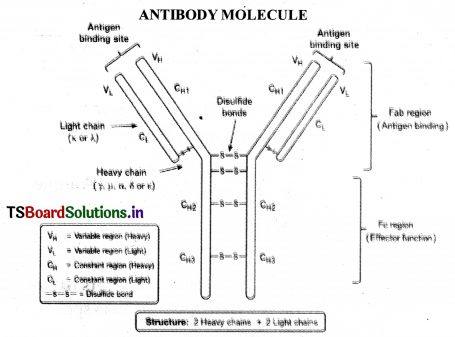
Question 9.
What is Metastasis?
Answer:
- Metastasis is the process in which cancer cells break away from the original tumour and spread to distant parts of the body through the bloodstream or lymphatic system.
- These cells establish secondary tumours, making cancer more dangerous.
Question 10.
How is a cancerous cell different from a normal cell?
Answer:
| Feature | Normal Cell | Cancerous Cell |
| Cell division | 1. Controlled and regulated. | 1. Uncontrolled and rapid. |
| Response to growth signals | 2. Responds normally to growth signals. | 2. Ignores growth-regulating signals. |
| Spread | 3. Remains at its original location. | 3. Can spread to other organs (metastasis). |
| Shape and structure | 4. Uniform and regular. | 4. Irregular and abnormal. |
V. Short Answer Questions
Question 1.
Explain the disease Amoebiasis with regards to its pathogen, symptoms, carrier, and mode of infection.
Answer:
Amoebiasis (Amoebic dysentery) is an intestinal disease caused by a protozoan parasite that affects the digestive system.
- Pathogen: The disease is caused by Entamoeba histolytica, which lives in the large intestine of humans.
- Symptoms: Common symptoms include constipation, abdominal pain, stomach cramps, and in severe cases, stools containing mucus and blood.
- Carrier: Houseflies act as mechanical carriers, transferring the parasite from contaminated material to food.
- Mode of Infection: The infection spreads by consuming food or water contaminated with faecal matter containing the parasite. Houseflies help transmit the cysts from infected faeces to food.
Question 2.
How does the transmission of each of the following diseases take place?
(a) Amoebiasis
(b) Malaria
(c) Ascariasis
(d) Pneumonia
Answer:
(a) Amoebiasis: Transmitted by consuming food or water contaminated with cysts of Entamoeba histolytica. Houseflies act as mechanical carriers by transferring cysts from infected faeces to food.
(b) Malaria: Spread through the bite of an infected female Anopheles mosquito, which injects the Plasmodium parasite into the human bloodstream.
(c) Ascariasis: Occurs by swallowing eggs of Ascaris lumbricoides present in contaminated food, drinking water, or soil.
(d) Pneumonia: Transmitted through respiratory droplets or aerosols released by an infected person during coughing or sneezing. It may also spread through contaminated eating utensils.
Question 3.
Expand the following abbreviations to their full forms :
(a) MALT
(b) CMI
(c) AIDS
(d) NACO
Answer:
(a) MALT: Mucosa-Associated Lymphoid Tissue – a lymphoid tissue associated with mucosal surfaces, constituting nearly 50% of the body’s lymphoid tissue.
(b) CMI: Cell-Mediated Immunity – an acquired immune response mediated mainly by T-lymphocytes.
(c) AIDS: Acquired Immunodeficiency Syndrome – a disease caused by the Human Immunodeficiency Virus (HIV) that weakens the immune system.
(d) NACO: National AIDS Control Organisation – the Indian organization that works with government and non-government agencies to create awareness, prevent HIV/AIDS, and implement control programmes.
Question 4.
What is innate immunity? What are its barriers?
Answer:
Innate immunity is the body’s natural, non-specific defence mechanism that is present from birth. It provides the first line of protection against invading pathogens by preventing their entry and destroying them through various defence barriers.
Types of Barriers:
i) Physical Barriers:
- The skin serves as the first protective barrier against microorganisms.
- Mucous membranes lining the respiratory, gastrointestinal, and urogenital tracts trap and prevent microbes from entering the body.
ii) Physiological Barriers: These include hydrochloric acid (HCl) in the stomach, saliva, and tears, which destroy microbes or inhibit their growth.
iii) Cellular Barriers: Certain white blood cells (leucocytes) such as neutrophils, monocytes, macrophages, and natural killer (NK) cells eliminate pathogens through phagocytosis and other defence mechanisms.
iv) Cytokine Barriers: Virus-infected cells release interferons, which protect neighbouring healthy cells from viral infection.
Question 5.
Explain the term “Addiction” in respect of drugs and alcohol abuse.
Answer:
Addiction is a psychological dependence on drugs or alcohol in which a person repeatedly seeks these substances to experience pleasure, euphoria, or a temporary sense of well-being.
- Compulsive Use: The affected person continues to consume drugs or alcohol repeatedly, even when it is harmful or unnecessary.
- Increased Tolerance: With repeated use, the body becomes tolerant, requiring progressively higher doses to produce the same effect.
- Vicious Cycle: Continued use creates a cycle of dependence, making it increasingly difficult for the individual to stop without assistance.
- Dependence: Long-term addiction results in physical and psychological dependence. Stopping the substance may produce withdrawal symptoms such as anxiety, nausea, sweating, restlessness, and discomfort.
Question 6.
Differentiate between Innate and Acquired Immunity.
Answer:
| Feature | Innate Immunity | Acquired Immunity |
| Type of Defense | 1. Provides a non-specific defense against pathogens. | 1. Provides a specific defense directed against particular pathogens. |
| Time of Origin | 2. Naturally present from birth. | 2. Develops after birth following exposure to specific antigens. |
| Mechanism | 3. Protects the body through physical, physiological, cellular, and cytokine barriers, preventing the entry and spread of foreign agents. | 3. Acts by recognizing specific antigens, activating lymphocytes, and developing immunological memory. |
| Response Type | 4. Produces an immediate, uniform response against invading organisms without. specificity. | 4. Shows a slow primary response during first exposure and a rapid, stronger secondary (anamnestic) response upon subsequent exposure. |
| Key Components | 5. Includes skin, mucous membranes, stomach acid, saliva, tears, neutrophils, macrophages, natural killer cells, and interferons. | 5. Mainly involves B-lymphocytes (produce antibodies) and T-lymphocytes (cell- mediated immune response). |
VI. Long Answer Questions
Question 1.
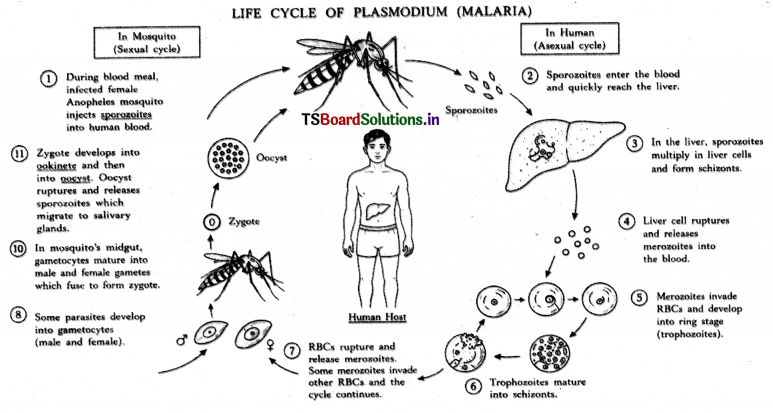
Describe the life cycle of Plasmodium with a labelled diagram.
Answer:
- The life cycle of Plasmodium is completed in two hosts: humans and the female Anopheles mosquito.
- The cycle starts when an infected female Anopheles mosquito bites a person and injects sporozoites into the bloodstream.
- These sporozoites travel to the liver, enter liver cells, and multiply repeatedly to produce merozoites.
- The merozoites leave the liver and invade red blood cells (RBCs), where they multiply again and finally rupture the RBCs.
- The bursting of RBCs releases a toxic pigment called haemozoin, which is responsible for the periodic chills and high fever seen in malaria.
- Some merozoites differentiate into gametocytes inside RBCs. When another female Anopheles mosquito feeds on the infected person, it ingests these gametocytes.
- Inside the mosquito, gametocytes develop into male and female gametes. Fertilization forms a zygote, which develops into an ookinete and later into an oocyst. The oocyst produces numerous sporozoites.
- The newly formed sporozoites migrate to the salivary glands of the mosquito. During its next bite, they are injected into another human host, thereby repeating the life cycle.
- Among all malaria parasites, Plasmodium falciparum causes the most severe form of malaria. Mosquito bite → Sporozoites → Liver → Merozoites → RBC cycle → Gametocytes → Mosquito →Gametes → Zygote → Oocyst → Sporozoites
Question 2.
What is Immunity? Describe the various types of immunity.
Answer:
Immunity is the body’s natural ability to protect itself from disease-causing microorganisms. It is provided by the immune system, which identifies and destroys harmful pathogens.
1. Innate Immunity: Innate immunity is a non-specific defense mechanism that is present from birth. It protects the body by preventing the entry and spread of foreign organisms.
Types of Barriers:
Physical barriers:
1. Skin acts as the first protective barrier against pathogens.
2. Mucous membranes lining the respiratory, digestive, and urogenital tracts trap microorganisms and prevent their entry.
- Physiological barriers: Stomach acid, saliva, and tears destroy microbes or inhibit their growth.
- Cellular barriers: White blood cells such as neutrophils, monocytes, macrophages, and natural killer (NK) cells eliminate invading pathogens through phagocytosis.
- Cytokine barriers: Virus-infected cells produce interferons, which protect neighbouring cells from viral infection.
2. Acquired Immunity Acquired immunity is a pathogen-specific defense system that develops after exposure to antigens and possesses immunological memory.
- During the first exposure, the body produces a primary immune response, which is relatively slow and less intense.
- During subsequent exposures, a secondary (anamnestic) immune response is produced, which is much faster and stronger due to immunological memory.
Acquired immunity mainly involves two types of lymphocytes:
B-Lymphocytes:
1. Produce antibodies that circulate in the blood and destroy pathogens.
2. This is known as humoral immunity.
T-Lymphocytes:
- They do not produce antibodies directly but help B cells and destroy infected cells.
- They are responsible for cell-mediated immunity (CMI) and also play a major role in organ transplant rejection.
3. Active and Passive Immunity: Acquired immunity is further classified into Active Immunity and Passive Immunity.
Active Immunity:
- Develops when the body is exposed to antigens such as living or dead microbes or their products.
- The body produces its own antibodies.
- It develops gradually but provides long-lasting protection.
Passive Immunity:
- Occurs when preformed antibodies are transferred directly from another individual.
- It provides immediate protection, but the protection is temporary.
- Examples include IgA antibodies present in colostrum passed from mother to infant and maternal antibodies transferred through the placenta to the developing foetus.
Question 3.
Explain the transmission of Human Immunodeficiency Virus (HIV) and its replication in man with the help of diagram.
Answer:
Human Immunodeficiency Virus (HIV) is a retrovirus containing an RNA genome enclosed within an envelope. It causes Acquired Immunodeficiency Syndrome (AIDS) by weakening the body’s immune system.
1. Transmission of HIV: HIV spreads only through infected body fluids and not by casual contact.
The major modes of transmission are:
- Unprotected sexual contact with an infected individual.
- Transfusion of infected blood or blood products.
- Sharing contaminated needles or syringes, especially among intravenous drug users.
- Mother-to-child transmission during pregnancy, childbirth, or breastfeeding.
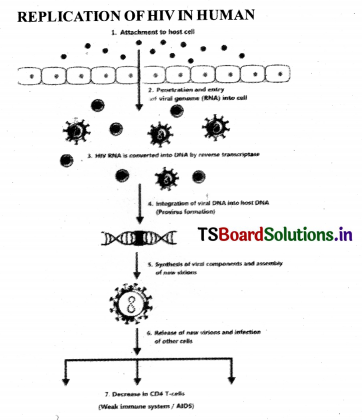
2. Replication of HIV in Humans :
- Entry into Macrophages: HIV first enters macrophages, where it begins its multiplication.
- Reverse Transcription: Inside the host cell, the viral RNA is converted into DNA with the help of the enzyme reverse transcriptase.
- Integration: The newly formed viral DNA integrates into the host cell DNA and becomes a provirus.
- Formation of New Viruses: Using the host cell machinery, the provirus directs the synthesis of viral RNA and proteins, which assemble into new HIV particles.
- Infection ofT-Lymphocytes: The newly formed viruses infect helper T-lymphocytes (CD4 cells) and continue multiplying within them.
- Progressive Destruction: Large numbers of viruses are released, infecting additional CD4 cells and causing a steady decline in their number.
3. Effect on the Immune System :
- As the CD4 (helper T-cell) count decreases, the immune system becomes weak and less effective.
- The infected individual becomes highly susceptible to opportunistic infections caused by bacteria, viruses, fungi, and parasites.
- Continuous destruction of helper T-cells eventually results in immunodeficiency, making the body unable to defend itself against common infections.
Question 4.
Explain cancer with reference to its causes, diagnosis and treatment.
Answer:
Cancer is a disorder in which body cells divide abnormally and uncontrollably, resulting in the formation of tumours. Malignant tumours invade nearby tissues and spread to other parts of the body through metastasis.
1. Causes of Cancer :
- Carcinogens: Cancer develops due to cancer-causing agents called carcinogens, which transform normal cells into cancer cells.
- Physical Agents: Exposure to ionizing radiation (X-rays and gamma rays) and non¬ionizing radiations (UV rays) can damage DNA and initiate cancer.
- Chemical Agents: Chemicals, especially those present in tobacco smoke, are major contributors to cancers such as lung cancer.
- Biological Agents: Certain oncogenic viruses and the activation of proto-oncogenes (cellular oncogenes) may also trigger cancer development.
2. Diagnosis of Cancer :
- Early Detection: Early diagnosis greatly improves the chances of successful treatment.
- Biopsy and Histopathology: A small tissue sample is collected and examined microscopically to confirm the presence of cancer.
- Blood and Bone Marrow Tests: These investigations, particularly useful in leukaemia, help detect abnormal blood cell counts.
- Imaging Techniques: Methods such as X-rays, CT scans, and MRI are used to locate and identify tumours inside the body.
- Molecular Diagnosis: Advanced molecular techniques help detect genetic susceptibility and identify cancer at an early stage.
3. Treatment of Cancer: Cancer treatment usually involves one or more of the following methods:
- Surgery: Removal of the tumour by surgical operation.
- Radiotherapy: High-energy radiation is used to destroy cancer cells.
- Chemotherapy: Anti-cancer drugs are administered to kill rapidly dividing cancer cells. Hair loss and other side effects may occur.
- Immunotherapy: Biological agents such as interferons are used to stimulate the immune system to recognize and destroy cancer cells.
Question 5.
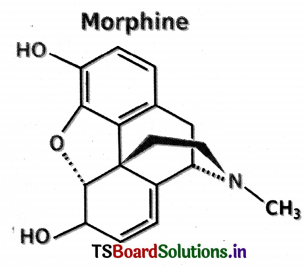
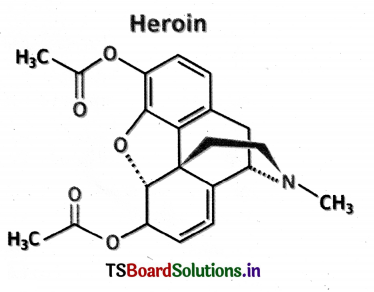
Describe the commonly abusing drugs by drawing their chemical structures.
Answer:
Commonly abused drugs are broadly classified into opioids, cannabinoids, and coca alkaloids. Most of these substances are obtained from flowering plants and mainly affect the central nervous system (CNS), leading to addiction.
1. Opioids: Opioids bind to specific opioid receptors present in the brain and gastrointestinal tract, thereby reducing pain and producing sedation.
Morphine:
- Obtained from the latex of the plant Papaver somniferum.
- It is a powerful pain-relieving (analgesic) drug and sedative used in medicine.
- Chemically, it possesses a complex multi-ring structure.
Heroin (Smack):
- Chemically known as Diacetylmorphine.
- It is produced by acetylation of morphine.
- It acts as a strong CNS depressant, slowing body functions and causing severe addiction.
2. Cannabinoids: Cannabinoids act on receptors mainly present in the brain, affecting memory, mood, coordination, and behaviour.
Source:
- Obtained from the plant Cannabis sativa.
- Common products include marijuana, hashish, ganja, and charas.
Active Compound: The principal active chemical is Tetrahydrocannabinol (THC).
Effects :
- They influence the cardiovascular system.
- Produces euphoria, hallucinations, and altered perception.
Structure: Cannabinoids possess a phenolic ring attached to a long hydrocarbon chain.
3. Coca Alkaloids (Cocaine):
- Source: Cocaine is extracted from the South American plant Erythroxylum coca.
- Action: It blocks the reuptake of dopamine, increasing its concentration in the brain.
Effects:
- Produces alertness, excitement, increased energy, and euphoria.
- Excessive use may result in hallucinations and nervous disorders.
4. Other Commonly Abused Substances:
- Hallucinogens: Plants such as Atropa belladonna and Datura contain hallucinogenic compounds that alter perception and produce hallucinations.
- Misused Medicinal Drugs: Certain prescribed medicines like barbiturates, amphetamines, and benzodiazepines are often abused despite their therapeutic use.
- Tobacco: Tobacco contains nicotine, which increases heart rate and blood pressure. Long-term consumption is associated with cancer and several respiratory diseases.
Question 6.
Describe the harmful effects caused by alcohol and drug abuse. Discuss its prevention and control measures.
Answer:
Alcohol and drug abuse, especially among adolescents, can lead to serious physical, mental, emotional, and social problems.
1. Harmful Effects:
- Immediate and serious effects: Abuse of drugs or alcohol may cause reckless behaviour, violence, coma, heart failure, respiratory failure, brain damage, or even death. 1
- Warning signs in young people: Common signs include poor academic performance, frequent absenteeism, poor personal hygiene, social isolation, depression, and aggressive behaviour.
- Spread of infectious diseases: Sharing contaminated needles can transmit infections such as HIV/AIDS and Hepatitis B.
- Long-term health effects: Continuous use damages the liver (cirrhosis), brain, nervous system, and during pregnancy it may also harm the developing foetus.
Effects of steroid abuse in sports :
- Females: Masculinisation and irregular menstrual cycles.
- Males: Reduced sperm count and enlargement of breasts (gynecomastia).
- Adolescents: Stunted growth and severe acne.
Social and financial consequences: Addiction may result in theft, family conflicts, emotional stress, poor relationships, and financial difficulties.
2. Prevention and Control Measures :
- Avoid peer pressure: Adolescents should resist negative influences and develop confidence to make healthy choices.
- Education and counselling: Awareness programmes and counselling help young people manage stress, accept failures positively, and adopt healthy habits such as sports, reading, and yoga.
- Seek support: Individuals should approach parents, teachers, friends, or counsellors for guidance and emotional support.
- Recognise warning signs early: Parents and teachers should identify behavioural changes at an early stage and take timely corrective action.
- Professional treatment: People affected by addiction should receive help from doctors, psychologists, rehabilitation centres, and de-addiction programmes. With proper treatment, counselling, and determination, recovery is possible.
I. Multiple Choice Questions
Question 1.
Diseases are broadly grouped into infectious and non-infectious diseases. In the list given below, identify the infectious diseases.
i) Cancer
ii) Pneumonia
iii) AIDS
iv) Arthritis
1. i and ii
2. ii and iii
3. iii and iv
4. ii and iv
Answer:
2. ii and iii
Question 2.
Find out the correct option with regards to the disease and its causative pathogen.
| a) Elephantiasis | i) Bacteria |
| b) Amoebiasis | ii) Plasmodium |
| c) Malaria | iii) Entamoeba histolytica |
| d) Pneumonia | iv) Wuchereria |
1. a-i, b-ii, c-iii, d-iv
2. a-iv, b-iii, c-ii, d-i
3. a-ii, b-iii, c-i, d-iv
4. a-iii, b-i, c-iv, d-ii
Answer:
2. a-iv, b-iii, c-ii, d-i
| a) Elephantiasis | iv) Wuchereria |
| b) Amoebiasis | iii) Entamoeba histolytica |
| c) Malaria | ii) Plasmodium |
| d) Pneumonia | i) Bacteria |
Question 3.
Which of the following is a pair of viral diseases?
1. Ringworm and AIDS
2. Common cold and Pneumonia
3. AIDS and Common cold
4. Typhoid and Malaria
Answer:
3. AIDS and Common cold
Question 4.
The substance produced by a cell in viral infection that can protect other cells from further infection is :
1. Serotonin
2. Histamine
3. Interferon
4. Lysozyme
Answer:
3. Interferon
Question 5.
The number of Heavy and Light peptide chains present in Antibody molecule is
1. H2,L2
2.H3,L1,
3. H1, L3
4.H3,L3
Answer:
1. H2,L2
Question 6.
Which of the following is mainly responsible for graft rejection in transplantation of
1. Inflammatory immune response
2. Autoimmune response
3. Cell-mediated immune response
4. Humoral immune response
Answer:
3. Cell-mediated immune response
Question 7.
Match List – I with List – II.
| List – I | List – II |
| a) Interferons | i) T-Lymphocytes |
| b) Colostrum | ii) Innate Immunity |
| c) Antibody-mediated immunity | iii) Passive immunity |
| d) Cell-mediated immunity | iv) B-Lymphocytes |
1. a-ii, b-iv, c-i, d-iii
2. a-ii, b-iii, c-iv, d-i
3. a-iii, b-i, c-iii, d-i
4. a-i, b-ii, c-iii, d-iv
Answer:
2. a-ii, b-iii, c-iv, d-i
| List – I | List – II |
| a) Interferons | ii) Innate Immunity |
| b) Colostrum | iii) Passive immunity |
| c) Antibody-mediated immunity | iv) B-Lymphocytes |
| d) Cell-mediated immunity | i) T-Lymphocytes |
Question 8.
The exaggerated response of the immune system to certain antigens present in the environment is called
1. Active Immunity
2. Passive Immunity
3. Autoimmunity
4. Allergy
Answer:
4. Allergy
Question 9.
Which of the following factors does not cause transmission of HIV infection?
1. Sharing of household items
2. Transfusion of contaminated blood
3. Sexual contact with an infected person
4. Sharing of infected needles
Answer:
1. Sharing of household items
Question 10.
The Cancer-causing genes are
1. Structural genes
2. Oncogenes
3. Functional genes
4. Expressor genes
Answer:
2. Oncogenes
Question 11.
The drug ‘Heroin’ is synthesized by.
1. Glycosylation of morphine
2. Nitration of morphine
3. Methylation of morphine
4. Acetylation of morphine
Answer:
4. Acetylation of morphine
Question 12.
Match List – I with List – II.
| a) Cocaine | i) Effective sedative in surgery |
| b) Heroin | ii) Cannabis sativa |
| c) Morphine | iii) Erythroxylum coca |
| d) Marijuana | iv) Papaver somniferum |
1. a-iv, b-iii, c-i, d-ii
2. a-i, b-iii, c-ii, d-iv
3. a-ii, b-i, c-iii, d-iv
4. a-iii, b-iv, c-i, d-ii
Answer:
4. a-iii, b-iv, c-i, d-ii
| a) Cocaine | iii) Erythroxylum coca |
| b) Heroin | iv) Papaver somniferum |
| c) Morphine | i) Effective sedative in surgery |
| d) Marijuana | ii) Cannabis sativa |
Question 13.
Which one of the following pairs of disease can spread through blood transfusion?
1. Hepatitis and AIDS
2. Ascariasis and malaria
3. Hay fever and AIDS
4. Cholera and hepatitis
Answer:
1. Hepatitis and AIDS
II. Fill in the Blanks
1. Typhoid fever could be confirmed by…………………….. test.
Answer:
Widal test
2. Common cold differs with pneumonia as that virus do not infect ……………………………. .
Answer:
Lungs
3. Colostrum secreted by mother during the initial days ¿flactation has abundant ………………………. to protect the infant.
Answer:
antibodies
4. The principle of immunisation or vaccination is based on the property …………………… of the immune system.
Answer:
Memory
5. The antibodies produced to allergies are of ………………………….. type.
Answer:
IgE
6. RNA genome ofthe HIV replicates to form vfral DNA with the help of enzyme ………………………. .
Answer:
Reverse Transcriptase
7. Heroin commonly called ………………………. .
Answer:
Smack
8. Smoking increases …………………….. content in blood and reduces the concentration of haem bound oxygen.
Answer:
Carbon monoxide (CO).
III. One Word Answer Questions
Question 1.
The overall ability of the host to fight the disease-causing organisms is called?
Answer:
Immunity
Question 2.
Which toxic substance is responsible for the chill and high fever recurring every three to four days in malarial fever?
Answer:
Haemozoin
Question 3.
Among non-infectious diseases, which disease is a major cause of death?
Answer:
Cancer
4. Subsequent encounter with the same pathogen elicits a highly intensified response in the body. This response is called?
Answer:
Secondary or Anamnestic Response
Question 5.
Which technique accurately detects pathological and physiological changes in the living tissue by using strong magnetic field and non-ionizing radiation?
Answer:
Magnetic Resonance Imaging (MRI)
Question 6.
Name the drug which is a very effective sedative and painkiller, and is very useful in patients who have undergone surgery?
Answer:
Morphine
Question 7.
A psychological attachment to certain effects, such as euphoria and temporary feeling of well-being, associated with drugs and alcohol is called?
Answer:
Addiction.
Objective Questions
Question 1.
Health refers to a condition of complete physical, mental and social well-being rather than merely the absence of:
1. Growth
2. Immunity
3. Disease
4. Fitness
Answer:
3. Disease
Question 2.
Disease is a condition that interferes with the normal functioning of:
1. Tissues only
2. Organs only
3. Body and mind
4. Cells only
Answer:
3. Body and mind
Question 3.
Organisms responsible for causing infectious diseases are known as :
1. Hormones
2. Enzymes
3. Pathogens
4. Nutrients
Answer:
3. Pathogens
Question 4.
The most common mode of transmission of communicable diseases is through :
1. Water contamination
2. Soil only
3. Sound
4. Air
Answer:
4. Air
Question 5.
Malaria is caused by:
1. Virus
2. Fungi
3. Protozoa
4. Bacteria
Answer:
3. Protozoa
Question 6.
Typhoid is caused by :
1. Protozoa
2. Fungus
3. Bacteria
4. Virus
Answer:
3. Bacteria
Question 7.
The bacterium responsible for typhoid is :
1. HTV
2. Vibrio cholerae
3. Salmonella Typhi
4. Plasmodium
Answer:
3. Salmonella Typhi
Question 8.
Cholera mainly spreads through:
1. Skin contact
2. Air
3. Insects only
4. Water contamination
Answer:
4. Water contamination
Question 9.
Which of the following diseases is caused by a virus?
1. Malaria
2. Tuberculosis
3. AIDS
4. Typhoid
Answer:
3. AIDS
Question 10.
AIDS is caused by:
1. Bacteria
2. DNA virus
3. Protozoa
4. Retroviruses
Answer:
4. Retroviruses
Question 11.
HIV mainly attacks:
1. Platelets
2. WBCs (T-lymphocytes)
3. Neurons
4. RBCs
Answer:
2. WBCs (T-lymphocytes)
Question 12.
The full form of AIDS is:
1. Antibody Induced Disease System
2. Acute Infectious Disease Syndrome
3. Acquired Immune Deficiency Syndrome
4. Autoimmune Disorder System
Answer:
3. Acquired Immune Deficiency Syndrome
Question 13.
The immune system mainly protects the body from:
1. Nutrients
2. Hormones
3. Pathogens
4. Enzymes
Answer:
3. Pathogens
Question 14.
Vaccination provides:
1. Genetic immunity
2. Artificial active immunity
3. No immunity
4. Natural passive immunity
Answer:
2. Artificial active immunity
Question 15.
Antibodies are produced by:
1. Platelets
2. Neurons
3. WBCs
4. RBCs
Answer:
3. WBCs
Question 16.
The body’s primary protective barrier consists of:
1. T-cells
2. Skin and mucous membrane
3. B-cells
4. Antibodies
Answer:
2. Skin and mucous membrane
Question 17.
Which disease is commonly spread by houseflies?
1. Cholera
2. Malaria
3. Dengue
4. AIDS
Answer:
1. Cholera
Question 18.
Dengue is transmitted through:
1. Tick
2. Aedes mosquito
3. Housefly
4. Anopheles
Answer:
2. Aedes mosquito
Question 19.
Antibiotics are effective against:
1. Fungi only
2. Bacteria
3. Viruses
4. All pathogens
Answer:
2. Bacteria
Question 20.
Penicillin belongs to which category?
1. Vitamin
2. Antibiotic
3. Enzyme
4. Hormone
Answer:
2. Antibiotic
Question 21.
Overuse of antibiotics results in:
1. Faster cure
2. Resistance in bacteria
3. No effect
4. Immunity increase
Answer:
2. Resistance in bacteria
Question 22.
Which disease is caused by Plasmodium?
1. AIDS
2. Cholera
3. Malaria
4. Typhoid
Answer:
3. Malaria
Question 23.
Chills accompanied by fever are commonly seen in:
1. Allergy
2. Malaria
3. Cancer
4. AIDS
Answer:
2. Malaria
Question 24.
Cancer is marked by:
1. Mutation only
2. No division
3. Uncontrolled cell division
4. Controlled cell division
Answer:
3. Uncontrolled cell division
Question 25.
Tumours that spread to other parts of the body are called:
1. Stable
2. Benign
3. Normal
4. Malignant
Answer:
4. Malignant
Question 26.
Benign tumours are:
1. Viral
2. Infectious
3. Non-spreading
4. Spreading
Answer:
3. Non-spreading
Question 27.
Smoking can lead to:
1. Lung cancer
2. Heart health
3. No effect
4. Immunity increase
Answer:
1. Lung cancer
Question 28.
Drug addiction mainly affects the:
1. Muscles
2. Skeletal system
3. Nervous system
4. Digestive system
Answer:
3. Nervous system
Question 29.
Excessive alcohol consumption mainly damages the:
1. Brain
2. Liver
3. Kidney
4. Heart
Answer:
2. Liver
Question 30.
Immunization helps in:
1. Preventing disease
2. Mutation
3. Spreading disease
4. Causing disease
Answer:
1. Preventing disease
Question 31.
Allergy is caused due to:
1. Mutation
2. Weak immunity
3. Infection
4. Hypersensitivity
Answer:
4. Hypersensitivity
Question 32.
Pathogens can enter the body through:
1. Skin
2. Digestive tract
3. Respiratory tract
4. All of these
Answer:
4. All of these
Question 33.
Which disease spreads through air?
1. Malaria
2. Typhoid
3. Tuberculosis
4. Cholera
Answer:
3. Tuberculosis
Question 34.
Cell-mediated immunity is mainly carried out by:
1. RBCs
2. Platelets
3. T-cells
4. B-cells
Answer:
3. T-cells
Question 35.
Which of the following is a vector-borne disease?
1. Allergy
2. AIDS
3. Cancer
4. Malaria
Answer:
4. Malaria
Question 36.
Hepatitis mainly affects which organ?
1. Heart
2. Kidney
3. Lung
4. Liver
Answer:
4. Liver
Question 37.
The incubation period refers to the duration between:
1. Infection and symptoms
2. Birth and death
3. Treatment and cure
4. Exposure and recovery
Answer:
1. Infection and symptoms
Question 38.
Preventive measures include:
1. Vaccination
2. Hygiene
3. Clean water
4. All of these
Answer:
4. All of these
Question 39.
Good health depends upon:
1. Hygiene
2. Mental balance
3. Nutrition
4. All of these
Answer:
4. All of these
Question 40.
The malaria parasite first enters and multiplies in: .
1. Kidney cells
2. Liver cells
3. Muscle cells
4. RBCs
Answer:
2. Liver cells
Question 41.
Rupture of infected RBCs during malaria releases:
1. Hormones
2. Antibodies
3. Enzymes only
4. Toxins causing fever
Answer:
4. Toxins causing fever
Question 42.
Typhoid is diagnosed using:
1. PCR
2. ELISA
3. Widal test
4. X-ray
Answer:
3. Widal test
Question 43.
The HIV stage in which multiplication occurs without symptoms is:
1. Recovery phase
2. Latent phase
3. Acute phase
4. Final stage
Answer:
2. Latent phase
Question 44.
Activation of B-lymphocytes results in the production of:
1. Enzymes
2. Nutrients
3. Hormones
4. Antibodies
Answer:
4. Antibodies
Question 45.
T-lymphocytes mainly participate in:
1. Digestion
2. Humoral immunity
3. Circulation
4. Cell – mediated immunity
Answer:
4. Cell – mediated immunity
Question 46.
Vaccines stimulate the body to produce:
1. Hormones
2. Enzymes
3. Antibodies
4. Antigens
Answer:
3. Antibodies
Question 47.
Which disease is transmitted through contaminated food and water?
1. Cancer
2. Allergy
3. AIDS
4. Cholera
Answer:
4. Cholera
Question 48.
Dengue virus is transmitted by:
1. Housefly
2. Female Anopheles mosquito
3. Tick
4. Aedes mosquito
Answer:
4. Aedes mosquito
Question 49.
Allergy results from an exaggerated immune response to:
1. Hormones
2. Allergens
3. Vitamins
4. Nutrients
Answer:
2. Allergens
Question 50.
The substances released during allergic reactions are called:
1. Antibodies
2. Hormones
3. Histamines
4. Enzymes
Answer:
3. Histamines
Question 51.
Agents responsible for causing cancer are known as:
1. Allergens
2. Carcinogens
3. Antibiotics
4. Pathogens
Answer:
2. Carcinogens
Question 52.
Uncontrolled cell division in cancer occurs due to:
1. Hormones
2. Enzymes
3. Mutation in genes
4. Normal genes
Answer:
3. Mutation in genes
Question 53.
Which of the following is used in the treatment of cancer?
1. Antibiotics
2. Vaccination
3. Chemotherapy
4. Dialysis
Answer:
3. Chemotherapy
Question 54.
Alcohol addiction mainly affects the functioning of:
1. Muscles
2. Liver
3. Bones
4. Skin
Answer:
2. Liver
Question 55.
Malaria can be effectively controlled by:
1. Maintaining hygiene
2. Killing mosquitoes; All of these
3. Preventing water stagnation
4. All of these
Answer:
4. All of these
Question 56.
Which of the following diseases is caused by bacteria?
1. Dengue
2. Tuberculosis
3. AIDS
4. Malaria
Answer:
2. Tuberculosis
Question 57.
Passive immunity is obtained through:
1. Mutation
2. Infection
3. Antibody transfer
4. Vaccination
Answer:
3. Antibody transfer
Question 58.
Colostrum provides immunity to the newborn because of the presence of:
1. Enzymes
2. Hormones
3. Nutrients
4. Antibodies
Answer:
4. Antibodies
Question 59.
Which of the following diseases is caused by a virus?
1. Cholera
2. Dengue
3. Tuberculosis
4. Typhoid
Answer:
2. Dengue
Question 60.
Antibiotics are ineffective against:
1. Protozoa
2. Viruses
3. Fungi
4. Bacteria
Answer:
2. Viruses
Question 61.
Misuse of antibiotics results in:
1. Faster cure
2. Immunity increase
3. No effect
4. Resistance
Answer:
4. Resistance
Question 62.
The immune system identifies foreign substances as:
1. Hormones
2. Enzymes
3. Antigens
4. Nutrients
Answer:
3. Antigens
Question 63.
Which disease spreads through sexual contact?
1. Cholera
2. Typhoid
3. Malaria
4. AIDS
Answer:
4. AIDS
Question 64.
HIV transmission can be prevented by:
1. Sterilized needles
2. Safe blood transfusion
3. Safe sex practices
4. All of these
Answer:
4. All of these
Question 65.
Which of the following is an autoimmune disorder?
1. Allergy
2. Diabetes
3. AIDS
4. Cancer
Answer:
2. Diabetes
Question 66.
HIV reduces immunity by specifically destroying:
1. RBCs
2. T-helper cells
3. Platelets
4. B-cells
Answer:
2. T-helper cells
Question 67.
In which form does the malaria parasite enter the human body?
1. Gamete
2. Sporozoite
3. Zygote
4. Larva
Answer:
2. Sporozoite
Question 68.
The release of toxic substances during malaria leads to:
1. Fever with chills
2. Vomiting
3. Cough
4. Diarrhea
Answer:
1. Fever with chills
Question 69.
The Widal test is commonly used to diagnose:
1. Malaria
2. Typhoid
3. AIDS
4. Dengue
Answer:
2. Typhoid
Question 70.
Through which process does cancer spread from one organ to another?
1. Mutation
2. Metastasis
3. Isolation
4. Immunity
Answer:
2. Metastasis
Question 71.
Benign tumors are different from malignant tumors because they:
1. Spread rapidly
2. Cause infection
3. Do not spread
4. Are viral
Answer:
3. Do not spread
Question 72.
Smoking raises the risk of:
1. Heart disease
2. Lung cancer
3. Respiratory diseases
4. All of these
Answer:
4. All of these
Question 73.
Drug abuse affects neurotransmitters present in the:
1. Heart
2. Brain
3. Liver
4. Kidney
Answer:
2. Brain
Question 74.
Vaccination provides long-term immunity by producing:
1. Antigens
2. Enzymes
3. Memory cells
4. Hormones
Answer:
2. Enzymes
Question 75.
The type of immune response developed after vaccination is known as:
1. Passive immunity
2. Active immunity
3. Artificial immunity
4. Natural immunity
Answer:
2. Active immunity
Question 76.
The transmission of diseases through vectors is known as:
1. Direct transmission
2. Indirect transmission
3. Genetic transmission
4. Passive transmission
Answer:
2. Indirect transmission
Question 77.
Which stage of HIV infection is characterized by the absence of symptoms?
1. Acute phase
2. Finalphase
3. Latentphase
4. Recovery phase
Answer:
3. Latentphase
Question 78.
Which of the following has the greatest weakening effect on the immune system?
1. Vaccination
2. HTV infection
3. Nutrition
4. Exercise
Answer:
2. HTV infection
Question 79.
In which condition does the immune system fail to recognize the body’s own cells?
1. Infection
2. Autoimmune disease
3. Cancer
4. Allergy
Answer:
2. Autoimmune disease
Question 80.
The ability of pathogens to withstand the effects of drugs is called:
1. Immunity
2. Mutation
3. Resistance
4. Isolation
Answer:
3. Resistance
Question 81.
Which is the most effective way to prevent communicable diseases?
1. Antibiotics
2. Hygiene and vaccination
3. Isolation only
4. Mutation
Answer:
2. Hygiene and vaccination