AP Inter 1st Year Maths Exercise 1g Solutions

Referring to the AP Inter 1st Year Maths Study Material Chapter 1 Sets Exercise 1g Solutions makes it easier to understand complex problems.

AP Inter 1st Year Maths Sets Solutions Exercise 1g

Question 1.
If X and Y are two sets such that n(X) & 17, n(Y) = 23 and n(X ∪ Y) = 38, find n(X ∩ Y),
Solution:
Given that, n(X) = 17; n(Y) = 23; n(X ∪ Y) = 38
We know that, n(X ∪ Y) = n(X) + n(Y) – n(X ∩ Y)
⇒ 38 = 17 + 23 – n(X ∩ Y)
⇒ 38 = 40 – n(X ∩ Y)
⇒ n(X ∩ Y) = 40 – 38 = 2
∴ n(X ∩ Y) = 2.

Question 2.
If X and Y are two sets such that X ∪ Y has 18 elements, X has 8 elements and Y has 15 elements, how many elements does X ∩ Y have ?
Solution:
n(X ∪ Y) = n(X) + n(Y) – n(X ∩ Y)
⇒ 18 = 8 + 15 – n(X ∩ Y)
⇒ 18 = 23 – n(X ∩ Y)
⇒ n(X ∩ Y) = 23 – 18 = 5
∴ n(X ∩ Y) = 5 elements.

Question 3.
In a group of 400 people, 250 can speak Hindi and 200 can speak English. How many people can speak both Hindi and English ?
Solution:
Let No. of people in a group be = 400 = n(H ∪ E)
No. of people who can speak Hindi = 250 = n(H)
No. of people who can speak English = 200 = n(E)
No. of people who can speak both = x = n(H ∩ E)
According to n(H ∪ E) = n(H) + n(E) – n(H ∩ E)
400 = 250 + 200 – x
400 = 450 – x
x = 450 – 400 = 50
∴ n(H ∩ E) = 50
∴ 50 people can speak both Hindi and English.

AP Inter 1st Year Maths Exercise 1g Solutions

Question 4.
If S and T are two sets such that S has 21 elements. T has 32 elements and S ∩ T has 11 elements how many elements does S ∪ T have ?
Solution:
Given that n(S) = 21, n(T) = 32 and n(S ∩ T) = 11
We know that principle of inclusion & exclusion
n(S ∪ T) = n(S) + n(T) – n(S ∩ T)
⇒ n(S ∪ T) = 21 + 32 – 11 = 42
∴ 42 elements are in S ∪ T.

Question 5.
IfX and Yare two sets such that Xhas 40 elements, XuYhas 60elements and X ∩ Y has 10 elements, how many elements does Y have ?
Solution:
Given that, X has 40 elements = n(X) = 40
(X ∪ Y) has 60 elements = n(X ∪ Y) = 60
(X ∩ Y) has 10 elements = n(X ∩ Y)= 10
We know that, n(X ∪ Y) = n(X) + n(Y) – n(X ∩ Y)
⇒ 60 = 40 + n(Y) – 10
⇒ 60 = 30 + n(Y)
⇒ n(Y) = 60 – 30 = 30
∴ Y has 30 elements.

Question 6.
In a group of 70 people, 37 like coffee, 52 like tea and each person likes at least one of the two drinks. How many people like both coffee and tea ?
Solution:
Let No. of people in group n(C ∪ T) = 70
No. of people who likes coffee n(C) = 37
No. of people who likes tea n(T) = 52
Let No. of people who likes both n(C ∩ T) = x
Since everyone likes at least one, we know that
n(C ∪ T) = n(C) + n(T) – n(C ∩ T)
⇒ 70 = 37 + 52 – x
⇒ x = 89 – 70
⇒ x = 19
∴ ‘19’ people like both coffee and tea.

Question 7.
In a group of 65 people, 40 like cricket, 10 like both cricket and tennis. How many like tennis only and not cricket ? How many like tennis ?
Solution:
Total no. of people in a group n(C ∪ T) = 65
No. of people who likes only cricket n(C) = 40
No. of people who likes both cricket and tennis
n(C ∩ T) = 10
We know that,
n(C ∪ T) = n(C) + n(T) – n(C ∩ T)
⇒ 65 = 40 + n (T) – 10
⇒ n(T) = 65 – 30
⇒ n(T) = 35
So, 35 people like tennis (include both cricket)
Now, n(T) = n(T – C) + n(C ∩ T)
35 = n(T – C) + 10
⇒ n(T – C) = 35 – 10 = 25
∴ So, 25 people like only tennis.

AP Inter 1st Year Maths Exercise 1g Solutions

Question 8.
In a committee, 50 people speak French. 20 speak Spanish and 10 speak both Spanish and French. How many speak at least one of these two languages?
Solution:
Given that,
No. of people who speaks French n(F) = 50,
No. of people who speaks Spanish n (S) = 20
No. of people who speaks both Spanish and French n(S ∩ F) = 10
We know that
n(S ∪ F) = n(F) + n(S) – n(S ∩ F)
n(S ∪ F) = 50 + 20 – 10 = 60
∴ 60 people speak at least one of these two languages.

AP Inter 1st Year Maths Exercise 1f Solutions

Referring to the AP Inter 1st Year Maths Study Material Chapter 1 Sets Exercise 1f Solutions makes it easier to understand complex problems.

AP Inter 1st Year Maths Sets Solutions Exercise 1f

I.

Question 1.
Decide, among the following sets, which sets are subsets of one and another.
A = {x : x ∈ R and X satisfy x2 -8X+12 = 0}
B = {2, 4, 6}, C = {2, 4, 6. 8, ….. }, D = {6}.
Solution:
A = {x : x ∈ R and x satisfies x2 – 8x + 12}
2 and 6 are the only solutions of x2 – 8x + 12 = 0. ∴ A = {2, 6)
B = {2, 4, 6}, C = {2, 4, 6, 8, ……..}, D = {6}. ∴ D ⊂ A ⊂ B ⊂ C
Hence, A ⊂ B, A ⊂ C, B ⊂ C, D ⊂ A, D ⊂ B, D ⊂ C.

Question 2.
In each of the following, determine whether the statement is true or false. If it is true, prove it. If it is false, give an example.
i) If x ∈ A and A ∈ B, then x ∈ B.
ii) If A ⊂ B and B ∈ C, then A ∈ C.
iii) If A ⊂ B and B ⊂ C, then A ⊂ C.
iv) If A ⊄ B and B ⊄ C, then A ⊂ C.
v) If x ∈ A and A ⊄ B, then x ∈ B.
vi) If A ⊂ B and x ∉ B, then x ∈ A.
Solution:
i) False
Let A = {1, 2} and B = {1, {1, 2), {3}}.
Now 2 ∈ {1, 2} and {1, 2} ∈ {{3}, 1, {1, 2}}.
∴ A ∈ B. However, 2 ∉ {{3}, 1, {1, 2}}

ii) False
Let A = {2}, B = (0, 2} and C = {1, {0, 2}, 3}. As A ⊂ B.
∴ B ∈ C. However, A ∉ C.

iii) True
Let A ⊂ B and B ⊂ C.
Let x ∈ A ⇒ x ∈ B [∵ A ⊂ B]
⇒ x ∈ C [∵ B ⊂ C]
∴ A ⊂ C.

iv) False
Let A = {1, 2, 9} and B = {0, 6, 8} and C = {0, 1, 2, 6, 9}
Accordingly, A ⊄ B and B ⊄ C. However, A ⊂ C

v) False
Let A = {1, 2} and B = {1, 3}. Here x = 2 ⊄ A and A ct B but x ∉ B.

vi) True
A ⊂ B ⇒ all elements of A are in B.
∴ If x ∈ B; it means x is not an element of B.
∵ all elements of A are also in B.
If x is not in B, it cannot be in A.

AP Inter 1st Year Maths Exercise 1f Solutions

Question 3.
Show that if A ⊂ B, then (C – B) ⊂ (C – A).
Solution:
Let A c B. To show that C – B ⊂ C – A.
Let x ∈ C – B
⇒ x ∈ C and x ∉ B
⇒ x ∈ C and x ∉ A [A ⊂ B]
⇒ x ∈ C – A
∴ C – B ⊂ C – A.

Question 4.
Show that A ∩ B = A ∩ C need not imply B = C.
Solution:
Let A = {0, 1}, B = {0, 2, 3} and C = {0, 4, 5}
Accordingly, A ∩ B = {0} and A ∩ C = {0}
Here, A ∩ B = A ∩ C = {0}
However, B ≠ C [2 ∈ B and 2 ∉ C].

II.

Question 1.
Let A, B and C be the sets such that A ∪ B = A ∪ C and A ∩ B = A ∩ C. Show that B = C.
Solution:
Given that A ∪ B = A ∪ C and A ∩ B = A ∩ C
Let x ∈ B
⇒ x ∈ A ∪ B [∵ B ⊂ A ∪ B]
⇒ x ∈ A ∪ C [∵ A ∪ B = A ∪ C]
⇒ x ∈ A or x ∈ C
⇒ If x ∈ A then x ∈ A ∩ B [∵ x ∈ B]
⇒ x ∈ A ∩ C [∵ A ∩ B = A]
⇒ x ∈ C
∴ B ⊂ C
Similarly, we can show that C ⊂ B
Hence B = C.

Question 2.
Show that the following four conditions are equivalent.
i) A ⊂ B
ii) A – B = Φ
iii) A ∪ B = B
iv) A ∩ B = A
Solution:
To prove (i) is equivalent to (ii)
From (i) A ⊂ B.
It means that all elements of A are in B. i.e., there is no element of A that is not in B. i.e., A – B = Φ (which is (ii)).
Thus (i) ⇔ (ii).
To prove (i) is equivalent to (iii).
From (i) A ⊂ B.
It means that all elements of A are in B.
Then A ∪ B = set of all elements of A and B = B (which is (iii)).
Thus, (i) ⇔ (iii).
To prove (i) is equivalent to (iv) :
From (i) A ⊂ B.
It means that all elements of A are in B.
Then A ∩ B = Set of all elements common to A and B.
= A (which is (iv)).
Thus, (i) ⇔ (iv)
We have proved that (i) ⇔ (ii), (i) ⇔ (iii) and (i) ⇔ (iv).
Thus, (i) ⇔ (ii) ⇔ (iii) ⇔ (iv).

Question 3.
Show that for any sets A and B.
Solution:
A = (A ∩ B) ∪ (A – B) and A ∪ (B – A) = (A ∪ B).
Solution:
i) To show that A = (A ∩ B) ∪(A-B).
Consider R.H.S. = (A ∩ B) ∪ (A – B).
= (A ∩ B) ∪ (A ∩ B’) (∵ By Def.of difference of sets A – B = A ∩ B’).
= A ∩ (B ∪ B’) [∵ By distributive law],
= A ∩ U [∵ A ∪ A’ – U].
= A = L.H.S
∴ A = (A ∩ B) ∪ (A – B).

ii) To show that A ∪ (B – A) = (A ∪ B)
Consider A ∪ (B – A)
= A ∪ (B ∩ A’) (∵ By def. of difference of sets, A – B = A ∩ B’).
= (A ∪ B) ∩ (A ∪ A’) [∵ By the distributive law],
= (A ∪ B) ∩ U (∵ A ∪ A’ = U).
= A ∪ B
∴ A ∪ (B – A) = A ∪ B.

Question 4.
Using properties of sets, show that
i) A ∪ (A ∩ B) = A
ii) A ∩ (A ∪ B) = A.
Solution:
i) To show that, A ∪ (A ∩ B) = A
We know that,
A ⊂ A
A ∩ B ⊂ A
∴ A ∪ (A ∩ B) ⊂ A …………(1)
Also, A ⊂ A ∪ (A ∩ B) ………….(2)
From (1) and (2), A ∪ (A ∩ B) = A

ii) To show : A ∩ (A ∪ B) = A
A ∩ (A ∪ B) = (A ∩ A) ∩ (A ∪ B) = A ∪ (A ∩ B) = A {From (i)}.

AP Inter 1st Year Maths Exercise 1f Solutions

Question 5.
Let A and B be sets. If A ∩ X = B ∩ X = Φ and A ∪ X = B ∪ X for some set X, show that A = B. (Hints : A = A ∩ (A ∪ X), B = B ∩ (B ∪ X) and use Distributive law)
Solution:
Given A and B be two sets such that A ∩ X = B ∩ X = Φ and A ∪ X = B ∪ X for some set X.
To show that A = B
It can be seen that
A = A ∩ (A ∪ X) = A ∩ (B ∪ X) [∵ A ∪ X = B ∪ X]
= (A ∩ B) ∪ (A ∩ X) [Distributive law]
= (A ∩ B) ∪ Φ [ A ∩ X = Φ]
= (A ∩ B) ……….(1)

Now, B = B ∩ (B ∪ X)
= B ∩ (A ∪ X)
= (B ∩ A) ∪ (B ∩ X)
= (B ∩ A) ∪ Φ
= (B ∩ A) …………(2)
Hence, from (1) 8s (2), we obtain A = B.
Find sets A, B and C such that A ∩ B, B ∩ C and A ∩ C are non-empty sets and
A ∩ B ∩ C = Φ.
Let A = {0, 1}, B = {1, 2} and C = {2, 0}
Accordingly, A ∩ B = {1}, B ∩ C = {2} & A ∩ C = {0}
A ∩ B, B ∩ C and A ∩ C are non-empty.
However, A ∩ B ∩ C = Φ

AP Inter 1st Year Maths Exercise 1e Solutions

Referring to the AP Inter 1st Year Maths Study Material Chapter 1 Sets Exercise 1e Solutions makes it easier to understand complex problems.

AP Inter 1st Year Maths Sets Solutions Exercise 1e

I.

Question 1.
If U = {1. 2, 3, 4. 5. 6, 7. 8, 9}, A = {2, 4, 6, 8} and B = {2, 3, 5, 7}.
Verify that (i) (A ∪ B)’ = A’ ∩ B’ (ii) (A ∩ B)’ = A’ ∪ B’
Solution:
Given U = {1, 2, 3, 4, 5, 6, 7, 8, 9}, A = {2, 4, 6, 8} & B = {2, 3, 5, 7}
i) A ∪ B = {2, 3, 4, 5, 6, 7, 8}
(A ∪ B}’ = U – (A ∪ B) = {1, 9}
A = {1, 3, 5, 7, 9}, B’ = {1, 4, 6, 8, 9}
A’ ∩ B’ = {1, 9}
(A ∪ B)’ = A’ ∩ B’.

ii) A ∩ B = {2}
(A ∩ B)’ = {1, 3, 4, 5, 6, 7, 8, 9}
A’ ∪ B’ = {1, 3, 5, 7,9} ∪ {1, 4, 6, 8, 9} = {1, 3, 4, 5, 6, 7, 8, 9}
(A ∩ B)’ = A’ ∪ B’.

Question 2.
Let U be the set of all triangles in a plane. If A is the set of all triangles with atleast one angle different from 60°, what is A’?
Solution:
Given U be the set of all triangles in a plane.
A is the set of all triangles with atleast one angle different from 60°.
A’ is the set of all equilateral triangles.

AP Inter 1st Year Maths Exercise 1e Solutions

Question 3.
Fill in the blanks to make each of the following a true statement.
(i) A ∪ A’ = …………….
(ii) Φ’ ∩ A= …………….
(iii) A ∩ A’ = ………………..
(iv) U’ ∩ A = …………………
Solution:
i) A ∪A’ = U.
ii) Φ’ ∩ A = U ∩ A = A.
iii) A ∩ A’ = Φ.
iv) U’ ∩ A = Φ ∩ A = Φ.

II.

Question 1.
If U = {a, b, c, d, e,f, g, h}, find the complements of the following sets.
(i) A = {a, b, c)
(ii) B = {d, e, f, g)
(iii) C = [a, c, e, g]
(iv) D = {f, g, h, a)
Solution:
Given U = {a, b, c, d, e, f, g, h}; A = {a, b, c}; B = {d, e, f, g}; C = {a, c, e, g}; D = {f, g, h, a}
i) A’ = {d, e, f, g, h}.
ii) B’ = {a, b, c, h}.
iii) C’ = {b, d, f, h}.
iv) D’ = {b, c, d, e}.

Question 2.
Draw appropriate Venn diagram for each of the following.
(i) (A ∪B)’
(ii) A’ ∩ B’
(iii) (A ∩ B)’
(iv) A’ ∪B’
Solution:
i) (A ∪ B)’
AP Inter 1st Year Maths Exercise 1e Solutions 1

ii) A’ ∩ B’
AP Inter 1st Year Maths Exercise 1e Solutions 2

iii) (A ∩ B)’
AP Inter 1st Year Maths Exercise 1e Solutions 3

iv) A’ ∪ B’
AP Inter 1st Year Maths Exercise 1e Solutions 4

III.

Question 1.
Let U = {1, 2, 3, 4, 5, 6, 7, 8, 9}. A = {1, 2. 3, 4}, B = {2. 4, 6, 8} and C = {3, 4, 5, 6).
Find (i) A’ (ii) B’ (iii) (A ∪ C)’ (iv) (A ∪ B)’
Solution:
Let U = {1, 2, 3, 4, 5, 6, 7, 8, 9}, A = {1, 2, 3, 4}, B = {2, 4, 6, 8}, C = {3, 4, 5, 6}
i) A’ = U – A = {1, 2, 3, 4, 5, 6, 7, 8, 9} – {1, 2, 3, 4} = {5, 6, 7, 8, 9}.
ii) B’ = U – B = {1, 2, 3, 4, 5, 6, 7, 8, 9} – {2, 4, 6, 8} = {1, 3, 5, 7, 9}.
iii) A ∪ C = {1, 2, 3, 4, 5, 6}
(A ∪ C)’ = U – (A ∪ C) = {1, 2, 3, 4, 5, 6, 7, 8, 9} – {1, 2, 3, 4, 5, 6} = {7, 8, 9).
iv) A ∪ B = {1, 2, 3, 4, 6, 8}
(A ∪ B)’ = {5, 7, 9}.
v) (A’)’ = A = {1, 2, 3, 4}.
vi) B – C = {2, 8}
(B – C)’ = {1,3, 4, 5, 6, 7, 9}.

AP Inter 1st Year Maths Exercise 1e Solutions

Question 2.
Taking the set of natural numbers as the universal set, write down the • complements of the following sets.
i) {x : x is an even natural number}.
ii) {x : x is an odd natural number}
iii) {x : x is a positive multiple of 3}.
iv) (x : x is a prime number}
v) (x : x is a natural number divisible by 3 and 5}.
vi) {x : x is a perfect square}.
vii) {x : x is a perfect cube},
viii) {x : x + 5 = 8}.
ix) {x : 2x + 5 = 9}.
x) {x : x > 7}.
xi) {x : x ∈ N and 2x +1 > 10}.
Solution:
Given U = N = {1, 2, 3, }
i) (x : x is an even natural number}’ = {x : x is an odd natural number}.
ii) {x : x is an odd natural number}’ = (x : x is an even natural number}.
iii) {x : x is a positive multiple of 3}’ = {x: x ∈ N and x is not a multiple of 3}.
iv) {x : x is a prime number}’ = {x : x is a positive composite number and x = 1}.
v) {x : x is a natural number divisible by 3 & 5} = {x : x is a natural number that is not divisible by 3 & 5 }.
vi) {x : x is a perfect square} = {x : x ∈ N and x is not a perfect square}.
vii) {x : x is a perfect cube} = (x : x ∈ N and x is not a perfect cube}.
viii) {x : x + 5 = 8} = {x : x ∈ N and x ≠ 3}.
ix) { x : 2x + 5 = 9} = {x : x ∈ N and x ≠ 2}.
x) {x : x ≥ 7} = {x : x ∈ N and x < 7}.
xi) {x : x ∈ N and 2x + 1 > 10} = {x : x ∈ N and x ≤ 9/2}.

AP Inter 1st Year Maths Exercise 1d Solutions

Referring to the AP Inter 1st Year Maths Study Material Chapter 1 Sets Exercise 1d Solutions makes it easier to understand complex problems.

AP Inter 1st Year Maths Sets Solutions Exercise 1d

I.

Question 1.
Let A = {a, b}, B = {a, b, c}. Is A ⊂ B? What is A ∪ B?
Solution:
Given A {a, b) and B {a, b, C). Yes, A ⊂ B
∴ A ∪ B = {a, b, c) = B.

Question 2.
If A and B are two sets such that A ⊂ B, then what is A ∪ B?
Solution:
Given A and B are two sets such that A ⊂ B then A ∪ B = B.

Question 3.
Which of the following pairs of sets are disjoint.
i) {1, 2, 3, 4} and {x : x is a natural number and 4 ≤ x ≤ 6}.
Solution:
Let A = {1, 2, 3, 4), B = {4, 5, 6).
A ∩ B = {4} ∴ Given pair of sets are not disjoint.

ii) {a, e, i, o, u} and (c, d, e, f}.
Solution:
Let A = {a, e, i, o, u), B = {c, d, e, f)
A ∩ B = {e} ∴ Given pair of sets are not disjoint.

iii) {x: x is an even Integer} and {x: x is an odd Integer}.
Solution:
Let A = {x: x is an even integer), B = {x : x is an odd integer)
A ∩ B = Φ ∴ Given pair of sets are disjoint.

Question 4.
If x = {a, b, c, d} and Y = {f, b, d, g} find
i) X – Y
ii) Y – X
iii) X ∩ Y.
Solution:
Given X = {a,b, c, d}; Y = {f, b, d, g)
i) X – Y = {a, c}.
ii) Y – X = {f, g).
iii) X ∩ Y = (b, d}.

Question 5.
If R is the set of real numbers and 9 is the set of rational numbers, then what is R – Q ?
Solution:
Given, R : set of real numbers.; Q : set of rational numbers.
R – Q = set of irrational numbers.

AP Inter 1st Year Maths Exercise 1d Solutions

Question 6.
State whether each of the following statement is true or false. Justify your answer.
i) {2, 3, 4, 5} and {3, 6} are disjoint sets.
ii) {a, e, i, o, u) and {a, b, c, d} are disjoint sets.
iii) (2, 6, 10, 14} and {3, 7, 11, 15} are disjoint sets.
iv) }2, 6, 10} and {3, 7, 11} are disjoint sets.
Solution:
i) False, because 3e { 2, 3, 4, 5} & 3 ∈ {3, 6}.
ii) False, because a € {a, e, i, o, u} & a ∈ (a, b, c, d}.
iii) True, because {2, 6, 10, 14} ∩ {3, 7, 11, 15} = Φ.
iv) True, because {2, 6, 10} ∩ {3, 7, 11} = Φ.

II.

Question 1.
Find the union of each of the following pairs of sets.
i) X = {1, 3, 5}, Y = {1, 2, 3}.
ii) A = [a, e, i, o, u}, B = {a, b, c}.
iii) A = {x : x is a natural number and multiple of 3},
B = {x : x is a natural number less than 6}.
iv) A = {x : x is a natural number and 1 < x < 6},
B = {x : x is a natural number and 6 < x < 10}.
v) A= {1, 2, 3}, B = f
Solution:
i) X = (1, 3, 5}, Y = {1, 2, 3}
X ∪ Y = {1, 3, 5} ∪ {1, 2, 3} = {1, 2, 3, 5}.

ii) A = {a, e, i, o, u}, B = {a, b, c}
∴ A ∪ B = {a, e, i, o, u} ∪ {a, b, c} = {a, b, c, e, i, o, u}.

iii) A = {x : x is a natural number and multiple of 3} = {3, 6, 9, }
B = {x : x is a natural number less than 6} = {1, 2, 3, 4, 5}
A ∪ B = {x : x = 1, 2, 3, 4, 5 and a multiple of 3}.

iv) A = {x : x is a natural number and 1 < x < 6} = {2, 3, 4, 5, 6}
B = {x : x is a natural number and 6 < x < 10} = {7, 8, 9}
A ∪ B = {2,3, 4, 5, 6, 7, 8, 9}.

v) A = {1, 2, 3}, B = Φ; A ∪ B = {1, 2, 3}.

Question 2.
Find the intersection of each pair of sets of question 1 above.
Solution:
i) X = {1, 3, 5}, Y = {1, 2, 3} ⇒ X ∩ Y = {1, 3, 5} ∩ {1, 2, 3} = {1, 3}.
ii) A = {a, e, i, o, u}, B = {a, b, c} A ∩ B = {a}.
iii) A = {3, 6, 9, }, B = {1, 2, 3, 4, 5} ⇒ A ∩ B = {3}.
iv) A = {2, 3, 4, 5, 6}, B = {7, 8, 9} ⇒ A ∩ B = {} = Φ.
v) A = {1, 2, 3}, B = Φ ⇒ A ∩ B = Φ.

Question 3.
If A = {1, 2, 3, 4}, B = {3, 4, 5, 6}, C = {5, 6, 7, 8} and D = {7, 8, 9, 10); find
(i) A ∪ B
(ii) A ∪ C
(iii) B ∪ C
(iv) B ∪ D
(v) A ∪ B ∪ C
(vi) A ∪ B ∪ D
(vii) B ∪ C ∪ D
Solution:
Given A = {.1, 2, 3, 4}, B = {3, 4, 5, 6}, C = {5, 6, 7, 8} and D = {7, 8, 9, 10}
i) A ∪ B = {1, 2, 3, 4, 5, 6}.
ii) A ∪ C = {1, 2, 3, 4, 5, 6, 7, 8}.
iii) B ∪ C = {3,4, 5, 6, 7, 8}.
iv) B ∪ D = {3, 4, 5, 6, 7, 8, 9, 10}.
v) A ∪ B ∪ C = {l,2,3, 4, 5, 6} ∪ {5, 6, 7, 8} = {1, 2, 3, 4, 5, 6, 7, 8}.
vi) A ∪ B ∪ D = {1,2, 3, 4, 5, 6} ∪ {7, 8, 9, 10} ={1,2, 3, 4, 5, 6, 7, 8, 9, 10}
vii) B ∪ C ∪ D = {3, 4, 5, 6, 7, 8} ∪ {7, 8, 9, 10} = {3, 4, 5, 6, 7, 8, 9, 10}.

Question 4.
If A = {3. 5, 7. 9, 11}, B = {7, 9, 11, 13}, C = {11, 13, 15} and D = {15, 17};
find (i) A ∩ B
(ii) B ∩ C
(iii) A ∩ C ∩ D
(iv) A ∩ C
(v) B ∩ D
(vi) A ∩ (B ∪ C)
(vii) A ∩ D
(viii) A ∩ (B ∪ D)
(ix) (A ∩ B) ∩ (B ∪ C)
(x) (A ∪ D) ∩ (B ∪ C)
Solution:
Given A = {3, 5, 7, 9, 11}, B = {7, 9, 11, 13}, C = {11, 13, 15} and D = {15, 17}
i) A ∩ B = {7, 9, 11}.
ii) B ∩ C = {11, 13}.
iii) A ∩ C ∩ D = (A ∩ C) ∩ D = {11} ∩ {15, 17} = Φ
iv) A ∩ C = {11}.
v) B ∩ D = Φ (or) { }
vi) A ∩ (B ∪ C) = {3, 5, 7, 9, 11} ∩ {7, 9, 11, 13, 15} = {7, 9, 11}.
vii) A ∩ D = { } = Φ.
viii) A ∩ (B ∪ D) = {3, 5, 7, 9, 11} ∩ {7, 9, 11, 13, 15, 17} = {7, 9, 11}.
ix) (A ∩ B) ∩ (B ∪ C) = {7, 9, 11} ∩ {7, 9, 11, 13, 15} = {7, 9, 11}.
x) (A ∪ D) ∩ (B ∪ C) = {3, 5, 7, 9, 11, 15, 17} ∩ {7,9, 11, 13, 15} = {7, 9, 11, 15}.

III.

Question 1.
If A = {x : x is a natural number}, B = {x : x is an even natural number)
C = {x : x is an odd natural number} and D = [x : x is a prime number},
Find (i) A ∩ B (ii) A ∩ C (iii) A ∩ D (iv) B ∩ C (v) B ∩ D (vi) C ∩ D
Solution:
A = {x : x is a natural number};
B = {x : x is an even natural number}
C = {x ; x is an odd natural number};
D = {x ; x is a prime number}

i) A ∩ B = {x : x is an even natural number} = B.
ii) A ∩ C = {x : x is an odd natural number) = C.
iii) A ∩ D = {x : x is a prime number} = D.
iv) B ∩ C = Φ.
v) B ∩ D = { 2 }.
vi) C ∩ D = {x : x is an odd prime number}.

AP Inter 1st Year Maths Exercise 1d Solutions

Question 2.
If A = {3, 6, 9, 12, 15, 18, 21},
B = {4, 8, 12, 16, 20},
C = {2, 4, 6, 8, 10, 12, 14, 16},
D = {5, 10, 15, 20};
Find (i) A – B (ii) A – C (iii) A – D (iv) B – A (v) C – A (vii) B – C (viii) B – D (ix) C – B (x) D – B (xi) C – D
Solution:
Given A = {3, 6, 9, 12, 15, 18, 21},
B = {4, 8, 12, 16, 20},
C = {2, 4, 6, 8, 10, 12, 14, 16},
D = {5, 10, 15, 20}.
i) A – B = {3, 6, 9, 15, 18, 21}.
ii) A – C = {3, 9, 15, 18, 21}.
iii) A – D = {3, 6, 9, 12, 18, 21}.
iv) B – A = {4, 8, 16, 20}.
v) C – A = {2, 4, 8, 10, 14, 16}.
vi) D – A = {5, 10, 20}.
vii) B – C = {20}.
viii) B – D = {4, 8, 12, 16}.
ix) C – B = {2, 6, 10, 14}.
x) D – B = {5, 10, 15}.
xi) C – D = {2, 4, 6, 8, 12, 14, 16}.
xii) D – C = {5, 15, 20}.

Emerging Trends in Business Questions and Answers AP Inter 1st Year Commerce Chapter 9

Regular practice with AP Inter 1st Year Commerce Study Material Chapter 9 Emerging Trends in Business Questions and Answers helps students stay prepared for examinations.

AP Inter 1st Year Commerce 9th Lesson Emerging Trends in Business Questions and Answers

Fill in the Blanks

Question 1.
The Integration of business tools based on ICT to improve the functioning called ____________
Answer:
e-business

Question 2.
The term e-business was first used by ____________ in the year 1997.
Answer:
IBM

Question 3.
ICT full form is ____________ and communication Technology.
Answer:
Information

Question 4.
COD means ____________ on delivery.
Answer:
Cash

Question 5.
P2P means peer to ____________ payments.
Answer:
Peer

Question 6.
Demonetisation initiative took place in the year ____________
Answer:
2016

Question 7.
E-business used web based technology to improve relationship with ____________
Answer:
Customers

Question 8.
Transacting or facilitating business through internet is called ____________
Answer:
e-Commerce

Question 9.
_____________ is used for buying and selling stocks in stock markets.
Answer:
E-trading

Question 10.
____________ provides a platform for buying and selling of goods without having any geographical barriers.
Answer:
E-marketing

Question 11.
The turning point for speed up of online transactions in India with ____________ in 2016.
Answer:
Demonetisation

Question 12.
Online transaction stages are pre-purchase and ____________ stages.
Answer:
Delivery

Emerging Trends in Business Questions and Answers AP Inter 1st Year Commerce Chapter 9

Question 13.
Order issue is one type of ____________ risk.
Answer:
Transaction

Question 14.
Virus and ____________ come under the data storage and transmission risks.
Answer:
Hacking

Very Short Answer Questions

Question 1.
Explain E-Banking.
Answer:
E-Banking : Electronic banking is one of the most successful online businesses. E-Banking allows customers to access their accounts and execute orders through the use of website. Online banking allows the customers to get their money from an Automated Teller Machine. (ATM), instead of walking up to the cash desk in the bank, can view their accounts, transfer funds, and pay bills.
Ex : Net Banking.

Question 2.
E-Business.
Answer:
E-business : The term “E-Business” refers to the integration of business tools based on ICT to improve the functioning of the company. The term e-commerce, which is frequently mixed up with e-business, covers one aspect of e-business, i.e. the use of online support for building relationships between a company and its clients.

In term ‘e-business’ was first used by IBM in 1997, which defined it as “the transformation of key business processes through the use of interenet technologies.”

Question 3.
E-Commerce.
Answer:
E-Commerce : Transacting or facilitating business through internet is called e-commerce. E- commerce is short for “Electronic commerce.”

Popular examples of e-commerce revolve around buying and selling online. But the e- commerce universe contains other types of activities as well. Any form of business transaction conducted electronically is e-commerce.

Question 4.
E-Trading.
Answer:
E-Trading : E-Trading is also known as “online trading” or e-broking. It is used for buying and selling stocks in stock exchanges.

Question 5.
Crypto currency transaction.
Answer:
Crypto currency transaction : Digital currencies like Bitcoin, Ethereum and others are increasingly being use for online transactions.

Question 6.
Digital cash.
Answer:
Digital cash : Digital cash is an electronic formal of money used only online. First, we deposit real money into a Bank account. The bank provides software that lets us access and spend this digital cash online. We can then use it to buy products or services over the internet.

Question 7.
E-auctioning.
Answer:
E-auctioning : The internet enables people to participate in the auction without sacrificing their time. In e-auctioning the people, who want to participate in the auction, visit the website with a click and go through the details of goods offered or kept in auction on the concerned web pages and participate in an auction.
Ex : Bank Auctions tenders.

Question 8.
E-Marketing.
Answer:
E-Marketing : Electronic marketing provides a worldwide platform for buying and selling goods without having any geographical barriers. The internet allows companies to react to individual customer demands immediately without any loss of time. It does not mater where the customer is located. Bye e-mails etc.

Question 9.
B2B.
Answer:
B2B : E-Business can be divided into the following are as

  1. Within the organisation
  2. Business-to-Business (B2B) dealings
  3. Business-to-Customer (B2C) transactions.
  4. Customer-to-customer and
  5. Customer-to-Business

2) Business-to-Business (B2B) dealings : B2B E-Business refers to an exchange of prod-ucts & services one business & another.

Question 10.
B2C.
Answer:
B2C : E-Business can be divided into the following areas: (c) Business-to-customer (B2C): B2C E-Business refers to an exchange of products & services from a business to a customer.

Question 11.
Online Transactions.
Answer:
Online Transactions: An online transaction refers to any financial or non-financial activity that takes place over the internet. The financial transctions include online banking, bill payments, electronic fund transfers, and digital wallet transactions. The non-financial transactions include online shopping, purchasing digital products, and participating in online forums.

Question 12.
Credit card.
Answer:
Credit card : Offer referred to as plastic money, these cards are the most popular way to pay online. Allow us to buy now and pay later. The bank pays the seller on our behalf and we repay the bank later, after in installments.

Question 13.
Debit card.
Answer:
Debit card : often referred to as plastic money, these cards are the most popular way to pay online. Allow us to make purchases using the money in our bank account. The amount is instantly deducted from our account at the time of purchase.

Emerging Trends in Business Questions and Answers AP Inter 1st Year Commerce Chapter 9

Question 14.
P2P.
Answer:
Peer-to-Peer (P2P) Payments : Allow individuals to send money directly to one another.

Question 15.
C2C.
Answer:
C2C transactions are being facilitated by websites like Quicker, olx, where customers offer their products online, to be bought by other customers.

Question 16.
C2B.
Answer:
C2B transactions involve provision of project work by customers on internet to needy companies.

Short Answer Questions

Question 1.
What are the benefits of e-business to organization?
Answer:
Benefits of E-Business : E-business has many advantages, which can be broadly classified into the following categories.

A) Benefits to customer :

  1. Shopping at ease : E-business enables customers to shop or do other transactions 24 hours a day, year round from almost any location.
  2. Wide choice : Customers will have more choices or more alternative products and ser-vices.
  3. Price Savings : E-business provides customers with less expensive products and services by allowing them to shop in multiple places and conduct quick comparisons. It facilitates competition, resulting in substantial discounts.
  4. Exchange of Information : E-business allows customers to interact with other customers and exchange their options and experiences on purchased products.

B) Benefits to the Organization :

  1. Reach Beyond Boundaries : Expands the market place to National and International markets.
  2. Cost Savings : Reduce the cost of creating, processing, distributing, storing and retriev¬ing information. Allows reduced inventories and overheads.
  3. Competitive Benefits : The adjusted processing time allows for the customization of products and service to achieve competitive advantages.
  4. Earlier capital collection : Reduces the time between the outlay of capital and the receipt of products or services.

C) Benefits to Society :

  1. Environmental benefits : Enable more individuals to work at home, and do less travelling for shopping, resulting in less traffic on the roads, and lower air polution.
  2. Public welfare : Allows some merchadise to be sold at lower prices benefiting the poor.
  3. Availability of products : Enables people in third-world countries and rural areas to enjoy products and services which otherwise are not available to them.

Question 2.
What are the benefits of e-business to customers?
Answer:
E-business to customers : The following are the benefits of E-Business to customers.

  1. Shopping at ease: E-business enables customers to shop or do other transactions 24 hours a day, year round from almost any location.
  2. Wide choice : Customers will have more choices or more alternative products and services.
  3. Price savings : E-business provides customers with less expensive products and services by allowing them to shop in multiple places and conduct quick comparisons. It facilitates competition, resulting in substantial discounts.
  4. Exchange of Information : E-Business allows customers to interact with other customers and exchange their opinions and experiences on purchased products.

Question 3.
What are the benefits of e-business to the society?
Answer:
E-Business to the society : The following are the benefits of E-Business to the society.

  1. Environmental benefits : Enable more individuals to work at home, and do less travelling for shopping, resulting in less traffic on the roads, and lower air pollution.
  2. Public welfare : Allows some merchandise to be sold at lower prices benefitting the poor.
  3. Availability of Products : Enables people in third-world countries and rural areas to enjoy products and services which otherwise are not available to them.

Question 4.
What are the different types of online transactions?
Answer:
Types of Online Transactions :

  1. E-commerce Transactions : The most common type of online transaction is e-commerce which involves the purchase of physical goods or services over the internet.
  2. Peer-to Peer(P2P) Payments : Allow individuals to send money directly to one another.
  3. Bank Transfers : Online banking allows individuals and business to transfer money between accounts electronically.
  4. Crypto currency Transactions : Digital currencies like Bitcoin, Ethereum and other are increasingly being used for online transactions.
  5. Digital Subscriptions and content Payments : The purchase of digital subscriptions and content has become more popular in recent times. Streaming services like Aha, Prime and Hotstar as well as educational content purchases, like Byjus and non-academic courses, also involve online transactions.
  6. Mobile Payments : With the advent of smart phones, mobile payment systems such as UPI, Phonepe and payTM, allow consumers to make purchases in store and online with just a tap of their phones.

Question 5.
What is the process of online transactions?
Answer:
1) Registration : Before shopping online, we need to register with the website. This involves creating an account by filling out a form. There is a need to set up a password to secure our account and shopping details. This ensures that no one else can log in and shop using our account.

2) Placing an Order : We can browse the website and add items to a “shopping cart” which keeps track of the items we want to buy. Just like in physical store, we can add or remove items from the cart. Once we are ready to buy, we can proceed to checkout and choose our preferred payment method.

3) Payment: When we shop online, there are several ways to pay for purchases:

  1. Cash-on-Delivery (COD) : Payment is made after the goods are delivered to our home.
  2. Cheque : We pay by the cheque, and the seller may arrange for it to be picked up and once the cheque is cleared, the goods will be delivered.
  3. Net Banking Transfer : Banks offer services like IMPS, NEFT, and RTGS that allow us to transfer money online directly to the seller’s account. Once the payment is received, the seller ships order.
  4. Credit cards : Often referred to as plastic money, these cards are the most popular way to pay online.
    1. Credit cards : Allow us to buy now and pay later. The bank pays the seller on our
      behalf and we repay the bank later, after in installments.
    2. Debit cards : Allow us to make purchases using the money in our bank account. The amount is instantly deducted from our account at the time of purchase. For secure transactions, online sellers use systems like Secure Sockets Layer (SSL) certificates to protect our card details.
  5. Digital cash : Cash in an electronic form of money used only online. First, we de-posit real money into a bank account. The bank provides software that let us access and spend this digital cash online. We can then use it to buy protects or services over the internet.

Question 6.
What are the different ways for payment mechanism for online transactions?
Answer:
Different ways for payment mechanism for online transaction :

1) Credit and debit cards : Often referred to as plastic money, these cards are the most popular way to pay online.

  • Credit cards : Allow us to buy now and pay later. The bank pays the seller on our behalf and we repay the bank later, after in installments.
  • Debit cards : Allow us to make purchases using the money in our bank account. The amount is instantly deducted from our account at the time of purchase.

2) Digital cash : Digtal cash is an electronic form of money used only online. First, we deposit real money into a bank account. The bank provides software that lets us access and spend this digital cash online. We can then use it to buy products or services over the internet.

  • Bank Transfers : Online banking allows individuals and businesses to transfer money between accounts electronically.
  • Cash on Delivery : Payment is made after the goods are delivered to our home. Crypto currency Transactions : Digital currencies like Bitcoin,
  • Ethereum and other are increasingly being used for online transactions.
  • Prepaid cards : These cards are loaded with a specific amount of money and can be used for online transactions.

Question 7.
What are the risks faced while involved in an E-business transaction?
Answer:
Risk Faced while involved in an E-Business Transaction :

  1. Risk of the information being unauthorizedly altered while travelling across the internet.
  2. Risks related to confidentiality of personal information and banking information like credit card details and passwords etc.
  3. Risks related to the legal enforceability of transactions entered into through e-commerce are of major concern as there will be no physical proof of such transactions.
  4. Risks of failure of electronic communications, which may result in the closure of a business.
  5. Risks to the management in controlling and cleaning the E-commerce, transactions and in selecting the best suited communication techniques to transact.
  6. Risks related to technology, such as viruses and backing.

Question 8.
Explain the Scope of E-business.
Answer:
Scope of e-business : E-business can be divided into following are as :

  1. Within the organisation
  2. Business-to-Business (B2B) dealings
  3. Business-to-Customer (B2C) transactions.
  4. Customer-to-customer and
  5. Customer-to-Business
  • B2B E-business refers to an exchange of products & services one business & another.
  • B2C E-business refers to an exchange of products & services from a business to a customer.
  • C2C – transactions are being facilitated by websites like Quicker, olx, where customers after their products online, to be bought by other customers.
  • C2B – transactions involve provision of project work by customers on internet to needy companies.

These scope of e-business is extended to the various field of the business segments. They can be explained under :

  1. E-commerce : Transacting or facilitating business through internet is called e-commerce. E-commerce is short for “Electronic commerce.”
  2. E-auctioning : The internet enables people to participate in the auction without sacrificing their time. In e-auctioning the people, who want to participate in the auction, visit the website with a click and go through the details.
  3. E-Banking : Electronic Banking is one of the most successful online business. E-Banking allow customers to access their accounts and execute orders through the use of website. Online Banking allows the customers to get their money from an Automated Teller Machine (ATM).
  4. E-marketing : Electronic marketing provides a worldwide platform for buying and selling goods without having any geographical barriers. The internet allows companies to react to individual customer demands immediately without any loss of time. It does not matter where the customer is located. By e-mails etc.
  5. E-Trading : E-trading is also known as “online trading” or e-broking. It is used for buying and selling stocks in stock exchanges.

Question 9.
Explain the characteristics of online Transactions.
Answer:
Characteristics of online Transactions :

  1. Exchange : Online transactions involve the exchange of money or goods and services between two or more parties using he internet.
  2. Convenience : Online transactions offer ease and speed, eliminating the need for physical presence or paper work.
  3. Security : Online transactions are considered more secure provided necessary precautions are taken.
  4. Payment : Online transactions use various payment methods such as credit cards, debit cards, digital wallets, bank transfer etc.
  5. Digital platforms : Online transactions are executed through electronic devices like computers, smartphones or tablets.
  6. Real-time Processing : Online transactions are processed almost instantaneously.
  7. Wide Accessibility : Online transactions are conducted from anywhere with an internet connection.
  8. Coverage : Online transactions include both financial and non-financial transactions.

Emerging Trends in Business Questions and Answers AP Inter 1st Year Commerce Chapter 9

Question 10.
Discuss the Security and safety of online transactions.
Answer:
Security & Safety of online transactions : Ensuring the safety & security of these transactions is a key concern in e-business. The risks can be grouped into three main categories.

1) Transaction Risks : Online transactions may face the following challenges:

  • Order Issue : The seller may deny receiving the order, or the customer may claim they never placed it. This is known as “Order taking /giving default.”
  • Delivery Problems : Goods may not be delivered may be sent to the wrong address, or the wrong items may arrive. This is known as “delivery default.”
  • Payment Disputes : The seller may not receive payment even though the customer claims to have paid. This is referred to as “Payment default.”

2) Data Storage and Transmission Risks : Data, whether stored in systems or transmitted online, can be vulnerable to theft or tampering. Here are same common risks.

  • Viruses : Malicious programs, called viruses, can disrupt system functioning or damage files. Anti-virus software can help protect against these threats if kept regularly updated.
  • Hacking : Unauthorized access to systems can result in stolen or altered information.

3) Threats to Intellectual Property and Privacy : Once data is shared online, it’s difficult to keep it private. Risks include.

  • Intellectual Proprety Theft : Information shared on the internet may be copied without permission.
  • Privacy Invasion : Personal information shared during transactions may be sold or misused, leading to unwanted spam and junk e mails.

By understanding these risks and using tools like encryption, anti-virus programs, and trusted e-commerce platforms, we can make online transactions safer and more secure.

Long Answer Questions

Question 1.
What are the benefits of E-business?
E-Business has many advantages, which can be broadly classified into the following categories :

A) Benefits to Customer :

  1. Shopping at ease: E-business en&bles customers to shop or do other transactions 24 hours a day, year round from almost any location.
  2. Wide choice: customers will have more choices or more alternative products and ser-vices.
  3. Price savings: E-business provides customers with less expensive products and services by allowing them to shop in multiple places and conduct quick comparisons. It facilitates competition, resulting in substantial discounts.
  4. Exchange of Information: E-business allows customers to interact with other customers and exchange their opinions and experiences on purchased products.

B) Benefits to the organisation :

  1. Reach beyond boundaries : Expands the market place to national and international markets.
  2. Cost savings : Reduces the cost of creating, processing, distributing, storing and retriev¬ing information. Allows reduced inventories and overheads.
  3. Competitive benefits : The adjusted processing time allows for the customization of products and services to achieve competitive advantages.
  4. Earlier capital collection : Reduces the time between the outlay of capital and the receipt of products or services.

C) Benefits to Society :

  1. Environmental benefits: Enable more individuals to work at home, and do less travelling for shopping, resulting in less traffic on the roads, and lower air pollution.
  2. Public welfare: Allows some merchandise to be sold at lower prices benefiting the poor.
  3. Availability of Products : Enables people in third-world countries and rural areas to enjoy products and services which otherwise are not available to them.

Question 2.
What is E-business and explain its scope.
Answer:
Meaning : The term “E-business” refers to the integration of business tools based on 1CT to improve the functioning of the company. The term e-commerce, which is frequently mixed up with e-business, covers one aspect of e-business, i.e. the use of online support for building relationships between a company and its clients.

Definition : The term ‘e-business’ was first used by IBM in 1997, which defined it as the transformation of key business processes through the use of internet technologies.

Scope of E-Business : E-business can be divided into the following are as

  1. Within the organisation
  2. Business-to-Business (B2B) dealings
  3. Business-to-Customer (B2C) transactions.
  4. Customer-to-customer and
  5. Customer-to-Business
  • B2B E-busines refers to an exchange of products & services one business & another.
  • B2C E-business refers to an exchange of products & services from a business to a cus¬tomer.
  • C2C – transactions are being facilitated by websites like Quicker, olx, where customers offer their products online, to be bought by other customers.
  • C2B – transactions involve provision of project work by customers on internet to needy companies.

These C2C & C2B transactions are a result of recent advancements in technology.

Most of us are aware of buying products on time through some sites like Flipkart, Jabong & Amazon. Almost everything from gym equipment to laptops, apparel to jewelry, is available online in this age of e-commerce. Even people are also buying services online. Business con-sultants, lawyers and doctors are offering their services/advice to their potential clients via internet.

Electronic business is a superset of business cases. E-commerce is one of the aspects of e-business. Other important aspects of e-business that are successfully carried out through the internet, include e-auctioning, e-directories, e-engineering, e-franchising, e-gambling, e-learning, e-mailing, e-marketing, e-operational resource management e-supply and e-trading. The scope of e-business is discussed in terms of the following broad elements viz.

  1. E-commerce : Transacting or facilitating business through internet is called e-commerce. E-commerce is short for “Electronic commerce.”
  2. E-Auctioning : The internet enables in the auction without sacrificing their time. In e- auctioning the people, who want to participate in the auction, visit the website with a click and go through the details.
  3. E-Banking : Electronic banking is one of the most successful online businesses. E-Banking allows customers to access their accounts and execute orders through the use of website online banking allow the customers to get their money from an Automated Teller Machine (ATM).
  4. E-marketing : Electronic marketing provides a worldwide platform for buying and selling goods without having any geographical barriers. The internet allows companies to react to individual customer demands immediately without any loss of time. It does not matter where the customer is located. By e-mails etc.
  5. E-Trading : E-trading is also known as ‘online trading’ or e-broking. It is used for buying and selling stocks in stock-exchanges.

Check Your Knowledge

I. Fill in the blanks for the following questions :

Question 1.
Which term is wider e-business or e-commerce ____________
Answer:
E-business

Question 2.
E-business is defined as the conduct industry, trade and commerce using the ____________
Answer:
Internet

Question 3.
E-business includes ____________
Answer:
E-commerce. Human Resouces management, Inventory management.

Question 4.
In a B2B transaction both the parties involved are ____________
Answer:
Business Firms

Question 5.
What is the fullform of EDI ____________
Answer:
Electronic Data Inter change

Question 6.
In a B2C business transaction which parties are involved ____________
Answer:
Both business & customer

Question 7.
One of the benefits of a B2C business transaction is ____________
Answer:
Business can be in touch with their customers 24 × 7

Question 8.
Internet is truly without boundaries which benefit of e-business is highlighted in this statements? ____________
Answer:
Global Reach

Question 9.
Withdrawal of money from ATM is an example of ____________ type of transaction.
Answer:
B2C

Question 10.
In an intra-B transaction parties involved are ____________
Answer:
Within a business firm

Question 11.
Chirag decided to sell his old books to his friend’s brother, Ashish. This is a ____________ transaction.
Answer:
C2C

Question 12.
Service provided by e-bay is an examples of ____________
Answer:
C2C

Question 13.
Which business is easy to setup e-business or traditional business ____________
Answer:
E-business

Question 14.
A firm’s electronic transactions and net works are extending into ____________ directions.
Answer:
3

Emerging Trends in Business Questions and Answers AP Inter 1st Year Commerce Chapter 9

Question 15.
What do you mean by the term B2B transaction ? ____________
Answer:
Business-to-Business

Question 16.
Which of the following is a benefit of e-business ? ____________
Answer:
Ease of Formation

Question 17.
The payment mechanism typical to e-business is ____________
Answer:
Credit card & Debit card

Question 18.
Tradition 3RS refers to ____________
Answer:
Reading, writing and arithmetic

II. State whether the statements are True or False.

Question 1.
Risks related to technology, such as viruses and hacking. (True/False)
Answer:
True

Question 2.
Public welfare allows some merchandise to be sold at lower prices, benefiting the high class people. (True/False)
Answer:
True

Question 3.
Delivery stages is when the goods or services are delivered to the buyer. (True/False)
Answer:
False

Question 4.
Before shopping online, we need to register with the website. (True/False)
Answer:
False

Question 5.
Payment is made before the goods are delivered to our home.(True/False)
Answer:
True

Question 6.
E-Trading is also known as “online Trading.” (True/False)
Answer:
False

Question 7.
E-Business can be divided into four areas. (True/False)
Answer:
True

Question 8.
ICT stands for Internet Communication Technology. (True/False)
Answer:
False

Question 9.
Transactions mainly involve 4 stages. (True/False)
Answer:
True

Emerging Trends in Business Questions and Answers AP Inter 1st Year Commerce Chapter 9

Question 10.
SSL stands for Secure Sockets Loss.(True/False)
Answer:
False

Question 11.
P2P means Peer-to-Paid Payments. (True/False)
Answer:
True

Student Activity

State whether the statements are True or False.

Question 1.
The transformation of key business processes through the use of internet technology is called e-business. (True/False)
Answer:
False

Question 2.
The concept of e-business is not flexible. (True/False)
Answer:
True

Question 3.
E-business is one aspect of e-commerce. (True/False)
Answer:
False

Question 4.
Information shared on the internet may be copied without permission, which is called in intellectual property theft. (True/False)
Answer:
False

Question 5.
Hacking is authorised access to a system where information can be stored or altered. (True/False)
Answer:
False

Question 6.
Credit cards and debit cards are also called plastic money. (True/False)
Answer:
False

Question 7.
The turning point for online transactions in India came with the demonetization initiative in 2016. (True/False)
Answer:
False

Question 8.
E-commerce is short form of economical commerce. (True/False)
Answer:
False

Question 9.
E-auctioning is participating in an auction personally. (True/Fake)
Answer:
False

Question 10.
E-Banking allows customers to access their accounts through the use of a website. (True/False)
Answer:
False

Question 11.
E-Trading is not useful for buying and selling stocks and through stock exchanges. (True/False)
Answer:
False

Question 12.
In e-business transactions there is a risk of the information being unauthorizedly altered (True/False)
Answer:
False

Business Finance Questions and Answers AP Inter 1st Year Commerce Chapter 8

Regular practice with AP Inter 1st Year Commerce Study Material Chapter 8 Business Finance Questions and Answers helps students stay prepared for examinations.

AP Inter 1st Year Commerce 8th Lesson Business Finance Questions and Answers

Fill in the Blanks

Question 1.
The requirement of funds by a business firm to accomplish its various activities is called _________
Answer:
Business Finance

Question 2.
Funds required for day-to-day operations for holding current assets are called _________
Answer:
Working capital

Question 3.
Funds required for more than one year but less than five years are called _________ sources of Finance.
Answer:
Medium Term

Question 4.
Funds required to purchase fixed assets in a business are called _________
Answer:
Fixed capital

Question 5.
Funds required for more than five years are called _________ sources of finance.
Answer:
Long Term

Question 6.
Funds required for a period not exceeding one year are called source of finance.
Answer:
Short term

Question 7.
_________ and _________ are two important sources of owners funds.
Answer:
Equity shares, retained earnings

Question 8.
The capital obtained by the issue of shares is known as _________
Answer:
Share

Question 9.
The person holding the share is known as _________
Answer:
Shareholder

Question 10.
The two types of shares normally issued by a company are _________ and _________ shares.
Answer:
Equity & preference

Question 11.
Retained earnings can also be called as _________
Answer:
Ploughing back of profits

Question 12.
Debenture holders are also terned as _________ of the company.
Answer:
creditors

Question 13.
ZID full form _________
Answer:
Zero Interest Debentures

Question 14.
The acceptance of public deposits is regulated by _________
Answer:
Reserve Bank of India

Question 15.
_________ is an unsecured promissory note issued by a firm to raise funds for a short-period.
Answer:
Commercial Paper

Business Finance Questions and Answers AP Inter 1st Year Commerce Chapter 8

Question 16.
CRISIL full form _________
Answer:
Credit Rating or Information Services of India limited

Question 17.
_________ shareholders are also referred to as residual owners.
Answer:
Equity

Very Short Answer Questions

Question 1.
Business Finance.
Answer:
The requirement of funds by a business firm to accomplish its various activities is called “business Finance.” Finance is considued the lifeblood of any organization. The succcess of an industry depends on the availability of adequate finance. Finance is also labeled as capital of a company.

Question 2.
Fixed capital.
Answer:
To start a business, funds are required to purchase fixed assets like land and buildings, plant and machinery, and furniture and fixtures. This is known as “fixed capital” requirements of a business enterprise. The funds required in fixed assets remain invested in the business for a long period. Different business units need varying amount of fixed capital depending on various factors such as the nature of business etc. A trading concern, for example, may require a small amount of fixed capital as compared to a manufacturing concern.

Question 3.
Working capital.
Answer:
The financial requirements of a business enterprize do no end with the procurement of fixed assets. No matter how small or large a business is, it needs funds for its day-to-day operations. This is known as the “Working capital” of an enterprise, which is used for holding current assets such as stock of material, bills receivables and for meeting expenses like salaries, wages, taxes and rent.

The amount of working capital required varies from one busines enterprise to another depending on various factors.

Question 4.
Long-term Finance.
Answer:
The capital raised for a period more than 5 years is called long-term capital. This type of capital is used to acquire fixed assets such as land and buildings, plant and machinery expansion and growth of the business etc.

Question 5.
Short-term Finance.
Answer:
Funds raised for a period not exceeding one year is called short-term capital or short-term Finance. This type of finance is used to meet day-to-day operating expenses of business such as purchase of raw-materials, wages, salaries etc. The main sources of short-term funds are Trade, credit, Bank credit. Advances from customers, Bank Loans, Retained earnings and Bills of Exchange etc.

Question 6.
Debenture.
Answer:
The Debenture issued by a company is an acknowledgement that the company has borrowed a certain amount of money, which it promises to repay on a future date. ‘Debenture holders’ are, therefore, termed as ‘creditors of the company.1

A company can raise funds through issue of debentures. It bears a fixed rate of interest irrespective of Profits and Loss.

Question 7.
Equity shares.
Answer:
Equiry shares are the most important source of raising long-term capital for a company. Equity shares also known as ordinary shares represent the ownership of a company and thus the capital raised by issue of such shares is known as “ownership capital or owner’s funds”. Equity share capital is a prerequisite of the creation of a company. Equity shareholders do not get a fixed dividend but are paid onthe basis of earnings by the company.

Question 8.
Retained earnings.
Answer:
A company generally does not distribute all its earnings to the shareholders as dividend. A portion of the net earnings may be retained in the business for use in the future. This is known as ‘Retained Earnings’. It is a source of internal financing or ‘Ploughing back of Profits.’

Question 9.
Preference shares.
Answer:
The capital raised by issue of Preference shares is called “Preference Share Capital.” The preference shareholders enjoy a preferential position over equity shareholders in two ways.

  1. Receiving a fixed rate of ‘dividend1, out of the net profits of the company, before any dividend is declared for equity shareholders and
  2. Receiving their capital after the claims of the company’s creditors have been settled, at the time of liquidation.

Question 10.
Lease Financing.
Answer:
A lease is a contractual obligation where by the lessor or owner grants the Lease the right to use the asset in return for a periodic payment known as ‘Lease Rent.’ At the end of the lease period, the asset goes back to the lessor. Lease Financing is an important means for modernisation and diversification to the firm. Such financing is resorted to in acquiring assets like computers and electronic equipment.

Question 11.
Overdraft.
Answer:
Under an overdraft financing facility, bank allows the business firm to withdraw the amount even more than the customer’s balance in the Bank account. The limit of extra withdrawal is also fixed by the bank. This limit is decided on the basis of credit worthiness of borrower. Interest is charged on the overdrawn money.

Question 12.
Cash credit.
Answer:
Bank grants the cash credit up to a specified limit. Business firms can withdraw any amount within that limit. Interest is charged on the actual amount drawn.

Question 13.
Internal Sources of Finance.
Answer:
These are the funds generated from internal sources. Internal source of funds are those which are generated from within the business, like ploughing back of earnings, retained earnings, reserves etc.

Question 14.
External sources of finance.
Answer:
These are the funds generated from external sources of business, like shares, debentures, public deposits, loans, and borrowings from banks, suppliers, lenders and investors etc.

Question 15.
Public Deposits.
Answer:
The deposits that are raised by organisations directly from the public are known as “Public Deposits.” Any person who is interested in depositing money in an organisation can do so by filling up a prescribed form. The organisation in return issues a deposit receipt as an acknowledgement of the debt. Public deposits can take care of medium-term financial require¬ments of a business.

Question 16.
Trade credit.
Answer:
Trade credit is the credit extended by one trader to another for the purchase of goods and services. Trade credit facilitates the purchase of supplies without immediate payment. Such credit appears in the records of the buyer of goods as ‘Sundry creditors’ or ‘Accounts Payable.’ Trade credit is commonly used by business organisation as a source of Short-term financing. It is granted to those customers who have reasonable amount of financial standing and goodwill.

Question 17.
Commercial Paper.
Answer:
Commercial paper emerged as a sources of short term finance in our country in the early nineties. Commercial paper is an unsecured promissory note issued by a firm to raise funds for a short-period, varying from 90 days to 364 days. It is issued by one firm to other business firms, insurance companies, pension funds, and banks. The amount raised by Commercial Pa¬per (CP) is generally very large. As the debt is completely unsecured, only firms having good credit rating can issue C.R. Its regulation falls under the purview of the RBI.

Question 18.
Commercial Banks.
Answer:
Commercial Banks occupy a vital position as they provide funds for different purposes as well as for different time periods. Banks extend loans to firms of all size and in many ways like cash credits, overdrafts, term loans, purchase/discounting bills and issue of letter of credit.

Question 19.
Definitions of Business Finance.
Answer:

  • “Finance is the art & science of raising and spending money.” – Hasings
  • “Business finance can be broadly defined as the activity concerned with the planning, raising, controlling and administrating the funds used in the business.” – Guthmann & Dougall.

Business Finance Questions and Answers AP Inter 1st Year Commerce Chapter 8

Question 20.
Bank Loan.
Answer:
Bank Loans are provided for a specific short period. The amount of loan depends upon the size and goodwill of the firm. Such advance is credited to a separate loan account and the borrower must pay interest on the entire amount of loan irrespective of the amount of loan granted. Bank loans are usually granted against the security of assets.

Question 21.
Advances.
Answer:
It is a source of short-term finance and it is the cheapest mode of source. It is a kind of sourcing financing by getting advance from customers and agents against orders placed by the customers.

Short Answer Questions

Question 1.
What are the sources of short-term finance?
Answer:
Short-term Sources of Finance : The short-term loans and credits are raised by a firm to meet its working capital requirements. These are generally for a short period not exceeding accounting period i.e. one year.

The main sources of short-term funds are as follows :

I) Bank credit Commercial Banks extend the short-term financial assistance to business firms by means of bank credit. Bank credit may be povided in following forms.

  • Loans : Loans are given for short period can be taken into this category.
  • Cash credit : Bank grants the cash credit up to a specified limit. Business firms can withdraw any amount within that limit. Interest is charged on the actual amount drawn.
  • Overdraft : Overdraft is a facility provided by the Banker, to withdraw some specific amount than the customer has in the business account with the Banker.

II) Trade credit: Trade credit extended by one trader to another for the purchase of goods and services. Trade credit facilitates the purchase of supplies without immediate payment. Such credit appears in the being an unsecured instrument, the firms having good credit rating can issue commercial paper. Its regulation falls under the purview of the RBI.

Question 2.
What are the sources of long-term finance?
Answer:
Long-term sources of Finance : The capital raised for a period more than 5 years can be treated as long-term source of finance. Issue of equity shares, preference shares, retained earnings, debentures etc. are the examples for this.

I) Issue of shares The capital obtained by issue of share is known as ‘share capital.’ The capital of a company is divided into small units called ‘shares.’ The person holding a share is known as a ‘Shareholder’. There are two types of shares normally issued by a company. These are “equity shares” and “Preference shares.” The money raised by issue of equity shares is called ‘equity share capital.’ While the money raised by issue of preference shares is called “Preference share capital.”

II) Equity Shares : Equity shares are the most important source of raising long-term capital for a company. Equity shares, also known as ordinary shares represent the ownership of a company and thus the capital raised by issue of such shares is known as ownership capital or owner’s funds. Equity share capital is records of the buyer of goods as ‘Sundry creditors or accounts payable.’ Trade credit is commonly used by business organizations as a source of short-term financing. It is granted to those customers who have reasonable amount of financial standing and goodwill.

III) Installment credit : This is another method by which the assets are purchased and possession of goods is taken immediately but the payment is made in installment over a Predetermined period. Generally, interest is charged on the unpaid price or it may be adjusted in the price. In any case, it provides finance for some time and is used as a source of short term working capital by many business organisations that have difficult funds positions.

IV) Advances : It is a source of short-term finance and it is a cheapest mode of source. It is a kind of sourcing financing by getting advance from customers and agents against orders placed by the customers.

V) Commercial Paper : Commercial Paper emerged as a source of short-term finance in our country in the early nineties. Commercial Paper is an unsecured promissory note issued by a firm to raise funds for a short-period, varying from 90 days to 364 days. It is issued by one firm to other business firms, insurance companies, pension funds and banks. Commercial Papers is an acknowledgement that the company has borrowed a certain amount of money, which it promises to repay on a future date. “Debenture holders” are, therefore, termed as ‘creditors of the company.’

Question 3.
What are the sources of medium-term finance?
Answer:
Medium-term Finance : It includes

1) Public Deposits : The deposits that are raised by organisations directly from the Public are known as ‘Public Deposits’. Any person who is interested in depositing money in an organisation can do so by filling up a prescribed form. The organisation in return issue a deposit receipt as an acknowledgement of the debt. Public deposits can take care of both medium and short-term financial requirements of a business.

2) Commercial Banks: Commercial Banks occupy a vital position as they provide funds for different purposes as well as for different time periods. Banks extend loans to firms of all sizes and in many ways, like, cash crdits, overdrafts, term loans, purchase/discounting of bills, and issue of letter credit. Though banks have started extending loans for longer periods, generally such loans are used for medium to short periods.

The borrower is required to provide some security or create a charge on the assets of the term before a loan sanctioned by a commercial bank, prerequisite to the creation of a company. Equity shareholders do not get a fixed dividend but are paid on the basis of earnings by the company. They are referred to as ‘residual owners’. They enjoy the reward as well as bear the risk of ownership. These shareholders have a right to participate in the management of a company.

  1. Preference Shares : The capital raised by issue of preference shares is called “Pref¬erence share capital.” In other words, as compared to the equity shareholders, the preference shareholders have a preferential claim over dividends and repayment of capital. Preference shareholders generally do not enjoy any voting rights. A company can issue different types of preference shares.
  2. Retained Earnings : A company generally does not distribute all its earnings to the shareholders as dividends. A portion of the net earnings may be retained in the busi¬ness for use in the future. This is known as ‘retained earnings.’ It is a source of Internal financing or self-financing or ‘Ploughing back of Profits.’
  3. Debentures : ‘Debentures are an important instrument for raising long term debt capital. A company can raise funds through issue of debentures. It bears a fixed rate of interest.

3) Lease Financing : A lease is a contractual agreement whereby one party i.e. the owner of an asset, grants the other party the right to use the asset in return for periodic payments. In other words it is the rental of an asset for a specified period .The owner of the assets is called the ‘lessor’ while the party that uses the assets is known as the ‘Lessee.’ Lease finance provides an important means of modernisation and diversification to the firm such type of financing is more prevalent in the acquisition of such assets as computers and electronic equipment.

Question 4.
Differentiate between the equity shares and preference shares.
Answer:
Equity shares : Equity shares also known as ordinary shares represent the ownership of a company and thus the capital raised by issue of such shares is known as ‘ownership capital’ or ‘owner’s funds’. Equity share capital is a prerequisite to the creation of a company. Equity shareholders do not get a fixed dividend but are paid on the basis of earnings by the company.

Preference shares : The capital raised by issue of preference shares is called “Preference share capital.” The preference shareholders enjoy a preferential position over equity shareholders.

Differences between Equity shares and Preference shares.

Basis of DiffereceEquity SharesPreference
Choice of issues of sharesThe issue of these shares is compulsory.The issue of these shares is is not compulsory.
Payment of DividendDividend is paid after paying dividends on Preference shares.Dividend is paid before paying dividends on equity shares.
Rate of dividendRate of dividend is not fixed and it is recommended by the Board of Directors of the company.Rate of dividend is prefixed and and precommunicated.
Return of CapitalIn case of winding up, capital is refunded after the payment of Preference share capital.In case of winding up, capital is repaid before the payment of equity share capital.
Voting rightsEquity shareholders are the real owners of the company who have the voting rights.Do not have any voting rights.
Risk ProfileIt is highly risks as compared to preference shares.It is less risky as compared to equity shares.
Speculation

Bonus shares

Scope of speculation.
Bonus shares are offered to equity shareholders.
No scope for speculation.
Bonus shares are not offered to preference shareholders.

Question 5.
Differentiate between a share and debenture.
Answer:
Share : The capital obtained by issue of share is known as ‘share capital.’ The capital of a company is divided into small units called ‘Shares.’ Each share has its nominal value. The person holding a share is known as ‘shareholder.’

Debentures : A company can raise funds through issue of debentures. It bears a fixed rate of interest. The debentures issued by a company is an acknowledgement that the company has borrowed a certain amount of money which it promises to repay on a future date. ‘Debenture holders’ are therefore, termed as ‘creditors of the company.’

Differences between Shares and Debentures.

SharesDebentures
A Share is a part of owned capital.A debenture is an acknowledgement of a debt.
Shareholders are paid dividends on the shares held by them.Debenture holders are paid interest on debentures.
The rate of dividend depends upon the amount of divisible profits and the Policy of the Board of Directors.A fixed rate of interst is paid on debentures in repective of (Profits or losses).
Shareholders have voting rights. They have control over the management of the company.Debenture holders are only creditors of the company.
Shares are not redeemable except redeemable preference shares during the life of the company.Debentures are redeemed after certain period.
At the timeof liquidation of the company, share capital is payable after meeting all outside liabilities.Debentures are payable in priority over share capital.

Question 6.
What are the various types of capital required for business enterprises?
Answer:
The requirement of funds by business firm to accomplish its various activities is called as “Busi¬ness Finance.” The amount of capital required for a business can be divided into

  1. Fixed capital and
  2. Working capital.

1) Fixed capital : To start a business, funds are required to purchase fixed assets like land and buildings, plant and machinery, and furniture and fixtures. This is known as fixed capital requirements of a business enterprise. The funds required in fixed assets remain invested in the business for a long period. The need for fixed capital investment would be greater for a large business enterprise as compared to that of a small enterprize.

2) Working capital : The financial requirements of a business enterprise do not end with the procurement of fixed assets. No matter how small or large a business is, it needs funds for its day-to-day operations. This is known as the “working capital” of an enterprise, which is used for holding current assets such as stock of material, bills receivables and meeting expenses like salaries, wages, taxes, and rent.

Business Finance Questions and Answers AP Inter 1st Year Commerce Chapter 8

Question 7.
Explain the classification of source of Finance.
Answer:
In case of a company form of business organisation, the different sources of business finance are available in the market. The sources of funds can be divided into three, viz.

  1. on the basis of the period.
  2. on the basis of ownership and
  3. on the basis of sources of generation.

I) Based on Period : Based on Period,the sources of funds required by a company are classifed as.

  1. Long-term sources : The long-term sources fulfill the financial requirements of an enterprises for a period exceeding five years.
  2. Medium-term Finance : Such financing is generally required for the acquisition of fixed assets, where the funds are required for a period more than one year less than five years, medium-term sources of finance are used.
  3. Short-term Finance : Short-term funds are those which are required for short-duration i.e. a period not exceeding one year.

II) Based on Ownership : On the basis of ownership, the sources can be classified into ‘owners’ funds’ and ‘borrowed funds.’ Owners funds are funds that are provided by the owners of an enterprise. Issue of equity shares” and retained earnings are the two important sources from where owner’s funds can be obtained. “Borrowed funds’ on the other hand, refer to the funds raised through loans or borrowings. The sources for raising borrowed funds include loans from commercial banks, loans from financial Institutions, issue of debentures, public deposits & trade credit.

III) Based on generation : Sources of finances can be generated from internal or external sources. Internal sources of funds are those that are generated from within the business. Such a ploughing back of profits, retained earnings, collection of receivables, disposing of surplus inventories and depreciation of funds etc. External sources of funds include those sources that are outside an organisation, such as debentures, public deposits, borrowing from commercial banks and financial institutions, suppliers, lenders and investors.

Long Answer Questions

Question 1.
Define Preference shares. Explain its advantages and limitations.
Answer:
Definition : As per section 85 of the Indian companies Act 1956, Preference shares those shares which carry special rights in respect of dividends and also repayment of capital at the time of winding up. The rate of dividend on these shares are fixed. Preference shareholders are paid dividends when the company makes profits.

In other words, as compared to the equity shareholders, the Preference shareholders have a Preferential claim over dividends and repayment of capital.

Advantages /Merits : The merits of preference shares are given as under :

  1. Preference shares provide reasonably steady income in the form of fixed rate of return and safety of investment.
  2. Preference shares are useful for investors who want to get a fixed rate of return with comparatively low risk.
  3. It is a superior security compared to equity shares.
  4. The payment of a fixed rate of dividend on preference shares may enable a company to declare a higher rate of dividends for equity shareholders during good times.
  5. Preference shareholders have a preferential right of repayment over equity shareholders in the event of liquidation of a company.
  6. Preference capital does not create any sort of charge against the assets of a company.

Disadvantages/demerits/Limitations : The major limitations of preference shares as a source of business ar as follows :

  1. Preference shares are notsuitable for those investors who are willing to take risk and are interested in higher returns.
  2. Preference capital dilutes the claims of equity shareholders over the assets of the company.
  3. The rate of dividend on preference shares is generally higher than the rate of interest on debentures.
  4. As the dividend on these shares is to be paid only when the company earns profit, there is no assured return for the investors. Thus, these shares may not be very attractive to the investors.

Question 2.
Discuss the various types of Preference Shares.
Answer:
Types of Preference Shares :

  1. Cumulative Preference shares : Under cumulative preference shares the dividend is accumulated if it is unpaid during a year, as cumulative preference shareholders carry the right to accumulate unpaid dividend in the future years.
  2. Non-cumulative Preference shares : Under non-cumulative preference shares, the dividend does not accumulate.
  3. Participating Preference shares : Participating preference shares are those Preference shares which have a right to participate in the company’s surplus after paying dividend to equity shareholders and preference shareholders.
  4. Non-Participating preference shares : The holders of such shares do not enjoy right to participating in the profit of the company.
  5. Convertible Preference shares : These shares can be converted into equity shares within a specific period.
  6. Non-convertible Preference shares : Non-convertible preference shares cannot be converted into equity shares.
  7. Redeemable Preference shares : Redeemable preference shares are those shares, the investments which are to be paid back to their respective holders after the completion of a certain time.
  8. Irredeemable Preference shares : Irredeemable preference shares do not carry any fixed period of repayment.

Question 3.
What do you mean by retained earnings? Explain its advantages and limitations.
Answer:
Meaning : A company generally does not distribute all its earnings to the shareholders dividends. A portion of the earnings as may be retained in the business for use in the future. This is known as retained earnings. It is a source of internal financing or self-financing or ‘Ploughing back of Profits.

Merits : The merits of retained earnings as a source of finance are as follows :

  1. Retained earnings are a permanent source of funds available to an organisation.
  2. It does not involve any explicit cost in the form of interest, dividend or flotation cost.
  3. As the funds are generated internally, there.is a greater degree of operational freedom and flexibility.
  4. It enhances the capacity of the business firm to absorb unexpected losses.
  5. It may lead to increase in the market price of the equity shares of a company.

Limitations :

  1. Excessive ploughing back may cause dissatisfaction amongst the shareholders as they would get lower dividends.
  2. It is an uncertain source of funds as the profits of business are fluctuating.
  3. The opportunity cost associated with these funds is not recognized by many firms. This may load to sub-optimal use.

Question 4.
What is a Debenture? Explain various types of debentures issued by a company.
Answer:
Meanings : ‘Debentures’ are an important instrument for raising long-term debt capital. A company can raise funds through issue of debentures. It bears a fixed rate of interest. The debentures issued by a company is an acknowledgement that the company has borrowed a certain amount of money, which it promises to repay on a future date. ‘Debenture holders’ are, therefore, termed as ’creditors of the company.’

Types of Debentures : Debentures may be of various types. Some important types of debentures are as follows :

  1. Mortgage Debentures : They are also known as ‘secured debentures,’ i.e. the payment of interest and principal is secured by some charge on any part or the whole of the com¬pany.
  2. Simple Debentures : These debentures have no charge of the assets of the company. They are also known as naked or unsecured debentures. They are not secured by any charge or security on any asset of the company.
  3. Redeemable Debentures : These debentures which are issued for a particular fixed period and after expiry of that period the principal amount is returned.
    For example : 5 years, 10 years. 15 years maturity period, after that the amount of deben¬ture is paid back to their holders.
  4. Irredeemable Debentures : They are to be paid back at the time of winding up of the company. They are not refundable i.e. perpetual in nature. A company can, however, redeem such debentures wherever it deems fit.
  5. Regisered Debentures : The names of the holders are recorded in the books of the company. If such debentures are transferred, the name of the transferee is entered in the regiseter and the name of the original holders is cancelled.
  6. Bearer Debentures : The debentures which are not recorded in the register of debenture holders are known as bearer debentures. These debentures are transferable by mere delivery.
  7. Convertible Debentures : They carry the option of having a part of the full value of their investments converted into equity shares on a fixed date.
  8. Non-Convertible Debentures : They do not enjoy any such right to get themselves converted into equity shares.

Question 5.
Narrate the advantages and limitations of issuing debentures by a Joint stock company.
Answer:
Issuing debentures has both advantages and disadvantages for a Joint stock company.

Merits :

  1. Long-term funding : Debentures provide a source of long-term capital, which can-be used for investments and operations that require sustained funding.
  2. No Dilution of ownership : Issuing debentures does not dilute the ownership of existing shareholders, as debenture holders are creditors and not owners of the company.
  3. Trading on Equity : Debentures allow a company to leverage its equity, potentially increasing returns for shareholders while managing debt.
  4. Attracts investors : Debentures can attract investors who prefer fixed income invest-ments, particularly if they are issued at attractive interest rates.
  5. Financial Protection for Directors : Debentures holders have a higher claim on com-pany assets than shareholders, potentially providing financial protection of directors.

Demerits :

  1. Fixed Interst Payments: Debentures require regular interest payments, which can be a financial burden on the company, especially if it faces financial difficulties or losses.
  2. Restrictions on Asset Use : Debentures may include convenants that restrict the use of company assets, which can limit flexibility and potentially hinder business operations.
  3. No voting Rights : Debenture holders do not have voting rights in the company, so they have no say in the management or direction of the business.
  4. Increased Financial strain : Issuing debentures increases the company’s debt burden, potentially loading to increased financial strain and a higher risk of default if the company’s financial performance deteriorates.
  5. Potential for compromised Business Growth : In some cases, the fixed interest pay-ments and restrictions on asset use association with debentures can compromise a company’s ability to pursue growth opportunities.
  6. Insolvency Risk : If a company cannot meet its interest payments or repay the principal amount of debentures, it can lead to insolvency.

Question 6.
What are the various factors that determine the selection of source of finance?
Answer:
The financial needs of a business are of different types long-term, short-term, fixed, and fluctuating. Therefore, business firms resort to different types of sources for raising funds. The choice of selecting a better source of finance depends on the following factors.

  1. Cost : There are two types of cost viz. The cost of procurement of funds and cost of utilizing the funds. Both these costs should be taken into account while deciding about the source of funds that will be used by an organisation.
  2. Financial strength and stability of operations : The financial strength of a business is also a key determinant. The choice of source of funds for business should be in a sound financial positon to be able to repay the principal amount and interest on the borrowed amount.
  3. Form of organisation and legal status : The form of business organisation and status influences the choice of a source for raising money. A partnership firm, for example, cannot raise money by issuing of equity shares as these can be issued only by a joint stock company.
  4. Purpose and Period : Businesses should plan according to the period for which the funds are required. A short- term need for example can be met through borrowing funds at a low rate of interest, through trade credit, commercial paper etc. For long term finance, sources such as issue of shares and debentures are more appropriate.
  5. Risk Profile : Businesses should evaluate each of the source of finance in terms of the risk involved. For example, there is a least risk in equity as the share capital has to be repaid only at the time of winding up and dividends need not be paid if no profits are available. A loan on the other hand, has a repyment schedule for both the principal and the interest. The interest is required to be paid irrespective of whether the firm earning a profit or incurring a loss.
  6.  Control : A particular source of funds may affect the control and power of the owners on the management of a firm. Issue of Equity shareholders, enjoy voting rights, financial institutions may take control of the assets or impose conditions as part of the loan agreement.
  7. Effect on credit worthiness : The dependence of a business on certain sources may affect its credit worthiness in the market.
    Ex : Issue of secured debentures may affect the interest of unsecured creditors of the company and may adversely affect their willingness to extend further loans as credit to the company.
  8. Flexibility and ease : Another aspect affecting the choice of a source of finance is the flexibility and ease of obtaining funds. Restrictive provisions, detailed investigation, and documentation in case of borrowings from banks and financial institutions. For example, may be the reason that business organisations may not prefer, if other options are readily available.
  9. Tax Benefits : Various sources may also be weighted in terms of their tax benefits.
    Ex : While the dividend on preference shares is not tax deductible and may, therefore, be preferred by organisations seeking tax advantage.

Question 7.
What is Business Finance ? Explain its need and significance in the business organisation. [March-2026]
Answer:
Meaning : The requirement of funds by a business firm to accomplish its various activities is called “Business Finance.”

Definition : “Finance is that business activity which is concerned with the acquisition and conservation of capital funds in meeting the financial needs and overall objectives of a business Enterprise.” – B.O. Wheeler

Business needs finance main by for acquiring various types of assets and to meet various expenses on a day-to-day basis. There are also many other reasons for the requirement of business finance. The significance and need of business finance are explained below.

  1. To meet fixed capital requirement of business : To purchase fixed assets like land and buildings, plant and machinery, furniture and fixtures etc. business requires finance.
  2. To meet working capital requirements : Working capital is used for holding current assets such as stock of material, payment of wages, transportation expenses etc.
  3. For growth and expansion : For growth and expansion activities, a business requires finance. It may be required to increase production, install more machines, set up a R & D center etc.
  4.  For diversification : Business Finance is needed to start any new activity in business. Entering into new business and new lines of activities is known as diversification.
    Ex : ITC dealing with tobacco started ITC kakatiya (Hotel), vivel (Shampoos and cosmet¬ics), classmate (notebooks & stationery) etc.
  5. For survival : To carry out the various business operations in continuity, business finance is needed. Without the required finance, organisations cannot survive for long.
  6. To meet liabilities : To meet the liabilities of a business, be it long-term or short-term, a business requires sufficient finance, e.g. for payment of loan installments, creditors etc.
  7. For Payment of expenses : For paying salaries,wages, taxes, advertisements and rent, finance is needed.
    Therefore, to execute the various plans of the business, finance is needed.

Question 8.
What are the advantages and disadvantages of equity sources of funds?
Answer:
Meanings : Equity shares are the most important source of raising long-term capital for a company. Equity shares also known as ordinary shares represent the ownership of a company and thus the capital raised by issue of such shares is known as “ownership capital” or owner’s funds. Equity share capital is prerequisite to the creation of a company. Equity shareholders do not get a fixed dividend but are paid on the basis of earnings by the company.

Merits : The important merits of raising funds through issuing equity shares are given below:

  1. Equity shares do not create any obligation to pay fixed rate of dividend.
  2. Equity shares can be issued without creating any charge over the assets of the company.
  3. It is a permanent source of capital and the company need not repay it except under liquidation.
  4. Equity shareholders are the real owners of the company who have the voting rights.
  5. In case of profits, equity shareholders are the real gainers by way of increased dividends and appreciation in the value of shares.

Limitations : The major limitations of raising funds through issue of equity shares are as follows :

  1. Investors who want steady income may not prefer equity shares as equity shares get fluctuating returns.
  2. The cost of equity shares is generally higher compared to the cost of raising funds through other sources.
  3. Issue of additional equity shares dilutes the voting power, and earnings of existing equity shareholders.
  4. More legal formalities and procedural delays are involved while raising funds through issue of equity shares.

Business Finance Questions and Answers AP Inter 1st Year Commerce Chapter 8

Question 9.
Critically examine the advantages and disadvantages of raising funds by issuing shares of different types.
Answer:
Shares : The capital obtained by issue of shares is known as ‘share capital’. The capital of a company is divided into small units called ‘shares’. Each share has its nominal value. The person holding a share is known as “Shareholder.”

There are two types of shares. They are :

1) Equity shares : Equity shares are the most important source of raising long-term capital for a company. Equity shares, also known as ordinary shares represent the ownership of a company and thus the capital raised by issue of such shares is known as “owenership capital” or “owner’s funds”. Equity share capital is is prerequisite to the creation of a com¬pany. Equity shareholders do not get a fixed dividend but are paid on the basis of earnings by the company.

Merits : The important merits of raising funds through issuing equity shares are given below :

  1. Equity shares do not create any obligation to pay a fixed rate of dividend.
  2. Equity shares can be issued without creating any charge over the assets of the company.
  3. It is a permanent source of capital and the company need not repay it except under liquidation.
  4. Equity shareholders are the real owners of the company who have the voting rights.
  5. In case of profits, equity shareholders are the real gainers by way of increased dividends and appreciation in the value of shares.

Limitations : The major limitations of raising funds through issue of equity shares are follows :

  1. Investors who want steady income may not prefer equity shares as equity shares get fluctuating returns.
  2. The cost of equity shares is generally higher compared to the cost of raising funds through other sources.
  3. Issue of additional equity shares dilutes the voting power, and earnings of existing equity shareholders.
  4. More legal formalities and procedural delays are involved while raising funds through issue of equity share.

2) Preference shares : The capital raised by issue of preference shares is called “Preference share capital.” The preference shareholders enjoy a preferential position over equity share¬holders.

Merits : The merits of preference shares are given as under.

  1. Preference shares provide reasonably steady income in the form of fixed rate of return and safety of investment.
  2. Preference shares are useful for investors who want to get a fixed rate of return with comparatively low risk.
  3. It is superior security compared to equity shares.
  4. The payment of a fixed rate of dividend on preference shares may enable a company to declare a higher rate of dividends for equity shareholders during good times.
  5. Preference shareholders have preferential right of repayment over equity shareholders in the event of liquidation of a company.
  6. Preference capital does not create any sort of charge against the assets of a company.

Limitations : The major limitations, preference shares as a source of business finance are as follows :

  1. Preference shares are not suitable for those investors who are willing to take risk and are interested in higher returns.
  2. Preference capital dilutes the claims of equity shareholders over the assets of the com¬pany.
  3. The rate of dividend on preference shares is generally higher than the rate of interest on debentures.
  4. As the dividend on these shares is to be paid only when the company earns profit, there is no assured return for the investors. Thus, these shares may not be very attractive to the investors.

Check Your Knowledge

I. Fill in the blanks for the following questions :

Question 1.
The foremost objective of Financial management is _________
Answer:
Maximisation of share holders

Question 2.
Which of the following can be considered as a use of funds ? _________
Answer:
A decrease in cash

Question 3.
Which of the following are short-term Finance ? _________
Answer:
Bank overdraft

Question 4.
Share warrants are issued by which company ? _________
Answer:
Public Limited company

Question 5.
Equity shares are _________
Answer:
Transferable

Question 6.
A busines loan repayable as per a specified schedule is known as _________
Answer:
Term Loan

Question 7.
Employing more of cheaper debt may enhance the EPS such practice is called _________
Answer:
Trading on Equity

Question 8.
SEBI full form _________
Answer:
Security Exchange Board of India.

Question 9.
SEBI became a statutory body under _________
Answer:
SEBI Act, 1992

Question 10.
Which of the following is Not a source of working capital ? _________
Answer:
Unsecured Term Loan

Question 11.
Funds raised through loans or borrowings are _________
Answer:
Borrowed Funds

Question 12.
Equity shareholders are called _________
Answer:
Owners of the company

Question 13.
Debentures represent _________
Answer:
Loan capital of the company

Question 14.
When one party grants the right use the asset to the other party, in return for a periodic payment it is known as _________
Answer:
Lease Financing

Question 15.
Short-term funds are those which are required for a period not exceeding _________
Answer:
1 year

Business Finance Questions and Answers AP Inter 1st Year Commerce Chapter 8

Question 16.
Internal sources of capital are those that are _________
Answer:
generated within the business

Question 17.
Under the lease agreement, the lessee get the right to _________
Answer:
Use the assets for a specified period

Question 18.
If the credit is extended by one trader to another for the purchase of goods and service it is called _________
Answer:
Trade credit

II. State whether the statement are True or False.

Question 1.
Finance is considered the life bood of any organization. (True/False)
Answer:
True

Question 2.
Finance is the Arts and science of raising and spending money. (True/False)
Answer:
True

Question 3.
Short-Term funds are those which are required for a period of not exceeding 2 years. (True/False)
Answer:
False

Question 4.
If the credit is extended by one trader to another for the purchase of goods and service it is called cash credit. (True/False)
Answer:
False

Question 5.
Funds required for purchasing current assets is an example of working capital requirement. (True/False)
Answer:
True

Question 6.
Public Deposits can take care of both long-term and medium financial requirements of a business. (True/False)
Answer:
False

Question 7.
Debenture holders are only creditors of the company. (True/False)
Answer:
True

Question 8.
Commercial paper is an unsecured promissory note. (True/False)
Answer:
False

Question 9.
Cash credit is commonly used by business organizations as a source of short term financing. (True/False)
Answer:
True

Question 10.
Bank loans are provided for a specific short-period. (True/False)
Answer:
False

Question 11.
Short-term loans and credits are raised by a firm to meet its fixed capital requirements. (True/False)
Answer:
True

Question 12.
Issue of equity shares may mean dilution of the control. (True/False)
Answer:
True

Question 13.
Sources of Finance can be generated from internal or external sources. (True/False)
Answer:
False

Question 14.
Borrowed funds on the first hand. (True/False)
Answer:
True

Question 15.
Lease finance provides an important means of modernisation and diversification to the firm. (True/False)
Answer:
True

Business Finance Questions and Answers AP Inter 1st Year Commerce Chapter 8

Question 16.
Bank credit is not a permanent source of funds. (True/False)
Answer:
False

Question 17.
Debentures are not payable in priority over share capital. (True/False)
Answer:
True

Question 18.
The acceptance of public deposits is regulated by the Reserve Bank of India. (True/False)
Answer:
True

Student Activity

State whether the statements are True or False.

Question 1.
The funds required to purchase fixed assets like land and buildings are known as working capital of an enterprize. (True/False)
Answer:
False

Question 2.
The requirement for fixed and working capital increases with the growth and expansion of business. (True/False)
Answer:
True

Question 3.
The funds required for more than one year but less than five years are called short-term sources of finance. (True/False)
Answer:
True

Question 4.
The dependence of a business on certain sources may affects its credit worthiness in the market. (True/False)
Answer:
True

Question 5.
Equity shares do not represent the ownership of a company. (True/False)
Answer:
False

Question 6.
Preference shares enjoy voting rights. (True/False)
Answer:
True

Question 7.
Irredeemable preference shares carry a fixed period of repayment. (True/False)
Answer:
False

Question 8.
Preference shares are useful for those investors who want to get a fixed rate of return with comparatively higher risk. (True False)
Answer:
False

Question 9.
Issue of additional equity shares dilutes the voting power and earnings of existing equity shareholders (True/False)
Answer:
True

Question 10.
The cost of equity shares is same as compared to the cost of raising funds through other sources. (True/False)
Answer:
True


Question 11.
Issue of additional equity shares dilutes the voting power and earnings of existing equity shareholders. (True/False)
Answer:
True

Question 12.
The cost of quity shares is same as compared to the cost of raising funds through other sources. (True/False)
Answer:
True
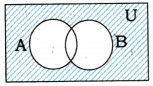
AP Inter 1st Year Maths Exercise 1c Solutions

Referring to the AP Inter 1st Year Maths Study Material Chapter 1 Sets Exercise 1c Solutions makes it easier to understand complex problems.

AP Inter 1st Year Maths Sets Solutions Exercise 1c

Question 1.
Make correct statements by filling the symbol a or <z in the blank spaces,
i) {2, 3, 4 }…{1, 2, 3, 4, 5}.
Solution:
⊂

ii) {a, b, c }…{b, c, d}.
Solution:
⊄

iii) {x : x is a student of Class XI of your school}…{x : x is a student of your school}.
Solution:
⊂

iv) {r : x is a circle in the plane} … {x : r is a circle in the same plane with radius 1 unit}.
Solution:
⊄

v) {x : x is a triangle in a plane} … {x : x is a rectangle in the plane}.
Solution:
⊄

vi) (x : x is an equilateral triangle in a plane}…{x : x is a triangle in the same plane}
Solution:
⊂

vii) {x : x is an even natural number} . . . {x : x is an integer}.
Solution:
⊂

Question 2.
Examine whether the following statements are true or false.
i) ( a, b } ⊄ { b, c, a }.
ii) { a, e } ⊂ { x : x is a vowel in the english alphabet}.
iii) { 1, 2, 3 } ⊂ { 1, 3, 5 }.
iv) { a } ⊂ { a, b, c }.
v) { a } ∈ { a, b, c }.
vi) { x : x is an even natural number less than 6} ⊂ { x : x is a natural number which divides 36}.
Solution:
i) False, each element of {a, b} is also an element of {b, c, a}.
ii) {a, e} ⊂ {x : x is a vowel in the english alphabet} is true.
iii) {1, 2, 3} ⊂ {1, 3, 5} is false because 2 ∉ {1, 3, 5}.
iv) True because each element of {a} is also an element of {a, b, c}.
v) False the elements of {a, b, c} are a, b, c therefore {a} ⊂ {a, b, c}.
vi) True {2, 4} ⊂ {1, 2, 3, 4, 6, 9, 12, 18, 36}.

Question 3.
Let A = { 1, 2, { 3, 4 }, 5 }. Which of the following statements are incorrect and why?
i) {3, 4} ⊂ A
Solution:
The statement {3, 4} ⊂ A is incorrect because 3e {3, 4} but 3 ∈ A.

ii) {3, 4} ∈ A
Solution:
The statement {3, 4} ∈ A is correct because {3, 4} is an element of A.

iii) {{3, 4}} ⊂ A
Solution:
The statement {{3, 4}} ⊂ A is correct because {3, 4} ∈ {{3, 4}} ∈ A.

iv) 1 ∈ A
Solution:
The statement 1 ∈ A is correct because 1 is an element of A.

v) 1 ⊂ A
Solution:
The statement 1 ⊂ A is incorrect because an element of a set can never be a subset of itself.

AP Inter 1st Year Maths Exercise 1c Solutions

vi) {1, 2, 5} ⊂ A
Solution:
The statement {1,2, 5} ⊂ A is correct because each element of {1, 2, 5} is also an element of A.

vii) {1, 2, 5} ∈ A
Solution:
The statement {1, 2, 5} ∈ A is incorrect because {1, 2, 5} is not an element of A.

viii) {1, 2, 3} ⊂ A
Solution:
The statement {1, 2, 3} ⊂ A is incorrect because 3 ∈ {1, 2, 3} but 3 ∉ A.

ix) Φ ∈ A
Solution:
The statement Φ ∈ A is incorrect because Φ is not an element of A.

x) Φ ⊂ A
Solution:
The statement Φ ⊂ A is correct because Φ is a subset of every set.

xi) {Φ} ⊂ A
Solution:
The statement {Φ} ⊂ A is incorrect because Φ ∈ {Φ} but Φ ∉ A.

Question 4.
Write down all the subsets of the following sets.
i) {a}
Solution:
The subsets of { a} are Φ and {a}.

ii) {a, b}
Solution:
The subsets of {a, b} are Φ, { a}, { b } & {a, b}.

iii) {1, 2, 3}
Solution:
The subsets of {1, 2, 3} are (j) , {1}, {2}, {3}, {1, 2}, {2, 3}, {1, 3} and {1, 2, 3}.

iv) Φ
Solution:
The subset of Φ is Φ .

Question 5.
Write the following as intervals.
(i) (x : x ∈ R, – 4 < x < 6}.
(ii) {x : x ∈ R, – 12 < x < -10}.
(iii) {x : x ∈ R, 0 < x < 7}.
(iv) {x : x ∈ R, 3 < x < 4}.
Solution:
i) {x : x ∈ R, -4 < x < 6} = (-4, 6]
ii) {x : x ∈ R, -12 < x < – 10} = (-12, -10)
iii)(x : x ∈ R, 0 < x < 7} = [0, 7).
iv) {x : x ∈ R, 3 < x < 4} = [3, 4],

Question 6.
Write the following intervals in set-builder form.
(i) (- 3, 0)
(ii) [6,12]
(iii) (6, 12]
(iv) [-23, 5)
Solution:
i) (-3, 0) = {x : x ∈ R and -3 < x < 0 }.
ii) [6, 12] = {x : x ∈ R and 6 < x < 12 }.
iii) (6, 12] = {x : x ∈ R and 6 < x < 12}.
iv) [-23, 5) = {x : x ∈ R and -23 < x < 5}.

Question 7.
What universal set(s) would you propose for each of the following?
i) The set of right triangles.
ii) The set of isosceles triangles.
Solution:
i) The universal set for the set of right triangles is the set of all triangles.
ii) The universal set for the set of isosceles triangles is the set of all polygons.

AP Inter 1st Year Maths Exercise 1c Solutions

Question 8.
Given the sets A = {1, 3, 5}, B = {2, 4, 6} and C = {0, 2, 4, 6, 8}, which of the following may be considered as universal set (s) for all the three sets A, B and C.
i) (0, 1, 2, 3, 4, 5, 6).
ii) Φ
iii) {0, 1, 2, 3, 4, 5, 6, 7, 8, 9, 10}.
iv) {1, 2, 3, 4, 5, 6, 7, 8}.
Solution:
i) A ⊂ {0, 1, 2, 3, 4, 5, 6}, B ⊂ {0, 1, 2, 3, 4, 5, 6}, C ⊄ {0, 1, 2, 3, 4, 5, 6}
∴ {0, 1, 2, 3, 4, 5, 6} cannot be the universal set of the sets A, B, & C.

ii) A ⊄ Φ, B ⊄ Φ, C ⊄ Φ
∴ Φ cannot be the universal set of the sets A, B & C.

iii) A ⊂ {0, 1, 2, 3, 4, 5, 6, 7, 8, 9, 10};
B ⊂ {0, 1, 2, 3, 4, 5, 6, 7, 8, 9, 10}
C ⊂ {0, 1, 2, 3, 4, 5, 6, 7, 8, 9, 10}
∴ The set {0, 1, 2, 3, 4, 5, 6, 7, 8, 9, 10} is the universal set for the sets A, B & C.

iv) A ⊂ {1, 2, 3, 4, 5, 6, 7, 8};
B ⊂ {1, 2, 3, 4, 5, 6, 7, 8}
C ⊄ {1, 2, 3, 4, 5, 6, 7, 8}
The set {1, 2, 3, 4, 5, 6, 7, 8} cannot be the universal set for the sets A, B & C.

AP Inter 1st Year Maths Exercise 1b Solutions

Referring to the AP Inter 1st Year Maths Study Material Chapter 1 Sets Exercise 1b Solutions makes it easier to understand complex problems.

AP Inter 1st Year Maths Sets Solutions Exercise 1b

Question 1.
Which of the following are examples of the null set.
i) Set of odd natural numbers divisible by 2.
ii) Set of even prime numbers.
iii) {x : x is a natural numbers, x < 5 and x > 7}.
iv) {y : y is a point common to any two parallel lines}.
Solution:
i) Set of odd natural numbers divisible by 2 is a null set because no odd number is divisible by 3.
ii) Set of even prime numbers is not a null set because 2 is an even prime number.
iii) {x : x is a natural numbers, x < 5 & x > 7}isa null set.
iv) {y : y is a point common to any two parallel lines} is a null set.

Question 2.
Which of the following sets are finite or infinite ?
i) The set of months of a year.
ii) {1, 2, 3, …….}
iii) {1, 2, 3, ……. 99, 100).
iv) The set of positive integers greater than 100.
v) The set of prime numbers less than 99.
Solution:
i) The set of months of a year is a finite set because it has 12 elements.
ii) {1, 2, 3, ……..} is an infinite set because it has infinite number of natural numbers.
iii) Given set is a finite set because it has 100 elements.
iv) Given set is an infinite set because it has infinite elements.
v) Given set is a finite set because prime numbers < 99 are finite.

Question 3.
State whether each of the following set is finite or infinite.
i) The set of lines which are parallel to the X-axis.
ii) The set of letters in the English alphabet.
iii) The set of numbers which are multiple of 5.
iv) The set of animals living on the earth.
v) The set of circles passing through the origin (0, 0).
Solution:
i) The set of lines which are parallel to the X-axis is an infinite set because lines parallel to the X-axis are infinite.
ii) The set of letters in the English alphabet is a finite set because it has 26 elements.
iii) The set of numbers which are multiples of 5 is an infinite set because multiples of 5 are infinite in numbers.
iv) The set of animals living on the earth is a finite set because animals living on the earth is finite.
v) The set of circles passing through the origin (0, 0) is an infinite set because the number of circles passing through the origin is infinite.

Question 4.
In the following state whether A = B or not.
i) A = {a, b, c, d} B = (d, c, b, a)
ii) A = {4, 8, 12, 16} B = {8, 4, 16, 18}
iii) A = {2, 4, 6, 8, 10} B = {x : x is a positive even integer and x < 10}
iv) A = {x : x is a multiple of 10} B = {10, 15, 20, 25, 30, ….}
Solution:
i) A = B because every element in A is element in B and every element in B is element in A.
ii) A ≠ B because 12 ∈ A but 12 ∉ B.
iii) A = {2, 4, 6, 8, 10}, B = {2, 4, 6, 8, 10} ∴ A = B
iv) A = {10, 20, 30, …………}, B = {10, 15, 20, 25, 30, …….}
A ≠ B because 15 ∈ B, but 15 ∉ A.

AP Inter 1st Year Maths Exercise 1b Solutions

Question 5.
Are the following pair of sets equal ? Give reasons,
i) A = {2, 3}, B = {x : x is a solution of x2 + 5x + 6 = 0}.
ii) A = {x : x is a letter in the word FOLLOW},
B = {y: y is a letter in the word WOLF}.
Solution:
i) A = {2, 3}, B = {x : x is a solution of x2 + 5x + 6 = 0} = {-2, -3}
B = {-2, -3} ∴ A ≠ B
ii) A = {F, O, L, W}, B = [W, O, L, F} ∴ A = B.

Question 6.
From the sets given below, select equal sets.
A = {2, 4, 8, 12},
B = {1, 2, 3, 4},
C = {4, 8, 12, 14},
D = {3, 1, 4, 2}
E = (-1, 1}, F = {0, a},
G = {1, -1}, H = (0, 1}
Solution:
Two sets are equal if they contain exactly the same elements, regardless of order.
B = D, E = G.

Formation of a Joint Stock Company Questions and Answers AP Inter 1st Year Commerce Chapter 7

Regular practice with AP Inter 1st Year Commerce Study Material Chapter 7 Formation of a Joint Stock Company Questions and Answers helps students stay prepared for examinations.

AP Inter 1st Year Commerce 7th Lesson Formation of a Joint Stock Company Questions and Answers

Fill in the blanks

Question 1.
_____________ is the process of organizing and planning the finance of a business enterprise under the corporate form.
Answer:
Promotion

Question 2.
_____________ is the consitution of the company.
Answer:
Memorandum of Association

Question 3.
The proposed name ofa Joint stock company should not be objectionable under the provisions of _____________ Act of 1950.
Answer:
Emblems and Names

Question 4.
The rules and regulations framed for the internal management of the company, are set out in a document named _____________
Answer:
Articles of Association

Question 5.
_____________ is a substitute for the prospectus.
Answer:
Statement-in-lieu of the prospectus

Question 6.
_____________ is to be collected by a Public company before it allots shares.
Answer:
Minimum subscriptions

Question 7.
A public limited company cannot commence its business without receiving a _____________ of business.
Answer:
Certificate of commencement

Question 8.
A public company must get a minimum subscription with days from the date of the issue of a propectus.
Answer:
120

Question 9.
_____________ is an invitation to the public to subscribe to the shares and debentures of a Public company.
Answer:
Prospectus

Formation of a Joint Stock Company Questions and Answers AP Inter 1st Year Commerce Chapter 7

Question 10.
Every Private company must prepare its own _____________
Answer:
Articles of Association

Very Short Answer Questions

Question 1.
Promotion.
Answer:
“Promotion is the Process of organizing and planning the finance of a business enterprise under the corporate form”. – L.H. Haney

Question 2.
Minimum Subscription.
Answer:
The mininum amount of capital to be collected by a public company before its allotment of shares is known as “minimum subscription”.

A public company cannot commence business unless a minimum subscription as stated in the prospectus has been subscribed. The amount of mininum subscription is fixed by taking into amount the following requirements.

  1. Amount required for the purchase of property.
  2. Amount needed for payment of preliminary expenses.
  3. Amount required for working capital.
  4. Amount required for any other expenditure for the formation of comapany.

Question 3.
Certificate of commencement of Business.
Answer:
A public limited company cannot commence its business unless it receives a certificate of business commencement. This certificate is not compulsory for Private Limited Companies. It means private company can commence its business without the certificate of Business commencement. The Registrar of companies issues this certificate only when all the legal documents are submitted. Further, the Registrar issued this certificate only on the confirmation of collection of minimum subscription.

Question 4.
Statement in lieu of Prospectus.
Answer:
The statement-in-lieu of prospectus is a substitute for a prospectus. In case a public company raises its capital through some other means (private) is no need to issue a prospectus, but a “statement in lieu of prospectus” must be filled with the registrar at least three days before the first allotment of shares. It must be duly signed by all directors. This statement is drafted strictly in accordance with the particulars set out in Schedule-III of the Act.

Question 5.
Memorandum of Association.
Answer:
The memorandum of Association is the constitution of the company. It is the charter of the company. It provides the foundation on which the company structure is built. It defines the scope of the company’s activities as well as its relation with the outside world. The purpose of the memorandum is to enable the shareholders, creditors and those who deal with the com¬pany to know what is the permitted range of activities of the enterprise.

Question 6.
Articles of Association.
Answer:
The rules and regulations framed for the internal management of the company which are set out in a document are named as “Articles of Association.” It gives the bye-laws which govern the conduct of the company. It also helps in achieving the objectives specified in memorandum of Association. The Articles play a very important role in the affairs of the company. It is a supplementary document to the memorandum of Association.

Question 7.
Prospectus.
Answer:
A Prospectus is a document which invites the Public to promote funds to the company by way of subcribing to its shares and debentures.The history;, nature and profitability of the company is depicted in the prospectus.

Question 8.
Incorporation certificate.
Answer:
A company being an artificial person, comes into existence only after its registration with the Registrar of companies. It is the legal process through which an enterprise, obtains recognition as a separate legal entity. A joint stock company, whether private limited or public limited must file all the necessary documents with the Registrar to obtain the certificate of Incorporation. With this certificte, the company gets a status of legal entity.

Question 9.
Object caluse.
Answer:
This claue difines the sphere of activities of the company. It also determines the powers of the company. This clause may be considered the core of memorandum of Association because it sets out the objects for which a company is formed. This clause contains main objects and other objects. This clause offers protection to the shareholders and creditors by ensuring that ihe funds are not going to be risked.

Question 10.
Association clause.
Answer:
This clause contains the names of the signatories to the memorandum of Association. The full addresses and occupations of subscribers and witnesses are also given. The subscribers declare that they agree to incorporate the company and agree to take the shares stated against their names.

Question 11.
Promotion.
Answer:
Promotion is the first stage in the formation of a company. It involves the identification of a business opportunity or idea, analysis of its prospects, gathering the relevant information and taking steps to implement it. Promotion is considered as putting an idea into practice.

Question 12.
Define memorandum of Association.
Answer:
Definition : Section 2(56) of the companies Act, 2013 defines a memorandum as “The memo- idndum of Association of a company as originally framed or as altered from time to time in pursuance of any previous company laws or of this Act”.

Question 13.
Define Articles of Association.
Answer:
Definition : According to Section 2(5) of the companies Act “Articles of Association of the ompany as oxiginally framed or as altered from time to time in pursuance of any previous . ompanies law or of this Act”. The Articles of a company shall contain the regulations for management of the company.

Question 14.
Define Prospectus.
Answer:
Definition : Section 2(70) of the companies act, 2013 defines the prospectus as “any documet described or issued as prospectus and includes any notice, circular, advertisment or other documents, inviting deposits from the public for the subscription or purchase of any shares in, or debentures of a body corporate”.

Formation of a Joint Stock Company Questions and Answers AP Inter 1st Year Commerce Chapter 7

Question 15.
Capital Subscription.
Answer:
A Public company connot commence business unless the minimum subscription as stated in ihe prospectus is subscribed. If a company does not receive 90% of the issue amount from the public as subscription within 120 days from the date of issuing prospectus, it must refund the amount to the applicants within 10 days as per the guidelines of Securities Exchange Board of India (SEBI).

Short Answer Questions

Question 1.
What are the differences between a Memorandum of Association and Articles of Association?
Answer:
Differences between M.O.A. and Articles of Association

AspectsMemorandum of Association (MOA)Articles of Association (AOA)
ScopeIt is the constitution of the company. The company works in the framework given in the memorandum.The articles contain by laws for the daytoday working of the company as set out in the M.O.A
NeedMOA must be prepared by all the companies and filed with the Registrar of Companies.Public companies may not have their own articles. They can adopt Tables F, G, H, I and J of Schedule I as their articles.
RelationshipIt defines the relationship between the company and the outside world.It defines the relationship between the company and its members among themselves.
AlterationIt cannot be changed easily.It can be altered easily by the special resolution of share holders.
StatusIt is subordinate only to the Act. The company works with in the legal provisions of Memorandum of Association.It is subordinate to the memorandum and companies Act and cannot contain anything contrary to both.
Legal EffectsAny Act of the company beyond the scope of memorandum will become void.Anything done beyond the scope of the articles will not be void and it can be ratified by passing a special resolution.

Question 2.
What are the different stages in the promotion of Company ?
Answer:
Promotion is the first stage in the formation of a company. It involves the identification of a business opportunity or idea, analysis of its prospects, gathering the relevant information and taking steps to implement it. Promotion is considered as putting an idea into practice.

Definition : “Promotion is the process of organizing and planning the finances of a business enterprize under the corporate form”. – L.H. Haney

Stages of Promotion :

a) Discovery of an Idea : The success of business depends on the selection of a business line. The promoter has to form an idea about the type of business and its prospects. The promoter should analyse the strengths and weaknesses of the proposed idea and develop the idea with the help of technical experts.

b) Detailed Investigation : At this stage various factors relating to the proposed business are to be studied from the practical point of view. The promoter shall estimate the total demand for the product, and then think of arranging finance. He also considers the availability of labour, machinery, raw-materials, and cost structure of the product.

c) Assembling the Requirements : After making sure that the proposition is practical and profitable, the promoter proceeds to assemble the requirements like appointing directors, selecting the place for company contacting the suppliers of raw-materials, purchasing ma¬chinery etc.

d) Financing Propostion : The promoter decided about the capital structure of the company. In this process, he determines how much share capital will be issued, the type of shares and debentures to be issued, and the amount of loans to be borrowed from finan¬cial institutions for a longer period.

Question 3.
What are the different types of promoters ?
Answer:

  1. Professional Promoters : They are the promoters who specialize in company promotion. It is their full time occupation.
  2. Accidental Promoters : They are the promoters who are not specialists in company formation, but promote their own firms. Such enterpreneurs are known as accidental Promoters.
  3. Financial Promoters : These are the promoters who float new enterprises during favourable conditions in the securities market. They invenrt capital and hold a sizable share in the company.
  4. Technical Promoters : The promoters who promote new enterprises based on their specialized knowledge and training in technical fields are called technical promoters.
  5. Institutional Promoters : These are the promoters who provide technical, managenial and financial assistance for the promotion of a company.

Question 4.
What are the contents of a prospectus ?
Answer:
A prospectus is a document which invites the public to promote funds to the company by way of subscribing to its shares and debentures. The history, nature and profitability of the company is depicted in the prospectus.

Definition : Section 2(70) of the company Act, 2013 defines the prospectus as “any document described or issued as prospectus and includes any notice, circular advertisement or other documents, inviting deposits from the public for the subscription or purchase of any shares in, or debentures of a body corporate.”

Contents of Prospectus : Every prospectus should disclose the matter as specified in Part-I of Schedule-II of the companies act. Some of the contents which every prospectus must in¬clude are :

  1. Name and full address of the company.
  2. The particulars of the signatories to the memorandum of Association and the number of shares taken up by them.
  3. Name, addresses and occupations of members of the Board of Directors.
  4. The mnimum subscription amount is fixed by the promoters.
  5. The details of property acquired if any.
  6. The time of opening of the subscription list.
  7. The capital structure of the company and particulars of the issue.
  8. The amount payable an application, allotmet and calls.
  9. Basis for the issue price.
  10. The particulars of preferential treatment given to any person for subscribing shares or debenutures.
  11. The addresses of the underwriters if any.
  12. Particulars about reserves and surpluses.
  13. The amount of preliminary expenses.
  14. The name and address of the Auditor.
  15. Particulars regarding voting rights at the meetings of the company.
  16. Management perception of risk factors.
  17. Disclosure of investor’s grievances and redressal system.

Formation of a Joint Stock Company Questions and Answers AP Inter 1st Year Commerce Chapter 7

Question 5.
What documents are required to obtain certificate of commencement of Business ?
Answer:
Commencement of Business : A public company has to file the following certificates to get the certificate of Commencement of Business.

  1. A declaration that a prospectus or statement in lieu of a prospectus has been filled.
  2. A declaration that directors have taken up their qualification shares and paid for them.
  3. A declaration that the minimum subscription amount has been allotted and collected.
  4. A statutory declaration by Secretary of the company or a Director that all the formalities relating to the commencement of Business are duly complied with.

The Registrar scrutinizes all the documents and issues a “Certificate of commencement of Business” if he satisfied that all the formalities are in order and the legal formalities are completed. The process of company formation comes to an end with the issue of this certificate. Documents to be prepared for the formation of a company : The important documents to be prepared by a company for its formation are discussed below :

  1. Memorandum of Association.
  2. Articles of Association.
  3. Prospectus.

Long Answer Questions

Question 1.
Explain the process involved in the Incorporation of a company.
Answer:
A company, being an artificial person, comes into existence only after its registration with the Registrar of companies. A Joint stock company, whether private limited or public limited must file all the necessary documents with the Registrar to obtain the certificate of Incorporation.

With this certificate, the company gets a status of legal entity.

Before getting a company registered, several steps have to be taken up. They are

1) Application for Approval of Name : For registration of a company, an application is to be submitted to the Registrar companies of the state and obtain the approval of name. A company may adopt any name which is not prohibited under the Emblems and Names Act of 1950. The Registrar is expected to approve the name within 14 days of the receipt of application. The proposed name must be registered within 3 months of the approved date.

2) Preparation of memorandum of Association (MOA): It is the constitution of company which describes its objects, scope and the relationship with outside world. This document must be carefully drafted, stamped and signed by 7 members incase of public com¬pany and two members incase of a private company. As per the new amendment of the act one member is enough to sign on MOA incase of private company/one person company.

3) Preparation of Articles of Association : It is the document which contains rules and regulations relating to the internal management and also the capital structure of the busi¬ness. A public limited company may not be required to file its own Articles of Association. However, it may adopt model clauses prescribed in Table F, Schedule I of the Act. A private company is required to submit its Articles duly signed by the signatories.

4) Preparation of Other Documents : At the time of incorporation of a company, the following documents are to be prepared and submitted to the Registrar of Companies.

  • Consent of the first directors.
  • The power of Attorney : Promoters, should execute a power of Attorney in favor of one of the promoters or an advocate who is to carry out the formalities required for registration.
  • Notice of Registered Office : When the location of the registered office is finalized, before incorporation, the notice of it is to be filed. If not, within 30 days of its registra¬tion, it is to be submitted. ,
  • Particulars of Directors : When a company by its Articles appoints any person to act as Director, manager or Secretary, their Particulars have to be filed with in 30 days along with the memorandum of Association and Articles of Association of the company.

5) Statutory Declaration : A declaration that all the requirements under the companies act have been complied within Form No.l is to be field with the Registrar.

6) Payment of Registration Free : In addition to filling the documents, the prescribed fees have to be paid towards the registration of company.

7) Incorporation Certificate : If the Registrar is satisfied that all the statutory requirements stated above are complied with under the Act, issues a certificate called “certificate of Incorporation.” With the receipt of this certificate, the company gets its recognition as a corporate body.

A private company can start its business as soon as it gets the incorporation certificate. However, a public company should wait till it gets a certificate of commencement of business to start the business.

Question 2.
What is a memorandum of Association? Explain its clauses.
Answer:
Meaning: The memorandum of Association is the constitution of the company. It is the charter of the company. It provides the foundation on which the company structure is built. It defines the scope of the company’s activities as well as its relation with the outside world. The purpose of the memorandum is to enable the shareholders, creditors and those who deal with the company to know what is the permitted range of activities of the enterprise.

Definition : Section 2(56) of the companies Act 2013 defines a memorandum as “The Memo¬randum of Association of a company as originally framed or as altered from time to time in pursuance of any previous company laws or of this Act.”

The memorandum of Association must be signed by atleast 6 members in case of a public limited company and 2 members in case of a Private Limited company. It is the basic document of the company. It cannot be changed easily. So it should be prepared very carefully. The contents of the memorandum of Association known as clauses are explained below.

Clauses of Memorandum of Association :

1) Name clause : A company being a separate legal entity must have a name. A company may select any name which does not resemble the name of any other company. It should not contain the words like king, Queen and name of the Government bodies. The proposed name should not be objectionable under the provisions of Emblems and Names Act 1950 the word “Limited” must be used at the end of the name of a public company and “Private Limited” is used by a private company.

2) Registered office or Situation clause : This clause states the place and address of the registered office of the company. This helps to have correspondence with the company. If the place is not decided at the time of incorporation, it can be intimated to the Registrar with in 30 days from the date of incorporation or commencement of business which ever is earlier.

3) Objects clause This clause defines the sphere of activities of the company. It also determines the powers of the company. This clause may be considered the core of memo¬randum of Association because it sets out the objects for which a company is formed. This clause contains (a) main object (b) other objects. This clause offers protection to the shareholders and creditors by ensuring that the funds are not going to be risked.

4) Liability clause This clause defines the nature of liability of its members. It states that the liability of the members is limited to the value of the shares held by them. This means that the members are liable to pay only the unpaid balance of their shares and nothing further.

5) Capital clause : This clause defines the capital structure of the company. The division of capital into equity shares and preference shares, the number of shares in each category, and their value should be given. It also specifies any special rights and privileges granted to certain types of shareholders.

6) Association clause : This clause contains the names of the signatories to the memorandum of Association. The full addresses and occupations of subscribers and witnesses are also given. The subscribers declare that they agree to incorporate the company and agree to take the shares stated against their names.

Question 3.
What is Articles of Association ? Explain its contents.
Answer:
Meaning : The rules and regulations framed for the internal management of the company, which are set out in a document are named as Articles of Association. It gives the bye-laws which govern the conduct of the company. It also helps in achieving the objetives specified in Memorandum of Association. The Articles play a very important role in the affairs of the company. It is a supplementary document to the memorandum of Association. The Articles must be printed, divided into paragraphs, numbered consecutively, stamped adequately, and signed by each subscriber to the memorandum of Association. It is duly witnessed and filed along with the memorandum of Association.

Definition : According to section 2(5) of the companies Act “Articles of Association of the company as originally framed or as altered from time to time in pursuance of any previous companies law or of this Act. “The Articles of a company shall contain the regulations for management of the company.

The contents of Articles of Association : The Articles of Association contain the following details :

  1. The procedure of issuing share capital. The amount of share capital issued, types of shares, number of shares, calls on shares, rights and privileges of different categories of share holders must be mentioned in the Articles of Association.
  2. Procedure for transfer and forfeiture of shares.
  3. Procedure for issue of debentures and stocks.
  4. Powers to alter as well as reduce share capital and its procedure for alteration.
  5. The appointment of the directors, their powers, duties and remuneration.
  6. The appointment of the managing director.
  7. Provisions regarding conducting the general meetings, special meetings, voting, proxies, resolutions etc.
  8. Provisions relating to dividends and reserves.
  9. Rules for preliminary contracts.
  10. Provisions regarding the use of common seal.
  11. Preparation of Accounts and Audit, and method of appropriation of profits.
  12. Maintenance of Bank Accounts.
  13. Procedure for winding up the company.
  14. Other rules and regulations of the company.

Question 4.
Discuss the procedure to form a company.
Answer:
A Joint stock company requires a number of legal formalities to be complied with before it is brought into existence. The important steps in the formation of a company are shown in the following chart:

Formation of a Joint Stock Company Questions and Answers AP Inter 1st Year Commerce Chapter 7 1

1) Promotion : Promotion is the first stage in the formation of a company. It involves identification of business opportunity or idea, detailed investigation assembling the requirements and financing proposition. Promotion is the process of organization and planning the finance of business enterprises under the corporate firm.

2) Incorporation or Registration : A company being an artificial person comes into existence only after its registration with the Registrar of companies. It is the legal process through which an enterprize obtained recognition as a separate legal entity. Private or Public limited companies must file all the necessary documents with the Registrar to obtain the Incorporation certificate. With this certificate the company gets a separate legal entity. For this purpose a number of steps have to be taken for registration.

3) Capital Subscription : After incorporation of a company the next step will be to raise the capital. A public company cannot commence business unless the minimum subscription as stated in the prospectus is subscribed. If a company does not receive 90% of the issue amount from the Public as subscription within 120 days, it has to refund the amount to the applicant as per the guidelines of Securities Exchange Board of India (SEBI) within 10 days.

4) Commencement of Business: A public company has to file the following certificates to get the certificate of commencement.

  • A declaration that a prospectus or statement in lieu of prospectus has been filed.
  • A declaration that directors have taken up their qualification shares and paid them.
  • A declaration that minimum subscription amount has been allotted and collected.
  • A statutory declaration by the Secretary of the company or a Director that all the formalities relating to the commencement of business are duly complied with.

A scrutiny is made by the Registrar with all the documents and issues a “certificate of commencement of business”. The process of Company formation comes to an end with the issue of this cerificate.

Question 5.
Describe various steps involved in Promoting a company.
Answer:
Meaning: Promotion is the first stage in the formation of a company. It involves the identification of a business opportunity or idea, analysis of its prospectus, gathering the relevant information and taking steps to implement it. Promotion is considered as putting an idea into practice.

Definition : “Promotion is the process of organizing and planning the finance of a business enterprise under the corporate form”. – L.H. Haney

  1. Discovery of an Idea : The success of business depends on the selection of a business line. The promoter has to form an idea about the type of business and its prospectus. The Promoter should analyse the strengths and weaknesses of the proposed idea and develop the idea with the help of technical experts.
  2. Detailed Investigation : At this stage various factors relating to the proposed business to be studied from the practical point of view. To find out the strong and weak point of the idea a detailed investigation is conducted. The promoter shall estimate demand for the product, and then thinks of arranging finance and also considers the availability of workers, Plant and machinery, raw-materials and cost of production. For this purpose technical experts, financial consultants etc. are consulted.
  3. Assembling requirements : After making sure that proposed business is feasible and profitable the promoters make arrangements to assemble the requirements like directors appointment, selecting the place for unit, contacting the suppliers of raw-materials purchasing of plant and machinery etc.
  4. Financing Proposition : The Promoter decides about the capital structure of the company. In this process, he determines how much share capital will be issued, type of shares and debentures to be issued, and the nature of loans to be borrowed from financial institutions or banks for a long period.

Formation of a Joint Stock Company Questions and Answers AP Inter 1st Year Commerce Chapter 7

Question 6.
What is Prospectus ? What are its contents ?
Answer:
Meaning : Prospectus is an invitation to the Public to subscribe to the shares and debentures of a Public company. This brings to the notice of the Public that a new company has been formed. After incorporation of a company promoters may issue the Prospectus for raising required finance.

Definition : Section 2 (70) of the companies, Act, 2013 defines the Prospectus as “any document described or issued as Prospectus and includes any notice, circular, advertisement or other documents, inviting deposits from the Public for the subscription or purchase of any shares or debentures of a body corporate.”

Contents of Prospectus : Every Prospectus should disclose the matter as specified in Part-I of Schedule-11 of the companies Act. Some of the contents which every Prospectus must include are :

  1. Name and full address of the company.
  2. The particulars of the signatories to the Memorandum of Association and the number of shares taken up by them.
  3. Name addresses and occupations of members of the Board of Directors.
  4. The minimum subscription amount is fixed by the promoters.
  5. The details of property acquired if any.
  6. The capital structure of the company and particulars of the issue.
  7. The time of opening the subscription list.
  8. The amount payable on application, allotment, and calls.
  9. Basis for the issue price.
  10. The particulars of preferential treatment given to any person for subscribing shares or debentures.
  11. The addresses of the underwriters if any.
  12. Particulars about reserves and surpluses.
  13. The amount of preliminary expenses.
  14. The name and address of the Auditor.
  15. Particulars regarding voting rights at the meetings of the company.
  16. Management perception of risk factors.
  17. Disclosure of investor’s grievances and redressal system.

Check Your Knowledge

I. Fill in the blanks for the following questions :

Question 1.
A company being an artificial person comes into existence only after its registration with the _____________
Answer:
Registrar of Companies

Question 2.
As per the guidelines of Securities Exchange Board of India, the refund to applicant has to be done within _____________ days.
Answer:
10

Question 3.
The registrar issues Certificate of incorporation after satisfying with all the requirements under the companies Act _____________
Answer:
1950

Question 4.
The promoters who provide technical and financial assistance for promotion of a company are called _____________
Answer:
Institutional Promotions

Question 5.
The Registrar is expected to approve the name with in _____________ days of the receipt of the application.
Answer:
14 days

Question 6.
As per the new amendment of the act _____________ is enough to sign on a MOA incase of a Private company.
Answer:
One member

Question 7.
At the time of incorporation of a company, documents are to be submitted to the _____________ company.
Answer:
Registrar

Question 8.
The _____________ is the most important main document of the company.
Answer:
M.O.A

Question 9.
The memorandum of Association must be signed by at least _____________ members in case of Public Limited company.
Answer:
7

Question 10.
The name of the company should be specified in _____________ clause.
Answer:
Name clause

Question 11.
The _____________ play a very important rote in the affairs of the company.
Answer:
Articles

Question 12.
Any advertisement offering shares or debentures of the company for sale to the Pubic is called _____________
Answer:
Repeated

Question 13.
Every prospectus should disclose the matter as specified in _____________ to the companies Act.
Answer:
Part-1 of Schedule-II

Question 14.
_____________ promoters are not specialish n company formation.
Answer:
Accidental clause

Question 15.
A _____________ company cannot issue prospectus to recure its capital.
Answer:
Private

Question 16.
The statement-in-lies of the prospectus is a _____________ for a prospectus.
Answer:
Substitute

Question 17.
A.O.A. stands for _____________
Answer:
Article of Association

Question 18.
M.O.A. stands for _____________
Answer:
Memorandum of Association

Question 19.
_____________ is the first stage in formation of a company.
Answer:
Promotion

Formation of a Joint Stock Company Questions and Answers AP Inter 1st Year Commerce Chapter 7

Question 20.
With the certificate of incorporation, the company gets a status of _____________ entity.
Answer:
Legal

Question 21.
Under _____________ liability, the person or company is liable to pay compensation to the opponents.
Answer:
Civil

Question 22.
As per criminal liability, a person may be in prisoned upto 2 years are upto _____________ rupees.
Answer:
50,000

Question 23.
The memorandum of association is the _____________ of the company.
Answer:
Constitution

II. State whether the statement are True or False

Question 1.
Each subscriber to the memorandum must sign the articles in the presence of atleast two witness. (True/False)
Answer:
False

Question 2.
Every prospectus should disclose the matter as specified in Part-11 of Schedule-Ill of the companies act. (True/False)
Answer:
False

Question 3.
A public company must get a minimum subscription within 40 days from the date of issue of the prospectus. (True/False)
Answer:
False

Question 4.
‘Capital clause contains the names of the signatories to the Articles of Association. (True/False)
Answer:
False

Question 5.
Association clause defines the nature of liability of its members. (True/False)
Answer:
False

Question 6.
Every private company must prepare its own objects clause. (True/False)
Answer:
False

Question 7.
A.O.A stands for Authority of Association. (True/False)
Answer:
False

Question 8.
M.O.A.stands for member of Assembly. (True/False)
Answer:
False

Question 9.
Registrar is expected to approve the name within 26 days of the receipt of application. (True/False)
Answer:
False

Question 10.
Promoters types are 6. (True/False)
Answer:
False

Question 11.
The important steps in the formation of company are 3. (True/False)
Answer:
False

Question 12.
Formation means the establishment of a company. (True/False)
Answer:
True

Formation of a Joint Stock Company Questions and Answers AP Inter 1st Year Commerce Chapter 7

Question 13.
Minimum number of private company 2. (True/False)
Answer:
True

Question 14.
Private co. members cannot transfer their shares. (True/False)
Answer:
True

Question 15.
A company cannot issue prospectus to recure its capital.
Answer:
True

State whether the statements are True or False.

Question 1.
Promotion is the final stage in formation of a company. (True/False)
Answer:
True

Question 2.
Memorandum of Association can be changed easily. (True/False)
Answer:
False

Question 3.
Articles of Association are the basic document of a company. (True/False)
Answer:
False

Question 4.
A private company issues a prospectus to recure its capital. (True/False)
Answer:
True

Question 5.
A public company must get a minimum subscription within 120 days from the date of issue of the prospectus. (Tme/False)
Answer:
True

Question 6.
Certificate of commencement of business is compulsory for public companies. (True/False)
Answer:
True

Question 7.
A private company can start its business as soon as it gets the incorporation certificate. (True/False)
Answer:
True

Question 8.
Statement in lieu of prospectus is a substitute for prospectus. (True/False)
Answer:
True

Question 9.
The Articles of Association can be altered by passing a special resolution. (True/False)
Answer:
True

AP Inter 1st Year Maths Exercise 1a Solutions

Referring to the AP Inter 1st Year Maths Study Material Chapter 1 Sets Exercise 1a Solutions makes it easier to understand complex problems.

AP Inter 1st Year Maths Sets Solutions Exercise 1a

Question 1.
Which of the following are sets? Justify your answer.
i) The collection of all the months of a year beginning with the letter J.
Solution:
The collection of all the months of a year beginning with the letter J is a set because it is well defined.

ii) The collection of ten most talented writers of India.
Solution:
The collection of ten most talented writers of India is not a set because it is not well defined.

iii) A team of eleven best cricket batsmen of the world.
Solution:
A team of eleven best cricket batsmen of the world is not a set because it is not well defined.

iv) The collection of all boys in your class.
Solution:
The collection of all boys in my class is a set because it is well-defined.

v) The collection of all natural numbers less than 100.
Solution:
The collection of all natural numbers less than 100 is a set because it is well-defined.

AP Inter 1st Year Maths Exercise 1a Solutions

vi) A collection of novels written by the writer Munshi Prem Chand.
Solution:
A collection of novels written by the writer Munshi Prem Chand is a set because it is well defined.

vii) The collection of all even integers.
Solution:
The collection of all even integers is a set because it is well defined.

viii) The collection of questions in this chapter.
Solution:
The collection of questions in this chapter is a set because it is well defined,

ix) A collection of most dangerous animals of the world.
Solution:
A collection of most dangerous animals of the world is not a set because it is not well defined.

Question 2.
Let A = {1, 2, 3, 4, 5, 6}. Insert the appropriate symbol ∈ or ∉ in the blank spaces,
i) 5 … A
ii) 8 … A
iii) 0 … A
iv) 4 … A
v) 2 … A
vi) 10 … A
Solution:
i) ∈
ii) ∉
iii) ∉
iv) ∈
v) ∈
vi) ∉

Question 3.
Write the following sets in roster form.
i) A = (x : x is an integer and – 3 < x < 7}.
ii) B = {x: x is a natural number less than 6}.
iii) C = {x: x is a two-digit natural number such that the sum of its digits is 8}.
iv) D = {x: x is a prime number which is divisor of 60).
v) E = {The set of all letters in the word TRIGONOMETRY}
vi) F = {The set of all letters in the word BETTER}.
Solution:
i) A = {-3, -2,-1, 0, 1, 2, 3, 4, 5, 6}.
ii) B = {1, 2, 3, 4, 5}.
iii) C = {17, 26, 35, 44, 53, 62, 71, 80}.
iv) D = {2, 3, 5}.
v) E = {T, R, I, G, O, N, M, E, Y}.
vi) F = {B, E, T, R}.

Question 4.
Write the following sets in the set-builder form.
i) {3, 6, 9, 12}
ii) {2, 4, 8, 16, 32}
iii) {5, 25, 125, 625}
iv) {2, 4, 6 , ………..}
v) {1, 4, 9, …………. 100}
Solution:
i) {x : x is a natural number multiple of 3 and x ≤ 15}.
ii) {x : x = 2n where n ∈ N & 1 ≤ n ≤ 5}.
iii) {x : x = 5n where ne N & 1 ≤ n ≤ 4}.
iv) { x : x is an even natural number}.
v) { x : x = n2, 1 ≤ n ≤ 10}.

Question 5.
List all the elements of the following sets.
i) A = {x : x is an odd natural number).
ii) B = {x : x is an integer, –\(\frac{1}{2}\) < x < \(\frac{9}{2}\)}.
iii) C = {x : x is an integer, x2 ≤ 4).
iv) D = {x : x is a letter in the word “LOYAL”}.
v) E = {x : x is a month of a year not having 31 days},
vi) F = {x : x is a consonant in the English alphabet which precedes k}.
Solution:
i) A = {1,3, 5, 7, ……….}.
ii) B = {0, 1,2, 3, 4}.
iii) C = {-2, -1, 0, 1, 2}.
iv) D = {L, O, Y, A},
v) E = {February, April, June, September, November},
vi) F = { b, c, d, f, g, h, j}

AP Inter 1st Year Maths Exercise 1a Solutions

Question 6.
Match each of the set on the left in the roster form with the same set on the right described in set-builder form.

(i) {1, 2, 3, 6}(a) {x : x is a prime number and a divisor of 6}
(ii) {2, 3}(b) (x : x is an odd natural number less than 10}
(iii) {M, A, T, H, E, I, C, S}(c) {x : x is a natural number and a divisor of 6}
iv) {1, 3, 5, 7, 9}(d) {x : x is a letter of the word MATHEMATICS}.

Answer:

(i) {1, 2, 3, 6}(c) {x : x is a natural number and a divisor of 6}
(ii) {2, 3}(a) {x : x is a prime number and a divisor of 6}
(iii) {M, A, T, H, E, I, C, S}(d) {x : x is a letter of the word MATHEMATICS}.
iv) {1, 3, 5, 7, 9}(b) (x : x is an odd natural number less than 10}

Fundamental Aspects of Joint Stock Company Questions and Answers AP Inter 1st Year Commerce Chapter 6

Regular practice with AP Inter 1st Year Commerce Study Material Chapter 6 Fundamental Aspects of Joint Stock Company Questions and Answers helps students stay prepared for examinations.

AP Inter 1st Year Commerce 6th Lesson Fundamental Aspects of Joint Stock Company Questions and Answers

Fill in the Blanks

Question 1.
The capital of a company is divided into small units is called __________
Answer:
Shares

Question 2.
The members who invest their money by purchasing the shares of a company are known as __________
Answer:
Shareholders

Question 3.
A company comes into existence when it is registered under Indian Companies Act or any previous company acts.
Answer:
2013

Question 4.
The elected representatives of the company who manage the day-to-day affairs of the company are called __________
Answer:
Board of Directors

Question 5.
East India Company is an example of a __________ company.
Answer:
Chartered company

Question 6.
A company created by special act of the parliament or legislature of any state is called a __________ company.
Answer:
Statutory company

Question 7.
The minimum paid up capital of a private company is __________
Answer:
Rs. 1,00,000/-

Question 8.
The minimum paid-up capital of public company is __________
Answer:
Rs. 5,00,000/-

Question 9.
A company which controls the management of another company is called a __________ company.
Answer:
Holding company

Fundamental Aspects of Joint Stock Company Questions and Answers AP Inter 1st Year Commerce Chapter 6

Question 10.
A private company must suffix its name __________
Answer:
private limited

Very Short Answer Questions

Question 1.
Joint Stock Company.
Answer:
A joint stock company or simply a company is a voluntary association of individuals formed to undertake a large-scale business activity. It is established by law and can be dissolved by law. The company has a separate legal existence so that even if its members die, the company remains in existence. Its members contribute money for a common purpose. The money so contributed constitutes the capital of the company. The capital of the company is divided into small units called shares. Since members invest their money by purchasing the shares from the company, they are known as share holders and the capital of the company is known as share capital.

Question 2.
Government Company.
Answer:
Government Company : Any company in which not less than 51 percent of the paid-up share capital is held by the central Government and or by any State Government or State Governments is called a “Government Company”.
Ex : BEL, ONGC, NTPC are the examples of Government Company.

Question 3.
Statutory Company.
Answer:
Statutory companies are those, which are started under the special act of parliament. Public utility concerns like railways, electricity etc are in corporated by special acts of parliament.
Ex : SBI, RBI established under Banking companies act -1949, New India assurance company is established under insurance companies act – 1956.

Question 4.
Chartered Company.
Answer:
Chartered companies are those which are started under a special charter of a king. Several companies were started in England under Royal charter in 17th century. The charter defined their powers.
Ex : East India Company.

In India such type of company does not exist because there is no monarchy.

Question 5.
One person company.
Answer:
As per the companies act 2013 one person company (OPC) means “a company which has only one person as member”. This is a company in which only one man hold the whole share capital of the company.

Question 6.
Holding Company.
Answer:
Where one company contrails the management for another company, the controlling company is called “Holding Company”.
Ex : If company A holds more than 51% of paid up share capital of company B, the company A is called Holding Company.

Question 7.
Subsidiary Company.
Answer:
When one company controls the management of another company, the company so controlled is called as subsidiary company. For example if company ‘A’ holds more than 51% of paid up share capital of company ‘B’. ‘B’ is called a subsidiary company.

Question 8.
Private Company.
Answer:
A private company is a very suitable form for carrying on the business of family and small concerns. It is registered under the companies act, 2013 or any previous company law. According to section 2(68) of the companies act, 2013 a private company has the following feature :

  1. The minimum paid up capital is Rs. 1,00,000.
  2. The minimum number of members is 2.
  3. The maximum number of members is 200.
  4. It is prohibited from issuing of shares to the public.
  5. It is prohibited from transfer of shares.

Question 9.
Public Company.
Answer:
It is a suitable form of company for carrying on the business on a large scale, involving a huge amount of capital. According to section 2(71) of companies act of 2013, a public company has the following features.

  1. The minimum paid up capital is Rs. 5,00,000.
  2. The minimum number of members is 7.
  3. The maximum number of members is unlimited. Such a company must us the word “Ltd” as part of its name.

A public company must write public limited or simply limited after its name. Steel Authority of India limited, Bajaj Auto Limited, Reliance Industries Limited and Hindustan Lever Limited are the examples of public companies.

Question 10.
Company Limited by Guarantee.
Answer:
This type of company can be defined as a company having the liability of its members limited by its memorandum to such amount as the members may respectively undertake to contribute to the assets of the company in the event of its being wound up. The amount guaranteed by each member cannot be demanded until the company is wound up. Companies limited by guarantee are very few, as they are non-trading companies.

Question 11.
Foreign Company.
Answer:
It is company incorporated outside India and has place of business. The term ‘place of business’ does not mean agency business in India. It may be noted that even if, all the shareholders of a company are Indian citizens, it will still be called “foreign company” if it is registered outside India.

Question 12.
Multi National Company.
Answer:
Such companies extend the areas of their operations beyond the country in which they are registered.

Question 13.
Define Company.
Answer:
Company : “According to Section 3 of the companies act, 1956 “A company is an artificial person created by law, having a separate legal entity with a perpetual succession and a common seal”.

“A joint stock company is a voluntary association of individuals for profit, having a capita’ dividend into transferable shares, the ownership of which is the condition of membership” – L.H. Honey

Fundamental Aspects of Joint Stock Company Questions and Answers AP Inter 1st Year Commerce Chapter 6

Question 14.
Company as per Companies Act, 2013.
Answer:
As per the companies Act, 2013. “A company refers to an organisation incorporated under the companies act, 2013 or under any previous company law”.

Question 15.
Dormant Company.
Answer:
It is a company does not carry any accounting transactions for a period of two years. Such company can apply to registrar of companies calling it as a “Dormant company”.

Short Answer Questions

Question 1.
List out the features of Joint Stock Company.
Answer:
The distinctive features of a company are as follows :

1) An Artificial Person Created by Law : A company is an artificial person created by law and existing only in contemplation of law. It is an intengible and invisible legal person having no body and soul.

2) Separate Legal Entity : A company has an entity quite distinct and independent of the existence of the members who constitute it. In other words, a company has a separate legal entity entirely different from that of its members. It can make contracts, purchase and sell goods, employ people and conduct any lawful business in its own name. It can sue and can be sued in the court of law in its own name, of course, through some representatives.

3) Formation : The formation of a joint stock company involves the preparation of several documents and compliance with various legal requirements before it starts its operation, A company comes into existence only when it is registered under the Indian companies act, 2013 or any previous company law.

4) Common seal as a substitute for signature : As the company is not a natural person, it cannot sign its documents. The common seal with the name of the company engraved on it is therefore, used in place of signature. Generally, the secretary of the company is authorised to keep the seal under his safe custody.

5) Perpetual Existence : A company has perpetual existance unlike a sole trading or partnership concern. Once a company is formed, it continues for an unlimited period until it is legally dissolved. In other words, a company has a perpetual life and the death, lunacy, retirement or insolvency of its members does not affect its existence.

6) Limited Liability of Members : The liability of a member of a company is limited to the extent of the amount unpaid on the shares he holds.
Ex :If “Jeswanth” holds one share of Rs. 10 and has paid Rs.7 on that share, his liability would be limited to the unpaid amount of Rs. 3. Beyond this, he is not liable to pay anything towards the debts or losses of the company.

7) Transfer ability of Shares :The members of a company (Public) are free to transfer or dispose of the shares held by them to any person as and when they like. They do not need the consent of other shareholders to transfer their shares. However, in the case of private companies, certain restrictions are imposed on the transfer of shares.

8) Membership : The form of a joint stock company, a minimum of two (2) members are required in case of a private limited company and seven (7) members in case of public limited company. The maximum limit is fifty (50) in case of private limited company. There is no maximum limit on the members in case of a public limited company. In case of one person company, only one shareholder will act as a member.

9) Democratic Management: Different catagories of people from various areas contribute to the capital of a company. Since it is not possible for them to look after the day-to-day management of the company, they may take part in deciding the general policies of the company but the day-to-day affairs of the company are managed by their elected representatives “Board of Directors”.

10) Statutory Regulations : A company has to comply with and abide by several statutory requirements. It is governed by the companies act and must invariably follow the various provisions of the act. Under the act, companies should submit several returns to the government and their accounts have to be audited by a chartered accountant.

Question 2.
Briefly explain different types of companies.
Answer:
1) Chartered Companies : Charatered companies are those which are started under a special charter of a king. Several companies were started in England under Royal charter in 17th century. The charter defined their powers.
Ex : East India company.
In India such type of company does not exist because there is no monarchy.

2) Statutory Company Statutory companies are those which are started under the special act of parliament. Public utility concerns like railways, electricity etc. are incorporated by special act of parliament.
Ex: SBI, RBI established under Banking companies act. 1949.
New India assurance company is established under insurance companies act – 1956

3) Government Companies : These companies are regisered under companies act 1956. According to companies act, Government company means any company in which not less than 51% of paid up share the central government or any state government holds capital.
Ex : Such companies is HMT.

4) Registered Companies : All those companies registered under the companies act are called “registered companies”. Companies formed under the India companies act may be divided into three classes.

5) Private company : A private company is one which by its Articles of Association.

  • Limits the number of members to 50.
  • Restricts the right of transfer of shares and
  • Prohibits any invitation to public to subscribe for its shares and debentures.

6) Public Company : According companies act, all those companies other than private companies are considered as public limited companies.

Question 3.
What are the features of Public Company ?
Answer:
The public companies carry business in large-scale involving huge amount of capital, resources and huge infrastructure. Public companies procure capital from public. There is no restriction on transfer of ownership on shares. Such a company must use the word “LIMITED” or “Ltd” as a part of its name. According to section 2(71) of the companies act, 2013 a public company is one which has

  1. The minimum paid-up capital of Rs. 5,00,000/-
  2. The minimum number of members is 7.
  3. The maximum number of members is unlimited.

Question 4.
What are the features of a Private Company ?
Answer:
Private Company : A private company is a very suitable form for carrying on the business of family and small concerns. It is registered under the companies act, 2013 or any previous company law. According to section 2(68) of the companies act, 2013 a private company has the following features.

  1. The minimum paid up capital is Rs. 1,00,000.
  2. The minimum number of members is two (2).
  3. The maximum number of members is 200
  4. It is prohibited from issuing of shares to the public.
  5. It is prohibited from transfer of shares.

Private companies have to follow all these conditions mentioned above. These companies must include “Private Limited” after their names. The ownership of these companies is confined only to well-known selected persons. It requires a minimum of two persons to start a “Private Limited company”. Usually, whenever partnership firms need more capital to expand their business, they convert themselves into private companies. It may be noted that private companies are exempted from various regulations of the companies act. They combine the advantages of both the company and the partnership form of business organisation.

Question 5.
Write any five advantages of joint stock company.
Answer:
Joint stock company organisation is an artificial person created by law and a voluntary association of persons who contributes to its capital. It will have a common seal.

Advantages or Merits of Joint Stock Company :

  1. Large Capital:One of the main advantages of the joint stock company is that it facilitates mobilisation of large amount of capital. It would not be possible under the other forms. Joint stock companies are suitable for those business where large resources are required.
  2. Limited Liability :The liability of the shareholders of a company is limited to the value of shares they held. The limited liability encourages many persons to invest in shares of joint stock companies.
  3. Continuity of Existence : When a company is incorporated it becomes a separate legal entity. It is an entity with perpetual succession. The death or insolvency of members does not in any way affect the existence of the company.
  4. Efficient – Management : In company form of organisation ownership is separate from management. It enables the company to appoint expert and qualified persons for managing various business functions. The efficient management will help the company to expand and diversity its activities.
  5. Economics of large – scale Production : With the availability of large-scale resources, the company can organise on a big scale. The increase in scale and size of the business will result in economic in production purchase and marketing etc. Hence, cost of production is reduced, goods are provided to customers at cheaper rates.

Fundamental Aspects of Joint Stock Company Questions and Answers AP Inter 1st Year Commerce Chapter 6

Question 6.
Write any Five disadvantages of Joint Stock Company.
Answer:

  1. Difficulty in formation : Promotion of a company is not an easy task. A number of stages are involved in company promotion. A lot of legal formalities are required to be performed at the time of registration. Therefore it is proved that the formation of company is difficult.
  2. Lack of personal interest : The company is not managed by the proprietors. It is
    managed by the directors and paid officials. They do not have a share in the profits. They have very little personal interest. .
  3. Fraudulent Management : All the shareholders of the company cannot take part in its management. They elect directors periodically. They will manage the business. If the directors are dishonest, they may misuse their powers and position.
  4. Temptation of speculate :The liability of shareholders is limited. So the management is tempted to get into speculative activities. They may lead to the ultimate ruin of the company.
  5. Limited borrowing capacity : The liability of the shareholders is limited. Therefore, the credit that can be obtained by the company will also be limited.

Long Answer Questions

Question 1.
Explain the advantages and disadvantages of a Joint Stock Company.
Answer:
Joint stock company organisation is an artificial person created by law and a voluntary association of persons who contributes to its capital. It will have a common seal. Definitions : “Joint stock company is voluntary association of individuals for profit, having a capital divided into transferable shares, the ownership of which is the condition of membership”. – L.H. Hanery

Advantages or Merits :

  1. Large Capital: One of the main advantages of the joint stock company is that it facilitates mobilisation of large amount of capital. Joint stock companies are suitable for those business where large resources are required.
  2. Limited Liability : The liability of the shareholders of a company is limited to the value of shares they held. The limited liability encourages many persons to invest in shares of joint stock companies.
  3. Continuity of Existence : When a company is incorporated it becomes a separate legal entity. It is an entity with perpetual succession. The death or insolvency of members does not in anyway affect the existence of the company.
  4. Efficient Management ; In company form of organisation ownership is separate from management. It enables the company to appoint expert and qualified persons for managing various business functions. The efficient management will help the company to expand and diversity its activities.
  5. Economics of large – scale Production : With the availability of large-scale resources, the company can organise on a big scale. The increase in scale and size of the business will result in economic in production purchase and marketing etc. Hence, cost of production is reduced, goods are provided to customers at cheaper rates.
  6. Transfer of Shares : Every member can transfer his share freely without informing the other shareholders. He can sell his shares easily in the stock market. This facility attracts many investors.
  7. Public Confidence : Companies are subject to government controls and regulation. Their accounts are audited by chartered accountant. The affairs of a company are made public through its published accounts and annual reports. This creates confidence in the public about the functioning of the company.
  8. Mobilisation of small savings : As the value of a share is small and as the liability is limited more capital can be raised from all classes of people. Small savings of the public can be mobilized and directed to productive channels.
  9. Facilitates Industrial Development: We cannot expect Industrialization of a country without the help of Joint Stock system. Joint stock companies have encouraged the growth of national income. They have brought about an increase in the standard of living of the people.
  10. Public Confidence :The accounts of the company are audited by chartered accountants. The affairs of the company are made published through leading newspapers. This creates confidence in the public about the functioning of the company.
  11. Tax Benefits : Company income tax at flat rate and the companies which are established in backward areas get some concession in tax.

Demerits / Disadvantages :

  1. Difficulty in formation : Promotion of a company is not an easy task. A number of stages are involved in company promotion. A lot of legal formalities are required to be performed at the time of registration. Therefore it is proved that the information of company is difficult.
  2. Lack of personal interest: The company is not managed by the proprietors. It is managed by the directors and paid officials. They do not have a share in the profits. They have very little personal interest in the business.
  3. Fraudulent Management : All the shareholders of a company cannot take part in its management. They elect directors periodically. If the directors are dishonest, they may misuse their powers and position.
  4. Temptation of speculate : The liability of shareholders is limited. So the management is tempted to get into speculative activities. They may lead to the ultimate ruin of the company.
  5. Limited borrowing capacity : The liability of the shareholders is limited. Therefore, the credit that can be obtained by the company will also be limited.
  6. Lack of personal touch : There is no personal touch between the shareholders and consumers and the worker. This may result consumer’s dissatisfaction and labour troubles.
  7. Delay in decision making : In company form of organisation no single individual can make a policy decision. All important decisions are taken either by the Board of Directors or by the General House. Decision making process is time consuming. So. many opportunities may be lost because of delay in decision – making.
  8. Inflexible and Inelastic : A company lacks elasticity and adaptability. The memorandum of association of the company restricts the scope of business. It is very difficult to adopt business to changing circumstances due to very rigid legal formalities.
  9. Lack of Secrecy : The management of company’s remaining in the hands of many persons. Everything is discussed in the meetings of Board of Directors. The trade secrets cannot be maintained.
  10. Lack of continuity policies : In company, the some directors may not be elected every time. Therefore, company may not have unity of management and continuity of policies.
  11. Evils of Large-scale Operation : A company suffers from the Evils of large – scale operation such as lack of co-ordination, lack of close supervision.

Question 2.
Distinguish a Private company and a Public company.
Answer:
Private Company : A private company is a very suitable form for carrying on the business of family and small concerns. It is registered under the companies act, 2013 or any previous company law. According to section 2(68) of the companies act. 2013 a private company has the following features.

  1. The minimum paid up capital is Rs. 1,00,000.
  2. The minimum number of members is two (2).
  3. The maximum number of members is 200.
  4. It is prohibited from issuing of shares to the public.
  5. It is prohibited from transfer of shares. Such a company must use the word “Pvt. Ltd” as the part of its name.

Public Company : ft rs a sccftahte form of company for carrying on the business on a targe – scale, involving a huge amount of capital. According to section 2(71) of the companies act of 2013, a public company has the following features :

  1. The minimum paid-up capital of Rs. 5,00,000/-
  2. The minimum number of members is 7.
  3. The maximum number of members is unlimited. Such a company must use the word “Ltd” as part of its name.
    Ex : Steel Authority of India Ltd., Reliance Industries Ltd., Hindustan Lever Ltd., & Bajaj Auto Limited etc.

Distinguish between Private Company & Public Company :

Basis of comparisonPrivate CompanyPublic Company
1. Minimum number of membersTwo (2) membersSeven (7) members
2. Maximum number of members200 membersNo Limit
3. Minimum paid up capitalRs. One LakshRs. 5 Lakh.
4. IdentificationMust suffix ‘Private Limited’ to its nameMust suffix ‘Public Limited’ to its name.
5. Transfer of sharesMembers cannot transfer their sharesMembers can freely sell their shares to others
6. Public issue of capitalIt cannot secure capital from the publicIt can secure capital from the public
7. Commencement of BusinessIt can start its business immediately upon its incorporationIt cannot starts its business immediately after its in corporation. It has to obtain a certificate for starting
8. Board of DirectorsMinimum : 2
Maximum : 15
Minimum : 3
Maximum : 15
9. Appointment and Retirement of directorsA single resolution is enough to appoint or retire the directors.A separate resolution is require.
10. Managerial RemunerationThere are no restrictions on the remuneration of Directors and Managing Directors.There are Restriction.

Question 3.
What is Joint Stock Company ? What are the features of it ?
Answer:
Meaning : Joint stock company organisation is an artificial person created by law and voluntary association of persons who contributes to its capital.

Definitions : “Joint stock company is voluntary association of individuals for profit, having a capital divided into transferable shares, the ownership of which is the condition of membership”. – L.H. Hanery

A Joint Stock Company limited by shares is “a company having permanent paid or nominal share capital of fixed amount divided into shares also of fixed amount held and transferable as stock and formed on the principles of having in its members only the holders of those shares of stocks and no other persons”. – Indian Companies Act, 1956

Distinctive features of a Joint Stock Company :

  1. Artificial Person Created by Law : A company is an artificial person created by law and existing only in contemplation of law. It is an intengible and invisible legal person having no body and soul.
  2. Separate Legal Entity : The company is created under law. It has separate legal entity apart from its members. It can file a suit against others and can be sued against. It can purchase assets and can make contracts on its name.
  3. Formation : The formation of a joint stock company consists of preparation of several documents and compliance of so many legal requirements prior to starting its operations. Registration under Indian Companies Act. 1956 is mandatory.
  4. Common Seal : A company being an artificial person cannot put its signatures. The law requires every company to have a seal and get its name engraved on it. The seal of the company is affixed on all important documents.
  5. Perpetual Existence : A company has perpetual existance that is to say its existence is not affected by the death or insolvency of its members. The company can be wound up by the operation of law.
  6. Limited Liability : The liability of a share-holder is limited to the extent of face value of shares held by him. Shareholders are not liable to bring their personal assets to pay the debts of the company.
  7. Transferability of Shares : Shareholder of a company can sell his shares at his will at anytime. He need not take permission from other shareholders.
  8. Membership : In the case of public limited companies, the minimum number of shareholders is seven and the maximum is unlimited. In the case of private limited companies, the minimum is two and maximum is fifty.
  9. Democratic Management : Members are the owners of the company. Management of business is vested in the board of directors elected by the members. Thus, owners of the company have no direct control over the business of the company on democratic lines.
  10. Wide diffusion of ownership : The shareholders are the owners of the company. They are scattered throughout the country.
  11. Statutory Regulations : A company is governed by the companies act. It has to submit a number of returns to the government. Its account must be audited by a chartered accountant.
  12. Regid Objective : The type of business in which the company would participate is mentioned in the object clauses of memorandum of association.
  13. Shareholders are not the agents : The shareholders of the company cannot act as agents of the company. They cannot bind the company by their acts.

Fundamental Aspects of Joint Stock Company Questions and Answers AP Inter 1st Year Commerce Chapter 6

Question 4.
Listout and briefly explain different types of companies.
Answer:

Fundamental Aspects of Joint Stock Company Questions and Answers AP Inter 1st Year Commerce Chapter 6 1

Companies are of different types, and are classified based on various points of view. A brief description of each type is as follows :

I) Based on Formation:

  1. Chartered Companies : The companies that are established by a Royal charter or special sanctions from the Royal Head of state are called chartered companies. Such companies are granted special privileges and powers to achieve their defined objectives. Ex : East India company, Bank of England etc.
    Such companies do not exist now-a-days.
  2. Statutory Company : A company that is created by a special act of the parliament or the legislature of a state is called a “Statutory company”.
    Ex : SBI, RBI, LIC & UTI etc.
  3. Registered Companies : A company which is established through registration with the registrar or companies, under the companies act, 2013 or any previous law is called a “Registered Company”. These companies are governed by the above act, but subject to the rules of Memorandum of association and articles of association of their own.
    Ex : Infosys, ITC, WIPRO etc.
  4. Government Companies : A company in which not less than 51% of the paid up share capital is held by the Central Government and or by any state government or state governments is called a “Government Company”.
    Ex : ONGC, NTPC etc.
  5. One Person Company (OPC) : Section 2(62) of the companies act, 2013 states that a company can be firmed with just one director and one member. The director and the member can be the same person.

II) Based on Public Interest: On the basis of the number of members or public interest, companies may be further categorized into

  1. Private company,
  2. Public company.

1) Private Company : A private company is a very suitable form for carrying on the business of family and small concerns. It is registered under the companies act, 2013 or any previous company law. According to section 2(68) of the companies act, 2013 a private company has the following features.

  • The minimum paid up capital is Rs. 1,00,000.
  • The minimum number of members is two (2).
  • The maximum number of members is 200.
  • It is prohibited from issuing of shares to the public.
  • It is prohibited from transfer of shares. These companies must include private limited after their names.

2) Public Company : It is a suitable form of company for carrying on the business on a large – scale, involving a huge amount of capital. According to section 2(71) of the companies act of 2013, a public company has the following features :

  • The minimum paid-up capital of Rs. 5,00.000/-
  • The minimum number of members is 7.
  • The maximum number of members is unlimited. Such a company must use the word “Ltd” as part of its name.
    Ex : Steel Authority of India Ltd., Bajaj Auto Ltd., Reliance Industries Ltd. & Hindustan Lever Ltd., & etc.

III) Based on Liability :

  1. Companies Limited Shares : A company having the liability of its members limited by the memorandum to the value of shares held by them is called a “company Limited” by shares.
  2. Companies Limited by Guarantee : This type of company can be defined as a company having the liability of its members limited by its memorandum to such amount as the members may respectively undertake to contribute to the assets of the company in the event of its being wound up. The amount guaranteed by each member cannot be demanded until the company is wound up. Companies limited by guarantee are very few, as they are non-trading companies.
  3. Unlimited Companies : The liability of members of such companies is limited. All the members will be liable to meet the liabilities of the company to an unlimited extent. Such companies are not popular and they are not found in large number.

IV) Based on Control :

  1. Holding Company : Where are company controls the management of another company, the controlling company is called “Holding Company”.
    Ex : If company ‘A’ holds more than 51% of paidup share capital of company ‘B’, then company ‘A’ is called a holding company.
  2. Subsidiary Company : When one company controls the management of another company the company so controlled is called as “Subsidiary Company”.
    Ex : If company ‘A’ holds more than 51% of paidup share capital of company ‘B’. ‘B’ is called a subsidiary company.

V) Based on of Nationality

  1. Indian Company : A company registered in India and having a place of business in India is called an “Indian company”. It may be a private company or a public company.
  2. Foreign Company : It is a company incorporated outside India and has a place of business. The term ‘place of business’ does not mean agency business in India. It may be noted that even if, all the sharholders of a company are Indian citizens, it will still be called “foreign company”, if it is registered outside India.

VI) Based on area :

  1. National Company : Such companies confine their operations within the boundaries of the country in which they are registered.
  2. Multi-National Company : Such companies extend the areas of their operations beyond the country in which they are registered.

Check Your Knowledge

1. Fill in the blanks for the following questions :

Question 1.
The official signature of a company is called __________
Answer:
common seal

Question 2.
The company is managed by the group of persons known as __________
Answer:
Board of directors

Question 3.
The word limited should appear after the name of __________
Answer:
Registered company

Question 4.
A company is formed by __________
Answer:
Promoters

Question 5.
A joint stock company or simply a company is a __________ of individuals formed to undertake a large scale business activity.
Answer:
Voluntary Association

Question 6.
A company is an __________ person.
Answer:
Artificial

Question 7.
The secretary of the company is authorised to keep the __________ under his safe custody.
Answer:
seal

Question 8.
The liability of a member of a company is __________
Answer:
limited

Question 9.
OPC stands for __________
Answer:
One Person Company

Question 10.
Statutory company one example is __________
Answer:
Life Insurance Corporation, SBI etc.

Question 11.
A company in which not less than 51% of the paid-up share capital is held by the __________
Answer:
Central Government / State Govt. / State Govt.

Question 12.
A public company must write __________ after its name.
Answer:
Public Limited

Fundamental Aspects of Joint Stock Company Questions and Answers AP Inter 1st Year Commerce Chapter 6

Question 13.
A company registered in India and having a place of business in India is called an __________
Answer:
Indian Company

Question 14.
The accounts of a public company are open for inspection by __________
Answer:
Public

II. State whether the statement are True or False

Question 1.
The company’s form of organisation contributes to the growth of business. (True/False)
Answer:
True

Question 2.
The joint stock company is the only form of business organisation which can provide capital for small-scale operations. (True/False)
Answer:
False

Question 3.
The companies are required to pay tax at a low rate. (True/False)
Answer:
False

Question 4.
Redtapism and bureaucratic hurdles do not permit quick decisions and prompt action in company form of organisation. (True/False)
Answer:
True

Question 5.
At every stage in the management of a company, there are legal rules and regulations to follow. (True/False)
Answer:
True

Question 6.
The shares of a public company are dealt in on an employment exchange. (True/False)
Answer:
False

Question 7.
Company is the only form of business. (True/False)
Answer:
True

Question 8.
According to Sec 2(71) of the companies act 2013. (True/False)
Answer:
True

Question 9.
A company which not less than 51% of the paid-up share capital is held by the private company. (True/False)
Answer:
False

Question 10.
Chartered companies for example Bank of England. (True/False)
Answer:
True

Student Activity

State whether the statements are True or False.

Question 1.
The capital of a company is divided into small units called shares. (True/False)
Answer:
True

Question 2.
A company is a natural person created by law. (True/False)
Answer:
False

Question 3.
A company has a separate legal entity. (True/False)
Answer:
True

Question 4.
The secretary of the company is authorized to keep the seal of the company under his safe custody. (True/False)
Answer:
True

Question 5.
The liability of a member of a company is limited to the extent of the amount of shares held by him. (True/False)
Answer:
True

Question 6.
East India company is an example of a statutory company. (True/False)
Answer:
False

Question 7.
A single resolution is enough to appoint or retire the directors of a private company. (True/False)
Answer:
True

Fundamental Aspects of Joint Stock Company Questions and Answers AP Inter 1st Year Commerce Chapter 6

Question 8.
Both public & private companies can secure capital from the public. (True/False)
Answer:
False

Question 9.
A public company can start its business immediately upon its registration. (True/False)
Answer:
False

Question 10.
The maximum number of members in case of Pvt. Ltd. company is 200. (True/False)
Answer:
True

Question 11.
There are no restrictions on managerial remuneration in case of a public limited company. (True/False)
Answer:
False

Question 12.
The shares of a private company can be transferred freely. (True/False)
Answer:
False