
Regular practice with AP Inter 2nd Year Chemistry Study Material Chapter 4 The d- and f-Block Elements Questions and Answers helps students stay prepared for examinations.
AP Inter 2nd Year Chemistry 4th Lesson The d- and f-Block Elements Questions and Answers
I. Multiple Choice Questions
Question 1.
The elements in which the differentiating electron enter into the penultimate energy level are
1. s-block elements
2. p-block elements
3. d-block elements
4. f-block elements
Answer:
3. d-block elements
Differentiating electron enters (n-1)d orbital, not outer shell.
That’s the key identity of d-block elements.
Question 2.
Which of the following represents the general electronic configuration of d-block elements?
1. (n-1)d1-10 ns1-2
2. (n-1)d1-9ns0-1
3. (n-1)d1-8 ns1-2
4. (n-2)d1-10 ns1-2
Answer:
1. (n-1)d1-10 ns1-2
d-block involves filling of (n-1)d and ns orbitals.General form: d1– d10 and s1– s2 (n-1)d1-10ns1-2
Question 3.
The correct electronic configuration of Cr is
1. [Ar]3d4 4s2
2. [Ar]3d5 4s1
3. [Ar]3d6 4s0
4. [Ar]3d3 4s2
Answer:
2. [Ar]3d5 4s1
Chromium shows exception due to half-filled stability. ,
One electron shifts → stable 3d5 Cr 24 : [Ar] 4s1 3d5
Question 4.
Which of the following is not regarded as a transition element?
1. Cr
2. Mn
3. Fe
4. Zn
Answer:
4. Zn
Transition elements must have partially filled d-orbitals.
Zn = d10 (fully filled) → not transition. Zn 30 : [Ar] 4s2 3d10
Question 5.
Which block elements in the periodic table have high ductility and malleability
1. s-block
2. p-block
3. d-block
4. f-block
Answer:
3. d-block
Strong metallic bonding + delocalized electrons → ductility & malleability.
Seen strongly in transition metals.

Question 6.
The common oxidation state of d-block elements is
1. +3
2. +2
3. +1
4. +4
Answer:
2. +2
ns electrons are lost first → gives +2 oxidation state commonly.
Question 7.
Which of the following is the only element of 3d series with positive standard electrode potential(M2+/M)?
1. Mn
2. Cr
3. Co
4. Cu
Answer:
4. Cu
Positive E° → metal is less reactive (noble).Only Cu shows this in 3d series.
S.E.P of Cu is +0.34 V
Question 8.
The transition metal which shows the highest oxidation state in its compounds is
1. Mn
2. Cr
3. V
4. Co
Answer:
1. Mn
Highest oxidation state depends on total valence electrons.
Mn 25 : [Ar] 4s2 3d5 → +7 maximum.
Question 9.
Identify the option in which the given species is correctly arranged in the increasing order of oxidizing power.
1. VO2+ < MnO4– < Cr2O72-
2. Cr2O72- < VO2+ < MnO4–
3. VO2+ < Cr2O72- < MnO4–
4. Cr2O72- < MnO4– < VO2+
Answer:
3. VO2+ < Cr2O72- < MnO4–
Oxidizing power order (strong → weak):
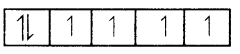
Reverse for increasing order. VO2+ < Cr2O72- < MnO4–
Question 10.
The spin only formula used for calculation of magnetic moment of a substance is
1. μ = \(\sqrt{n(n+1)}\)
2. μ = \(\sqrt{(n+2)}\)
3. μ = \(\sqrt{n(n+0)}\)
4. μ = \(\sqrt{n(n+2)}\)
Answer:
4. μ = \(\sqrt{n(n+2)}\)
Magnetic moment depends on unpaired electrons (n):
μ = \(\sqrt{n(n+2)}\)
Question 11.
Which of the following set of elements represent coinage metals?
1. Cu, Ag, Au
2. Cu, Fe, Zn
3. Ag, Fe, Cr
4. Au, Fe, Zn
Answer:
1. Cu, Ag, Au
Coinage metals = Group 11 metals used in coins.Cu, Ag, Au
Question 12.
Transition metals form large number of complex compounds. This is due to
1. small size
2. high nuclear charge
3. presence of vacant d-orbitals
4. All the above
Answer:
4. All the above
Complex formation depends on:
Small size → strong attraction; High charge → strong bonding
Vacant d-orbitals → accept lone pair of electrons from ligands . All contribute.
Question 13.
The catalyst used in Haber’s process is
1. Ni
2. Fe
3. Pt
4. Mo
Answer:
2. Fe
Haber process uses iron catalyst. With promoters like K2O, Al2O3.
Question 14.
Which of the following element is not involved in the formation of Interstitial compounds with transition elements?
1. H
2. C
3. N
4. Cl
Answer:
4. Cl
Interstitial compounds form with small atoms like H, C, N.
Cl is too large → cannot fit.
Question 15.
In long form of periodic table which elements have high melting and boiling points?
1. Representative elements
2. Transition elements
3. Lanthanides
4. Actinides
Answer:
2. Transition elements
High melting/boiling points due to strong metallic bonding.
Maximum in transition elements.
II. Fill in the Blanks
Question 1.
The atomic radii of 5d series of elements is same as that of _______ series of elements.
Answer:
4d series
Question 2.
In aqueous solution the colour of the Cu2+ ion is ________
Answer:
blue
Question 3.
Ce4+ is a strong ________ agent.
Answer:
oxidizing
Question 4.
Most of the radioactive elements are present in __________ series/ block of periodic j table.
Answer:
5f series / f-block
Question 5.
The common oxidation state of lanthanides is __________
Answer:
+3
III. One Word Answer Questions
Question 1.
Name the transition element which does not exhibit variable oxidation states?
Answer:
Sc (Scandium)does not exhibit variable oxidation states.
Question 2.
Which substances are attracted very strongly by applied magnetic Held?
Answer:
Ferro Magnetic substances are attracted very strongly.
Question 3.
What is the other name of f-block elements?
Answer:
Inner transition elements is the other name of f-block elements.
Question 4.
What is the catalyst used in the manufacture of high density polythene?
Answer:
Zeigler – Natta Catalyst is used in the manufacture of high-density polythene.
Question 5.
Which metals are involved in the formation of an alloy called Brass?
Answer:
Cu and Zn are used in the formation of Brass.
IV. Very Short Answer Questions
Question 1.
What are transition elements? Give examples.
Answer:
Transition elements: These are the elements with partially filled d-orbital either in their atoms or ions.
Ex: Chromium (Cr 24) : [Ar] 4s13d5 ; for Cr+3 : [Ar]4s03d3.
Manganese (Mn 25) : [Ar]4s23d5. for Mn+2: [Ar]4s03d5.
Question 2.
Why is it difficult to obtain M3+ oxidation state in Ni,Cu and Zn
Answer:
The element Ni, Cu and Zn are stable in +2 oxidation state and hence difficult to obtain +3 oxidation state.
Reason for +2 oxidation stability:
Ni and Cu in +2 oxidation state (Ni+2) are stable due to highest negative enthalpy of hydration.
Zn in +2 oxidation state (Zn+2) is stable due to completely filled d-subshell.
Question 3.
Why Zn2+ is diamagnetic whereas Mnup>2+ is paramagnetic?
Answer:
Electronic configuration of Zn+2 is [Ar] 4s03d10
It has no unpaired electrons. So it is diamagnetic.
Atomic numbers
Zn = 30
Mn = 25
Ar = 18
E.C of Mn+2 is [Ar]4s03d5 It has five impaired electrons. So it is paramagnetic
Note: E.C of Cr+3 is [Ar]4s03d3
It has three unpaired electrons. So it is paramagnetic.
Question 4.
Calculate the ‘spin only’ magnetic moment of Fe2+(aq) ion.
Answer:
Electronic configuration of Fe+2 ion = [Ar] 3d64s0

The number of unpaired electrons is n = 4.
∴ Spin only’ magnetic moment (μ) = \(\sqrt{n(n+2)}\)
= \(\sqrt{4(4+2)}\) = \(\sqrt{24}\) = 4.9 BM
Question 5.
Aqueous Cu2+ ions are blue in colour, where as Aqueous Zn2+ ions are colourless. Why?
Answer:
E.C of Cu+2 is [Ar] 4s03d9. It contains one unpaired electron.
Hence it exhibits blue colour in aqueous solution.
E.C of Zn+2 is [Ar] 4s03d10
It contains no unpaired electron. Hence it is colourless in aqueous solution.
Atomic numbers
Cu = 29
Zn = 30
Question 6.
Why do the transition metals form a large number of complex compounds?
Answer:
Transition metals form a large number of complex compounds due to their small size, higher effective nuclear charge and presence of partially filled d-orbitals.
Question 7.
How do transition metals exhibit catalytic activity?
Answer:
Transition elements exhibit catalytic activity due to
(i) Variable oxidation states
(ii) Free valnecies on their surfaces
(iii) presence of partially filled d-orbitals.
Ex: Fe is the catalyst used in Haber’s process in the manufacture of ammonia.
V2O5 is the catalyst used in Contact process in the manufacture of H2SO4.
Pt is the catalyst used in Ostwald’s process in the manufacture of nitric acid.
Question 8.
What is an alloy? Give example.
Answer:
Alloy: It is a homogeneous mixture of a metal with other metals or metalloids or non-metals, having similar physical properties to that of the metal.
Ex: Brass: Cu (60% to 70%) and Zn (30% to 40%).
Bronze: Cu (75% to 90%) and Sn (10% to 25%).
Question 9.
What is mischmetal? Give its composition and uses.
Answer:
Mischmetal is a well known alloy of Lanthanoid metal.
Composition: 95% Lanthanoid metals (Ce, La, Nd, Pt), 5% iron and traces of S, C, Ca, Al.
Uses: Ignitium sources – Cigarette lighter, fire starter, bullets.
Question 10.
What is actinoid contraction
Answer:
Actinoid contraction: It is the gradual decreases in the size of atoms of actinoid series.
It is due to poor screening effect of 5f orbitais.
V. Short Answer Questions
Question 1.
Explain why Ni and Fe exhibit zero oxidation state in [Ni(CO)4] and [Fe(CO)5] respectively.
Answer:
In [Ni(CO)4] and [Fe(CO)5] the oxidation state of Ni and Fe is zero.
CO is a neutral ligand, hence the oxidation states of Ni and Fe are zero.
Low oxidation states are found when the complex compound has ligands capable of π-acceptor character in addition to the σ bonding.
Question 2.
What are interstitial compounds? How are they formed? Give two examples.
Answer:
Interstitial compounds are compounds formed when small atoms (H,C,B,N) occupy the empty spaces (interstitial sites-voids) in the metals of crystal lattice structure.
Formation: In metals such as Fe, Ti atoms are arranged in a closely packed structures with tiny gaps (voids). Small atoms can fit in this voids without disturbing the overall structure much.
Ex: Fe-C (Iron- carbon steel), Ti-H (Titanium – Hydride), Fe3H
Question 3.
Write the characteristics properties of transition elements.
Answer:
Characteristics properties of transition elements:
- Transition elements show variable oxidation states.
- They exhibit paramagnetic character.
- They form complex compounds.
- They form coloured hydrated ions and salts.
- They show catalytic activity.
- They form alloys like Brass, Bronze.
Question 4.
Write down the electronic configuration of
(i) Cr3+
(ii) Cu+
(iii) Co2+
(iv) Mn2+
Answer:
i) E.C of Cr3+ : [Ar]3d3
Cr(24) : Cr3+ (21 = 18 + 3)
ii) E.C of Cu+ :[Ar]3d10
Cu(29) : Cu+ (28 = 18 + 10)
iii) E.C of Co2+ : [Ar]3d7
Co(27) = Co2+ (25 = 18 + 7)
iv) E.C of Mn2+ : [Ar]3d5
Mn(25) : Mn2+ (23 = 18 + 5)
Question 5.
What is lanthanoid contraction?What are the consequences of lanthanoid contraction?
Answer:
Lanthanoid contraction: It is the steady decrease in the atomic radii even with increase in atomic number from Lanthanum to Lutetium due to poor screening effect of 4f-electrons. Consequences of Lanthanoid contraction:
i) Basic character of oxides and hydroxides: Due to the lanthanoid contraction, the covalent nature of La-OH bond increases and thus, the basic character of oxides and hydroxides decreases from La(OH)3 to Lu(OH)3.
ii) Due to lanthanide contraction, size of 4d series and 5d series elements remains the same. Thus, pairs of elements such as Zr/Hf, Nb/Ta and Mo/W are almost identical in size. Due to almost similar size, such pairs have very similar properties which makes their separation difficult.
iii) Separation of lanthanoids: Due to lanthanoid contraction, there is a difference in some properties of lanthanoid like solubility, degree of hydration and complex formation.
These differences enable the separation of lanthanoids by ‘ion exchange method’.
Question 6.
Describe the preparation of potassium dichromate from iron chromite ore.
Answer:
Preparation of potassium dichromate (K2Cr2O7) from chromile ore (FeCr2O4):
1) Potassium dichromate (K2Cr2O7) is obtained by the fusion of chromite ore (FeCr2O4) with sodium (or potassium) carbonate (Na2CO3) in the presence of excess of air.
4FeCr2O4 + 8Na2CO3 + 7O2 → 8Na2CrO4 + 2Fe2O3 + 8CO2. (yellow solution)
2) The yellow solution of sodium chromate is filtered and acidified with sulphuric acid to give a
solution from which orange sodium dichromate (Na2Cr2O7.2H2O) can be crystallised.
2Na2CrO4 + 2H+ → Na2Cr2O7 + 2Na+ + H2O
3) Na2Cr2O7 is more soluble than potassium dichromate. So the solution of sodium dichromate is treated with potassium chloride to prepare K2Cr2O7.
Na2Cr2O7 + 2KCl → K2Cr2O7 + 2NaCl
Orange crystals of potassium dichromate crystallise out.
Question 7.
Why do the transition metal ions exhibit characteristic colours in aqueous solution. Explain giving examples.
Answer:
Transition metal ions exhibit colour property in aqueous solution due to the presence of unpaired d-electrons.
These unpaired d-electrons from a lower energy are excited to a higher energy d-orbitals of the same ‘n’ value. The energy of excitation corresponds to the frequency of light absorbed and this frequency lies in visible region. The colour observed corresponds to the complementary colour of light absorbed. The frequency of light absorbed is determined by the nature of the ligand. In aqueous solutions water molecules are the ligands.
Ex 1: Ti2+ [Ar] 3d1 Purple
V2+ [Ar] 3d3 Violet
These have unpaired electrons in their d orbitals and hence they are coloured.
Ex 2: Sc3+ [Ar] 3d0 colourless
Cu+ [Ar] 3d10 colourless
These have paired electrons in their d orbitals and hence they are colourless.
Question 8.
Compare the stability of +2 oxidation state of the elements of the first transition series.
Answer:
The sum I.E1 + I.E2 of first transition series increases due to increased nuclear charge.
Thus, the standard potentials become less and less negative.
So the tendency to form M+2 ion decreases.
The greater stability of +2 state of Mn is due to half-filled d-subshell (d5).
For zinc, it is due to completely filled d-subshell (d10).
For nickel, it is due to highest negative enthalpy of hydration.
Question 9.
Compared to the changes in atomic and ionic sizes of elements of 3d and 4d series, the change in radii of elements of 4d and 5d series is virtually the same. Comment.
Answer:
Compared to the change in atomic and ionic sizes of elements 3d and 4d series, the change in radii of elements 4d and 5d series is virtually the same.
This is due to the intervention of the 4f orbitals which must be filled before the 5d series of elements. This filling of 4f before 5d orbitals results in a regular decrease in atomic radii called Lanthanoid contraction. Due to Lanthanoid contraction the 4d and 5d series elements exhibit same size.
Question 10.
Write the characteristics of interstitial compounds.
Answer:
Characteristics of Interstitial compounds:
- They are very hard and rigid. Ex: Some borides approach diamond in hardness.
- They have high melting points, higher than those of their pure metals.
- They retain metallic conductivity
- They are chemically inert.
VI. Long Answer Questions
Question 1.
Explain giving reasons:
i) Transition metals and many of their compounds show paramagnetic behaviour.
ii) The enthalpies of atomisation of the transition metals are high.
iii) The transition metals generally form coloured compounds.
iv) Transition metals and their many compounds act as good catalysts.
Answer:
- Transition metals and their compounds show paramagnetic behaviour. This is due to the presence of unpaired d-electrons. Each unpaired electron has a magnetic moment associated with its spin angular momentum and orbital angular momentum.
- The enthalpies of atomisation of the transition metals are high. This is due to the presence of large number of unpaired electrons in their atoms. These atoms have strong interatomic interaction and hence, stronger bonding between them.
- The transition metals generally form coloured compounds.This is due to absorption of visible light. The electron absorbs the radiation of a particular frequency (of visible region) and jumps into next orbital and the colour of compounds is complementary colour of observed colour.
- Transition metals and their many compounds act as good catalysts. Due to Variable oxidation states (ii) Free valencies on their surfaces (iii) presence of partially filled d-orbitals.
Ex: Consider the reaction

Mechanism of catalysing action of Fe+3 in the above reaction is as follows:
a) 2Fe+3 + 2I– → 2Fe+2 + I2
b) 2Fe+2 + S2O8-2 2Fe+3 + 2SO4-2
Question 2.
Describe the preparation of potassium permanganate. How does the acidified permanganate solution react with
(i) iron (II) ions
(ii) SO2 and
(iii) oxalic acid? Write the ionic equations.
Answer:
1) Preparation of KMnO4: Potassium permanganate is prepared by the fusion of MnO2 with an alkalimetal hydroxide and an oxidising agent like KNO3. It forms dark green, K2MnO4 which disproportionate in a neutral or acidic solution to give permanganate.
3K2MnO4 + 2H2SO4 → 2KMnO4 + 2K2SO4 + MnO2 + 2H2O
2) Reactions of KMnO4 in acidic medium MnO4– + 8H+ + 5e– -» Mn+2 + 4H2O
- Iron (II) ions: Ferrous ion is oxidised to Ferric ion.
5Fe+2 + MnO4– + 8H+ → Mn+2 + 4H2O + 5Fe+3 - SO2: It is oxidised to SO4-2 by acidified KMnO4.
5SO2 + 2MnO4– + 2H2O → 2Mn+2 + 4H+ + 5SO4-2 - Oxalic acid:
5C2O4-2 + 2MnO4– + 16H+ → 2Mn+2 + 8H2O + 10CO2
Question 3.
Compare the chemistry of actinoids with that of the lanthanoids with special reference to:
i) Electronic configuration
ii) Oxidation state
iii) Atomic and ionic sizes
iv) Chemical reactivity
Answer:
i) Electronic configuration (E.C):
E.C of lanthanoids: [Xe]4f1-145d0-16s2.
E.C of actinoids: [Rn] 5f1-146d0-17s2,
Thus, lanthanoids belong to 4f series whereas actinoids belong to Sf series.
ii) Oxidation state: Lanthanoids show limited oxidation states (+2,+3,+4) out of which +3 is most common. This is because of large energy gap between 4f and Sd subshells.
But actinoids show a large number of oxidation states because of small energy gap between 5f, 6d, 7s subshells.
iii) Atomic and ionic size: Both show decrease in size of their atoms or ions in +3 oxidation state. In Lanthanoids, the decrease is called lanthanoid contraction whereas in actinoids, it is called actinoid contraction. However, the contraction is greater from element to element in actinoids due to poorer shielding by Sf electrons than that by 4f electrons in lanthanoids.
iv) Chemical reactivity: Lanthanoids show less tendency towards complex formation than actinoids. Lanthoids except promethium are non-radioactive. All the actinoids are radioactive. Lanthanoids do not form oxocations. Actinoids form oxo cations like UO2+2, PuO2+2,UO+. Oxides and hydroxides of Lanthanoids are less basic whereas actinoids are more basic.
Question 4.
How would you account for the following:
(i) among d4 species, Cr2+ is strongly reducing while manganese(III) is strongly oxidising.
(ii) Cobalt(II) is stable in aqueous solution but in the presence of compiexing reagents it is easily oxidised.
(iii) The d1 configuration is very unstable in ions.
Answer:
i) Electronic configuration ofCr+2 is [AT] 4s03d4
Electronic configuration of Mn+3 is [Ar]4s03d4
Though Cr+2 and Mn+3 have the same electronic configuration, Cr+2 acts as reducing agent but Mn+3 acts as oxidizing agent.
Reason: E<sup0 value for Cr+3/Cr+2 is negative (-0.41V), where as E0 value for Mn+3/Mn+2 is positive (+ 1.57 V)
Thus Cr+2 ions can easily undergo oxidation to give Cr+3 ions and hence act as strong reducing agent. But Mn+3 can easily undergo reduction to give Mn+2 and hence act as oxidizing agent.
ii) Cobalt (III) has greater tendency to form coordination complexes than Co(II). Thus, in the presence of ligands, Co(II) changes to Co(III) and easily gets oxidised.
Hence Co(II) is more stable in aqueous solution.
iii) The ions with d1 configuration have the tendency to lose the only electron present in d-subshell to acquire stable d0 configuration. Hence, they are unstable and undergo oxidation or disproportionation. Hence the d1 configuration is unstable.
Objective Questions
Question 1.
Transition elements belong to:
1. s-block
2. p-block
3. d-block
4. f-block
Answer:
3. d-block
Question 2.
The general electronic configuration of d-block elements is:
1. (n-1)d1-10 ns1-2
2. ns2 np6
3. ns2 np1-6
4. ns1
Answer:
1. (n-1)d1-10 ns1-2
Question 3.
Gadolinium belongs to 4f series. It’s atomic number is 64. Which of the following is the correct electronic configuration of gadolinium?
1. [Xe] 4f75d16s2
2. [Xe] 4f65d26s2
3. [Xe]4f86d2
4. [Xe] 4f95s1
Answer:
1. [Xe] 4f75d16s2
Question 4.
Transition elements show variable oxidation states due to:
1. Small size
2. Participation of ns and (n-1)d electrons
3. High ionisation energy
4. Presence of p-electrons
Answer:
2. Participation of ns and (n-1)d electrons
Question 5.
Which element shows the highest oxidation state?
1. Sc
2. Ti
3. Mn
4. Zn
Answer:
3. Mn
Question 6.
The colour of transition metal compounds is due to:
1. Presence of neutrons
2. d-d transitions
3. Proton transfer
4. Radioactivity
Answer:
2. d-d transitions
Question 7.
Which of the following is colourless?
1. Cu2+
2. Fe3+
3. Zn2+
4. Mn2+
Answer:
3. Zn2+
Question 8.
KMnO4 acts as:
1. Reducing agent
2. Oxidising agent
3. Catalyst only
4. Acid
Answer:
2. Oxidising agent
Question 9.
Lanthanoids belong to:
1. 3d series
2. 4f series
3. 5d series
4. 6d series
Answer:
2. 4f series
Question 10.
The electronic configuration of Cu(II) is 3d9 whereas that of Cu(I) is 3d10. Which of the following is correct?
1. Cu(II) is more stable
2. Cu(II) is less stable
3. Cu(I) and Cu(II) are equally stable
4. Stability of Cu(I) and Cu(II) depends on nature of copper salts
Answer:
1. Cu(II) is more stable
Question 11.
The common oxidation state of lanthanoids is:
1. +1
2. +2
3. +3
4. +4
Answer:
3. +3
Question 12.
Electronic configuration of a transition element X in +3 oxidation state is [Ar]3d5. What is its atomic number?
1. 25
2. 26
3. 27
4. 24
Answer:
2. 26
Question 13.
Which element among the following is radioactive?
1. Ce
2. Nd
3. U
4. La
Answer:
3. U
Question 14.
The first transition series starts from:
1. Sc
2. Ti
3. Cr
4. Fe
Answer:
1. Sc
Question 15.
Which of the following has highest number of unpaired electrons?
1. Sc
2. Mn
3. Cu
4. Zn
Answer:
2. Mn
Question 16.
Cu2+ compounds are generally:
1. Coloured
2. Colourless
3. Radioactive
4. Acidic
Answer:
2. Colourless
Question 17.
When acidified K2Cr2O7 solution is added to Sn2+ salts then Sn2+ changes to
1. Sn
2. Sn3+
3. Sn4+
4) Sn+
Answer:
3. Sn4+
Question 18.
KMnO4 acts as an oxidising agent in acidic medium. The number of moles of KMnO4 that will be needed to react with one mole of sulphide ions in acidic solution is
1. \(\frac{2}{5}\)
2. \(\frac{3}{5}\)
3. \(\frac{4}{5}\)
4. \(\frac{1}{5}\)
Answer:
3. \(\frac{4}{5}\)
Question 19.
Which transition metal shows maximum oxidation state?
1. Fe
2. Mn
3. Cu
4. Zn
Answer:
2. Mn
Question 20.
Which of the following statements about the interstitial compounds is incorrect?
1) They retain metallic conductivity.
2) They are chemically reactive
3) They are much harder than the pure metal
4) The have higher melting points than the pure metals
Answer:
2) They are chemically reactive
Question 21.
Which ion is diamagnetic?
1. Fe3+
2. Mn2+
3. Zn2+
4. Cu2+
Answer:
3. Zn2+
Question 22.
Zr(Z = 40) and HF(Z=72) have similar atomic and ionic radii because of
1) having similar chemical properties
2) belonging to same group
3) diagonal relationship
4) lanthanoid contraction
Answer:
4) lanthanoid contraction
Question 23.
Which of the following pairs has the same size?
1) Fe2+, Ni2+
2) Zr4+, Ti4+
3) Zr4+, Hf4+
4) Zn2+, Hf4+
Answer:
3) Zr4+, Hf4+
Question 24.
Reason of lanthanide contraction is
1) negligible screening effect of f-orbitals
2) increasing nuclear charge
3) decreasing nuclear charge
4) decreasing screening effect
Answer:
1) negligible screening effect of f-orbitals
Question 25.
Which ion is strongly oxidising?
1. MnO4–
2. Fe2+
3. Cr2+
4. Cu+
Answer:
1. MnO4–
Question 26.
Lanthanoid contraction is due to:
1. Increase in nuclear charge
2. Poor shielding by 4f electrons
3. Presence of d-electrons
4. High density
Answer:
2. Poor shielding by 4f electrons
Question 27.
Which element shows only +3 oxidation state?
1. Sc
2. Mn
3. Fe
4. Cr
Answer:
1. Sc
Question 28.
Which metal is used as catalyst in hydrogenation of oils?
1. Cu
2. Fe
3. Ni
4. Zn
Answer:
3. Ni
Question 29.
The highest oxidation state shown by Mn is:
1. +4
2. +5
3.+6
4.+7
Answer:
4.+7
Question 30.
Which of the following forms coloured ions?
1. Sc3+
2. Zn2+
3. Cu2+
4. Ca2+
Answer:
3. Cu2+
Question 31.
Transition elements form interstitial compounds because:
1. They are non-metals
2. They have large atomic size
3. Small atoms occupy empty spaces in lattice
4. They are radioactive
Answer:
3. Small atoms occupy empty spaces in lattice
Question 32.
Magnetic moment. 2.83 BM is given by which of the following ions?
(At.No Ti = 22, Cr = 24, Mn = 25, Ni = 28)
1) Ti3+
2) Ni2+
3) Cr3+
4) Mn2+
Answer:
2) Ni2+
Question 33.
Mischmetal contains mainly:
1. Actinoids
2. Lanthanoids
3. Transition metals
4. Alkali metals
Answer:
2. Lanthanoids
Question 34.
Which compound is used in volumetric estimation of Fe2+ ?
1. KMnO4
2. NaCl
3. NaOH
4. NH4Cl
Answer:
1. KMnO4
Question 35.
Which of the following has completely filled d-orbitals?
1. Cu2+
2. Zn2+
3. Fe2+
4. Mn2+
Answer:
2. Zn2+
Question 36.
Which transition metal compound is used as bleaching agent?
1. KMnO4
2. K4Cr2O7
3. TiO2
4. FeSO4
Answer:
1. KMnO4