
Referring to the AP Inter 1st Year Maths Study Material Chapter 5 Permutations and Combinations Exercise 6a Solutions makes it easier to understand complex problems.
AP Inter 1st Year Maths Permutations and Combinations Solutions Exercise 6a
Question 1.
How many 3-digit numbers can be formed from the digits 1, 2, 3, 4 and 5 assuming that
i) repetition of the digits is allowed ?
ii) repetition of the digits is not allowed?
Solution:
i) When repetition of the digits is allowed :
There will be as many ways as there are way’s of filling 3 vacant places

in succession by the given five digits.
In this case, repetition of digits is allowed.
Therefore, the unit’s place can be filled in by any of the given five digits.
Hence, by the multiplication principle, the number of ways in which three¬digit number can be formed from the given digits is 5 × 5 × 5 = 125.
ii) When repetition of the digits is not allowed :
In this case, repetition of digits is not allowed. Here, if unit place is filled the units place of the three digit number is 5.
Then, the ten’s place can be filled with any of the remaining four digit and the hundreds place can filled with any of the remaining three digits.
Hence, by the multiplication principle, the number of ways in which three¬digit number can be formed without repeating the given digits is 5 × 4 × 3 = 60.
Question 2.
How many 3-digit even numbers can be formed from the digits 1, 2, 3, 4, 5, 6 if the digits can be repeated ?
Solution:
There will be as many ways as there are ways of filling 3 vacant places

in succession by the given six digits. In this case, the units place can be filled by 2 or 4 or 6 only i.e., the unit’s place can be filled in 3 ways. The tens place, be filled by any of the 6 digits in 6 different ways and also the hundreds place can be filled by any of the 6 digits in 6 different ways, as the digits can be repeated.
Therefore, by multiplication principle, the required number of three digit even numbers are 3 × 6 × 6 = 108.

Question 3.
How many 4-letter code can be formed using the first 10 letters of the English alphabet, if no letter can be repeated ?
Solution:
There are as many codes as there are way’s of filling 4 vacant places
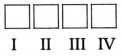
in succession by the first 10 letters of the English alphabet, keeping in mind the repetition of letters is nqt allowed. The first place can be filled in 10 different ways by any of the first 10 letters of the English alphabet following which, the second place can be filled in be filled in by any of the remaining letters in 9 different ways. The third place can be filled in by any of the remaining 8 letters in 8 different ways and the fourth place can be filled in by any of the remaining 7 letters in 7 different ways.
Therefore, by multiplication principle.
The required numbers of ways in which 4 vacant places, can be filled is 10 × 9 × 8 × 7 = 5040. Hence, 5040 four letter codes can be formed using first 10 letters of the English alphabet, if no letter is repeated.
Question 4.
How many 5-digit telephone numbers can be constructed using the digits 0 to 9 if each number starts with 67 and no digit appears more than once ?
Solution:
It is given that the 5-digit telephone numbers always start with 67.
Therefore, there will be as many phone numbers there are ways of filling 3 vacant places
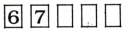
by the digist 0 to 9, keeping in mind the digits 0 to 9, except digits 6 and 7.
Therefore, the unit’s place can be filled in 8 different ways following which, the ten’s place can be filled in by remaining 7 digits in 7 different ways, and the hundred’s place can filled in any of the remaining 6 digits in 6 different ways.
Therefore, by multiplication principle, the required number of ways in which 5-digit telephone numbers can be constructed is 8 × 7 × 6 = 336.
Question 5.
A coin is tossed 3 times and the outcomes are recorded. How many possible outcomes are there ?
Solution:
When a coin is tossed, a different of outcomes is 2 (Head and tail) i.e., in each throw, the number of ways of showing a different face is 2.
Hence, by multiplication principle, the required number of possible outcomes is 2 × 2 × 2 = 8.
Question 6.
Given 5 flags of different colours, how many different signals can be generated if each signal requires the use of 2 flags, one below the other?
Solution:
Each signals requires the use of 2 flags.
There will be as many flags as there are ways of filling in 2 vacant places

in succession by the given 5 flags of different colours.
The upper vacant place can be filled in 5 different ways by any one of 5 flags following which, the lower vacant place can be filled in 4 different ways by any one the remaining of different flags.
Thus, by multiplication principle, the number of different signals that can be generated is 5 x 4 = 20.