TS Inter 1st Year Commerce Study Material Chapter 9 Source of Business Finance

Telangana TSBIE TS Inter 1st Year Commerce Study Material 9th Lesson Source of Business Finance Textbook Questions and Answers.

TS Inter 1st Year Commerce Study Material Chapter 9 Source of Business Finance

Long Answer Questions

Question 1.
Explain various sources of business finance available to Indian businessmen.
(Or)
Discuss the main sources of finance available to companies for meeting long-term as well as short-term financial requirements.
(Or)
Write a comparative evaluation of the various methods that are opened to meet the financial requirements of a business firm.
Answer:
A businessman can raise funds from various sources. On the basis of the period, they are classified into three:

  • Long-term sources
  • Medium-term sources
  • Short-term sources.

1) Long-term sources: These sources include i)Issue of equity and preference shares ii) the Issue of debentures iii) Retained earnings.

i) Shares: A company is able to get large amount of capital primarily by the issue of shares. A company generally issues various types of shares, preference, equity, and deferred shares. The object of issuing different kinds of shares is to appeal investors with different temperaments. Preference shares carry preferential rights regarding payment of dividends and repayment of capital at the time of winding up of the company. Equity shares do not carry such rights. Issue of shares is the most important method of raising long-term finance because the raising from the shareholders remain in the company till the time of winding up.

ii) Debentures: A company may not wish to possess more share capital. Instead it may invite persons to lend their money. Money so lent must be acknowledged. The document which the lender receives is called debenture. So, debenture is an acknowledge of debt by a company. It is usually issued under a common seal, secured by fixed or floating charge on the assets of the company. A company in order to secure long term finance for initial needs and more of ten for developments, to supplement its capital may issue debentures. Money raised through debentures remain in the company for long period,

iii) Retained earnings: The ploughing back of earning is an important source of financing the business. Instead of distributing the entire profits, some portion of the profits are retained in the business as reserve. The undistributed earnings are used to finance long term needs.

2) Medium term finance: These sources include

  • Public deposit
  • Loans from banks
  • Lease financing

i) Public deposits: Industries receive deposits from the public. These deposits are called as public deposits. The period of public deposits used to be short (i.e., For three years) so public deposits have been a very important source for working capital requirements.

ii) Loans from banks: Commercial banks occupy a vital position as they provide funds for different purposes and for different periods. They extend loans in the form of cash credits, overdrafts, purchase/discounting bills and term loans. The borrower is required to provide some security or to create a charge on the assets of the firm before a loan is sanctioned.

iii) Lease financing: A lease is a contractual agreement whereby the lesser or owner grants lesser the right to use the asset in return for a periodic payment known as lease rent. At the end of the lease period, the asset goes back to lessor. Lease finance is an important means for modernisation and diversification in the firm. Such financing is resorted to in acquiring assets like computers and electronic equipment.

3) Short-term sources: These sources include

  • Bank credit
  • Trade credit
  • Installment credit
  • Advances
  • C.P.

i) Bank credit: Commercial banks extend the short-term financial assistance to business in the form of loans, cash credits, overdraft and discount of bills. Bank loans are provided for a specific short period. Such advance is credited to loan account and the borrower has to pay interest on the entire amount of loan sanctioned. Bank grants the cash credit upto a specific limit. The firm can withdraw any amount within the limit. Interest is charged on the actual amount withdrawn. In overdraft, the customer can overdraw his current account. This arrangement is for a short period only. Commercial banks finance the business houses by discounting the bills of exchange or promissory notes.

ii) Trade credit: Just as firm grants credit to customers, so it often gets credit from suppliers. It is known as trade credit. It does not make available of funds in cash but it facilitate the purchase of goods without immediate payment.

iii) Installment credit: Business firm gets credit from equipment suppliers. The supplier may allow the purchase of equipment with payments extended over a period of 12 months or more. Some portion of the cost price is paid on delivery and the balance is paid in a number of installments. The supplier charges interest on unpaid balance.

iv) Customers advance: Many times, the manufacturer of goods insist on advance by the customers, incases of big orders. The customers advance represent a part of the price of the product that has been ordered which will be delivered at a later date.

v) C.P or Commercial Paper: Commercial paper is an unsecured promissory note issued by a firm to raise funds for shorter period, varying from 90 days to 365 days. It is issued by one firm to another firm. The amount raised by CP is generally large. As the debt is totally unsecured, firms having good credit rating can issue commercial paper.

Question 2.
What do you mean by Specialized Financial Institutions? Why are these needed?
Answer:
Specialised financial institutions are the institutions which have been setup to serve the increasing financial needs of commerce and trade in the areas of venture capital, credit rating and leasing etc.

1) IFCI Venture Capital Funds Ltd.: Formerly known as Risk Capital and Technology Finance Corporation Ltd. is a subsidiary of Industrial Finance Corporation of India Ltd. It was promoted with the objective of broadening entrepreneurial base in the country by facilitating funding to ventures involving innovative product /process/ technology.

TS Inter 1st Year Commerce Study Material Chapter 9 Source of Business Finance

2) ICICI Venture Funds Ltd: Formerly known as Technology Development and Information Company of India Ltd. was established in 1988 as a joint venture with the Unit Trust of India. Subsequently, it became a fully owned subsidiary of ICICI. It is a Technology Venture Finance Company set upto sanction project finance for new technology ventures. The industrial units assisted by it are in the fields of computer, chemicals/polymers, drugs, diagnostics and vaccines, biotechnology, environmental engineering etc.

3) Tourism Finance Corporation of India Ltd.: TFCI is a specialised financial institution setup by Government of India for promotion and growth of tourist industry in the country. Apart from conventional tourism projects, it provides financial assistance for non-conventional tourism projects like amusement parks, ropeways, car rental services, ferries for inland water transport etc.

Question 3.
Critically examine the advantages and disadvantages of raising funds by issuing shares of different types.
Answer:
Issue of shares: The capital of the company is divided into number of equal parts known as shares. A company can issue different types of shares to get funds from the investors to suit their requirement. Some investors prefer regular income though it may be low, others may prefer higher returns and they will be prepared to take risk. Under the companies act, 1956, a company can issue only two types of shares. 1) Preference shares 2) Equity shares.

1) Preference shares: As the name suggests, these shares have certain preferences as compared to equity shares. There is a preference for payment of dividend and also repayment of capital at the time of liquidation. When the company has distributable profits, the dividend is first paid to preference shares. In the event of liquidation of the company, after the payment of outside creditors, preference share capital is returned. Because of these preferences they are called preference shares. These shares are further divided into cumulative, noncumulative, participating, redeemable, irredeemable, convertable and non-convertable preference shares.

Advantages:

  • Rate of return is guaranteed to those investors who prefer safety and want to earn income certainly.
  • These shares are helpful in raising long term capital of the company.
  • Redeemable preference shares have the added advantage of repayment of capital whenever there is surplus in the company.
  • As fixed rate of dividend is payable, this enable the company to adopt trading on equity.
  • There is no need to mortgage assets for the issue of shares.

Disadvantages:

  • Fixed rate of dividend is paid on these share. This is a permanent burdent to the company.
  • These shares does not carry any voting right and cannot participate in the management of the company.
  • Compared to other types of securities such as debentures, usually cost of raising capital is high.

2) Equity shares: They are also known as ordinary shares. Equity shareholders are the real owners of the company as these shares carry voting rights. Equity shareholders are paid dividend after paying to the preference shares. The rate of dividend depends on the profits of the company. There may be a higher rate of dividend or they may not get anything. These shareholders take more risk as compared to preference shareholders. Equity capital is returned after meeting all other claims including preference shares.

Advantages:

  • Equity shares do not create any obligation to pay fixed rate of dividend.
  • They can be issued with creating any charge over the assets of the company.
  • It is a permanent source of capital and the company need not repay it except under liquidation.
  • Equity shareholders are the real owners of the company.
  • In case of profits, these shareholders can get higher dividends and appreciation in the value of shares.

Disadvantages:

  • If only equity shares are issued the company cannot take the advantage of trading on equity.
  • There is danger of over capitalisation in case of excess issue of these shares.
  • These shareholders can put obsticles in management.
  • In case of higher profits, increase in the value of shares may lead to speculation in the market.

TS Inter 1st Year Commerce Study Material Chapter 9 Source of Business Finance

Short Answer Questions

Question 1.
What are the sources of Short-Term finance?
Answer:
The following are the sources of short-term finance:
1) Bank credit: Commercial banks extend the short term financial assistance to business in the form of loans, cash credits, overdrafts and discount of bills. Bank loans are provided for a specific short period. Such advance is credited to loan account and the borrower has to pay interest on the entire amount of loan sanctioned. Bank grants cash credits upto a specific limit. The firm can withdraw any amount within that limit. Interest is charged on the actual amount withdrawn. In overdraft, the customer can overdraw his current account. The arrangement is for short period only. Commercial banks finance the business houses by discounting the bills of exchange and promissory notes.

2) Trade credit: Just as firm grants credit to customers, so it often gets credit from suppliers. It is known as trade credit. It does not make available of funds in cash but it facilitates the purchase of goods without immediate payment of cash.

3) Installment credit: Business firms get credit from equipment suppliers. The suppliers may allow the purchase of equipment with payments extended over a period of 12 months or more. Some portion of the cost price is paid on delivery and the balance is paid in number of installments. The supplier charges interest on the unpaid balance.

4) Customers advance: Many times, the manufacturer of goods insist on advance by customers in case of big order. The customers advance represent a part of the price of the product which will be delivered at a later date.

5) Commercial paper: Commercial paper is an unsecured promissory note issued by a firm to raise funds for shorter period, varying from 90 days to 365 days. It is issued by one firm to another firm. The amount raised by C.P is large. As the debt is totally unsecured, firms having good credit rating can issue commercial paper.

Question 2.
What are the sources of Long-term finance?
Answer:
The sources of long-term finance are

  • Issue of shares
  • Issue of debentures
  • Retained earnings.

i) Issue of shares: A company is able to get large amount of capital primarily by the issue of shares. A company may issue different types of shares like preference shares, equity shares and deferred shares. The object of issuing different types of shares to appeal investors with different temperment. Preference shares carry preferential right with regarding to payment of dividend and repayment of capital. The equity shares do not carry such rights. It is important method of raising long term finance because the share capital remain in the company till winding up.

ii) Issue of debentures: If a company do not wish to possess more share capital may invite persons to lend their money. Debentures is an acknowledge of debt by company, issued under common seal, secured by fixed or floating charge on the assets of the company. A company in order to secure long-term finance for development purposes and to suppliment its capital may issue debentures. Money raised through debentures remain in the company for a longer period.

iii) Retained earnings: The ploughing back of earnings is an important sources of financing the business. Instead of distributing entire profits, some portion of the profits are retained in the business as reserve. This is called as “Retained Earnings”. The undistributed earnings are used to finance long term needs.

TS Inter 1st Year Commerce Study Material Chapter 9 Source of Business Finance

Question 3.
What are the sources of medium term finance?
Answer:
1) Public Deposits: The deposits that one raised by organisations directly from public are known as ‘public deposits’. Any person who is interested in depositing money in any organisation, can do by filling up a prescribed form. The organisation in return issues a deposit receipt as acknowledgement of debt. Company generally invite public deposits for a period upto 3 years. The acceptance of public deposits is regulated by RBI.

2) Loans from Commercial Bank: Commercial Banks provides funds for different purposes as well as for different time periods. Bank extend loans to firm of all sizes and in many ways like cash credit, overdraft, term loans, discounting of bills etc., the rate of interest charged by banks depend on various facts. The borrower is required to provide some security or create a charge on the assets of the firm before a loan is sanctioned by a commercial bank.

3) Lease Financing: A lease is a contractual agreement where by one party i.e., the owner of an asset grants the other party right to use the asset in return for a periodic payment. The owner of the assets is called the ‘lessor’ while the party that uses the assets is known as the “lesser”. The lesser pays a fixed periodic amount called lease rental to the lessor for the use of the asset. At the end of the lease period, the asset goes back to the lessor. While making the leasing decision, the cost of leasing an asset must be compared with the cost of owning the same.

Question 4.
Discuss the need for specialized financial institutions.
Answer:
Specialised financial institutions are the institutions which have been setup to serve the increasing financial needs of commerce and trade in the areas of venture capital, credit rating and leasing etc.

1) DFCI Venture Capital Funds Ltd.: Formerly known as Risk Capital and Technology Finance Corporation Ltd. is a subsidiary of Industrial Finance Corporation of India Ltd. It was promoted with the objective of broadening entrepreneurial base in the country by facilitating funding to ventures involving innovative product /process/ technology.

2) ICICI Venture Funds Ltd: Formerly known as Technonology Development and Information Company of India Ltd. was established in 1988 as a joint venture with the Unit Trust of India. Subsequently, it became a fully owned subsidiary of ICICI. It is a Technology Venture Finance Company set upto sanction project finance for new technology ventures. The industrial units assisted by it are in the fields of computer, chemicals/polymers, drugs, diagnostics and vaccines, biotechnology, environmental engineering etc.

3) Tourism Finance Corporation of India Ltd.: TFCI is a specialised financial institution setup by Government of India for promotion and growth of tourist industry in the country. Apart from conventional tourism projects, it provides financial assistance for non-conventional tourism projects like amusement parks, ropeways, car rental services, ferries for inland water transport etc.

Question 5.
Explain the advantages and disadvantages of equity source of finance.
Answer:
Equity shares: Equity shares are the most important source of raising long term capital by a company. Equity shares also known as “ordinary shares” represent the ownership of a company. The capital raised by issue of such shares are known as “Owners Fund”. Equity share holders do not get a fixed dividend but are paid on the basis of earning by the company. They are reffered as “residual owners”. They liability, is limited to the extent of capital contributed by them in the company. These share holders have a right to participate in the management of a company.

Merits: The important merits or raising funds through issuing equity shares are given below.

  • Equity shares do not create any obligation to pay a fixed rate of dividend.
  • Equity shares can be issued without creating any charge over the assets of the company.
  • It is a permanent source of capital and the company need not repay it except under liquidation.
  • Equity shareholders are the real owners of the company who have the voting rights.
  • In case of profits, equity share holders are the real gainers by way of increased dividends and appreciation in the value of shares.

Limitations: The major limitations of raising funds through issue of equity shares are as follows.

  • Investors who want steady income may not prefer equity shares as equity shares get fluctuating returns.
  • The cost of equity shares is generally more as compared to the cost of raising funds through other sources.
  • Issue of additional equity shares dilutes the voting power and earning of existing equity shareholders.
  • More legal formalities and procedural delays involved while raising funds through issue of equity shares.

Question 6.
Differentiate between the Equity shares and Preference shares.
Answer:
The following are the differences between equity shares and preference shares.

Basis of DifferenceEquity sharesPreference shares
1. Choice of IssueIssue of these shares are compulsory.Issue of these shares are optional. i.e., not compulsory.
2. Payment of dividendDividends are paid after paymet of dividends to preference shares.Dividends are paid before payment of dividends to equity shares.
3. Rate of dividendRate of dividend is not fixed and recommended by board of directors.Rate of dividend is prefixed and precommunicated.
4. Return of capitalIncase of windingup capital is refunded after the payment of preference shares.Incase of windingup capital is refunded before the payment to equity shares.
5. Voting rightsEquity shareholders are the real owners of the company who have the voting rights.These shares do not have any voting rights.
6. RiskIt is highly risk as compared to preference shares.It is less risky as compared to equity shares.
7. SpeculationScope for speculation.No scope for speculation.
8. Bonus sharesBonus shares are offered to equity shareholders.Bonus shares are not offered to preference shareholders.

TS Inter 1st Year Commerce Study Material Chapter 9 Source of Business Finance

Question 7.
Differentiate between Shares and a Debenture.
Answer:
The following are the differences between shares and Debentures.

SharesDebentures
1. A share is a part of owned capital.1. A debenture is an acknowledge of debt.
2. Shareholders are paid dividend on the shares held by them.2. Debenture holders are paid interest on debentures.
3. The rate of dividend depends upon the amount of divisible profits and policy of the company.3. A fixed rate of interest is paid on debentures irrespective of profit or loss.
4. Dividend on shares is a charge against profit and loss appropriation account.4. Interest on debentures is a charge against profit and loss account.
5. Shareholders have voting rights. They have control over the management of the company.5. Debenture holders are only creditors of the company. They cannot participate in management.
6. Shares are not redeemable (except redeemable preference shares) during the life time of the company.6. The debentures are redeemed after a certain period.
7. At the time of liquidation of the company, share capital is payable after meeting all outside liabilities.7. Debentures are payable in priority over share capital.

Question 8.
What is preference shares and explain the types of preference shares?
Answer:
Types of preference shares:

  • Cumulative preference shares: Under cumulative preference shares the dividend accumulated if it is unpaid during a year.
  • Non-cumulative preference shares: Under non-cumulative preference shares, the dividend does not accumulate.
  • Participating preference shares: Participating preference shares are those preference shares which have a right to participate in the company’s surplus after paying dividend to equity share holders and preference share holders.
  • Non-participating preference shares: The holders of such shares do not enjoy right of participating in the profit of the company.
  • Convertible preference shares: These shares can be converted into equity shares with in a specific period of time.
  • Non-convertible preference shares: Non-convertible preference shares cannot be coverted into equity shares.

Question 9.
What is Retained earnings and explain merits and limitations of Retained earnings.
Answer:
Retained earnings:
A company generally does not distribute all its earnings amongst the share holders as dividends. A portion of the net earnings may be retained in the business for use in the future. This is known as “retained earnings”. It is a source of internal financing or self financing or “ploughing back of profits”. The profit available for ploughing back of points in an organisation depends on many factors like net profits, dividend policy and age of the organization.

Merits: The merits of retained earning as a source of finance are as follows:

  • Retained earnings is a permanent source of funds available to an organisation.
  • It does not involve any explicit cost in the form of interest dividend or floation cost.
  • As the funds are generated internally, there is a greater degree of operational freedom and flexibility.
  • It enhances the capacity of the business firm to absorb unexpected losses.
  • It may lead to increase in the market price of the equity shares of a company.

Limitations:

  • Excessive ploughing back may cause dissatisfication amongst the share holders as they would get lower dividends.
  • It is an uncertain source of funds as the profits of business are fluctuating.
  • The opportunity cost associated with these funds is not recognized by many firms. This may lead to sub-optimal use.

TS Inter 1st Year Commerce Study Material Chapter 9 Source of Business Finance

Question 10.
What is Debentures and write the different types of Debentures.
Answer:
Debentures: ‘Debentures’ are an important instrument for raising term debit capital A company can raise funds through issue of debentures. The debenture issued by a pany is an acknowledgement that the company has borrowed a certain amount of r Which it promises to repay on a future date. Debentures holders are therefore termed as creditors of the company.

Debenture holders are paid a fixed state amount of interest at specified intervals say six months or one year.

Types of Debentures: Debentures may be of a various types. Some important types of debentures are as follows.

1) Mortage Debenture: They are also known as ‘Secured debentures’. The payment of interest and principal is secured by some charge on any part of the whole of the company.

2) Simple Debentures: These debentures have no charge on the assets of the company. They are also known as naked or unsecured debentures. They are not secured by any change or security on any asset of the company.

3) Redeemable Debentures: Those debentures which are issued for a particular fixed time period and after expiry of that period the principal amount is returned.
For example: 5 years, 10 years, 15 years maturity period, after that the amount of debenture is paid back to their holders.

4) Irredeemable Debentures: They are to be paid back at the time of winding up of the company. They are not refundable. Perpetual in nature. A company can, however, redeem such debentures whenever at deems fit.

5) Registered Debentures: The names of the holders are recorded in the books of the company. If such debentures are transferred, the name of the transferee is entered in the register and the name of the original holders is cancelled.

6) Bearer Debentures: The debentures which are not recorded in the register of debenture holders are known as bearer debentures. These debentures are transferable by more delivery.

7) Convertible Debentures: They carry the option of getting a part or the full value of their investments converted into equity shares on a fixed date.

8) Non-Convertible Debentures: They do not enjoy any such right to get themselves converted into equity shares.

Question 11.
Explain various international sources of finance?
Answer:
Liberalisation and Globalisation processes initiated in India in 1991 have opened the gates for the foreigners to invest in India and vice versa. Since then certain international sources are available for financing purposes.

1) American Depository Receipts (ADRS): American depository receipts is issued by any U.S Bank. The first ADR was introduced by J.P. Morgan in 1927 for the British retailers. It is basically a negotiable instrument which represents a specified number of share(s) in a foreign stock that is traded on U.S. exchange. The majority of ADRS range in price from $10 to $100 per share.

The holder of American depository receipt does not carry voting rights. The dividend on ADR is paid in terms of U.S. Dollars.

2) Global Depository Receipt (GDRs): GDR is a bank certificate issued in more than one country for shares in a foreign company. There are more than 900 GDRs listed on exchanges world wide. A holder of GDR does not carry any voting rights. A holder of GDR can convert it into the number of shares that it represented. On conversion of GDR into equity shares, no remitance is to be made by the company.

3) Indian Depository Receipts (IDRs): An IDR is an instrument in the form of Depository Receipt created by the Indian depository in India against the underlaying equity shares of the issuing company. IDRs are listed on stock exchanges in India and are freely transferable. IDRs can be issued with prior approval from securities exchange. Board of India (SEBI). Application can be made for the same 90 days before the issue opening date. An IDR is denominated in Indian Rupees.

According to the guidelines of SEBI, only those companies listed in their home market for at least three years and which have been profitable for three of the preced-ing five years can issue IDRS.

4) Foreign Currency Convertible Bonds (FCCBs): FCCBs have assumed a great importance for various multinational companies. A foreign currency convertiable bond is a type of convertiable bond in which the money is raised by issuing company in the form of a foreign currency. FCCBs are issued in currencies different from the issuing company’s domestic currency. FCCBs are redeemable at maturity if not converted into equity.

TS Inter 1st Year Commerce Study Material Chapter 9 Source of Business Finance

Very Short Answer Questions

Question 1.
Business finance
Answer:
1) The requirement of funds by business firms to accomplish its various activities is called business finance.

2) Business finance is viewed as the activity which is concerned with the acquisition and conservation of capital funds in meeting the financial needs and overall objectives of the business enterprise.

Question 2.
Bank loan
Answer:
1) Bank loan is a direct advance made in lumpsum against some security. A specified amount is sanctioned by the bankers to the customer.

2) The loan amount is paid in cash or credited to customers account. The customer has to pay interest on the amount from the date of sanctioning the loan.

Question 3.
Debentures
Answer:
1) A debenture is an acknowledgement of debt by a company. It is usually issued under common seal, secured by a fixed or floating charge on the assets of the company.

2) The debentures can be classified in different types on the basis of terms and conditions of issue. A company may issue debentures in secure long-term finance for initial needs and for expansions and developments.

Question 4.
Trade Credit
Answer:
1) Trade credit is the credit extended by one trader to another for the purchase of goods and services.

2) Trade credit facilitates the purchase of supplies without immediate payment. Such credit appears in the records of the buyer of the goods as ‘sundry creditors’ or ‘account payable’. Trade credit is commonly used by business organisations as a source of short term financing.

Question 5.
Equity share
Answer:
1) These shares are also known as ordinary shares. Equity sharesholders are the real owners of the company, as these shares carry voting rights.

2) Equity shareholders are paid dividend after paying the preference shares. The rate of dividend depends upon the profits of the company.

Question 6.
Preference share.
Answer:
1) Preference shares have certain preferences as compared to equity shareholders.There is a preference for payment of dividend and also repayment of capital at the time of liquidation when the company has distributable profits, the dividend is first paid to preference shares. In the event of liquidation, after the payment of outside creditors, preference share capital is returned. Because of these preferences they are called as preference shares.

2) These shares do not carry any voting rights. Hence they cannot participate in the management.

Question 7.
Retained earnings.
Answer:
1) Ploughing back of profits or retained earnings refers to the process of reinvestment of the earnings year of after. In this technique all the profits are not distributed to shareholders. A part of the profits is retained in the business as a reserve.

2) These reserves are used to finance long-term and short-term needs of the company. It is also known as self financing or internal financing.

Question 8.
Deferred Shares.
Answer:
1) The rights of deferred shareholders with regard to payment of dividend and repayment of capital are deferred or postponed. These shareholders get their only when all the other shareholders are paid.

2) These shares are generally of small denomination. The management of the company remained in their hands by virtue of their voting rights. These shares were earlier issue to promoters or founders for services rendered to the company. Under the present act, a public company cannot issue deferred shares.

Question 9.
State Financial Corporation.
Answer:
1) The State Financial Corporation was established by the government of India in 1951 with a view to provide financial assistance to small and medium scale industries which are beyond the scope of industrial finance corporation of India.

2) Its share capital is subscribed by respective state governments, Reserve Bank of India, Life Insurance Corporation of India and commercial banks.

TS Inter 1st Year Commerce Study Material Chapter 9 Source of Business Finance

Question 10.
Commercial Banks.
Answer:
1) Commercial banks occupy a vital position as they provide funds for different purposes as well as for different periods. Banks extends loans to firms of all sizes and in many ways like cash credits, overdrafts, purchase / discounting of bills and issue of letter of credit.

2) The loan is repaid in lumpsum or installments. The borrower is required to provide some security or create a charge on the assets of the firm before the loan is sanctioned.

Question 11.
Financial Institutions.
Answer:
1) Another important source of raising finance is from the financial institutions like Industrial Finance Corporation of India, Industrial Development Bank of India, Industrial Credit and Investment Corporation of India.

2) Such institutions provide long-term and medium terms on easy installments to big industrial houses. Such institutions help in pomoting new companies and expansion and development of existing companies.

Question 12.
Industrial Development Bank of India.
Answer:
Industrial Development Bank of India was established in July 1964 by a special Act or Parliament. The IDBI’s whole paid up capital is held by the central government. The main objectives are:

  • To set up an apex institution to co-ordinate the activities of other financial institutions.
  • To promote participation of private capital.
  • To promote private ownership of industrial activities.

Question 13.
Industrial Finance Corporation of India.
Answer:
1) IFCI was the first development finance institution setup in 1948 under IFCI act inorder to pioneer long-term institutional credit to large and medium industries.

2) It is to provide financial assistance to industry by way of rupee and foreign currency loans, underwriting, subscribing the issue of shares, stocks, bonds and debentures of industries.

3) It has also diversified its activities in the field of merchant banking, syndication of loans, formulation of rehabilitation programmes, amalgamation and mergers etc.

Question 14.
Small Industrial Development Bank of India.
Answer:
1) SIDBI was setup by the government of India in April 1990 as a wholly owned subsidiary of IDBI. It is the principal financial institution for promotion, financing and development of small scale industries in the economy.

2) It aims to empower micro, small and medium enterprises sector with a view to contributing to the process of economic growth, employment generation and balanced regional development.

Question 15.
Global Depository Receipt.
Answer:
1) GDR is a bank certificate issued in more than one country for shares in a foreign company. There are more than 900 GDRs listed on exchange worldwide.

2) GDRs are mainly listed in the Frankfurt Stock Exchange, Luxembourg Stock Exchange and London Stock Exchange, Global depository receipts facilitate trade of shares several international banks issue GDRs such as Citigroup, J.P. Morgan, Bank of New York etc. A holder of GDR can convert into number of shares that it represents.

TS Inter 1st Year Economics Study Material Chapter 9 ద్రవ్యం, బాంకింగ్, ద్రవ్యోల్బణం

Telangana TSBIE TS Inter 1st Year Economics Study Material 9th Lesson ద్రవ్యం, బాంకింగ్, ద్రవ్యోల్బణం Textbook Questions and Answers.

TS Inter 1st Year Economics Study Material 9th Lesson ద్రవ్యం, బాంకింగ్, ద్రవ్యోల్బణం

వ్యాసరూప సమాధాన ప్రశ్నలు:

ప్రశ్న 1.
ద్రవ్య పరిణామక్రమాన్ని చర్చించండి. ద్రవ్య రకాలను వివరించండి.
జవాబు.
ద్రవ్యం అంటే ఏమిటి అనే శ్న సామాన్యంగా కనిపించినప్పటికీ, జవాబు క్లిష్టమైంది. మానవుల కార్యకలా పాలన్నింటికీ ద్రవ్యం కేంద్ర బిందువు. సమాజంలో ప్రజలు పలు రకాలైన లావాదేవీల కోసం ద్రవ్యాన్ని ఉపయోగిస్తారు. ప్రభుత్వం కూడా దైనందిన వ్యవహారాల కొరకు ద్రవ్యాన్ని ఉపయోగిస్తుంది. నేడు ద్రవ్యం యొక్క పాత్ర లేని సమాజాన్ని మనం ఊహించలేం.

అందుకే, వాకర్ (Walker) పేర్కొన్నట్లు “money is what money does” అంటే ద్రవ్యం ఏ పనులను నిర్వహిస్తుందో ఆయా పనుల ఆధారంగా ద్రవ్య స్వభావాన్ని నిర్వచించవచ్చు. మొత్తం మీద మానవుని నవ్య కల్పన (ఆవిష్కరణ, discovery) అన్నింటిలో ‘ద్రవ్యం’ అత్యద్భుతమైందని చెప్పవచ్చు.

ద్రవ్య పరిణామక్రమం :
‘ద్రవ్యం అనే పదం ‘మానెటా’ అనే పదం నుంచి వచ్చింది. రోమన్ దేవత ‘మానెటా” ఆలయంలో నాణేలు ముద్రించేవారు. ఆర్థిక వ్యవస్థలో ద్రవ్యం వాడుకలోకి రాకముందు ‘వస్తు మార్పిడి విధానం’ అమలులో ఉండేది. ఈ విధానంలో వ్యక్తులు వస్తువులకు బదులుగా వస్తువులను వినిమయంగా పొందేవారు.

వస్తు మార్పిడి పద్ధతిలోని ఇబ్బందులను తొలగించడానికే ద్రవ్యం కనుగొనబడింది. ప్రాథమిక దశలో ద్రవ్యం స్థానంలో జంతువులను ఉపయోగించారు.

కాలక్రమంలో బంగారం, వెండి, రాగి, నికెల్ వంటివి లోహ ద్రవ్యంగా చలామణిలోకి వచ్చాయి. మూడవ దశలో నాణేలు ద్రవ్యంగా ఉపయోగించబడగా, ఆ తదుపరి కరెన్సీ నోట్లు ద్రవ్యంగా చలామణిలోకి వచ్చాయి. ప్రస్తుతం, కరెన్సీ నోట్లతో బాటు, వాణిజ్య బాంకులు సృష్టించే డ్రాఫ్ట్లు, చెక్కులు, డెబిట్ కార్డులు కూడా ద్రవ్యంగా చలామణి కావడం మనం చూస్తున్నాం. ఈ విధంగా ద్రవ్య పరిణామక్రమం ఆర్థిక వ్యవస్థలో పలు దశలలో చోటు చేసుకొన్నదని చెప్పవచ్చు.

ద్రవ్యం నిర్వచనాలు :
వస్తు మార్పిడి విధానంలోని ఇబ్బందులను తొలగించడానికి ద్రవ్యాన్ని చలామణిలోకి తీసుకురావడం జరిగింది. అర్థశాస్త్రవేత్తలు ద్రవ్యాన్ని అనేక విధాలుగా నిర్వచించడం జరిగింది.

  1. రాబర్ట్సన్ అభిప్రాయంలో ద్రవ్యం “వస్తు క్రయ విక్రయ చెల్లింపులలో, ఇతర వ్యవహారాల పరిష్కారాలలో అధికంగా జనామోదం పొందింది.”
  2. ‘దేనికైతే సర్వజనాంగీకారం కలిగి ఉన్నదో అదే ద్రవ్యం’ అని సెలిగ్మన్ పేర్కొన్నాడు.
  3. సాధారణంగా ‘వినిమయ సాధనం’గా అందరూ అంగీకరించేది. అంతేకాకుండా విలువల కొలమానంగా, విలువ నిధిగా ఉపయోగపడేది’ ద్రవ్యం అని డా॥ క్రౌథర్ నిర్వచించాడు.
  4. ‘ద్రవ్యం ఏ పనులను నిర్వహిస్తుందో దానినే ద్రవ్యం’ అని వాకర్ పేర్కొన్నాడు.

ద్రవ్యాన్ని సాధారణంగా ఒక ‘యూనిట్’ రూపంలో వ్యక్తపరచడం జరుగుతుంది. కేంద్ర బాంకు జారీ చేసే కరెన్సీ పేపర్ నోట్లు, చిల్లర నాణేల రూపంలో ఉంటుంది. ఉదా॥ భారతదేశంలో రూపాయి, అమెరికాలో డాలర్, యు.కె. లో పౌండ్ స్టెర్లింగ్, జపాన్లో యెన్, యూరోపియన్ దేశాలలో యూరో.

TS Board Inter First Year Economics Study Material Chapter 9 ద్రవ్యం, బాంకింగ్, ద్రవ్యోల్బణం

ప్రశ్న 2.
ద్రవ్యాన్ని నిర్వచించండి. ద్రవ్యం విధులను వివరించండి.
జవాబు.
వస్తు మార్పిడి విధానంలోని ఇబ్బందులను తొలగించడానికి ద్రవ్యాన్ని చలామణిలోకి తీసుకురావడం జరిగింది. అర్థశాస్త్రవేత్తలు ద్రవ్యాన్ని అనేక విధాలుగా నిర్వచించడం జరిగింది.

  1. రాబర్ట్సన్ అభిప్రాయంలో ద్రవ్యం “వస్తు క్రయ విక్రయ చెల్లింపులలో, ఇతర వ్యవహారాల పరిష్కారాలలో అధికంగా జనామోదం పొందింది.”
  2. ‘దేనికైతే సర్వజనాంగీకారం కలిగి ఉన్నదో అదే ద్రవ్యం’ అని సెలిగ్మన్ పేర్కొన్నాడు.
  3. సాధారణంగా ‘వినిమయ సాధనం’గా అందరూ అంగీకరించేది, అంతేకాకుండా విలువల కొలమానంగా, విలువ నిధిగా ఉపయోగపడేది’ ద్రవ్యం అని డా॥ క్రౌథర్ నిర్వచించాడు.
  4. ‘ద్రవ్యం ఏ పనులను నిర్వహిస్తుందో దానినే ద్రవ్యం’ అని వాకర్ పేర్కొన్నాడు.

ద్రవ్యాన్ని సాధారణంగా ఒక ‘యూనిట్’ రూపంలో వ్యక్తపరచడం జరుగుతుంది. కేంద్ర బాంకు జారీ చేసే కరెన్సీ పేపర్ నోట్లు, చిల్లర నాణేల రూపంలో ఉంటుంది. ఉదా॥ భారతదేశంలో రూపాయి, అమెరికాలో డాలర్, యు.కె. లో పౌండ్ స్టెర్లింగ్, జపాన్లో యెన్, యూరోపియన్ దేశాలలో యూరో.

ద్రవ్యం విధులు :
ద్రవ్యం నిర్వహించే విధులు చాలా ఉన్నాయి. వీటికి ప్రాథమిక విధులు, ద్వితీయ శ్రేణి విధులు, అనుషంగిక విధులు అని పలు రకాలుగా వర్గీకరిస్తారు.

ప్రాథమిక విధులు :
1. వినిమయ మాధ్యమం :
ద్రవ్యం వినిమయ మాధ్యమంగా వ్యవహరిస్తుంది. ఏ వస్తువైనా ముందుగా ద్రవ్యంతో మార్పిడి చేసుకొని, ఆ తరువాత ఆ ద్రవ్యంలో మరి ఏ ఇతర వస్తువునైనా కొనుగోలు చేయవచ్చు. ఆ విధంగా ద్రవ్యం అనే వినిమయ మాధ్యమం ద్వారా ప్రజలు వస్తు సేవలను వినిమయం చేసుకోవచ్చు.

2. విలువల కొలమానం :
వస్తు సేవల విలువ కొలమానంగా ద్రవ్యం వ్యవహరిస్తుంది. వ్యాపార వ్యవహారాలను సులువైనవిగా, సులభతరమైనవిగా మార్చింది. ప్రతి వస్తువు విలువను ద్రవ్య యూనిట్లో వ్యక్తపరచడం జరుగుతుంది. దీనిని ధర అంటారు. ద్రవ్యం యూనిట్ విలువ స్థిరంగా ఉన్నప్పుడు మాత్రమే అది సంతృప్తికరమైన కొలమానంగా పనిచేస్తుంది.

ద్వితీయ శ్రేణి విధులు :

1. విలువ నిధి :
వస్తు సేవల విలువను ద్రవ్య రూపంలో నిల్వ చేయవచ్చు. కీన్స్ అభిప్రాయంలో, ద్రవ్యం నిర్వహించే విధులలో ఈ విధి అతి ముఖ్యమైనది. ద్రవ్యం వల్ల మాత్రమే, ప్రస్తుత ఆదాయంతో భవిష్యత్తులో వినియోగం సాధ్యపడుతుంది. అందువల్ల ద్రవ్యం భూత, వర్తమాన, భవిష్యత్తు కాలాల మధ్య వారధిగా పనిచేస్తుంది.

2. వాయిదాల చెల్లింపుల ప్రామాణికం :
ద్రవ్యం వాయిదా చెల్లింపుల ప్రమాణాలుగా వ్యవహరిస్తుంది. ఈ విధిని నిర్వర్తించడం వల్ల వ్యక్తులు వస్తువులను కొనుగోలు చేయడం, బ్యాంకులు, ఇతర ద్రవ్య సంస్థల నుంచి ఋణాలు పొందడం, షేర్లు, బాండ్లు అమ్మకాలు, కొనుగోలు మొ||నవి సులభతరమయ్యాయి.

3. విలువల బదిలీ :
ఏ సమయంలోనైనా, ఏ ప్రదేశంలోనైనా ద్రవ్యాన్ని ఒక వ్యక్తి నుంచి మరొక వ్యక్తికి బదిలీ చేయడం సాధ్యం అవుతుంది. ద్రవ్యం వల్ల విలువను బదిలీ చేయడం తేలికవుతుంది.

అనుషంగిక విధులు :

1. జాతీయాదాయ మదింపు, పంపిణీ :
ఒక సం॥ కాలంలో ఒక దేశంలో ఉత్పత్తి చేయబడిన వస్తు సేవల విలువలను అంచనా వేయవచ్చు. వివిధ ఉత్పత్తి కారకాలను ద్రవ్య రూపంలో చెల్లింపులు చేయడం ద్వారా జాతీయాదా యమును వాటి మధ్య పంపిణీ చేయవచ్చు.

2. ఉపాంత ప్రయోజనాలు/ఉత్పాదకతలు సమానీకరణ :
వినియోగదారులు తాము కొనుగోలు చేసే వివిధ వస్తువుల నుంచి పొందే ఉపాంత ప్రయోజనాలను ద్రవ్యం ఆధారంగా సమానం చేయడం ద్వారా ప్రయోజనాలను గరిష్ఠం చేసుకోగలుగుతాడు.

అదే విధంగా ఉత్పత్తిదారు వివిధ ఉత్పత్తి కారకాల ఉపాంత ఉత్పాదకతలను ద్రవ్యం సహాయంతో సమానం చేయడం ద్వారా లాభాలను గరిష్ఠం చేసుకోగలుగుతాడు.

3. పరపతి వ్యవస్థకు మూలం :
అన్ని ఆర్థిక లావాదేవీలకు ద్రవ్యం ప్రాతిపదిక. ద్రవ్య రిజర్వు లేనిదే పరపతి సృష్టి జరగదు. పరపతి కార్యకలాపాలన్నింటికి ద్రవ్యం పూచీకత్తుగా వ్యవహరిస్తుంది.

4. ద్రవ్యత్వం :
ద్రవ్యానికి అత్యధిక ద్రవ్యత్వం ఉంటుంది. ద్రవ్యత్వపరంగా ఆస్తులన్నింటిలోకి ఉత్తమమైనది. ద్రవ్యం నూరుశాతం ద్రవ్యత్వం కలిగి ఉంటుంది.

TS Board Inter First Year Economics Study Material Chapter 9 ద్రవ్యం, బాంకింగ్, ద్రవ్యోల్బణం

ప్రశ్న 3.
వాణిజ్య బాంకుల విధులను విశదీకరించండి.
జవాబు.
వాణిజ్య బ్యాంకులు దేశ బాంకింగ్ రంగంలో ప్రముఖ స్థానాన్ని ఆక్రమించాయి. వాణిజ్య బ్యాంకులు ప్రజల నుంచి, సంస్థల నుంచి డిపాజిట్లను స్వీకరించి, ఆ సొమ్మును వ్యాపారస్తులకు, ఉత్పత్తిదారులకు ఋణాలను ఇస్తూ, అటు ఋణ గ్రహీతలకు, ఋణదాతలకు మధ్య అనుసంధాన కర్తగా వ్యవహరిస్తుంది.

సేయర్స్ అభిప్రాయంలో “బాంకులు వ్యక్తుల నుంచి డిపాజిట్లను స్వీకరించి, అవసరమైన వాళ్ళకు ఋణాలు మంజూరు చేసే సంస్థలు”.

క్రౌథర్ అభిప్రాయంలో “ఇతరుల ఋణాలు తీసుకొని, తన వద్దగల ద్రవ్యాన్ని ఇతరులకు ఇవ్వడం ద్వారా ద్రవ్యాన్ని సృష్టించడమే బ్యాంకుల వ్యాపారం”.

వాణిజ్య బ్యాంకుల విధులు :
ఇవి దేశ ఆర్థికాభివృద్ధిలో ప్రముఖ స్థానాన్ని ఆక్రమించుకున్నాయి. వాణిజ్య బ్యాంకుల విధులు ముఖ్యంగా

  1. ప్రాథమిక విధులు.
  2. అనుషంగిక విధులు.
  3. సాధారణోపయోగ సేవలు.

1. ప్రాథమిక విధులు :
ఎ) డిపాజిట్లను స్వీకరించడం:
ప్రజల వద్ద నుంచి పొదుపులను డిపాజిట్లగా స్వీకరించడం బ్యాంకుల ప్రాథమిక నంగా వాణిజ్య బ్యాంకులు స్వీకరించే డిపాజిట్లు రెండు రకాలు, అవి : డిమాండ్ డిపాజిట్లు, కాలపరిమితి

  1. డిమాండ్ డిపాజిట్ల కింద సేవింగ్స్ డిపాజిట్లను, కరెంట్ డిపాజిట్లను సేకరిస్తుంది.
  2. కాలపరిమితి డిపాజిట్ల కింద ఫిక్స్డ్ డిపాజిట్లను, రికరింగ్ డిపాజిట్లను సేకరిస్తుంది.

బి) ఋణాలను మంజూరు చేయడం :

  1. లాభాలను ఆర్జించటం వాణిజ్య బాంకుల ముఖ్యోద్దేశం. బాంకులు వ్యాపారస్తుల ద్రవ్య అవసరాల కోసం ఇచ్చే రుణాలను ‘నగదు పరపతి’ అంటారు. ఋణాన్ని తీసుకొన్న ఖాతాదారు, ఆ ద్రవ్యాన్ని ‘చెక్కు’ ద్వారా తీసుకుంటాడు. ఈ ఋణాలపై బాంకులు వడ్డీ వసూలు చేస్తాయి.
  2. నమ్మకమైన ఖాతాదారులకు బాంకులు “ఓవర్ డ్రాఫ్ట్” పద్ధతి ద్వారా ఋణాలిస్తాయి. ఖాతాదారుని కరెంట్ ఖాతాలో నిలువ ఉన్న మొత్తం కంటే, అధిక మొత్తాన్ని వాడుకొనే వసతిని ‘ఓవర్ డ్రాఫ్ట్’ అంటారు. వాడుకున్న సొమ్ముపై ఖాతాదారుని నుంచి వడ్డీని వసూలు చేస్తాయి.
  3. కేంద్ర బాంకు ఉత్తర్వుల మేరకు, స్టాక్ ఎక్స్ఛేంజ్ బ్రోకర్లకు వాణిజ్య బాంకులు అతి స్వల్పకాలిక ఋణాలు ఇస్తుంది. వీటిని ‘కాలనీ లేదా కాల్ లోన్స్’ అంటారు. వీటి కాల పరిమితి 15 రోజులకు మించదు.
  4. ఖాతాదారుల వద్ద ఉన్న బిల్లులపై కాలపరిమితికి ముందుగానే వడ్డీ మినహాయించుకొని మిగిలిన మొత్తాన్ని చెల్లించే అవకాశం కల్పిస్తుంది. ఈ పద్ధతిని “బిల్లుల డిస్కౌంటింగ్” అంటారు.

సి) పరపతిని సృష్టించడం :
బాంకులు స్వీకరించే డిపాజిట్లే అవి ఇచ్చే ఋణాలకు ఆధారం. పరపతి సృష్టి అంటే బాంకు డిపాజిట్ల కంటే ఎన్నో రెట్లు రుణాలు పెంచడం. పరపతి ఇచ్చేటప్పుడు డిపాజిట్లు సృష్టించబడతాయి.

డి) క్రెడిట్ కార్డులు :
ఆధునిక బాంకులు ఖాతాదారులకు ‘క్రెడిట్ కార్డులు’ మంజూరు చేయడం ద్వారా క ఋణాలను మంజూరు చేస్తున్నాయి. క్రెడిట్ కార్డు ఉన్న ఖాతాదారు వస్తు సేవలను కార్డ్పై కొనుగోలు చేసి, బాంకుకు అసలుతోపాటు వడ్డీ చెల్లించడం జరుగుతుంది.

2. అనుషంగిక విధులు :
బాంకులు నిర్వహించే ప్రాథమిక విధుల ఫలితంగా ‘ప్రాతినిథ్య విధులు’ ఏర్పడతాయి.

  1. బాంకులు ఖాతాదారుల ప్రతినిధులుగా వారి తరపున బీమా ప్రీమియమ్లు, కరెంట్ బిల్లులు మొదలైన వాటిని ఖాతాదారుల ఆదేశానుసారం నిర్ణీత సమయాల్లో చెల్లించుట.
  2. బాంకులు ఖాతాదారులు ‘ఏజెంట్గా’ కంపెనీల షేర్లను, రుణ పత్రాలను కొనిపెడతాయి.
  3. ఖాతాదారుల తరపున డ్రాఫ్టు ద్వారా, ద్వారా, తంతి తపాలా ద్వారా సొమ్ము బదిలీ చేస్తుంది.

3. సాధారణోపయోగ సేవలు :

  1. విదేశీ వ్యాపార క్రమంలో అత్యవసరమైన ‘పరపతి పత్రాలను’ జారీ చేస్తాయి.
  2. విదేశీ వర్తకం చేసేవారికి ‘విదేశీ ద్రవ్యం’లో విత్త సహాయం చేస్తుంది.
  3. విద్యార్థులు ఉన్నత విద్యను అభ్యసించటానికి ‘విద్యా రుణ’ సౌకర్యాన్ని కల్పిస్తుంది.
  4. బాంకింగ్ సేవలలో మరో విప్లవాత్మక సౌకర్యం ATM పద్ధతి ఖాతాదారులు తమకు సొమ్ము కావలసినప్పుడు బాంకుకు వెళ్ళకుండా, తమకు దగ్గరలో ఉన్న ATM నుంచి నగదు తీసుకొనే సౌకర్యం కల్పించింది.

TS Board Inter First Year Economics Study Material Chapter 9 ద్రవ్యం, బాంకింగ్, ద్రవ్యోల్బణం

ప్రశ్న 4.
భారతీయ రిజర్వు బ్యాంకు విధులు ఏమిటి ?
జవాబు.
రిజర్వు బ్యాంకు ఆఫ్ ఇండియా మన దేశానికి కేంద్ర బ్యాంకు. దేశంలోని ద్రవ్య, కోశ విధానాలను రూపొందించడం లోను, అమలు పరచడంలో ముఖ్యపాత్ర వహిస్తుంది. ఇది దేశంలోని బ్యాంకింగ్ వ్యవస్థ అభివృద్ధికి నాయకత్వం వహిస్తూ దేశ అవసరాలకు తగినట్లుగా బ్యాంకింగ్ కార్యకలాపాలను క్రమబద్ధీకరిస్తుంది.

రాయల్ కమీషన్ ఆఫ్ ఇండియన్ కరెన్సీ అండ్ ఫైనాన్స్ సూచన మేరకు 1935 ఏప్రిల్లో కౌ 5 కోట్ల వాటా మూలధనంతో రిజర్వు బ్యాంకు నెలకొల్పబడినది. మొదట ఇది ప్రైవేటు వాటాదారు యాజమాన్యం క్రింద ఏర్పడింది. దీనిని 1949లో భారత ప్రభుత్వం జాతీయం చేసింది. 1934 భారతీయ రిజర్వు బ్యాంకు చట్టం ప్రకారం అన్ని ముఖ్యమైన కేంద్ర బ్యాంకు విధులను ఇది నిర్వహిస్తుంది.

దీని ప్రధాన కార్యాలయం ముంబాయిలో ఉంది. ఢిల్లీ, కోలకత్తా, చెన్నై, ముంబాయి మొదలైన నగరాలలో ప్రాంతీయ కార్యాలయాలు పనిచేస్తాయి. 20 మంది డైరెక్టర్లతో కూడిన కేంద్ర డైరెక్టర్ల బోర్డు నియంత్రణ క్రింద ఇది పనిచేస్తుంది.

ఇందులో ఒక గవర్నరు, నలుగురికి మించకుండా డిప్యూటీ గవర్నర్లు, రిజర్వు బ్యాంకు నాలుగు స్థానిక డైరెక్టర్ల బోర్డుల నుంచి ఒక్కొక్కరు కేంద్ర ప్రభుత్వంచే నియమించబడే పదిమంది డైరెక్టర్లు, ఒక ప్రభుత్వ అధికారి, మొత్తం 20 మంది ఉంటారు. వీరందరినీ కేంద్ర ప్రభుత్వం నియమిస్తుంది.

భారతీయ రిజర్వు బ్యాంకు విధులు :

1. కరెన్సీ నోట్ల జారీ :
మనదేశంలోని కరెన్సీ నోట్ల జారీపై గుత్తాధిపత్య అధికారం రిజర్వు బ్యాంకు కలిగి ఉంది. రిజర్వు బ్యాంకు 2,000, 500, 200, 100, 50, 20, 10 ల కరెన్సీ నోట్లను జారీ చేస్తుంది. ఈ నోట్లపై భారతీయ రిజర్వు బ్యాంకు గవర్నర్ సంతకం ముద్రించబడతాయి.

2. ప్రభుత్వ బ్యాంకరు :
రిజర్వు బ్యాంకు కేంద్ర ప్రభుత్వానికీ, రాష్ట్ర ప్రభుత్వానికి బ్యాంకరుగా, ప్రతినిధిగా, ఆర్థిక సలహాదారుగా వ్యవహరిస్తుంది. ప్రభుత్వ బ్యాంకరుగా వివిధ ప్రభుత్వ విభాగాల అకౌంట్లను నిర్వహిస్తుంది.

ప్రభుత్వం తరుపున ద్రవ్యాన్ని స్వీకరిస్తుంది, చెల్లింపులు చేస్తుంది. ప్రభుత్వాలకు తాత్కాలిక ఋణాలు అందిస్తుంది. అన్ని ఆర్థిక వ్యవహారాలలో ప్రభుత్వాలకు సలహాదారుగా కూడా పనిచేస్తుంది.

3. బ్యాంకుల బ్యాంకరు :
దేశంలోని బ్యాంకులకు రిజర్వు బ్యాంకు బ్యాంకరుగా పనిచేస్తుంది. కొన్ని రకాల బిల్లులను రీడిస్కౌంట్ చేసుకునే సదుపాయం వాణిజ్య బ్యాంకులకు కలుగజేస్తుంది. వివిధ బ్యాంకుల మధ్య బ్యాంకింగ్ లావాదేవీలను పరిష్కరించడానికి క్లియరింగ్ హౌస్గా పనిచేస్తుంది. అలాగే బ్యాంకుల కార్యకలాపాలు తీర్చిదిద్ది వాటికి ” నాయకత్వం వహిస్తుంది.

4. అంతిమ ఋణదాత :
మార్కెట్లోని అన్నిరకాల పరపతి సౌకర్యాలు ఉపయోగించుకున్న తర్వాత ఇంకా ద్రవ్యత్వ ఇబ్బందులున్నప్పుడు రిజర్వు బ్యాంకు వాణిజ్య బ్యాంకులకు, డిస్కౌంటు గృహాలకు, ఇతర పరపతి సంస్థలకు కొన్ని షరతులకు లోబడి వాటి వినిమయ బిల్లులను రీడిస్కౌంట్ చేయడం ద్వారా పరపతి అందిస్తూ అంతిమ ఋణదాతగా పనిచేస్తుంది.

5. క్లియరింగ్ హౌస్ల నిర్వహణ :
వ్యాపార అవసరాల నిమిత్తం బ్యాంకు ఖాతాదార్లు చెక్కుల ద్వారా చెల్లింపులు చేస్తుంటాయి. వేరువేరు ఖాతాదార్లు వేరువేరు బ్యాంకులలో తమ ఖాతాలు కలిగి ఉండటం వల్ల వివిధ బ్యాంకుల మీద ఈ చెక్కులు జారీ అవుతూ ఉంటాయి.

వివిధ బ్యాంకుల మధ్య ఖాతాదార్ల చెక్కులకు సంబంధించిన సొమ్ము వారి వారి ఖాతాలలో జమచేయడానికి రిజర్వు బ్యాంకు తమవద్ద ఉన్న వివిధ బ్యాంకుల ఖాతాలను సర్దుబాటు చేస్తూ వసూళ్ళ చెల్లింపులు సులభతరం చేయడానికి వివిధ నగరాలలో క్లియరింగ్ హౌస్లు నిర్వహిస్తుంది.

6. విదేశీ మారక ద్రవ్యం పరిరక్షణ :
రిజర్వు బ్యాంకు విదేశీ మారక ద్రవ్యంను పరిరక్షిస్తుంది. విదేశీ మారక ద్రవ్యం మారకం రేటులను స్థిరంగా ఉంచవలసిన బాధ్యత రిజర్వు బ్యాంకుది. విదేశీ మారక నిల్వలను నిర్వహిస్తూ వాటి వినియోగాన్ని నియంత్రణ చేస్తుంది.

7. పరపతి నియంత్రణ :
ఆర్థిక వ్యవస్థలోని పరపతి పరిమాణాన్ని తగిన ద్రవ్య విధానం ద్వారా కేంద్ర బ్యాంకు నియంత్రిస్తుంది. ద్రవ్యోల్బణం సమయంలో పరపతి తగ్గిస్తుంది. ఆర్థిక వ్యవస్థ తిరోగమన పరిస్థితి ఎదుర్కొంటున్న సమయంలో పరపతి సప్లయి పెంచుతుంది.

TS Board Inter First Year Economics Study Material Chapter 9 ద్రవ్యం, బాంకింగ్, ద్రవ్యోల్బణం

ప్రశ్న 5.
ద్రవ్యోల్బణాన్ని నిర్వచించండి. ద్రవ్యోల్బణ రకాలను, ప్రభావాలను వివరించండి.
జవాబు.
స్థూలంగా ద్రవ్యోల్బణం అంటే సాధారణ ధరల స్థాయిలో నిర్విరామంగాను, స్థిరంగాను పెరుగుదల ఏర్పడే పరిస్థితి. క్రౌథర్ ప్రకారం, ‘ద్రవ్యోల్బణ స్థితిలో ద్రవ్య విలువ తగ్గి, ధరలు పెరుగుతాయి’.
ఆచార్య కెమ్మెరక్ అభిప్రాయంలో ‘ఒక ఆర్థిక వ్యవస్థలో వ్యాపార వ్యవహారాలు తక్కువగాను, ద్రవ్యం ఎక్కువగాను ఉన్న పరిస్థితియే ద్రవ్యోల్బణం’.

‘సాధారణ స్థాయిలో లేదా సగటు స్థాయిలో ధరలు స్థిరంగా, నిరాఘాటంగా పెరిగే పరిస్థితిని ద్రవ్యోల్బణం’ అని ఆక్లె గార్డనర్ తెలిపాడు. ‘ఆర్థిక కార్యకలాపాల అనుపాతం కంటే ద్రవ్య ఆదాయం విస్తరించినప్పుడు ద్రవ్యోల్బణం ఏర్పడుతుందని పిగూ అభిప్రాయపడ్డాడు.

‘తక్కువ వస్తురాశిని హెచ్చు ద్రవ్యరాశికి తరమడమే ద్రవ్యోల్బణం’ అని డాల్టన్ అన్నాడు.
సామ్యూల్సన్ ప్రకారం సాధారణ ధరల స్థాయిలో పెరుగుదలను ద్రవ్యోల్బణం సూచిస్తుంది.

ద్రవ్యోల్బణంలో రకాలు :
ద్రవ్యోల్బణపు గమనం లేదా రేటు మరియు ద్రవ్యోల్బణ కారణాల ఆధారంగా ద్రవ్యోల్బణం వివిధ రకాలుగా ఉంటుంది.

ద్రవ్యోల్బణ రేటు ప్రకారం :
ద్రవ్యోల్బణ రేటు అంటే సాధారణ ధరల స్థాయిలో పెరుగుదల గమనం ఆధారంగా ద్రవ్యోల్బణం 4 రకాలని చెప్పవచ్చు.

i) ‘పాకే ద్రవ్యోల్బణం’లో (Creeping Inflation) ధరలు నెమ్మదిగా పెరగడాన్ని గమనించవచ్చు. ఇలాంటి పరిస్థితులలో ఆర్థిక వ్యవస్థలో వ్యవసాయ, పారిశ్రామిక రంగాలు అభివృద్ధి చెందడానికి ప్రేరణ కలుగుతుంది. సాధారణ ధరల స్థాయిలో సంవత్సరానికి సుమారు 0 (శూన్యం) నుంచి 2 శాతం వరకు (0 నుంచి) పెరుగుదల ఉంటుంది.

ii) ‘నడిచే ద్రవ్యోల్బణం’ (Walking Inflation) కాలంలో సాధారణ ధరల స్థాయిలో పెరుగుదల సంవత్సరానికి సుమారు 2% నుంచి 4% వరకు (A నుంచి B) ఉంటుంది. ఈ దశలో కూడా ఆర్థిక వ్యవస్థ పురోగతి బాటలో పయనిస్తుంది.

iii) ‘పరుగెత్తే ద్రవ్యోల్బణ’ (Running Inflation) దశలో ధరల పెరుగుదల రేటు సంవత్సరానికి సుమారు 4% నుంచి 10% వరకు (B నుంచి C) ఉంటుంది. ఈ దశలో ప్రభుత్వం సరైన నియంత్రణ చర్యలు చేపట్టకపోతే పర్యవసానాలను ఎదుర్కోవలసి వస్తుంది.

iv) ‘దుమికే’ (Galloping) లేదా ‘అతి తీవ్ర ద్రవ్యోల్బణ’ (Hyper Inflation) పరిస్థితిలో ధరల పెరుగుదల రేటు సంవత్సరానికి పది శాతానికి మించి (C నుంచి D) ఉంటుంది. కీన్స్ (Keynes) అభిప్రాయంలో ఈ స్థితి ‘ద్రవ్యోల్బణం’ పరిస్థితి. ఇలాంటి పరిస్థితి మొదటి, రెండవ ప్రపంచ యుద్ధ కాలాల్లో ఏర్పడింది. ఇలాంటి పరిస్థితులను అదుపులోకి తీసుకొనిరావాలంటే, ప్రభుత్వం సరైన ద్రవ్య, కోశ విధానాలను ఉపయోగించవలసి ఉంటుంది. ఈ స్థితిలో ఆర్థిక వ్యవస్థ తీవ్ర ఒడిదుడుకులకు లోనవుతుంది.

2. ద్రవ్యోల్బణ కారణాల ప్రకారం :
ద్రవ్యోల్బణం ఏర్పడడానికి గల కారణాలను అనుసరించి ద్రవ్యోల్బణాన్ని రెండు రకాలుగా వర్గీకరించవచ్చు. అవి :

i) డిమాండ్ ప్రేరిత ద్రవ్యోల్బణం :
వస్తు సేవల డిమాండ్లో పెరుగుదల ద్రవ్యోల్బణ పరిస్థితులకు దారి తీయవచ్చు. దీనినే ‘డిమాండ్ ప్రేరిత ద్రవ్యోల్బణం’ (Demand Pull Inflation) అంటారు.

ii) వ్యయ ప్రేరిత ద్రవ్యోల్బణం :
వస్తుసేవల ఉత్పత్తికి అయ్యే వ్యయం పెరగడంవల్ల ద్రవ్యోల్బణ పరిస్థితులు ఏర్పడి దానిని ‘వ్యయ ప్రేరిత ద్రవ్యోల్బణం’ (Cost – Push Inflation) అంటారు. దీనినే “సప్లయి ప్రేరిత” ద్రవ్యోల్బణం” అని కూడా అంటారు. ఉత్పత్తి వ్యయంలో భాగంగా ఉన్న శ్రామికుల వేతనాలు పెరగటం, అంటే యాజమాన్యంపై శ్రామిక సంఘాల ఒత్తిడివల్ల ఉత్పత్తి వ్యయం పెరిగితే, అలాంటి పరిస్థితిని ‘వేతన ప్రేరిత’ (wage push) ద్రవ్యోల్బణం అంటారు.

ఉత్పత్తిదారులు తమ లాభాల శాతం పెంచుకోవటంవల్ల ‘లాభాల ప్రేరిత’ (profit push) ‘వేతనాల పెరుగుదల’ కారణాలుగా ఉత్పత్తి వ్యయం భారీగా పెరిగి వస్తుసేవల ధరలు పెరుగుతున్నట్లయితే ‘వ్యయ ప్రేరిత ద్రవ్యోల్బణా’నికి దారి తీస్తుంది.

ద్రవ్యోల్బణం ప్రభావాలు : నిరంతరంగా పెరుగుతున్న ద్రవ్యోల్బణం ఆర్థిక వ్యవస్థపై అనేక చెడు ప్రభావాలను కలిగిస్తుంది.

A) ఉత్పత్తి ద్రవ్యోల్బణ ప్రభావం :

  1. పరిమిత ద్రవ్యోల్బణం ఏర్పడినప్పుడు లాభాలు పెరగటంవల్ల దీర్ఘ కాలంలో ఉత్పత్తి దెబ్బ తింటుంది.
  2. అతి తీవ్ర (మోతాదు మించిన) ద్రవ్యోల్బణం (10%కు మించి ధరల పెరుగుదల) ఉత్పత్తిపై చెడు ఫలితాల నిస్తుంది.
  3. ద్రవ్యోల్బణం పొదుపును నిరుత్సాహపరచి, మూలధన సంచయనాన్ని దెబ్బతీస్తుంది. దానివల్ల ఉత్పత్తి తగ్గిపోతుంది.

B) పంపిణీపై ద్రవ్యోల్బణ ప్రభావం :

  1. ద్రవ్యోల్బణం వల్ల సమాజంలో ఎక్కువగా ‘మధ్య తరగతి’, స్థిర ఆదాయ’ వర్గాలవారు వేదనకు గురవుతారు.
  2. కార్మిక వర్గం లేదా వేతన వర్గం అధికంగా దెబ్బతింటారు.
  3. ద్రవ్యోల్బణ కాలంలో ‘ద్రవ్యం విలువ క్షీణిస్తుంది.’ ఫలితంగా ఋణగ్రహీతల కంటే ఋణదాతలు తీవ్రంగా నష్టపోతారు.
  4. ద్రవ్యోల్బణ ప్రభావం వినియోగదారుల స్థితి క్షీణించేలా, ఉత్పత్తిదారుల పరిస్థితులు మెరుగుపరచేలా చేస్తుంది.

C) సాంఘిక న్యాయం వంటి అంశాలపై ద్రవ్యోల్బణ ప్రభావం :
ద్రవ్యోల్బణం ఆర్థిక వ్యవస్థలో ఒక వర్గం మాత్రమే లబ్ధి పొందేటట్లుగా చేయడంవల్ల ధనికులు మరింత ధనికులు కావడం, పేదవారు మరింత పేదరికం అనుభవించాల్సి వచ్చి మొత్తంమీద ‘సాంఘిక న్యాయం’ దెబ్బతింటుంది.

D) రాజకీయ వ్యవస్థ ద్రవ్యోల్బణ ప్రభావం :

  1. ద్రవ్యోల్బణం ఆర్థిక అసమానతలను ఎక్కువ చేయడంవల్ల అసాంఘిక కార్యకలాపాలు పెరిగి, అభివృద్ధి వ్యయం మళ్ళింపు జరుగుతుంది.
  2. అధిక ధరలు, ఉద్యమాలు, పోరాటాలకు దారితీసి, కొన్ని సందర్భాలలో ప్రభుత్వాల సుస్థిరతను దెబ్బతీస్తాయి.

TS Board Inter First Year Economics Study Material Chapter 9 ద్రవ్యం, బాంకింగ్, ద్రవ్యోల్బణం

ప్రశ్న 6.
ద్రవ్యోల్బణ కారణాలు ఏవి ? ద్రవ్యోల్బణ నియంత్రణ నివారణకు చర్యలను సూచించండి.
జవాబు.
సాధారణ ధరల స్థాయిలో స్థిరమైన, గ్రహించదగిన పెరుగుదల పరిస్థితిని ద్రవ్యోల్బణం అంటారు. ఇది అనేక విధాలుగా ప్రజల ఆర్థిక జీవితాన్ని, సంక్షేమాన్ని ప్రభావితం చేస్తుంది. ఇది ఉత్పత్తి విలువ, పంపిణీ విలువ ప్రభావితం కలిగి ఉంటుంది.

ద్రవ్యోల్బణానికి కారణాలు :
ద్రవ్యోల్బణం అధిక డిమాండు వల్లగాని, అల్ప సప్లయ్ వల్లగాని, ఉత్పత్తి వ్యయం పెరుగుదల వల్లగాని ఏర్పడుతుంది. ఈ పరిస్థితులకు దారితీసే పలు అంశాలు.

a) వస్తువుల సమిష్టి డిమాండ్ పెరుగుదల :

  1. అధిక జనాభా పెరుగుదల రేటు.
  2. ఆర్థికాభివృద్ధి వల్ల తలసరి ఆదాయాలు పెరగడం.
  3. ఉద్యోగిత కార్యక్రమాలు, సంక్షేమ కార్యక్రమాలపై ప్రభుత్వం అధికంగా ఖర్చుచేయడం.
  4. ఆర్థిక వ్యవస్థలో ద్రవ్య సప్లయ్ పెరగడం.
  5. ప్రత్యక్ష పన్నురేట్లు తగ్గించటం.
  6. లోటు బడ్జెట్ విధానాన్ని అనుసరించడం.

b) అల్ప సప్లయ్ కారణాలు :

  1. వ్యవసాయ రంగంలో ఋతుపవనాలు విఫలం కావడం, వరదలు, పంటలకు తెగులు రావడం, కల్తీ విత్తనాల వాడకం మొదలైనవి.
  2. సంస్థాగత పరపతి తగినంత లభించనందువల్ల పెట్టుబడి కొరత ఏర్పడటం.
  3. ఉత్పాదకాలు, ముడిపదార్థాల సప్లయి లేకపోవడం లేదా కొరతగా ఉండటం.
  4. విద్యుత్ కొరత, కార్మికుల అశాంతి మొదలైన కారణాల వల్ల స్థాపిత శక్తి పూర్తిగా వినియోగించుకోలేక పోవటం.
  5. కొన్ని పరిశ్రమల దీర్ఘ ఫలనకాలం.
  6. దేశంలో వినియోగానికి సప్లయ్ తగ్గించి ఎగుమతులు చేయడం.

c) ఉత్పత్తి వ్యయం పెరుగుదలకు కారణాలు :

  1. ఉత్పత్తి కారకాల ధరలు పెరగడం.
  2. పన్నుల రేట్లు పెరగడం.
  3. ఆధునిక పద్ధతులు ఉపయోగించకుండా పాత పద్ధతులలో ఉత్పత్తి చేయడం.
  4. అధిక ధరలకు యంత్రాలను, పనిముట్లను దిగుమతి చేయడం.

ద్రవ్యోల్బణం నివారణ చర్యలు :
దీర్ఘకాలంలో సాధారణ ధరల స్థాయిలో నిరంతరమైన పెరుగుదలను ద్రవ్యోల్బణం అని అంటారు. పరిమిత ద్రవ్యోల్బణం ఆర్థికాభివృద్ధికి దోహదం చేస్తుంది. అతి ద్రవ్యోల్బణం ఆర్థికాభివృద్ధిని నిరోధిస్తుంది. ద్రవ్యోల్బణాన్ని నివారించ డానికి ప్రభుత్వం అనేక చర్యలను చేపడుతుంది. అవి :

1. ద్రవ్యపరమైన చర్యలు :
ద్రవ్యపరమైన చర్యలు ఆర్థిక వ్యవస్థలో ద్రవ్య సప్లయ్న క్రమబద్ధం చేస్తాయి. బ్యాంకులు పరపతిని క్రమబద్ధం చేయటం ద్వారా ద్రవ్య సప్లయ్న నియంత్రణ చేయటం జరుగుతుంది. కేంద్ర బ్యాంకు పరిమాణాత్మక, గుణాత్మక పరపతి నియంత్రణ సాధనాల ద్వారా ద్రవ్యం సప్లయ్న నియంత్రణ చేయవచ్చు.

2. కోశ విధానాలు :
ద్రవ్యోల్బణ కాలంలో ప్రభుత్వం మిగులు బడ్జెట్ను ప్రవేశపెట్టడానికి పన్ను రేట్లను పెంచటం, కొత్తగా పన్నులను విధించడం మొదలగువాటిని కోశపరమైన చర్యలు అంటారు.

3. ద్రవ్యేతర అంశాలు :

a) ఉత్పత్తిని పెంచటం :
వస్తూత్పత్తిని పెంచటం ద్వారా ద్రవ్యోల్బణాన్ని అరికట్టవచ్చు. ఉత్పత్తిని పెంచటానికి ఈ క్రింది చర్యలు చేపట్టాలి.

  • ఉత్పాదక వనరులను సక్రమంగా కేటాయించడం.
  • దేశీయంగా ఉన్న వస్తుకొరతను దిగుమతుల ద్వారా ద్రవ్యోల్బణాన్ని అరికట్టవచ్చు.

b) వేతనాలు :
వేతనాల పెరుగుదలకు, వస్తు ధరల పెరుగుదలకు దగ్గర సంబంధం ఉంది. సక్రమమైన వేతన విధానాలను అమలు చేయాలి.

c) రేషనింగ్ :
ద్రవ్యోల్బణాన్ని నివారించే ప్రత్యక్ష చర్య వస్తువు ధరలను అమలు చేయటం, అదుపులో ఉంచటం. చట్టబద్ధంగా ప్రతి వస్తువుకు గరిష్ఠ ధరను నియంత్రించి ఆ ధర కంటే ఎక్కువ ధరకు అమ్మకుండా చర్యలు తీసుకోవాలి.

d) బ్లాక్ మార్కెటింగ్ను అరికట్టుట అక్రమ వస్తు నిల్వలను అదుపు చేయుట ద్వారా వస్తువుల ధరలను అదుపు చేయవచ్చు. ప్రభుత్వ నియమ, నిబంధనలకు వ్యతిరేకంగా నిల్వచేసే వ్యాపారస్తులను కఠినంగా శిక్షించాలి.

TS Board Inter First Year Economics Study Material Chapter 9 ద్రవ్యం, బాంకింగ్, ద్రవ్యోల్బణం

స్వల్ప సమాధాన ప్రశ్నలు:

ప్రశ్న 1.
వస్తు మార్పిడి విధానం అంటే ఏమిటి ? అందులో గల ఇబ్బందులేమిటి ?
జవాబు.
ఆర్థిక వ్యవస్థలో ద్రవ్యం వాడుకలోకి రాకముందు “వస్తు మార్పిడి విధానం” అమలులో ఉండేది. అప్పుడు జనాభా పరిమితంగా ఉండి, వ్యక్తుల కోరికలు సాధారణ స్థాయిలో ఉండేవి.

ఈ విధానంలో వ్యక్తులు వస్తువులకు బదులుగా వస్తువులను వినిమయంగా పొందటాన్ని వస్తు మార్పిడి విధానం అంటారు. ఇలాంటి మార్పిడికి ప్రధాన కారణం మానవుల ‘అవసరాలు’.

ఆర్థిక కార్యకలాపాలు పరిమితంగా ఉండి, వ్యక్తుల కోరికలు సాధారణంగా ఉన్నంత వరకు ఈ విధానం కొనసాగుతుంది. జనాభా పెరిగి, కోరికలలో మార్పులు సంభవించి, వర్తక వాణిజ్య వ్యవహారాలు పెరగడంతో ఈ విధానం అనేక ఇబ్బందులను ఎదుర్కొనవలసి వచ్చింది.

వస్తు మార్పిడి విధానంలోని సమస్యలు :

1. కోర్కెల సమన్వయము లోపించుట :
వస్తు మార్పిడి విధానం సాఫీగా జరగాలంటే ఇరుపక్షాల వారి కోరికలలో సమన్వయం కుదరాలి.
ఉదా : వరి పండించే వ్యక్తికి వస్త్రం అవసరం, వస్త్రం నేసే వ్యక్తికి వరి అవసరం ఏక కాలంలో కలగాలి. అలాగైతేనే వినిమయం లేదా మార్పిడికి అవకాశం ఏర్పడుతుంది. ఇరువురి కోరికలలో సమన్వయం కుదరకపోతే మార్పిడి అసాధ్యమవుతుంది.

2. సంపద నిల్వ చేయడంలో ఇబ్బంది :
మార్పిడికి ఉపయోగించే అన్ని వస్తువులను ‘నిల్వ’ ఉంచే అవకాశం ఉండదు. కారణం కొన్ని రకాల వస్తువులను ‘నిల్వ’ ఉంచడం వల్ల అవి పాడైపోయే అవకాశం ఉంది. కాలం గడిచే కొద్ది ఇలాంటి వస్తువుల విలువ క్షీణించడం, కొన్నిసార్లు నశించడం జరగవచ్చు.
ఉదా : పశువులు, కూరగాయలు, ఆహార ధాన్యాలు మొదలైనవి.

3. వస్తువుల అవిభాజ్యత :
కొన్ని వస్తువులను విభజించడం వల్ల వాటి విలువ క్షీణించవచ్చు లేదా పూర్తిగా నశించవచ్చు. ఉదా : పశువులు, పనిముట్లు, యంత్రాలు. ఇలాంటి వాటి విషయంలో విభజించటానికి వీలుండదు. అందువల్ల మార్పిడి సాధ్యం కాదు.

4. విలువను నిర్ణయించే కొలమానం లేకపోవుట :
వస్తు మార్పిడి విధానంలో వస్తువుల విలువలను ఇతర వస్తువుల విలువలో చెప్పవలసి వస్తుంది. అంటే వస్తువుల విలువలను ఖచ్చితంగా కొలిచే కొలమానం/సాధనం లేకపోవడం వల్ల ఈ విధానాన్ని అమలుచేయడం ఎంతో కష్టమౌతుంది.

5. వాయిదా చెల్లింపులలో ఇబ్బంది :
ఆర్థిక వ్యవస్థలో ఋణాలు ఇవ్వడం, పుచ్చుకోవడంలో ఇబ్బందులు ఎదురవుతాయి. ఎందుకంటే వస్తు వినిమయంలో ఈ రకమైన చెల్లింపులు కష్టసాధ్యం.

6. సేవల మార్పిడి :
సేవల మార్పిడికి అవకాశం లేదు. విలువలను కొలిచే సాధనం లేకపోవడం వల్ల “సేవల” విలువలను వస్తు రూపంలో చెప్పడానికి వీలుండదు. ఉదా : డాక్టర్లు, టీచర్లు, లాయర్ల సేవలు.

TS Board Inter First Year Economics Study Material Chapter 9 ద్రవ్యం, బాంకింగ్, ద్రవ్యోల్బణం

ప్రశ్న 2.
ద్రవ్యం నిర్వచనాలను వివరించండి.
జవాబు.
ద్రవ్యమునకు పూర్వం వస్తు మార్పిడి విధానం అమలులో ఉండేది. వ్యక్తి తాను ఉత్పత్తి చేసిన వస్తువులను ఇతర వస్తువులతో మార్పిడి చేసుకొను విధానాన్నే వస్తు మార్పిడి విధానమంటారు. ఈ విధానంలో కొన్ని ఇబ్బందులు ఉండటం వల్ల దీనికి బదులు ద్రవ్యాన్ని ప్రవేశపెట్టడమైంది.

నిర్వచనాలు : వివిధ ఆర్థిక శాస్త్రవేత్తలు ద్రవ్యానికి సంబంధించి వివిధ నిర్వచనాలను ఇచ్చారు.
క్రౌథర్ అను ఆర్థిక శాస్త్రవేత్త ప్రకారం, “వినిమయ సాధనంగా అందరూ అంగీకరించేది, విలువల కొలమానంగా ఉపయోగించబడేదే ద్రవ్యం”.

రాబర్ట్సస్ ప్రకారం, “వస్తు క్రయ విక్రయ చెల్లింపులలో, ఇతర వ్యవహారాల పరిష్కారాలలో అధికంగా జనామోదం పొందింది ద్రవ్యంగా చెప్పవచ్చును.

సెలిగ్మన్ ‘ఏ వస్తువుకు అయితే సర్వజనాంగీకారం ఉంటుందో దానినే ద్రవ్యం’గా నిర్వచించాడు. కొంతమంది అభిప్రాయం ప్రకారం చట్టం దేనిని ద్రవ్యమంటుందో అదే ద్రవ్యం అంటారు.

TS Board Inter First Year Economics Study Material Chapter 9 ద్రవ్యం, బాంకింగ్, ద్రవ్యోల్బణం

ప్రశ్న 3.
ద్రవ్య సంబంధిత భావనలను చర్చించండి.
జవాబు.
వస్తు మార్పిడి విధానంలోని ఇబ్బందులను తొలగించడానికి ద్రవ్యాన్ని చలామణిలోకి తీసుకురావడం జరిగింది. అర్థశాస్త్రవేత్తలు ద్రవ్యాన్ని అనేక విధాలుగా నిర్వచించడం జరిగింది.

  1. రాబర్ట్సన్ అభిప్రాయంలో ద్రవ్యం “వస్తు క్రయ విక్రయ చెల్లింపులలో, ఇతర వ్యవహారాల పరిష్కారాలలో అధికంగా జానామోదం పొందింది.”
  2. ‘దేనికైతే సర్వజనాంగీకారం కలిగి ఉన్నదో అదే ద్రవ్యం’ అని సెలిగ్మన్ పేర్కొన్నాడు.
  3. సాధారణంగా ‘వినిమయ సాధనం’గా అందరూ అంగీకరించేది, అంతేకాకుండా విలువల కొలమానంగా, విలువ నిధిగా ఉపయోగపడేది’ ద్రవ్యం అని డా॥ క్రౌథర్ నిర్వచించాడు.

ద్రవ్య అనుబంధ భావనలు (Money Related Concepts) :
ద్రవ్యానికి అనుబంధంగా కరెన్సీ, ద్రవ్యత్వం, సమీప ద్రవ్యం అను భావనల గురించి తెలుసుకోవడం అవసరం. ఎందుకంటే వీటికి వేరువేరు అర్థాలున్నాయి. ఈ భావనలు ద్రవ్యానికి సంబంధించినవి. అందుకే భావనపరమైన అస్పష్టత లేకుండా ఉండడానికి వాటి గురించి ముచ్చటించుకొందాం.

i) కరెన్సీ (Currency) :
కేంద్ర ప్రభుత్వం, కేంద్ర బ్యాంకులచే ముద్రించబడి ఆర్థిక వ్యవస్థలో చలామణిలోకి వచ్చిన నాణేలు, పేపరు నోట్లను ‘కరెన్సీ’ అంటారు. ద్రవ్యంలో కరెన్సీ ఒక భాగం మాత్రమే. కరెన్సీతోపాటు డిమాండ్, టైమ్ డిపాజిట్లు మొదలైనవి కూడా ద్రవ్యం కిందకు వస్తాయి.

ii) ద్రవ్యత్వం (Liquidity) :
ద్రవ్యానికి ద్రవ్యత్వం ఉంది. ద్రవ్యత్వం అంటే వెంటనే ‘కొనుగోలు చేసే శక్తి’ (ready purchasing power). ఒక వస్తువును విలువ తగ్గకుండా సులభంగా తక్కువ కాలవ్యవధిలో ద్రవ్యంగా మార్చగల గుణాన్ని ‘ద్రవ్యత్వం’ అంటారు. అందువల్లనే ద్రవ్యత్వాన్ని ‘పరిపూర్ణ ద్రవ్యం’ గల ఆస్తి అంటారు.

iii) సమీప ద్రవ్యం (Near Money) :
ద్రవ్యంగా గుర్తింపబడనటువంటి అతి తక్కువ కాలంలో సులభంగా మార్చుకొనే వీలుండే అత్యధిక ద్రవ్యత్వం గల ఆస్తులను సమీప ద్రవ్యం అని అంటారు. అంటే వీటి ద్రవ్యం ద్రవ్యత్వానికి చాలా దగ్గరలో ఉంటుంది. ఇలా ద్రవ్యత్వంలో ద్రవ్యానికి దగ్గరలో ఉన్న వాటిని సమీప ద్రవ్యం లేదా కృత్రిమ ద్రవ్యం (quasi money) అంటారు.

సమీప ద్రవ్యానికి ఉదాహరణలుగా కింది వాటిని చెప్పవచ్చు. (ఎ) వాణిజ్య బాంకులలోని పొదుపు డిపాజిట్లు, డిమాండ్ డిపాజిట్లు; (బి) పోస్టాఫీస్ పొదుపు డిపాజిట్లు, పోస్టాఫీస్ బాండ్లు, (సి) ఉమ్మడి వ్యాపార సంస్థల స్టాకులు, షేర్లు; (డి) UTI యూనిట్లు; (ఇ) పొదుపు బాండ్లు, పత్రాలు; (ఎఫ్) ట్రెజరీ బిల్లులు, (జి) వినిమయ బిల్లులు, ప్రభుత్వ సెక్యూరిటీలు, ప్రభుత్వం హామీ ఇచ్చిన సెక్యూరిటీలు.

TS Board Inter First Year Economics Study Material Chapter 9 ద్రవ్యం, బాంకింగ్, ద్రవ్యోల్బణం

ప్రశ్న 4.
ద్రవ్యం రకాల మధ్య తారతమ్యాలను తెలపండి.
జవాబు.
క్రౌథర్ అను ఆర్థిక శాస్త్రవేత్త ప్రకారం “వినిమయ సాధనంగా అందరూ అంగీకరించేది, విలువ కొలమానంగా ఉపయోగపడేదే ద్రవ్యం”.

ద్రవ్య రకాలు :

1. వస్తురూప ద్రవ్యం/ ప్రాతినిద్య ద్రవ్యం :
ద్రవ్యం ప్రవేశపెట్టిన తొలిదశలో కొన్ని వస్తువులు ద్రవ్యంగా పరిగణించబడేవి. జంతువులు, బంగారం, వెండి మొదలగు వాటిని ద్రవ్యంగా ఉపయోగించారు. ఈ విధమైన ద్రవ్యాన్ని వస్తు రూప ద్రవ్యం లేదా పుల్ బాడీడ్ ద్రవ్యం అంటారు.

నాణేలు, కరెన్సీ నోట్లు ఈ రకానికి చెందుతాయి. ఇది ద్రవ్యానికి ప్రాతినిధ్యం వహిస్తాయి. కాబట్టి వీటిని ప్రాతినిధ్య ద్రవ్యం అంటారు. వీటి ముఖ విలువ కంటే అంతర్గత విలువ తక్కువగా ఉంటుంది.

2. చట్టబద్ధ ద్రవ్యం, ఐచ్ఛిక ద్రవ్యం :
చట్టబద్ధ ద్రవ్యం అనగా ప్రభుత్వంచే చట్టరీత్యా గుర్తింపు పొందిన ద్రవ్యాన్ని చట్టబద్ధ ద్రవ్యం అని అంటారు. ఈ ద్రవ్యానికి చట్టబద్ధత ఉన్నందువల్ల ప్రతి ఒక్కరూ వస్తుసేవల కొనుగోలుకు, అమ్మకానికి దీనిని వినిమయ మాధ్యమంగా తప్పనిసరిగా అంగీకరించాలి.

ద్రవ్యానికి ప్రత్యామ్నాయంగా వాడే ఏ పరపతి సాధనాన్ని అయినా ఐచ్ఛిక ద్రవ్యంగా పరిగణించవచ్చు.
ఉదా : బిల్లులు, ప్రామిసరి నోట్లు, బాండ్లు, ట్రెజరీ బిల్లులు మొదలగు ద్రవ్యాన్ని అంగీకరించమని ఏ ఒక్కరిని బలవంతం చేయడానికి వీలుకాదు.

3. లోహ ద్రవ్యం, కాగితపు ద్రవ్యం:
అన్ని రకాల నాణేలు లోహ ద్రవ్యం క్రిందికి వస్తాయి. నాణేల తయారీకి వెండి, నికెల్, స్టీల్ మొదలగు లోహాలను ఉపయోగిస్తారు. కాగితంపై ముద్రించిన ద్రవ్యాన్ని కాగితపు ద్రవ్యం అని అంటారు. అన్ని కరెన్సీ నోట్లు కాగితం ద్రవ్యం క్రిందకు వస్తాయి.

4. ప్రామాణిక ద్రవ్యం, టోకెన్ ద్రవ్యం :
ప్రామాణిక ద్రవ్యం ముఖ విలువ, అంతర్గత విలువ ఒకటిగానే ఉంటాయి. ప్రభుత్వం కరెన్సీని ముద్రించడానికి ఏదైనా ఒక లోహాన్ని ప్రమాణంగా తీసుకుంటుంది. ద్రవ్యం అంతర్గత విలువ కంటే ముఖ విలువ ఎక్కువగా ఉంటే దీనిని టోకెన్ ద్రవ్యం అంటారు. ఇది పరివర్తనాత్మకం కాదు. దీనిని ప్రజలు అన్ని రకాల వ్యవహారాలలో వినిమయ మాధ్యమంగా మాత్రమే అంగీకరిస్తారు.

TS Board Inter First Year Economics Study Material Chapter 9 ద్రవ్యం, బాంకింగ్, ద్రవ్యోల్బణం

ప్రశ్న 5.
ద్రవ్యం ప్రాథమిక, ద్వితీయ విధులను వివరించండి.
జవాబు.
ద్రవ్యం నిర్వచనాల ఆధారంగా అది నిర్వహించే విధులను క్రింది విధంగా వర్గీకరించవచ్చు.

1. ప్రాథమిక విధులు (Primary Functions)

i) వినిమయ మాధ్యమం (Medium of Exchange) :
ద్రవ్యం నిర్వహించే విధులలో ముఖ్యమైంది వినిమయ మాధ్యమం. ద్రవ్యం వినిమయ మాధ్యమంగా పని చేయడంవల్ల, అమ్మకాలు, కొనుగోళ్ళు సులభతరమయ్యాయి.

ప్రతి వస్తువు విలువను ద్రవ్యం రూపంలో చెప్పడంవల్ల ‘ధర’ ఏర్పడి, వ్యక్తులు ఎక్కడైనా, ఎప్పుడైనా, ఏ వస్తువునైనా కొనుగోలు చేసే వీలు కలుగుతుంది. ద్రవ్యం వినిమయ మాధ్యమంగా పనిచేయడంవల్ల ద్రవ్యంతో నడిపే వ్యవహారాల సంఖ్య పెరిగింది.

ii) విలువ కొలమానం (Measure of Value) :
ద్రవ్యం వస్తు సేవల విలువ కొలమానంగా పనిచేస్తుంది. బరువును గ్రాముల్లో, దూరాన్ని మీటర్లలో కొలచినట్లే వస్తుసేవల విలువలను ద్రవ్య రూపంలో కొలవవచ్చు.

వస్తుసేవల విలువలు ద్రవ్య రూపంలో (ధరలు) తెలియడంతో వినియోగదారులు, ఉత్పత్తిదారులు తమకు ఎక్కువ సంతృప్తికరంగా ఉండే విధానంలో కావలసిన వస్తుసేవలను కొనడానికి వీలు పడుతుంది. ద్రవ్యం యూనిట్ విలువ స్థిరంగా ఉన్నప్పుడు మాత్రమే అది సంతృప్తికరమైన కొలమానంగా పనిచేస్తుంది.

2. ద్వితీయ శ్రేణి విధులు (Secondary Functions)

iii) విలువ నిధి (Store of Value) :
కీన్స్ అభిప్రాయంలో, ద్రవ్యం నిర్వహించే విధులలో ఈ విధి అతి ముఖ్యమైంది, అత్యంత ప్రాముఖ్యమైంది. ద్రవ్యంవల్ల మాత్రమే, ప్రస్తుత ఆదాయంతో భవిష్యత్తులో వినియోగం. సాధ్యపడుతుంది. అందువల్ల ద్రవ్యం భూత, వర్తమాన, భవిష్యత్తు కాలాల మధ్య వారధిలాగా పనిచేస్తుంది.

కొన్ని వస్తువులు నశ్వర Perishable రూపంలో ఉంటాయి. కాబట్టి వీటిని ద్రవ్య రూపంలోకి మార్చుకుంటే విలువలో తేడా రాదు. అంతేగాక మన్నిక గల వస్తువులకు కూడా ఒక నిర్ణీత కాలంలో వాటి విలువ క్షీణిస్తుంది. కాని వాటిని ద్రవ్య రూపంలోకి మార్చుకొంటే ఆ ఇబ్బంది ఉండదు.

iv) వాయిదాల చెల్లింపుల ప్రామాణికం (Standard of Deferred Payments) :
ఆధునిక ఆర్థిక వ్యవస్థలో వ్యవహారాలన్నీ ‘అరువు’ పద్ధతి లేదా వాయిదాల చెల్లింపుల పద్ధతిలోనే జరుగుతాయి. ద్రవ్యం ఈ విధిని నిర్వర్తించడంవల్ల వ్యక్తులు వస్తువులను కొనుగోలు చేయడం, బాంకులు, ఇతర ద్రవ్య సంస్థల నుంచి ఋణాలు పొందడం, షేర్లు, బాండ్లు, డిబెంచర్ల కొనుగోలు, అమ్మకాలు మొదలైనవి సులభతరమయ్యాయి.

v) విలువల బదిలీ (Transfer of Money) :
ద్రవ్యం ఉన్న వ్యక్తి దానిని ఏ సమయంలోనైనా, ఏ ప్రదేశంలోనైనా, ఎవరికైనా బదిలీ చేయవచ్చు. ద్రవ్యంవల్ల విలువను బదిలీ చేయడం తేలికవుతుంది.
ఉదా : హైదరాబాదులో ఆస్తిని అమ్మి కొత్త ఆస్తులను నిజామాబాద్ లో కొనుగోలు చేయవచ్చు.

TS Board Inter First Year Economics Study Material Chapter 9 ద్రవ్యం, బాంకింగ్, ద్రవ్యోల్బణం

ప్రశ్న 6.
ద్రవ్యం అనుషంగిక, నిశ్చల, చలన విధులను తెలపండి.
జవాబు.
ద్రవ్యం అనుషంగిక, నిశ్చల, చలన విధులను క్రింది విధంగా వివరించవచ్చు.

1. అనుషంగిక విధులు :

a) జాతీయాదాయ మదింపు, పంపిణీ :
ఒక సంవత్సర కాలంలో ఒక దేశంలో ఉత్పత్తి చేసిన వస్తుసేవల విలువలను అంచనా వేయవచ్చు. జాతీయాదాయాన్ని వివిధ ఉత్పత్తి కారకాల ప్రతిఫలాలైన, భాటకం, వేతనం, వడ్డీ, లాభాలు చెల్లింపులు ద్రవ్యం ద్వారా సాధ్యపడుతుంది.

b) ఉపాంత ప్రయోజనాలు / ఉత్పాదకతలు సమానీకరణ :
వినియోగదారులు తాము కొనుగోలు చేసే వివిధ వస్తువుల నుంచి పొందే ఉపాంత ప్రయోజనాలను ద్రవ్యం (ధర) ఆధారంగా సమానం చేయడం ద్వారా ప్రయోజనాలను గరిష్ఠం చేసుకోగలుగుతాడు.

అదే విధంగా ఉత్పత్తిదారు వివిధ ఉత్పత్తి కారకాల ఉపాంత ఉత్పాదకతలను ద్రవ్యం సహాయంతో సమానం చేయడం ద్వారా లాభాలను గరిష్ఠం చేసుకోగలుగుతాడు.

c) పరపతి వ్యవస్థకు మూలం :
అన్ని ఆర్థిక లావాదేవీలకు ద్రవ్యం ప్రాతిపదిక. ద్రవ్య రిజర్వు లేనిదే పరపతి సృష్టి జరగదు. పరపతి కార్యకలాపాలన్నింటికీ ద్రవ్యం పూచీకత్తుగా వ్యవహరిస్తుంది.

d) ద్రవ్యత్వం ఆపాదించడం :
ద్రవ్యానికి అత్యధిక ద్రవ్యత్వం ఉంటుంది. ద్రవ్యత్వం అంటే ‘వెంటనే కొనుగోలు చేసే శక్తి’ ద్రవ్యం ద్వారా భూమి, యంత్రాలు, పనిముట్లు, భవనాలు లాంటి ఆస్తులకు ద్రవ్యత్వం చేకూరుతుంది.

2. ద్రవ్యం యొక్క నిశ్చల, చలన విధులు :

a) నిశ్చల విధులు :
పాల్ ఎక్జిగ్ అభిప్రాయంలో ద్రవ్యం పై విధులే కాకుండా, నిశ్చల, గతిశీల విధులను నిర్వర్తిస్తుంది. ద్రవ్యం ప్రాథమిక, ద్వితీయ శ్రేణి విధులను నిర్వర్తిస్తున్నప్పుడు ‘నిశ్చల విధులు’గా భావించారు. ఆర్థిక వ్యవస్థ ప్రగతిపై ఈ విధుల ప్రభావం ఉండదు.

b) చలన విధులు :
ఆర్థిక వ్యవస్థలో ధరల స్థాయి, ఉత్పత్తి, వినియోగం, పంపిణీ మొదలైనవి ద్రవ్యంతో ప్రభావితమవుతాయి. ఆర్థిక వ్యవస్థపై ప్రభావం చూపే ఈ విధులను ‘గతిశీలక’ విధులుగా భావించారు.

TS Board Inter First Year Economics Study Material Chapter 9 ద్రవ్యం, బాంకింగ్, ద్రవ్యోల్బణం

ప్రశ్న 7.
వాణిజ్య బ్యాంకులు సేకరించే వివిధ రకాల డిపాజిట్లను వివరించండి.
జవాబు.
సంస్థాగత పరపతిని సమకూర్చే విషయంలో వాణిజ్య బ్యాంకుల ప్రాముఖ్యత ఎక్కువగా ఉంది. దేశ ఆర్థిక కార్యకలాపాలలో వాణిజ్య బ్యాంకుల పాత్ర గణనీయమైంది.

వాణిజ్య బ్యాంకులు ప్రజల వద్ద నుండి పొదుపు మొత్తాలను సమీకరించి వాటిని ఉత్పాదక కార్యకలాపాల కోసం పెట్టుబడిగా ఉపయోగించవచ్చు. పొదుపు, పెట్టుబడులను సమన్వయ పరచడానికి వాణిజ్య బ్యాంకులు తోడ్పడతాయి. వాణిజ్య బ్యాంకులు ద్రవ్యాన్ని సృష్టిస్తాయి.

ఈ బ్యాంకులు ముఖ్యంగా ప్రజల దగ్గర నుండి డిపాజిట్లను సేకరించి ఋణాలు మంజూరు చేస్తాయి. డిపాజిట్ల మీద ఇచ్చే వడ్డీ కంటే ఋణాల మీద వసూలు చేసే వడ్డీ ఎక్కువగా ఉంటుంది. వాణిజ్య బ్యాంకులు కొన్ని ప్రయోజనాలకు మాత్రమే పరపతిని సమకూర్చడం ద్వారా ఆర్థిక కార్యకలాపాల స్వభావ, స్వరూపాలను నిర్ణయించగలవు.

వాణిజ్య బ్యాంకుల విధులు : వాణిజ్య బ్యాంకులు నిర్వహించే విధులను ముఖ్యంగా రెండు విధాలుగా విభజించవచ్చు. అవి : ప్రాథమిక విధులు, అనుషంగిక విధులు.

1) ప్రాథమిక విధులు :
వాణిజ్య బ్యాంకుల యొక్క ప్రాథమిక విధులు ప్రజల దగ్గర నుండి డిపాజిట్లను సేకరించడం, ఖాతాదారులకు ఋణాలను మంజూరు చేయుట.

డిపాజిట్లను స్వీకరించుట :
వాణిజ్య బ్యాంకులు ప్రజల నుండి డిపాజిట్లను స్వీకరిస్తాయి. ఖాతాదారులు బ్యాంకులో సొమ్మును డిపాజిట్ చేసినప్పుడు ఆ మొత్తం వారి ఖాతాలో జమ అవుతుంది.

ఇటువంటి డిపాజిట్లను ప్రాథమిక డిపాజిట్లు లేదా సాధారణ డిపాజిట్లు అని అంటారు. వాణిజ్య బ్యాంకులు స్వీకరించే డిపాజిట్లు అనేక రకాలుగా ఉంటాయి.

a) కరెంట్ డిపాజిట్లు :
కరెంట్ డిపాజిట్లలోని సొమ్మును ఖాతాదారుడు అడిగిన వెంటనే బ్యాంకు చెల్లిస్తుంది. ఖాతాదారుడు తన సొమ్మును తీసుకునేటప్పుడు ముందుగా బ్యాంకుకు తెలియపరచవలసిన అవసరం లేదు. కాని ఈ డిపాజిట్లకు బ్యాంకు వడ్డీ చెల్లించదు. సాధారణంగా వ్యాపారస్తులు తమ వ్యాపార వ్యవహారాల చెల్లింపు కోసం కరెంటు డిపాజిట్లను చేయుదురు.

b) ఫిక్స్డ్ డిపాజిట్లు :
ఈ డిపాజిట్లు ఒక నిర్ణీత కాలానికి సంబంధించినవై ఉంటాయి. ఈ డిపాజిట్లు నిర్ణయించిన కాల వ్యవధి లోపల చెల్లించబడవు. వీటినే గడువు డిపాజిట్లు లేదా కాల పరిమితి డిపాజిట్లు అని కూడా అందురు. వీటిపై బ్యాంకులు ఎక్కువ వడ్డీని చెల్లిస్తాయి.

c) సేవింగ్ డిపాజిట్లు :
ప్రజలు తమ వద్దనున్న చిన్నచిన్న పొదుపు మొత్తాలను బ్యాంకులలో సేవింగ్ డిపాజిట్లుగా దాచుకుంటారు. ఈ డిపాజిట్లను అవసరమయినప్పుడు తీసుకోవచ్చు. కానీ వీటిపై కొన్ని షరతులు ఉంటాయి. కొంత గరిష్ఠ మొత్తానికి మించి తీసుకోకూడదు. వీటిపై బ్యాంకులు స్వల్ప వడ్డీని చెల్లిస్తాయి.

d) రికరింగ్ డిపాజిట్లు :
కాల పరిమితి డిపాజిట్లలో ఒక రకం రికరింగ్ డిపాజిట్లు ఒకేసారి పెద్ద మొత్తంలో పొదుపు చేయలేని వారికి ఈ డిపాజిట్లు సౌకర్యంగా ఉంటాయి. ప్రతి నెల 10 గాని అంతకన్నా కొన్ని రెట్లు అదనంగాగాని ఒక సంవత్సరం లేదా కొన్ని సంవత్సరాల వ్యవధికి ఈ ఖాతాలో జమ చేయవచ్చు. పై డిపాజిట్లేగాక రికరింగ్ డిపాజిట్లు, సీజనల్ డిపాజిట్లు, చిల్డ్రన్ బెనిఫిట్ డిపాజిట్లు మొదలైనవి కూడా ఉంటాయి.

2. అనుషంగిక విధులు :
బాంకులు నిర్వహించే ప్రాథమిక విధుల ఫలితంగా ‘ప్రాతినిథ్య విధులు’ ఏర్పడతాయి.

  1. బాంకులు ఖాతాదారుల ప్రతినిధులుగా వారి తరపున బీమా ప్రీమియమ్లు, కరెంట్ బిల్లులు మొదలైన వాటిని ఖాతాదారుల ఆదేశానుసారం నిర్ణీత సమయాల్లో చెల్లించుట.
  2. బాంకులు ఖాతాదారులు ‘ఏజెంట్’ కంపెనీల షేర్లను, రుణ పత్రాలను కొనిపెడతాయి.
  3. ఖాతాదారుల తరపున డ్రాఫ్టు ద్వారా, చెట్ల ద్వారా, తంతి తపాలా ద్వారా సొమ్ము బదిలీ చేస్తుంది.

TS Board Inter First Year Economics Study Material Chapter 9 ద్రవ్యం, బాంకింగ్, ద్రవ్యోల్బణం

ప్రశ్న 8.
వాణిజ్య బాంకులు సమకూర్చే వివిధ రకాల ఋణాలు, అడ్వాన్స్ల గురించి వివరించండి.
జవాబు.
భారత బాంకింగ్ రెగ్యులేషన్ చట్టం 1949, సెక్షన్-5 బాంకింగ్ వ్యాపారాన్ని క్రింది విధంగా నిర్వచించింది. కోరిన వెంటనే కాని, ఇంకో సమయంలో కాని చెక్కు, డ్రాఫ్ట్, ఆర్డర్ల ద్వారా కాని, ఇంకో విధంగా కాని, తిరిగి చెల్లించే షరతుల మీద డిపాజిట్లను స్వీకరించి, ఆ సొమ్మును ఋణాలు ఇవ్వడానికిగాని, పెట్టుబడి కోసం కాని ఉపయోగించడం బాంకు వ్యాపారం.

ఋణాలను, అడ్వాన్స్లను మంజూరు చేయడం:
వ్యాపారస్తులు, పారిశ్రామిక వేత్తలు, రైతులు, వివిధ వృత్తి కళాకారులు మొదలైన వారికి వాణిజ్య బాంకులు ఋణాలను అడ్వాన్సులను ఇస్తాయి. కేంద్ర బాంకు నిబంధనలకు లోబడి, వాణిజ్య బాంకులు వాటి ఖాతాదారుల నుండి సేకరించిన డిపాజిట్లలో కొంత భాగం ఉంచుకొని మిగితాది ఋణాలుగా ఇస్తాయి.

ఎ) డిమాండ్ ఋణాలు (Demand / Call Loans) :
ఈ రకమైన ఋణాలను బాంకులు అడిగిన వెంటనే ఋణ గ్రహీత డబ్బు చెల్లిస్తాడు. దీనికి ఒక ప్రత్యేక కాలపరిమితి ఉండదు. ఋణాన్ని మంజూరు చేసి అప్పు పొందిన ఖాతాదారు పేరున అది జమ చేయబడుతుంది. ఏ విధమగు సెక్యూరిటీ లేకుండానే ఈ ఋణాన్ని బాంకులు మంజూరు చేస్తాయి. వీటిని పిలుపు ఋణాలు (call loans) అని కూడా అంటారు.

బి) స్వల్ప కాలిక ఋణాలు (Short Term Loans) :
వ్యాపారస్తులకు, రైతులకు చర మూలధనం రూపంలో ఈ ఋణం చెల్లింపబడుతుంది. ఇతర వ్యక్తులు కూడా దీనిని వ్యక్తిగత రుణాల రూపంలో పొందవచ్చు. తగిన సెక్యూరిటీ | ఆధారంతో ఈ ఋణం మంజూరు చేయబడుతుంది.

సి) ద్రవ్య పరపతి (Cash Credit) :
ఖాతాదారుని ఆర్థిక పరిపుష్టిని అనుసరించి బాంకులు తమ ఖాతాదారులకు ఈ రకమైన ఋణాలనిస్తాయి. ఇందులో గల మొత్తాన్ని ఋణ గ్రహీత విడతల వారీగా తీసుకోవచ్చు. ఈ రకమైన ఋణాల మంజూరీకి సెక్యూరిటీ తప్పనిసరి.

డి) ఓవర్ డ్రాఫ్ట్ (Overdraft) :
కరెంట్ అకౌంట్ ఖాతాదారునికి ఈ సౌకర్యం కల్పించబడుతుంది. ఖాతాదారుని ఖాతాలో ఉన్న జమను దృష్టిలో ఉంచుకొని ఒక పరిమితికి లోబడి ఈ సౌకర్యం కల్పించబడుతుంది. ఖాతాదారులు తమ స్వల్ప కాల అవసరాల దృష్ట్యా ఈ సౌకర్యాన్ని వాడుకొంటారు.

ఇ) వినిమయ బిల్లుల డిస్కౌంట్ (Discounting of Bills of Exchange) :
వర్తక లావాదేవీలు అరువు రూపంలో జరిగినప్పుడు కొనుగోలుదారుడు, అమ్మకందారునికి ఒక నిర్ణీత కాలానికి చెల్లింపు చేసే విధంగా అరువు బిల్లు రాసి ఇవ్వవచ్చు.

కాబట్టి వ్యాపారస్తులు భవిష్యత్తులో తాము పొందబోయే ఈ వినిమయ బిల్లులు డిస్కౌంట్ చేసుకొని ఋణం ఇవ్వవలసిందిగా వాణిజ్య బాంకులను అభ్యర్థించవచ్చు. వాణిజ్య బాంకులు ఈ బిల్లుల పూచీకత్తుగా ఋణాలు మంజూరు చేయడాన్నే వినిమయ బిల్లుల డిస్కౌంట్ అంటారు.

ఎఫ్) క్రెడిట్ కార్డులు (Credit Cards) :
ఇటీవల కాలంలో బాంకులు ఈ రకమైన ఋణ సౌకర్యాన్ని కూడా తమ ఖాతాదారులకు కల్పిస్తున్నాయి. ఒక పరిమితి వరకు వివిధ కంపెనీలలో దుకాణాలలో వస్తువులను కొనుగోలు చేయడానికి ఖాతాదారులు క్రెడిట్ కార్డులను ఉపయోగించుకోవచ్చు. ఇందుకు సంబంధించిన డబ్బును కంపెనీలు సంబంధిత బాంకుల నుంచి తిరిగి రాబట్టుకుంటాయి.

నిబంధనలకు లోబడి ఖాతాదారుడు బాంకుకు అసలును మాత్రమే కాని లేదా అసలుతోబాటు వడ్డీని కాని తిరిగి చెల్లించాలి. ప్రతీ క్రెడిట్ కార్డుకు ఒక పరపతి పరిమితి ఉంటుంది. వీటి ప్రాముఖ్యం ఈ మధ్య కాలంలో పెరిగింది.

TS Board Inter First Year Economics Study Material Chapter 9 ద్రవ్యం, బాంకింగ్, ద్రవ్యోల్బణం

ప్రశ్న 9.
వాణిజ్య బ్యాంకుల ఏజెన్సీ, సాధారణ ఉపయోగ సేవలపై వ్యాఖ్యానించండి.
జవాబు.
ఆచార్య క్రౌథర్ ప్రకారం “తమ ఆదాయం నుండి పొదుపు చేసే వర్గాల నుండి ద్రవ్యాన్ని సేకరించి, ఆ ద్రవ్యాన్ని అవసరమైన వారికి అప్పుగా ఇచ్చే సంస్థ” బాంకు.

డా॥ హెర్బర్డ్ ఎల్. హర్ట్ బాంకర్ అనే పదాన్ని ఈ విధంగా నిర్వచించాడు: ‘సాధారణ వ్యాపార క్రమంలో, వ్యక్తులు జమకట్టే సొమ్మును వారి పేర కరెంట్ ఖాతాలో జమకడుతూ, ఆయా వ్యక్తుల మీద జారీ చేసిన చెక్కులను ఆదరిస్తూ చెల్లించే వారినే బాంకర్’ అంటారు.

అనుషంగిక విధులు :
వాణిజ్య బాంకులు కొన్ని అనుషంగిక విధులను నిర్వహిస్తాయి. కొన్ని సందర్భాలలో ఖాతాదారులకు ఏజెంట్లుగా పనిచేస్తాయి. ప్రధాన అనుషంగిక (ప్రాతినిధ్య) విధులను కింది విధంగా తెలపవచ్చు.

  1. బాంకులు ఖాతాదారులు ప్రతినిధులుగా వారి తరపున బీమా ప్రీమియమ్లు, కరెంట్ బిల్లులు మొదలైన వాటిని ఖాతాదారుల ఆదేశానుసారం నిర్ణీత సమయాల్లో చెల్లించుట, ఆ మొత్తాలను ఖాతాదారు ఖాతాలో ఖర్చుగా రాస్తాయి.
  2. బాంకులు ఖాతాదారుల ‘ఏజెంట్’ కంపెనీల షేర్లను, ఋణ పత్రాలను కొనిపెడతాయి మరియు అమ్మి పెడతాయి.
  3. బాండ్లమీద, షేర్లపై రావలసిన వడ్డీని, డివిడెండ్లను వసూలు చేసిపెడతాయి.
  4. ఖాతాదారుల తరపున డ్రాఫ్టు ద్వారా, చెక్ల ద్వారా, తంతి తపాలా ద్వారా సొమ్ము బదిలీ చేస్తాయి.
  5. ఖాతాదారులకు ట్రస్టీలుగా వారి నిధులను సేఫ్ కస్టడీలో పెడతాయి.

పై సేవలన్నింటికి ఖాతాదారుల నుంచి నామమాత్రపు రుసుమును వసూలు చేస్తాయి.

సాధారణ ఉపయోగ సేవలు :

  1. ఖాతాదారులు తమ విలువైన వస్తువులను, పత్రాలను దాచుకోవడానికి ‘లాకర్’ సదుపాయాన్ని కల్పిస్తాయి.
  2. ఇతర ప్రాంతాలలో ఉండే వ్యాపారులు, పారిశ్రామిక వేత్తలు మొదలైన వారి సమాచారాన్ని సేకరించి, ఖాతాదారులకు అందిస్తాయి.
  3. ఇంటర్నెట్ సౌకర్యం ద్వారా ద్రవ్యాన్ని ఒక బాంకు నుంచి మరొక బాంకుకు బదిలీ చేస్తాయి.
  4. విదేశీ వ్యాపార క్రమంలో అత్యవసరమైన ‘పరపతి పత్రాలను’ జారీ చేస్తాయి.
  5. ద్రవ్యాన్ని నగదు రూపంలో కాకుండా సులభంగా ఒక ప్రదేశం నుంచి మరో ప్రదేశానికి తీసుకొని వెళ్ళడానికి వీలైన పద్ధతిలో బాంకులు ‘ప్రయాణీకుల చెక్కులను జారీ చేస్తాయి.
  6. విదేశీ వర్తకం చేసేవారికి ‘విదేశీ ద్రవ్యం’లో విత్త సహాయం చేస్తాయి.
  7. ఖాతాదారులకు ఇతర ప్రాంతాలలోని వారితో వర్తక సంబంధాలను ఏర్పాటు చేయటానికి బంకులు ‘రిఫరీలు’గా వ్యవహరిస్తాయి.
  8. వినియోగదారులు మన్నిక గల వినియోగ వస్తువులు కొనుగోలు చేయటానికి, గృహాలు నిర్మించుకోవటానికి ఋణ సౌకర్యాలను కల్పిస్తాయి.
  9. విద్యార్థులు ‘ఉన్నత విద్య’ను అభ్యసించటానికి ‘విద్యా ఋణ’ సౌకర్యాన్ని కల్పిస్తాయి.
  10. బాంకింగ్ సేవలలో మరో విప్లవాత్మక సౌకర్యం (మార్పు) ATM పద్ధతి. ఖాతాదారులు తమకు సొమ్ము కావలసినప్పుడు బాంకుకు వెళ్ళకుండా, తమకు దగ్గరలో ఉన్న ATM (Automatic Teller Machine) నుంచి నగదు తీసుకొనే సౌకర్యం కల్పించబడింది. ఖాతాదారులు సొమ్మును ఒక పరిమితికి లోబడి తీసుకోవచ్చు. ఈ విధానంవల్ల ఖాతాదారులు అన్ని దినాల్లోనూ, ఏ సమయంలోనైనా (24 × 7) తమ నగదును పొందవచ్చు. అంతేకాకుండా క్రెడిట్ కార్డ్ ద్వారా ఏ దేశంలోనైనా, ఏ ప్రాంతంలోనైనా, ఏ సమయంలోనైనా ATM ద్వారా నగదు తీసుకోవచ్చు.

TS Board Inter First Year Economics Study Material Chapter 9 ద్రవ్యం, బాంకింగ్, ద్రవ్యోల్బణం

ప్రశ్న 10.
కేంద్రబ్యాంకు విధులలో ఏవైనా మూడు ప్రధాన సాధారణ విధులను పేర్కొనండి.
జవాబు.
‘కేంద్ర బాంకు’ అనేది 20వ శతాబ్దపు భావనగా పేర్కొనవచ్చు. ప్రతి దేశపు బాంకింగ్ వ్యవస్థలో ‘అత్యున్నత స్థానం (apex) గా ఉండే బాంక్ కేంద్ర బాంకు, భారతదేశంలో ఉన్న కేంద్ర బాంకును “రిజర్వు బాంక్ ఆఫ్ ఇండియాగా పిలుస్తారు. మన దేశంలో 1934 రిజర్వు బాంకు చట్టం ఫలితంగా 1935 ఏప్రిల్ 1వ తేదీన ‘భారతీయ రిజర్వు బాంకు’ ఏర్పడింది.

మొట్టమొదట రిజర్వు బాంకు వాటాదారులు బాంకుగా, 5 కోట్ల రూపాయల మూలధనంతో స్థాపించబడింది. 1949 జనవరి 1వ తేదీన RBI జాతీయం చేయబడింది.

రిజర్వు బాంకు విధులు : భారతీయ రిజర్వు బాంకు కింది విధులను నిర్వహిస్తుంది. అవి :

I. సాధారణ విధులు (General Functions):

1. కరెన్సీ నోట్ల జారీ (Note Issue) :
కరెన్సీ నోట్లు జారీ చేయటం రిజర్వు బాంకు గుత్తాధిపత్యపు అధికారం. అందువల్లే ఈ బాంకుకు ‘జారీ బాంకు’ అని పేరు వచ్చింది. 10, 20, 50, 100, 200, 500, 2,000 రూపాయల కరెన్సీ నోట్లను రిజర్వు బాంకు జారీ చేస్తుంది. ప్రత్యేక ‘జారీ డిపార్టుమెంటు’ ద్వారా నోట్లను జారీ చేయడం జరుగుతుంది.

2. ప్రభుత్వ బాంకరు (Banker to the Government) :
రిజర్వు బ్యాంకు కేంద్ర ప్రభుత్వానికి బాంకరుగా, ప్రతినిధిగా, సలహాదారుగా వ్యవహరిస్తుంది. రిజర్వు బాంకు ప్రభుత్వానికి బాంకింగ్ సౌకర్యాలను కల్పిస్తుంది.

ప్రభుత్వ స్వర్ణ నిధులకు పరిరక్షకుడిగా పనిచేస్తుంది. ద్రవ్య విధానాన్ని రూపొందించడం, ప్రభుత్వానికి సలహా ఇవ్వడమే కాకుండా, అమలు పరచే బాధ్యతను రిజర్వు బాంకు స్వీకరిస్తుంది.

3. బాంకులకు బాంకు (Bankers’ Bank) :
1934 బాంకింగ్ చట్టం ప్రకారం, భారతీయ రిజర్వు బాంకు, వాణిజ్య బాంకులకు నాయకత్వం వహించి వాటి కార్యకలాపాలను నియంత్రణ చేస్తుంది. వాణిజ్య బాంకులు తమ లావాదేవీలను ఎప్పటికప్పుడు రిజర్వు బాంకుకు పంపవలసి ఉంటుంది.

వాణిజ్య బాంకులు అవి సేకరించే డిపాజిట్లలో కొంత భాగం వాటి వద్ద ఉంచుకోవాలి. దీనినే నగదు నిల్వల నిష్పత్తి (CRR) అంటారు. వాణిజ్య బాంకులకు కష్టకాలంలో రిజర్వు బాంకు ఋణ సహాయం కల్పిస్తుంది.

TS Board Inter First Year Economics Study Material Chapter 9 ద్రవ్యం, బాంకింగ్, ద్రవ్యోల్బణం

ప్రశ్న 11.
ద్రవ్యోల్బణాన్ని నిర్వచించి, దానిలోని రకాలను వివరించండి.
జవాబు.
వస్తువుల సప్లయ్కి, డిమాండుకు మధ్య ఏర్పడే అసమతౌల్యం వల్ల వస్తువుల ధరలు పెరుగుతూ ఉన్న యెడల దానిని ద్రవ్యోల్బణమనవచ్చు. ధరల పెరుగుదల నిర్విరామంగా, గణనీయమైనదిగా ఉన్నప్పుడు మాత్రమే ద్రవ్యోల్బణం ఏర్పడిందని చెప్పాలి. ద్రవ్యోల్బణ భావాన్ని వివిధ రకాలుగా పరిశీలించవచ్చు.

డిమాండ్ ప్రేరిత ద్రవ్యోల్బణం :
సమిష్టి డిమాండ్, సమిష్టి సప్లయ్ కన్నా ఎక్కువగా ఉన్నందువల్ల ఏర్పడే ద్రవ్యోల్బణాన్ని డిమాండ్ ప్రేరిత ద్రవ్యోల్బణం అని అంటారు. ద్రవ్యరాశి పెరుగుదల పొదుపు కన్నా పెట్టుబడి అధికంగా ఉండటం వల్ల సమిష్టి డిమాండ్, సమిష్టి సప్లయ్ కన్నా అధికంగా ఉండవచ్చు.

ఆర్థిక వ్యవస్థ సంపూర్ణ ఉద్యోగితా స్థాయికి చేరుకున్న తరువాత సమిష్టి డిమాండ్ పెరిగినట్లయినా ఉత్పత్తి పెరగక కేవలం ధరలు మాత్రమే పెరుగుతాయి. డిమాండ్ ప్రేరిత ద్రవ్యోల్బణాన్ని నివారించడానికి సమిష్టి డిమాండును తగ్గించాలి.

వ్యయ ప్రేరిత ద్రవ్యోల్బణం :
ఉత్పత్తి వ్యయం పెరుగుదల వల్ల ధరల స్థాయి పెరిగి ద్రవ్యోల్బణం ఏర్పడినా దానిని వ్యయప్రేరిత ద్రవ్యోల్బణం అని అంటారు. కార్మిక సంఘాలు బలోపేతమైన వేతనాలను పెంచుకొన్నప్పుడు లేదా ఇతర ఉత్పత్తి వ్యయాలు పెరిగినప్పుడు ఈ వ్యయ ప్రభావిత ద్రవ్యోల్బణం ఏర్పడుతుంది.

వాస్తవిక ద్రవ్యోల్బణం :
వస్తువుల ధరలు పెరిగి శ్రామికుల జీవన ప్రమాణ స్థాయి తగ్గినప్పుడు వాస్తవిక ద్రవ్యోల్బణం ఏర్పడుతుంది. వస్తువుల ధరల పెరుగుదల రేటులో శ్రామికుల వేతనాలు పెరగకపోయిన వాస్తవిక వేతనాలు తగ్గిపోతాయి. దీనివల్ల ఎక్కువ ప్రమాణంలో వస్తురాశిని కొనుగోలు చేయరాదు.

పాకుతున్న ద్రవ్యోల్బణం :
ఈ ద్రవ్యోల్బణం స్వల్ప మోతాదులో ఉంటుంది. ఇందు ధరలు పెరుగుదల స్వల్పంగా ఉండును. ఈ రకమైన ద్రవ్యోల్బణంలో ధరల స్థాయిలో పెరుగుదల సంవత్సరానికి 3 శాతం లోపే ఉంటుంది. కొంతమంది ఆర్థికవేత్తల ప్రకారం ఈ రకమైన ద్రవ్యోల్బణం ఆర్థికాభివృద్ధికి దోహదపడుతుంది.

నడుస్తున్న ద్రవ్యోల్బణం :
ధరల స్థాయిలో పెరుగుదల కొంచెం ఎక్కువగా ఉండి ఇది మోతాదులో ఉంటే దీనిని నడుస్తున్న ద్రవ్యోల్బణమని అంటారు. ధరల పెరుగుదల రేటు సంవత్సరానికి 3 నుంచి 4 శాతం వరకు ఈ రకమైన ద్రవ్యోల్బణంలో జరుగును.

పరుగెడుతున్న ద్రవ్యోల్బణం :
ఈ రకం ద్రవ్యోల్బణంలో ధరల పెరుగుదల విపరీతంగా ఉంటుంది. సుమారుగా ఇందు ధరల పెరుగుదల 10 శాతం వరకు ఉండవచ్చు. ఈ ద్రవ్యోల్బణం వల్ల ఆర్థిక వ్యవస్థలో అనేక చెడు ఫలితాలు ఏర్పడతాయి.

ఉదృతమైన లేదా అతి ద్రవ్యోల్బణం :
ధరల పెరుగుదల విపరీతంగా, అతివేగంగా, నిరాటంకంగా జరుగుతున్న దానిని అతి ద్రవ్యోల్బణం అని అంటారు. దీనినే ఉదృతమైన ద్రవ్యోల్బణం అని కూడా అంటారు.

అణచిన ద్రవ్యోల్బణం :
ద్రవ్యోల్బణాన్ని రేషనింగ్, ప్రభుత్వ కంట్రోళ్ళు, ఇతర నియంత్రణ సాధనాల ద్వారా అదుపు చేయబడిన ధరలు తగ్గి ద్రవ్యోల్బణం అదుపు చేయబడుతుంది. దీనినే అణచిన ద్రవ్యోల్బణం అంటారు.

TS Board Inter First Year Economics Study Material Chapter 9 ద్రవ్యం, బాంకింగ్, ద్రవ్యోల్బణం

ప్రశ్న 12.
ద్రవ్యోల్బణానికి గల కారణాలను గుర్తించండి.
జవాబు.
నేడు ప్రపంచంలోని అన్ని దేశాలు ద్రవ్యోల్బణానికి గురవుతున్నాయి. ద్రవ్యోల్బణం సామాన్య ప్రజా జీవనాన్ని సంక్షోభానికి గురిచేయడమే కాకుండా, ఆర్థిక వ్యవస్థలో మొత్తం ఉత్పత్తి, పంపిణీలపై చెడు ప్రభావాలను కలుగచేస్తుంది. కొన్ని సందర్భాల్లో ప్రభుత్వాల మనుగడకూ ఒక సవాలుగా ద్రవ్యోల్బణం నిలుస్తున్నది.

1. వస్తు సేవల సమిష్టి డిమాండ్ పెరుగుదలకు కారణాలు :

  1. జనాభా పెరుగుదల.
  2. ప్రభుత్వ ప్రణాళికా, ప్రణాళికేతర వ్యయాల పెరుగుదల.
  3. ఆర్థికాభివృద్ధి ఫలితంగా ప్రజల తలసరి ఆదాయం పెరిగి, కొనుగోలు శక్తి పెరుగుదల.
  4. దీర్ఘఫలనకాలమున్న పరిశ్రమలపై ప్రభుత్వ పెట్టుబడిలో పెరుగుదల.
  5. ఎగుమతులలో పెరుగుదల.
  6. పన్నులలో తగ్గుదల, ముఖ్యంగా ప్రత్యక్ష పన్నుల రేట్ల తగ్గింపు.
  7.  ప్రభుత్వం అంతర్గత రుణాలు తిరిగి చెల్లింపులవల్ల వ్యక్తుల కొనుగోలు శక్తిలో పెరుగుదల.
  8. ఆర్థిక వ్యవస్థలో ద్రవ్య సప్లయి పెరుగుదల.
  9. ద్రవ్య విధానంలో మార్పులు, అంటే బాంకుల ద్వారా వినియోగదారులకు మన్నికగల వస్తువుల కొనుగోలుకు చౌకగా రుణాల లభ్యత.
  10. ప్రభుత్వం పేదరిక నిర్మూలనకై, ఉద్యోగితా / ఉపాధి కల్పనకై సంక్షేమ పథకాలను అమలుపరచడానికి అధిక వ్యయం చేయడం.

2. వస్తు సేవల ఉత్పత్తి వ్యయంలో పెరుగుదలకు కారణాలు :

  1. ఉత్పత్తి కారకాల ధరలు అంటే, భాటకాలు, వేతనాలు, వడ్డీలు, లాభాల రేట్లలో పెరుగుదల.
  2. మూలధన వస్తువుల రేట్లలో పెరుగుదల.
  3. ముడి సరుకుల ధరలలో పెరుగుదల.
  4. పరోక్ష పన్నుల రేట్లలో పెరుగుదల.
  5. మూలధన పరికరాలు ఎక్కువ అరుగుదలకు గురైనట్లయితే “తరుగుదల వ్యయంలో పెరుగుదల.’
  6. విదేశాల నుంచి యంత్ర పరికరాలను, సాంకేతిక పరిజ్ఞానాన్ని దిగుమతి చేసుకోవడంవల్ల.
  7. ) వనరులను గరిష్ఠంగా ఉపయోగించుకోకపోవడం.
  8. స్వదేశీ కరెన్సీ విలువ క్షీణించడం.
  9. వస్తూత్పత్తిపై సరైన యాజమాన్య పర్యవేక్షణ లోపించడం, వనరుల దుబారా, వృధా వ్యయాలలో పెరుగుదల.
  10. నల్లధనము పెరుగుదల.

3. సమిష్టి డిమాండ్ పెరుగుదలకు కారణాలు :

  1. అకాల ఋతుపవనాలు, వరదలు, మేలైన విత్తనాలను ఉపయోగించుకోకపోవడం మొదలైన కారణాలవల్ల వ్యవసాయోత్పత్తులలో తగ్గుదల.
  2. పెట్టుబడులు సకాలంలో పెట్టకపోవడం.
  3. ఉత్పత్తి కారకాల కొరత.
  4. ముడి సరుకుల కొరత.
  5. ఉత్పాదక వనరులను పూర్తి స్థాయిలో వినియోగించుకోకపోవడం.
  6. పెట్టుబడులు అధికంగా దీర్ఘఫలనకాల పరిశ్రమలలో పెట్టడం.
  7. దేశీయ ఉత్పత్తులను ఎగుమతులకు మళ్ళించడం.
  8. నల్ల బజారు కార్యకలాపాలవల్ల దేశంలో వస్తువులకు ‘కృత్రిమ కొరత’ ను సృష్టించడం.

TS Board Inter First Year Economics Study Material Chapter 9 ద్రవ్యం, బాంకింగ్, ద్రవ్యోల్బణం

ప్రశ్న 13.
ద్రవ్యోల్బణ ప్రభావాలను వివరించండి.
జవాబు.
సాధారణ పరిభాషలో ద్రవ్యోల్బణమనగా ధరల పెరుగుదల. కేవలం ఒక్కసారి ధరలు పెరిగినంత మాత్రాన దానిని ద్రవ్యోల్బణం అని అనకూడదు. నిర్విరామంగా ధరలు పెరుగుతుంటే దానినే ద్రవ్యోల్బణం అంటారు. భారతదేశంలో ద్రవ్యోల్బణ సమస్య ఉంది.

ద్రవ్యోల్బణ నిర్వచనం : వివిధ ఆర్థిక శాస్త్రవేత్తలు ద్రవ్యోల్బణం గూర్చి వివిధ నిర్వచనాలు ఇచ్చారు.

  1. హాట్రే అను ఆర్థిక శాస్త్రవేత్త ప్రకారం, “కరెన్సీ నోట్లను అధికంగా జారీ చేయటాన్నే ద్రవ్యోల్బణమందురు”.
  2. డాల్టన్ అభిప్రాయం ప్రకారం, “ద్రవ్యోల్బణమనగా అధిక ద్రవ్యం తక్కువ వస్తువులను వెంటాడటం”.
  3. కిమ్మరర్ అను ఆర్థిక శాస్త్రవేత్త ప్రకారం, “వ్యాపార అవసరాలకు మించి కరెన్సీ ఉండటాన్నే ద్రవ్యోల్బణ మందురు”.
  4. క్రౌథర్ అను ఆర్థిక శాస్త్రవేత్త ప్రకారం, “ద్రవ్య విలువ పడిపోవడం అనగా ధరలు పెరగటాన్ని ద్రవ్యోల్బణమని చెప్పవచ్చు”.

వస్తువుల సప్లై, డిమాండ్లలో అసమతౌల్యం ఏర్పడటం వలన ధరల స్థాయిలో నిర్విరామంగా పెరుగుదల ఏర్పడును. అటువంటి ధరల పెరుగుదలనే ద్రవ్యోల్బణంగా చెప్పవచ్చు. ప్రతి ధర పెరుగుదలను ద్రవ్యోల్బణంగా చెప్పకూడదు. ధరల పెరుగుదల గణనీయమైందిగా, నిర్విరామంగా కొనసాగినప్పుడే ద్రవ్యోల్బణం ఏర్పడిందని చెప్పాలి.

ద్రవ్యోల్బణ ప్రభావం లేదా ఫలితాలు : ధరల పెరుగుదల ముఖ్యంగా ఉత్పత్తి, పంపిణీలపై ఎటువంటి ప్రభావం కలిగించునో పరిశీలిద్దాం.

ఉత్పత్తిపై ప్రభావం :
ద్రవ్యోల్బణం ఏర్పడినప్పుడు ధరలు పెరుగుటచే ఉత్పత్తిదారులకు ప్రోత్సాహకరంగా ఉంటుంది. ధరలు పెరుగుట వల్ల లాభాలు పెరుగుతాయి. దీనివల్ల పెట్టుబడి పెరిగి ఉత్పత్తి పెరుగును. దీనివల్ల ఉద్యోగిత, ఆదాయాలు పెరిగి ఉత్పత్తి మరింతగా పెరుగుతుంది.

ఇది సంపూర్ణ ఉద్యోగితకు దారితీస్తుంది. ఆర్థిక వ్యవస్థ సంపూర్ణ ఉద్యోగితను చేరుకున్న తరువాత ధరలు పెరుగుదల ఉత్పత్తిని పెంచదు. ధరలు పెరుగుదల ఒక మోతాదు ఉన్నా ఇది ఉత్పత్తి పెరుగుదలకు దారితీస్తుంది.

ధరల పెరుగుదల విపరీతంగా ఉన్నా, అనగా అతి ద్రవ్యోల్బణం ఉన్నా వ్యాపార రంగం ఏర్పడి ఉత్పత్తి మీద ప్రతికూల ప్రభావాన్ని చూపుతుంది.

అతి ద్రవ్యోల్బణం వల్ల ఆర్థిక స్థిరమ ర పరిస్థితులు తిని ఆర్థిక వ్యవస్థలో సమస్యలేర్పడతాయి. దీనివల్ల రాజకీయ, ఆర్థిక అస్థిరత్వం ఏర్పడి ఉత్పత్తి, ఉద్యోగితాలపై ప్రతికూల ప్రభావం చూపుతుంది. ఆర్థిక వ్యవస్థలో వస్తువుల కొరత, నల్ల బజారు కార్యకలాపాలు ఏర్పడి సామాన్య ప్రజలకు వస్తువులు అందుబాటులో ఉండక వారి జీవన ప్రమాణ స్థాయిని దెబ్బతీయును.

పంపిణీపై ప్రభావం : సమాజంలోని ప్రజలను మూడు విధాలుగా విభజించవచ్చు. అవి :

a) నిశ్చిత ఆదాయం పొందేవారు
b) వ్యాపారస్తులు
c) ఋణాలు ఇచ్చేవారు, పుచ్చుకొనేవారు, ద్రవ్యోల్బణ ప్రభావం ఈ వర్గాలవారిపై ఏ విధంగా ఉంటుందో తెలుసుకోవచ్చు.

a) నిశ్చిత ఆదాయం పొందేవారు, శ్రామిక వర్గంవారు :
ద్రవ్యోల్బణం ఏర్పడినప్పుడు ధరలు పెరుగుతాయేమో గాని నిశ్చితమైన ఆదాయం పొందేవారి ఆదాయం పెరగదు. కనుక ఈ వర్గం వారు ద్రవ్యోల్బణం ఏర్పడినప్పుడు నష్టపోతారు.

ద్రవ్యోల్బణ సమయంలో వస్తు సేవలు, వస్తు సేవల ధరలు పెరిగినంతగా వారి వేతనాలు పెరగకపోవడం వల్ల శ్రామిక వర్గంవారు నష్టపోతారు. శ్రామిక సంఘాలు బలమైనవిగా ఉన్నా ధరలు పెరుగుదలకు అనుగుణంగా వేతనాలను పొందవచ్చు. అట్లా కాని పక్షంలో శ్రామిక వర్గం నష్టపోతుంది.

b) వ్యాపారస్తులు :
ద్రవ్యోల్బణం ఏర్పడినప్పుడు ధరలు పెరుగుతాయి, కనుక వ్యాపారస్తుల లాభాలు పెరుగుతాయి. వ్యాపారానికి అయ్యే వ్యయం మాత్రం ఒప్పందం ప్రకారం నిలకడగా ఉంటుంది. అందువల్ల ధరలు పెరిగితే వ్యాపారస్తులు లాభాన్ని పొందుతారు.

c) ఋణాలు ఇచ్చేవారు పుచ్చుకొనేవారు :
ద్రవ్యోల్బణం ఏర్పడినప్పుడు ఋణాలు ఇచ్చేవారు అనగా ఋణదాతలు నష్టపోతారు. ఈ సమయంలో ఋణాలు తీసుకొనేవారు లాభాన్ని పొందుతారు.

ద్రవ్యోల్బణం వల్ల ఉద్యోగితా స్థాయి పెరుగుతుంది. ధరలు పెరుగుదల వల్ల ఉత్పత్తి పెరిగి, ఉద్యోగితా స్థాయి పెరుగుతుంది. ద్రవ్యోల్బణం వల్ల ధరలు పెరిగి, ఎగుమతులు తగ్గి విదేశీ వ్యాపారంలో లోటు ఏర్పడుతుంది. ద్రవ్యోల్బణ పరిస్థితులు ధనవంతులను ధనవంతులుగా, పేదవారిని నిరుపేదలుగాను తయారుచేసి అసమానతలను పెంచుతుంది. అందువల్ల ద్రవ్యోల్బణాన్ని అరికట్టాలి.

TS Board Inter First Year Economics Study Material Chapter 9 ద్రవ్యం, బాంకింగ్, ద్రవ్యోల్బణం

ప్రశ్న 14.
ద్రవ్య సప్లయిలోని అంతర్భాగాలు ఏవి ?
జవాబు.
ఆర్థిక వ్యవస్థలో చలామణిలో ఉన్న అన్ని రకాల ద్రవ్యం, ద్రవ్య సరఫరాలో అంతర్భాగం. ద్రవ్య సరఫరాలో ఉండే అంతర్భాగాలు వివిధ దేశాల్లో వివిధ రకాలుగా ఉండవచ్చు. అయితే ప్రధానంగా ద్రవ్య సరఫరాలో కింద తెలిపినవి ఉంటాయి.

1. కేంద్ర బాంకు జారీ చేసిన కరెన్సీ :
ఒక దేశపు కేంద్ర బాంకు ఆ దేశ కరెన్సీని జారీ చేస్తుంది. కరెన్సీలో కాగితపు ద్రవ్యం, నాణేలు ఉంటాయి. భారతదేశంలోని కేంద్ర బాంకు అయిన రిజర్వ్ బాంకు ఆఫ్ ఇండియా 2,000, 500, 200, 100, 50, 20, 10 రూపాయల నోట్లను ముద్రిస్తుంది. ఒక రూపాయి నోటును (ఆచరణలో ఇది చెలామణిలో లేదు), చిల్లర నాణేలను భారత ప్రభుత్వ ఆర్థిక మంత్రిత్వ శాఖ జారీ చేస్తుంది.

2. వాణిజ్య బాంకులచే సృష్టించబడిన డిమాండ్ డిపాజిట్లు:
ద్రవ్య సరఫరాలో బాంకు డిపాజిట్లు ముఖ్యమైన అంతర్భాగం. వాణిజ్య బాంకులు ప్రజల నుంచి సేకరించిన ప్రాథమిక డిపాజిట్ల ద్వారా పరపతిని సృష్టిస్తాయి. ఉత్పన్న డిపాజిట్లు లేదా గౌణ డిపాజిట్ల రూపంలో పరపతి సృష్టించబడుతుంది. అభివృద్ధి చెందిన దేశాల్లో ఈ ద్రవ్యపు వాటా దాదాపు 80 శాతం ఉన్నది.

ద్రవ్య సమిష్టి అంశాలు :
భారతదేశంలో రిజర్వ్ బాంక్ ఆఫ్ ఇండియా మూడు కొలమానాలను ద్రవ్య సరఫరా కొలమానాలుగా నిర్వచించింది. అవి :

M0 = చలామణిలో ఉన్న కరెన్సీ + RBI వద్ద గల బాంకర్ల డిపాజిట్లు + RBI వద్ద గల ఇతర డిపాజిట్లు.
M1 = ప్రజల వద్ద ఉన్న కరెన్సీ + డిమాండ్ డిపాజిట్లు + RBI వద్ద గల ఇతర డిపాజిట్లు.
M2 = M1 + బాంకుల వద్ద ఉన్న కాలపరిమితి గల పొదుపు డిపాజిట్లు + బాంకులు జారీ చేసిన డిపాజిట్ సర్టిఫికేట్లు + ఒక సంవత్సర కాలంలో చెల్లింపదగిన టర్మ్ డిపాజిట్లు. (CDలు మినహాయించబడినవి.)
M3 = M2 + ఒక సంవత్సరం తరవాత చెల్లింపు చేసే టర్మ్ డిపాజిట్లు + బాంకుల టర్మ్ అప్పులు.

TS Board Inter First Year Economics Study Material Chapter 9 ద్రవ్యం, బాంకింగ్, ద్రవ్యోల్బణం

అదనపు ప్రశ్నలు:

ప్రశ్న 1.
కేంద్ర బ్యాంకు విధులు ఏవి ?
జవాబు.
దేశంలోని బ్యాంకింగ్ వ్యవస్థకు కేంద్ర బ్యాంకు అత్యున్నతమైనది. బ్యాంకింగ్ వ్యవస్థలో బ్యాంకుల ఆర్థిక కార్యకలాపాలను పర్యవేక్షిస్తుంది, నియంత్రిస్తుంది, క్రమబద్దీకరిస్తుంది.
కేంద్ర బ్యాంకు విధులు :

1. కరెన్సీ నోట్ల జారీ :
ఒక దేశంలో కరెన్సీ నోట్ల జారీలో కేంద్ర బ్యాంకు గుత్తాధిపత్యం కలిగి ఉంటుంది. దీనివల్ల నోట్ల జారీలో ఏకత్వం ఏర్పడుతుంది. కరెన్సీపై విశ్వసనీయత కలుగుతుంది. ఆర్థిక వ్యవస్థ అవసరాలకు అనుగుణంగా ద్రవ్య సప్లయ్ నియంత్రించడానికి వీలుంటుంది.

2. ప్రభుత్వ బ్యాంకరు :
కేంద్ర బ్యాంకు ప్రభుత్వ బ్యాంకరుగా, ఏజెంట్, సలహాదారుగా వ్యవహరిస్తుంది. ఇది ప్రభుత్వ ద్రవ్య నిధులకు సంబంధించిన లెక్కలు తయారుచేస్తుంది. ప్రభుత్వం తరుపున ద్రవ్యం స్వీకరిస్తూ, ప్రభుత్వం తరుపున ఋణాలు ఇస్తూ ప్రభుత్వ ఋణాన్ని స్వీకరిస్తుంది. ప్రభుత్వానికి ఋణాలను ఇస్తూ, అన్ని ఆర్థిక వ్యవహారాలలో ప్రభుత్వానికి సలహాలను అందిస్తుంది.

3. బ్యాంకుల బ్యాంకరు:
కేంద్ర బ్యాంకు ప్రభుత్వానికే కాకుండా బ్యాంకులకు కూడా బ్యాంకరుగా పనిచేస్తుంది. ప్రతి బ్యాంకు చట్ట ప్రకారం తను స్వీకరించిన డిపాజిట్లు మొత్తంలో కొంత శాతం నగదు నిల్వలుగా ఉంచాలి.

ఆ నిల్వల నిష్పత్తిని కేంద్ర బ్యాంకు నిర్ణయిస్తుంది. వినిమయబిల్లుల రీడిస్కౌంట్ ద్వారా షెడ్యూల్డు బ్యాంకులకు విత్త సహాయం అందజేస్తుంది. ఇది వాణిజ్య బ్యాంకుల మధ్య ఏర్పడిన లావాదేవీలను పరిష్కరించడానికి క్లియరింగ్ హౌస్ పనిచేస్తుంది.

4. అంతిమ ఋణదాత :
మార్కెట్లోని అన్నిరకాల పరపతి సౌకర్యాలు ఉపయోగించుకున్న తరువాత ఇంకా ద్రవ్యత్వ ఇబ్బందులున్నప్పుడు బ్యాంకులకు, డిస్కౌంట్ గృహాలకు, ఇతర పరపతి సంస్థలకు కేంద్ర బ్యాంకు అనేక రకాలుగా విత్త సహాయం అందిస్తూ అంతిమ ఋణదాతలుగా పనిచేస్తుంది.

5. పరపతి నియంత్రణ :
ఆర్థిక వ్యవస్థలోని పరపతి పరిమాణాన్ని తగిన ద్రవ్య విధానం ద్వారా కేంద్ర బ్యాంకు నియంత్రిస్తుంది. ద్రవ్యోల్బణం సమయంలో పరపతి తగ్గిస్తుంది. ఆర్థిక వ్యవస్థ తిరోగమన పరిస్థితి ఎదుర్కొంటున్న సమయంలో పరపతి సప్లయ్ పెంచుతుంది.

6. పర్యవేక్షణ:
దేశంలోని బ్యాంకింగ్ వ్యవస్థను పర్యవేక్షిస్తుంది. నూతన బ్యాంకుల ఏర్పాటు, బ్యాంకుల విస్తరణకు కేంద్ర బ్యాంకు అనుమతి అవసరం.

దేశంలో ద్రవ్య సుస్థిరతను సాధించుట కేంద్ర బ్యాంకు ప్రధాన ధ్యేయం. దేశంలో ఆర్థికాభివృద్ధిని పెంపొందించే విధానాలను కేంద్ర బ్యాంకు చేపడుతుంది.

TS Board Inter First Year Economics Study Material Chapter 9 ద్రవ్యం, బాంకింగ్, ద్రవ్యోల్బణం

ప్రశ్న 2.
కేంద్ర బ్యాంకు / రిజర్వు బ్యాంక్ ఆఫ్ ఇండియా గురించి వ్రాయుము.
జవాబు.
భారతదేశపు కేంద్ర బ్యాంకు భారతీయ రిజర్వు బ్యాంకు. ఇది 1935 సం॥ ఏప్రిల్లో 5 కోట్ల వాటా మూలధనంతో నెలకొల్పబడినది. మొదట భారతీయ రిజర్వు బ్యాంక్ ప్రైవేటు వాటాదారుల యాజమాన్యం క్రింద ఏర్పడినది. 1949 లో భారత ప్రభుత్వం దీనిని జాతీయం చేసింది.

1934 భారతీయ రిజర్వు బ్యాంకు చట్టం ప్రకారం అన్ని ముఖ్యమైన కేంద్ర బ్యాంక్ విధులను నిర్వర్తిస్తుంది. దీని ప్రధాన కార్యాలయం ముంబాయిలో ఉంది. భారతీయ రిజర్వు బ్యాంకు కార్యనిర్వహణ అధికారి గవర్నర్. గవర్నర్కు సహాయంగా నలుగురు డిప్యూటీ గవర్నర్లు పనిచేస్తారు.

ఆర్థికాభివృద్ధికి కావలసిన ద్రవ్య వనరులను సమకూర్చుట. మరొకవైపు నుండి అభివృద్ధి వ్యయం వలన ద్రవ్యోల్బణ పరిస్థితులు ఏర్పడకుండా చూడటం, ఆర్థికాభివృద్ధికవసరమైన ద్రవ్య సంస్థలను నెలకొల్పటం, దీర్ఘకాలిక ఋణాలు అందేలా చూడటం చాలా అవసరం.

ఇవన్ని కేంద్ర బ్యాంకు యొక్క బాధ్యతలుగా చెప్పవచ్చును. ద్రవ్య వ్యవస్థకు, అభివృద్ధికి కావలసిన ద్రవ్య వనరులను సప్లైని పెంచటం ద్వారా సమకూర్చాలి. మరొకవైపు ద్రవ్య సప్లై పెరగటం వలన ద్రవ్యోల్బణ పరిస్థితులు ఏర్పడకుండా చూడటం దీని ప్రధాన విధి.

భారతీయ రిజర్వు బ్యాంకు విధులు :

1. కరెన్సీ నోట్ల జారీ :
మనదేశంలోని కరెన్సీ నోట్ల జారీపై గుత్తాధిపత్య అధికారం రిజర్వు బ్యాంకు కలిగి ఉంది. రిజర్వు బ్యాంకు 2,000, 500, 200, 100, 50, 20, 10 రూపాయల కరెన్సీ నోట్లను జారీ చేస్తుంది. ఈ నోట్లపై భారతీయ రిజర్వు బ్యాంకు గవర్నర్ సంతకం ముద్రించబడతాయి.

2. ప్రభుత్వ బ్యాంకరు :
రిజర్వు బ్యాంకు కేంద్ర ప్రభుత్వానికీ, రాష్ట్ర ప్రభుత్వానికి బ్యాంకరుగా, ప్రతినిధిగా, ఆర్థిక సలహాదారుగా వ్యవహరిస్తుంది. ప్రభుత్వ బ్యాంకరుగా వివిధ ప్రభుత్వ విభాగాల అకౌంట్లను నిర్వహిస్తుంది. ప్రభుత్వం తరుపున ద్రవ్యాన్ని స్వీకరిస్తుంది, చెల్లింపులు చేస్తుంది.

ప్రభుత్వాలకు తాత్కాలిక ఋణాలు అందిస్తుంది. అన్ని ఆర్థిక వ్యవహారాలలో ప్రభుత్వాలకు సలహాదారుగా కూడా పనిచేస్తుంది.

3. బ్యాంకుల బ్యాంకరు:
దేశంలోని బ్యాంకులకు రిజర్వు బ్యాంకు బ్యాంకరుగా పనిచేస్తుంది. కొన్ని రకాల బిల్లులను రీడిస్కౌంట్ చేసుకునే సదుపాయం వాణిజ్య బ్యాంకులకు కలుగజేస్తుంది.

వివిధ బ్యాంకుల మధ్య బ్యాంకింగ్ లావాదేవీలను పరిష్కరించడానికి క్లియరింగ్ హౌస్ గా పనిచేస్తుంది. అలాగే బ్యాంకుల కార్యకలాపాలు తీర్చిదిద్ది వాటికి నాయకత్వం వహిస్తుంది.

4. అంతిమ ఋణదాత :
మార్కెట్లోని అన్నిరకాల పరపతి సౌకర్యాలు ఉపయోగించుకున్న తర్వాత ఇంకా ద్రవ్యత్వ ఇబ్బందులున్నప్పుడు రిజర్వు బ్యాంకు వాణిజ్య బ్యాంకులకు, డిస్కౌంటు గృహాలకు, ఇతర పరపతి సంస్థలకు కొన్ని షరతులకు లోబడి వాటి వినిమయ బిల్లులను రీడిస్కౌంట్ చేయడం ద్వారా పరపతి అందిస్తూ అంతిమ ఋణదాతగా పనిచేస్తుంది.

5. క్లియరింగ్ హౌస్ల నిర్వహణ :
వ్యాపార అవసరాల నిమిత్తం బ్యాంకు ఖాతాదార్లు చెక్కుల ద్వారా చెల్లింపులు చేస్తుంటాయి. వేరువేరు ఖాతాదార్లు వేరువేరు బ్యాంకులలో తమ ఖాతాలు కలిగి ఉండటంవల్ల వివిధ బ్యాంకుల మీద ఈ చెక్కులు జారీ అవుతూ ఉంటాయి.

వివిధ బ్యాంకుల మధ్య ఖాతాదార్ల చెక్కులకు సంబంధించిన సొమ్ము వారి వారి ఖాతాలలో జమచేయడానికి రిజర్వు బ్యాంకు తమవద్ద ఉన్న వివిధ బ్యాంకుల ఖాతాలను సర్దుబాటు చేస్తూ వసూళ్ళ చెల్లింపులు సులభతరం చేయడానికి వివిధ నగరాలలో క్లియరింగ్ హౌస్లు నిర్వహిస్తుంది.

3. ఉత్పత్తి, పంపిణీపై ద్రవ్యోల్బణ ప్రభావం వ్రాయుము.
జవాబు.
ద్రవ్యోల్బణ ప్రభావం అన్ని వర్గాల ప్రజల మీద ఒకే విధంగా ఉండదు. ద్రవ్యోల్బణం కొన్ని వర్గాల ప్రజలకు అనుకూలంగా ఉంటుంది. కొన్ని వర్గాల ప్రజలపై ప్రతికూల ప్రభావం చూపిస్తుంది.

1. స్థిర ఆదాయ వర్గాల వారి మీద :
స్థిర ఆదాయ వర్గాలకు చెందిన వారి ఆదాయం, ధరల పెరుగుదలతోపాటు పెరగదు. కాబట్టి ద్రవ్యోల్బణం వల్ల వారు ఇబ్బందిపాలవుతారు. ఫించనుదార్లు, బ్యాంకులలో కాలపరిమితి డిపాజిట్ల ద్వారా వచ్చే ఆదాయం మీద ఆధారపడి జీవించేవారు.

2. శ్రామిక వర్గం :
అసంఘటిత రంగాలలో పనిచేస్తూ వేతనధార జీవనం సాగించే శ్రామికులు సాధారణంగా తక్కువ ఆదాయం కలిగి ఉంటారు. సాధారణంగా ధరలు పెరిగినందువల్ల వీరి వేతనాలలో పెరుగుదల ఉండదు.

3. ఋణదాతలు, ఋణగ్రహీతలు :
ద్రవ్యోల్బణం వల్ల ద్రవ్యం విలువ క్షీణిస్తుంది. కాబట్టి ఋణం ఇచ్చినప్పటికంటే, తిరిగి చెల్లించినప్పటికి ద్రవ్యోల్బణం వల్ల ద్రవ్యం విలువ తగ్గుతుంది. కాబట్టి ఋణదాతలు నష్టపోతారు, ఋణగ్రహీతలు లాభపడతారు.

4. వినియోగదారులు ఉద్యమదారులు :
ద్రవ్యోల్బణం వల్ల వినియోగదారులు నష్టపోతారు. కాని ఉద్యమదారులకు లాభాలు పెరుగుతాయి.
ద్రవ్యోల్బణం ఆర్థిక వ్యవస్థలో ఆదాయ అసమానతలను పెంచుతుంది.

TS Board Inter First Year Economics Study Material Chapter 9 ద్రవ్యం, బాంకింగ్, ద్రవ్యోల్బణం

ప్రశ్న 4.
డిమాండ్ ప్రేరిత మరియు వ్యయ ప్రేరిత ద్రవ్యోల్బణంలను చర్చించుము.
జవాబు.
వస్తువు సప్లైకి, డిమాండ్కు మధ్య ఏర్పడే అసమతౌల్యం వల్ల వస్తువుల ధరలు నిర్విరామంగా పెరుగుతూ ఉన్న యెడల దానిని ద్రవ్యోల్బణమనవచ్చు. ధరల పెరుగుదల నిర్విరామంగా, గణనీయమైనదిగా ఉన్నప్పుడు మాత్రమే ద్రవ్యోల్బణం ఏర్పడిందని చెప్పాలి. ద్రవ్యోల్బణ భావాన్ని వివిధ రకాలుగా పరిశీలించవచ్చు.

డిమాండ్ ప్రేరిత ద్రవ్యోల్బణం :
సమిష్టి డిమాండ్, సమిష్టి సప్లై కన్నా ఎక్కువగా ఉన్నందువల్ల ఏర్పడే ద్రవ్యోల్బణాన్ని డిమాండ్ ప్రేరిత ద్రవ్యోల్బణం అని అంటారు. ద్రవ్యరాశి పెరుగుదల, పొదుపుకన్నా పెట్టుబడి అధికంగా ఉండటం వల్ల సమిష్టి డిమాండ్, సమిష్టి సప్లై కన్నా అధికంగా ఉండవచ్చు.

ఆర్థిక వ్యవస్థ సంపూర్ణ ఉద్యోగితా స్థాయికి చేరుకున్నతరువాత సమిష్టి డిమాండ్ పెరిగినట్లయినా ఉత్పత్తి పెరగక కేవలం ధరలు మాత్రమే పెరుగుతాయి. డిమాండ్ ప్రేరిత ద్రవ్యోల్బణాన్ని నివారించడానికి సమిష్టి డిమాండ్ను తగ్గించాలి.

వ్యయ ప్రభావిత ద్రవ్యోల్బణం :
ఉత్పత్తి వ్యయం పెరుగుదల వల్ల ధరల స్థాయి పెరిగి ద్రవ్యోల్బణం ఏర్పడినా దానిని వ్యయ ప్రేరిత లేదా వ్యయ ప్రభావిత ద్రవ్యోల్బణం అని అంటారు. కార్మిక సంఘాలు బలోపేతమై వేతనాలను పెంచుకొన్నప్పుడు లేదా ఇతర ఉత్పత్తి వ్యయాలు పెరిగినప్పుడు ఈ వ్యయ ప్రభావిత ద్రవ్యోల్బణం ఏర్పడుతుంది. ఉత్పత్తి వ్యయాన్ని తగ్గించుట ద్వారా వ్యయ ప్రేరిత ద్రవ్యోల్బణాన్ని నివారించవచ్చు.

ప్రశ్న 5.
అంతర్జాల బాంకింగ్ అనగానేమి ? దాని ప్రయోజనాలను వివరించుము.
జవాబు.
అంతర్జాలం ద్వారా కూడా బాంకు వ్యాపార వ్యవహారాల నిమిత్తం నగదును పొందే అవకాశం కల్పిస్తుంది. దీనినే ‘అంతర్జాల బాంకింగ్’ అంటారు.
అంతర్జాల బాంకింగ్ ప్రయోజనాలు :

  1. వారంలోని 7 రోజులు, రోజులోని 24 గంటలు బాంకింగ్ సేవలు లభిస్తాయి.
  2. అంతర్జాల సౌకర్యం ఉండే కంప్యూటర్ ఉంటే చాలు, ఎక్కడి నుంచి అయినా ఖాతాపై వ్యవహారాలు నడపవచ్చు.
  3. విద్యుచ్ఛక్తి బిల్లులు, బీమా ప్రీమియంలు కట్టే సౌకర్యం లభిస్తుంది.
  4. భద్రతతో కూడిన ఆర్థిక లావాదేవీల నిర్వహణకు సౌకర్యం ఏర్పడుతుంది.
  5. ఖాతాదారులకు అన్ని విధాలా అనుకూలంగా ఉండి, చాలావరకు కాగితాల వృథాను అరికడుతుంది.

TS Board Inter First Year Economics Study Material Chapter 9 ద్రవ్యం, బాంకింగ్, ద్రవ్యోల్బణం

ప్రశ్న 6.
రిజర్వు బాంకును నిర్వచించుము. రిజర్వు బ్యాంకుల లక్ష్యాలు ఏవి ?
జవాబు.
‘కేంద్ర బాంకు’ అనేది 20వ శతాబ్దపు భావనగా పేర్కొనవచ్చు. ప్రతి దేశపు బాంకింగ్ వ్యవస్థలో అత్యున్నత స్థానం (apex) గా ఉండే బాంక్ కేంద్ర బాంకు, భారతదేశంలో ఉన్న కేంద్ర బాంకును “రిజర్వు బాంక్ ఆఫ్ ఇండియా”గా పిలుస్తారు.

మన దేశంలో 1934 రిజర్వు బాంకు చట్టం ఫలితంగా 1935 ఏప్రిల్ 1వ తేదీన ‘భారతీయ రిజర్వు బాంకు’ ఏర్పడింది. మొట్టమొదట రిజర్వు బాంకు వాటాదారుల బాంకుగా, 5 కోట్ల రూపాయల మూలధనంతో స్థాపించబడింది. 1949 జనవరి 1వ తేదీన RBI జాతీయం చేయబడింది.

రిజర్వు బాంకు లక్ష్యాలు :
కింది లక్ష్యాలను సాధించడానికి భారతీయ రిజర్వు బాంకు పనిచేస్తుంది.

  1. కరెన్సీని క్రమబద్ధం చేయడం.
  2. ఆర్థిక వ్యవస్థలో ద్రవ్య స్థిరత్వాన్ని, సుస్థిరతను సాధించడం.
  3. పటిష్టమైన ద్రవ్య విధానాన్ని అమలుపరుస్తూ, పరపతి నియంత్రణ చేయడం.
  4. దేశంలోని వాణిజ్య బాంకులకు మార్గదర్శిగా వ్యవహరించడం.
  5. దేశవ్యాప్తంగా ఒకే రీతిలో పరపతి విధానాన్ని అమలుచేయడం.

ప్రశ్న 7.
రిజర్వు బాంకుల యొక్క పర్యవేక్షణ విధులు మరియు అభివృద్ధిపరమైన విధులను పేర్కొనుము.
జవాబు.
‘కేంద్ర బాంకు’ అనేది 20వ శతాబ్దపు భావనగా పేర్కొనవచ్చు. ప్రతి దేశపు బాంకింగ్ వ్యవస్థలో ‘అత్యున్నత స్థానం’ (apex) గా ఉండే బాంక్ కేంద్ర బాంకు, భారతదేశంలో ఉన్న కేంద్ర బాంకును “రిజర్వు బాంక్ ఆఫ్ “ఇండియా”గా పిలుస్తారు.

మన దేశంలో 1934 రిజర్వు బాంకు చట్టం ఫలితంగా 1935 ఏప్రిల్ 1వ తేదీన ‘భారతీయ రిజర్వు బాంకు’ ఏర్పడింది. మొట్టమొదట రిజర్వు బాంకు వాటాదారుల బాంకుగా, 5 కోట్ల రూపాయల మూలధనంతో స్థాపించబడింది. 1949 జనవరి 1వ తేదీన RBI జాతీయం చేయబడింది.

పర్వవేక్షణ విధులు (Supervisory Functions) :
దేశంలోని అత్యున్నత బాంక్ కావడంవల్ల దేశంలోని అన్ని రకాల బాంకింగ్ కార్యకలాపాలపై పర్యవేక్షణ, నియంత్రణాధికారాలు రిజర్వు బాంకుకు ఉన్నాయి.

అభివృద్ధిపరమైన విధులు (Developmental Functions) :
పైన పేర్కొన్న సాంప్రదాయ విధులతోపాటు, రిజర్వు బాంకు అభివృద్ధి విధులను కూడా నిర్వహిస్తుంది. అవి :

  1. బాంకింగ్ వ్యవస్థను అభివృద్ధిపరచటం.
  2. వ్యవసాయ పరపతిని ప్రోత్సహించడం – 1982 లో NABARD స్థాపించడం ద్వారా.
  3. పారిశ్రామికాభివృద్ధికి పరపతిని అందించడం – IDBI, IFCI, SIDBI తదితర అభివృద్ధి బాంకుల ద్వారా.
  4. సమాచార సేకరణ, ప్రచురణ, శిక్షణా కళాశాలలను ఏర్పాటు చేయడం.
    భారతదేశ రిజర్వు బాంకు పటిష్ఠమైన ద్రవ్య విధానాన్ని రూపొందించి, అమలుపరచి ప్రపంచ దేశాలలో ఒక ప్రత్యేక గుర్తింపును తెచ్చుకుంది.

TS Board Inter First Year Economics Study Material Chapter 9 ద్రవ్యం, బాంకింగ్, ద్రవ్యోల్బణం

ప్రశ్న 8.
ద్రవ్యోల్బణాన్ని నిర్వచించి, ద్రవ్యోల్బణాన్ని నివారించే చర్యలు వ్రాయుము.
జవాబు.
సాధారణ పరిభాషలో ద్రవ్యోల్బణమనగా ధరల పెరుగుదల కేవలం ఒకేసారి ధరలు పెరిగినంత మాత్రాన దానిని ద్రవ్యోల్బణం అనకూడదు. నిర్విరామంగా ధరలు పెరుగుతున్నా దీనినే ద్రవ్యోల్బణం అంటారు. భారతదేశంలో ద్రవ్యోల్బణ సమస్య ఉంది.

ద్రవ్యోల్బణ నిర్వచనాలు : వివిధ ఆర్థిక శాస్త్రవేత్తలు ద్రవ్యోల్బణం గూర్చి నిర్వచనాలను ఇచ్చారు.

  1. హాట్రే అను ఆర్థిక శాస్త్రవేత్త ప్రకారం, “కరెన్సీ నోట్లను అధికంగా జారీ చేయటాన్నే ద్రవ్యోల్బణమందురు”.
  2. డాల్టన్ అభిప్రాయం ప్రకారం, “ద్రవ్యోల్బణమనగా అధిక ద్రవ్యం తక్కువ వస్తువులను వెంటాడటం”.
  3. కిమ్మరర్ అను ఆర్థిక శాస్త్రవేత్త ప్రకారం, “వ్యాపార అవసరాలకు మించి కరెన్సీ ఉంటే దాన్ని ద్రవ్యోల్బణం అందురు”.
  4. ఏసి. పిగూ ప్రకారం, “వాస్తవిక ఆదాయం కన్నా ద్రవ్య ఆదాయం ఎక్కువగా ఉండటాన్నే ద్రవ్యోల్బణమందురు”.
  5. కేదర్ అను ఆర్థిక శాస్త్రవేత్త ప్రకారం, “ద్రవ్య విలువ పడిపోవడం అనగా ధరలు పెరగడాన్ని ద్రవ్యోల్బణమని చెప్పవచ్చు”. వస్తువుల సప్లై, డిమాండ్లలో అసమతౌల్యం ఏర్పడడం వల్ల ధరల స్థాయి నిర్విరామంగా పెరుగుదల ఏర్పడినా అటువంటి ధరల పెరుగుదలనే ద్రవ్యోల్బణంగా చెప్పవచ్చు. ప్రతి ధర పెరుగుదలను ద్రవ్యోల్బణంగా చెప్పకూడదు. ధరల పెరుగుదల గణనీయమైందిగా నిర్విరామంగా కొనసాగినప్పుడే ద్రవ్యోల్బణం ఏర్పడిందని చెప్పాలి”.

ద్రవ్యోల్బణం – నివారణ చర్యలు :

1. ద్రవ్యపరమైన చర్యలు :
ద్రవ్యపరమైన చర్యలు ఆర్థిక వ్యవస్థలో ద్రవ్య సప్లైని క్రమబద్ధం. చేస్తాయి. బ్యాంకులు పరపతిని క్రమబద్ధం చేయటం ద్వారా ద్రవ్య సప్లైయిని నియంత్రణ చేయటం జరుగుతుంది. కేంద్ర బ్యాంకు పరిమాణాత్మక, గుణాత్మక పరపతి నియంత్రణ సాధనాల ద్వారా ద్రవ్యం సప్లైయిని నియంత్రణ చేయవచ్చు.

2. కోశ విధానాలు :
ద్రవ్యోల్బణ కాలంలో ప్రభుత్వం మిగులు బడ్జెట్ను ప్రవేశపెట్టడానికి పన్ను రేట్లను పెంచటం, కొత్తగా పన్నులను విధించడం మొదలగువాటిని కోశపరమైన చర్యలు అంటారు.

3). ద్రవ్యేతర అంశాలు :

a) ఉత్పత్తిని పెంచటం :
వస్తుత్పత్తిని పెంచటం ద్వారా ద్రవ్యోల్బణాన్ని అరికట్టవచ్చు. ఉత్పత్తిని పెంచటానికి ఈ క్రింది చర్యలు చేపట్టాలి.

  • ఉత్పాదక వనరులను సక్రమంగా కేటాయించడం.
  • దేశీయంగా ఉన్న వస్తూ కొరతను దిగుమతుల ద్వారా ద్రవ్యోల్బణాన్ని అరికట్టవచ్చు.

b) వేతనాలు :
వేతనాల పెరుగుదలకు, వస్తు ధరల పెరుగుదలకు దగ్గర సంబంధం ఉంది. సక్రమమైన వేతన విధానాలను అమలు చేయాలి.

c) రేషనింగ్ :
ద్రవ్యోల్బణాన్ని నివారించే ప్రత్యక్ష చర్య వస్తువు ధరలను అమలు చేయటం, అదుపులో ఉంచటం. చట్టబద్ధంగా ప్రతి వస్తువుకు గరిష్ఠ ధరను నియంత్రించి ఆ ధర కంటే ఎక్కువ ధరకు అమ్మకుండా చర్యలు తీసుకోవాలి.

d) బ్లాక్ మార్కెటింగ్ను అరికట్టుట:
అక్రమ వస్తు నిల్వలను అదుపు చేయుట ద్వారా వస్తువుల ధరలను అదుపు చేయవచ్చు. ప్రభుత్వ నియమ, నిబంధనలకు వ్యతిరేకంగా నిల్వచేసే వ్యాపారస్తులను కఠినంగా శిక్షించాలి.

TS Board Inter First Year Economics Study Material Chapter 9 ద్రవ్యం, బాంకింగ్, ద్రవ్యోల్బణం

ప్రశ్న 9.
వాణిజ్య బ్యాంకు – కేంద్ర బ్యాంకు మధ్యగల తేడాలు వ్రాయుము.
జవాబు.
వాణిజ్య బ్యాంకు :
ఇతరులకు ఇవ్వడానికి ద్రవ్యం కలిగిన వారి నుంచి లేదా తమ ఆదాయాల నుంచి పొదుపు చేసే వారి నుంచి బ్యాంకు ద్రవ్యం వసూలు చేసి దానిని అవసరమైన వారికి ఋణంగా ఇస్తుంది.

కేంద్ర బ్యాంకు :
దేశంలోని బ్యాంకింగ్ వ్యవస్థకు కేంద్ర బ్యాంకు శిఖరం. ఇది బ్యాంకింగ్ వ్యవస్థలో బ్యాంకుల ఆర్థిక కార్యకలాపాలను పర్యవేక్షిస్తూ, నియంత్రిస్తూ, క్రమబద్ధీకరిస్తుంది.

వాణిజ్య బ్యాంకుకేంద్ర బ్యాంకు
1. వాణిజ్య బ్యాంకుల ప్రాథమిక విధి డిపాజిట్ల సేకరణ, ఋణాల మంజూరు.1. కేంద్ర బ్యాంకు ప్రాథమిక విధి కరెన్సీ నోట్ల జారీ.
2. వాణిజ్య బ్యాంకులు ఖాతాదారులకు ఏజెంట్గా, సలహా ఏజెంటుగా, సలహాదారుగా వ్యవహరిస్తాయి.2. కేంద్ర బ్యాంకులు ప్రభుత్వానికి, వాణిజ్య బ్యాంకులకు దారుగా వ్యవహరిస్తాయి.
3. ప్రజల నుంచి స్వీకరించిన డిపాజిట్ల నుంచి పరపతిని సృష్టిస్తాయి.3. ఆర్థిక వ్యవస్థలోని పరపతిని ద్రవ్య విధానాల ద్వారా నియంత్రిస్తుంది.
4. వాణిజ్య బ్యాంకులు కొనుగోలుదారుడు అమ్మకం దారునికి ఇచ్చిన వినిమయ బిల్లులు డిస్కౌంట్ చేసుకుంటాయి.4. వాణిజ్య బ్యాంకుల డిస్కౌంట్ హౌస్ల, ఇతర పరపతి నియంత్రిస్తుంది.
5. ఎగుమతిదారులకు, దిగుమతిదారులకు వ్యాపార నిమిత్తం విదేశీ మారక ద్రవ్యాన్ని సమకూరుస్తాయి.5. ఇది విదేశీ మారక ద్రవ్యం విలువను, వాటి వినిమయాన్ని సంస్థల వినిమయ బిల్లులను రీడిస్కౌంట్ చేసుకుంటాయి.

TS Board Inter First Year Economics Study Material Chapter 9 ద్రవ్యం, బాంకింగ్, ద్రవ్యోల్బణం

అతిస్వల్ప సమాధాన ప్రశ్నలు:

ప్రశ్న 1.
వస్తు మార్పిడి పద్ధతి అంటే ఏమిటి ?
జవాబు.
ఈ పద్ధతిలో వ్యక్తులు వస్తువులకు బదులుగా వస్తువులను మారకం చేసుకునేవారు. ఈ విధానంలో ఏ ఒక వ్యక్తి తనకు కావలసిన అన్ని వస్తువులను ఉత్పత్తి చేసుకునేవాడు కాదు. అందువలన తాను ఉత్పత్తి చేసిన వస్తువులను ఇతరులకు ఇచ్చి తనకు కావలసిన లేదా అవసరం అయిన వస్తువులతో మార్పిడి చేసుకునేవాడు.

ప్రశ్న 2.
ద్రవ్యం విధులెట్టివి ?
జవాబు.
ద్రవ్యం అనేక ముఖ్య విధులను నిర్వర్తిస్తుంది. ద్రవ్యం నిర్వహించే విధులను ఈ విధంగా వర్గీకరించవచ్చు.

  1. ప్రాథమిక విధులు
  2. ద్వితీయ విధులు
  3. అనుషంగిక విధులు
  4. నిశ్చల చలనాత్మక విధులు.

ప్రశ్న 3.
కాగితపు ద్రవ్యం అంటే ఏమిటి ?
జవాబు.
ఒక దేశపు కేంద్ర బాంకు ఆ దేశ కరెన్సీని జారీ చేస్తుంది. కరెన్సీలో కాగితపు ద్రవ్యం, నాణేలు ఉంటాయి. భారతదేశంలోని కేంద్ర బాంకు అయిన రిజర్వ్ బాంకు ఆఫ్ ఇండియా 2,000, 500, 200, 100, 50, 20, 10 రూపాయల నోట్లను ముద్రిస్తుంది.

TS Board Inter First Year Economics Study Material Chapter 9 ద్రవ్యం, బాంకింగ్, ద్రవ్యోల్బణం

ప్రశ్న 4.
ద్రవ్యం విలువ నిక్షేపంను నీవేవిధంగా అవగాహన చేసుకొంటావు?
జవాబు.
ద్రవ్యం అనే పదం రోమన్ దేవత పేరు జునోమొనెటా (Juno Moneta) నుంచి ఏర్పడినది. ద్రవ్యం వాడుకలోకి రాకముందు ‘వస్తు మార్పిడి విధానం’ అమలులో ఉండేది. ఈ విధానంలో ఒక వస్తువుకు బదులుగా మరొక వస్తువును మార్పిడి చేసుకొనేవారు. వస్తు మార్పిడి పద్ధతిలోని ఇబ్బందులను తొలగించడానికే ద్రవ్యం కనుగొనబడింది.

ప్రాథమిక దశలో ద్రవ్యం స్థానంలో జంతువులను ఉపయోగించేవారు. క్రమక్రమంగా బంగారం, వెండి, కంచు, నికెల్ వంటి లోహాలు ద్రవ్యంగా చలామణిలోకి వచ్చాయి. మూడవ దశలో నాణేలు ద్రవ్యంగా ఉపయోగింపబడగా, ఆ తదుపరి కరెన్సీ నోట్లు ద్రవ్యంగా చలామణిలోకి వచ్చాయి.

ప్రశ్న 5.
చిల్లర ద్రవ్యం అంటే ఏమిటి ?
జవాబు.
చిల్లర ద్రవ్యం (Token Money) :
ప్రామాణిక ద్రవ్యపు ముఖ విలువ దాని అంతర్గత విలువకు సమానంగా ఉంటుంది. చిల్లర ద్రవ్యం ముఖ విలువ దాని అంతర్గత విలువ కంటే అధికంగా ఉంటుంది. ఉదా॥ 1, 2, 5 రూపాయల నాణెములు మున్నగునవి.

ప్రశ్న 6.
భారతీయ రిజర్వు బాంకు ద్రవ్య సమిష్టి అంశాలు అంటే ఏవిటి ?
జవాబు.
M0 = చలామణిలో ఉన్న కరెన్సీ + RBI వద్ద గల బాంకర్ల డిపాజిట్లు + RBI వద్ద గల ఇతర డిపాజిట్లు.
M1 = ప్రజల వద్ద ఉన్న కరెన్సీ + డిమాండ్ డిపాజిట్లు + RBI వద్ద గల ఇతర డిపాజిట్లు.
M2 = M1 + బాంకుల వద్ద ఉన్న కాలపరిమితి గల పొదుపు డిపాజిట్లు + బాంకులు జారీ చేసిన డిపాజిట్ సర్టిఫికేట్లు + ఒక సంవత్సర కాలంలో చెల్లింపదగిన టర్మ్ డిపాజిట్లు. (CDలు మినహాయించబడినవి.)
M3 = M2 + ఒక సంవత్సరం తరవాత చెల్లింపు చేసే టర్మ్ డిపాజిట్లు + బాంకుల టర్మ్ అప్పులు.

TS Board Inter First Year Economics Study Material Chapter 9 ద్రవ్యం, బాంకింగ్, ద్రవ్యోల్బణం

ప్రశ్న 7.
పొదుపు డిపాజిట్లు మరియు కాలపరిమితి డిపాజిట్లను విభేదించండి.
జవాబు.
పొదుపు డిపాజిట్లు :
ఇవి ఖాతాదారుల పొదుపు ఖాతా రూపంలో ఉంటాయి. చిన్న మొత్తం పొదుపులను వాణిజ్య బాంకులలో దాచుకోవడం ప్రజలు భద్రతగా భావిస్తారు. ఈ రకపు పొదుపులు చిన్న వ్యాపారస్తులు, ఉద్యోగస్తులు, వివిధ రకాల వృత్తులు చేపట్టే వారికి, మధ్య తరగతి ఆదాయ వర్గాలకు అనువుగా ఉంటాయి.

ఇలాంటి డిపాజిట్లపై వాణిజ్య బాంకులు సాధారణంగా 4 శాతం వడ్డీ చెల్లిస్తాయి. ఈ ఖాతాలో ఉన్న డబ్బును ఖాతాదారు ఎప్పుడైనా తిరిగి తీసుకోవచ్చు.

కాలపరిమితి డిపాజిట్లు (Term Deposits) :
ఒక నిర్ణీత కాలానికి డబ్బుని డిపాజిట్ చేయడం జరుగుతుంది. అందువల్ల వీటిని కాలపరిమితి లేదా ఫిక్స్డ్ డిపాజిట్లు అంటారు. కాలపరిమితి తరవాతనే ఖాతాదారుకు ఈ మొత్తం చెల్లించబడుతుంది. ఖాతాదారు కాలపరిమితికి ముందుకూడా ఈ డిపాజిట్ సెక్యూరిటీ ఆధారంగా ఋణం పొందవచ్చు.

ఈ డిపాజిట్లకు పొదుపు డిపాజిట్ల కంటే అధిక వడ్డీ ఉంటుంది. వీటిపై వాణిజ్య బాంకులు 6 నుంచి 8.5 శాతం వరకు వడ్డీని డిపాజిట్ కాలపరిమితి ఆధారంగా చెల్లిస్తాయి.

ప్రశ్న 8.
పరపతి సృష్టిని వివరించండి.
జవాబు.
బాంకులు స్వీకరించే డిపాజిట్లే అవి ఇచ్చే రుణాలకు ఆధారం. డిపాజిట్లు స్వీకరించని బాంకులు రుణాలను మంజూరు చేయలేవు. పరపతి సృష్టి అంటే బాంకు డిపాజిట్లకంటే ఎన్నో రెట్లు రుణాలు ఇవ్వడం పరపతి ఇచ్చేటప్పుడు డిపాజిట్లు సృష్టించబడతాయి.

అంటే డిపాజిట్లు (ప్రాథమిక డిపాజిట్లు) పరపతికి దారితీయడమే కాకుండా, పరపతి కూడా వ్యుత్పన్న డిపాజిట్లకు, ద్వితీయ డిపాజిట్లకు దారి తీస్తుంది.

ప్రశ్న 9.
ఆధునిక ఆర్థిక వ్యవస్థలో క్రెడిట్ కార్డుల ఉపయోగాలేవి ?
జవాబు.
క్రెడిట్ కార్డులు (Credit Cards) :
ఇటీవల కాలంలో బాంకులు నూతన పద్ధతిలో అంటే క్రెడిట్ కార్డును ఇవ్వడం ద్వారా ఋణ సౌకర్యాన్ని తమ ఖాతాదారులకు కల్పిస్తున్నాయి. ఒక పరిమితి వరకు నిర్ణీత కంపెనీలలో, దుకాణాలలో వస్తువులను కొనుగోలు చేయడానికి క్రెడిట్ కార్డుదారులు క్రెడిట్ కార్డులను ఉపయోగించుకోవచ్చు.

బిల్లు మొత్తాన్ని కంపెనీలు కార్డుజారీ చేసిన బాంకుల నుంచి రాబట్టుకుంటాయి. నిబంధనలకు లోబడి ఖాతాదారుడు బాంకుకు అసలును కాని లేదా అసలుతోబాటు వడ్డీని కలుపుకొని తరువాత కాలంలో చెల్లిస్తాడు.

ప్రతీ క్రెడిట్ కార్డుకు ఒక పరపతి పరిమితి ఉంటుంది. బాంకు పరిమితికి లోబడి కార్డు ద్వారా నగదును కూడా పొందవచ్చు. వీటి ప్రాముఖ్యం ఈ మధ్య కాలంలో పెరిగింది. జనాభాలో కొన్ని వర్గాల వారికి కిసాన్కార్డుల వంటి ప్రత్యేక కార్డులను బాంకులు సమకూరుస్తున్నాయి.

TS Board Inter First Year Economics Study Material Chapter 9 ద్రవ్యం, బాంకింగ్, ద్రవ్యోల్బణం

ప్రశ్న 10.
నెట్ బాంకింగ్ అంటే ఏమిటి (Net Banking) ? దీని ప్రయోజనాలను వివరించండి.
జవాబు.
గడచిన కొన్ని దశాబ్దాలలో ఏర్పడిన గొప్ప అంతర్జాల విప్లవం ఫలితంగా ఆవిర్భవించినది నెట్ బాంకింగ్. దీనినే అంతర్జాల బాంకింగ్ లేదా ఆన్లైన్ బాంకింగ్ అంటారు. ఇది అంతర్జాలం ఆధారంగా బాంకింగ్ వ్యవహారాలు నిర్వర్తించే ప్రక్రియ. బాంక్ స్టేట్మెంట్లు, బాంక్ ఖాతా స్థాయి (status) ని ఆన్లైన్లో పరిశీలించడం అంతర్జాల బాంకింగ్ నిర్వచనంలో చేర్చబడింది.

ప్రశ్న 11.
కేంద్ర బాంకు ప్రధాన ఉద్దేశ్యాలను గురించి వ్రాయండి.
జవాబు.
భారతదేశంలోని కేంద్ర బాంకులుగా రిజర్వు బాంకు ఆఫ్ ఇండియా క్రింది లక్ష్యాలు లేదా ఆశయాల కోసం ప్రయత్నిస్తుంది.
రిజర్వు బ్యాంకు ఆశయాలు :

  1. కరెన్సీ నోట్ల జారీని క్రమబద్దం చేయటం.
  2. దేశంలో ద్రవ్య స్థిరత్వాన్ని సాధించటం.
  3. వాణిజ్య బ్యాంకులకు మార్గదర్శకత్వం వహించటం.
  4. దేశంలో పరపతి వ్యవస్థను నియంత్రించటం.
  5. దేశవ్యాప్తంగా ఒకే పరపతి విధానాన్ని రూపొందించి అమలు చేయడం.

ప్రశ్న 12.
క్లియరింగ్ హౌస్ అంటే ఏమిటి ?
జవాబు.
బాంకుల నిత్య వ్యవహారాలలో పనులను సులభతరం చేసే నిమిత్తం కొన్ని ముఖ్య కేంద్రాలలో రిజర్వు బాంకు ‘క్లియరింగ్ హౌస్’ లను నిర్వహిస్తోంది. ప్రస్తుతం ముంబాయి, బెంగళూరు, కలకత్తా, హైదరాబాద్, చెన్నై, కాన్పూరు, నాగపూర్, న్యూ ఢిల్లీ, పాట్నా మొదలైన ముఖ్య కేంద్రాలలో క్లియరింగ్ హౌస్లను నెలకొల్పింది.

క్లియరింగ్ హౌస్ల ద్వారా జరిగిన వ్యవహారాల వల్ల ఏయే వాణిజ్య బాంకులు ఎక్కువ ఋణాలను ఇస్తున్నాయో రిజర్వు బ్యాంకుకు తెలుస్తుంది.

TS Board Inter First Year Economics Study Material Chapter 9 ద్రవ్యం, బాంకింగ్, ద్రవ్యోల్బణం

ప్రశ్న 13.
ద్రవ్యోల్బణం రకాలను వివరించండి.
జవాబు.

  1. 1) ద్రవ్యోల్బణ రేటు ప్రకారం
  2. పాకే ద్రవ్యోల్బణం
  3. నడిచే ద్రవ్యోల్బణం
  4. దుమికే ద్రవ్యోల్బణం.

ప్రశ్న 14.
ద్రవ్యోల్బణం వల్ల ఎవరు ప్రభావితం అవుతారు ?
జవాబు.
ఆర్థిక వ్యవస్థలో ద్రవ్యోల్బణం ఆర్థిక కార్యకలాపాలైన, ఉత్పత్తి, పంపిణి, సాంఘిక, రాజకీయ సంబంధాలపై ప్రతికూల ప్రభావాలను కలిగిస్తుంది.

ప్రశ్న 15.
ఓవర్ డ్రాఫ్ట్ ఉపయోగాలెట్టివి ?
జవాబు.
ఓవర్ డ్రాఫ్ట్ (Overdraft) :
కరెంట్ అకౌంట్ ఖాతాదారునికి ఈ సౌకర్యం కల్పించబడుతుంది. ఖాతాదారుని ఖాతాలో ఉన్న జమను మించి ఒక పరిమితికి లోబడి సెక్యూరిటీతో గాని సెక్యూరిటీ లేకుండాగాని ఖాతాదారుడు ద్రవ్యాన్ని ఉపసంహరించుకోవచ్చు. ఖాతాదారులు తమ స్వల్పకాల అవసరాల దృష్ట్యా తాత్కాలికంగా రెగ్యులర్ నిధుల కొరత ఉన్నప్పుడు ఈ సౌకర్యాన్ని వాడుకొంటారు.

TS Board Inter First Year Economics Study Material Chapter 9 ద్రవ్యం, బాంకింగ్, ద్రవ్యోల్బణం

ప్రశ్న 16.
బాంకర్లకు బాంకుగా ఏ బాంకు పిలువబడుతుంది ? ఎందుకు ?
జవాబు.
రిజర్వుబాంకు బాంకర్గా ప్రభుత్వానికి మాత్రమే కాక బాంకులకు కూడా పనిచేస్తుంది. 1934 బాంకింగ్ రెగ్యులేషన్ చట్టం ప్రకారం అన్నీ షెడ్యూల్డ్ బాంకులు అవి సేకరించే మొత్తం డిపాజిట్లలో కొంత భాగంను నగదు నిల్వలుగా RBI దగ్గర ఉంచాలి. ఈ నిష్పత్తిని నగదు నిల్వ నిష్పత్తి అంటారు.

వాణిజ్య బాంకులకు కష్టకాలంలో రిజర్వు బాంకు విత్త సహాయాన్ని అందిస్తుంది. ఈ సహాయం రుణ సహాయం లేదా వినిమయ బిల్లుల రీడిస్కౌంట్ రూపంలో ఉంటుంది. వివిధ వాణిజ్య బాంకుల మధ్య ఖాతాల పరిష్కారానికి రిజర్వుబాంకు క్లియరింగ్ హౌస్ గా వ్యవహరిస్తుంది.

ప్రశ్న 17.
ద్రవ్యం చలనాత్మక విధులెట్టివి ?
జవాబు.
చలన విధులు :
ఉత్పత్తి, వినియోగం, పంపిణీ, సాధారణ ధరల స్థాయిలను ప్రభావితం చేసే ద్రవ్య విధులను చలన విధులుగా పేర్కొనవచ్చు. ఇవి మొత్తం ఆర్థిక వ్యవస్థను చలనాత్మకంగా రూపొందిస్తాయి.

ప్రశ్న 18.
కరెన్సీ అంటే ఏమిటి ?
జవాబు.
ఆర్థిక వ్యవస్థలో చలామణిలో ఉన్న ద్రవ్య రూపాన్ని కరెన్సీ అంటారు. నాణేలు, కాగితపు నోట్లు ఉంటాయి.

ప్రశ్న 19.
క్యాష్ క్రెడిట్స్ అంటే ఏమిటి ?
జవాబు.
ఖాతాదారులు తమ ఖాతా నుంచి రుణ మొత్తాన్ని అవసరమైనప్పుడే విడతల వారీగా తీసుకోవడానికి వీలుగా వాణిజ్య బాంకులు కల్పించే రుణ సౌకర్యం.

TS Board Inter First Year Economics Study Material Chapter 9 ద్రవ్యం, బాంకింగ్, ద్రవ్యోల్బణం

ప్రశ్న 20.
వినిమయ బిల్లుల డిస్కౌంటింగ్ అంటే ఏమిటి ?
జవాబు.
వినిమయ బిల్లుల డిస్కౌంట్ (Discounting of Bills of Exchange) :
వర్తక లావాదేవీలు అరువు రూపంలో జరిగినప్పుడు కొనుగోలుదారుడు, అమ్మకందారునికి ఒక నిర్ణీత కాలానికి చెల్లింపు చేసే విధంగా అరువు బిల్లు రాసి ఇవ్వవచ్చు.

కాబట్టి వ్యాపారస్తులు భవిష్యత్తులో తాము పొందబోయే ఈ వినిమయ బిల్లులు డిస్కౌంట్ చేసుకొని రుణం ఇవ్వవలసిందిగా వాణిజ్య బాంకులను అభ్యర్థించవచ్చు. వాణిజ్య బాంకులు ఈ బిల్లుల పూచీకత్తుగా రుణాలు మంజూరు చేయడాన్నే వినిమయ బిల్లుల డిస్కౌంట్ అంటారు.

TS Inter 1st Year Commerce Study Material Chapter 10 Micro, Small and Medium Enterprises (MSMEs)

Telangana TSBIE TS Inter 1st Year Commerce Study Material 10th Lesson Micro, Small and Medium Enterprises (MSMEs) Textbook Questions and Answers.

TS Inter 1st Year Commerce Study Material Chapter 10 Micro, Small and Medium Enterprises (MSMEs)

Long Answer Questions

Question 1.
Define MSMEs and explain their significance in the Indian economy.
Answer:
Definition:
MSMEs means Micro, Small, and Medium Enterprises. The Small and Medium Enterprise Development Bill, of 2005 was enacted in June 2006 as the “Micro, Small and Medium Enterprises Development Act, 2006”. As per the MSMED Act, 2006, Micro, Small, and Medium Enterprises (MSMEs) are classified into two classes. They are:

  • Manufacturing Enterprises
  • Service Enterprises.

1) Manufacturing Enterprises: Manufacturing enterprises are those enterprises that are engaged in the manufacturing or production of goods. These enterprises are involved in converting raw material into finished products by using plants and machinery.

As per MSMEDs Act 2006, manufacturing enterprises are classified into micro, small and medium enterprises, and those are defined on the base of investment made in plant and machinery.

  • A micro enterprise is an enterprise where investment in plant and machinery does not exceed. ₹ 25 lakhs.
  • A small enterprise is an enterprise where the investment in plant and machinery is more than ₹ 25 lakhs but does not exceed ₹ 5 crores.
  • A medium enterprise is an enterprise where investment in plant and machinery is more than ₹ 5 crores but does not exceed ₹ 10 crores.

2) Service Enterprises: The enterprises involved in providing or rendering of services are known as Service enterprises. As per MSMEDs act 2006, Service enterprises are divided into micro, small and medium enterprises and there are defined as below.

  • A micro enterprise is an enterprise where the investment in equipment does not ex¬ceed ₹ 10 Lakhs.
  • A small enterprise is an enterprise where the investment in equipment is more than ₹ 10 lakhs but does not exceeds ₹ 2 crores.
  • A medium enterprise is an enterprise where the investment in equipment is more than ₹ 2 crores but does not exceed ₹ 5 crores.

Significance of MSMEs:
Micro, Small and Medium Enterprises are integral part of the economy world wide it is accepted that Micro, Small and Medium Enterprises (MSMEs) are engine of economic growth and for promoting economic development.

In India, the MSMEs play an important role in the overall industrial economy of the country. They are widely dispersed across the country and produce a diverse range of products and services to meet the needs of local market and also global market. The significance of MSMEs is given below.

  • MSME contributes 45% of India’s produced output.
  • MSME contributes approximately 40% of India’s exports.
  • MSMEs are contributing 8% of the country’s GDP.
  • MSMEs gives employment to 73 million people in more than 31 million units spread across the nation [40% of the employment opportunity in India is provided by MSME Sector].
  • 90% of MSMEs in India are unregistered (out of which nearly 80% are sole proprietor Firms].
  • MSMEs provide opportunities to the small entrepreneurs by providing various channels of Investment opportunity according to their class of investment.
  • MSMEs provide a good market for foreign companies to start venture capital business in India.
  • MSMEs manufactures more than 6,000 products arraying from hi-tech to traditional industries.

Question 2.
Explain the problems faced by Indian MSME sector in detail.
Answer:
The Indian MSMEs are facing different types of problems.

Various problems faced by Indian MSMEs are given below:
1) Lack of Credit from Banks: The MSMEs are facing the problems of non availability of credit from banks. The banks are not providing the adequate amount of loan to the MSMEs. The promotors of the MSMEs have to produce different types of documents to prove their worthiness. The loan providing process of the banks is very time consuming.

TS Inter 1st Year Commerce Study Material Chapter 10 Micro, Small and Medium Enterprises (MSMEs)

2) Competition from Multinational Companies: Due to globalization, the MSMEs are facing the tough competition from the multinational companies who are providing quality goods at cheapest prices. Therefore, it is very difficult for MSMEs to compete with the multinational companies.

3) Poor Infrastructure: MSMEs are developing so rapidly but their infrastructure is very poor. With poor infrastructure, their production capacity is very low while production cost is very high.

4) Non Availability of Raw Material and Other Inputs: For establishment of MSMEs required raw material, skilled work labour and other inputs which are not available in the market. Due to unavailability of these essentials, it is very difficult to produce the products at affordable prices.

5) Lack of Advanced Technology: The owners of MSMEs are not aware of advanced technologies of production. Their methodology of production is outdated.

6) Lack of Distribution of Marketing Channels: The MSMEs are not adopting the innovative channels of distribution. Their advertisement and sales promotion strategies are comparatively weaker than the multinational companies. Thus, they get low profits.

7) Lack of Training and Skill Development Program: The proprietors of MSMEs are not aware of the innovative methods of production. Lack of proper training and skill enhancement programs in respect of MSMEs are very low. The skill development pro-grams organised by the state and central governments are not reaching properly to all the units across the country.

Question 3.
Discuss the privileges offered to MSMEs in India.
Answer:
MSMEs are enjoying specific privileges and advantages when compared to other enter-prises. The MSMED Act, provides the following privileges on micro, small and medium enterprises.

1) Exclusive Manufacturing of Certain Products by MSMEs: The major benefit for MSMEs is the reservation policy, which reserves certain items, for exclusive manufacture by these enterprises. The Government has put in place policies and has reserved three hundred fifty (350) items for purchase from MSMEs, under the Government Stores Purchase Programme.

2) Space Allocation: To encourage the MSMEs, the Special Economic Zones (SEZs) are required to allocate 10% space for the small-scale units.

3) Timely Payment for Goods and Services: Under MSMED Act, protections are offered in relation to timely payment for goods and services by buyers to MSMEs. It lays an obligation upon the buyers of any goods or services of MSMEs to make payment on specified date as per the agreement.

4) Strong Support and Encouragement from the Government: The Government has been encouraging and supporting this sector by offering packages of schemes and incentives through its specialized institutions in the form of assistance in obtaining finance, help in marketing, technical guidance, training and technology upgradation etc.

5) Interest for Delayed Payment by the Buyer: When a buyer fails to make payment as required by the seller, he shall be liable to pay interest on the outstanding amount, for the period of delay from the date immediately following the agreed date. The interest shall be payable at a rate three times the bank rate and compounded at monthly rates.

6) Reference of Disputes: If there are any disputes relating to amount payable for any goods or services, and any interest thereon, may be referred by any party, to the Micro and Small Enterprises Facilitation Council, which shall conduct conciliation in the matter.

TS Inter 1st Year Commerce Study Material Chapter 10 Micro, Small and Medium Enterprises (MSMEs)

Short Answer Questions

Question 1.
Define manufacturing enterprises as per MSMEs Act, 2006.
Answer:
Manufacturing enterprises are those business enterprises which are engaged in the manufacturing or production of goods or commodities. Manufacturing enterprises involve in converting the raw materials into finished products.

As per MSMED Act 2006, the manufacturing enterprises are categorised into micro, small and medium enterprises and these are defined in terms of investment made in plant and machinery as shown below.

  • A micro enterprise is an enterprise where investment in plant and machinery does not exceed ₹ 25 lakhs.
  • A small enterprise is an enterprise where the investment in plant and machinery is more than ₹ 25 lakhs but does not exceed ₹ 5 crores.
  • A medium enterprise is an enterprise where the investment in plant and machinery is more than ₹ 5 crores but does not exceed ₹ 10 crores.

Question 2.
Define Service enterprises as per MSMEs Act, 2006.
Answer:
The enterprises which involved in providing or rendering of services are known as service enterprises.

As per MSMED Act 2006, Service enterprises are divided into micro, small and medium enterprises on the base of investment made in equipment. These service enterprises are defined as below:

  • A micro enterprise is an enterprise where the investment in equipment does not exceed ₹ 10 lakhs.
  • A small enterprise is an enterprise where the investment in equipment is more than 110 lakhs but does not exceed ₹ 2 crores.
  • A medium enterprise is an enterprise where the investment in equipment is more than ₹ 2 crores but does not exceed ₹ 5 crores.

Question 3.
Briefly explain the registration process of MSMEs.
Answer:
The Ministry of MSME has been undertaking number of programs to help and assist entrepreneurs and small business. Entrepreneurs who are planning to setup business, may contact National Institute for Micro, Small and Medium Enterprises, or Indian Institute of Entrepreneurship or the Development Commissioner for details about their programs and business plans.

The following are the requirements for registration process of MSMEs under MSMED Act, 2006.

  • Any person intending to establish a micro or small enterprise may do at his discretion.
  • Any person intending to establish a medium enterprise engaged in providing or rendering of services may at his discretion.
  • Any person intending to establish a medium enterprise engaged in the manufacturing or production of goods pertaining to any industry specified in the first schedule to the Industries (Development and Regulation) Act, 1951, shall file the memorandum of medium enterprise with authority specified by the state Government or the Central Government.

Question 4.
Explain the promotional measures initiated for strengthening MSMEs in India.
Answer:
The following are the measures for promotion and development of micro, small and medium enterprises, to be undertaken by the Central Government, State Government and the Reserve Bank of India.

These measures are explained as below:

  • Organizing programs to facilitate development of skills among the employees, management and entrepreneurs, provisioning for technological upgradation, marketing, infrastructure facilities.
  • Credit facilities are provided for timely and smooth flow of credit, minimize the incidence of sickness, and enhance the competitiveness of MSMEs.
  • Preferential procurement of goods and services of MSMEs, by the Government, its aided institutions and public sector enterprises.
  • Government grants to the notified fund or funds which are to be utilized exclusively for the measure of promotion and development of MSMEs.

TS Inter 1st Year Commerce Study Material Chapter 10 Micro, Small and Medium Enterprises (MSMEs)

Very Short Answer Questions

Question 1.
Micro Enterprise.
Answer:
i) For Manufacturing Enterprises:
A micro enterprise is an enterprise where the investment in plant and machinery does not exceed ₹ 25 lakhs,

ii) For Service Enterprises:
A micro enterprise is an enterprise where the investment in equipment does not exceed ₹ 10 lakhs.

Question 2.
Small Enterprises.
Answer:
i) For Manufacturing Enterprises:
A small enterprise is an enterprise where the investment in plant and machinery is more than ₹ 25 lakhs but does not exceed ₹ 5 crores.

ii) For Service Enterprises:
A small enterprise is an enterprise where the investment in equipment is more than ₹ 10 lakhs but does not exceed ₹ 2 crores.

Question 3.
Medium Enterprises.
Answer:
i) For Manufacturing Enterprises:
A medium enterprise is an enterprise where the investment in plant and machinery is more than ₹ 5 crores but does not exceed ₹ 10 crores.

ii) For Service Enterprises:
A medium enterprise is an enterprise where the investment in equipment is more than ₹ 20 crores but does not exceed ₹ 5 crores.

Question 4.
Manufacturing Enterprise.
Answer:
i) The enterprise which is engaged in the manufacturing or production of goods is called a manufacturing enterprise.
ii) There are 3 types of manufacturing enterprises on the base of investment in plant and machinery. They are given below:

  • Micro Enterprise: Investment in plant and machinery does not exceed ₹ 25 lakhs.
  • Small Enterprise: Investment in plant and machinery is more than ₹ 25 lakhs but does not exceed ₹ 5 crores.
  • Medium Enterprise: Investment in plant and machinery is more than ₹ 5 crores but does not exceed ₹ 10 crores.

TS Inter 1st Year Commerce Study Material Chapter 10 Micro, Small and Medium Enterprises (MSMEs)

Question 5.
Service Enterprise.
Answer:
i) The enterprise involved in providing or rendering services is called a service enterprise.
ii) There are 3 types of enterprises based on investment in equipment. They are:

  • Micro Enterprise: Investment in equipment does not exceed ₹ 10 lakhs.
  • Small Enterprise: Investment in equipment is more than ₹ 10 lakhs but does not exceed ₹ 2 crores.
  • Medium Enterprise: Investment in equipment is more than Rs. 2 crores but does not exceed ₹ 5 crores.

Question 6.
Define Enterprise.
Answer:
1) The term “Enterprise” is defined under section 2(e) as “any industrial understanding or business concern or any other establishment, engaged in the manufacture or production of goods, in any manner pertaining to any industry specified in the first schedule to the Industries (Development and Regulation) Act, 1951, or engaged or providing or rendering of any service or services.

2) The term “Enterprise” includes: Proprietorship, Hindu Undivided Family, Co-operative Society, Partnership Undertaking, or any other legal entity.

TS Inter 1st Year Telugu Non-Detailed Chapter 3 స్నేహలతాదేవి లేఖ

Telangana TSBIE TS Inter 1st Year Telugu Study Material 3rd Lesson స్నేహలతాదేవి లేఖ Textbook Questions and Answers.

TS Inter 1st Year Non-Detailed 3rd Lesson స్నేహలతాదేవి లేఖ

ప్రశ్నలు- సమాధానాలు

ప్రశ్న 1.
స్నేహలతాదేవి ఎదుర్కున్న సమస్యలను చర్చించండి?
జవాబు:
స్నేహలతాదేవి అను పాఠ్యభాగము డా. ముదిగంటి సుజాతారెడ్డిచే రచించబడిన. “విసుర్రాయి” కథా సంపుటి నుండి గ్రహించబడింది. ఈ కథ నేటి తరం మహిళా సాధికారికతను ప్రతిబింబిస్తుంది. స్త్రీల జీవితంలో పెళ్ళికే కాకుండా సమాంతరంగా విద్య, ఉద్యోగానికి ఆర్థిక స్వాలంబనకు చాలా ప్రాధాన్యత ఉందనే వాస్తవాన్ని వివరిస్తుంది.

యువత చిన్న విషయానికే కుంగిపోయి, అసంతృప్తికి, నిరాశ నిస్పృహలకు లోనవుతున్నారు. అలాంటి ప్రతికూల ధోరణులను ఆ కథ నిరసిమైంది. ఆత్మ విశ్వాసంలో దేన్నైనా సాధించవచ్చు అన్న నమ్మకాన్ని ఇస్తుంది. అమ్మా నాన్నలకు స్నేహలత రాసినలేఖ పై విషయాలను రుజువుచేస్తుంది.

స్నేహలత తన పెళ్ళి విషయముపై తన తల్లిదండ్రులు దిగులు పెట్టుకున్నారని తెలుసుకుంది. వారిని ఓదార్చుతూ వర్తమానకాలంలోని యువతులకు ధైర్యాన్నిస్తూ వ్రాసిన లేఖ స్నేహలతాదేవి లేఖ. అమ్మ నాకు పెళ్ళికాలేదని మీరు చింతపెట్టుకున్నారు. మిమ్మల్నిచూసి నాకు మొదట్లో చింతగానే ఉంది.

ఏకాంతంగా ఎన్నో సార్లు ఏడ్చాను కూడా? పెళ్ళిచూపులకు వచ్చిన ప్రతి మగాడు నన్ను కాదనటం వల్ల నాకు న్యూనతా భావం కలిగింది. నాలో నాకే ఎన్నో లోపాలు కన్పించడం మొదలుపెట్టాయి. పెళ్ళిచూపులు మీద పెళ్ళిచూపులు జరిగాయి. పెళ్ళి చూపులనే తతంగం ఆడదానికి జరిగే ఎన్నో అవమానాలలో ఒకటిగా స్నేహలత భావించింది.

నిజంగా పెళ్ళి చూపులకు వచ్చిన వారిలో చాలా మంది నాకు నచ్చలేదు. కాని ఆ మాటలను చెప్పే హక్కునాకు లేదని మీరు, సమాజం నాకు నేర్పారు. అందుకే నోరు మూసుకున్నాను. నేను పెళ్ళి చూపులకు వచ్చిన వారికి వచ్చాకపోవటానికి నా అందం కాదు ప్రమాణం అని నాకు తెలిసింది. వారికి నచ్చంది మీరిచ్చే కట్నకానుకలు నేను చదువకున్నాను.

వచ్చేవాడు ఏమంటాడోనని నన్ను ఉద్యోగ ప్రయత్నం మీరు చేయనీయలేదు. నేను మరీ అంత అందగత్తెను కాకున్నా వికారంగా మాత్రం లేను కదా! ఎంతోమంది పెళ్ళిచూపులకు వచ్చారు కదా? ఒక్కరన్నా నా చదువు సంస్కారం గురించి అడిగారా! కట్న కానుకలను గురించి బేరాలాడటమే సరిపెట్టారు. ఈ సమాజంలో ఆచారాలు కట్టుబాట్లు ఆడదాన్ని బేరమాడే అంగట్లో వస్తువుగా చేశాయి. అమ్ముడు పోయేది వరుడు అవమానాల పాలయ్యేది వధువు ఇదేమి విడ్డూరం. ఇదేమి సంస్కారం.

TS Inter 1st Year Telugu Non-Detailed Chapter 3 స్నేహలతాదేవి లేఖ

వరకట్న వ్యతిరేకంగా పొసెషన్లు, నినాదాలు చేసి రోడ్లమీద తిరిగితే ప్రయోజనం ఉండదు. మానవ మనస్తత్వాలు మారాలి. స్త్రీలలో ఈ పరిస్థితులను ఎదుర్కొనే ధైర్యం రావాలి. స్త్రీలు తమ జీవితాలను తమకు ఇష్టమైన రీతిలో మలచు కోవటానికి ప్రయత్నించాలి. ఒత్తిడితో ధైర్యాన్ని కోల్పోయి ప్రాణత్యాగం చేయవద్దని కోరింది. తనకు ఎదురైన సమస్యలు నేటి సమాజంలోని ప్రతి స్త్రీ ఎదుర్కోంటుందని వారిందరికి ధైర్యం నూరిపోసింది స్నేహలతాదేవి.

ప్రశ్న 2.
స్నేహలతాదేవి ఆత్మ విశ్వాసాన్ని వివరించండి?
జవాబు:
స్నేహలతాదేవి అను పాఠ్యభాగం డా॥ ముదిగంటి సుజాతారెడ్డిచే రచించ బడింది. ఆమె కథల సంపుటి “విసుర్రాయి”లోనికి ఈ కథ. ఈ కథ నేటి తరం మహిళా సాధికారికతను ప్రతిబింబిస్తుంది. స్త్రీల జీవితంలో పెళ్ళికే కాకుండా సమాంతరంగా విద్య, ఉద్యోగానికి, ఆర్థిక స్వావలంబనకు చాలా ప్రాధాన్యం ఉందన్న వాస్తవాన్ని వివరిస్తుంది.

తల్లిదండ్రుల పట్ల పిల్లలు ఎంత బాధ్యతాయుతంగా ఆలోచించాలన్న మానవీయ విలువలను ఆధర్మాలను తెలుపుతుంది. యువత ప్రతి చిన్న విషయానికి అసంతృప్తికి గురి అవుతున్నారని, చిన్న ఓటమికే కృంగిపోయే మనస్తత్వంతో నిరాశ నిస్పృహలకు లోనవుతున్నారని, ఆత్మహత్యలకు పాల్పడుతున్నారని నిరసిస్తుంది.

స్నేహలతాదేవికి తనపై తనకు అంచంచల ఆత్మ విశ్వాసం ఉంది. ఈ సమాజంలో జరుగుతున్న సంఘటనలు తనకు నేర్పాయి. తన తనతల్లిదండ్రులకు ఒక్కగా నొక్క కుమార్తె. తల్లిదండ్రులు చక్కగా విద్యాబుద్ధులు నేర్పించారు. వివాహ విషయంలో తన తల్లిదండ్రుల బాధే స్నేహలతను కలిచివేసింది.

స్నేహలతకు వివాహం కావడం లేదని తల్లిదండ్రులు చింతిస్తున్నారు. వారి బాధను చూడలేక వారిని ఓదార్చుతూ తనపై తాను విశ్వాసాన్ని పెంచుకుంది స్నేహలత. పెళ్ళి చూపుల మీద పెళ్ళిచూపులు జరిగాయి. ఇది ఆడదానికి జరిగే అవమానాలలో ఒకటి. నాకేం తక్కువ? చదువుకుంది. సంస్కారం ఉంది.

మరీ అంత అందంగా లేకపోయినా వికారంగా మాత్రం లేను. నన్ను చూడటానికి వచ్చేవారికి వీటితో అస్సలు పనేలేదు. నేనిచ్చే కట్నంపైనే వారి దృష్టి. నేను ఇచ్చే కట్నాన్ని ఆశించి ఎవరూ నన్ను వివాహం చేసుకుంటానని అనటం లేదు. ఎందుకంటే అది వారికి నచ్చలేదు. ఈ దేశంలో స్వయం శక్తిపై విశ్వాసం లేనివాళ్ళు పెరిగిపోతున్నారు. పరాయిధనానికి ఆశకాదు అత్యాశ పడేవారే అధికమవుతున్నారు.

TS Inter 1st Year Telugu Non-Detailed Chapter 3 స్నేహలతాదేవి లేఖ

నా గురించి మీరు ఇల్లు అమ్ముకుని బజారును పడవలసిన పనిలేదు. నాకు చదువుంది. డిగ్రీ వుంది. ఆ డిగ్రీలో ఏదైనా ఉద్యోగం చూసుకుంటాను. భవిష్యత్తులో నా జీవన పథంలో నేనంటే ఇష్టపడేవాడు. వ్యక్తిగా నన్ను గౌరవించే వాడు డబ్బుకోసం కాక, వరకట్నం కోసం కాక నా సాహచర్యం కోసం నా వ్యక్తిత్వం చూసి నన్ను పెళ్ళాడే వాడు దొరికినపుడే వివాహం చేసుకుంటాను. అందుకే నేను ఇంట్లో నుండి వెళ్ళిపోతున్నాను.

నా గురించి మీరు భయపడనవసరం లేదు. నన్ను నేను కాపాడుకోగలను. నాకా శక్తిని ఈ సమాజం ఇచ్చింది. ఎక్కడున్నా నేను జాగ్రత్తగా క్షేమంగా ఉంటాను. ఉద్యోగం సాధించగానే మీకు ఉత్తరం రాస్తాను. మీరు కూడా నా దగ్గరికే వచ్చి ఉండవచ్చు. మీరు నా దగ్గర ఉండటానికి ఇష్టపడే వాడు దొరికినప్పుడే పెళ్ళి చేసుకుంటాను. ఈ సమాజంలో స్త్రీ శక్తి మేల్కొవాలి. ఎవరికి తగిన స్థాయిలో వారు ఆర్థిక స్వాలంబనను పొందటానికి కృషిచేసి వరకట్నం వంటి దురాచారాలను ఎదుర్కోవాలని కోరుకుంటున్నాని స్నేహలతాదేవి తనతోపాటు స్త్రీ జాతి కంతటికి ఆత్మ విశ్వాసాన్ని కల్గించింది.

స్నేహలతాదేవి లేఖ Summary in Telugu

రచయిత్రి పరిచయం

కవి పేరు : డా॥ ముదిగంటి సుజాతారెడ్డి

కాలం : మే 25, 1942

పుట్టిన ఊరు : నల్గొండ జిల్లా నకిరేకల్ మండలం ‘ఆకారం’ గ్రామం

తల్లిదండ్రులు : వెంకటమ్మ, రామిరెడ్డి

చదువులు : ఉస్మానియా విశ్వవిద్యాలయంలో ఎం.ఏ,పిహెచ్

పిహెచ్ పరిశోధనాంశం : మను, వసు చరిత్రల తులనాత్మక పరిశీలన

రచనలు : తెలుగు సాహిత్య చరిత్ర
తెలంగాణ తెలుగు సాహిత్య చరిత్ర

TS Inter 1st Year Telugu Non-Detailed Chapter 3 స్నేహలతాదేవి లేఖ

నవలలు : మలుపు తిరిగిన రధచక్రాలు, సంకెళ్ళు తెగాయి, ఆకాశంలో విభజన రేఖలు లేవు

కథా సంపుటాలు. :

  • విసుర్రాయి, మిగుతున్న పట్నం, వ్యాపార మృగం, మరో మార్క్స్ పుట్టాలె, నిత్యకల్లోలం
  • గోపాలరెడ్డి సంస్కృత పండితుడు. ఆయనను వివాహం చేసుకున్నది. ఆయన స్మృతిలో
  • “ఛత్రప్రియ” అనే జీవిత కథను “ముసురు” పేరుతో ఆత్మకథను రాసుకున్నారు.
  • విదేశీ పర్యటనానుభవంతో ‘అద్భుత చైనా యాత్ర నైలునది నాగరికత’ గ్రంథాలను రచించారు. చాసో అవార్డు, రంగినేని ఎల్లమ్మ సాహితీ పురస్కారం, తెలంగాణ రాష్ట్ర ప్రభుత్వ విశిష్ట ప్రతిభా పురస్కారాలను అందుకున్నారు.

TS Board 6th Class Science Important Questions 10th Lesson Changes Around Us

These TS 6th Class Science Important Questions 10th Lesson Changes Around Us are crafted to align with the curriculum, ensuring students are well-prepared for assessments.

TS 6th Class Science Important Questions 10th Lesson Changes Around Us

Question 1.
How do colours change?
Answer:
When substances of different colours are mixed, a new substance with a different colour may be formed. This is a reason for the change of colour.

Question 2.
Why do some substances appear coloured?
Answer:
A coloured substance absorbs some components of white light (VIBGYOR) and reflects the remaining colours. For example, a red book absorbs all the components of the white light except red (absorbs VIBGYO only). So the book reflects red light only. So the book appears red to our eyes.
TS Board 6th Class Science Important Questions 10th Lesson Changes Around Us 1

Question 3.
What can be the reasons for the changes taking place, when milk changes to curd?
Answer:
Reasons:

  • The reason for change of milk into curd is due to addition of some curd to warm milk.
  • This added curd helps to grow some kind of bacteria in it and enables convertion of the milk into curd. Curd is a milk protein.

Question 4.
What changes do you observe from winter season to summer season?
Answer:

  • The winter season is cool and summer season is hot.
  • In winter, duration of night is longer than in summer.

The above changes are because of changes in seasons.

TS Board 6th Class Science Important Questions 10th Lesson Changes Around Us

Question 5.
Which changes could possibly be the causes for the change in seasons?
Answer:
(i) Seasons are caused because of earth’s inclination. It is inclined at an angle of 23! degrees to the orbit of its rotation around the sun. The earth is at four different places in the above figure. The sun is in the middle. The earth is away from the sun in different distances. The axis of the earth is inclined (we can observe it 23 12°) Seasons are caused because of earth’s inclination.
TS Board 6th Class Science Important Questions 10th Lesson Changes Around Us 2

(ii) Seasons change, because of revolution of the earth round the sun. The sun does not exactly rise in the east every day. It changes slightly every day. The slight change in the direction of the sunrise is also a reason for changes in seasons.

Question 6.
What is the duration of longest day in December?
Answer:
11 hours 11 minutes (17: 40-06 : 29).

Question 7.
What is the duration of longest day in May?
Answer:
13 hours 5 minutes (18 : 46 – 5 : 41).

TS Board 6th Class Science Important Questions 10th Lesson Changes Around Us

Question 8.
Do December and May belong to the same season ? If not, to which seasons do they belong?
Answer:
No. December belongs to winter season. May belongs to summer season.

Question 9.
Does the sun rise exactly in the east in all seasons? Explain.
Answer:
No.

  • Around 20th December the direction of sunrise is a little south of east.
  • Around 15 May, the direction of sunrise is very close to the east.

Question 10.
Are there differences in the duration of day and night everyday? If so, why?
Answer:

  • Yes. There are differences in the duration of day and night everyday. We do not find ‘day’ and ‘night’ of equal duration everyday.
  • Reason : The axis of the earth is inclined at an angle of 23 degrees to the plane of its orbit. Hence we do not find day and night of equal duration every day.

TS Board 6th Class Science Important Questions 10th Lesson Changes Around Us 3

Question 11.
Statements: Milk changes to curd. Seasons change.
(i) Which change is slow and which is fast? Why?
Answer:
Change of seasons is slow when compared to change of milk into curd.
Reason:

  • Every season extends for 4 months. So change of seasons is a slow process.
  • Curdling of milk is a chemical reaction initiated by bacteria. Chemical reactions take place quickly.

(ii) Which change takes place naturally?
Answer:
Change of seasons. It is related to the earth and its revolution around the sun.

TS Board 6th Class Science Important Questions 10th Lesson Changes Around Us

(iii) Which change needs initiation I intervention of human beings to occur?
Answer:
Change of milk to curd needs initiation and intervention from human beings. Because we have to add some curd to warm milk and keep it undisturbed for sometime.

(iv) Which is a temporary change and which is permanent?
Answer:
Seasonal changes are temporary because these changes are continuous as shown below. winter

Question 12.
Is it possible to classify certain changes? How would you classify?
Answer:

  • It is possible to classify certain changes.
  • The changes can be classified based on some grounds.

Ex : Slow changes – Fast changes; Natural changes – Man-made changes; Temporary changes Permanent changes; Physical changes – Chemical changes; Reversible changes – Irreversible changes etc.

Question 13.
Write the indicators and causes for the changes given below.
Answer:
Indicators of change are – colour, taste, state, smell etc.
(i) Change of ice into water and water into ice.
Indicators of change: Physical state, colour
TS 6th Class Science Important Questions 10th Lesson Changes Around Us 5
These two states of matter differ in their state and also differ in appearance.
Reason for change : When ice absorbs heat, it melts and gives water. When water is cooled to 0°C, it loses heat and changes to ice.
TS 6th Class Science Important Questions 10th Lesson Changes Around Us 7

TS Board 6th Class Science Important Questions 10th Lesson Changes Around Us

(ii) Rusting of Iron : Indicators of change : Change in colour, hardness of metal, formation of layers.
When iron rusts, a reddish brown coating is formed on it. It converts into a loose layer and detaches after sometime. Thus iron decays gradually.

Reason for change : In presence of sunlight, moisture and air, iron reacts with oxygen of air and moisture (water vapour present in air). Then the iron converts into a new substance, called rust (hydrated ferric oxide).
TS 6th Class Science Important Questions 10th Lesson Changes Around Us 9

(iii) Growth in plants:
Indicators of change: Height of plant, number of leaves, hardening of its stem.
Reason for change : Availability of water, fresh air, sun-light, nutrients etc.

(iv) Rice to cooked rice:
Indicators of change : Physical state, appearance, smell, stickiness.
Reason for change : The solid rice absorbs water and turns to semi-solid. white sticky mass. The volume also increases due to absorption of water. Cooked rice has a different smell.

(v) Melting of Ice- Cream:
Indicators of change : Physical state.
Reason for change : Absorption of heat from the surroundings by the ice-cream.
TS 6th Class Science Important Questions 10th Lesson Changes Around Us 10

(vi) Boiling the egg in water:
Indicators of change : Size of egg, hardness, weight.
Reason for change : The contents of the egg convert into a soft solid mass from semi solid form, due to heat.

(vii) Electric bulb on and off:
Indicators of change : Emission of light, consumption of electrical energy.
Reason for change : When switched on, electricity flows through the filament of the bulb. The filament gets heated up. This hot filament emits light. Here, electrical energy changes into heat energy and then to light energy.
TS 6th Class Science Important Questions 10th Lesson Changes Around Us 11

(viii) Changes in Atti Patti plant (Touch – me – not plant) : When we touch (a physical action) the attipatti plant, chemical change occurs inside the leaves and the leaves get folded.

TS Board 6th Class Science Important Questions 10th Lesson Changes Around Us

Question 14.
Mention one change you observe in nature.
Answer:
Growth of fresh leaves on plants.

Question 15.
Mention one change you observe in our body.
Answer:
Increase in height.

Question 16.
What is the physical state of curd?
Answer:
A semi-solid.

Question 17.
Which enables conversion of the milk into curd?
Answer:
A kind of bacteria.

Question 18.
Which type of clothes do we like to wear in summer?
Answer:
Cotton clothes.

Question 19.
Does the sunrise exactly in the same place on all the days?
Answer:
No.

Question 20.
Does the sun rise exactly in the east in all seasons?
Answer:
No

TS Board 6th Class Science Important Questions 10th Lesson Changes Around Us

Question 21.
Why days and nights are formed?
Answer:
Because of the rotation of earth on its own axis.

Question 22.
Why seasons are formed?
Answer:
Because of earth’s inclination.

Question 23.
What questions will you ask your teacher to know about any change that occurs in the nature?
Answer:

  • What has changed?
  • How do we know that it has changed?
  • What are the possible reasons for that change?
  • Which seems to be the most appropriate reason?
  • How would we check if the reason is correct?

Question 24.
If changes do not occur in nature, what would be the consequence?
Answer:
We can’t imagine our life without occurrence of changes in nature Absence or lack of changes make us suffer from availability of food, shelter, water, protection etc. Not only man but also other living things will struggle due to absence of changes.

Question 25.
Are there any other properties by which you can categorize the above changes?
Answer:
They can be further categorized based on properties like:

  • Physical change – Chemical change.
  • Reversible change – Irreversible change.
  • Colour change.

Question 26.
Do you know how milk can be converted into curd?
(Or)
How can milk be converted into curd ? Explain.
Answer:
Curdling of Milk:

  • Milk is heated gently to boiling and allowed to cool.
  • To the warm milk, a very small quantity of curd (sample curd) is added and stirred well.
  • The vessel is kept undisturbed for a few hours.
  • Then a white semi-solid mass appears in the vessel. It is curd.

TS Board 6th Class Science Important Questions 10th Lesson Changes Around Us

Question 27.
What changes do you see when milk is converted into curd?
Answer:
When milk changes to curd, there is change in the colour, taste and in the state.
Colour : Though both milk and the curd appear white, there is a slight difference in their colours.
Taste: Milk is some what sweet and curd is slightly sour to taste.
Physical state : Milk is a liquid. Curd is a semi-solid.
However, the weights and volumes of the two substance remains the same.

Question 28.
What changes do you observe when the season changes?
Answer:
The following changes we observe when the season changes.

  • Change in temperature.
  • Direction of the sun.
  • Humidity condïtions in the weather.
  • Change in wearing type of clothes.
  • Change in duration of day and night.

Question 29.
Observe the following table and answer to the questions given below.
Answer:

ChangesNaturalManTemporaryPermanentChanges in the StateChanges in the Shape
Milk to curdNomadeNoYesYesNo
Change in SeasonsYesYesYesNoYes
Egg to boiled EggNoNoNoYesYesYes
Rusting of IronYesYesNoYesYesYes
Growth in PlantsYesNoNoYesYesYes
Rice to cooked riceNoNoNoYesYesYes
Melting of Ice-CreamYesYesYesNoYesYes
Changes in Atti patti PlantYesNoYesNoYesYes

Questions:
(a) Write about any one man made change?
(b) What are the natural changes?
(c) What are the permanent changes?
(d) Why boiled egg is permanent change?
Answer:
(a) Rice to cooked rice is a man made change.
(b) Changes in seasons, rusting of iron, growth in plants, changes in Atti patti plant, Milk to curd, melting of ice-cream. Changes that occur themselves in the nature are called natural changes.
(c) Milk to curd, egg to boiled egg, rusting of iron, growth in plants, rice to cooked rice, Melting of
ice-cream. The change that occurs in the matter and never come back to its original state is called permanent change.
(d) Raw egg has shed with liquid yolk. After boiling yolk (liquid part) becomes solid substance.

TS Board 6th Class Science Important Questions 10th Lesson Changes Around Us

Question 30.
Observe the following table and answer to the questions given below.

ManukotaMonthTemperature


Rainfall
ManukotaJanuaryMin.Max.2.42 mm
April20°C28°C0.02 mm
August38°C49°C39.12 mm
January25°C36°C

1. Which month had minimum rainfall?
Answer: Month of April had minimum rain fall.

2. August occurs In which season ? How can you support your answer?
Answer: Rainy season occures in the month of August because the rainfall is more in this month.

TS Board 6th Class Science Important Questions 10th Lesson Changes Around Us

Question 31.
Read the following table and answer the questions.
Answer the following questions:

PlaceMonth


Temperature

RainfallSun riseSun rise
Min.Max.
Renta

Chintala

January21 °C27°C2.44 mm6.556.55
April39°C47°C0.10 mm6.106.10
August24°C34°C38.42 mm6.336.33

(i) Which month was recorded with lowest temperature? How much?
Answer:
Month of January was recorded with lowest temperature. The recorded temperature was 21°C.

(ii) In which month the duration of the day the time was maximum?
Answer:
In the month of April duration of day was maximum.

(iii) What changes do you identify ¡n January to April?
Answer:
Winter season changes into summer season.

(iv) Which season occurs in the month of April ? What changes takes does in this season?
Answer:
Summer season is seen in April. Climate become very hot.

Question 32.
Ramesh has observed the changes and filled the table. Can you do this?

ChangeNaturalMan madeTemporaryPermanent
Change from Milk to curd
Change in seasons
Rusting of iron
Growth in plants
Changes in Attipatti
Boiling of egg

(a) In the above changes which are natural and permanent changes?
Answer:
Rusting of iron and growth in plants are natural and permanent changes.

(b) Which of the above changes are man made?
Answer:
Change from milk to curd and boiling of egg are man made changes.

Question 33.
Observe the table and answer the following questions.
Answer:
TS-6th-Class-Science-Important-Questions-10th-Lesson-Changes-Around-Us-15

(i) How many changes are natural?
Answer:
Six.

(ii) How many are man-made?
Answer:
Five

(iii) How many changes are temporary?
Answer:
Five.

(iv) How many are permanent?
Answer:
Five.

(v) How many changes are slow?
Answer:
Slow’ is a relative term.

(vi) How many are fast?
Answer:
‘Fast’ is a relative term.

TS Board 6th Class Science Important Questions 10th Lesson Changes Around Us

List the changes in the following table.
Answer:

Slow ChangeFast Change
Change from milk to curdMelting of ice-cream
Change in seasons
Change of ice into water and water into ice Electric bulb ON and OFF
Rusting of iron
Growth in plants
Egg to boiled egg
Rice to cooked riceChange in Atti Patti

Question 34.
Observe the below pictures. Give a brief explanation about curdling of milk in which vessel we will see curd ? why?
TS Board 6th Class Science Important Questions 10th Lesson Changes Around Us 6
Answer:

  • The vessel with luke warm milk and butter milk drops will have curd.
    Luke warm condition of milk enables curd.
  • Where as two vessels with cool milk and hot boiled milk cannot bring the change.
  • The temperature is the factor that helps in curdling of milk.

TS Board 6th Class Science Important Questions 10th Lesson Changes Around Us

Question 35.
Observe the given pictures. Write your conclusion?
Answer:
It is concluded that the sun does not rise exactly in the east in all seasons. In summer it rises exactly in the east. During winter it rises in little south of east.

Question 36.
How changes that occur in the nature keep the man in a comfortable living conditions?
Answer:

  • Changes in the seasons help the man growing crops in the field.
  • Different seasonal changes from rainy season to summer season help to harvest different types of crops.
  • Changing milk into curd is an amazing fact. Microbes bring the change in milk.
  • Changes in seasons help the man to protect health from various diseases.

TS 6th Class Science Bits 10th Lesson Changes Around Us

The multiple-choice format of TS 6th Class Science Bits with Answers 10th Lesson Changes Around Us allows students to practice decision-making and selecting the most appropriate answer.

TS 6th Class Science Bits 10th Lesson Changes Around Us

Question 1.
This is our common experience
A) cyclones
B) hail storms
C) curdling of milk
D) earth quakes
Answer:
C) curdling of milk

Question 2.
Curd is prepared by. …… to the lukewarm milk.
A) adding little curd
B) adding drops of butter milk
C) removing milk protein
D) A and B
Answer:
D) A and B

TS 6th Class Science Bits 10th Lesson Changes Around Us

Question 3.
We notice changes in our body such as …….
A) height of body
B) length of nails
C) A and B
D) decrease in brain size
Answer:
C) A and B

Question 4.
Change in the colour of shirt may occur due to ………
A) tea drops
B) water drops
C) white petrol
D) All the above
Answer:
A) tea drops

Question 5.
The adding of little curd to the milk helps to ……….
A) grow microbes
B) grow bacteria
C) grow proteins
D) grow fungi
Answer:
B) grow bacteria

Question 6.
Days and nights occur due to … of earth on its own axis.
A) change
B) reaction
C) jumping
D) rotation
Answer:
D) rotation

TS 6th Class Science Bits 10th Lesson Changes Around Us

Question 7.
Duration of a day is …………… of changes in season.
A) reaction
B) an indicator
C) commander
D) follower
Answer:
B) an indicator

Question 8.
Sun light Is the mixture of ………… colours.
A) 6
B) 7
C) 5
D) 8
Answer:
B) 7

Question 9.
Seasons are caused because of
A) Earth’s inclination
B) Sun’s rotation
C) Moon’s rotation around the Sun
D) Moon
Answer:
A) Earth’s inclination

TS 6th Class Science Bits 10th Lesson Changes Around Us

Question 10.
Identify the correct match
1. Iron rusting ( ) a. Temporary change
2. Melting of ice ( ) b. Man-made change
3. Milk turns into curd ( ) c. Permanent change
A) 1 – a, 2 – b, 3 – c
B) 1 – a, 2 – c, 3 – b
C) 1 – b, 2 – a, 3 – c
D) 1 – c, 2 – a, 3 – b
Answer:
A) 1 – a, 2 – b, 3 – c

Question 11.
A temporary change …………
A) Burning of candle
B) Growth of nails
C) Rusting of iron
D) Burning of coal
Answer:
A) Burning of candle

TS 6th Class Science Bits 10th Lesson Changes Around Us

Question 12.
A change that cannot be reversed
A) Cooking of food
B) Curdling of milk
C) Ripening of a mango
D) All of them
Answer:
D) All of them

Question 13.
Blowing of a balloon is a …….. change
A) temporary
B) permanent
C) stable
D) unstable
Answer:
A) temporary

Question 14.
Change of season is ………….
A) Temporary
B) permanent
C) continuous
D) B or C
Answer:
A) Temporary

Question 15.
Conversion of ice into water is ………..
A) temporary change
B) permanent change
C) no change
D) chemical change
Answer:
A) temporary change

Question 16.
Classification of changes is based on .……..
A) chemicals
B) hard ships
C) indicators
D) substances
Answer:
C) indicators

TS 6th Class Science Bits 10th Lesson Changes Around Us

Question 17.
Process of melting of icecream is
A) Permanent change
B) Temporary change
C) Chemical change
D) None
Answer:
B) Temporary change

Question 18.
When iron rusts
A) It changes colour
B) It changes physical state
C) It does not change
D) It becomes vapour
Answer:
A) It changes colour

Question 19.
Find out the man-made activity
A) Sun rays
B) Changing the milk into curd
C) Moon light
D) All the above
Answer:
B) Changing the milk into curd

Question 20.
Changing milk into curd is not a
A) Temporary change
B) Chemical change
C) Slow change
D) Permanent change
Answer:
D) Permanent change

Question 21.
This change takes place without any cause
A) Melting of ice
B) Evaporation of water
C) Rising of sun
D) None of these
Answer:
C) Rising of sun

Question 22.
Match the following:
1. Summer ( ) a. Sun rises in south of east
2. Winter ( ) b. More water available
3. Rainy season ( ) c. Temporary change
A) 1 – a, 2 – c, 3 – b
B) 1 – c,  2 – a, 3 – b
C) 1 – b, 2 – c, 3 – a
D) 1- a, 2 – b, 3 – c
Answer:
B) 1 – c,  2 – a, 3 – b

TS 6th Class Science Bits 10th Lesson Changes Around Us

Question 23.
Read the following:
1) Melting of ice-cream is a fast change.
2) Change in seasons is a slow change.
3) Growth in plants is a fast change.
4) Change in Atti patti is a slow change. The correct statements are…………..
A) 1 & 3
B) 1 & 4
C) 1& 2
D) 2 & 3
Answer:
B) 1 & 4

Question 24.
Milk is not turned into curd. Guess the reasons.
1. Buttermilk added to hot milk
2. Buttermilk added to cold milk
3. Buttermilk added to luke warm milk
4. Buttermilk is not added to milk
A) 1,2,3
B) 1,2,4
C) 2, 3, 4
D) All of the Above
Answer:
B) 1,2,4

Question 25.
Find the odd one out regarding natural and man made change.
A) Milk into curd
B) Eggs to boiled egg
C) Melting of ice-cream
D) Summer season
Answer:
A) Milk into curd

Question 26.
Read the statements
P. Growth in the plants is temporary change
Q. Melting of Ice cream is temporary change.In the above statements
A) P is correct
B) Q is correct
C) P and Q are correct
D) P and Q both are wrong
Answer:
B) Q is correct

Question 27.
Summer is hot: cotton dress : Winter is cool.
A) hot coffee
B) Sweden
C) cold water
D) none
Answer:
B) Sweden

Question 28.
Find the natural change among the following options.
A) Seasonal changes
B) Growing plants
C) Rusting of iron
D) All the above
Answer:
D) All the above

Question 29.
One of the changes is not man made
A) Furniture works
B) Seasons
C) Making dosa
D) Preparing coffee
Answer:
B) Seasons

Question 30.
To explain any change what type of questions we need to ask?
A) What has changed?
B) Write the reasons for the change.
C) How do we know that it has changed?
D) All the above are relavant questions
Answer:
D) All the above are relavant questions

Question 31.
1) Flowers bloom and wither away.
2) Increase in body height.
The above mentioned changes are …………….
A) Temporary changes
B) Permanent changes
C) Man made changes
D) Transparent changes
Answer:
B) Permanent changes

TS 6th Class Science Bits 10th Lesson Changes Around Us

Question 32.
Slight change in the direction of the sunrise is ……………
A) One of the reasons for seasons
B) Only the reason for season
C) Not a reason for seasons
D) Reason influenced by man
Answer:
A) One of the reasons for seasons

Question 33.
1) Change of seasons is a natural change.
2) Changing milk into curd needs our interference
A) Both 1 & 2 sentences are correct
B) 1 is true 2 sentence is false
C) Sentence 1 is false and 2 sentence is true
D) Both 1 & 2 sentences are false
Answer:
A) Both 1 & 2 sentences are correct

Question 34.
The indicators you observed while changing milk into curd
A) state
B) taste
C) smell
D) all the above
Answer:
D) all the above

Question 35.
You wear these clothes in winter
A) woollen
B) cotton
C) silk
D) jute
Answer:
A) woollen

Question 36.
Example of a chemical change
A) Change of ice into water
B) Changes in Atti pathi
C) Explosion of fire works
D) All the above
Answer:
C) Explosion of fire works

Question 37.
What did you notice while comparing milk and curd in your class room?
A) Difference in colour between milk and curd
B) Similarity in liquid condition of milk and curd
C) Difference in size of the milk and curd
D) B or C observation
Answer:
A) Difference in colour between milk and curd

Question 38.
Some of the following show changes in the shape.
(i) Changes in seasons
(ii) Growth in plants
(iii) Melting of candle
(iv) Rice to cooked rice
(v) Melting of ice-cream
A) i, ii, iii, v
B) ii, iii, iv, v
C) iii, iv, v
D) i, iv, v
Answer:
C) iii, iv, v

Question 39.
One of the following need human intervention to bring the change in it.
A) Changes in seasons
B) Rusting of iron
C) Growth in plants
D) Milk to curd
Answer:
D) Milk to curd

Question 40.
In summer we wear these clothes
A) Woollen
B) Polyester
C) Nylon
D) Cotton
Answer:
D) Cotton

Question 41.
Ravi prepared an idol with mud and water. Name the change in it.
A) Permanent change
B) Temporary change
C) Natural change
D) Artificial change
Answer:
B) Temporary change

Question 42.
Find out the correct sentence
A) Change of ice into water – permanent change
B) Change of rice into idly – permanent change
C) Change of vegetables into curry – temporary change
D) All are correct
Answer:
B) Change of rice into idly – permanent change

TS 6th Class Science Bits 10th Lesson Changes Around Us

Question 43.
Day time is less during
A) Winter season
B) Summer
C) Rains season
D) None
Answer:
A) Winter season

Question 44.

ChangeIndicators of changeCauses of the change
Change from milk to curdThe small quantity of curd added to warm milk makes certain bacteria converts milk into curd.

What are the indicators you determine for the above activity?
A) Change in state
B) Change in taste
C) Change in smell
D) Above all
Answer:
D) Above all

Question 45.
What have (instrument) you used to observe the directions of the sun rise and sun set?
A) Magnetic compass
B) Bar magnets
C) Clothes
D) Sticks
Answer:
A) Magnetic compass

Question 46.

Slow changeFast change
Growth in plants Changes in seasons Drying wet clothesChange in Atti plant Melting of ice-cream Electric bulb ON and OFF

Find the fast change based on the above table.
A) Growth in plants
B) Melting of ice-cream
C) Drying wet clothes
D) seed into
Answer:
B) Melting of ice-cream

Question 47.

Permanent ChangeTemporary Change
Rusting of iron Curdling of milk Cutting tree into piecesMelting candle wax Water into ice Electric bulb ON and OFF

What are the temporary changes?
A) Rusting of iron
B) Water into ice
C) Cutting tree into pieces
D) Curdling of milk
Answer:
B) Water into ice

Question 48.

Natural changeMan made change
Decomposing dry leaves in the soilFlowers are tied as garland
Growth in plantsConcrete formation
Water vapourisation from seaRaw vegetables into curry

What are natural changes?
A) Leaves decompose in the soil
B) Making concrete
C) Curry formation
D) Electric bulb ON and OFF
Answer:
A) Leaves decompose in the soil

Question 49.

ChangeIndicators changeCauses of the change
Changes in seasonsChange in dress we wear, coldness or hotness of air, food/ drinks we take, usage of water, fruits and flowers available duration of a dayThe change in the direction of sunrise

What are the indicators that influence changes in the seasons?
A) Cold or hot
B) Usage of water and fruits
C) Flowering in the plants
D) Above all
Answer:
D) Above all

TS 6th Class Science Bits 10th Lesson Changes Around Us

Question 50.

Egg to boiled eggMan made change
Electric bulbs ON and OFFMan made change
Changes in Atti patti?

What will be the answer in the place ‘?’ mark?
A) Natural change
B) Artificial change
C) Natural or artificial change
D) Both natural and artificial changes
Answer:
A) Natural change

Question 51.

Growth in plantsPermanent change
Rusting of iron‘?’
Change in seasonTemporary change

What do we see in the iron?
A) Man made change
B) Natural change
C) Permanent change
D) B and C
Answer:
D) B and C

Question 52.
Read the following :

1. Rice to cooked riceSlow change
2. Growth in plantsSlow change
3. Raw vegetables into cooked curry?

What is the nature of change in 3rd one?
A) Slow change
B) Fast change
C) Slow did Fast change
D) Slow or Fast change
Answer:
A) Slow change

TS 6th Class Science Bits 10th Lesson Changes Around Us

Question 53.
The picture shows which season?
TS-6th-Class-Science-Bits-10th-Lesson-Changes-Around-Us-2
A) Summer
B) Rainy
C) Winter
D) All the seasons
Answer:
A) Summer

Question 54.
Which season is conveyed through the given picture?
TS-6th-Class-Science-Bits-10th-Lesson-Changes-Around-Us-4
A) Summer
B) Winter
C) Rainy
D) All the seasons
Answer:
B) Winter

Question 55.
Human intervention doesn’t bring change in one of the following.
A) Milk to curd
B) Egg to boiled egg
C) Flowering in plant
D) Lighting candle
Answer:
C) Flowering in plant

TS 6th Class Science 15th Lesson Questions and Answers Telangana – Light, Shadows and Images

TS Board TS 6th Class Science Study Material Pdf 15th Lesson Light, Shadows and Images Textbook Questions and Answers.

Light, Shadows and Images – TS 6th Class Science 15th Lesson Questions and Answers Telangana

Question 1.
Classify the following objects into transparent, translucent and opaque :
Cardboard, duster, polythene cover, oily paper, glass, spectacle lens, piece of chalk, ball, table, book, window glass, palm, school bag, mirror, air, water. (Conceptual understanding)
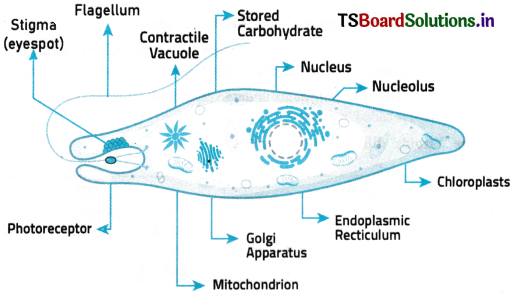
Which type of materials do you find more in your surroundings ? 2 M
Answer:

Transparent objectsTranslucent objectsOpaque objects
Glass, Air, Spectacle lensPolythene cover,Cardboard, Mirror,
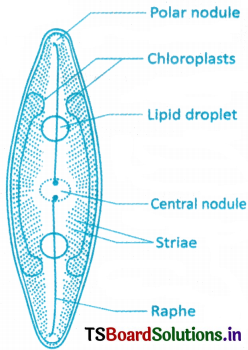
Oily paper,Piece of chalk,
Window glass,Ball, table,
WaterBook, Palm,
School bag, duster

I find opaque materials more in my surroundings.

Question 2.
Hold a glass slab at one end with your hand and stand in sunlight. See the shadows of your hand and glass slab. Explain what you observed. (Experimentation) 2 M
Answer:

  1. We can see the shadow of our hand on the ground.
  2. We can not see the shadow of glass slab.
  3. Glass slab is transparent and so sunlight passes through it without forming its shadow.

TS 6th Class Science 15th Lesson Questions and Answers Telangana - Light, Shadows and Images

Question 3.
We cannot identify the presence of completely transparent objects even in the light. Is it correct or not? Support your answer. (Conceptual Understanding) 2 M
Answer:
Yes, we cannot identify the presence of completely transparent objects even in the light.
Eg:

  1. Air cannot be seen.
  2. Light transmitted through certain matter like air doesn’t reach our vision.
  3. I can support the given statement.

Question 4.
Why can’t we see objects which are behind us? (Conceptual Understanding) 2 M
Answer:

  1. Our body is opaque. Light cannot pass through it.
  2. So the light reflected by those objects does not reach our eyes.
  3. So we can’t see the objects lying behind us.

Question 5.
If we focus a coloured light on an opaque object, does the shadow of the object posses colour or not? Predict and do the experiment to verify your predictions (coloured light can be obtained by covering torch glass with transparent coloured paper) (Asking questions and making hypothesis) 2 M
Answer:

  1. The shadow is not coloured. It is dark only.
  2. Because, a ‘shadow’ means, ‘absence of light of any colour’.
  3. Shadow is colourless irrespective of colour of the object.
  4. It is predicted and proved correct after verifying the experiment.

Question 6.
Between an electric bulb and a tube light, which forms sharp shadows of objects? Do experiment to find and give the reason. (Conceptual Understanding) 4 M
Answer:

  1. Electric bulb forms sharp shadows of objects.
  2. A tube light cannot form sharp shadows of objects.
  3. The same thing is proved correctly after doing the experiments.
  4. Bulb light is a point source of light and it forms sharp shadow of the object.
  5. Tube light is an extended source of light and so it cannot form sharp shadows of objects.
    (Note : Bulb = filament bulb)

TS 6th Class Science 15th Lesson Questions and Answers Telangana - Light, Shadows and Images

Question 7.
What is required to get a shadow of an opaque body? (Conceptual understanding) 2 M
Answer:
Three things are required to get a shadow of an opaque body,

  • Source of light
  • Opaque object
  • Screen

Question 8.
How can you explain the straight line motion of the light?
(Conceptual Understanding) /Experimentation and field investigation)2 M
Answer:

  1. Light travels in a straight line. That is why, when opaque objects obstruct the light, their shadows form.
  2. We can predict the shapes of the shadows only when we consider that light travels as rays along a straight path.
  3. Formation of an ‘inverted image’ on the screen of the pinhole camera explains that light travels in a straight line.

Question 9.
Explain, what happens if the size of the hole in a pinhole camera is as big as the size of a green gram. Increase the size of the hole in pinhole camera and look at any object with that camera. What do you find? Write reasons for that. (Asking questions and making hypothesis) 2 M
Answer:

  1. If the size of the pinhole camera is as big as the size of a green gram, the sharpness in the image decreases.
  2. The image becomes thick and the details of the image are not visible.
  3. As the size of the hole increases more light enters and disturbs the formation of the image.

Draw the shadows in your note book for the objects given below assuming that the light source is exactly above on these objects.

Question 10.
Draw the shadows in your note book for the objects given below assuming that the light source is exactly above on these objects. (Communication through drawing and Model Making) 8 M
TS 6th Class Science 15th Lesson Questions and Answers Telangana - Light, Shadows and Images 1
Answer:
TS 6th Class Science 15th Lesson Questions and Answers Telangana - Light, Shadows and Images 2

TS 6th Class Science 15th Lesson Questions and Answers Telangana - Light, Shadows and Images

Question 11.
Where do you find reflection of light in your daily life? Write few examples. (Conceptual Understanding) 2 M
Answer:

  1. The image of our face in the plane mirror is due to reflection of light.
  2. The visibility of object in and around us.
  3. The moon is visible to us because it reflects the sunlight.

Question 12.
We would not be able to see any object around us if light does not get reflected. How do you appreciate this property of objects? (Appreciation and aesthetic sense and values) 2 M
Answer:

  1. Objects are visible only when light falls on it gets reflected and reaches our eye.
  2. In darkness the objects are not visible as no light reaches our eyes from the objects.

Question 13.
Can we use a plain mirror as a rear view mirror? If not, why? (Asking questions and making hypothesis) 2 M
Answer:

  1. We can’t use a plain mirror as a rear view mirror.
  2. It can’t give a full rear view. So a convex mirror is used.
  3. The convex mirror gives a small erect image.
  4. Convex mirror has a capacity of minimising the rear object and catch in it.

Question 14.
A mirror is kept on the wall of your room. Your friend is sitting on a chair in that room. You are not visible to him in the mirror. How do you adjust your place so that you are visible to your friend in the mirror? Explain. (Experimentation and field investigation) 4 M
Answer:

  1. Suppose my friend is sitting to the left side of the mirror fixed on the wall, at a distance.
  2. Then I move to the right side of the mirror, till I am visible to my friend.
  3. I sit in a position to fall incident ray from me on to the mirror.
    TS 6th Class Science 15th Lesson Questions and Answers Telangana - Light, Shadows and Images 3

Question 15.
Why do we get shadows of different shapes for same object? (C.U) 2M
Answer:

  1. We can get shadows of different shapes for the same object, by changing its position.
  2. Reason: It is because, light travels in a straight line path, in that path only shadows form.

TS 6th Class Science 15th Lesson Questions and Answers Telangana - Light, Shadows and Images

Question 16.
What are the differences between a shadow and an image? (C. U) 4 M
Answer:

ShadowImage
1) Shadows are not coloured.1) An image has colours that are same as that of the object.
2) A shadow shows only the outline of the object.2) An image shows the complete object as it is, just like a photograph.
3) Sometimes we may not be able to guess the object by observing its shadow.3) We can indirectly see the object, in the mirror.
4) Position of the shadow changes with the change in the position of the source of light.4) This is formed due to reflection of light.
5) A screen is required to catch the shadow.5) No such thing is required.

Question 17.
Malati noticed changes in lengths of her shadows during the daytime. She got some doubts about this. What could be those doubts? (Asking questions and making hypothesis) 4 M
Answer:
Possible doubts Malati may get.

  1. From morning to noon (12 o’clock), the length of my shadow decreased gradually. Why so?
  2. The position of my shadow also changed. Why so?
  3. At noon, my shadow is just below me. Why so?
  4. Again after the noon, the length of my shadow went on increasing with time. Why so?
  5. The position of my shadow also changed, Why so?
  6. Though I did not change my position, my shadow changed positions. Why so?

Question 18.
Observe the light source and mark the place where the screens should be kept to get the shadows of the objects given below. (Communication through drawing and model making) 8 M
TS 6th Class Science 15th Lesson Questions and Answers Telangana - Light, Shadows and Images 4
Answer:
TS 6th Class Science 15th Lesson Questions and Answers Telangana - Light, Shadows and Images 5
i) Screens should be placed at a distance from the objects.
ii) They should be placed just opposite to the light source.

TS 6th Class Science 15th Lesson Notes – Light, Shadows and Images

  • We cannot see the objects in the absence of light.
  • We can see an object only when light falls on it, bounces back and reaches our eye.
  • Any object which burns or glows acts as a source of light.
  • We need light to get the shadow of any object.
  • We need a source of light, an opaque object and a screen, to form shadows.
  • In many cases, we cannot guess the object by observing its shadow.
  • Colour of objects cannot be determined by looking at their shadows.
  • Shadow is always dark, whatever be the colour of the object.
  • Light travels in a straight line. So shadows are formed.
  • By changing its position, we can get shadows with different shapes for a single object.
  • In a pinhole camera, we get an inverted image of the object.
  • An image is different from a shadow.
  • Light : It is a form of energy, which is released from sources of light such as sun, moon, bulb, candle etc.
  • Sources of light : A substance which gives light is known as a source of light. Eg : sun, moon, bulb, etc.
  • Shadow : A dark shape produced by an object on the effect of light rays. Shadows are formed when opaque objects obstruct the path of light.
  • Transparent substances : The substance which we can see through is called transparent substance. They can not form shadows. Eg : air, glass etc. :
  • Opaque substances : The substances through which we can not see it are called opaque substances. These can form shadows. Eg: card hoard, wall, etc.
  • Pin hole camera : A camera through which we can observe a big object through a pinhole (very small hole). We get an inverted image in pin hole camera.
  • Image : An image is a picture of someone or some thing.
  • Reflection : When light falls on any object, it bounces back. This process is called reflection.

TS Board 6th Class Science Important Questions 15th Lesson Light, Shadows and Images

These TS 6th Class Science Important Questions 15th Lesson Light, Shadows and Images are crafted to align with the curriculum, ensuring students are well-prepared for assessments.

TS 6th Class Science Important Questions 15th Lesson Light, Shadows and Images

Question 1.
Why am I (are we) not able to see the objects clearly when it gets dark?
(or)
Why am I (are we) not able to see the objects when power went off?
Answer:
We see the objects only when the light falls on them and bounces back.
That is why we can’t see the object clearly when it gets dark.

TS Board 6th Class Science Important Questions 15th Lesson Light, Shadows and Images

Question 2.
How are we able to see the objects in the presence of light?
Answer:
When light falls on the object it gets reflected on our eyes. Therefore the reflection of light from the exposed object makes us to see it clearly.

Question 3.
Where does light come from?
Answer:
Light comes from objects that are called sources of light.
Eg: Sun, candle, stars, moon, fire, oil lamps, bulbs etc.

Question 4.
Is moon a source of light? Can you give some more examples for source of light?
Answer:
Moon is a source of light. Other sources of light are candle, the sun, oil lamps, fire, tube lights, bulbs etc…

TS Board 6th Class Science Important Questions 15th Lesson Light, Shadows and Images

Question 5.
Define source of light? Give example.
Answer:
A substance which gives light is known as a light source.
Eg : Sun, glowing bulb, candle etc.

Question 6.
How can we see an object?
Answer:
We can see an object only when light falls on it, bounces back and reaches our eye.

Question 7.
Which objects give us light?
Answer:
Sun, stars, a glowing bulb, lightened candle, kerosene lamp etc. give light.
They are known as ‘sources of light’.

Question 8.
When did you see your shadow ? Is it during day time or at night?
Answer:
I saw my shadow during the day time.

TS Board 6th Class Science Important Questions 15th Lesson Light, Shadows and Images

Question 9.
What do we need to form a shadow?
Answer:
We need light source to get the shadow of any object.

Question 10.
What is shadow puppetry ?
Answer:

  • Shadow puppetry is one of our traditional recreational activities.
  • In this, some puppets are used to form shadows on a screen and a story is narrated with the help of these shadows.

Question 11.
Why do we get an ‘inverted image’ in a pinhole camera?
Answer:
Reason of inversion of image:
Light from the candle travels straight in all directions from each point of the flame of the candle.
But only the light coming in some particular directions can enter into the camera through its pinhole.
Light which comes from the point at the top of the flame goes straight towards the bottom of the screen.
Light which comes from the point at the bottom of the flame goes straight towards the top of the screen.
TS-6th-Class-Science-Important-Questions-15th-Lesson-Light-Shadows-and-Images-8
In this way, the light coming in a particular direction from each point of the flame will be able to enter into the pinhole. Light going in other directions is filled out due to the pinhole.This leads to the formation of an inverted image.

TS Board 6th Class Science Important Questions 15th Lesson Light, Shadows and Images

Question 12.
What difference do you notice between the images formed through the pin-hole camera and through a magnifying glass?
Answer:
The image formed through the magnifying lens is clearer than that formed with a pinhole camera.

Question 13.
What is ‘reflection’?
Answer:
When light falls on any object, it rehounces back. This is called reflection.

Question 14.
Can you see the light reflected by an object?
Answer:
We can see the reflected light only when light falls on the objects like mirror.

Question 15.
How does mirror differ from a glass sheet?
Answer:
A mirror reflects light falling on it. A glass sheet transmits the light falling on it.

Question 16.
Predict what would happen if we make two pinholes in the camera.
Answer:
Two inverted images form. They overlap each other. They are not so clear.

TS Board 6th Class Science Important Questions 15th Lesson Light, Shadows and Images

Question 17.
What is the object that emits light of its own, called?
Answer:
Luminous object.

Question 18.
What do you call, a brilliantly polished reflecting surface?
Answer:
A mirror.

Question 19.
What is the dark patch of an object cast on the screen, called?
Answer:
Its shadow.

Question 20.
What is throwing back of light rays by a surface called?
Answer:
Reflection.

Question 21.
To which class these belong?
(a) a piece of red hot iron
(b) sun
(c) firefly
Answer:
Luminous objects.

TS Board 6th Class Science Important Questions 15th Lesson Light, Shadows and Images

Question 22.
What type image forms in a pinhole camera?
Answer:
An inverted image.

Question 23.
Why are the shapes of the shadows of the same object different when you change the position of the object?
Answer:
The shapes of the shadows are guessed only when we consider that light travel as rays along a straight path.

Question 24.
Read the following paragraph and frame at/east two questions.
We know that shadows are not coloured but an ¡mage has colours that are same as
that of the object. Also, a shadow shows only the outline of the object but an image
shows the complete object as it is, just like a photograph.
Answer:

  • What is the difference between a shadow and an image?
  • How can we make shadows?
  • How can we make an image?

TS Board 6th Class Science Important Questions 15th Lesson Light, Shadows and Images

Question 25.
Can you guess the object by observing its shadow ?
Answer:
It is not always possible to guess the object by observing its shadow.

Question 26.
Is it possible to guess the colour of the object by observing its shadow?
Answer:
No. Shadow is always colourless irrespective of the colour of the object.

Question 27.
Can you guess the shape of the shadow that would be formed by an object?
Answer:
Yes. We can get different shaped shadows for a single object by changing its position.

Question 28.
Write the required apparatus or material for making pinhole camera.
Answer:
Requirements:

  • A PVC pipe of about 8cm in diameter and 30cm in length.
  • Another PVC pipe of about 7cm in diameter and 20cm in length.
  • One black drawing sheet.
  • Oil – 1ml.
  • Two rubber bands
  • A pin and
  • A4 sheet.

Question 29.
You are provided with a book, a pen, a duster, a polythene cover and a glass plate. Answer the following questions.

(i) Which objects form shadows ? Why?
Answer:
(a) Book, pen and duster form clear shadows.
Reason: They are opaque objects.

(b) Polythene cover forms an unclear shadow.
Reason: It is a translucent substance.

(ii) Which objects do not form shadows?
Answer:
Glass
Reason : Glass (also air) is a transparent substance.

TS Board 6th Class Science Important Questions 15th Lesson Light, Shadows and Images

Question 30.
How can you make a pinhole camera?
Answer:
Making a pinhole camera.
Requirements:

  • A PVC pipe of about 8 cm in diameter and 30 cm in length.
  • Another PVC pipe of about 7 cm in diameter and 20 cm in length.
  • One black drawing sheet.
  • Oil -1 ml
  • Two rubber bands
  • A pin and
  • A 4 sheet

Method:

  • A piece of black paper is cut and put like a cap at one end of the big PVC pipe. It is fixed with a rubber band.
  • The white paper is put like a cap at one end of the thinner PVC pipe. It is also fixed with a rubber band.
  • A hole is made in the middle of black paper cap with the pin.
  • 2 to 3 drops of oil is put on the white paper cap so that it becomes translucent.
  • The thin pipe is slide into the big pipe. Now the pinhole camera is ready.

Question 31.
See the picture given below.
Answer the following questions:

(i) Is the object visible to her even after holding the plank infront of the girl face, there is light?
(ii) What happens when you hold a plank between the object and girl?
TS-6th-Class-Science-Important-Questions-15th-Lesson-Light-Shadows-and-Images-3
Answer:
(i) The object is not visible, though there is light.
(ii) The plank that is held between girl and object obstructs the reflection of light that bounces back from it.

Question 32.
Read the para and answer the questions.
The objects which form shadow are called opaque substances.
Eg: stone, book, stick etc.
The substances which allow light to pass through them are called transparent substances. Eg: glass
1. Give the examples of opaque substances.
2. If a student playing with polythene cover, does he see shadow through that ? Why?
3. What are transparent substances?
4. If light falls on book how does the shadow appear?
Answer:

  1. Stone, hook, stick etc.
  2. He doesn’t see the shadow. Because polythene cover is a transparent substance.
  3. The substances which allow light to pass through them are transparent substances.
  4. If light falls on one side of the book the shadow appears on other side.

TS Board 6th Class Science Important Questions 15th Lesson Light, Shadows and Images

Question 33.
Draw the diagram of pinhole camera.
Answer:
TS-6th-Class-Science-Important-Questions-15th-Lesson-Light-Shadows-and-Images-8

Question 34.
Observe the figures given below.
Write whether the sheet held by the boy is transparent, translucent or opaque below each of the pictures.
TS-6th-Class-Science-Important-Questions-15th-Lesson-Light-Shadows-and-Images-5
Answer:

  • Sheet 1 is opaque
  • Sheet 2 is transparent
  • Sheet 3 is translucent

Question 35.
Based on the above given pictures A, B, C guess the types of objects regarding shadow formation. Classify and name them according to light passing through them.
TS-6th-Class-Science-Important-Questions-15th-Lesson-Light-Shadows-and-Images-7
Answer:
The given pictures show the types of objects which allow the light to form shades. As per the observations the pictures of objects are classified these substances.
(A) Opaque substances: The form shades when light falls on them.
(B) Transparent substances: They allow light to pass through them.
(C) Translucent substances: They form unclear shadows.

TS Board 6th Class Science Important Questions 15th Lesson Light, Shadows and Images

Question 36.
How do you feel when you see object that form different shapes of shades?
Answer:
We must have wondered when we compared our guesses and the actual objects of which shadows are formed.
Eg : We may notice that the shadows that look like bird and animals are actually formed by hands.

TS 8th Class Telugu 10th Lesson Questions and Answers Telangana సింగరేణి

Telangana SCERT TS 8th Class Telugu Guide Pdf Download 10th Lesson సింగరేణి Textbook Questions and Answers.

TS 8th Class Telugu 10th Lesson Questions and Answers Telangana సింగరేణి

బొమ్మను చూడండి ఆలోచించి చెప్పండి
TS-8th-Class-Telugu-Guide-10th-Lesson-సింగరేణి-1

ప్రశ్న 1.
చిత్రంలో కనపడుతున్నవాళ్ళు ఏం పనులు చేస్తున్నారు ?
జవాబు.
చిత్రంలో కనపడుతున్నవాళ్ళు బొగ్గు గనుల నుండి బొగ్గును బయటకు తెస్తున్నారు.

ప్రశ్న 2.
చిత్రంలో ఏయే వస్తువులు కనపడుతున్నాయి ?
జవాబు.
చిత్రంలో బ్యాటరీలైట్లు, బొగ్గుతో నిండిన గంపలు, తలలకు హెల్మెట్లు కన్పిస్తున్నాయి.

TS 8th Class Telugu 10th Lesson Questions and Answers Telangana సింగరేణి

ప్రశ్న 3.
చిత్రం దేనికి సంబంధించిందని మీరు అనుకొంటున్నారు ?
జవాబు.
ఈ చిత్రం బొగ్గు గనులకు సంబంధించిందని అనుకుంటున్నాను.

ప్రశ్న 4.
తెలంగాణలో బొగ్గు గనులు ఏ ఏ జిల్లాలలో ఉన్నాయి ?
జవాబు.
తెలంగాణలో కరీంనగర్, వరంగల్లు, ఖమ్మం జిల్లాలలో బొగ్గు గనులున్నాయి.

ప్రశ్న 5.
నేలబొగ్గు వల్ల ఉపయోగాలేవి ?
జవాబు.
నేలబొగ్గు పరిశ్రమలకు ఇంధనంగా, విద్యుత్ ఉత్పత్తికి, రోడ్లు వేయటానికి తారుగా, ప్లాస్టిక్ను తయారు చేయటానికి, తలకు రాసే సువాసన నూనెలను తయారు చేయటానికి, బట్టలకు వేసే అద్దకాల రంగులను తయారుచేయటానికి ఉపయోగపడుతుంది.

ఆలోచించండి – చెప్పండి

1. “శ్రమజీవే జగతికి మూలం … చెమటోడ్చక జరుగదు కాలం’ అన్న వాక్యాన్ని ఏవిధంగా అర్థం చేసుకున్నారు?
జవాబు.
మానవ జీవితం సుఖమయం కావాలంటే అందరి అవసరాలు తీరాలి. అందరి అవసరాలు తీరాలంటే జాతీయోత్పత్తులు పెరగాలి. జాతీయోత్పత్తులు పెరగాలంటే అందరూ కష్టపడి పని చేయాలి. అందుకే శ్రమజీవే జగతికి మూలం అని అర్థం చేసుకున్నాం.

2. ఈ నేల బొగ్గును ‘నల్ల బంగారం’ అని ఎందుకంటారు ?
జవాబు.
బంగారం ఎన్ని రకాలుగా ఉపయోగపడుతూ మన విలువను పెంచుతుందో అన్నివిధాలుగా బొగ్గుకూడా ఉపయోగపడుతున్నది. కావున బొగ్గును బంగారంతో పోల్చి ‘నల్ల బంగారం’ అని అంటున్నాం.

TS 8th Class Telugu 10th Lesson Questions and Answers Telangana సింగరేణి

3. ‘సహజ సంపదను వినియోగించుకొనే విజ్ఞానం పైననే మానవ నాగరికత నిర్మించబడుతున్నది’ చర్చించండి.
జవాబు.
ఒకదేశం తనకున్న సహజవనరులను ఎంత విరివిగా ఉపయోగించుకుంటే అంత అభివృద్ధిని సాధిస్తుంది. ఉదాహరణకు ప్రకృతి ప్రసాదించిన సహజ సంపద బొగ్గు. దానిని పలు పరిశ్రమలు పలురకాలుగా వాడుకుంటున్నాయి. అలాగే అటవీ సంపద, జల సంపద వీటిని పూర్తి వినియోగంలోనికి తేవటం ద్వారా సామాజిక ఎదుగుదలకు అవకాశాలుంటాయి.

4. ఈ ‘దేశంలో మరే ఇతర బొగ్గు సంస్థకు లేని ప్రత్యేకత సింగరేణి గనులకు ఉన్నది’ ఎందుకో చర్చించండి.
జవాబు.
సింగరేణి గనుల్లో అపారంగా, తరిగిపోనన్ని బొగ్గు నిల్వలు ఉన్నాయి. ఈ గనుల్లోని బొగ్గు నాణ్యమైంది. ఇవి తెలంగాణా గ్రామీణ ప్రజలకు ఉపాధి కల్పిస్తూ, సామాజిక, ఆర్థిక స్థితులను మెరుగుపరిచాయి.

5.”బొగ్గు ఉత్పత్తిలో కార్మికుడే అత్యంత కీలకమైన పనిముట్టు” అని ఎందుకన్నారు?
జవాబు.
సింగరేణి బొగ్గు ఉత్పత్తిలో ముఖ్యమైన పాత్ర పోషించేది కార్మికులే! వారందరూ తెలంగాణ గ్రామీణ ప్రాంత వాసులు. గనులలోకి వెళ్ళి బొగ్గును త్రవ్వి పోగుచేసి తట్టల్లో ఎత్తి వెలుపలికి పంపిస్తారు. ఆ నైపుణ్యం గని కార్మికులకే ఉంటుంది. అందుకే బొగ్గు ఉత్పత్తిలో కార్మికుడే అత్యంత కీలకమైన పనిముట్టు అని అన్నారు.

6. ‘గడియారం ముండ్లవలె పనిచేస్తున్న కార్మికులు’ అన్న వాక్యాన్ని మీరెట్లా అర్థం చేసుకున్నారు?
జవాబు.
శ్రమకు ప్రతినిధిగా గడియారం ముల్లును సూచిస్తాం. అట్లాగే బొగ్గుగనిలో పనిచేసే కార్మికులు కోడికూత కంటే ముందే లేచి గనులలోకి వెళ్ళేవారు వెళ్తుంటారు, వచ్చేవారు వస్తుంటారు. ఇలా గడియారం ముల్లులు తిరిగినట్లు కార్మికులు కూడా విరామం లేకుండా మూడు షిఫ్టుల్లో పనిచేస్తూనే ఉంటారని అర్థమయింది.

TS 8th Class Telugu 10th Lesson Questions and Answers Telangana సింగరేణి

7. ప్రమాదాల అంచున నిలబడి పని చేయటం అంటే ఏమిటి?
జవాబు.
ప్రమాదాల అంచున నిలబడి పనిచేయట మంటే గనిలోకి వెళ్ళిన కార్మికులకు ఎపుడు ఏవిధంగా ప్రమాదం ఏర్పడుతుందో తెలియదు. గనులు విరిగిపడి, గనులలోకి నీరువచ్చి, గాలి వెలుతురులు లేక ఊపిరితిత్తుల సమస్యలు తరచు వారి ఆరోగ్యాన్ని పాడుచేస్తుంటాయి. అందుకే వారు ప్రమాదాల అంచున పనిచేసే కార్మికులని అర్థమౌతుంది. ఏ ప్రమాదం ఎక్కడ పొంచి వున్నదో చెప్పలేని పరిస్థితి..

ఇవి చేయండి

I. విని, అర్థం చేసుకొని, ఆలోచించి మాట్లాడడం

1. సింగరేణి కార్మికులు కాయకష్టం చేసి బొగ్గు తీస్తున్నారు కదా! కార్మికుల జీవితాల గురించి మీకేం అర్థమయిందో చెప్పండి.
జవాబు.
తెలంగాణ ప్రాంతంలోని సింగరేణి బొగ్గు గనులు దేశంలోనే ప్రసిద్ధి వహించినవి. దానికి కారకులు సింగరేణి గనులలో పనిచేసే గని కార్మికులే! ఆ కార్మికులందరూ తెలంగాణ గ్రామీణ ప్రాంతంలోని పేద ప్రజలే! వారి సామాజిక ఆర్థిక స్థితిగతులు సింగరేణికి ఊపిరులయ్యాయి. బ్రతుకు భారాన్ని మోయటానికి కష్టం చేయక తప్పిందికాదు. ప్రారంభంలో వారి శ్రమకు తగిన ఫలితం కూడా వచ్చేది కాదు.

తరువాత కార్మిక సంఘాల చైతన్యంతో తగిన కూలీ రెట్లతో వారి జీవితాలు కొంతలో కొంత మెరుగు పడ్డాయి. బొగ్గు గనుల్లో పనిచేయట మంటే ప్రాణాలకు ముప్పు తెచ్చుకోవటమే! ఏ బతుకుదెరువు లేకపోతే ఈ పనిలో చేరేవారు. కార్మికులు రాత్రి పగలు అను భేదం లేకుండా కష్టపడి పనిచేస్తుంటారు. గడియారంలో ముల్లు విరామం లేకుండా ఎట్లా తిరుగుతుందో సింగరేణి కార్మికులు కూడా నిరంతరం కృషికి ప్రతినిధులని అర్థమౌతుంది.

II. ధారాళంగా చదువడం అర్థం చేసుకొని ప్రతిస్పందించడం చదువడం-అర్థం

1. కింది గేయాన్ని చదువండి. ప్రశ్నలకు జవాబులు రాయండి.

ఇష్టదేవతకు దండం పెట్టి
గనిలోనికి నువు అడుగుబెట్టి
బళ్ళున బొగ్గు కూలుత ఉంటే
ప్రాణాలకు వెనుకాడక నువ్వు
రక్తమాంసాలు చెమటగ మార్చి
టబ్బుల్లోన బొగ్గు నింపుతవ్
జాతికి వెలుగులు అందిస్తుంటవు
“నల్లసూర్యుని”వై వెలుగొందుతవు.

ప్రశ్నలు :

అ. గేయం ఎవరిని గురించి తెలుపుతుంది?
జవాబు.
ఈ గేయం బొగ్గు కార్మికుని గురించి తెలుపుతుంది.

ఆ. ఇష్టదేవతకు ఎందుకు దండం పెడతారు ?
జవాబు.
ఇష్టదేవతకు తమకు కష్టం రానీయవద్దని దండం పెడతారు.

ఇ. కార్మికుడిని ‘నల్లసూర్యుడు’ అని ఎందుకన్నారు?
జవాబు.
సూర్యుడు లోకాలకు వెలుగులను పంచినట్లు, నల్లసూర్యునిగా పిలువబడుతున్న గని కార్మికుడు ప్రపంచానికి కరెంటు కాంతిని అందిస్తున్నాడు. అందుకే బొగ్గుగని కార్మికుడిని నల్లసూర్యుడని అన్నారు.

TS 8th Class Telugu 10th Lesson Questions and Answers Telangana సింగరేణి

ఈ. జాతికి వెలుగు అందించడమంటే ఏమిటి?
జవాబు.
జాతికి వెలుగు అందించట మంటే జాతి పురోభివృద్ధికి పాటుపడటమని అర్థం.

ఉ. తెలంగాణలో బొగ్గుగనులు ఎక్కడున్నాయి?
జవాబు.
తెలంగాణలోని ఖమ్మం జిల్లా ఇల్లందులోను, అదిలాబాద్ జిల్లా తాండూరులోను, కరీంనగర్ జిల్లా గోదావరిఖనిలోను, తెలంగాణలోని గోదావరి నదీ పరీవాహక ప్రాంతంలో బొగ్గుగనులు విస్తరించి ఉన్నాయి.

2. కింది పేరా చదువండి. అయిదు ప్రశ్నలను తయారు చేయండి.

తెలంగాణ బట్టల అద్దకం విషయంలో అనాదిగా ప్రాముఖ్యత వహించిన ప్రదేశం. ఒకప్పుడు ఆ పరిశ్రమ ఉన్నతదశలో ఉండేది. కాని దేశంలో వచ్చిన ఆర్థిక చిక్కులు ఈ పరిశ్రమను కష్టనష్టాలకు గురిచేశాయి. విదేశాలలో యంత్రాలపై తయారైన బట్టలకు అలవాటుపడిన ఈ నాటి వారికి మన చేతి పనుల వలన తయారయ్యే సుందర వస్త్రాల గురించి నేటికైనా కనువిప్పు కలిగింది.

అ. ఈ పేరా మనకు దేనిని గురించి వివరిస్తుంది?
ఆ. ఒకప్పుడు తెలంగాణ దేనికి ప్రాముఖ్యత వహించిన ప్రదేశం?
ఇ. ఒకప్పుడు ఏ కుటీర పరిశ్రమ తెలంగాణలో ఉన్నతస్థితిలో ఉండేది?
ఈ. బట్టల అద్దకం పరిశ్రమ ఎందుకు కష్టనష్టాలకు గురి అయింది?
ఉ. విదేశాలలోని యంత్రాలపై ఎట్లాంటి వస్తువులు తయారయ్యేవి?
ఊ. చేతి పనులపై తయారయ్యే వస్తువులు ఎలా ఉంటాయి?
ఎ. నేటికి ప్రజలలో ఏ విషయంలో కనువిప్పు కలిగింది?

III. స్వీయరచన:

1. కింది ప్రశ్నలకు ఐదేసి వాక్యాల్లో జవాబులు రాయండి.

అ. సహజ సంపదలను వినియోగించుకునే విజ్ఞానం పైన మానవ నాగరికత నిర్మించబడుతుందని ఎట్లా చెప్పగలవు?
జవాబు.
ఒక దేశం తనకున్న సహజ వనరులను చక్కగా వినియోగించుకుంటేనే మంచి అభివృద్ధిని సాధించగలుగుతుంది. ప్రపంచదేశాలన్నీ పారిశ్రామికంగా ముందంజలో ఉన్నాయి. భారతదేశం కూడా వాటితో పోటీ పడాలంటే పారిశ్రామిక అభివృద్ధిని సాధించాలంటే సహజ సంపదలను వినియోగించుకోక తప్పదు. అప్పుడే నిజమైన మానవ నాగరికత నిర్మించబడుతుంది. ఉదాహరణకు జలవనరులను, ఖనిజ సంపదను ఉపయోగించుకోవటం ద్వారా మనం దేశాభివృద్ధిని చేసుకోగలిగాం. అట్లాగే పలు పరిశ్రమలకు, విద్యుదుత్పత్తికి, రంగుల తయారీకి, రోడ్లకు మూలమైన నేలబొగ్గును ఒక సహజవనరుగా ఉపయోగించటం వలన అభివృద్ధికి రాచబాటలు వేసుకోగలమని చెప్పగలను.

ఆ. “బుక్కెడు బువ్వకోసం బతుకు పోరాటానికి సిద్ధమైనారు” దీనిని మీరెట్లా అర్థం చేసుకున్నారో తెల్పండి.
జవాబు.
తెలంగాణా పోరాటగడ్డ. వారు జీవితంలో తిండికి గుడ్డకు, స్వాతంత్ర్యానికి పోరాటం అనాదిగా సాగిస్తూనే ఉన్నారు. శ్రమలేకుండా సుఖం లేదన్నది వారి సిద్ధాంతం. శ్రమజీవే జగతికి మూలం. చెమటోడ్చక జరుగదు కాలం. అందుకే శ్రమజీవన సౌందర్యానికి సమానమైనది లేనే లేదని శ్రీశ్రీ అని ఉంటారు. తెలంగాణ గ్రామీణులు మిక్కిలి పేదవారు. నీటికి కటకట పడుతున్న ప్రాంతమది. నీటి సదుపాయం లేకపోవటం వలన వర్షం మీద ఆధారపడి పంటలు పండిస్తారు. వర్షం పడకపోతే క్షామం తప్పనిసరి. అందుకే ‘బుక్కెడు బువ్వకోసం బతుకు పోరాటానికి సిద్దమై ప్రమాదం పొంచి ఉన్నా బొగ్గు గనులలో పనిచేయుటకు సిద్ధమయ్యారు. బొగ్గుగనులు వారికి జీవన భృతినిస్తున్నాయి.

TS 8th Class Telugu 10th Lesson Questions and Answers Telangana సింగరేణి

ఇ. పగలు, రేయి తేడా లేకుండా గడియారం ముండ్లవలె పని చేయటం అంటే ఏమిటి ? కార్మికుల పనితో అన్వయించి రాయండి.
జవాబు.
సింగరేణి కార్మికులు పగలు రేయి తేడా లేకుండా గడియారం ముండ్లవలే పనిచేస్తుంటారు. కోడి కూతకు ముందే లేచి తయారై గనిలోకి పోయేవారు కొందరైతే, పగలు మూడు గంటలకు గనులలోకి పోయేవారు మరికొందరు. అర్ధరాత్రి పనికి పోయేవారు ఇంకొందరు. ఇట్లా ప్రొద్దున నుండి అర్ధరాత్రి వరకు మూడు షిఫ్టుల్లో గనుల్లో పని చేస్తూనే ఉంటారు. ఇలా గడియారం ముళ్ళు విసుగు విరామం లేకుండా ఎట్లా పనిచేస్తాయో అట్లానే సింగరేణి కార్మికులు కూడా పనిచేస్తున్నారని తెలుస్తుంది.

ఈ. డాక్టర్ కింగ్ పరిశోధనల వల్ల కల్గిన మేలు ఏమిటి?
జవాబు.
సింగరేణి గనుల విశిష్టతలను లోకానికి తెలియజేసిన వాడు డాక్టర్ కింగ్. ఆయన పరిశోధనల వలన దేశంలోని ఏ ఇతర బొగ్గు గనులకు లేని విశిష్టత వీటికి వచ్చింది. 1841లో ఖమ్మం జిల్లా ఇల్లందు గ్రామానికి చెందిన కొందరు గ్రామస్థులు భూమిని త్రవ్వుతుండగా బొగ్గు విషయం లోకానికి తెలిసింది. ఈ సంఘటన ఆధారంతో 1871లో డాక్టర్ కింగ్ ఇల్లందు గ్రామ పరిసరాలలో శ్రేష్టమైన బొగ్గు ఉన్నదని తన పరిశోధనలో గుర్తించాడు. ఈ బొగ్గు భూమి లోపల ఆరు పొరల్లో నిక్షిప్తమై ఉన్నదని కనుగొన్నాడు. గనిలోని క్రింది బొగ్గుపొరకు ‘కింగ్ సీమ్’ అని, పై బొగ్గు పొరకు ‘క్వీన్ సీమ్’ అని పేరు పెట్టారు. కింగ్ పరిశోధనల వలన వేలాది కార్మికులకు ఉపాధి, ప్రకృతి వనరులను ఉపయోగించుకోగలిగిన అవకాశం మనకు లభించింది.

ఉ. బొగ్గు గనులలో కార్మికులను ఎలా ఎంపిక చేసేవారు?
జవాబు.
తెలంగాణ గ్రామీణ ప్రజలు బతుకు పోరాటానికి అలవాటు పడినవారు. బుక్కెడు బువ్వకోసం తెలంగాణ పల్లెల నుండి గనులలో కూలీలుగా తరలి వచ్చేవారు. చదువురాకపోయినా, బరువులు మోయటం, గుంజీలు తీయటం, పరుగు పోటీలు వంటి వాటిద్వారా అర్హులను ఎంపిక చేసి వారిని బొగ్గు గని కార్మికులుగా తీసుకొనేవారు. వారు మూడు షిఫ్టులలో పనిచేయాల్సి వచ్చేది. గనుల్లో పనిచేయటం ప్రాణాలకు ముప్పు అని తెలిసినా గత్యంతరం లేక వారు పెట్టే పరీక్షలలో నెగ్గి గని కార్మికులుగా చేరిపోయేవారు. తరువాత తరువాత గనుల యజమానులు కార్మికుల రక్షణకు శ్రద్ధ చూపించటంతో ఎక్కువ మంది గనులలో పనిచేయటానికి ముందుకు వచ్చారు. యూనియన్ల ద్వారా ప్రస్తుతం మంచి జీవన భృతిని అందుకుంటున్నారు.

ఊ. సింగరేణి గని కార్మికుడు వ్రాసిన పాటకు అర్థాన్ని తెలుపండి.
జవాబు.
ఆలోచనలను ప్రక్కనపెట్టి హాయిగా కష్టపడు. అరవై ఐదు అంగుళాల సమతలంలో నలభై అంగుళాల లోతు వరకు రంధ్రం చేసి ఆ రంధ్రంలో మందుకూరి మందుపాతరను పేల్చమని షార్టు ఫైరన్నకు వివరిస్తున్నాడు. పైకప్పు కూలకుండా బోల్టులు వేసి ప్రమాదాలను జరుగకుండా చూడమంటున్నాడు. బొగ్గు జారిపోకుండా దిమ్మలను సరిచేయమంటున్నాడు. టబ్బు తరువాత టబ్బును పెట్టి మెల్ల మెల్లగా టబ్బును నింపమని ఫిల్లరన్నకు చెప్తున్నాడు.

చక్కగా ఆ బొగ్గుతో నిండిన టబ్బులను రోప్తో పైకి నడిపించమని హాలరన్నను కోరుతున్నాడు. బాధ లెన్నో పడి చక్కని కష్టం చేసి బొగ్గును పైకి చేర్చాము. దానికి తగిన ఫలితాన్ని బ్యాంకు ద్వారా మాకు అందించమని సింగరేణి గని కార్మికుడు పాట ద్వారా తన కష్టాన్ని మరచి పోతున్నాడు అని దీని అర్థం.

ఎ. బొగ్గు గనులు ఎలా ఏర్పడి ఉంటాయి ? అవి సహజ వనరులు ఎలా అయ్యాయి?
జవాబు.
బొగ్గు గనులు గోదావరి నది పరీవాహక ప్రాంతమంతా వ్యాపించి ఉన్నాయి. పూర్వం ఈ ప్రాంతమంతా దట్టమైన అడవులతో నిండి ఉండేది. రెండు వందల మిలియన్ సంవత్సరాలకు పూర్వం ఆ అడవులు తగలబడి భూమి మీదున్న ఆ వృక్షముల అవశేషాలు క్రమ క్రమంగా భూమిలోకి కూరుకుపోయాయి.

అట్లా కూరుకుపోయిన వాటి మీద మట్టి, రాళ్ళు పడి లోపలికి చేరి పొరలు పొరలుగా బొగ్గు ఏర్పడిందని శాస్త్రజ్ఞుల భావన. అట్లా ఏర్పడిన బొగ్గు మనకు ఇపుడు పలు అవసరాలకు ఉపయోగపడుతోంది. ప్రకృతి ప్రసాదించిన సహజవనరుల్లో ఇది కూడా ఒకటి అయింది. సహజంగా ఎవరి ప్రమేయం లేకుండా నేరుగా భూమి నుండి తీసుకొని వాడుకుంటున్నాం కాబట్టి ఇది ఒక సహజ వనరు అయింది.

2. కింది ప్రశ్నలకు పది వాక్యాల్లో జవాబులు రాయండి.

అ. సింగరేణి కార్మికులతో ప్రత్యక్ష సంబంధం మనకు లేకపోవచ్చు. కానీ పరోక్ష సంబంధం ఉన్నది. ఎట్లాగో వివరించండి.
జవాబు.
సింగరేణి కార్మికులతో ప్రత్యక్ష సంబంధం మనకు లేకపోయినా ఆ కార్మికులు ఉత్పత్తి చేసిన బొగ్గు మన అవసరాల నెన్నింటినో తీరుస్తున్నది కావున మనకు వారితో పరోక్ష సంబంధం ఉన్నట్లే. వారు తయారుగా ఉంచిన బొగ్గు యంత్రాలు నడపటానికి ఉపకరిస్తుంది. దానివలన ఎందరికో ఉపాధి కలుగుతున్నది. బొగ్గుతో విద్యుచ్ఛక్తి తయారవుతుంది. అది లేనిదే ఈ మన దైనందిన జీవితం చాలా కష్టతరమౌతుంది.

బొగ్గుతో ఎన్నో పరిశ్రమలు నడుస్తున్నాయి. ఆ పరిశ్రమలలో పనిచేసేవారికి ఉపాధికారి అవుతుంది. మనం నడవటానికి సరైన రహదారులు కావాలి. రహదారుల నిర్మాణంలో బొగ్గు నుండి ఉత్పత్తి చేసే తారు ప్రధానపాత్ర వహిస్తుంది. పంట పొలాలకు వేస్తున్న రసాయనిక ఎరువులు బొగ్గుతో తయారవుతున్నాయి. బట్టలకు అద్దకం పనిచేయటానికి రంగులను బొగ్గుతోనే తయారు చేస్తున్నారు. మనదేశంలో విరివిగా అందుబాటులో ఉన్న సహజవనరు బొగ్గు, ఆ బొగ్గును అందించే కార్మికుడితో మన సమాజంలో బతుకుతున్న వారందరికి పరోక్ష సంబంధం ఉన్నది.

చివరకు బట్టలను ఇస్త్రీ చేయటానికి కూడా ఈ బొగ్గు ఉపయోగింప బడుతున్నది కదా! కాబట్టి సింగరేణి కార్మికులు అక్కడ బొగ్గు గనులలో పనిచేస్తున్నా వారితో మనకు పరోక్ష సంబంధం తప్పనిసరి అవుతుంది. ఎంతో మందికి జీవనోపాధిని కల్పించి, ఎన్నెన్నో అవసరాలు తీర్చే సింగరేణి తెలంగాణ ప్రాంతానికి తలమానికం అని చెప్పవచ్చు.

TS 8th Class Telugu 10th Lesson Questions and Answers Telangana సింగరేణి

ఆ. ఆ సింగరేణి గనుల పూర్వాపరాలను తెలియజేయండి. (లేదా) సింగరేణి తెలంగాణాకు తలమానికం వంటిదని ఎలా చెప్పగలవు ?
జవాబు.
ఏ దేశం తన సహజ సంపదను సమర్థవంతంగా వినియోగించుకుంటుందో ఆ దేశం అభివృద్ధి పథంలో పయనిస్తుంది. మన నేలల్లో అపారమైన ఖనిజ సంపద ఉంది. ముఖ్యంగా తెలంగాణ ప్రాంతంలోని సింగరేణి బొగ్గు గనులు చెప్పుకోదగినవి.
గోదావరి నదీ పరీవాహక ప్రాంతమంతా ఒకప్పుడు దట్టమైన అడవులతో నిండి ఉండేది. రెండు మిలియన్ సంవత్సరాలకు పూర్వం ఆ అడవులు తగలబడి ఆ చెట్ల అవశేషాలు భూమిలోపలకు చేరి పొరలు పొరలుగా ఏర్పడ్డాయి. అవే బొగ్గుగనులు. దానినే నేలబొగ్గు అని, నల్ల బంగారం అని పిలుస్తున్నాం.

మొట్టమొదటిగా ఖమ్మం జిల్లా ఇల్లందు గ్రామస్తుల త్రవ్వకాలలో ఈ బొగ్గు గనుల చరిత్ర బయటపడింది. భారత ప్రభుత్వానికి చెందిన భూగర్భ పరిశోధన శాఖ పరిశోధనలు చేసి ఇది అంత మంచిది కాదని తేల్చింది. ఆ తరువాత 1871లో డాక్టర్ కింగ్ అనే శాస్త్రజ్ఞుడు ఇల్లందు గ్రామ పరిసరాలలో శ్రేష్టమైన బొగ్గును గుర్తించాడు. ఇది భూమి అడుగు పొరలలో ఉందని అన్నాడు. 1886లో హైదరాబాద్ దక్కన్ కంపెనీవారు తొలి భూగర్భ గనిని ఇల్లందులో ప్రారంభించారు.

దీనిలోని క్రింది బొగ్గుపొరకు ‘కింగ్సీమ్’ అని పైపొరకు ‘క్వీన్ సీమ్’ అని పేరుపెట్టారు. బొగ్గును రవాణా చేయటానికి డోర్నకల్ నుండి ఖాజీపేట వరకు రైల్వేలైను వేసి దానికి ‘సింగరేణి కాలరీస్’ అను పేరు పెట్టారు. హైదరాబాద్ దక్కన్ కంపెనీ, సింగరేణి కాలరీస్ కంపెనీగా మారిపోయింది. ఎంతోమందికి జీవనోపాధిని కల్పించి, ఎన్నెన్నో అవసరాలు తీర్చే సింగరేణి తెలంగాణ ప్రాంతానికి తలమానికం అని చెప్పవచ్చు.

ఇ. బొగ్గు గనులలో పనిచేసే విభాగాలు, వాటి పేర్లు, కార్మికుల హోదాలను రాయండి.
జవాబు.
బొగ్గుగనులలో పనిచేసేవారు గడియారం ముళ్ళవలే శ్రమజీవులు. మూడు షిఫ్ట్లలో పనిచేస్తారు. గనిలోకి పోయేముందు హాజరు వేయించుకుంటారు. ‘ఓర్మెన్’ పనిని విభజించి ఎవరెవరు ఏం చేయాలో చెప్తాడు. పొట్టినిక్కరు, కాళ్ళకు బూట్లు, తలపై లైటుతో ఉన్న టోపి, నడుముకు బాటరీ కట్టుకొని కార్మికులు గనిలోకి ప్రవేశిస్తారు. సర్దార్ పని ప్రదేశాన్ని పరిశీలించి టింబర్మెన్ చేయవలసిన పనిని నిర్దేశిస్తాడు. ‘కోల్ కట్టర్’ ఉళ్ళు కోసి మందుపాతరలను పెడతాడు. ‘షార్ట్ ఫైర్మెన్’ వాటిని పేలుస్తాడు. తర్వాత ‘సర్దార్’ ఆ ప్రాంతాన్ని పరిశీలిస్తాడు.

ఇతడు పైకప్పు కూలకుండా ప్రమాదాలను పసికడుతుంటాడు. ‘కోల్ ఫిల్లర్’లు చెమ్మత్తో బొగ్గును తట్టల్లోకి ఎత్తి టబ్బులు నింపుతారు. ‘హాలర్’ టబ్బులన్నీ నిండిన తరువాత రోప్ సాయంతో పైకి చేరుస్తాడు. ఇట్లా సేఫ్టీ అధికారి, అండర్మెన్, సర్వేయర్, చైర్మెన్, ఓర్మెన్, సర్దార్ (మొకద్దం) షార్ట్ఫర్, కోల్కట్టర్, టింబర్మెన్, లైన్మెన్, ట్రామర్, హాలర్, కోల్ ఫిల్లర్, జనరల్ మద్దూర్లు, బొగ్గును వెలికి తీసే పనిలో భాగస్వాములు అవుతారు. వీరందరూ కలసికట్టుగా పనిచేస్తేనే బొగ్గు త్రవ్వి తీయటం సాధ్యమౌతుంది. అపుడే దేశ పురోభివృద్ధి సాధ్యమౌతుంది.

TS 8th Class Telugu 10th Lesson Questions and Answers Telangana సింగరేణి

ఈ. “సింగరేణిని వెలుగులు విరజిమ్మే సింగరేణి” అని ఎందుకు అన్నారు ?
జవాబు.
సింగరేణిని “సిరి వెలుగులు విరజిమ్మే సింగరేణి బంగారం” అని అంటారు. ఎందుకంటే మొత్తం దక్షిణ భారతదేశంలో బొగ్గు ఉత్పత్తి చేసే ఏకైక కంపెనీ; వేల మందికి ముఖ్యంగా గ్రామీణ పేద ప్రజలకి జీవనోపాధిని, పనిని కల్పించిన కంపెనీ అయిన సింగరేణికి తెలంగాణలో ఎంతో విశిష్టత ఉంది. సామాజిక జీవితంలో ప్రత్యేక స్థానాన్ని సంపాదించుకున్న పరిశ్రమల్లో సింగరేణి ఒకటి. దేశ ప్రగతికి తోడ్పడే సింగరేణి గనులు, బొగ్గు, థర్మల్ స్టేషన్ గొప్పతనం చెప్పారు.

బొగ్గును అందించి పరిశ్రమలు పనిచేసేలా భగభగమండి వెలుగులు విరజిమ్ముతుంది. ఆ గనుల్లో, కర్మాగారాలలో పనిచేసే కార్మికుల జీవితాలలో వెలుగును నింపుతుంది. అక్కడ పనిచేసే వారి జీవితాలకు సిరిసంపదలనిస్తుంది. ఎంతో సహజ ఖనిజ సంపద అణువణువున కల్గి ఉంది. అక్కడి బొగ్గుతో విద్యుచ్ఛక్తి తయారుచేసి వివిధ ప్రాంతాలకు సరఫరా చేస్తారు. ఆ విద్యుత్ వెలుగులను సింగరేణి ఇస్తుంది. కనుక సింగరేణిని “వెలుగులు విరజిమ్మే సింగరేణి బంగారం” అని, “అణువణువున ఖనిజాలే నీ తనువుకు సింగారం” అని అంటారు.

IV. సృజనాత్మకత/ప్రశంస:

1. సింగరేణి కార్మికులు గనిలో తీసుకోవలసిన జాగ్రత్తలను తెలుపుతూ ఒక పోస్టరు తయారుచేయండి.

గనిలో పాటించవలసిన జాగ్రత్తలు.

  1. గనులలోకి పోయే కార్మికులు ‘మస్టర్’ (హాజరు) తప్పనిసరిగా వేయించుకోవాలి.
  2. తన పనేదో దానికే పరిమితం కావాలి.
  3. సులువుగా నడవటానికి, పరిగెత్తటానికి వీలయ్యే పొట్టి నిక్కరునే ధరించాలి.
  4. కాళ్ళకు దెబ్బలు తగలకుండా బూట్లు వేసుకోవాలి.
  5. తలపై టోపీకున్న లైటు సరిగా వెలుగుతుందో లేదో పరీక్షించుకోవాలి.
  6. నడుముకున్న బాటరీ సరిగా ఉన్నదో లేదో చూసుకోవాలి.
  7. మందు పాతరలు పెట్టేటప్పుడు, పేల్చేటప్పుడు అందరినీ అప్రమత్తం చేయాలి.
  8. గనులలోకి నీరు ప్రవేశించినపుడు వెంటనే బయటకు వచ్చేయాలి.
  9. గనులు కూలిపోతాయన్న అనుమానం వచ్చినపుడు వేగంగా బయటకు రావాలి.
  10. అనుక్షణం అప్రమత్తంగా ఉండాలి.
  11. మత్తుపానీయాలు సేవించి గనులలోకి ప్రవేశించరాదు.
  12. నిప్పుపట్ల జాగ్రత్త వహించాలి.
  13. బొగ్గును పైకి చేర్చే రోప్ ను ఎప్పటికప్పుడు పరీక్షిస్తూ ఉండాలి.
  14. ఆరోగ్య విషయంలో తరచుగా డాక్టర్ను సంప్రదించాలి.
  15. ఒంటికి శక్తినిచ్చే ఆహారం తీసుకోవాలి.

(లేదా)

2. సింగరేణి గనులు / కార్మికుల గురించి ఒకపాట రాయండి.

పల్లవి: చీకటిలో కష్టపడే శ్రమ జీవన సాంద్రుడు
పరుల బతుకులకు వెలుగులు పంచు నల్ల చంద్రుడు. ॥

అనుపల్లవి: శ్రేష్ఠుడురా మాయన్న సింగరేణి కార్మికుడు
నిష్ఠాయుతుడైన నల్ల బంగారం ప్రేమికుడు. ॥

1 చరణం: ఫ్యాక్టరీ కూత విని పరుగెత్తే సైనికుడు
పగలు రేయి పని వీణను మోగించే వైణికుడు
ఊపిరాడలేని గనుల లోపల ఒక యాత్రికుడు
చెమటను బంగారంగా చేయగలుగు మాంత్రికుడు.

2 చరణం: చావుకు వెరువక పోరే ఒక సాహస వీరుడు
కఠిన పరిస్థితులనైన కరిగించే ధీరుడు
తన వాళ్ళ సుఖం కోసం తపియించు ఋషీంద్రుడు
పెనుసవాళ్ళు ఎదురైనా వెరవని గంభీరుడు.

3 చరణం: జీవితమొక పోరాటంగా సాగే యోధుడు
త్యాగ జీవనానికే నిదర్శనమౌ ధన్యుడు
కడలివంటి కన్నీళ్ళను దాచుకునే సాగరుడు
జనతకు ప్రభుతకు జాతికి నిజమైన సేవకుడు.

V. పదజాల వినియోగం:

1. కింద ఇచ్చిన జాతీయాలను ఉపయోగించి సొంతవాక్యాలు రాయండి.

ఉదా : కోడికూత = తెల్లవారు సమయం
పల్లె ప్రజలు కోడికూత కు ముందే లేచి పనులు మొదలు పెడతారు.

(అ) చెమటోడ్చు = కష్టపడు
తెలంగాణ ప్రజలందరు చెమటోడ్చి పనిచేస్తేనే బంగారు తెలంగాణ సాధ్యమౌతుంది.

(ఆ) మూలస్తంభం = ముఖ్యమైనది
దేశ అభివృద్ధిలో కార్మికులే మూలస్తంభాలు

(ఇ) బతుకుపోరు = కష్టపడి పనిచేసేవారే బతుకు పోరులో విజయం సాధిస్తారు.

(ఈ) మసిబారు = చేతి వృత్తుల వారి జీవితాలు రోజురోజుకు మసిబారుతున్నాయి.

(ఉ) తలమానికం = శ్రేష్ఠము – గొప్పది
సింగరేణి గనులు మనదేశానికి తలమానికం

2. కింద ఇవ్వబడిన పదాలకు పట్టికలోని పదాల సహాయంతో పర్యాయపదాలు రాయండి.

శరీరంపుడమినిశీథినిసుగంధం
సౌరభంరాత్రివసుధమేను
ధరణిదేహంయామినిపరిమళం

(అ) తనువు = శరీరము మేను దేహం
(ఆ) భూమి = పుడమి, వసుధ, ధరణి
(ఇ) రేయి = నిశీథిని, రాత్రి, యామిని
(ఈ) సువాసన = సుగంధం, పరిమళం, సౌరభం

కింది పదాలకు పాఠం ఆధారంగా ప్రకృతి, వికృతులను రాయండి.

(అ) అచ్చెరువు అచ్చెరువు
(ఆ) ఖని
(ఇ) జంత్రము
(ఈ) ప్రాణం

(అ) అచ్చెరువు – ఆశ్చర్యము (ప్ర)
(ఆ) ఖని (ప్ర) – గని (వి)
(ఇ) జంత్రము (వి) – యంత్రము (ప్ర)
(ఈ) ప్రాణం (ప్ర) – పానం (వి)

TS 8th Class Telugu 10th Lesson Questions and Answers Telangana సింగరేణి

VI. భాషను గురించి తెలుసుకుందాం:

1. కింది విడదీసిన పదాలను కలిపి రాయండి. సంధిపేరు రాయండి.

(అ) కావాలి + అంటే = కావాలంటే – ఇత్వ సంధి
సూత్రం : ఏమి మొదలైన పదాలలోని ఇత్తునకు సంధి వైకల్పికంగా అవుతుంది.

(ఆ) మూల + ఆధారం = మూలాధారం – సవర్ణదీర్ఘ సంధి
సూత్రం : అ, ఇ, ఉ, ఋలకు సవర్ణాలైన అచ్చులు పరమైనపుడు వాని దీర్ఘాలు ఏకాదేశమవుతాయి.

(ఇ) ప్రాంతము + అంతా = ప్రాంతమంతా – ఉత్వసంధి
సూత్రం : ఉత్తునకు అచ్చు పరమైనపుడు సంధి అవుతుంది.

(ఈ) ఎప్పుడు + ఎప్పుడు = ఎప్పుడ్సండు – ఆమ్రేడితసంధి
సూత్రం : అచ్చునకు ఆమ్రేడితం పరమైనపుడు సంధి తరచుగా అవుతుంది.

(ఉ) మహా + ఉద్యమం = మహోద్యమం – గుణసంధి
సూత్రం : అకారానికి ఇ, ఉ, ఋలు పరమైనపుడు క్రమంగా ఏ, ఓ, అర్లు ఏకాదేశమవుతాయి.

2. కింది విగ్రహ వాక్యాలకు సమాసపదం రాయండి. సమాసం పేరు రాయండి.

(అ) మానవుని యొక్క నాగరికత = మానవ నాగరికత – షష్ఠీతత్పురుష సమాసము
(ఆ) సాధ్యం కానిది = అసాధ్యము -నఞ తత్పురుష సమాసము
(ఇ) రక్తమును, మాంసమును = రక్తమాంసాలు – ద్వంద్వ సమాసము
(ఈ) నేలలోని బొగ్గు = నేలబొగ్గు – షష్ఠీతత్పురుష సమాసము
(ఉ) మూడైన పూటలు = మూడు పూటలు – ద్విగు సమాసము

3. కింది వాక్యం చదువండి.

“ఈ మేఘాలు గున్న ఏనుగులా! అన్నట్టు ఉన్నాయి.”
దేన్ని దేనితో పోల్చారు ?
పై వాక్యంలో కనిపిస్తున్న పోలిక ఊహించి చెప్పబడింది. పై వాక్యంలో
ఉపమేయం : మేఘాలు
ఉపమానం : గున్న ఏనుగులు
అంటే మేఘాలను ఏనుగు పిల్లలవలె ఊహిస్తున్నామన్న మాట
దీనిని బట్టి పోలికను ఊహించి చెబితే అది “ఉత్ప్రేక్ష” అలంకారం.

4. కింది వాక్యాల్లో దేనిని దేనిగా ఊహించి చెప్పారో రాయండి.

(అ) మండే ఎండ నిప్పుల కొలిమా! అన్నట్లు ఉన్నది.
జవాబు.
మండే ఎండను నిప్పుల కొలిమితో ఊహించి చెప్పారు. ఇలా ఊహించి పోలిక చెప్తే దానిని ఉత్ప్రేక్షాలంకారం అంటారు. దీనిలో ఉపమేయం మండే ఎండలు. ఉపమానం నిప్పుల కొలిమి.

(ఆ) ఆకాశంలో నక్షత్రాలు కొలనులోని పువ్వులా! అన్నట్లు ఉన్నాయి.
జవాబు.
ఆకాశంలోని నక్షత్రాలను కొలనులోని పువ్వులుగా ఊహించి చెప్పారు. ఇలా ఊహించి పోలిక చెప్తే దానిని ఉత్ప్రేక్షాలంకారమంటారు. దీనిలో ఉపమేయం ఆకాశంలోని నక్షత్రాలు. ఉపమానం కొలనులోని పువ్వులు.

TS 8th Class Telugu 10th Lesson Questions and Answers Telangana సింగరేణి

భాషాకార్యకలాపాలు / ప్రాజెక్టు పని:

1. మీ ప్రాంతంలోని కార్మికులను / శ్రామికులను కలిసి, పనిలో వారు పొందిన అనుభవాలను, అనుభూతులను తెలుసుకొని, ఆ వివరాలను నివేదిక రూపంలో వ్రాసి తరగతిలో ప్రదర్శించండి.
జవాబు.

(అ) ప్రాథమిక సమాచారం :
(1) ప్రాజెక్టు పని పేరు : : కార్మికులు/శ్రామికులు పనిలో వారు పొందిన అనుభవాలు, అనుభూతులు
2) సమాచారాన్ని సేకరించిన విధానం : ఆయా కార్మికులు/శ్రామికులను కలువడం ద్వారా

(ఆ) నివేదిక :

విషయ వివరణ :
ఇటీవలే నేను మా ఊరికి దగ్గరలో ఉన్న సిరిసిల్లకు బంధువుల ఇంటికి వెళ్ళాను. సిరిసిల్ల ప్రముఖ వస్త్ర ఉత్పత్తి కేంద్రం. అందులో మరమగ్గాలపై ఆధారపడి వందలాది మంది నేతన్నలు జీవిస్తున్నారు. పనిలో వారి అనుభవాలు, అనుభూతులు తెలిసికోవడానికై వారి పని గూర్చి, ఆ పని పట్ల వారి అభిప్రాయం అడిగాను. చాలా మంది వారి వృత్తి పట్ల అసంతృప్తితో ఉన్నట్లు వారి మాటల ద్వారా నాకు అర్థమైంది. సొంత ఊరు విడిచి, పొట్ట చేత పట్టుకుని వచ్చిన నేతన్నలకు ఈ వస్త్ర పరిశ్రమ తగిన ఉపాధి కల్పించడం లేదనే చెప్పాలి.

ఇంటి అద్దె, పిల్లల చదువులు, జీవనయానంకై అయ్యే కిరాణ సామాను ఖర్చు, కూరగాయల ఖర్చు .. ఇలా ఎన్నో ఉన్నాయి. వారికి ఈ పనిలో లభించే డబ్బు సరిపోవడం లేదు … కుటుంబాన్ని నెట్టుకు రావడానికో, పిల్లల చదువులకో, పిల్లల పెళ్ళిళ్ళకో చేసిన అప్పు తీర్చే మార్గం కన్పించక కొందరు నేతన్నలు ఆత్మహత్యలు చేసుకొంటున్నారు. తాగుడుకు బానిసలై తమ ఇంటిని, ఒంటిని గుల్ల చేసుకొంటున్నారు.

  1. రోజుకు 12 గంటలు పనిచేయాలి. కార్మిక చట్టం 8 గంటలు పనే అని చెబుతున్నా పట్టించుకొనే నాథుడే లేడు.
  2. డే & నైట్ రెండు షిఫ్టులలో పనిచేయాలి. నైట్ షిఫ్ట్లో పనిచేసేప్పుడు నిద్రలేక …. అనారోగ్యం బారిన పడుతున్నారు.
  3. విపరీతమైన శబ్దం మధ్య పనిచేయడంవల్ల వినికిడి శక్తి తగ్గడం, తలనొప్పి, రోజంతా చికాకుగా ఉండడం లాంటి లక్షణాలు వేధిస్తున్నాయి.
  4. ఒక్కసారి 8 మరమగ్గాలను పర్యవేక్షించాలి … ఎంతో ఒత్తిడి మధ్య నిలబడే పని చేయాల్సి వస్తుంది.
  5. చిన్న చిన్న దారపు పోగులు గాలిలో కలిసి, శ్వాస వ్యవస్థలో ప్రవేశించి శ్వాస సంబంధిత ఇబ్బందులు ఉదా ॥ ఆస్త్మా లాంటివి వస్తున్నాయి.
  6. 12 గంటల పనిలో కనీసం 300 రూ॥లు సంపాదించ లేకపోతున్నారు. ఇంకా స్త్రీలకు ఈ రంగంలో మరీ అన్యాయం జరుగుతోంది. 12 గంటల పాటు కండెలు చుడితే 50-60 రూ॥లే వస్తున్నాయి. ఈ విధంగా వృత్తిలో వారెదుర్కొంటున్న సాదక బాధకాలు వివరించారు.

(ఇ) ముగింపు :
నేత కార్మికుల సాదక బాధకాలు వింటుంటే చాలా బాధనిపించింది. 8 గంటల పని అమలు చేస్తే బాగుండు ననిపించింది. పెరిగిన రేట్ల కనుగుణంగా వారి కూలీ రేట్లు కూడా పెంచితే బాగుండు ననిపించింది. వారి నెల జీతంలో కొంత డబ్బు మినహాయించుకొని వారిని, వారి కుటుంబాలను Health scheme లో చేర్పిస్తే బాగుండు ననిపించింది.

TS 8th Class Telugu 10th Lesson Important Questions సింగరేణి

పర్యాయపదాలు:

  • వ్యవసాయం – సేద్యము, కృషి
  • ప్రపంచము – లోకము, జగత్తు
  • సిరి – సంపదలు, ఐశ్వర్యము
  • నీరు – జలము, ఉదకము
  • బంగారము – స్వర్ణము, పసిడి

నానార్థాలు:

  • కాలము – సమయము, నలుపు
  • కార్యము – పని, పయోజనము
  • కుప్స – ధాన్యరాళ, ప్రోగు
  • కులము – వంశము, జాతి
  • కృషి. – ప్రయత్నము, వ్యవసాయం
  • గుహ – కొండ యందలి బిల్వము, హ్దయము
  • చరణము – పాదము, పద్యపాదము
  • చీకటి – అంధకారము, దుఃఖము

ప్రకృతిలు – వికృతిలు:

  • భూమి = బూమి
  • శక్తి = సత్తి
  • బంగారము = బంగరము
  • స్థిరము = తిరము
  • శ్రద్ధ = సడ్డ
  • భారము = బరువు
  • నిద్ర = నిదుర

సంధులు:

నడవాలంటే = నడవాలి + అంటే = ఇత్వసంధి
సూత్రం : క్రియా పదాల్లోని ఇత్తునకు సంధి వైకల్పికంగా అవుతుంది.

విస్తారమైన = విస్తారము + ఐన = ఉత్వసంధి
నిలయమై = సిలయము + ఐన = ఉత్వసంధి
అద్భుతమైన = అద్భుతము + ఐన = ఉత్వసంధి
కష్టమైన = కష్టము + ఐన = ఉత్వసంధి
సూత్రం : ఉత్తునకు అచ్చుపరమైనపుడు సంధి అవుతుంది.

దశాబ్దము = దశ + అబ్దము = సవర్ణదీర్ఘసంధి
దేశాభివృధద్ధి = దేశ + అభివృద్ధి = సవర్ణదీర్ఘసంధి
సూత్రం : అ, ఇ, ఉ, ఋ లకు సవర్ణాలైన అచ్చులు పరమైనపుడు వాని దీర్ఘాలు ఏకాదేశమవుతాయి.

TS 8th Class Telugu 10th Lesson Questions and Answers Telangana సింగరేణి

సమాసాలు:

  • నల్ల బంగారము = నల్లనైన బంగారము – విశేషణ పూర్వపద కర్మధారయము
  • శ్రద్ధాసక్తులు = శ్రద్ధయును, ఆసక్తియును – ద్వంద్వ సమాసము
  • కష్టనష్టాలు = కష్టమును నష్టమును – ద్వంద్వ సమాసము
  • జీతభత్యాలు = జీతమును భత్యమును – ద్వంద్వ సమాసము
  • కార్మికలోకము = కార్మికుల యొక్క లోకము – షష్ఠీ తత్పురుష సమాసం
  • ఊపిరితిత్తుల సమస్యలు = ఊపిరితిత్తుల యొక్క సమస్యలు – షష్ఠీ తత్పురుష సమాసం
  • దేశాభివృద్ధ = దేశము యొక్క అభివృద్ధి – షష్ఠీ. తత్పురుష సమాసం
  • ఆరు పొరలు = ఆరు సంఖ్య గల పొరలు – ద్విగు సమాసము
  • భారతదేశము = భారతమను పేరుగల దేశము – సంభావనా పూర్వపద కర్మధారయము
  • గోదావరినది = గోదావరి అను పేరు గల నది – సంభావనా పూర్వపద కర్మధారయము

పాఠం ఉద్దేశం:

ఏ దేశం తన సహజ సంపదను సమర్థంగా వినియోగించుకోగలుగుతుందో ఆ దేశం అభివృద్ధి దిశలో పయనిస్తుంది. మన దేశం సకల సంపదలకు నిలయం. ఇక్కడి నేలల్లో అపారమైన ఖనిజ సంపద దాగి ఉన్నది. ప్రత్యేకంగా మన తెలంగాణ ప్రాంతంలోని సింగరేణి దొగ్గుగనులు దేశంలోనే ప్రసిద్దిపొందాయి. దేశ ప్రగతికి దోహదపడే ‘సింగరేణి గనుల’ గురించి తెలియజేయటమే ఈ వ్యాసం ప్రధాన ఉద్దేశం.

పాఠ్యభాగ వివరాలు:

ఈ పాఠం వ్యాస ప్రక్రియకు చెందినది. సింగరేణి దాగ్గు గనులు, దాగ్గు ఉత్పత్తి గురించి సమాచారాన్ని తెలిపే వ్యాసం.

ప్రవేశిక:

ఒక దేశ పారిశ్రామిక పురోగమనానికి, ఆర్థిక పుష్టికి అతి ప్రధానమైన వనరుల్లో దొగ్గు ఒకటి. తెలంగాణ రాష్ట్రంలో బొగ్గు ఉత్పత్తిలో ‘సింగరేణి కాలరీస్’ ప్రధాన భూమికను పోషిస్తున్నది. శ్రమైక జీవన సౌందర్యానికి సమానమైనది లేనేలేదని శ్రీశ్రీ అన్నాడు. ఆధునిక ప్రపంచంలో కార్మికుల పాత్ర అమోఘమైనది. ఉాగ్గు ఉత్పత్తిలో కార్మికుల శ్రమ వెలకట్టలేనిది. ప్రతి రోజూ పొంచివున్న ప్రమాదాలను కూడా లెక్క చేయకుండా…. గనుల్లో పనిచేస్తూ…. తమ స్వేదాన్ని శక్తిగా మార్చి నేల బొగ్గును వెలికి తీస్తున్న సింగరేణి కార్మికుల జీవితాలను ఆవిష్కరించే విషయాన్ని ఈ పాఠంలో చదువుదాం.

కఠినపదాలకు అర్థాలు:

  • సిరి – సంపద
  • విశిష్టత – గొప్పతనం
  • విరివిగా – ఎక్కుయగా
  • అనూహ్యంగా – ఊహించనివిధంగా
  • (శేష్ఠము – మేలైన / ప్రసిద్ధి చెందిన
  • సిక్షిప్తము – దాచిన
  • మస్టర్ – హాజరు
  • రంగరించు – కలిపినా
  • దుర్ఖరంగ – ఈష్టంగా, భారంగా
  • సౌకర్యాలు – వసతులు
  • జగతి – లోకం
  • పరీవాహకం – ప్రవహించే పరిసర ప్రాంతం
  • డాంబరు – తారు
  • తనువు – శరీరం
  • సింగారం – అలంకారం
  • ఖ్యాతి – ప్రసిద్ధి
  • గని – ఖని
  • బదిలీ – షిఫ్ట్ట = విధి పూర్తి అయిన తర్వాత వ్యక్తులు మూరే సమయం
  • తెరువు – మార్గం
  • సాదాసీదాగా – అతిసామాన్యంగా
  • మజ్దూర్ – కార్మికుడు
  • ఎన్. టి. పి. సి – నేషనల్ థర్మల్ పవర్ స్టేషన్
  • సల్ల బంగారం – బొగ్గు
  • ప్రగతి – పురోగతి, అభివృద్ధి
  • సీదీ – సమానంగా

TS Inter 1st Year English Study Material Chapter 14 Sanghala Panthulu

Telangana TSBIE TS Inter 1st Year English Study Material 14th Lesson Sanghala Panthulu Textbook Questions and Answers.

TS Inter 1st Year English Study Material 14th Lesson Sanghala Panthulu

Paragraph Answer Questions (Section – A, Q.No. 5, Marks : 4)

Question 1.
Is the title, SANGHALA PANTHULU apt to the story ? Explain.
Answer:
Suravaram Pratapa Reddy’s thought provoking Telugu story, SANGHALA PANTHULU is a social and historical narration. It was rendered into English by Elanaaga (Dr. N. Surendra). The story pictures the struggles and sufferings of innocent and ignorant villagers. Ramasagaram village is just a representative of any village in Nizam’s rule. Timidity and lack of unity and awareness among the masses helped a handful of people to exploit the poor. A well-informed and good-intentioned gentleman (Panthulu) came to their rescue. He explained to the villagers about their rights. He helped them pick up courage and form into associations (SANGHALU). That ultimately solved their problems. Hence, the title perfectly suits the story.

సురవరం ప్రతాపరెడ్డి ఆలోచనాత్మక తెలుగు కథ “సంఘాల పంతులు” ఒక సాంఘిక మరియు చారిత్రక కథనము. అది ఎలనాగ (డా॥ ఎన్. సురేంద్ర) గారి చేత ఆంగ్లంలోకి అనువదించబడింది. ఈ కథ అమాయక, అజ్ఞాన గ్రామీణుల బాధలను, పోరాటాలను చిత్రిస్తుంది. రామసాగరం అనే గ్రామం నిజాల పాలనలోని ఏ గ్రామానికైనా ఒక ప్రతీక. ప్రజల అధైర్యము, అనైక్యత, అవగాహనా రాహిత్యము ఆ బీదలను దోచుకోవడానికి కొద్దిమంది దోపిడీదారులకు ఉపయోగపడింది. ఒక మంచి పరిజ్ఞానము, సదుద్దేశము కల పెద్ద మనిషి (పంతులు) వారి రక్షణకై వచ్చాడు. ఆ గ్రామీణులకు వారి హక్కుల గురించి చక్కగా వివరించారు. వారికి ధైర్యము కూడగట్టుకునేలాగా, సంఘాలుగా ఏర్పడేలా సహాయపడ్డారు ఆయన. అది చివరిగా వారికి సమస్యలను పరిష్కరించింది. అందువలన ఆ పేరు కథకు సంపూర్ణంగా సమంజసము. సరిగ్గా సరిపోతుంది.

TS Inter 1st Year English Study Material Chapter 14 Sanghala Panthulu

Question 2.
“With all these atrocities, we cannot live”, cries a woman of Ramasagaram. Explain the atrocities the villagers were subjected to.
Answer:
“Sanghala Panthulu”, an insightful Telugu story by Suravaram Pratapa Reddy, portrays the plight of the innocent poor. English rendering of the story by Elanaaga (Dr. N. Surendra) captures its spirit well. The story lists the atrocities Ramasagaram villagers were subjected to by the police. They (atrocities) were innumerable and unjust.

They (villagers) were forced to supply to the police fowls, eggs, groceries, todday and nuts and fruits. The police demanded drudgery. The poor had to clean their toilets, press their legs, get for them firewood, etc. The wages the poor got for their services or supplies were beatings and scoldings. They were branded on the cheeks. An old, tired and hungry woman was beaten to death. The list is Pendless.

“సంఘాల పంతులు” అనే నిశిత దృష్టితో రాయబడిన సురవరం ప్రతాపరెడ్డి గారి తెలుగు కథ అమాయక బీదల దీనగాథను చిత్రిస్తుంది. ఎలనాగ (డా॥ ఎన్. సురేంద్ర) గారి ఆంగ్లానువాదము కథ స్ఫూర్తిని చక్కగా పట్టుకోగలిగింది. పోలీసుల చేతిలో రామసాగరం గ్రామీణులు అనుభవించిన దురాగతాల జాబితాను అందిస్తుంది ఆ కథ. ఆ అరాచకాలు అసంఖ్యాకము, అన్యాయము.

ఆ గ్రామీణుల చేత బలవంతంగా పోలీసులు కోళ్ళను, గుడ్లను, సరుకులను, కల్లును, గింజలను, పండ్లను తెప్పించుకొనేవారు. పోలీసులు వారి నుండి గాడిద చాకిరీని “చేయించుకునేవారు. బీదవారి చేత మరుగుదొడ్లను శుభ్రం చేయించుకోవడము, కాళ్ళు వత్తించుకోవడం, కట్టెలు తెప్పించుకోవడం లాంటివి చేయించుకొనేవారు. వారి సేవలకు, సరఫరాలకు ఆ బీదలు పొందే ప్రతిఫలం తిట్లు, తన్నులు మాత్రమే. బుగ్గల మీద కాల్చిన ఇనుప కడ్డీలతో వాతలు పెట్టేవారు. ఒక వృద్ధ, అలిసిపోయి ఆకలితో ఉన్న స్త్రీని ఊపిరిపోయేదాకా కొట్టారు. ఈ జాబితాకు ముగింపు లేదు.

TS Inter 1st Year English Study Material Chapter 14 Sanghala Panthulu

Question 3.
They realized that the lack of unity had been the cause for their plight. What followed this realisation? How did it help the people of Ramasagaram? * (Imp) (Model Paper)
Answer:
“Sanghala Panthulu”, a social story by Suravaram Pratapa Reddy, presents us valuable life lessons. Its English translation by Elanaaga (Dr. N. Surendra) impresses the readers. The story describes the problems the villagers faced. Then it analyses the reasons. And finally it offers a practicable solution.

So, the crisis was resolved. The police were the exploiters. Ramasagaram villagers were the victims. The causes were the lack of unity among them, their timidity, ignorance, etc. With the help of Sanghala Panthulu, the villagers understood the problem. They stood united. They formed themselves into associations. They proved their strength and courage. Their problems ended. Joy pervaded the village. Celebrations started.

సురవరం ప్రతాపరెడ్డి గారి సాంఘిక కథ ‘సంఘాల పంతులు’ మనకు విలువైన జీవన పాఠాలను అందిస్తుంది. ఎలనాగ (డా|| ఎన్.సురేంద్ర గారి ఇంగ్లీషు అనువాదం పాఠకులను ఆకట్టుకుంటుంది. కథ, ఆ గ్రామస్థులు ఎదుర్కొన్న సమస్యను వర్ణిస్తుంది. తరువాత అది అందుకు కారణాలను విశ్లేషిస్తుంది. అంతిమంగా, ఒక ఆచరణాత్మక పరిష్కార మార్గాన్ని అందిస్తుంది.

తద్వారా, ఆ క్లిష్ట సమస్య పరిష్కరించబడుతుంది. దోపిడీదారులు పోలీసులు. బాధితులు రామసాగరం గ్రామ ప్రజలు. కారణాలు వారి మధ్య ఐక్యతా లోపం, పిరికితనం, అమాయకత్వం మొదలైనవి. సంఘాల పంతులు సహాయంతో వారు సమస్యను అర్థం చేసుకున్నారు. వారు కలిసికట్టుగా నిలబడ్డారు. తమ సంఘాలను ఏర్పరచుకున్నారు. తమ ధైర్యాన్ని, బలాన్ని నిరూపించుకున్నారు. వారి కష్టాలు గట్టెక్కాయి. గ్రామంలో ఆనందం వెల్లివిరిసింది. ఉత్సవాలు ప్రారంభమయ్యాయి.

TS Inter 1st Year English Study Material Chapter 14 Sanghala Panthulu

Question 4.
Describe the result of the declaration by the “Mohathemeem”.
Answer:
Suravaram’s social story, “Sanghala Panthulu”, presents the pathetic plight of Ramasagaram villagers. Elanaaga translated this moving Telugu story into English. The police went on exploiting the innocent villagers ruthlessly. Sandhala Panthulu came to the rescue of the poor. The police were angry with Panthulu.

When they tried to arrest Panthulu, a good number of youth revolted against the police. The police complained against them. The Mohathemeem came to enquire into the incident. He found the police were guilty. He declared the dismissal, suspension and scaling down of different police personnel. The villagers felt happy. Their joy knew no bounds. Feasts followed. Justice prevailed.

సురవరం వారి సాంఘిక కథ, ‘సంఘాల పంతులు’ రామసాగరం గ్రామ ప్రజల దీనగాథను సమర్పిస్తుంది. ఎలనాగ (డా॥ ఎన్. సురేంద్ర ఈ కదిలించే తెలుగు కథను ఆంగ్లంలోకి అనువదించారు. పోలీసులు అమాయక పల్లె ప్రజల నిర్దయగా దోపిడీ చేస్తూ అణచసాగారు. ఆ బీదలను కాపాడేందుకు సంఘాల పంతులు వస్తారు. పోలీసులకు సంఘాల పంతులుపై అంతులేని కోపం. అతనిని నిర్బంధించ ప్రయత్నించినప్పుడు, పెద్ద సంఖ్యలో యువకులు పోలీసులపై తిరుగుబాటు చేస్తారు.

పోలీసులు వారిపై ఫిర్యాదు చేస్తారు. మొహతిమీమ్ విచారణ నిమిత్తం వస్తారు. పోలీసులదే తప్పు అని వారు నిర్ధారించుకుంటారు. వివిధ స్థాయిలలోని పోలీసు సిబ్బందిని ఉద్యోగంలోంచి తొలగించడం, విధి నిర్వహణ నుండి కొంత కాలం పక్కకు పెట్టడం, క్రింది స్థాయికి పంపడం లాంటి చర్యలను ప్రకటించారు ఆ మొహతిమీమ్. గ్రామస్థులు చాలా సంతోషించారు. వారి ఆనందానికి అవధులు లేకపోయాయి. విందు వినోదాలు కొనసాగాయి. న్యాయం గెలిచి నిలబడింది.

TS Inter 1st Year English Study Material Chapter 14 Sanghala Panthulu

Sanghala Panthulu Summary in English

TS Inter 1st Year English Study Material Chapter 14 Sanghala Panthulu 1
Suravaram Pratapa Reddy is multifaceted personality. His writings mainly reflect local history and local people’s sufferings. The story Sanghala Panthulu crafted by Suravaram Pratapa Reddy is a caustic comment on contemporary complex problems. It is translated into English by Elanaaga (Dr. N. Surendra). Like other works of Suravaram, this story also reflects local history and local masses struggles and suffering. Gripping narration moves readers into those periods and places. It offers interesting insights into the then social, economic, political and cultural conditions.

The story takes place in a tiny river side village known as Ramasagaram, ruled by the Nizams. The village Ramasagaram is just a symbol. The time of the story is pre-1940. Most of the villagers are either illiterate or not well-informed. Atrocities witnessed in that village are common all over the Nizam’s state.

It is because people are timid and unorganized. Lack of unity among people, their ignorance about their rights comes in handy to the exploiters. The police are exploiting them to the core. In fact, the village needs no police station. Their only duty is to demand. drudgery, fowls and required grocery without any payment.

They have madigas for drudgery and komatis for supplying commodities. Thus, things are moving happily. But the farmers are perturbed. They observe the lives of people on the other side of the river Krishna ruled by the British. They find that the people are happy there.

TS Inter 1st Year English Study Material Chapter 14 Sanghala Panthulu

Sanghala Panthulu Summary in Telugu

“సంఘాల పంతులు” ఒక అరుదైన బహుముఖ ప్రజ్ఞాశాలి సురవరం ప్రతాపరెడ్డి గారి తెలుగు కథ. వారు గొప్ప సంఘసేవకులు, పరిశోధకులు, పత్రికా సంపాదకులు, రచయిత, బహు భాషాకోవిదులు. 1940 కు ముందున్న దారుణ సాంఘిక, ఆర్థిక పరిస్థితులను, అణగారిన వర్గాల ఆవేదనను అద్దంలో చూపినంత స్పష్టంగా చిత్రించారు.

ఈ కథలో. కదిలించే ఈ తెలుగు కథను ఆంగ్లంలోకి అనువదించినవారు ఎలనాగ (ఎలనాగ గారి అసలు పేరు డా.ఎన్. సురేంద్ర). కథా స్థలం కృష్ణా నదీతీర పల్లె రామసాగరం. కథాకాలం 1940 కి ముందు. ప్రభువులు నిజాములు. దోపిడీదారులు పోలీసు సిబ్బంది. బాధితులు గ్రామస్థులు అందరూ. కారణం గ్రామీణుల అజ్ఞానం, అనైక్యత, నిరక్షరాస్యత.

పరిష్కారం : అవగాహన, ఐకమత్యం. సాధించినవారు : సంఘాల పంతులు. ఫలితం : సమస్య అంతం వాతావరణం సంతోషభరితం. ఇదీ సంక్షిప్త చిత్రణ. అత్యంత ఆసక్తికరంగా సాగే కదిలించి వేసే, కట్టిపడవేసే కథనంతో రచయిత నాటి పరిస్థితులను కళ్ళకు కట్టినట్లు చిత్రిస్తారు. అస్సలు అవసరం లేని ఊరిలో ఏర్పాటు చేయబడిన పోలీసు స్టేషన్లోని సిబ్బంది అందరూ.

ఊరి ప్రజలందరినీ పీల్చి పిప్పిచేసి పీడించడమే కార్యక్రమంగా పెట్టుకొన్నారు. పొయ్యిలో కట్టెల నుండి, తినడానికి కోళ్ళు, తాగడానికి కల్లు – సర్వస్వం ఊరి ప్రజలు ఉచితంగా వారి అందరికీ సమకూర్చాలి. గాడిద చాకిరీ చేయాలి. ఫలితం తిట్లు, తన్నులు, ఒంటి మీద వాతలు. చెప్పనలవి కాని బాధలు. నదికి ఆవలి వైపు పల్లెలో ఆంగ్లేయుల పాలన. ఈ రకమైన బాధలు లేవు. అక్కడికి వలస పోదామనుకున్న వారికీ ఆ అవకాశం లేదు.

జీవితం దుర్భరంగా ఉన్న స్థితిలో సంఘాల పంతులు ఆ ఊరికి వస్తారు. జనులను ఐక్యపరిచి, అవగాహన కల్పించి, వారి హక్కులను వివరించి, పోలీసులకు ఏదీ ఉచితంగా ఇవ్వవలసిన పనిలేదని చెబుతారు. అందరూ పాటిస్తారు. గత సాగిబాటు నడవని పోలీసులు అసలు కారణం సంఘాల పంతులు అని, అతనిని నిర్బంధిస్తారు. అంతే పల్లెయువకులు లాఠీలతో దాడిచేసి పోలీసులను చితకబాది పంతులును విడిపించుక వెళతారు.

పోలీసులు పై అధికారులకు తప్పుడు ఫిర్యాదు చేస్తారు. విచారణాధికారి గ్రామ ప్రజల ద్వారా వాస్తవాలు గ్రహించి, పోలీసులకు తగిన శిక్ష విధిస్తారు. గ్రామంలో పండుగ వాతావరణం. దానిని ప్రసాదించిన సంఘాల పంతులను అందరూ ‘దేవుడు’ అని పిలుచుకుంటారు.

TS Inter 1st Year English Study Material Chapter 14 Sanghala Panthulu

Sanghala Panthulu Summary in Hindi

“संघाला पंतुलु’ विश्लित एवं बहुमुखी प्रज्ञाशाली सुरवरं प्रतापरेड्डी जी की तेलुगु कहानी हैं । वे सामाजिक सुधारक, शोधकर्ता, संपादक, लेखक और बहुभाषी कोविद थे । सन् 1940 के पूर्व प्रचलित दारुण सामाजिक, आर्थिक स्थितियों और दलित वर्गों की व्यथाओं का दर्पण है, यह कहानी ।

इस प्रभावपूर्ण कहानी का अनुवाद पुलनागा ( असली नाम डॉ. एन. सुरेंद्र) ने किया । क्या स्थल कृष्णा नही के तीर स्थित रामसागरम नामक देहात है । 1940 के पूर्व देहाती लोगों के अज्ञान, अनेकता, निरक्षरता आदि हो बादशाह, निजाम, लुटेरे, पुलीस कारक हैं । बाधित लोग : ग्रामीण, हल : समझदारी और एकता । कार्यसिद्धि करनेवाले : संघाला पंतुलु । परिणाम : समस्या का अंत | ग्रामीण वातावरण : संतोष भरित । यही है संक्षिप्त चित्र । गाँव में स्थापित पुलिस स्टेशन अनावश्यक है । पुलिसस्टेशन के सभी स्टाफ़ सभी गाँववालों को पीड़ित करते हैं ।

उन्हें जलाऊ लकड़ी, खाने के लिए मुर्गी-मुर्गे, पीने के लिए दारु आदि सर्वस्व ग्रामीणों द्वारा देना पडता है । संघाला पंतुल उस गाँव आते हैं । वे लोगों को समेकता कर, उन्हें उनके अधिकारों की जानकारी देकर कहते हैं कि पुलिस को मुफत से किसी चीज देने की जरुरत नहीं है । सभी पालन करते हैं। मुफ्त की सुविधाएँ बंद होने के कारण संघाला पंतुलु है, यह सझक कर उसे बंदी बनाती हैं । पुलीस । तुरंत ग्रामीण युवक पुलिसवालों को घेरा डालकर, अँधाधुंध मारपीट करके पंतुलु छुड़कर ले जाते हैं। पूछताछ – अधिकारी वास्तविकता जानकर पुलिसों को सजा देते हैं । गाँव पर्व का वतावरण है। इसके कारक व्यक्ति संघाल पंतुलु को भगवान के नाम से पुकारते हैं ।

Meanings and Explanations

frontier (n) /frantıə(r)/ (ఫ్రన్ టీఅ(ర్)) (disyllabic) = border: సరిహద్దు, सीमांत

the rest (noun phrase) = the others; remaining: మిగిలినవి, रहना

sundry (adj)/sandri/ (సన్ డ్రి) (disyllabic) = several: చాలా various; వివిధ, विभिन्न

jawan, jamedar, Ameen: terms denoting police personnel : పొలిసు సిబ్బందిని, వారి హోదాను సూచించే పదములు, जमींदार

drudgery (n) /dradzəri/ (డ్రజరి) (trisyllabic) hard and boring work : కఠోర శ్రమ; వెట్టిచాకిరి

commodities (n-pl) /kamodati:z/ (కమొడటీజ్) = useful goods : సరుకులు, దైనందిన వాడుక వస్తువులు

splinters (n-pl) /splıntə(r)z/ (కమొడటీజ్ ) (disyllabic) = pieces of wood used as firewood; పోయిల్లా కట్టెలు, किरच, छिपटी

TS Inter 1st Year English Study Material Chapter 14 Sanghala Panthulu

perturbed (adj) /pǝ(r)t3:(r)bd/ (ప(ర్)ట(ర్)బ్ డ్) (disyllabic) = troubled; angered: ఇబ్బందులకు ; కోపమునకు గురిచేయబడిన, व्याकुल करना

seethe (v) /si:ð/ (సీడ్ ) (monosyllabic) = boil (with anger) : (కోపంతో) మరిగిపోవు, उबलना

hew (v) /hju:/ (హ్యూ) (monosyllabic) = cut : ముక్కలు చేయు, నరుకు, कुल्हाड़ी से काटना

Rela; Cassia = = names of plants and trees in forests : అడవి చెట్ల పేర్లు, जंगल का पेड़

fume (v) /fju:m/ (ఫ్యూమ్) (monosyllabic) = express great anger : తీవ్ర కోపము వెలిబుచ్చు, गड़बड़ कर देना

corpse (n) /ko:(r)ps/ (కో(ర్)ప్ స్) (monosyllabic) = a dead body : శవము , सव

summon (v) /sɅmən/ (సమన్) (disyllabic) = call : పిలుచు, बुलाव

badam, akhrot, pista = names of nuts: పప్పులు, గింజలు పేర్లు दाल

treacherous (adj) /tretsǝrǝs/ (ట్రెచరస్ ) (trisyllabic) = deceitful: మోసపూరిత, विस्वसघाती

quiet (adj) /kwalǝt/ (క్వ్తెఅట్ ) (disyllabic) = calm : ప్రశాంతంగా, शांति, स्थिरता

persuade (v) /pɔ(r)sweid/ (ప(ర్)స్వేఇడ్ ) (disyllabic) = make someone agee to : ఒప్పించు, నచ్చచెప్పు, पुसलना

station (v) /steisǝn/ (స్టెఇషన్) (disyllabic) = to place to do a duty : ఏదైనా పని చేయు నిమ్మిత్తం ఒకరిని ఒక చోట ఉంచు, स्टेशन

fowls, cocks = birds; chickens: పక్షులు; కోళ్ళు, मुर्गा

storeyed (adj) /stɔ:rid/ (స్టోరిడ్) (disyllabic) = with floors : అంతస్తులు కల

Note: story = కథ; storey = floor = అంతస్తు

sport (v)/spɔ:(r)t/ (స్పో(ర్)ట్) (monosyllabic) = display : ప్రదర్శించు; ధరించి చూపు, मन बहलाना

do away with (idiom) = put an end to : ముగింపు పలుకు ; పరిష్కరించు

TS Inter 1st Year English Study Material Chapter 14 Sanghala Panthulu

abound (v) /ǝbaund/ (అబౌండ్ ) (disyllabic) = fill to full : నిండుగా నింపు

timid (adj) /tımıd/ (టీమిడ్) (disyllabic) = lacking in courage: ధైర్యము లేని cowardly : పిరికి, डरपोक

instill (v) /instil/ (ఇన్ స్టిల్) (disyllabic) = to cause a quality to become part of someone’s nature : ఒక లక్షణమును ఒక వ్యక్తి స్వభావములో భాగము చేయు

plight (n) /plait/ (ప్లైట్) (monosyllabic) = a difficult situation : కష్టము, दुर्दशा

consensus (n) /kǝnsensǝs/ (కన్ సెస్ సస్ ) = agreement among many : ఏకాభిప్రాయము , अनुकूलता

emerge (v) /imз:(r)dz/(ఇమ(ర్)జ్) (disyllabic) = come into view : కనిపించు; ప్రవేశించు, प्रकट होना

alert (v) /ǝl3:(r)t/ (అల(ర్)ట్) (disyllabic) = warn : హెచ్చరించు, चेतावनी देना

fetch (v) /fets/ (ఫెచ్) (monosyllabic) = get; obtain: పొందు; వేలకు బదులుగా దేనికైనా గ్రహించు

are (అరె), khabardar (కబడ్డార్) = కోపాన్ని, హెచ్చరికలను వ్యక్తీకరించే పదాలు

snarl (v)/sna:(r)// (స్నా(ర్)ల్) (monosyllabic) = say very angrily : చాలా కోపంగా అరచు, गुरहिट

prostrate (v) /prostreit/ (ప్రోస్ట్రేఇట్) (disyllabic) = lying flat with face down as a token of respect : సాష్టా౦గపడుदंडवत पड़ा हुआ

brand (v) /brænd/ (బ్య్రా౦డ్ ) (monosyllabic) = a burn flesh with hot iron : వాతపెట్టు; కాల్చిన ఇనుముతో , व्यापारिक चिन्ह

flank (n) /flænk/(ష్ణ్యానిక్) (monosyllabic) = the body part between the last rib and the hip: తొంటి భాగము

atrocities (n-pl)/ǝtrasətiz/(ఆట్రోసటీజ్ ) (polysyllabic-4 syllables) = very cruel acts: అరాచకములు క్రూర చర్యలు

peepul (n) = name of a tree: రావిచెట్టు

insist (v) /Insist/ (ఇన్ సిస్ ట్) (disyllabic) = demand : గట్టిగా కోరు

pompously (adv) /pompǝsli/ (పోమ్ పస్ లి) (trisyllabic) = in an affectedly grand way : ఆడంబరముగ; పైకి తెచ్చిపెట్టుకున్న గాంభీర్యంతో, గొప్పగా

patrol (v) /pǝtrǝul/ (పత్రఉల్) (disyllabic) = go round as a guard : రక్షకుడి వలె పహారా తిరుగు

pertaining to (phrase) = connected to: సంబంధించిన

TS Inter 1st Year English Study Material Chapter 14 Sanghala Panthulu

enraged (v-pt)/inreidzd/ (ఇన్ రెఇజ్ డ్) (disyllabic) = became very angry : బాగా కోపగించుకొనెను

tipsy (adj) /tipsi/ (టిప్సి) (disyllabic) = drunk : త్రాగిన మైకంలో ఉన్న

hail from (phrase) = come from ; belong to (a place) (ఏ ప్రాంతానికి చెందిన; నుండి వచ్చిన

deprive (v) /diprarv/ (డిప్రైవ్) (disyllabic) prevent someone from having something : వచ్చేది రాకుండా చేయు

shriek (v) /fri:k/ (ప్రీక్) (monosyllabic) = cry : అరచు; ఏడ్చు

beseech (v) /brsi:tf/ (బిసీచ్) (disyllabic) = request : విన్నవించు; beg

to no avail (phrase) = to no use : ఉపయోగం లేకుండా; ఫలితం లేకుండా

thrash (v) /9ræf/ (త్ర్యాష్) (monosyllabic) beat mercilessly : నిర్దయగా కొట్టు

rotund (adj) /routAnd/ (రఉటన్) (disyllabic) = having a fat round body : కొవ్వుపట్టి బలిసిన శరీరం కల

divulge (v) /darvAld3/ (డైవల్) (disyllabic) = reveal : తెలియచెప్పు; బహిర్గతము చేయు

instigate (v) /instagert/ (ఇన్టగెట్) (trisyllabic) = to incite : రెచ్చగొట్టు, भड़काना

TS Inter 1st Year English Study Material Chapter 14 Sanghala Panthulu

looming large (idiom) = seeming hard to avoid something dangerous : ఏదో ప్రమాదము ఆప వీలుకాకుండా జరుగబోతున్నట్లున్నది.

scale down (phrase) = reduce : తగ్గించు, काम करना

delight (n) /dilart (డిలైట్) (disyllabic) joy; pleasure : ఆనందము, खुश

feasts (n-pl) /fi:sts/ (ఫీస్) (monosyllabic) = large, ceremonial meals : భారీ విందు భోజనములు; daavat, दावत देना

TS 8th Class Hindi Guide 10th Lesson अनमोल रत्न

Telangana SCERT TS 8th Class Hindi Guide Pdf 10th Lesson अनमोल रत्न Textbook Questions and Answers.

TS 8th Class Hindi 10th Lesson Questions and Answers Telangana अनमोल रत्न

प्रश्न :

प्रश्न 1.
चित्र में क्या – क्या दिखाई दे रहे हैं?
उत्तर :
चित्र में अध्यापिका और छात्र – छात्राएँ दिखाई दे रहे हैं।

प्रश्न 2.
वे क्या कर रहे हैं ?
उत्तर :
अध्यापिका हिन्दी पाठ पढ़ा रही हैं। छात्र ध्यान से सुन रहे हैं।

TS 8th Class Hindi Guide 10th Lesson अनमोल रत्न

प्रश्न 3.
श्यामपट पर लिखे सुवचन से आप क्या समझते हो ?
उत्तर :
हर एक अच्छी बात अधिक मूल्यवान होती है। अर्थात अच्छी बातों का अधिक मह्त्व होता है।

सुनो – बोलो :

प्रश्न 1.
पाठ में दिये गये चित्र के बारे में बातचीत कीजिए।
उत्तर :
इस चित्र में एक हीरा है। इसके बारे में दो मित्रों के बीच में बातचीत इस प्रकार चल रहा है।
अशोक : यह क्या है ? इसे क्या कहते हैं ?
कुमार : यह हीरा है।
अशोक : मैं ने सुना था कि हीरा बहुत मूल्यवान होता है।
कुमार : हाँ, तुमने सच ही सुना । हीरा बहुत मूल्यवान होता है। इसका मूल्य लाखों या करोडों रुपये होता है।
अशोक : इसके बारे में एक कहावत भी है। उसे मैं भूल गया। एक बार याद करो।
कुमार : हीरे का परख जौहरी ही जानते हैं।

प्रश्न 2.
पाठ का शीर्षक आपको कैसा लगा और क्यों ?
उत्तर :
पाठ का शीर्षक अनमोल रव्भ मुझे अच्छा लगा। क्योंकि ये दोहे नीति से युक्त हैं। नीतिपरक हैं। सचमुच अनमोल रन्न हैं।

पढ़ो :

अ. नीचे दिये गये वाक्यों के भाव बतलाने वाले अंश दोहों में पहचानकर उत्तर – पुस्तिका में लिखिए।

प्रश्न 1.
हमारा शरीर खेत के समान है।
उत्तर :
तुलसी काया खेत है, मनसा भयो किसान।

प्रश्न 2.
लाख प्रयन्न करने पर भी बात नहीं बनती है।
उत्तर :
बिगरी बात बनै नहि, लाख करो किन कोय।

TS 8th Class Hindi Guide 10th Lesson अनमोल रत्न

आ. नीचे दी गयी पंक्तियों के बाद आनेवाली पंक्ति लिखिए।

1. तुलसी साथी विपत्ति- विदया – विनय – विवेक।
2. रहीमन हीरा कब कहै – लाख टका मेरो मोल।

लिखो :

अनीचे दिये गये प्रश्नों के उत्तर लिखिए।

प्रश्न 1.
तुलसीदास ने शरीर की खेत व मन की किसान से तुलना क्यों की होगी ?
उत्तर :
तुलसीदास ने शरीर की तुलना खेत से और मन की तुलना किसान से की है। क्योंकि पाप और पुण्य दो बीजों में मन रूपी किसान, शरीर रूपी खेत में जो बोये जाते हैं, उसीके फल को हम प्राप्त करते हैं।

प्रश्न 2.
रहीम के दोहों के भाव अपने शब्दों में लिखिए।
रहीम के अनुसार जब बात बिगड जाती है तो किसी के लाख प्रयद्न करने पर भी बनती नहीं हैं। इसके लिए रहीम यह उदाहरण दिये कि एक बार दूध फट जाता है तो उसे कितने बार मथने पर भी मक्खन नहीं बनता।
रहीम के दूसरे दोहे के अनुसार जो सचमुच बडे होते हैं वे अपनी बंडाई कभी नहीं किया करते। बडे – बडे बोल बोला नहीं करते। इसके लिए रहीम यह उदाहरण दिये कि हीरा कभी भी अपने बारे में स्वयं नहीं कहता कि उसका मोल लाख टके का है। इस प्रकार तुलसी और रहीम अपने – अपने दोहों के माध्यम से अमूल्य रत्नों को दिये।

आ. “अनमोल रव्न” दोहों का भाव अपने शब्दों में लिखिए।
तुलसीदास जी के अनुसार शरीर खेत के समान है। और मन किसान के समान। पाप और पुण्य दो बीउत्तर – हैं, जो बोया जाता है, उसी को प्राप्त करना पडता है।
तुलसीदास जी के अनुसार विपति के समय शिक्षा, विनय, विवेक, साहस अच्छे कार्य और सच्चाई ही साथ देते हैं।
रहीम जी के अनुसार जब बात बिगड जाती है तो किसी के लाख प्रयन्न करने पर भी बनती नहीं है। जिस तरह एक बार दूध फट जाते हैं तो उसे मथने पर भी मकखन नहीं बनता।
रहीम जी के अनुसार जो सचमुच बडे होते हैं। वे अपनी बडाई नहीं किया करते। बडे-बडे बोल नही बोला करते । हीरा स्वयं कभी नहीं कहता कि उसका मोल ताख टके का है।

TS 8th Class Hindi Guide 10th Lesson अनमोल रत्न

शब्द भंडार :

अ. दोहे में आये कुछ शब्द नीचे दिये गये हैं। इन शब्दों से एक – एक वाक्य बनाइए।
उत्तर :

खेतकिसान खेत में काम करते हैं।
विपत्तिविपत्ति में धीरज के साथ रहना चाहिए।
विनयसदा विनय से बडों से बातें करना चाहिए।
दूधबच्चा दूध पीता है।
हीरावस्तु संग्रहालय में कई हीरे हैं।

आ. नीचे दी गयी पंक्ति पढ़िए। समझिए।
‘लाख टका मेरो मोल।’
इस पंक्ति में ‘टका’ शब्द का प्रयोग विशेष अर्थ के लिए हुआ है। पुराने समय में टके का बड़ा महत्व था। अंग्रेजों के समय यह भारत की मुद्रा थी, जिसका मूल्य दो आना था। इसी शब्द पर कई मुहावरे भी हैं, जैसे –
1. टका-सा मुँह लेकर रह जाना। (उदास होना)
2. टके-टके को मोहताज होना। (गरीब होना)
3. टका पास न होना। (धन की कमी होना)
अब तुम पता लगाइए कि टका को इन भाषाओं में क्या कहते हैं?
TS 8th Class Hindi Guide 10th Lesson अनमोल रत्न 2
उत्तर :
1. तेलुगु – बेडा
2. कन्नड़ – टका
3. तमिल – बेडा
4. मराठी – बेडा

सृजनात्मक अभिव्यत्ति :

अ. पाठ में बताई गयी नीतियों के आधार पर नारे बनाइए।
उत्तर :
1. जैसी करनी वैसी भरनी।
2. विद्या विपत्ति में साथ रहती है।
3. लाख प्रयत्न से भी बिगडी बात नहीं बनती।
4. बडे लोग अपने बडप्पन की प्रशंसा कभी नही करते।

TS 8th Class Hindi Guide 10th Lesson अनमोल रत्न

प्रशंसा :

अ. तुलसीदास और रहीम के दोहों का हमारे जीवन में क्या महत्व है ?
उत्तर :
तुलसीदास जी के दोहे भगवान श्रीराम से संबंधित और नीतिपरक होते हैं। रहीम के दोहे नीतिपरक और उपदेशात्मक होते हैं। उनकी कविता में कल्पना की प्रचुरता के साथ – साथ भावुकता की अधिकता भी है।

भवा की बात :

अ. पढ़िए – समझिए।
उत्तर :
TS 8th Class Hindi Guide 10th Lesson अनमोल रत्न 3

आ. ऊपर दिये गये शब्दों में से किन्हीं दो शब्दों से वाक्य प्रयोग कीजिए।

किसान – गाँवों में किसान रहते हैं।
विवेक – नायक को विवेक से रहना चाहिए।
बोल – बच्चों के बोल में मिठास होती है।

परियोजना कार्य :

तुलसी और रहीम के अन्य दोहे ढूँढ़ए। उन्हें लिखिए और कक्षा में लगाइए।

तुलसीदास :
1. तुलसी रा के कहत ही, निकसत पाप पहार।
फिरि भीतर आवत नहीं, देत मकार विकार॥
2. जड़ चेतन गुन दोषमय, विस्व कीन्ह करतार।
संत हंस गुन गहहि पय, परिहरि वारि विकार।।

रहीम :
1. सर सूखे पंछी उड़ै, और सरन समाहि।
दीनमीन बिन पच्छ के, कहु रहीम कहँ जाहि॥
2. रहिमन देखि बड़ेन को, लघु न दीजिये डारि।
जहाँ काम आवै सुई, कहा करे तरवारि।।

TS 8th Class Hindi Guide 10th Lesson अनमोल रत्न

Essential Material For Examination Purpose :

I. पढ़ो :
पठित – पद्यांश

नीचे दिये गये पद्यांश को पढ़कट प्रश्नों के उत्तर एक वाक्य में लिखिए।

I. तुलसी काया खेत है, मनसा भयो किसान।
पाप – पुण्य दोक बीज है, बुवै सो लुनै निदान।

प्रश्न :
1. शरीर किसके समान है?
2. मन किसके समान है ?
3. दो बीज क्या है?
4. अनमोल रत्न कैसा पाठ है?
उत्तर :
1. शरीर संत के समान है।
2. मन किसान की समान है।
3. पाप और पुण्य दो बीज हैं।
4. कविता पाठ है।

II. तुलसी साथी विपत्ति, विद्या – विनय – विवेक।
साहस, सुकृति, सुसत्य व्रत, राम भरोसे एक।।

प्रश्न :
1. तुलसी के अनुसार विपत्ति के समय हमारे साथ कौन देते हैं?
2. “सुकृति” का अर्थ क्या है?
3. विवेक का उल्टा शब्द क्या है ?
4. इस दोहे के कवि कौन है?
उत्तर :
1. शिक्षा, विनय, विवेक, साहस, अच्छे कार्य और सचाई हमारे साथ देते हैं।
2. अच्छे कार्य
3. अविवेक
4. तुलसीदास

TS 8th Class Hindi Guide 10th Lesson अनमोल रत्न

III. बिगरी बात बनै नहि, लाख करो किन कोय।
रहिमन फाटे दूध को, मथे न माखन होया।

प्रश्न :
1. रहीम के अनुसार फटे दूध से क्या नहीं बनता है?
2. लाख करो किन कोय। इसका भाव क्या है?
3. “कोय” का अर्थ क्या है?
4. रहीम का पूरा नाम क्या है?
उत्तर :
1. माखन नहीं बनता।
2. लाख प्रयत्न करने पर भी बात नहीं बनती है।
3. कोय का अर्थ ‘कोई’ है।
4. रहीम का पूरा नाम अब्दुल रहीम खानखाना है।

IV. बडे बड़ाई न करैं, बड़ो न बोलैं बोल।
रहीमन हीरा कब कहै, लाख टका मेरो मोल।।

प्रश्न :
1. बडे क्या नहीं करते हैं?
2. बडे क्या नहीं बोलते हैं?
3. लाख टका मेरो मोल का अर्थ लिखिए।
4. कौन अपना मोल स्वयं नहीं कहता ?
उत्तर :
1. बडे बड़ाई नहीं करते हैं।
2. बडे बडे – बडे बोल नहीं बोलते हैं।
3. मेरा मोल लाख टके का है।
4. हीरा अपना मोल स्वयं नही कहता।

TS 8th Class Hindi Guide 10th Lesson अनमोल रत्न

अपठित – पद्यांश :
नीचे दिये गये पद्यांश को पढ़कर प्रश्नों के उत्तर एक वाक्य में लिखिए।

1. श्रमर छूटकर पंकज दल से,
करने लगे विहार।
आनुकरों ने खोल दिया है,
कारावृह का द्वार।
कल किरणें हैं शयन सदन की,
मंजुल बंदनवार।
सजनी। रजनी की सुख स्मृति ही।
बस अब है आधार।

प्रश्न :
1. भ्रमर छूटकर क्या करने लगे हैं?
2. भानुकरों ने क्या किया है?
3. शयन सदन की बंदनवार क्या है?
4. सजनी ! अब आधार क्या है?
5. बंदनवार की क्या विशेषता है?
उत्तर :
1. भ्रमर छूटकर विहार करने लगे हैं।
2. भानुकरों ने कारागृह का द्वार खोल दिया।
3. कल किरणें शयन सदन की बंदनवार है।
4. सजनी ! रजनी की सुख स्मृति ही अब आधार है।
5. बंदनवार की विशेषता है कि वे मंजुल हैं।

TS 8th Class Hindi Guide 10th Lesson अनमोल रत्न

II. बह वाई उस काल एक ऐसी हवा।
बूँद समुंदर की ओर आई अनमनी।
एक सुंदर सीप का मुँह था खुला।
वह उसी में जा पडी मोती बनी।
लोग यों ही हैं इिझकते सोचते।
जब कि उनको छोडना पडता है घर।
किन्तु घर को छोडना अकसर उन्हें।
बूँद सा कुछ और हीं देता है कर।

प्रश्न :
1. बूँद समुंदर की ओर कैसी आयी ?
2. किसका मुँह खुला हुआ था ?
3. बूँद किसके मुँह में जा पडी और क्या बनी ?
4. लोग घर छोडते समय क्या करते हैं?
5. घर को छोडने से उनको क्या मिलता है?
उत्तर :
1. बूँद समुंदर की ओर अनमनी आयी।
2. एक सीप का मुँह खुला हुआ था।
3. बूँद सीप के मुँह में जा पडी और मोती बनी।
4. लोग घर छोडते समय सोचते हैं।
5. घर को छोडने से उनको बूँद सा कुछ और ही मिलता है।

III. मेरे घर के पास लठा है
पेड नीम का हरा – भरा,
उसकी डाली झुक – झुक छूतीं
मेरे रहले का कमरा।
अभी – अभी निकली फुनगी में,
नयी – नयी प्यारी कोंपल,
लाल, बैंगनी रंग देखकर
मेरा मन बनता शीतल।

प्रश्न :
1. नीम का पेड कैसा है?
2. नीम की डाली क्या करती है?
3. नयी – नयी प्यारी कोंपल कहाँ निकल पडी है?
4. कोंपल किस रंग में हैं?
5. लाल, बैंगनी रंग देखकर मन कैसे बनता है?
उत्तर :
1. नीम का पेड हरा – भरा है।
2. नीम की डाली झुकती कवि के कमरे को छूती है।
3. नयी – नयी प्यारी कोंपल फुनगी में निकल पडी है।
4. कोंपल लाल और बैंगनी रंग में हैं।
5. लाल, बैंगनी रंग देखकर मन शीतल बनता है।

TS 8th Class Hindi Guide 10th Lesson अनमोल रत्न

IV. मेरा भारत है महान
चाँद सितारों से शोभित है आसमान
यह रहा नदियों का संगम पुण्य स्थान
मन्दिर, मसजिद, विरजाघर एक समान
रंग, बिरंगो, फूलों से है विराजमान
लोगों का है विविध परिधान
होता है सब धर्मों का सम्मान
मेरा भारत है महान।

प्रश्न :
1. आसमान किस प्रकार शोभित है ?
2. नदियों का संगम पुण्य स्थान क्या है?
3. भारत किस तरह विराजमान है?
4. लोगों का विविध परिधान कहाँ होता है?
5. भारत में किसका सम्मान होता है?
उत्तर :
1. आसमान चाँद, सितारों से शोभित है।
2. नदियों का संगम पुण्य स्थान भारत है।
3. भारत रंगबिरंगे फूलों से विराजमान है।
4. लोगों का विविध परिधान भारत में होता है।
5. भारत में सब धर्मो का सम्मान होता है।

I. लिखो :

लघु प्रश्न :

प्रश्न 1.
तुलसी और रहीम के समय की स्थिति कैसी रही होगी ?
उत्तर :
तुलसीदास और रहीम भक्ति काल के प्रमुख कवि थे। आचार्य रामचंद्र शुक्ल के अनुसार भक्ति काल का समय सन् 1375 से 1700 तक माना है। तत्कालीन भारतीय समाज में हिंदु – मुर्लिम दो संस्कृतियों व विचार धाराओं का पारस्परिक संघर्ष हो रहा था। साहित्य की दृष्टि से हिंदी साहित्य के भक्ति काल को उसका स्वर्णयुग मानते हैं। ज्ञानाश्रयी – प्रेमाश्रयी, सगुण – निर्गुण, राम भक्ति – कृष्ण भक्ति, संत – सूफ़ी इस प्रकार के तरह तरह की भक्ति धाराओं से समाज प्रभावित होने लगा।

प्रश्न 2.
तुलसीदास ने शरीर और मन की तुलना किसके साथ की है?
उत्तर :
तुलसीदास ने शरीर की तुलना खेत से और मन की तुलना किसान से की है।

प्रश्न 3.
रहीम के अनुसार फटे दूध से क्या नहीं बनता है?
उत्तर :
रहीम के अनुसार फटे दूध से मक्खन नहीं बनता है।

TS 8th Class Hindi Guide 10th Lesson अनमोल रत्न

प्रश्न 4.
हीरा अपने बारे में क्या नहीं कहता ?
उत्तर :
हीरा अपने बारे में स्वयं कभी नहीं कहता कि उसका मोल लाख टके का है।

प्रश्न 5.
विपत्ति के समय हमारा साथ कौन देता है ?
उत्तर :
वेपत्ति के समय शिक्षा, विनय, विवेक, साहस, अच्छे कार्य और सच्चाई ही हमारा साथ देते हैं।

प्रश्न 6.
तुम विपत्ति का सामना कैसे करोगे ? क्यों ?
उत्तर :
में विपत्ति का सामना विद्या, विनय, विवेक, साहस, अच्छे कार्य और सच्चाई से करूँगा। क्योंकि ये सभी विपत्ति का सामना करने के लिए आवश्यक हैं।

लघु निबंध प्रश्न :

प्रश्न 1.
तुलसीदास जी के बारे में लिखो।
उत्तर :
तुलसीदास जी का जन्म सन् 1532 में राजापुर नामक गाँव में हुआ था। उनकी मृत्यु सन् 1623 में काशी में हुयी। माता का नाम हुलसी तथा पिता का नाम आत्माराम दुबे था। गुरु का नाम नरहरिदास था। उनकी पन्नी का नाम रत्नावली था। तुलसीदास भक्तिकाल के कवि थे।
तुलसीदास राम भक्त थे। अवधी और ब्रज भाषा दोनों में उन्होंने काव्य रचना की। उन्होंने दर्जनों काव्य ग्रंथ लिखें। उनका सुप्रसिद्ध ग्रंथ का नाम था रामचरितमानस।
उनके अन्य ग्रंथ थे – कवितावली, दोहावली, विनय-पत्रिका, बरवै रामायण, पार्वती मंगल और जानकी मंगल आदि।

TS 8th Class Hindi Guide 10th Lesson अनमोल रत्न

సారాంశము :

तुलसीदास (తులసీదాస్) :

ఈ పద్యంలో కవి తులసీదాస్ శరీరమును వ్యవసాయ క్షేత్రం (పొలము)తో, మనస్సును రైతుతో పోల్చుచున్నాడు. పాపం పుణ్యం అనునవి రెండు విత్తనములు. మనం ఈ రెండు విత్తనాలలో దేనిని నాటితే వాటినే పొందుతాము.
తులసీదాస్ గారు ఈ పద్యంలో ఆపదల వేళ మనల్ని రక్షించే సాధనములను గురించి పేర్కొనుచుండెను. మనల్ని ఆపదల నుండి విద్య, వినయము, వివేకము (మంచి, చెడు విచక్షణాగుణము) సాహసము, మంచి పనులు, నీతి-నిజాయితీ అనునవి రక్షించును. ఇవన్నియు ఆపదల వేళలలో మనకు తోడుగా ఉండును.

रहीम (రహీమ్) :

ఈ పద్యంలో కవి రహీమ్ చెడిపోయిన (పాడైపోయిన) పనుల స్వభావాన్ని గురించి వివరించుచుండెను. ఏదైనా పని చెడిపోయి (పాడైపోయి)నప్పుడు మనం లక్షలకొలది ప్రయత్నాలు చేసినా ఆ పనిని చేయలేము. అదెట్లనగా ఒకసారి పాలు విరిగిపోయినట్లయిన వాటిని చిలికి వెన్నతీయలేము కదా !
కవి రహీమ్ గారు ఈ పద్యంలో పెద్దవారి (గొప్పవారి) యొక్క లక్షణాలను తెలియజేయుచున్నారు.
ఎవరైతే గొప్పవారో వారు తమ గొప్పతనాన్ని గురించి గొప్పలు చెప్పుకోరు. (పెద్దవారు గొప్పవారు కానివారే గొప్పలు చెప్పుకుంటారు) అదెట్లనగా వజ్రం ఎప్పుడూ తన విలువ లక్ష టంకములు ఉంటుందని స్వయంగా మనతో చెప్పదు కదా!

वचन :

  • खेत – खेत
  • किसान – किसान
  • पाप – पाप
  • पुण्य – पुण्य
  • बीज – बीज
  • साथी – साथी
  • विपत्ति – विपत्तियाँ
  • कृति – कृतियाँ
  • व्रत – व्रत
  • बात – बातें
  • हीरा – हीरे

TS 8th Class Hindi Guide 10th Lesson अनमोल रत्न

उल्टे शब्द :

  • पाप × पुण्य
  • साहसी × डरपोक
  • बनना × बिगडना
  • विनय × घमंड
  • सुकृति × दुष्कृति
  • बडा × छोटा
  • विवेक × अविवेक
  • सत्य × असत्य/झूठ
  • साथी × शत्रु

उपसर्ग :

  • निदान – नि
  • सुसत्य – सु
  • सज्जन – सत्
  • विविध – वि
  • सुसंगति – सु
  • अनुसार – अनु
  • सुकृति – सु
  • दुर्जन – दुर

प्रत्यय :

  • मनसा – सा
  • बिगरी – ई
  • महात्मा – आत्मा
  • सुकृति – कृति
  • बड़ाई – आई
  • सुसत्य – सत्य
  • दुर्जन – जन

TS 8th Class Hindi Guide 10th Lesson अनमोल रत्न

पर्यायवाची शब्द :

  • काया – शरीर
  • विद्या – शिक्षा
  • मोल – मूल्य, दाम, भाव
  • किसान – कृषक
  • साहस – धैर्य
  • बड़ाई – बडप्पन
  • साथी – मित्र
  • दूध – क्षीर

वाक्य प्रयोग :

1. किसान – किसान खेतीबारी करके जीते हैं।
2. विवेक – सदा विवेक के साथ रहना चाहिए।
3. माखन – माखन में विटमिन ए मिलता है।
4. बड़ाई – बडे लोग जो होते कभी बडाई बातें नहीं करते।

मुहावरे वाले शब्द :

1. बात बनाना = प्रयोजन सिद्ध होना ; उसने टेलीफ़ोन से बात बनायी।
2. बात आना = चर्चा होना ; वहाँ इसी विषय पर बात आयी।
3. बड़े आदमी = प्रतिष्ठावान ; बड़े आदमी ऐसी बातें नहीं करते।
4. बडी – बडी बातें करना = बडाई करना, बढ-चढकर बातें करना
वह हमेशा बडी – बडी बातें करता रहता है।

TS 8th Class Hindi Guide 10th Lesson अनमोल रत्न

शब्दार्थ (అర్ధములు) (Meanings) :

TS 8th Class Hindi Guide 10th Lesson अनमोल रत्न 1